
July 29, 2025
More Than Just a Speaker
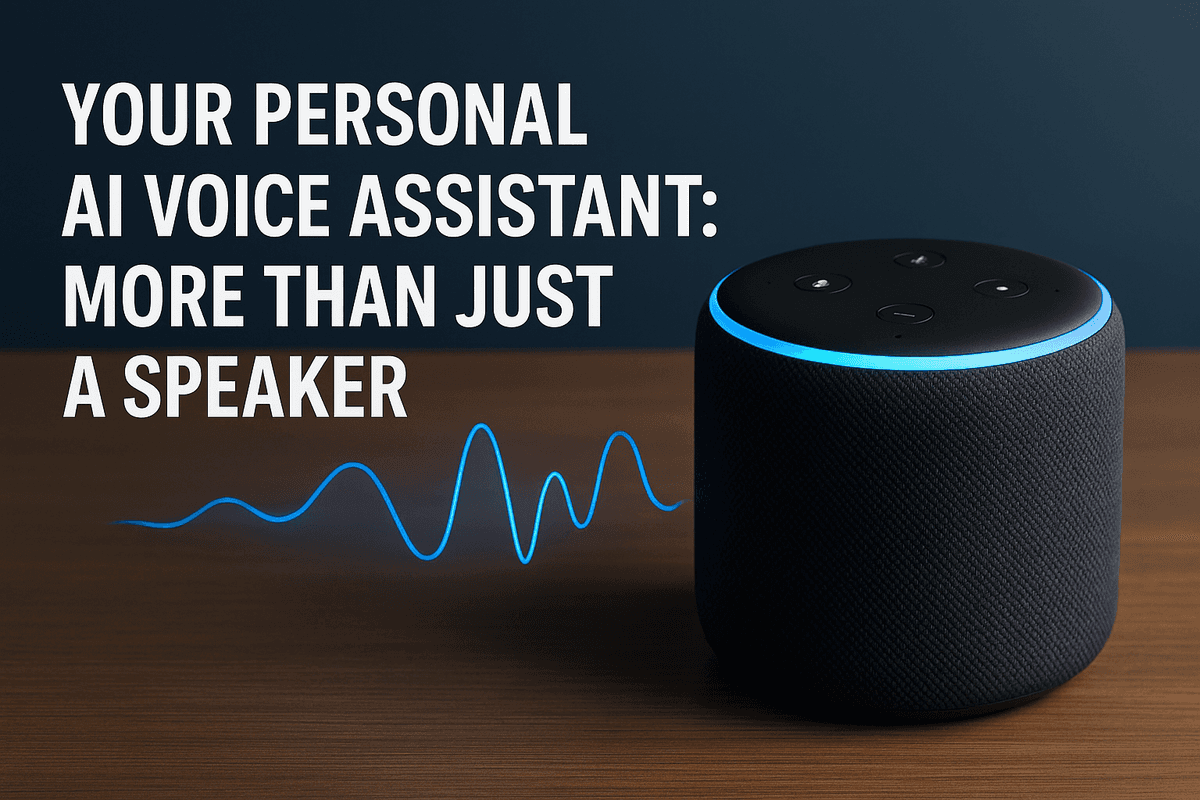
Your Personal AI Voice Assistant: More Than Just a Speaker
When you think of an AI voice assistant, you might picture a smart speaker sitting on a kitchen counter, ready to play a song or tell you the weather. But that device is merely the vessel. The real power lies within the sophisticated software—a digital brain designed to understand, process, and act upon your spoken commands. At its core, an AI voice assistant is your personal, on-demand partner, using technologies like Natural Language Processing (NLP) and machine learning to interpret the nuances of human speech and execute tasks. It’s the difference between a simple remote control and a helpful assistant who understands what you mean, not just what you say.
From Hands-Full to Hands-Free: The Productivity Revolution
The true revolution of voice technology isn’t just about convenience; it’s about fundamentally changing how we interact with our digital world to boost productivity. Our days are filled with moments where our hands and eyes are occupied—cooking, driving, exercising, or typing an important email. In these moments, stopping to type a note or search for information creates friction and breaks our focus.
This is where voice commands transform our workflow. An AI voice assistant acts as a seamless bridge between thought and action.
- Capture Ideas Instantly: A brilliant idea for your next project strikes while you’re washing dishes. Instead of drying your hands and scrambling for a pen, you simply say, “Hey [Assistant], add ‘research competitor marketing funnels’ to my to-do list.” The idea is captured without breaking your stride.
- Streamline Your Schedule: While getting ready in the morning, you can ask your assistant to read your calendar, add a new appointment, and set a reminder to leave for your meeting on time, all without ever touching a screen.
- Automate Your Environment: Voice commands extend beyond simple data retrieval. You can create routines like, “Hey [Assistant], start my workday,” which could simultaneously turn on your office lights, launch specific applications on your computer, and play a focus-music playlist.
By removing the physical barrier of typing and tapping, voice assistants minimize context-switching and allow you to remain immersed in your primary task.
The Evolution: From Simple Commands to Complex Conversations
The journey of the AI voice assistant has been remarkable. Early iterations were rigid and unforgiving. You had to use precise, pre-programmed phrases. A slight deviation in wording would result in the dreaded, "I'm sorry, I don't understand that." The interaction was transactional, not conversational.
Today, we are in an era of conversational AI. Thanks to massive advancements in machine learning, these assistants can now:
- Understand Context: You can ask a follow-up question without repeating the subject. For instance, after asking, “Who is the CEO of Microsoft?” you can simply follow up with, “Where was he born?” The assistant remembers the context of the initial query.
- Process Complex Instructions: Modern assistants can handle multi-step commands. A single instruction like, “Add bread and eggs to my shopping list and set a timer for 10 minutes,” is parsed and executed flawlessly.
- Integrate and Act: The most significant leap is the deep integration with third-party apps and services. Your voice assistant can now book a table at a restaurant, order a car service, or pay a bill, transforming it from a simple information source into a powerful action-oriented tool.
This evolution continues to accelerate, pushing the boundaries from a reactive tool to a proactive partner that anticipates your needs, making the AI voice assistant an indispensable part of modern productivity.
Comparing the Titans: Which AI Voice Assistant is Best?
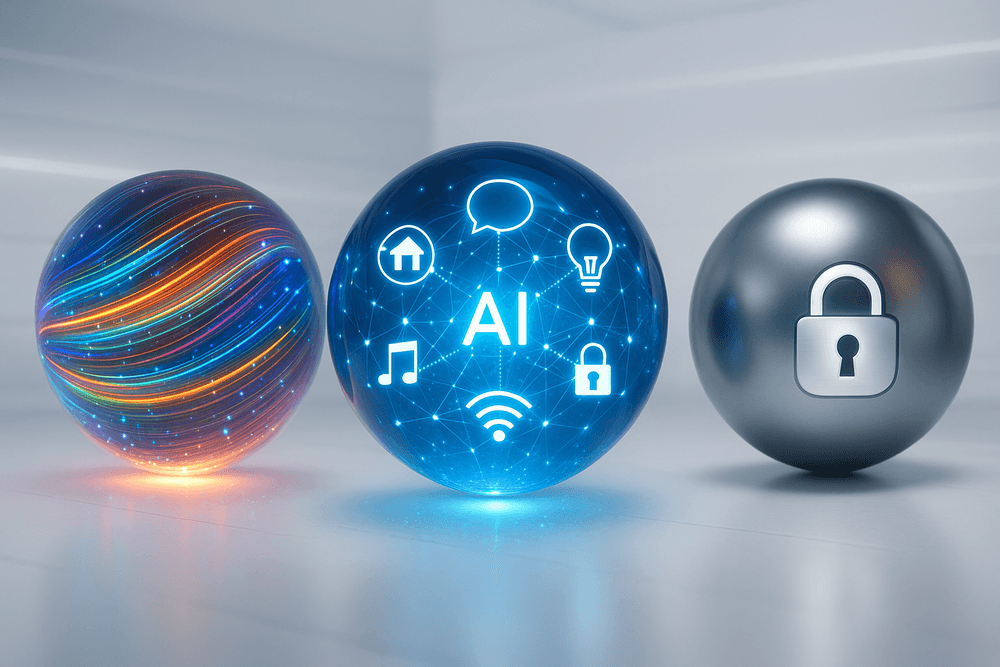
Choosing the right AI voice assistant can feel like picking a side in a tech rivalry. The three dominant players—Google Assistant, Amazon Alexa, and Apple's Siri—all promise to streamline your life, but they excel in distinctly different arenas. The best choice for you depends entirely on your existing technology, your priorities, and what you want your digital helper to accomplish. Let's break down the strengths of each contender to determine which one deserves a place in your home and on your devices.
Google Assistant: The Brainy Integrator
If knowledge is power, then Google Assistant is the most powerful of the bunch. Leveraging the unparalleled might of Google's search engine, this AI voice assistant is a conversational genius. It excels at understanding natural language, context, and complex, multi-part questions. Ask it who directed a movie and then follow up with "What other films did they direct?"—Google Assistant will know exactly what you're talking about without needing you to repeat the director's name.
Its true strength lies in its seamless integration with the Google ecosystem. It can read your upcoming events from Google Calendar, find the fastest route on Google Maps, manage your Gmail, and curate your YouTube Music playlists. For Android users, it’s deeply embedded in the operating system, providing a cohesive experience.
Best for: Users heavily invested in Google’s services, Android phone owners, and anyone who values a highly intelligent and context-aware AI voice assistant for answering questions and managing information.
Amazon Alexa: The Smart Home Conductor
Alexa, housed within the popular Echo device family, is the undisputed king of the smart home. Its primary advantage is its massive and ever-growing library of third-party "Skills." With over 100,000 Skills available, you can connect Alexa to an astonishing range of smart devices, from lights and thermostats to coffee makers and robot vacuums. If a gadget has smart capabilities, it almost certainly works with Alexa.
This makes Alexa the ultimate home automation hub. Setting up routines—like having the lights turn on, the thermostat adjust, and your favorite news briefing play with a single command like "Alexa, good morning"—is simple and powerful. While it's a capable assistant for general queries, its core competency is device control and third-party integration, making it the most versatile AI voice assistant for orchestrating your connected environment.
Best for: Smart home enthusiasts, users who want the widest possible compatibility with smart gadgets, and those who enjoy customizing their assistant with a vast array of Skills.
Apple's Siri: The Polished Private Assistant
For those living within Apple's walled garden, Siri is the natural and most logical choice. Its superpower is its deep, native integration across the entire Apple ecosystem—iPhone, iPad, Mac, Apple Watch, and HomePod. Siri excels at on-device tasks: sending a message via iMessage, starting a FaceTime call, setting a reminder that syncs across all your devices, or finding a photo on your iCloud.
Apple’s significant focus on privacy is a key differentiator. Many Siri requests are processed directly on your device rather than being sent to the cloud, offering a greater sense of security. With the "Shortcuts" app, users can create powerful, personalized automations and voice commands for their favorite apps. While Siri has historically lagged behind in general knowledge questions, recent updates have improved its capabilities, making it a more robust and private AI voice assistant for dedicated Apple users.
Best for: iPhone, Mac, and Apple Watch users who prioritize privacy and want an assistant that works flawlessly within their existing ecosystem of devices and services.
Core Features of a Modern AI Voice Assistant
Today’s sophisticated AI voice assistant has evolved far beyond a simple novelty for playing music or asking about the weather. It has become a powerful command center for managing your life, automating your environment, and accessing information on demand. These core features work in harmony to streamline your daily routines, boost productivity, and integrate technology seamlessly into your life. By understanding these capabilities, you can unlock the full potential of your smart device.
Mastering Task Automation: Calendars, Reminders, and Lists
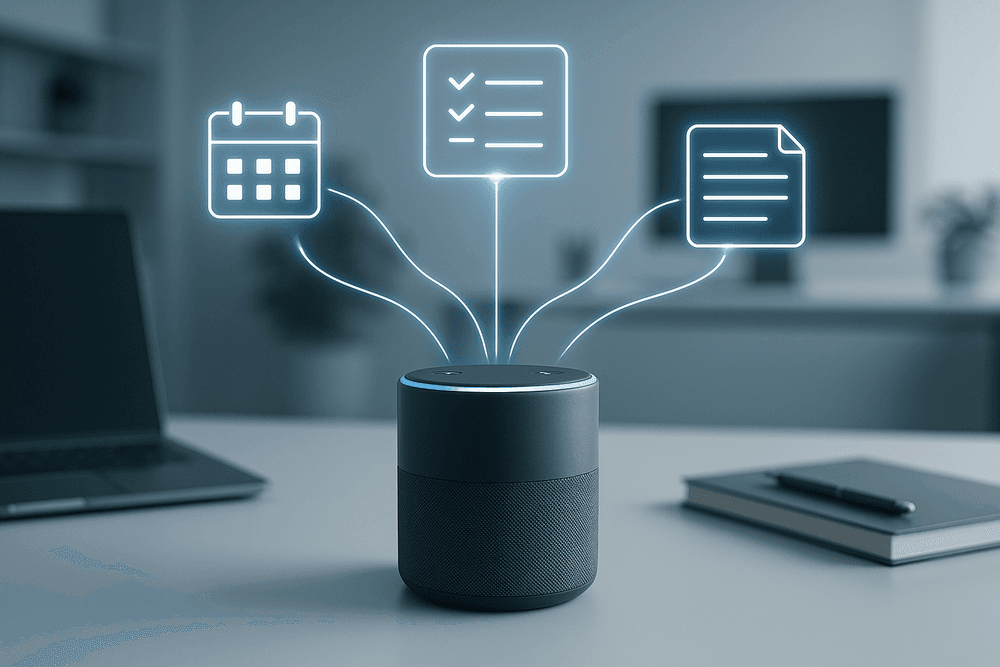
One of the most impactful functions of a modern AI voice assistant is its ability to serve as a personal productivity powerhouse. It effortlessly manages the mental load of remembering appointments, tasks, and to-do items. Instead of stopping what you’re doing to type on a phone or computer, you can integrate organization into the flow of your day with simple voice commands.
Imagine you’re making coffee and suddenly remember a deadline. A quick "Hey Google, remind me to submit the project report by 4 PM today" ensures you won’t forget. Planning your week becomes as simple as saying, "Siri, add 'Dentist Appointment' to my calendar for Wednesday at 2 PM." While cooking, you can build your grocery list hands-free: "Alexa, add avocados and cilantro to my shopping list." This seamless integration removes friction, making you more organized and efficient without breaking your concentration.
Controlling Your Environment with Smart Home Integration
The AI voice assistant truly shines as the central hub of a connected smart home. It acts as a universal remote for a vast ecosystem of devices, allowing you to control your physical environment with nothing more than your voice. From lighting and climate control to security and entertainment, your assistant can orchestrate it all.
This capability transforms how you interact with your home. Walking into a dark house, you can say, "Alexa, turn on the living room lights." Feeling a bit chilly? "Hey Siri, set the thermostat to 72 degrees." You can also create powerful "routines" or "scenes" that execute multiple actions with a single command. For example, a "Good Morning" routine could simultaneously raise the smart blinds, start the coffee maker, and have your AI voice assistant read you the day's headlines and weather forecast. This level of automation adds unparalleled convenience and a touch of futuristic magic to everyday life.
Getting Instant Information: News, Weather, and Quick Facts
Curiosity no longer requires a keyboard. An AI voice assistant is your direct line to the world’s knowledge base, ready to answer questions, provide updates, and settle debates in seconds. These devices are connected to powerful search engines and data sources, delivering concise, relevant information in a conversational format.
Whether you need a quick weather check before heading out, a summary of the morning’s top news stories, a simple unit conversion while baking ("How many tablespoons in a quarter cup?"), or the score of last night's game, the answer is just a voice command away. This feature is invaluable for multitasking, allowing you to gather information while your hands are busy, making it an indispensable tool in the kitchen, workshop, or office.
Protecting Your Privacy with Modern Security Features
As these devices become more integrated into our lives, privacy and security have become paramount. A core feature of any reputable AI voice assistant is a robust set of user-controlled security options. Manufacturers now prioritize features that give you command over your data.
This includes physical microphone mute buttons that electronically disconnect the mic, ensuring it cannot listen. Assistants are designed to only activate after hearing a specific "wake word," minimizing unintentional recording. Furthermore, user dashboards allow you to easily review and delete your voice command history, giving you full transparency and control. Increasingly, assistants are also performing more command processing directly on the device rather than in the cloud, further enhancing privacy. These essential security measures are designed to build trust and make the AI voice assistant a safe and reliable partner.
How to Supercharge Your Workflow with an AI Voice Assistant
You’ve mastered the basics of asking for the weather and playing music. Now, it’s time to unlock the true potential of your ai voice assistant and transform it from a simple gadget into a powerful productivity partner. By moving beyond single commands and embracing automation, you can reclaim valuable time and mental energy. Here’s how to integrate your assistant deeply into your daily workflow.
Best Practices for Crafting Clear Voice Commands
An ai voice assistant isn’t a mind reader. The clarity of your command directly impacts the quality of its response. To get consistent and accurate results, you need to speak its language.
- Be Specific and Direct: Ambiguity is the enemy of automation. Instead of a vague "Remind me about the meeting," try a precise command like, "Remind me to review the project brief at 2 PM."
- Use an Action-Oriented Structure: Frame your commands with a clear verb. Start with words like "Add," "Create," "Set," "Play," or "What is." For example, "Add 'Buy presentation clicker' to my shopping list."
- Speak Naturally, Not Robotically: While clarity is key, you don’t need to speak like a robot. Use a natural pace and tone. Modern assistants are designed to understand conversational language, but they still need you to enunciate clearly.
- Learn Your Assistant's Lingo: Spend a few minutes exploring the "Skills" (Amazon Alexa) or "Actions" (Google Assistant) library. This will reveal the specific phrasing and commands that supported apps use, allowing you to interact with them flawlessly.
Connecting Third-Party Apps to Automate Tasks
The real power of an ai voice assistant is unleashed when you connect it to the other tools you use every day. This integration creates a centralized, voice-controlled hub for your digital life.
Start by opening your assistant's app (Google Home, Amazon Alexa, Apple Home) and navigating to the settings to link your accounts. A few powerful integrations include:
- Calendars (Google Calendar, Outlook): Once linked, you can add events, check your schedule, or ask what’s next on your agenda without touching a device. Try: "Hey Google, what's my first meeting tomorrow?"
- To-Do Lists (Todoist, Any.do): Capture tasks the moment you think of them. A simple "Alexa, add 'Email the sales team' to my to-do list" ensures nothing falls through the cracks.
- Note-Taking Apps (Evernote, Notion): Perfect for hands-free brainstorming. Dictate ideas, meeting notes, or random thoughts directly into your preferred app while you’re on a walk or driving.
- Workflow Automators (IFTTT): For ultimate customization, connect your assistant to IFTTT (If This Then That). This allows you to create powerful "applets" that trigger cross-platform actions. For example, you could create a command like, "Alexa, trigger 'start focus mode'," which could simultaneously put your phone on Do Not Disturb and start a 25-minute timer.
Creating Custom Routines for Morning and Evening Efficiency
Routines are the ultimate productivity hack, allowing you to trigger a sequence of different actions with a single custom phrase. This eliminates repetitive tasks and reduces decision fatigue at the start and end of your day.
Example Morning Start-Up Routine
- Trigger: "Hey Siri, good morning."
- Actions:
- Your smart lights slowly brighten.
- Your thermostat adjusts to your preferred temperature.
- Your assistant tells you the weather forecast.
- It reads your first three calendar events for the day.
- It starts playing your favorite news podcast or a "Focus" playlist.
Example Evening Wind-Down Routine
- Trigger: "Alexa, shut down for the day."
- Actions:
- The lights in your office turn off, and your living room lights dim.
- The assistant confirms your alarm is set for the next day.
- It gives you a one-sentence summary of tomorrow's weather.
- It starts playing a calming ambient sound playlist or an audiobook.
By setting up these automated workflows, your ai voice assistant becomes an active participant in managing your day, freeing you up to focus on what truly matters.
Real-World Use Cases for an AI Voice Assistant
The theoretical power of an AI voice assistant becomes tangible when we explore its practical applications. Far from being a simple novelty, this technology is revolutionizing how we interact with our digital and physical environments across business, home, and accessibility contexts. Its ability to understand and act on natural language commands unlocks new levels of efficiency and independence.
In Business: Streamlining Meeting Notes and Follow-ups
In the fast-paced corporate world, an AI voice assistant is quickly becoming an indispensable productivity tool. Imagine sitting through a critical brainstorming session without the distraction of taking notes. A dedicated AI meeting assistant can join your call, provide real-time transcription, and even distinguish between different speakers.
After the meeting, its true power is unleashed. Instead of manually sifting through pages of text, you can simply ask the assistant to generate a concise summary, identify key decisions, and automatically create a list of action items with assigned owners and deadlines. This AI can then integrate with your project management software to create tasks or draft follow-up emails, ensuring nothing falls through the cracks. This hands-free delegation frees up valuable mental bandwidth, allowing teams to focus on strategic thinking rather than administrative chores. By automating the entire meeting lifecycle from transcription to follow-up, the modern AI voice assistant transforms communication and boosts team productivity.
At Home: Creating a Truly Connected Smart Home Experience
While playing music and setting timers are popular uses, the true potential of a home-based AI voice assistant lies in its role as the central conductor of a connected smart home. It’s the hub that unifies dozens of disparate devices—from smart bulbs and thermostats to security cameras and coffee makers—into a single, cohesive ecosystem.
This integration enables the creation of powerful routines triggered by a simple voice command. For example, saying "Good morning" could simultaneously raise the blinds, slowly brighten the lights, adjust the thermostat to a comfortable temperature, and start brewing your morning coffee. Similarly, a "Movie Night" command could dim the lights, turn on the TV and sound system, and even lock the front door. This level of orchestration goes beyond simple convenience; it creates an environment that adapts to your lifestyle. The AI voice assistant acts as your personal home manager, simplifying complex interactions and delivering a truly seamless and intelligent living experience.
For Accessibility: How Voice Control Empowers Users
Perhaps the most profound impact of AI voice assistants is in the realm of accessibility. For individuals with mobility impairments or dexterity challenges, voice control is a gateway to greater independence and control over their environment. Simple tasks that many take for granted, like turning on a light, adjusting room temperature, or locking a door, can be accomplished effortlessly with a spoken command. This technology empowers users to manage their homes safely and comfortably without needing physical assistance.
Furthermore, for users with visual impairments, an AI voice assistant serves as an essential interface to the digital world. It can read emails and text messages aloud, announce incoming callers, search the web for information, and provide audio-based navigation through device menus. By translating visual information into an auditory format, it breaks down significant barriers to technology and information access. In this capacity, the AI voice assistant is not just a tool for convenience but a crucial piece of assistive technology that fosters autonomy and enhances quality of life.

The Future is Vocal: What's Next for the AI Voice Assistant?
The journey of the AI voice assistant is far from over. We're moving rapidly beyond simple command-and-response interactions into an era of sophisticated, conversational partnerships. The stilted, robotic exchanges of the past are making way for fluid, natural dialogue that will fundamentally change how we interact with technology.
The Trend: More Natural, Human-Like Conversations
The future of the AI voice assistant is less about a tool and more about a collaborator. Developers are intensely focused on several key advancements:
- Contextual Awareness: The next generation of assistants will remember the context of your conversation. You won't have to repeat information. You could ask, "What's the weather like in London?" followed by "What about in Paris?" and the assistant will understand you're still asking about the weather.
- Proactive Assistance: Instead of waiting for you to issue a command, a future AI voice assistant will anticipate your needs. Imagine your assistant notifying you to leave for a meeting early because it has already analyzed real-time traffic data, or suggesting you add milk to your grocery list because it knows you buy it every Friday.
- Emotional Nuance: Through advancements in affective computing, assistants are learning to detect emotional cues in your tone of voice. This could lead to more empathetic and appropriate responses, whether you're expressing frustration with a task or excitement about an event.
How to Choose the Right AI Voice Assistant for Your Needs
With several major players in the market, selecting the best AI voice assistant depends largely on your personal and professional ecosystem. Consider these factors:
- Ecosystem Integration: The most seamless experience comes from an assistant that integrates with the devices you already use.
- Apple Users: Siri is deeply integrated into iPhones, Macs, and the HomePod.
- Android/Google Users: Google Assistant excels on Android phones and integrates flawlessly with Google services and Nest devices.
- Amazon Users: Alexa dominates the smart home space with its wide range of Echo devices and third-party skills.
- Primary Use Case: What will you use it for most? If your goal is robust smart home control and a vast library of "skills," Alexa is a strong contender. If you want a powerful information retrieval tool that leverages the world's largest search engine, Google Assistant is unmatched. If you value privacy and on-device processing, Siri is a solid choice.
- Privacy Controls: All major providers offer dashboards to review and delete your voice history. Before committing, take a moment to understand the privacy settings and data policies of the company behind the assistant.
Getting Started: Your First Voice-Automated Task Today
Ready to experience the productivity boost firsthand? You don't need to buy any new hardware; the smartphone in your pocket likely has a powerful AI voice assistant built-in. Let's start with a simple, high-value task.
- Activate Your Assistant: On an iPhone, say "Hey Siri." On an Android, say "Hey Google."
- State Your Command Clearly: Let's create a reminder so you don't forget something important. Try saying: "Remind me to call the client back tomorrow at 10 AM."
- Confirm the Action: Your assistant will process the command and show you the reminder it has created, asking for confirmation. Simply say "Yes" or tap the screen.
That's it. In under 10 seconds, you’ve delegated a mental task, freeing up your focus for more important work. Now, try another: "What’s on my calendar for today?" or "Send a text to [Contact Name] that I'm running five minutes late." Welcome to the world of voice automation.