October 5, 2025
Why Your Business Urgently Needs an AI Ethics Framework
Why Your Business Urgently Needs an AI Ethics Framework
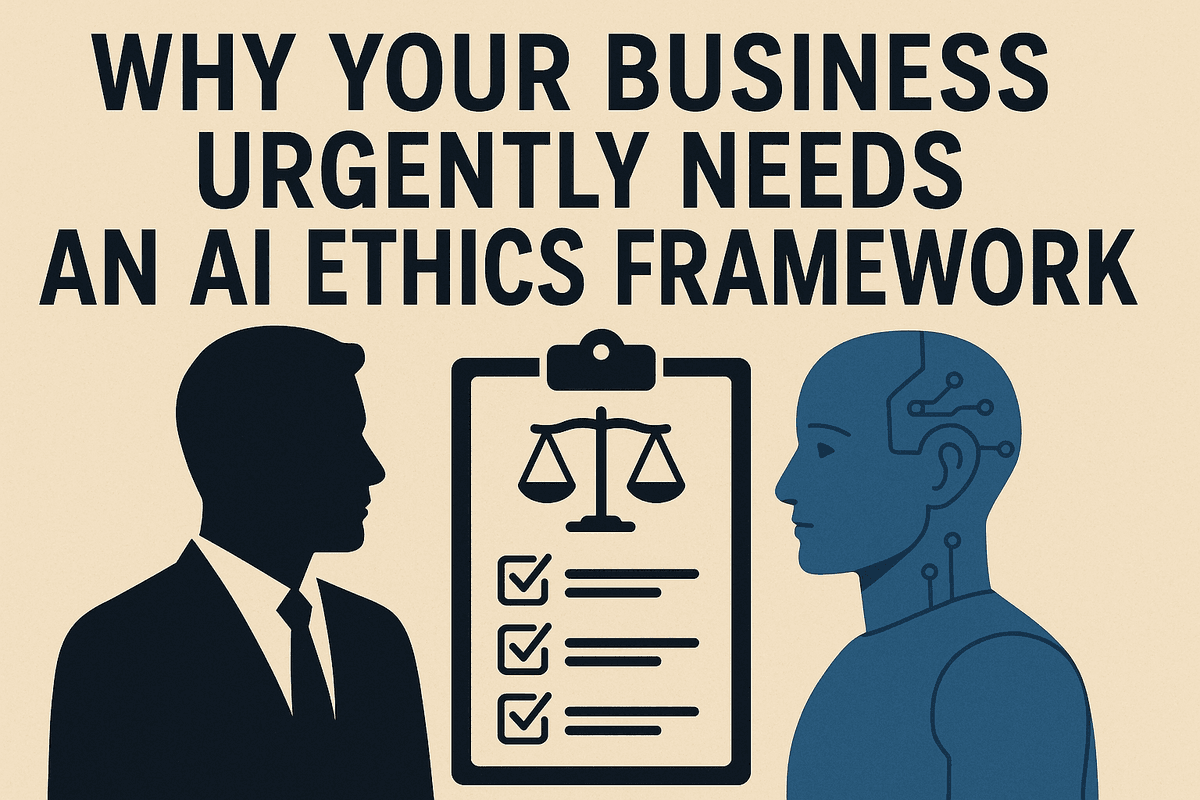
In the race to innovate, it’s easy to focus on what AI can do and forget to ask what it should do. But ignoring the ethical dimension of artificial intelligence isn't just a philosophical oversight—it's a critical business risk. As AI systems become more integrated into core operations, from hiring and marketing to credit scoring and customer service, the absence of a guiding ethical structure can lead to disastrous consequences. This is where an AI ethics framework transforms from a "nice-to-have" into a non-negotiable strategic asset.
What Exactly Is an AI Ethics Framework?
Let's clear up a common misconception: an AI ethics framework is not a vague mission statement or a one-page checklist you file away. It's a comprehensive, operational system of principles, guidelines, and governance processes designed to ensure your AI technologies are developed and deployed responsibly.
Think of it as the constitution for your company's AI initiatives. It defines your organization's stance on critical issues like fairness, accountability, transparency, and privacy. An effective AI ethics framework provides a practical structure for:
- Assessing risks before an AI model is ever deployed.
- Ensuring human oversight at critical decision points.
- Establishing clear accountability when an AI system makes a mistake.
- Guiding developers and data scientists to build solutions that align with your company’s values.
It’s a living document that integrates ethical considerations directly into the AI lifecycle, from data collection and model training to deployment and ongoing monitoring.
Beyond the Buzzword: The Real-World Risks of Unethical AI
Operating without a formal AI ethics framework is like navigating a minefield blindfolded. The risks are not abstract; they are tangible and carry significant weight. We’ve all seen the headlines: AI-powered hiring tools discriminating against candidates, facial recognition systems exhibiting racial bias, or automated systems making decisions that amplify societal inequities.
For your business, these aren't just PR nightmares. They translate into severe, real-world consequences:
- Reputational Damage: A single biased algorithm can erode decades of brand trust overnight, alienating customers and partners.
- Legal and Regulatory Penalties: Governments worldwide are enacting stricter regulations around AI. Non-compliance with laws like the EU AI Act or GDPR can result in crippling fines.
- Operational Failure: An AI system that makes biased or inaccurate decisions is fundamentally flawed. It can lead to poor financial performance, flawed strategies, and a loss of competitive edge.
From Brand Trust to the Bottom Line: The Business Case for Responsible AI
The imperative to adopt an AI ethics framework isn't just about avoiding disaster; it’s about seizing a powerful opportunity. Responsible AI is good business. Organizations that proactively embed ethics into their AI strategy unlock significant competitive advantages.
- Build Unbreakable Customer Trust: In an era of data skepticism, demonstrating a commitment to ethical AI is a powerful differentiator. Customers are far more likely to trust and remain loyal to companies that use their data responsibly.
- Attract and Retain Top Talent: The best and brightest in the tech world want to work on projects that have a positive impact. A strong ethical stance makes your company a magnet for top-tier talent who are passionate about building a better future.
- Drive Superior Innovation: Ethical constraints breed creativity. By forcing your teams to address challenges like bias and transparency, you encourage the development of more robust, resilient, and sophisticated AI models that perform better for everyone.
Ultimately, implementing an AI ethics framework is an investment in your company's long-term sustainability and success. It aligns your technological ambitions with your corporate values, ensuring that as you innovate, you’re also building a business that is trusted, respected, and built to last.
The Core Pillars of a Successful AI Ethics Framework
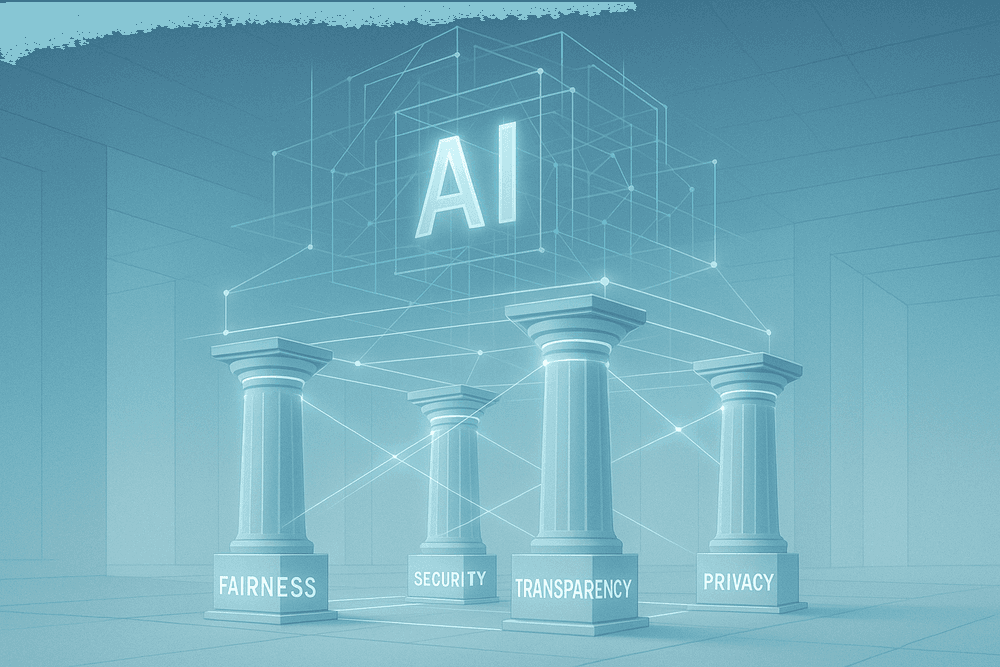
Building a responsible AI practice isn't an abstract exercise; it's a structured endeavor grounded in concrete principles. A successful AI ethics framework is built upon four interconnected pillars that provide a comprehensive foundation for governance, development, and deployment. These pillars ensure that AI systems are not only powerful but also principled, safe, and aligned with human values.
Pillar 1: Fairness, Accountability, and Transparency (FAT)
Often referred to as FAT, this pillar is the bedrock of trustworthy AI. Each component addresses a critical aspect of how an AI system impacts people and society.
- Fairness: This principle demands that AI systems treat all individuals and groups equitably, actively working to mitigate harmful bias. A core function of an AI ethics framework is to establish processes for identifying and correcting biases in datasets and algorithms that could lead to discriminatory outcomes in areas like hiring, lending, or law enforcement.
- Accountability: When an AI system makes a critical error, who is responsible? Accountability means establishing clear lines of ownership and governance. It defines who is answerable for the system's decisions, ensuring there are mechanisms for redress when things go wrong.
- Transparency: Stakeholders, from users to regulators, have a right to understand how an AI system operates. Transparency involves being open about the system's purpose, the data it uses, its limitations, and the logic behind its decisions, fostering trust and enabling informed scrutiny.
Pillar 2: Explainability and Interpretability
While often used interchangeably, these concepts are distinct yet complementary. They focus on demystifying the "black box" nature of complex AI models, particularly deep learning systems.
- Explainability (XAI): This is the ability to describe a model’s internal mechanics and the logic behind a specific prediction in human-understandable terms. For example, explaining why a loan application was denied by pointing to specific influencing factors.
- Interpretability: This refers to the extent to which a human can understand the cause-and-effect relationship within an AI model. A simpler, more interpretable model might be preferred over a more complex one in high-stakes scenarios where understanding the "how" is non-negotiable. An effective AI ethics framework mandates a level of explainability appropriate for the system's context and risk level.
Pillar 3: Robustness, Security, and Reliability
An ethical AI system must be a dependable one. This pillar ensures that AI technology functions as intended, consistently and safely, even in the face of unexpected challenges or malicious attacks.
- Robustness: The AI system should be resilient, maintaining its performance even when encountering novel or adversarial inputs. It shouldn't fail unpredictably when faced with data that differs slightly from its training set.
- Security: This involves protecting the AI system from external threats. This includes safeguarding it against data poisoning, model theft, and adversarial attacks designed to manipulate its outputs for malicious purposes.
- Reliability: The system must perform its intended function accurately and consistently over its entire lifecycle. This requires rigorous testing, ongoing monitoring, and validation to ensure it meets performance benchmarks and operates safely in its deployed environment.
Pillar 4: Privacy and Data Governance
Data is the lifeblood of AI, and how it is managed is a critical ethical concern. This pillar ensures that individual privacy is respected and data is handled responsibly from collection to deletion.
- Privacy: This principle goes beyond mere compliance with regulations like GDPR. It involves designing AI systems with privacy at their core (Privacy by Design), using techniques like data minimization, anonymization, and federated learning to protect sensitive personal information.
- Data Governance: A strong AI ethics framework requires a comprehensive data governance strategy. This establishes clear policies for data quality, lineage, access controls, user consent, and usage rights. It ensures that the data fueling AI models is sourced and managed ethically, legally, and securely.
Real-World Examples: How Industry Leaders Implement Their AI Ethics Framework
Theory is one thing, but practice is another. To truly understand how an ai ethics framework functions, it's essential to see how it's implemented by organizations on the front lines of innovation. From tech giants to regulatory bodies, these examples showcase different approaches to embedding responsibility into the AI lifecycle.
Google's AI Principles: A Deep Dive
Google's approach is defined by its seven public AI Principles, a foundational ai ethics framework guiding its product development and research since 2018. These principles are not just aspirational; they are actionable directives. Key tenets include ensuring AI is socially beneficial, avoiding the creation or reinforcement of unfair bias, and building systems that are safe, accountable, and incorporate robust privacy protections.
What truly sets Google's framework apart is its clear articulation of "red lines." The company explicitly states it will not pursue AI applications in weaponry, surveillance violating international norms, or technologies whose principal purpose is to cause direct injury. This commitment is operationalized through a rigorous governance model. The Advanced Technology Review Council (ATRC), a group of senior executives and experts, conducts mandatory ethical reviews for sensitive projects. This process ensures that high-impact AI systems are systematically vetted against the principles before launch, making the framework a practical gatekeeper in the innovation pipeline rather than a philosophical afterthought.
How Microsoft Builds Its Responsible AI Standard
Microsoft champions its "Responsible AI" initiative, which is built upon six core principles: Fairness, Reliability & Safety, Privacy & Security, Inclusiveness, Transparency, and Accountability. This comprehensive approach moves beyond a simple checklist by embedding ethical oversight deep within the organization’s engineering culture.
The centerpiece of this strategy is the Responsible AI Standard, a set of mandatory rules and engineering requirements that have been integrated across the company’s development lifecycle. To translate principles into practice, Microsoft has established a robust governance system. The Office of Responsible AI (ORA) sets the rules and governance processes, while the AI, Ethics, and Effects in Engineering and Research (AETHER) Committee acts as an advisory board for complex ethical challenges. Furthermore, Microsoft empowers its developers with practical tools like the Responsible AI Toolbox and the Responsible AI Dashboard in Azure, which help them diagnose, mitigate, and monitor issues related to fairness and explainability. This demonstrates a mature ai ethics framework that combines top-down governance with bottom-up, tool-based implementation.
Lessons from the EU AI Act: A Governmental Approach
Shifting from corporate self-regulation to binding public law, the European Union's AI Act represents the world's first comprehensive governmental ai ethics framework. Its pioneering risk-based approach categorizes AI systems into four distinct tiers: unacceptable risk (e.g., social scoring systems, which are banned outright), high-risk, limited-risk, and minimal-risk.
For high-risk AI systems—those used in critical infrastructure, medical devices, employment, or law enforcement—the Act imposes strict, legally binding obligations. These include requirements for high-quality data governance, comprehensive technical documentation, transparent information for users, robust human oversight, and a high level of cybersecurity. Compliance is not optional. High-risk systems must undergo conformity assessments before they can enter the EU market, and non-compliance can result in substantial fines. The EU AI Act is a landmark piece of legislation that moves the conversation from voluntary ethical principles to mandatory legal standards. It sets a powerful global precedent, compelling companies both inside and outside the EU to build their internal AI governance and development processes around a framework of accountability and public trust.

How to Build and Implement Your Own AI Ethics Framework in 5 Steps
Moving from abstract principles to concrete action is the most critical part of AI ethics. A theoretical document gathers dust; an integrated process drives real-world change. Building and implementing a successful AI ethics framework is a structured, collaborative effort. Follow these five steps to create a practical and effective framework for your organization.
Step 1: Assemble a Cross-Functional AI Ethics Committee
Responsible AI is not just a technical problem; it’s an organizational challenge. The first step is to create a dedicated, cross-functional committee or council to champion and govern your AI ethics framework. This group moves beyond siloed thinking to provide a holistic view of AI's impact.
Your committee should include representatives from diverse departments:
- Legal and Compliance: To navigate regulatory landscapes and assess liability.
- Data Science and Engineering: To understand technical feasibility and limitations.
- Product Management: To align ethical considerations with user needs and business goals.
- Business Leadership: To provide executive sponsorship and strategic direction.
- Human Resources: To address impacts on the workforce and hiring practices.
- Marketing and Communications: To ensure transparency with customers and the public.
This team will be responsible for defining principles, overseeing reviews, and guiding the evolution of your framework.
Step 2: Define and Customize Your Core Principles
While you don’t need to reinvent the wheel, you must tailor ethical principles to your specific context. Start with widely recognized pillars like Fairness, Accountability, Transparency, Privacy, Security, and Reliability. Then, ask critical questions to customize them:
- What does "fairness" mean for our specific customers and use cases?
- How does our industry (e.g., healthcare, finance, retail) change the priority of these principles?
- Which principles align most directly with our company’s core values and mission?
The goal is to translate broad concepts into a clear, concise set of statements that resonate with your organization’s culture. These customized principles will serve as the north star for your entire AI ethics framework.
Step 3: Develop an AI Risk Assessment Matrix
To make your principles actionable, you need a tool to evaluate risk. An AI Risk Assessment Matrix helps teams systematically identify and score potential ethical harms before a project begins. This matrix typically evaluates projects along two axes:
- Likelihood of Harm: How likely is it that the AI system could produce a negative ethical outcome (e.g., biased decisions, privacy violations)?
- Severity of Impact: If the harm occurs, what is the magnitude of its impact on individuals, groups, or the organization?
Projects that fall into the high-likelihood, high-severity quadrant require the most intensive review and oversight. This proactive assessment moves your framework from a reactive checklist to a strategic risk management tool.
Step 4: Create Clear Channels for Review and Oversight
A framework without a governance process is ineffective. You must establish clear, well-defined channels for reviewing AI projects against your ethical principles. Define the "what, when, and who" of the review process:
- Triggers: When does a project require an ethics review? (e.g., at the concept stage, before data acquisition, prior to deployment).
- Process: What documentation is required for a review? Who conducts the initial assessment (e.g., the project team using the risk matrix)?
- Oversight: Who provides the final review and approval? (e.g., the AI Ethics Committee). Define the possible outcomes: approve, approve with conditions, or reject.
- Escalation: Create a path for escalating complex or high-stakes dilemmas that require senior leadership input.
Step 5: Operationalize, Train, and Iterate Your Framework
Finally, your AI ethics framework must be woven into the fabric of your daily operations. Embed ethical checkpoints into existing workflows, such as your project management software, development lifecycle (SDLC), and procurement processes.
Training is non-negotiable. Every employee involved in the AI lifecycle—from data analysts to product managers—must understand the framework, their responsibilities, and how to use the tools you’ve created.
Most importantly, treat your framework as a living document. Technology, regulations, and societal expectations evolve. Schedule regular reviews (e.g., annually or biannually) to update your principles, risk matrix, and processes to ensure your commitment to responsible AI remains robust and relevant.
Overcoming Common Hurdles in AI Ethics Implementation
Developing an AI ethics framework is a critical first step, but the journey to responsible AI is paved with practical challenges. Implementation is where principles meet reality, and even the most well-designed framework can stumble. By anticipating common hurdles, you can build a more resilient and effective governance structure. Let’s explore three key challenges and how to navigate them successfully.
Navigating the 'Black Box' Dilemma with New Tools
One of the most significant challenges is the "black box" nature of complex AI models. When a deep learning algorithm denies a loan application or makes a medical recommendation, stakeholders—and regulators—want to know why. If you can't explain a model's reasoning, you can't verify its fairness or hold it accountable, directly undermining the transparency principle of your ai ethics framework.
Fortunately, the field of Explainable AI (XAI) provides a powerful toolkit. Technologies like SHAP (SHapley Additive exPlanations) and LIME (Local Interpretable Model-agnostic Explanations) act as translators, helping to illuminate which data points most influenced a model’s decision. Integrating these tools into your MLOps pipeline allows you to:
- Audit for Bias: Uncover whether a model is relying on sensitive attributes like gender or race.
- Debug Performance: Understand why a model is failing on certain predictions.
- Build Trust: Provide clear, human-readable justifications for automated decisions to customers and internal teams.
By demystifying your models, you transform accountability from an abstract goal into a measurable practice.
Balancing Rapid Innovation with Ethical Guardrails
In a competitive landscape, the pressure to innovate and deploy AI quickly is immense. Many teams fear that an ai ethics framework will act as a brake, bogging them down in bureaucratic red tape. The key is to reframe ethics not as a gate, but as a guardrail that enables faster, safer innovation.
To achieve this balance, embed ethics directly into your development lifecycle:
- Adopt 'Ethics by Design': Treat ethical considerations as a core requirement from the project's inception, just like security or scalability. This involves conducting impact assessments before a single line of code is written.
- Implement Agile Ethics Reviews: Instead of a single, monolithic ethical review at the end of a project, incorporate smaller, iterative check-ins into your agile sprints. This allows for course correction early and often.
- Form Cross-Functional Ethics Boards: Create a review board with representatives from legal, product, engineering, and business to provide diverse perspectives and rapid guidance, preventing ethical oversight from becoming a bottleneck.
Ensuring Your Framework Evolves with Technology and Regulation
An ai ethics framework is not a static document; it’s a living guide. AI technology is advancing at an exponential rate, and global regulations, like the EU AI Act, are constantly taking shape. A framework written last year might already be missing crucial considerations for today’s generative AI models or new compliance requirements.
To ensure your framework remains relevant and effective, build in mechanisms for continuous evolution:
- Schedule Annual Reviews: Formally assess and update your framework at least once a year, incorporating lessons learned, new technological capabilities, and emerging legal standards.
- Establish Feedback Loops: Create clear channels for developers, users, and other stakeholders to raise ethical concerns or suggest improvements to the framework.
- Invest in Ongoing Education: Keep your teams informed about the latest trends in AI ethics and regulation through regular training sessions and access to resources. This proactive approach ensures your organization can adapt and continue to lead in responsible AI deployment.

Conclusion: The Future of Your AI Ethics Framework
You’ve journeyed from understanding the core principles of AI ethics to exploring the steps for building a framework from the ground up. But creating your AI ethics framework is not the final destination; it’s the launchpad. The true work lies in its ongoing evolution and its integration into the very fabric of your organization. As AI technology continues to advance at an unprecedented pace, your commitment to ethical oversight must be dynamic, responsive, and deeply ingrained in your culture. This is not just about mitigating risk—it’s about building a sustainable competitive advantage rooted in trust.
The Next Frontier: From Principles to Auditable Practices
The initial wave of AI ethics focused on establishing high-level principles like fairness, transparency, and accountability. The next frontier is about making these principles tangible, measurable, and auditable. A document sitting on a server is not enough. The future of a successful AI ethics framework lies in its operationalization—embedding ethical checkpoints directly into the AI development lifecycle.
This means moving towards concrete practices such as:
- Mandatory Ethical Impact Assessments: Evaluating potential societal and individual harm before a project even begins.
- Bias and Fairness Audits: Utilizing technical tools to regularly test models for unintended bias across different demographic groups.
- Explainability Reports: Creating clear documentation that can explain a model’s decision-making process to both technical and non-technical stakeholders.
- Continuous Monitoring: Implementing systems to track model performance and ethical alignment post-deployment, ensuring it doesn’t drift into problematic behavior over time.
By transforming abstract principles into auditable actions, your framework becomes a powerful tool for demonstrating accountability to regulators, customers, and partners.
Fostering a Culture of Responsible Innovation
Ultimately, an AI ethics framework is powered by people. Its success depends on fostering a culture where responsible innovation is not a box-ticking exercise but a shared value. This requires a commitment that extends beyond the data science team.
Cultivating this culture involves empowering every employee to be an ethical stakeholder. This can be achieved through dedicated training programs, establishing cross-functional ethics committees for review and guidance, and creating psychologically safe channels for individuals to raise concerns without fear of reprisal. When leadership consistently champions and models these ethical considerations, responsibility shifts from a top-down mandate to a collective, bottom-up priority. The goal is to make asking "should we do this?" as natural as asking "can we do this?"
Get Started: Download Our AI Ethics Framework Template
Translating theory into action is the most critical step. To help you begin this journey, we’ve created a practical, customizable template to guide your process. Don't start from scratch. Use our foundation to accelerate your progress.
[Download Our Free AI Ethics Framework Template Now]
This comprehensive template provides the structure you need to define your principles, establish governance, and map out your implementation strategy. Use it to facilitate conversations within your organization and build the robust AI ethics framework necessary to innovate responsibly and earn lasting trust in the age of AI.