
November 9, 2025
Why Your Business Needs AI-Powered Demand Forecasting Tools
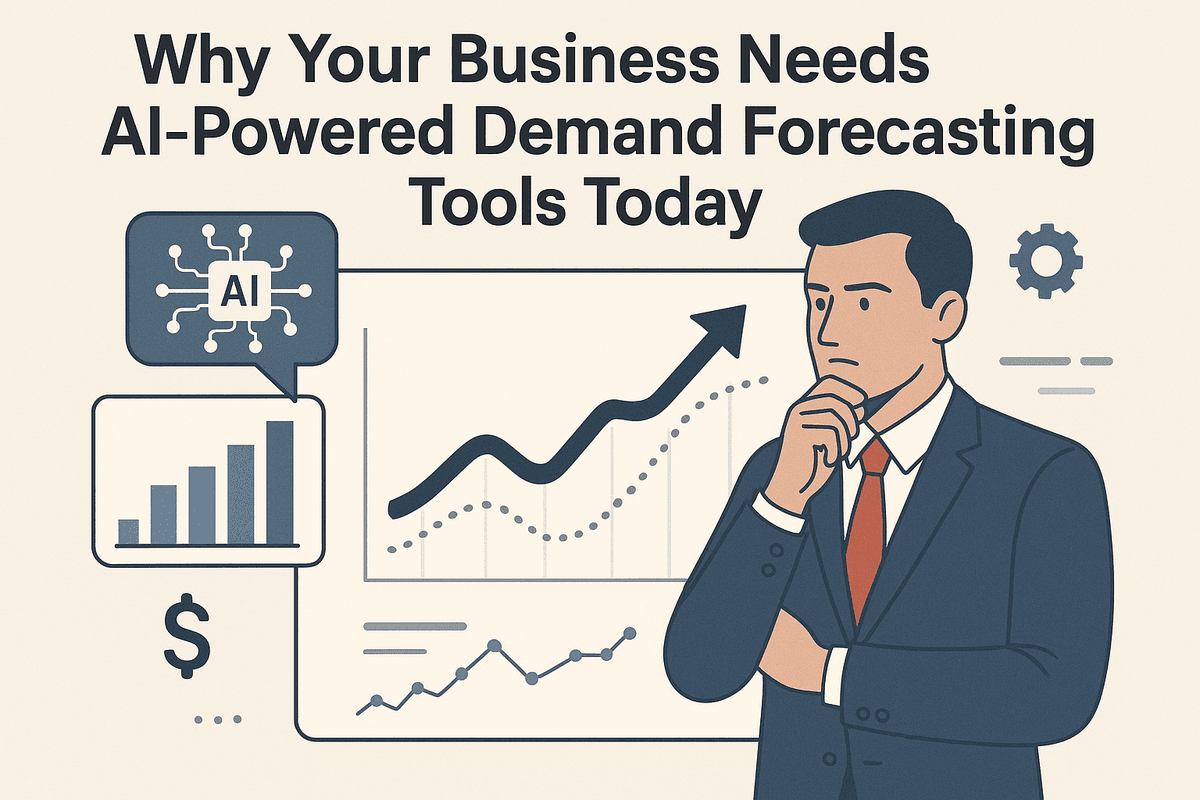
Why Your Business Needs AI-Powered Demand Forecasting Tools Today
In today's fast-paced market, relying on gut feelings and historical averages is like navigating a highway while looking only in the rearview mirror. To stay ahead, you need to see the road ahead clearly. This is where ai powered demand forecasting tools become less of a luxury and more of a necessity, transforming your operational strategy from reactive to predictive.
Moving Beyond Manual Spreadsheets: The Old vs. New Way
For years, demand forecasting lived inside complex spreadsheets. Teams of analysts would spend countless hours pulling historical sales data, wrestling with VLOOKUPs and pivot tables, and manually adjusting for seasonality or planned promotions. This "old way" is not only time-consuming but also riddled with potential for human error. A single broken formula could skew projections for an entire quarter. More importantly, this manual approach is inherently limited; it can't effectively process the vast number of variables that truly influence consumer demand.
The "new way" automates and elevates this entire process. AI powered demand forecasting tools ingest and analyze massive datasets in minutes, not weeks. They create a dynamic, living forecast that continuously learns and adapts to new information. This shift frees your team from the drudgery of data entry, allowing them to focus on high-level strategy and acting on the insights the AI provides, rather than just trying to generate them.
How AI Transforms Historical Data into Actionable Predictions
The magic of AI lies in its ability to identify complex patterns that are invisible to the human eye. While a traditional forecast might simply project a 5% increase in Q4 sales based on last year's performance, an AI model digs much deeper. It correlates that historical sales data with dozens or even hundreds of other variables, such as:
- External Factors: Weather patterns, competitor pricing, social media trends, economic indicators, and local events.
- Internal Factors: Upcoming marketing campaigns, pricing changes, product launches, and website traffic.
Machine learning algorithms sift through this data to understand the precise relationship between each variable and your sales. The AI might discover that a 10-degree drop in temperature combined with a specific social media influencer's post leads to a 30% spike in a particular product. As it processes more data, the system refines its algorithms, making its predictions increasingly accurate over time. The result isn't just a single number; it's a granular, actionable forecast that can be broken down by SKU, store location, and even by the day.
The Bottom-Line Impact: Reducing Costs and Boosting Revenue
Ultimately, the adoption of advanced forecasting technology is measured by its impact on your bottom line. Accurate predictions directly translate into smarter financial decisions and a more resilient business model.
- Reducing Costs: The most immediate benefit is optimized inventory management. AI helps you avoid the twin plagues of overstocking (which ties up capital, increases storage costs, and leads to markdowns) and understocking (which results in lost sales and frustrated customers). By accurately predicting demand, you can maintain leaner inventory levels, improve cash flow, and create a more efficient supply chain with fewer expensive rush shipments.
- Boosting Revenue: With the right products in the right place at the right time, you maximize every sales opportunity. Minimizing stockouts ensures customer loyalty and prevents them from turning to competitors. Furthermore, these insights empower smarter strategic planning, informing everything from promotional timing and pricing strategies to decisions about market expansion. Investing in ai powered demand forecasting tools is a direct investment in operational excellence and sustainable growth.
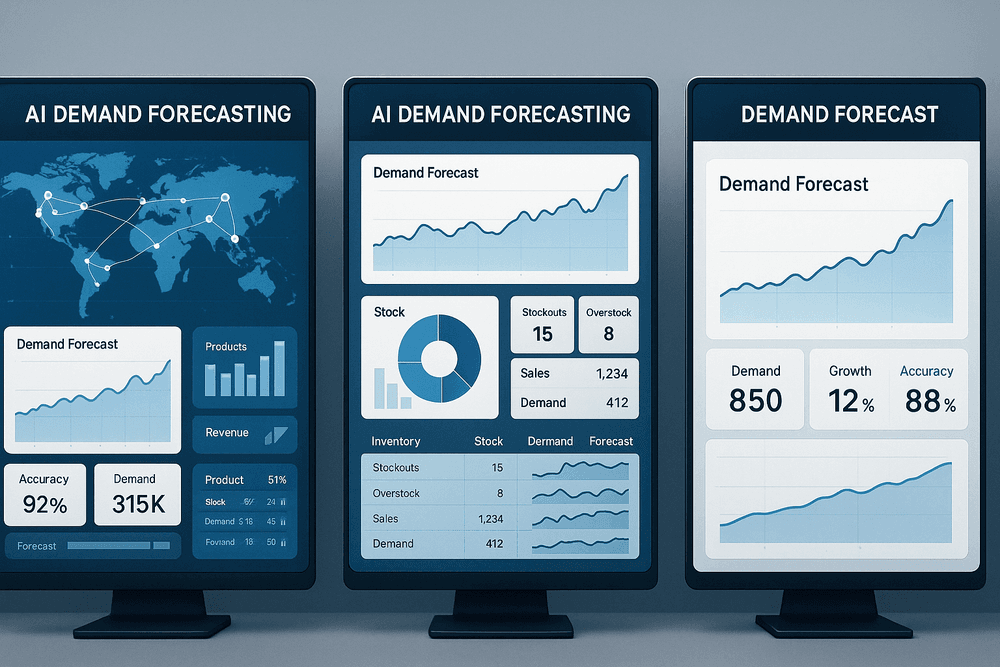
A Comparative Review of the Top AI-Powered Demand Forecasting Tools
Navigating the market for AI powered demand forecasting tools can be challenging, as the best solution depends heavily on your business's size, industry, and complexity. To help you make an informed decision, we’ve broken down three leading platforms, each excelling in a specific niche. These tools leverage machine learning to analyze vast datasets, identify subtle patterns, and deliver predictions far more accurate than traditional methods.
Tool A: Best for E-commerce & Retail Inventory Management
Tool A is a specialist, designed from the ground up for the fast-paced world of online retail and e-commerce. Its core strength lies in its ability to generate highly granular, SKU-level forecasts. The platform seamlessly integrates with major e-commerce ecosystems like Shopify, BigCommerce, and Amazon, pulling in real-time sales data, promotional calendars, and stock levels.
Its AI engine analyzes this data alongside external factors like seasonality, holidays, and marketing campaign uplift to predict demand for each individual product. This translates directly into actionable insights, such as automated reordering suggestions to prevent costly stockouts and recommendations for clearing out slow-moving inventory to free up cash flow. For businesses managing hundreds or thousands of SKUs, Tool A provides the clarity needed to optimize inventory and maximize profitability.
Tool B: Enterprise-Grade Solution for Complex Supply Chains
For large corporations with global operations and intricate supply chains, Tool B offers an enterprise-grade solution. This powerful platform is built for scale and complexity, capable of integrating with multiple data sources simultaneously, including ERPs (like SAP), CRMs, and external market intelligence feeds.
Tool B’s machine learning models go beyond simple sales history, incorporating variables like logistics lead times, supplier reliability, and macroeconomic indicators. Its standout feature is its advanced "what-if" scenario planning, allowing supply chain managers to model the impact of potential disruptions—such as a port closure or a sudden spike in raw material costs. This makes it one of the most robust AI powered demand forecasting tools for strategic, multi-echelon inventory optimization and risk mitigation across the entire supply network.
Tool C: The Top Choice for SMBs and Startups
Tool C carves out its niche by making powerful AI forecasting accessible to small and medium-sized businesses. Recognizing that SMBs lack dedicated data science teams, this tool prioritizes simplicity and a user-friendly interface. Setup is quick, often involving straightforward integrations with common accounting software like QuickBooks and Xero.
While it may not offer the deep customization of an enterprise system, Tool C delivers the essentials with excellence. Its intuitive dashboard visualizes future demand trends, highlights top-selling products, and provides clear, easy-to-understand inventory recommendations. For startups and growing businesses graduating from spreadsheets, Tool C represents the perfect first step into data-driven decision-making without the hefty price tag or steep learning curve.
Side-by-Side Feature and Pricing Comparison
| Feature | Tool A | Tool B | Tool C |
| :--- | :--- | :--- | :--- |
| Ideal Use Case | E-commerce & Retail | Large Enterprises | SMBs & Startups |
| Key Strengths | SKU-level accuracy, promo analysis | Complex supply chain modeling, scalability | User-friendliness, affordability |
| Data Integration | Shopify, Amazon, E-commerce APIs | ERP, CRM, Custom Data Lakes | QuickBooks, Xero, Spreadsheets |
| Learning Curve | Moderate | High | Low |
| Pricing Model | Tiered Subscription (often by SKU count) | Custom Enterprise Quote | Flat-rate Monthly/Annual Subscription |
Essential Features of Modern AI-Powered Demand Forecasting Tools
Choosing the right platform goes beyond just predicting future sales. The best ai powered demand forecasting tools are comprehensive solutions that integrate deeply into your operations and empower strategic decision-making. They are defined by a core set of features that transform raw data into a significant competitive advantage.
Machine Learning Models Explained (From ARIMA to Neural Networks)
The engine driving any advanced forecasting tool is its library of machine learning models. A robust platform doesn't rely on a single algorithm; it intelligently selects or combines models to best fit your data's unique patterns.
- Classical Models (e.g., ARIMA): Autoregressive Integrated Moving Average (ARIMA) is a powerful statistical method that excels at modeling linear trends and simple seasonality. Many tools use it as a reliable baseline for stable product categories.
- Tree-Based Models (e.g., XGBoost): Algorithms like Gradient Boosting (XGBoost) and Random Forest can capture complex, non-linear relationships. They are exceptionally good at incorporating external factors (or 'exogenous variables') like marketing promotions, competitor pricing, and holidays into the forecast.
- Neural Networks (e.g., LSTMs): The cutting edge of forecasting, Deep Learning models like Long Short-Term Memory (LSTM) networks are designed to identify intricate, long-term dependencies in time-series data. They are ideal for forecasting demand for products with complex lifecycles, volatile trends, or multiple influencing factors that are difficult to untangle manually.
Seamless Integration with Your ERP and Sales Channels
An AI forecasting tool cannot operate in a vacuum. Its accuracy and utility are directly tied to the quality and timeliness of its data. That’s why seamless integration is non-negotiable. Top-tier platforms offer pre-built connectors or flexible APIs to sync effortlessly with your existing tech stack, including:
- ERP Systems: (SAP, Oracle, NetSuite) for historical sales, inventory levels, and production data.
- CRM Systems: (Salesforce, HubSpot) for pipeline data and sales activity.
- E-commerce Platforms: (Shopify, Magento, Amazon Seller Central) for real-time sales transactions and customer behavior.
This automated data flow eliminates manual data entry, reduces human error, and ensures your forecasts are always based on the most current information available.
Mastering Scenario Planning & What-If Analysis
Modern ai powered demand forecasting tools move beyond passive prediction to become active strategic planning instruments. The what-if analysis feature allows you to simulate potential future outcomes and prepare your business for a range of possibilities. You can ask critical business questions and see the projected impact on demand, such as:
- "What happens to demand if we increase our marketing spend by 15% next quarter?"
- "How will a new competitor's product launch affect our flagship product's sales?"
- "What is the forecasted impact of a 10% price reduction during the holiday season?"
This functionality enables you to test strategies risk-free, build resilient supply chains, and make proactive, data-driven decisions with confidence.
Customizable Dashboards and Reporting for Stakeholders
Raw data and complex forecasts are useless if they can't be understood by the people who need them. Leading tools provide intuitive, customizable dashboards that translate complex analytics into clear, actionable insights. Key features include:
- Role-Based Views: Tailoring the information displayed for different teams (e.g., inventory managers see stock levels and turnover rates, while finance sees revenue projections).
- Visualizations: Interactive charts and graphs that make it easy to spot trends, identify outliers, and compare scenarios.
- Automated Reporting: Scheduling and automatically emailing key reports to stakeholders, ensuring everyone is aligned and informed.
Effective reporting turns your forecasting platform into a central source of truth, facilitating better communication and alignment across all business departments.

Best Practices for Implementing AI Forecasting in Your Workflow
Adopting a new technology is more than just flipping a switch; it's about integrating a powerful new capability into the very fabric of your operations. To unlock the full potential of AI-driven forecasting, you need a strategic implementation plan. Following these best practices will ensure a smooth transition and maximize your return on investment.
Step 1: Preparing and Cleaning Your Historical Data for Accuracy
The old adage "garbage in, garbage out" has never been more relevant. The predictive power of any AI forecasting tool is entirely dependent on the quality of the data it's fed. Before you even begin implementation, you must conduct a thorough data audit.
Start by consolidating data from disparate sources like your ERP, CRM, and sales platforms into a unified dataset. From there, focus on cleaning and preprocessing. This involves:
- Handling Missing Values: Decide on a consistent strategy for dealing with gaps, whether it's through imputation or removal.
- Correcting Inaccuracies: Identify and fix outliers, typos, and erroneous entries that could skew results.
- Ensuring Consistency: Standardize formats for dates, product names, and customer IDs across the entire dataset.
A clean, comprehensive, and well-structured historical dataset is the bedrock of reliable predictions, enabling ai powered demand forecasting tools to identify subtle patterns and deliver accurate insights.
Step 2: Training Your Team to Leverage AI-Driven Insights
An AI tool is only as effective as the people using it. Simply providing access isn't enough; you must invest in comprehensive training to build competence and trust. This training should go beyond basic software tutorials.
Educate your team on the "why" behind the technology. Help them understand how the AI model arrives at its conclusions, what the different variables mean, and how to interpret confidence levels in a forecast. The goal is to empower your employees to become "augmented" decision-makers who can combine the AI's quantitative analysis with their own qualitative industry expertise. When your team trusts and understands the insights, they are more likely to adopt the tool and use it to drive strategic actions in inventory management and supply chain optimization.
Step 3: Setting KPIs to Measure Forecasting ROI
To justify the investment and track your success, you must define clear Key Performance Indicators (KPIs) from the outset. These metrics will provide tangible evidence of the tool's impact on your business. Focus on KPIs that directly reflect operational and financial improvements, such as:
- Forecast Accuracy: Measure the reduction in Mean Absolute Percentage Error (MAPE) or similar accuracy metrics compared to your previous forecasting methods.
- Inventory Optimization: Track the decrease in stockout incidents and the reduction in excess inventory carrying costs.
- Supply Chain Efficiency: Monitor improvements in inventory turnover rates and a decrease in the need for costly expedited shipping.
- Service Levels: Measure the improvement in order fulfillment rates and customer satisfaction.
Regularly tracking these KPIs will demonstrate the clear return on investment (ROI) from your forecasting initiatives.
Step 4: Avoiding Common Pitfalls in AI Tool Adoption
A proactive approach can help you sidestep common challenges that hinder successful AI implementation. Be mindful of these potential pitfalls:
- Treating AI as a "Black Box": Don't blindly accept every forecast. Encourage your team to question and validate the AI’s output, especially for high-stakes decisions. The best results come from a human-AI partnership.
- Poor System Integration: Ensure your chosen tool integrates seamlessly with your existing technology stack. A lack of integration creates data silos and manual work, defeating the purpose of automation.
- Ignoring Model Drift: Markets change, and so should your model. The best ai powered demand forecasting tools allow for easy retraining. Regularly update your model with new data to ensure it remains accurate and relevant.
- Choosing the Wrong Solution: Not all tools are created equal. Select a platform that aligns with your company's scale, complexity, and specific industry needs. A solution that's too simple won't provide deep insights, while one that's too complex may suffer from low user adoption.
Real-World Use Cases: AI-Powered Demand Forecasting in Action
Theory and features are one thing, but the true test of any technology is its real-world impact. The value of AI-powered demand forecasting tools becomes crystal clear when you see how businesses are using them to solve complex, costly problems and drive tangible results. These platforms are not just predictive instruments; they are strategic assets transforming operations from the warehouse floor to the marketing department. Let’s explore three compelling examples of this technology in action.
How a Retailer Cut Overstock by 35% Using Predictive Analytics
A leading fashion retailer was grappling with a classic industry problem: the high cost of overstock. Seasonal items and fast-fashion trends created a volatile demand environment, frequently leading to inaccurate inventory planning. The result was excessive stock that tied up capital, incurred high holding costs, and eventually had to be cleared through margin-killing markdowns.
By implementing an AI forecasting solution, the company was able to move beyond simple historical sales analysis. The new tool integrated a vast array of external variables, including social media trend data, competitor promotions, local weather forecasts, and even upcoming public events. The machine learning model identified complex patterns that human analysts would miss, predicting which styles, colors, and sizes would be in high demand on a store-by-store basis. This granular insight allowed the retailer to optimize its initial orders and automate replenishment with far greater accuracy. Within the first year, they achieved a remarkable 35% reduction in overstock, directly improving cash flow and boosting overall profitability.
A CPG Brand Aligns Marketing Spend with Predicted Demand Peaks
For a major Consumer Packaged Goods (CPG) brand, marketing budget allocation was a constant challenge. Campaigns were often planned quarterly, based on historical seasonality, which meant they frequently missed short-term, regional surges in consumer interest. This reactive approach resulted in wasted ad spend during lulls and missed opportunities during unexpected peaks.
The brand turned to AI-powered demand forecasting tools to create a more dynamic marketing strategy. Their platform analyzed real-time data streams, including online search queries, social media sentiment, and retail point-of-sale data, to predict when and where demand for their products would spike. Instead of a blanket national campaign, the marketing team could now launch highly targeted digital ads in specific geographic areas just days before a predicted upswing. This proactive alignment of marketing spend with precise demand forecasts led to a 20% increase in campaign ROI and helped them capture market share from slower-moving competitors.
Manufacturing Firm Optimizes Raw Material Sourcing with AI
A mid-sized manufacturing firm was struggling with supply chain volatility. Fluctuating raw material prices and unpredictable supplier lead times made procurement a high-stakes guessing game. Ordering too much material strained the company’s finances, while ordering too little risked production shutdowns and an inability to fulfill customer orders.
To build a more resilient supply chain, the firm integrated an AI forecasting engine into its ERP system. The tool didn't just forecast finished goods demand; it reverse-engineered those predictions to determine precise raw material requirements. It analyzed commodity market trends, supplier performance data, and even geopolitical risk factors to recommend optimal purchasing times and quantities. The system could alert procurement managers to an impending price increase or a potential shipping delay, allowing them to act preemptively. This led to a 15% reduction in raw material costs and virtually eliminated production downtime caused by stockouts, proving the immense value of intelligent forecasting across the entire value chain.

Conclusion: Making Your Final Choice and Getting Started
Navigating the landscape of AI trend forecasting can feel complex, but the rewards—optimized inventory, a resilient supply chain, and a significant competitive edge—are undeniable. You've seen how these intelligent platforms operate and what the leading solutions offer. The final step is to select the one that aligns perfectly with your business goals and operational realities. This conclusion will provide a clear path forward, from making your selection to getting started and looking toward the future.
A Quick Checklist for Selecting the Right Tool
Choosing from the many available AI powered demand forecasting tools requires a structured approach. Use this checklist to evaluate potential platforms and ensure they meet your specific needs:
- Integration Capabilities: Does the tool connect seamlessly with your existing ERP, CRM, and other data sources? A smooth integration is non-negotiable for creating a single source of truth.
- Scalability and Performance: Will the platform grow with your business? Assess its ability to handle increasing data volumes, product SKUs, and market complexities without a drop in performance.
- Data Handling & Model Customization: Can the tool process diverse external data sets (e.g., weather, social media trends, economic indicators)? More importantly, does it allow for the customization of its machine learning models to fit your unique industry challenges?
- User Experience (UX) and Usability: Is the interface intuitive for your team? A powerful tool is only effective if your planners and analysts can easily use it to generate and interpret forecasts.
- Support and Onboarding: What level of customer support, training, and strategic guidance does the vendor provide? Look for a partner, not just a provider.
How to Request a Demo or Start a Free Trial
Reading about features is one thing; seeing them in action is another. A demo or free trial is the most critical step in your evaluation process. Here’s how to make the most of it:
- Prepare Your Data: Come to the demo with a sample of your own historical sales and operational data. This allows you to see how the tool handles your specific use case, not just a generic example.
- Ask Targeted Questions: Use the checklist above to guide your conversation. Ask the vendor to demonstrate exactly how their platform solves your biggest pain points, whether it's managing promotions or accounting for seasonality.
- Involve Key Stakeholders: Ensure that members from your supply chain, finance, and IT teams participate. Their diverse perspectives will help you conduct a more thorough evaluation.
- Test Drive the Full Workflow: During a free trial, have your team run a complete forecasting cycle. This hands-on experience is invaluable for assessing usability and the practical value of the insights generated.
The Future Outlook for AI in Supply Chain Management
The evolution of AI powered demand forecasting tools is far from over. The industry is rapidly moving beyond simple prediction toward a more autonomous and intelligent future. We are on the cusp of seeing AI not only forecast demand but also run simulations of potential disruptions, prescriptively recommend optimal inventory and pricing strategies, and even automate purchase orders.
This shift towards hyper-automation will build more resilient, agile, and sustainable supply chains. Businesses that invest in this technology today are not just solving current challenges; they are building a foundational capability that will define market leadership for years to come. By choosing the right tool and embracing this transformation, you position your organization to thrive in an increasingly unpredictable world.