
November 24, 2025
The Rise of AI Contract Review
Why Manual Methods Are Falling behind: The Rise of AI Contract Review
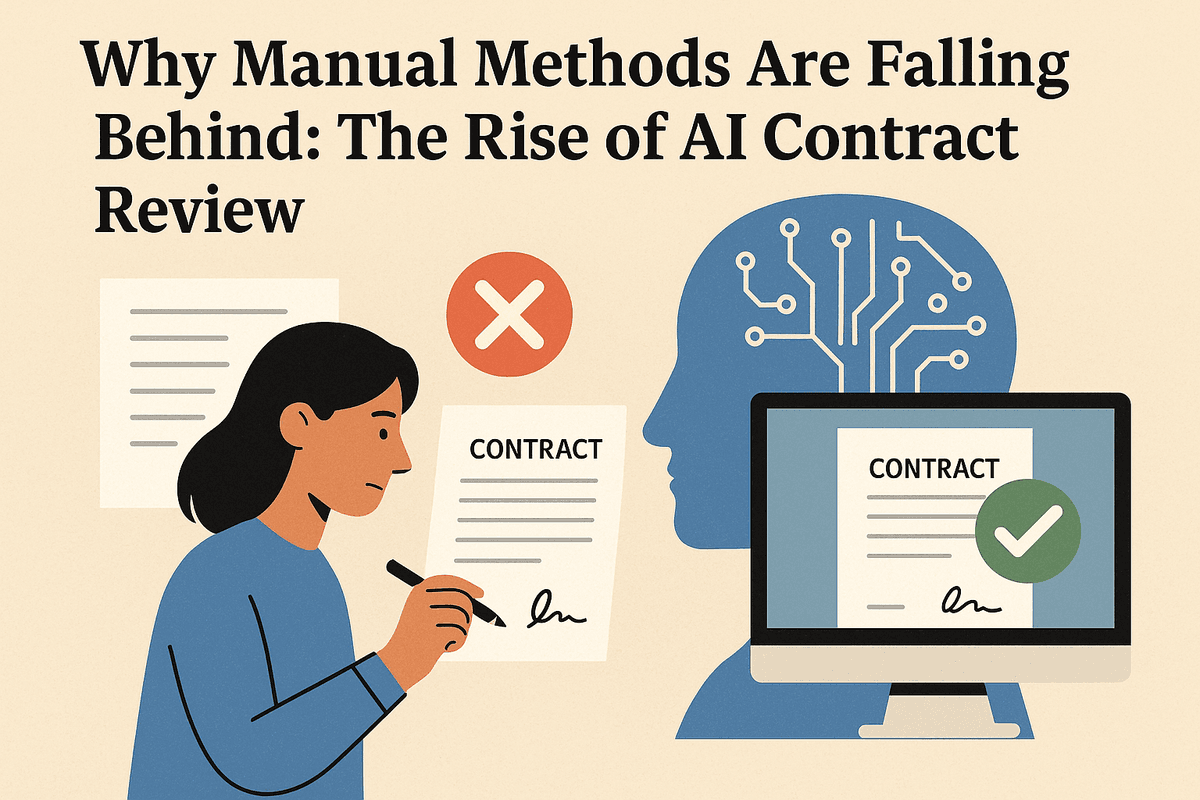
For decades, contract review has been a painstaking, manual process. Teams of lawyers and paralegals would spend countless hours poring over dense legal documents, a necessary but often inefficient bottleneck in business operations. This traditional approach, while thorough in theory, is fraught with hidden costs, inherent risks, and significant opportunity costs. In today's fast-paced business environment, these manual methods are no longer sustainable, paving the way for a transformative solution: AI contract review.
The Hidden Costs and Risks of Traditional Contract Analysis
The price of manual review extends far beyond billable hours. Every minute a skilled attorney spends searching for a standard indemnity clause is a minute not spent on high-value strategic negotiation. This process introduces significant friction, leading to delayed deal cycles, frustrated sales teams, and stalled partnerships.
The risks are even more alarming. Human error is an unavoidable factor. A fatigued reviewer might easily overlook a problematic auto-renewal clause, an unfavorable liability cap, or a non-standard data privacy requirement. This single oversight can expose a company to millions in unforeseen costs, regulatory fines, and legal disputes. Furthermore, consistency is a major challenge; different reviewers may interpret the same clause differently, leading to a portfolio of agreements with inconsistent risk profiles.
What is AI Contract Review and How Does It Work?
AI contract review is the application of artificial intelligence technologies—primarily Natural Language Processing (NLP) and machine learning—to automate the analysis of legal agreements. Instead of a human reading a contract line-by-line, sophisticated software does the heavy lifting in a fraction of the time.
Here’s a simplified look at the process:
- Ingestion & Data Extraction: The platform ingests contracts in various formats (e.g., PDF, DOCX). The AI then reads the document and accurately identifies and extracts critical metadata, such as parties, effective dates, and governing law.
- Clause Identification & Analysis: Trained on vast datasets of legal documents, the AI recognizes and categorizes hundreds of different clause types, from confidentiality to limitation of liability.
- Risk Assessment & Playbook Comparison: The core power of AI contract review lies in its ability to compare the contract's language against a pre-defined legal playbook. The software flags clauses that are missing, deviate from standard positions, or contain high-risk language, often assigning a risk score for quick assessment.
- Actionable Output: The system generates a clear, concise report highlighting key issues and suggesting alternative language or redlines. This empowers legal professionals to focus immediately on the most critical negotiation points, transforming a multi-day review into a task that takes mere minutes.
Who Benefits Most from Automated Contract Analysis?
The adoption of AI contract review delivers tangible benefits across an entire organization, moving legal from a cost center to a strategic business enabler.
- In-House Legal Teams: Overburdened legal departments can clear contract backlogs, enforce standards consistently, and free up their time to provide strategic counsel on complex, high-stakes matters.
- Law Firms: Firms can enhance efficiency, offer more competitive pricing on routine work like due diligence, and deliver faster turnaround times, strengthening client relationships and improving profitability.
- Sales & Procurement Teams: By accelerating the review of sales agreements and vendor contracts, these teams can close deals faster, recognize revenue sooner, and onboard suppliers more efficiently.
- Finance & Operations: With AI-powered data extraction, finance leaders gain unprecedented visibility into the obligations, liabilities, and opportunities hidden within their contract portfolio, improving financial forecasting and enterprise-wide risk management.
Under the Hood: How AI Contract Review Technology Works
Ever wondered what makes AI contract review software tick? It isn't magic—it's a sophisticated blend of advanced technologies designed to read, understand, and analyze legal documents with incredible speed and precision. By combining Natural Language Processing and Machine Learning, these platforms transform a traditionally manual task into a streamlined, data-driven process. Let's pull back the curtain on the core components that power modern AI contract review.
Leveraging Natural Language Processing (NLP) for Legal Text
At the heart of any AI contract review system lies Natural Language Processing (NLP), a branch of artificial intelligence that gives computers the ability to understand and interpret human language. Legal language, with its complex syntax, specific terminology ("legalese"), and contextual nuances, presents a unique challenge that NLP is perfectly suited to solve.
Instead of just scanning for keywords, NLP models perform several critical tasks:
- Clause Segmentation: The AI first breaks down the entire document into its structural components—clauses, sections, and individual provisions. This allows it to analyze each part in context.
- Concept and Provision Extraction: NLP identifies and categorizes key legal concepts. It can instantly pinpoint the Limitation of Liability clause, the Indemnification terms, or the Governing Law provision, regardless of how they are worded.
- Entity Recognition: The technology extracts critical data points like party names, dates, dollar amounts, and jurisdictions, structuring this unstructured text into organized, usable information.
Essentially, NLP acts as the system's "reading comprehension" engine, translating dense legal text into a structured format that a machine can analyze.
The Role of Machine Learning in Identifying Deviations and Risks
Once NLP has decoded what the contract says, Machine Learning (ML) steps in to determine what it means for your business. ML models are trained on vast datasets containing tens of thousands or even millions of executed contracts. By analyzing this data, the AI learns to recognize common patterns, standard clause language, and market norms for various contract types, from NDAs to complex Master Service Agreements.
This "trained intelligence" is what enables the AI contract review platform to act as a first-line defense. When you upload a new contract, the ML model compares its language against the patterns it has learned. It instantly flags:
- Deviations from Standard Positions: Is the warranty period unusually short? Is the payment term longer than the industry average? The AI spots these outliers immediately.
- Potential Risks: The model is trained to identify high-risk language, such as unlimited liability, one-sided indemnification clauses, or ambiguous termination rights.
- Missing Clauses: Just as important as what’s in the contract is what’s missing. The AI can identify if a critical clause, like Confidentiality or Data Privacy, is absent.
Setting Up Your AI: Training the System with Your Legal Playbooks
While a pre-trained AI offers immense value, its true power is unlocked through customization. This is where your company’s legal playbook comes into play. A playbook is your organization’s unique set of rules, standard clauses, preferred fall-back positions, and risk tolerance thresholds.
Leading AI contract review platforms allow you to train the system on your specific playbook. The process involves feeding the AI your approved contract templates and a set of rules based on your negotiation policies. The AI internalizes your standards and learns to review inbound contracts not just against general market data, but against your specific requirements.
This transforms the AI from a general legal analyst into a true extension of your in-house team. It ensures every contract review is consistent, compliant with internal policies, and perfectly aligned with your company's unique risk appetite.
Choosing the Right Platform: Key Features of AI Contract Review Software
Selecting the right software is crucial to unlocking the full potential of AI-powered contract analysis. While many tools are on the market, the most effective platforms share a set of core features designed to streamline workflows, mitigate risk, and provide actionable insights. When evaluating an ai contract review solution, look beyond the basic automation and focus on these key functionalities that separate the best-in-class from the rest.
Automated Clause Detection and Redlining
At its heart, a powerful ai contract review tool excels at understanding the language of a contract. This begins with sophisticated clause detection. The software should instantly identify, categorize, and even extract key clauses like indemnification, limitation of liability, and confidentiality. More importantly, it should be able to compare these clauses against your organization's pre-approved legal playbook or standard templates.
When the AI finds a non-standard or risky clause, it should trigger automated redlining. Instead of a lawyer spending hours manually marking up a document, the software can suggest compliant language, flag deviations, and generate a redlined version in seconds. This capability dramatically accelerates the negotiation cycle, ensures consistency across all agreements, and frees up legal teams to focus on high-level strategic issues rather than line-by-line edits.
Risk Scoring and Compliance Dashboards
Moving beyond simple text analysis, leading AI platforms provide a strategic overview of contractual risk. Through advanced algorithms, the software assigns a risk score—often categorized as low, medium, or high—to individual clauses and the contract as a whole. This allows reviewers to immediately prioritize their attention on the most problematic areas of an agreement.
This data is often visualized in intuitive compliance dashboards. These centralized hubs provide a 30,000-foot view of your entire contract portfolio. You can track compliance with internal policies, monitor risk exposure across different business units, and identify systemic issues before they escalate. This feature transforms ai contract review from a reactive task into a proactive risk management strategy, providing invaluable business intelligence for GCs and leadership.
Seamless Integration with CLM, Word, and Email
The most powerful software is useless if it doesn't fit into your existing workflow. Top-tier ai contract review platforms are designed for seamless integration. Look for native connections with your Contract Lifecycle Management (CLM) system to ensure a single source of truth for all agreements. This creates a frictionless process where contracts can be ingested, analyzed, negotiated, and stored without manual data entry.
Furthermore, robust plugins for Microsoft Word and email clients like Outlook are essential. This allows your team to initiate and manage a contract review directly from the applications they use every day. An attorney can analyze an agreement attached to an email or edit a document in Word with the AI’s guidance in a sidebar, eliminating the need to constantly switch between different applications and significantly boosting user adoption.
Multi-Language and Jurisdiction Support
In today's global economy, businesses operate across borders, and so do their contracts. A truly comprehensive ai contract review solution must be equipped to handle this complexity. Look for platforms that offer robust multi-language support, capable of accurately analyzing contracts written in Spanish, French, German, and other major languages, not just English.
Equally important is jurisdiction-specific intelligence. The software’s AI should be trained on the legal nuances and regulatory requirements of different countries and states. This ensures that the risk analysis is not generic but tailored to the applicable law, whether it's GDPR in Europe or CCPA in California. This feature is non-negotiable for any organization dealing with international agreements, providing a critical layer of compliance and risk mitigation.
The Business Impact: Unlocking Efficiency with AI Contract Review
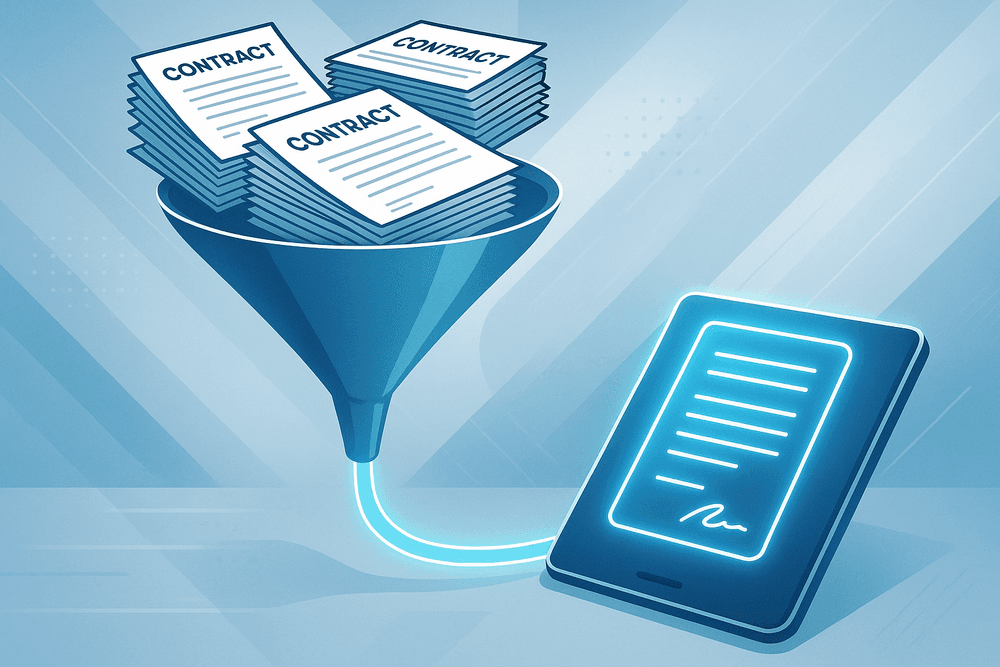
Adopting AI for contract analysis is more than a simple technology upgrade; it's a fundamental shift that transforms the legal function from a cost center into a strategic business accelerator. The real value of AI contract review lies in its tangible impact on operational efficiency, risk management, and overall business velocity. By automating the most time-consuming aspects of legal work, organizations can unlock significant competitive advantages and drive measurable return on investment.
Accelerate Deal Cycles by Reducing Review Bottlenecks
In today's fast-paced business environment, speed is currency. The traditional contract review process is notoriously slow, often creating a bottleneck that stalls sales deals, delays partnerships, and frustrates all parties involved. A contract sitting in a legal queue for days or weeks can be the difference between winning and losing a critical deal.
This is where AI contract review provides its most immediate impact. Instead of waiting for manual review, a sales or procurement team can run an agreement through an AI platform and receive a first-pass analysis in minutes. The system can instantly flag non-standard clauses, identify missing provisions, and confirm alignment with pre-approved company playbooks. This empowers commercial teams to handle low-risk agreements independently and escalates only the most complex issues to the legal department, dramatically reducing turnaround times and accelerating the entire deal cycle.
Enhance Accuracy and Mitigate Human Error
Even the most meticulous legal professional is susceptible to fatigue and human error. After reviewing dozens of similar agreements, it becomes easy to overlook a subtle but critical deviation in a key clause, such as indemnification, liability, or data privacy. These small oversights can expose a business to significant financial and legal risks down the line.
AI operates with tireless precision. An AI contract review platform analyzes every word and clause against your defined standards, every single time. It doesn't get tired or distracted. It excels at identifying subtle variations and inconsistencies that a human eye might miss, ensuring a higher degree of accuracy across your entire contract portfolio. This systematic approach minimizes the risk of signing off on unfavorable terms and provides a powerful safety net against costly mistakes.
Free Up Legal Teams for High-Value Strategic Tasks
Your legal team's expertise is one of your company's most valuable assets. Wasting their time on repetitive, low-value administrative tasks—like redlining standard NDAs or checking for basic compliance points—is an inefficient use of that talent. This type of work leads to burnout and prevents lawyers from focusing on what truly matters.
By automating the initial, repetitive stages of review, AI liberates your legal professionals to concentrate on high-impact activities. They can dedicate more time to complex negotiations, strategic corporate initiatives, M&A due diligence, and providing proactive legal counsel that guides business strategy. This not only increases the ROI of your legal department but also boosts job satisfaction and talent retention.
Ensure Consistent Compliance Across All Agreements
Maintaining consistency in a growing organization is a major challenge. When multiple lawyers or teams are reviewing contracts, their individual interpretations and risk tolerances can lead to significant variations in the final agreements. This inconsistency creates unpredictable risks and makes it difficult to enforce company-wide policies.
An AI contract review system acts as a central enforcer of your legal playbook. It ensures that every single contract is measured against the same set of standards, rules, and risk profiles. Whether it’s ensuring GDPR compliance, checking for specific data security clauses, or enforcing payment terms, the AI applies the rules uniformly. This creates a predictable, auditable, and highly consistent compliance framework across the entire organization, strengthening your overall risk posture.
AI Contract Review in Action: Real-World Use Cases
The theoretical benefits of AI are compelling, but its true value is revealed in practical application. Across industries, legal and business teams are deploying AI contract review solutions to solve tangible problems, transforming high-stakes, labor-intensive processes into models of efficiency and accuracy. Here’s how this technology is making a difference in the real world.
Streamlining High-Volume NDA and Vendor Agreement Reviews
For most legal departments, non-disclosure agreements (NDAs) and standard vendor agreements represent a constant, high-volume workload. While often considered "routine," each one carries potential risk and requires careful scrutiny. Manual review creates significant bottlenecks, slowing down sales cycles and procurement processes.
This is a prime use case for AI contract review. By using a pre-trained AI model configured to a company’s specific legal playbook, the software can perform a first-pass review in minutes. The platform automatically flags non-standard clauses, identifies missing key provisions (like jurisdiction or term limits), and highlights high-risk language. Instead of reading every word, lawyers can focus their attention directly on the AI-identified exceptions. This accelerates turnaround times from days to hours, ensures consistency across all agreements, and frees up legal talent for more complex, strategic work.
Navigating Complex M&A Due Diligence Processes
Mergers and acquisitions are defined by immense pressure and tight deadlines. The due diligence process involves sifting through thousands of contracts in a virtual data room to uncover risks and liabilities that could derail the entire deal. Manually tackling this mountain of documents is not just slow—it’s fraught with the risk of human error.
AI for contract analysis revolutionizes M&A due diligence. An AI contract review platform can ingest and analyze an entire data room, rapidly identifying and categorizing documents. It can instantly extract critical information, such as:
- Change of Control Clauses: Pinpointing agreements that could be terminated upon acquisition.
- Assignment Restrictions: Identifying contracts that cannot be transferred to the new entity without consent.
- Intellectual Property Rights: Verifying ownership and licensing terms.
- Unusual Liabilities or Indemnities: Flagging financial risks hidden within the fine print.
By automating this discovery phase, AI empowers deal teams to assess risk more accurately, negotiate from a position of strength, and dramatically shorten the diligence timeline.
Ensuring Regulatory Adherence in Lease Agreements
Managing a large portfolio of commercial real estate leases is a significant operational challenge. Each agreement contains dozens of critical dates and obligations, and the entire portfolio must comply with a web of local, state, and federal regulations, as well as accounting standards like ASC 842.
AI contract review tools provide a powerful solution for portfolio management and compliance. The software can audit thousands of leases simultaneously to extract key data points like renewal dates, rent escalation clauses, and maintenance responsibilities. More importantly, it can be configured to scan for compliance with specific regulations. For example, it can verify that all leases adhere to new environmental standards or flag agreements that lack clauses required by recent legislation. This proactive approach helps businesses avoid fines, mitigate legal exposure, and maintain a clear, accurate view of their obligations across the entire portfolio.
Getting Started: Implementing AI Contract Review in Your Workflow
Adopting new technology can feel daunting, but a strategic approach ensures a smooth transition and maximizes your return on investment. Implementing an AI contract review platform is not just about buying software; it's about transforming how your legal team operates. Follow this guide to successfully integrate legal AI into your daily processes.
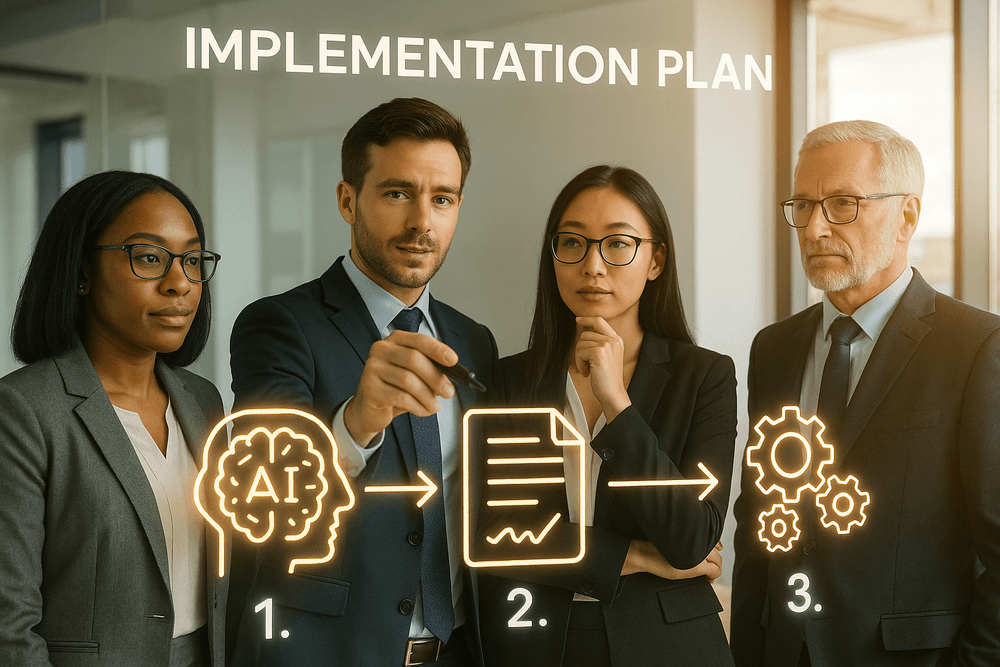
A 3-Step Guide to a Successful Rollout
A phased, methodical rollout is the key to gaining team-wide adoption and achieving your goals. Don’t try to do everything at once. Instead, build a foundation for success with these three steps.
Step 1: Define Your Objectives and Scope
Before you even look at vendors, look inward. What are the primary pain points you want to solve with AI contract review?
- Speed: Are you trying to reduce the turnaround time for high-volume contracts like NDAs or Sales Agreements?
- Risk Mitigation: Is the goal to standardize risk assessment and ensure no critical non-standard clause is missed?
- Efficiency: Do you want to free up senior lawyers from routine reviews to focus on high-value strategic work?
Clearly define your key performance indicators (KPIs). For example, your goal might be to "reduce the initial review time for Master Service Agreements by 40% within six months." This clarity will guide your entire implementation and vendor selection process.
Step 2: Launch a Pilot Program
Instead of a company-wide launch, start with a controlled pilot program. Select a specific use case and a small, dedicated team. A great starting point is often a high-volume, relatively standardized contract type.
This approach allows you to test the AI software in a real-world environment, gather valuable feedback from your team, and demonstrate tangible value to key stakeholders. A successful pilot creates internal champions for the technology, making the broader rollout much smoother. It’s the perfect way to prove the concept and build momentum.
Step 3: Integrate, Train, and Scale
Once your pilot proves successful, it’s time to expand. Work with your chosen AI partner to integrate the platform with your existing systems, such as your Contract Lifecycle Management (CLM) or document management system. Seamless integration is crucial for user adoption—the tool should fit into your team's existing workflow, not disrupt it.
Provide comprehensive training to the entire legal team, focusing on how the AI contract review tool solves their specific challenges. As the team becomes proficient, you can gradually scale its use to other contract types and departments, transforming it from a niche tool into an essential part of your legal tech stack.
Choosing the Right AI Partner for Your Legal Team
The vendor you choose is more than a software provider; they are a partner in your success. When evaluating AI contract review platforms, look beyond the feature list and consider these critical factors:
- Accuracy and Customization: The AI should be highly accurate out-of-the-box but also allow for easy customization. Can you train the AI on your company’s specific legal language, negotiation history, and risk tolerance to create a bespoke review playbook?
- Ease of Use: Great legal technology is designed for lawyers, not data scientists. The interface should be intuitive and require minimal training to use effectively.
- Security and Compliance: You are entrusting the platform with your most sensitive data. Ensure the vendor has robust, enterprise-grade security credentials like SOC 2 Type II certification, end-to-end data encryption, and a clear data privacy policy.
- Integration Capabilities: The platform must work where you work. Look for seamless integrations with Microsoft Word, email clients, and your existing CLM or cloud storage solutions.
- Customer Support and Training: Your partner should offer dedicated support, comprehensive onboarding, and ongoing training to ensure your team maximizes the value of the software.
Book a Demo to See AI Contract Review in Action
Reading about the benefits is one thing, but seeing it transform your own documents is another. The best way to understand the power and precision of AI-driven analysis is to see it live. Schedule a personalized demo today to witness how an AI contract review platform can be tailored to your playbooks, identify risks in minutes, and empower your legal team to close deals faster and more securely.