January 6, 2026
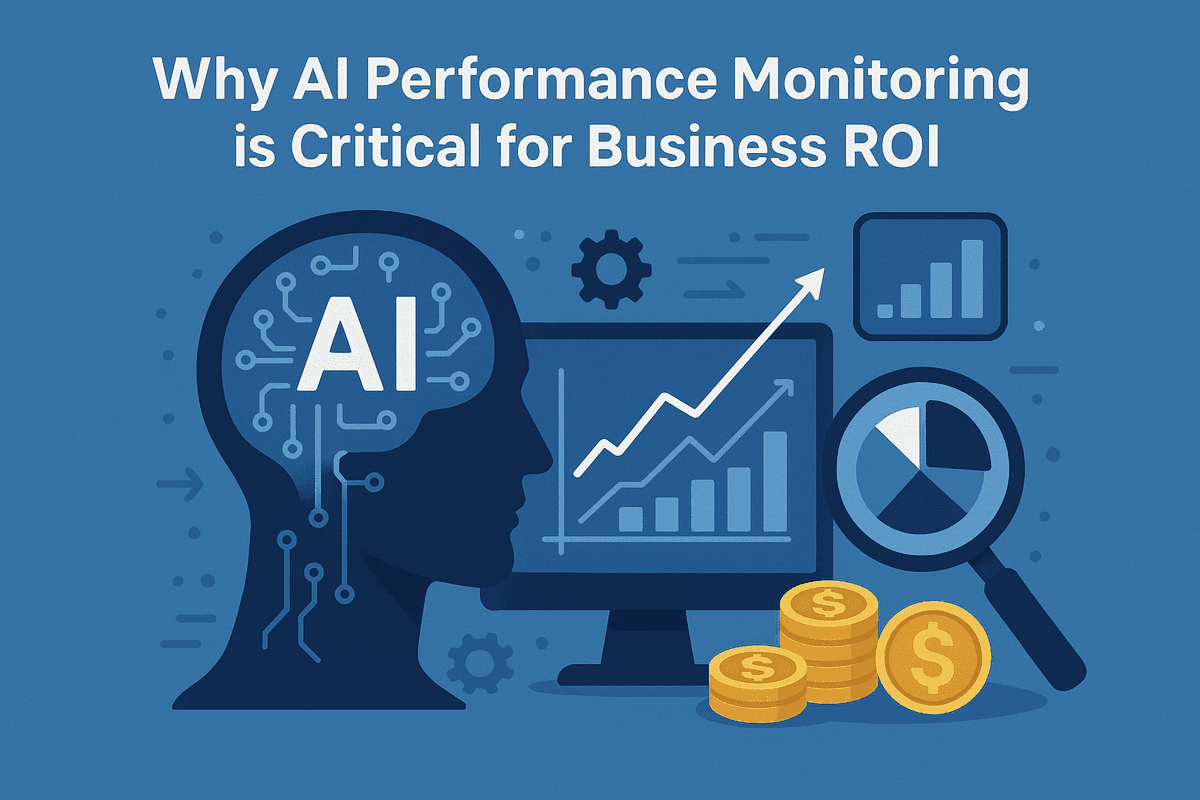
Why AI Performance Monitoring is Critical for Business ROI
Why AI Performance Monitoring is Critical for Business ROI
For many enterprises, the deployment of an artificial intelligence model marks the end of a project. The model is trained, tested, and integrated into the workflow. However, in the realm of machine learning and automated systems, deployment is merely the starting line. The reality is that AI models are not static assets like traditional code; they are dynamic, probabilistic systems that interact with an ever-changing world. Without robust AI performance monitoring, high-potential tools can quickly become operational liabilities.
The Hidden Risks of 'Black Box' Models
One of the most significant challenges in modern AI deployment is the "black box" nature of complex algorithms, particularly with Deep Learning and Large Language Models (LLMs). Unlike rule-based software, where a bug is usually a logic error, AI failures are often silent and insidious. A model might continue to produce outputs without crashing, but the quality of those outputs can degrade significantly over time—a phenomenon known as model drift.
Without visibility into the model's decision-making process, businesses face hidden risks. A recommendation engine might slowly start favoring low-margin products, or a customer service bot might begin hallucinating facts, providing confident but incorrect answers. These issues rarely trigger standard system alerts because the server is still "up," but the business logic is failing. AI performance monitoring acts as the flashlight inside this black box, illuminating how inputs are being processed and ensuring the outputs remain aligned with business goals.
Defining Monitoring: From Latency to Accuracy
To effectively manage these systems, stakeholders must understand that monitoring AI requires a different set of metrics than monitoring infrastructure. It is a two-pronged approach involving operational efficiency and model quality.
- Operational Metrics (The Speed): This covers latency (how long inference takes) and throughput (how many requests are handled). High latency destroys user experience, while inefficient throughput drives up cloud compute costs.
- Quality Metrics (The Accuracy): This involves tracking precision, recall, and specific behaviors like hallucination rates or sentiment drift.
True AI performance monitoring bridges the gap between these two worlds. It asks: "Is the model fast enough to be useful?" and "Is the model accurate enough to be trusted?" Neglecting either side of this equation inevitably harms the user experience and reduces adoption rates.
Connecting Model Reliability to Operational Costs
The correlation between model reliability and Return on Investment (ROI) is direct and quantifiable. An unmonitored AI model is a cost center. Consider an automated document processing AI used in finance. If the model’s accuracy drops by just 5% due to data drift, human employees must manually review and correct thousands of documents. The theoretical savings of automation vanish, replaced by the cost of the software plus the cost of manual rework.
Furthermore, efficiency metrics directly impact the bottom line. Inefficient models consume excessive GPU resources or generate unnecessary API tokens. By implementing continuous monitoring, organizations can identify when a model is "over-confident" or computationally wasteful, allowing for optimization that reduces infrastructure bills. Ultimately, monitoring protects ROI by ensuring the AI does exactly what it was hired to do: drive productivity without requiring constant human intervention.
Key Metrics to Track in Your AI Performance Monitoring Strategy
Deploying an AI model into production is often celebrated as the finish line, but for organizations focused on long-term efficiency, it is merely the starting gun. An artificial intelligence system is a dynamic entity; it interacts with live data, fluctuating user demands, and evolving real-world contexts. Without a robust ai performance monitoring strategy, even the most sophisticated algorithms can degrade, leading to poor ROI and disrupted automated workflows.
To ensure your AI tools deliver optimal productivity, you must move beyond basic uptime checks and analyze the specific metrics that dictate system health and reliability.
Detecting Data Drift and Concept Drift Early
The most insidious threats to AI efficiency are silent degradations known as drift. These occur when the environment the model operates in no longer matches the environment it was trained on.
- Data Drift (Covariate Shift): This happens when the statistical properties of the input data change. For example, if an invoice processing AI was trained on PDFs but suddenly starts receiving JPEGs or scanned images with different formatting, its performance will plummet.
- Concept Drift: This occurs when the relationship between the input and the target output changes. A classic example is a fraud detection model; as scammers evolve their tactics, the patterns the AI learned previously become obsolete.
Effective ai performance monitoring involves setting up alerts for these shifts. By tracking the statistical distribution of inputs and outputs in real-time, you can retrain or recalibrate models before users notice a drop in quality, preserving the integrity of your automated workflows.
Measuring Inference Latency and System Throughput
In automated business processes, speed is synonymous with efficiency. A highly accurate model is useless if it creates a bottleneck that slows down the entire operation.
- Inference Latency: This measures the time it takes for the model to process a single request and return a prediction (or the "time to first token" for LLMs). High latency destroys user experience in chatbots and delays decision-making in real-time trading or logistics applications.
- System Throughput: This metric tracks how many requests the system can handle simultaneously over a specific period.
Balancing these two is a critical optimization challenge. You might need to sacrifice a fraction of accuracy for lower latency, or increase hardware resources to maintain throughput during peak hours. Monitoring these metrics ensures your infrastructure scales efficiently with business growth.
Assessing Prediction Accuracy and Preventing Hallucinations
Finally, the reliability of your AI hinges on the correctness of its output. While standard metrics like F1 scores, precision, and recall are standard for classification models, Generative AI introduces the complex challenge of hallucinations—instances where an LLM confidently generates false or nonsensical information.
For automated workflows, hallucinations are a major liability. An AI that invents legal precedents or fabricates financial figures can cause significant reputational and operational damage.
To combat this, your monitoring strategy should include:
- Reference-based Evaluation: Comparing model outputs against a "gold standard" or ground truth dataset periodically.
- Uncertainty Quantification: Measuring how confident the model is in its own prediction. If confidence dips below a certain threshold, the system should flag the output for human review rather than pushing it through the automation pipeline.
By rigorously tracking these accuracy metrics, you transform your AI from a "black box" into a transparent, trustworthy asset that drives genuine organizational value.
Choosing the Right AI Performance Monitoring Tools
Deploying an artificial intelligence model is only the beginning of the lifecycle. To ensure your automated workflows deliver high ROI and maintain reliability over time, you must implement a robust ai performance monitoring strategy. Without the right visibility, models can suffer from "silent failure," where they continue to make predictions but with degrading accuracy, or they may become resource hogs that drain your budget through inefficient compute usage.
Selecting the right toolstack is critical for maintaining system efficiency. The market is currently split between flexible open-source libraries and comprehensive enterprise observability platforms, each offering distinct advantages depending on your organization's maturity and scale.
Open-Source Libraries vs. Enterprise Observability Platforms
The first decision in your monitoring strategy is choosing between building a custom solution using open-source tools or purchasing a managed enterprise platform.
- Open-Source Solutions: Tools like Prometheus, Grafana, and MLflow are industry standards for engineering teams that want granular control. They allow for deep customization and are cost-effective initially. However, they often require significant maintenance overhead. You are responsible for scaling the monitoring infrastructure, managing data retention, and configuring security protocols. This path is ideal for lean startups or highly technical teams that need specific, non-standard metrics.
- Enterprise Platforms: Solutions such as Datadog, New Relic, or specialized AI platforms like Arize AI, offer "out-of-the-box" functionality. These platforms excel at correlating infrastructure metrics (CPU/GPU usage) with model performance (accuracy/drift). While the licensing costs are higher, they reduce the engineering burden, provide enterprise-grade security, and offer long-term data retention for compliance.
Essential Features for Operational Efficiency
Regardless of the deployment path you choose, a streamlined ai performance monitoring system must possess three core capabilities to ensure optimal productivity:
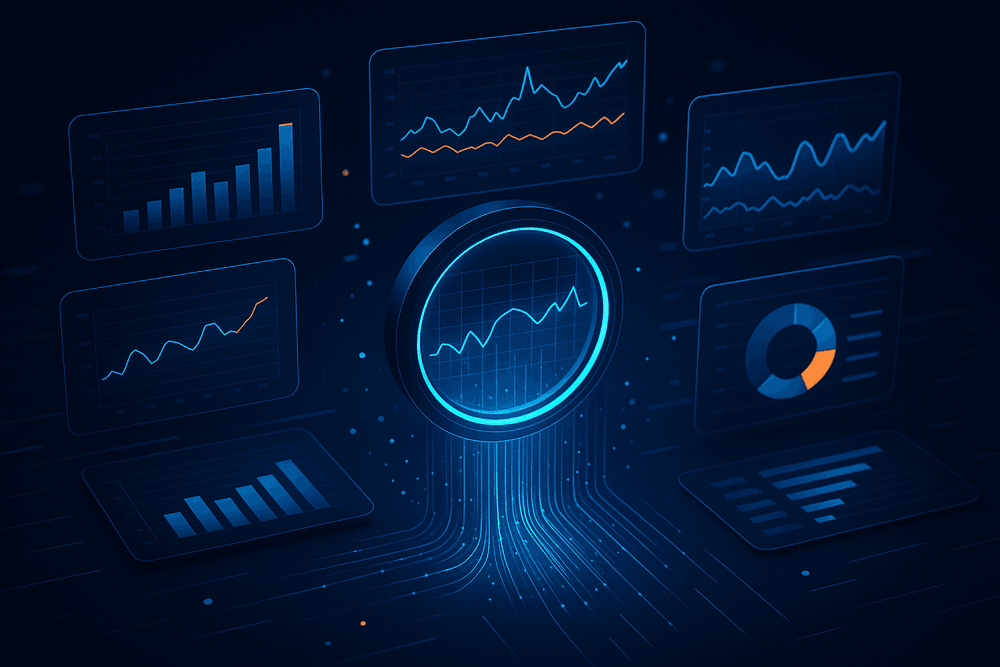
- Real-Time Dashboards: You cannot optimize what you cannot see. Dashboards should visualize key metrics such as latency (speed of response), throughput (requests per second), and resource utilization. For LLMs, this also includes tracking token usage and cost-per-query in real-time to prevent budget overruns.
- Intelligent Alerting: Passive monitoring is insufficient for automated workflows. Your system needs proactive alerting mechanisms that trigger when specific thresholds are breached. This includes alerts for data drift (when input data diverges from training data) and concept drift (when the relationship between inputs and outputs changes). Immediate alerts allow teams to intervene before model degradation impacts the end-user.
- Root Cause Analysis: When an AI system fails or slows down, efficiency depends on how fast you can diagnose the issue. Advanced tools offer tracing capabilities that allow engineers to pinpoint exactly where a failure occurred—whether it was a vector database retrieval error, a model timeout, or a hallucination in the generation layer.
Navigating Solutions for MLOps and LLM Observability
The rise of Generative AI has bifurcated the monitoring landscape. Traditional MLOps tools are excellent for predictive models (regression, classification), focusing heavily on statistical accuracy and drift. However, the new wave of LLM observability tools addresses the unique challenges of Large Language Models.
For traditional MLOps, tools like Weights & Biases remain top-tier for tracking experiments and model registry versions. However, for LLM-based workflows, look for solutions like LangSmith, HoneyHive, or Helicone. These platforms are specifically designed to handle unstructured data, evaluating the quality of text output, detecting hallucinations, and managing prompt engineering versions.
Ultimately, the goal is to create a feedback loop. The insights gathered from these tools should not just report on health but inform the next iteration of training and optimization, ensuring your AI systems become more efficient and accurate over time.
Best Practices for Robust AI Performance Monitoring
Deploying a machine learning model is often celebrated as the finish line, but in reality, it is merely the starting gate. To ensure AI tools deliver optimal productivity and sustained ROI, organizations must move beyond basic uptime checks and adopt comprehensive AI performance monitoring. Without a proactive strategy, even the most sophisticated algorithms will succumb to data drift, concept decay, and silent failures that erode business value.
Implementing a robust monitoring framework requires a shift from reactive troubleshooting to proactive optimization. Below are the essential strategies for maintaining high-efficiency AI systems within automated workflows.
Integrating Monitoring into CI/CD Pipelines
The most effective way to guarantee model reliability is to treat AI performance monitoring as code, integrating it directly into your Continuous Integration/Continuous Deployment (CI/CD) pipelines. This approach, often referred to as "Shift Left" in MLOps, ensures that performance gates are established well before a model reaches production.
In a standard DevOps environment, code is tested for bugs. In an MLOps environment, models must be tested for data quality and behavioral consistency. By embedding monitoring agents into the deployment pipeline, you can automatically block a release if a candidate model shows higher latency or lower accuracy than the version currently in production.
Key integration points include:
- Pre-deployment Benchmarking: automatically running the model against a "golden dataset" to verify precision and recall.
- Latency Testing: Ensuring inference speeds meet the Service Level Agreements (SLAs) required for real-time applications.
- Schema Validation: Verifying that incoming data formats match the model’s training requirements to prevent prediction errors downstream.
Setting Dynamic Thresholds to Reduce Alert Fatigue
One of the quickest ways to undermine an observability strategy is "alert fatigue." If engineering teams are bombarded with notifications for every minor fluctuation in data, they will eventually ignore critical warnings. Traditional static thresholds—such as triggering an alert whenever confidence scores drop below 80%—are often insufficient because real-world data is noisy and seasonal.
To combat this, effective AI performance monitoring relies on dynamic thresholds. Instead of hard-coded values, these systems use anomaly detection algorithms to establish a baseline of "normal" behavior that evolves over time.
For example, a drop in traffic volume at 3:00 AM might be normal, whereas the same drop at 10:00 AM signifies an outage. Dynamic thresholds adjust automatically based on historical patterns and statistical deviation (e.g., three standard deviations from the mean). This ensures that alerts are only triggered for statistically significant anomalies, allowing teams to focus their energy on genuine performance degradation rather than chasing false positives.
Establishing Feedback Loops for Continuous Retraining
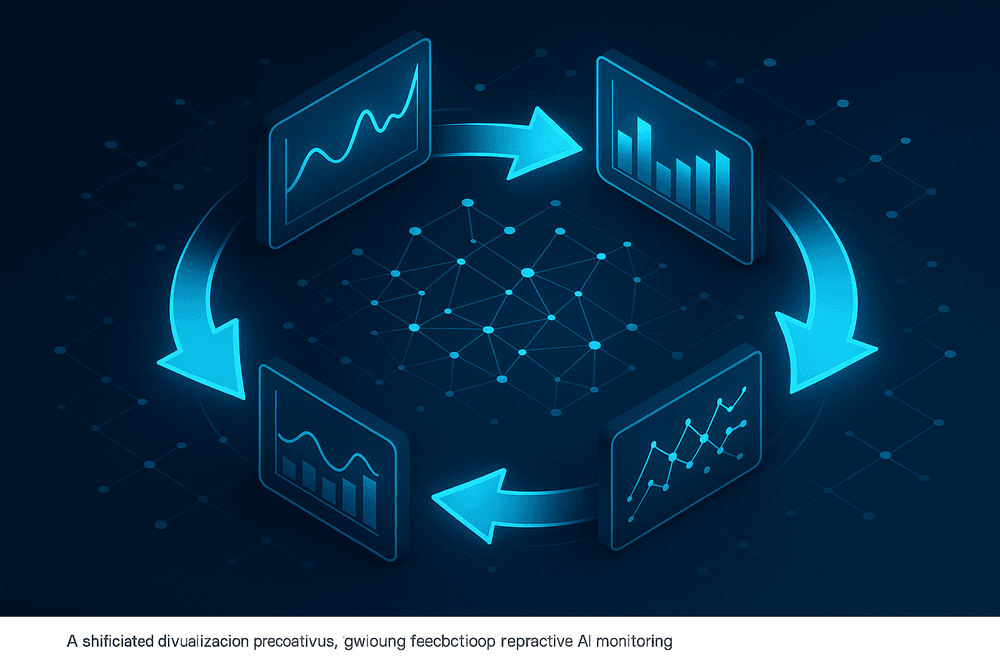
Monitoring tells you when a model is failing; a feedback loop tells you how to fix it. A high-efficiency AI ecosystem is circular, not linear. When monitoring tools detect significant data drift (where the input data changes) or concept drift (where the relationship between input and output changes), it should trigger an automated or semi-automated retraining workflow.
Establishing this feedback loop involves:
- Capturing Prediction Data: Logging inputs and model outputs in a centralized store.
- Ground Truth Matching: Comparing model predictions against actual outcomes (e.g., did the customer actually click the recommendation?) to calculate real-world accuracy.
- Triggering Retraining Pipelines: If performance metrics dip below the dynamic threshold, the system automatically initiates retraining using the most recent data.
By closing the loop, you transform your AI from a static asset into an adaptive system that continuously learns and optimizes itself, ensuring long-term reliability and efficiency.
Real-World Applications of AI Performance Monitoring
While theoretical efficiency benchmarks are essential for development, the true value of artificial intelligence is proven in the field. Implementing robust ai performance monitoring transforms abstract metrics into tangible business outcomes, ensuring that automated systems deliver the return on investment (ROI) organizations expect. By moving beyond basic uptime checks to deep performance analysis, businesses can optimize workflows across diverse sectors, from customer support to high-frequency finance.
Enhancing Chatbot Reliability and Response Times
In the realm of customer service, the margin for error is razor-thin. Modern consumers expect instant gratification, and a delay of mere seconds can lead to abandoned interactions and plummeted satisfaction scores. Here, performance monitoring is not just about checking if the server is online; it is about scrutinizing latency and intent recognition.
Effective monitoring tools track the "time-to-first-token" (how fast the AI begins generating a response) and total generation time. By visualizing these metrics, engineering teams can identify bottlenecks in the inference pipeline—such as an overloaded vector database or an unoptimized prompt—and rectify them. Furthermore, continuous monitoring tracks "fallback rates," measuring how often the AI fails to understand a query and hands off to a human agent. optimizing these metrics ensures the chatbot remains a reliable first line of defense, reducing support costs while maintaining high user engagement.
Optimizing Financial Models for Fraud Detection Speed
In the financial sector, efficiency is synonymous with security. Fraud detection models operate in a high-stakes environment where milliseconds determine the difference between a secure transaction and a significant financial loss. AI performance monitoring in this context focuses heavily on the trade-off between latency and precision.
Financial institutions utilize monitoring to ensure that inference speeds remain under strict thresholds (often sub-millisecond) without sacrificing accuracy. If a model optimizes purely for speed but begins generating false positives—blocking legitimate customer transactions—the revenue impact is immediate. Conversely, a model that is too slow may fail to flag a fraudulent transfer before it clears. continuous optimization allows data scientists to adjust decision thresholds in real-time, ensuring the system adapts to new fraud patterns instantly while maintaining the velocity required for global commerce.
Scaling Generative AI Workflows with Confidence
As organizations move from pilot programs to full-scale deployment of Generative AI (GenAI), the complexity of monitoring increases. Scaling Large Language Models (LLMs) introduces unique challenges regarding cost management and safety. Without oversight, a GenAI workflow can quickly become a drain on resources due to inefficient token usage or "model drift," where the quality of outputs degrades over time.
Performance monitoring provides the visibility needed to scale these workflows safely. It tracks token consumption rates to predict and control API costs, ensuring the deployment remains profitable. More importantly, it serves as a safety guardrail. By monitoring output quality for hallucinations or policy violations, businesses can deploy generative tools for internal knowledge bases or content creation with confidence. This creates a feedback loop where performance data drives continuous fine-tuning, ensuring the AI behaves predictably even as the workload expands.

The Future of AI Performance Monitoring and Optimization
As organizations transition from experimental AI pilots to fully integrated, mission-critical automated workflows, the philosophy behind maintaining these systems is undergoing a radical shift. We are moving beyond simple observation—watching a dashboard for red flags—toward an era of autonomous resilience. The future of AI performance monitoring is not just about detecting issues; it is about predicting them and, crucially, automatically resolving them before they impact the end-user experience or erode ROI.
Emerging Trends: Automated Remediation and Self-Healing Models
The next frontier in AI efficiency is the development of "self-healing" infrastructure. In traditional monitoring, a spike in model latency or a sudden drop in accuracy (model drift) would trigger an alert for a data scientist to investigate manually. However, as AI systems become more complex, manual intervention becomes a bottleneck that kills productivity.
Emerging technologies are now facilitating automated remediation. For example, if a monitoring agent detects that a specific Large Language Model (LLM) is hallucinating due to ambiguous user prompts, the system can automatically inject a refined prompt template or switch to a more robust, albeit slower, model to ensure accuracy. Similarly, in terms of infrastructure, predictive scaling can dynamically allocate GPU resources based on historical traffic patterns rather than reactive triggers.
This evolution creates a closed-loop system where AI performance monitoring tools act as the immune system of your technical stack, constantly identifying threats to efficiency and neutralizing them without human input. This ensures that the reliability of your AI tools matches the speed of your business requirements.
Summary Checklist: Your Performance Optimization Framework
To ensure your AI initiatives deliver optimal productivity and sustainable ROI, you must operationalize the strategies discussed throughout this article. Use the following checklist as a foundational framework to evaluate the health and efficiency of your current AI ecosystem:
- Latency & Throughput: have you established baseline metrics for inference speed? Ensure your system meets real-time requirements without hanging during peak loads.
- Accuracy & Drift Detection: Are you monitoring for data drift and concept drift? Ensure you have automated triggers to retrain models when prediction confidence dips below your threshold.
- Resource Utilization: Are your GPUs and cloud resources optimized? Verify that you aren't paying for idle compute time or over-provisioned instances.
- Cost-Per-Transaction: Can you track the ROI of individual automated workflows? Ensure that the cost of running the AI does not exceed the value of the task it performs.
- Error Rate & Fallback: Do you have a robust fallback mechanism? Confirm that the system gracefully handles edge cases rather than failing silently.
Call to Action: Start Your AI Efficiency Audit Today
The difference between a costly experiment and a high-ROI asset lies in how effectively you manage optimization. Don't wait for a system failure or a ballooning cloud bill to address inefficiencies.
Start your AI efficiency audit today. Begin by reviewing your current latency metrics and cost structures against the checklist above. By proactively integrating robust AI performance monitoring and preparing for self-healing architectures, you safeguard your automated workflows and position your organization to lead in the age of intelligent automation.