
November 22, 2025
What is an AI Research Assistant and Why is it a Game-
What is an AI Research Assistant and Why is it a Game-Changer?
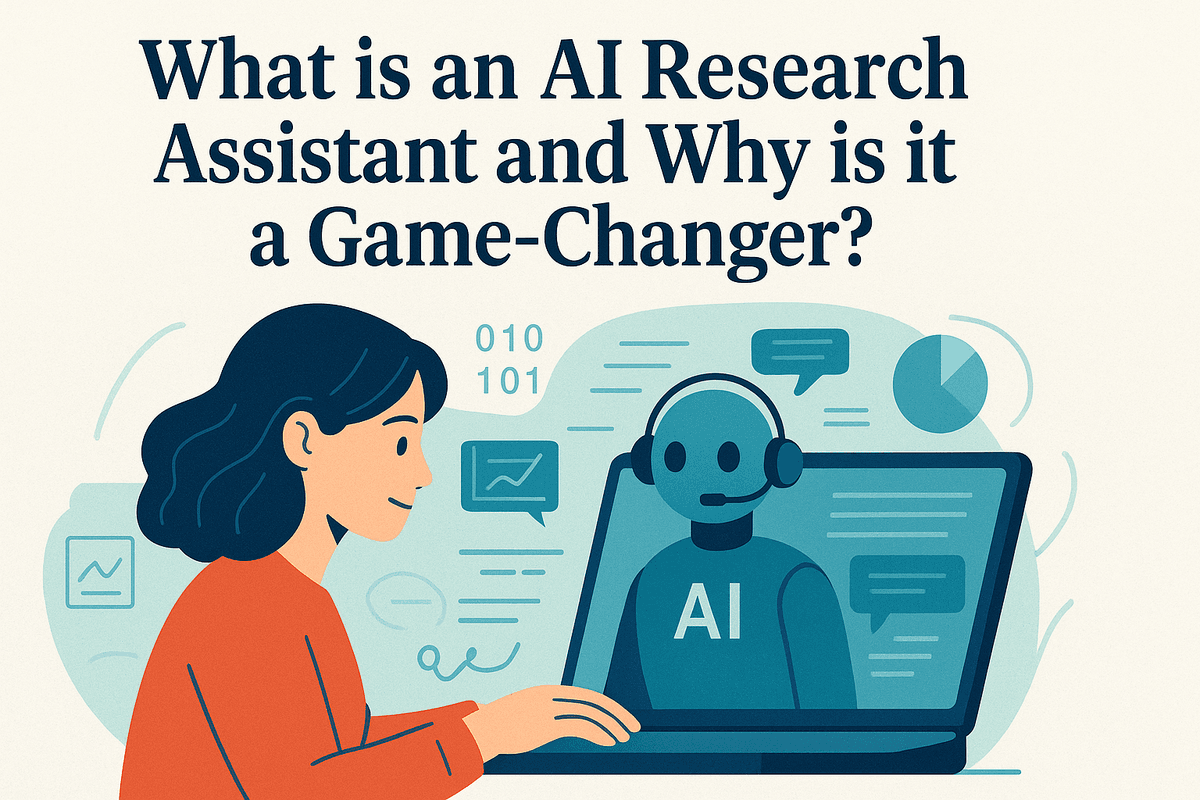
Imagine having a brilliant, tireless partner who can read thousands of documents in minutes, pinpoint the exact information you need, and help you connect ideas you never saw before. That’s the power of an AI research assistant. It’s not just another search tool; it's an intelligent collaborator designed to supercharge your entire research workflow, from initial discovery to final draft.
Think of it this way: for decades, we've relied on search engines. You type in a query and get a list of links—a digital library stack you still have to climb manually. An AI research assistant fundamentally changes this dynamic. It doesn't just point you to the library; it goes inside, reads the books for you, and returns with a synthesized, actionable summary.
From Search Engines to Synthesis Engines: The Evolution of Research
The leap from a standard search engine to an AI research assistant is as significant as the jump from a card catalog to the internet. We're moving beyond simple information retrieval into an era of automated knowledge synthesis.
- Search Engines Find: They are incredibly effective at indexing the web and providing a ranked list of potentially relevant sources based on keywords. The burden of sifting, reading, evaluating, and connecting the dots falls entirely on you.
- AI Research Assistants Understand and Synthesize: These advanced platforms use Natural Language Processing (NLP) and large language models to read and comprehend the content within documents. They can extract key arguments, identify themes across multiple papers, summarize complex findings, and even answer specific questions with cited sources. They transform a mountain of data into a molehill of insight.
This evolution turns the researcher from a data-gatherer into a true strategist, freeing up valuable cognitive energy to focus on critical thinking, analysis, and generating novel ideas.
How an AI Research Assistant Can 10x Your Productivity
Integrating an AI research assistant into your workflow isn’t just an incremental improvement—it’s a force multiplier for your productivity. By automating the most time-consuming parts of the research process, it allows you to achieve more in a fraction of the time. Here’s how:
- Automate Literature Reviews: Slash the hours spent manually searching for and summarizing papers. An AI assistant can generate comprehensive literature reviews with citations in minutes.
- Accelerate Data Extraction: Instantly pull key data points, methodologies, and findings from dense academic papers, reports, and articles.
- Deepen Comprehension: Get plain-language summaries of complex topics, helping you grasp core concepts faster and overcome knowledge gaps.
- Uncover Hidden Connections: Discover thematic links and contrasting viewpoints between different sources that you might have otherwise missed.
- Eliminate Writer’s Block: Generate structured outlines, draft initial paragraphs, and rephrase sentences to keep your momentum going.
Who This Guide Is For: Students, Academics, and Innovators
Whether you are writing a term paper or developing a groundbreaking product, an AI research assistant is a transformative tool. This guide is for anyone whose work depends on high-quality, efficient research:
- Students (Undergraduate and Graduate): Ace your assignments, craft compelling thesis arguments, and build annotated bibliographies with unprecedented speed and accuracy. Spend less time searching and more time thinking critically.
- Academics and Researchers: Accelerate your publication pipeline, prepare grant proposals more effectively, and stay effortlessly current with the latest developments in your field. Let AI handle the grunt work so you can focus on novel contributions.
- Innovators and Professionals: From market researchers and R&D teams to strategists and product managers, gain a competitive edge by rapidly analyzing market trends, competitor reports, and technical documents to drive informed, data-backed decisions.
Core Features of the Modern AI Research Assistant
While the concept of digital assistance is not new, the modern AI research assistant has evolved far beyond a simple search engine. It's a sophisticated partner powered by a suite of interconnected features designed to streamline every stage of the research workflow. These core capabilities work in concert to augment human intellect, turning hours of manual labor into minutes of strategic analysis. Let's explore the engine that drives this revolutionary tool.
Automated Literature Discovery and Summarization
The foundational challenge of any research project is navigating the vast ocean of existing literature. An AI research assistant tackles this head-on with powerful discovery engines. Instead of relying solely on keyword matching, it employs semantic search to understand the context and intent behind your query. This allows it to unearth relevant papers, articles, and studies that traditional methods might miss.
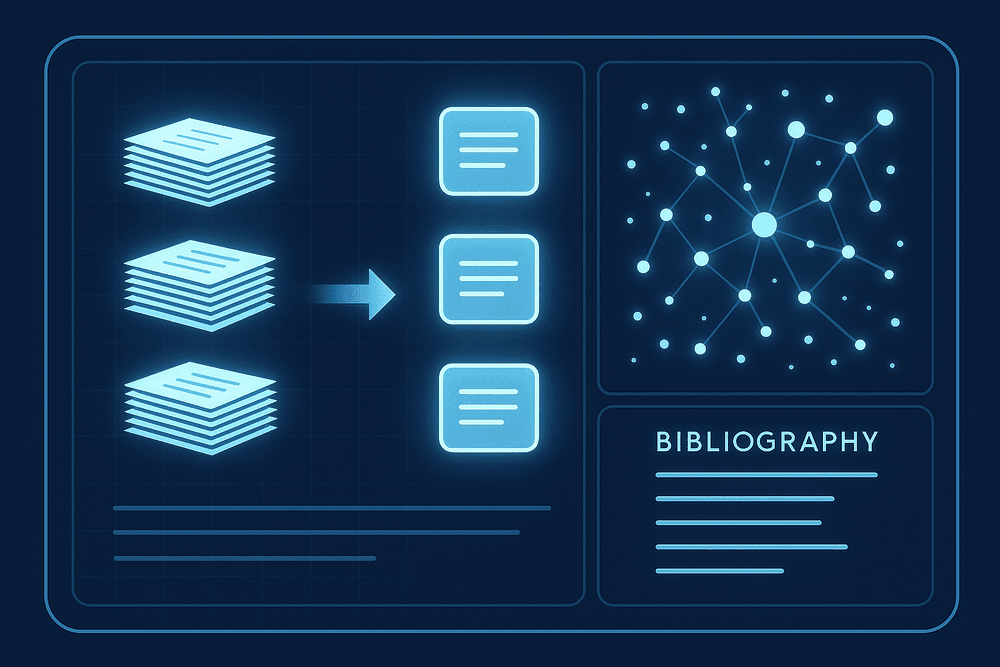
Once relevant sources are identified, the real time-saver kicks in: automated summarization. The AI can process dense, jargon-filled academic papers and distill them into concise, understandable summaries. It highlights key arguments, methodologies, findings, and conclusions, allowing you to quickly assess a document's relevance without having to read it in its entirety. This feature alone can cut the initial literature review time by more than half.
Intelligent Data Extraction and Synthesis
A truly advanced AI research assistant goes a step further than summarization by actively extracting and synthesizing information. It can be tasked to pinpoint and pull specific data points, statistics, quotes, or figures from a single document or across a collection of sources.
The magic happens during synthesis. The AI can intelligently organize this extracted information, grouping related findings, identifying recurring themes, and even flagging contradictions between different studies. Imagine asking a tool to "find all papers that mention the impact of X on Y and synthesize their key statistical findings." The assistant can generate a structured overview, effectively creating a preliminary analysis that helps you see the bigger picture and identify critical gaps in the existing literature.
Accurate Citation and Bibliography Generation
One of the most tedious and error-prone aspects of academic writing is managing citations. An AI research assistant eliminates this pain point entirely. As you gather sources, the tool automatically captures all the necessary metadata. It can then generate perfectly formatted in-text citations and full bibliographies in any style you require (APA, MLA, Chicago, IEEE, etc.) with a single click. This not only saves an immense amount of time but also ensures accuracy, helping you maintain academic integrity and avoid unintentional plagiarism.
Collaborative Knowledge Management Features
Research is rarely a solo endeavor. Modern AI research platforms are built with collaboration in mind. They act as a centralized hub where teams can build a shared library of resources, articles, and notes. Team members can annotate documents together in real-time, highlight key passages, and leave comments for discussion. This creates a dynamic and searchable knowledge base for the project, ensuring everyone is working from the same set of information and insights. This shared workspace breaks down information silos and fosters a more efficient, cohesive, and productive research environment.
For Students & Academics: How an AI Research Assistant Revolutionizes Study
The academic journey is a marathon of reading, critical thinking, and meticulous writing. From undergraduate essays to a doctoral dissertation, the process is demanding and time-consuming. However, a new class of technology is fundamentally changing the equation. An AI research assistant is not just another productivity tool; it’s a powerful partner that streamlines your entire workflow, empowering you to produce higher-quality work in a fraction of the time.
Find and Analyze Relevant Papers in Minutes, Not Weeks
The days of spending entire weekends locked in the library, sifting through stacks of journals and endless database results, are numbered. The traditional research process is a bottleneck, consuming valuable time that could be spent on analysis and writing. An AI research assistant transforms this landscape by acting as a super-powered search and synthesis engine.
Instead of wrestling with boolean operators and keyword variations, you can ask a complex question in plain English, such as, "What are the latest findings on the efficacy of cognitive-behavioral therapy for social anxiety in adolescents?" The AI scans millions of academic papers, patents, and clinical trials in seconds, presenting you with a curated list of the most relevant documents. More importantly, it can instantly generate concise summaries, extract key data points, and even identify methodologies and conflicting findings across multiple papers, allowing you to grasp the core concepts of a field quickly and efficiently.
Craft a Flawless Thesis with AI-Powered Outlining
Staring at a blank page when starting a major project like a thesis can be paralyzing. Structuring a complex argument across dozens or even hundreds of pages requires meticulous planning. This is where an AI research assistant becomes an indispensable ally.
By analyzing the literature you've collected, the AI can help you identify major themes, sub-topics, and logical connections you might have missed. It can generate multiple potential outlines, suggesting a coherent flow for your chapters—from introduction and literature review to methodology and conclusion. This isn’t about letting the AI write your thesis for you; it's about using it as a sophisticated brainstorming and organizational tool. It helps you build a strong, logical skeleton for your work, ensuring your arguments are well-supported and presented in a compelling, structured manner.
Avoid Plagiarism with Smart Sourcing and Citation Tools
Maintaining academic integrity is non-negotiable, yet managing hundreds of sources and citations manually is a recipe for error and accidental plagiarism. An AI research assistant acts as your diligent, ever-present partner in upholding the highest standards of scholarship. As you extract information, the tool automatically links every sentence and data point back to its original source. When it's time to write, it generates perfectly formatted citations and bibliographies in any style you need (APA, MLA, Chicago, etc.) with a single click. This meticulous tracking virtually eliminates the risk of unattributed ideas slipping into your work, safeguarding your academic reputation and ensuring your focus remains on developing your own brilliant ideas.
For Professionals: Gaining a Competitive Edge with an AI Research Assistant
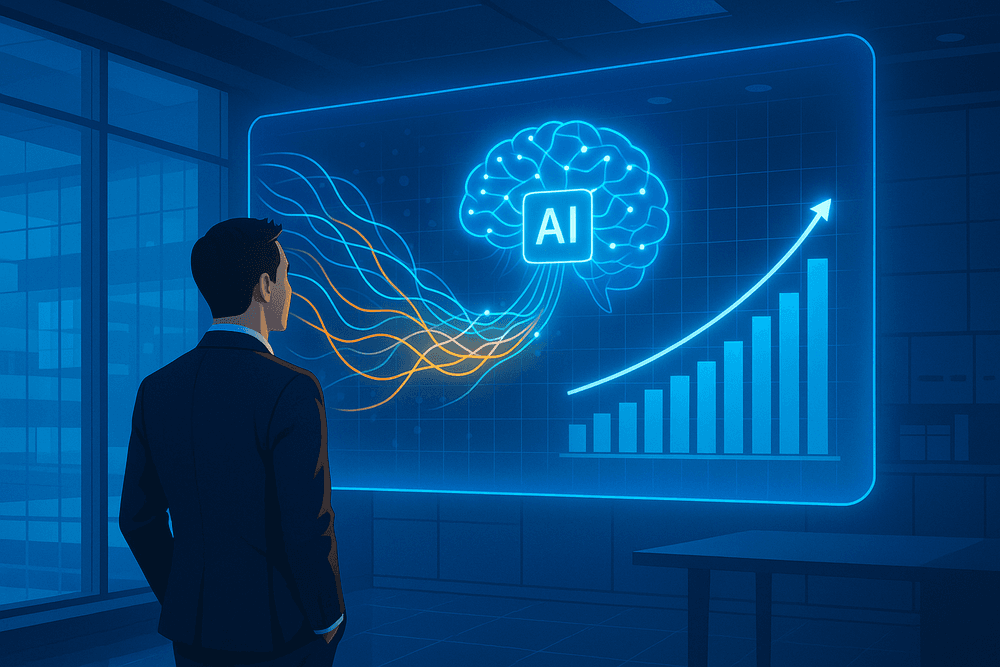
In the relentless pace of modern business, the speed and quality of information directly impact success. For professionals, the ability to quickly gather, synthesize, and act on data is no longer just an advantage—it's a necessity. This is where an ai research assistant becomes a transformative ally, turning the overwhelming flood of data into a clear, actionable stream of intelligence and providing a significant competitive edge.
Accelerate Market Research and Competitive Analysis
Traditional market research is a laborious process, often taking weeks or months to complete. By the time a report is finalized, the market may have already shifted. An ai research assistant revolutionizes this workflow by automating the most time-consuming tasks. It can instantly scan and analyze thousands of sources, including industry reports, competitor press releases, social media sentiment, customer reviews, and news articles.
Imagine needing a complete overview of a competitor's Q3 strategy. Instead of assigning a team to manually scour the web, you can task your AI assistant. Within minutes, it can deliver a synthesized brief highlighting their new product launches, marketing campaigns, and customer feedback trends. This real-time intelligence empowers you to react swiftly, identify emerging market gaps, and make proactive decisions that keep your organization ahead of the curve.
Streamline R&D, Legal, and Financial Data Gathering
Professionals in specialized fields like research and development, law, and finance depend on access to precise, often dense, information. The manual process of sifting through patent databases, legal journals, or financial statements is a bottleneck that consumes valuable expert hours.
An ai research assistant is expertly designed to navigate these complex information ecosystems.
- For R&D Teams: It can rapidly cross-reference scientific papers and patent filings to identify prior art or uncover emerging technological trends, accelerating the innovation cycle.
- For Legal Professionals: It can instantly pull relevant case law, statutes, and legal precedents, drastically reducing research time for case preparation.
- For Financial Analysts: It can extract key data points from lengthy SEC filings, earnings call transcripts, and market analysis reports, enabling faster and more accurate financial modeling.
By handling the heavy lifting of data retrieval, the AI assistant frees up these highly skilled professionals to focus on what they do best: interpreting information, developing strategy, and driving value.
Generate Insight-Driven Reports and Presentations Effortlessly
The final hurdle in any research project is communicating the findings. Transforming raw data into a compelling, easy-to-understand narrative is a skill that takes time and effort. A sophisticated ai research assistant doesn't just deliver data; it helps you build the story.
These tools can automatically synthesize key findings, identify core trends, and generate structured summaries or executive-level reports. Some can even create draft presentation slides complete with charts, graphs, and bullet points based on the collected information. This allows professionals to move from data to decision-making at an unprecedented speed. Instead of spending hours formatting a report, you can spend that time refining your strategic recommendations and preparing to persuade stakeholders with a clear, data-backed vision.
How to Choose the Best AI Research Assistant for Your Needs
With a growing number of tools entering the market, selecting the perfect ai research assistant can feel overwhelming. The ideal choice isn't a one-size-fits-all solution; it depends entirely on your specific workflow, research field, and budget. To cut through the noise and find a tool that genuinely enhances your work, focus on three core criteria: accuracy, source quality, and usability.
Key Criteria for Selecting Your AI Research Assistant
Making an informed decision starts with knowing what to look for. Evaluate potential platforms based on these essential pillars to ensure you choose a reliable and effective partner for your research endeavors.
Accuracy and Reliability
This is the absolute non-negotiable. An ai research assistant must provide factually correct, verifiable information. The best tools are transparent about their data sources and are specifically engineered to minimize "hallucinations"—the AI term for confidently stating falsehoods. When testing a new tool, ask it questions you already know the answer to. Cross-reference its findings and meticulously check the provided citations to ensure they are relevant and support the claims being made.
Source Quality and Citations
A powerful answer is meaningless without a credible origin. A top-tier ai research assistant prioritizes high-quality sources like peer-reviewed journals, academic databases, conference proceedings, and reputable publications. It should not only provide answers but also show its work by linking directly to the source material. Critically, assess its citation management capabilities. Does it allow you to easily export references in standard formats like APA, MLA, or Chicago? Seamless integration into your bibliography is a massive time-saver.
Usability and Workflow Integration
The most powerful engine is useless if it’s impossible to drive. A great user experience (UX) is key to adoption. Does the interface feel intuitive, or is the learning curve steep? Can you easily upload your own documents for analysis? Does it offer a browser extension or other integrations to help you research on the fly? The best ai research assistant should feel like a natural extension of your existing process, not another complex system you have to fight with.
Free vs. Paid Plans: Making the Right Investment
Most AI research tools operate on a "freemium" model, so it's important to understand what you get at each level.
- Free Plans: These are perfect for getting started. Use them to test a platform’s core functionality, run a few queries, and see if the interface works for you. They are excellent for casual users or for preliminary topic exploration. However, free tiers almost always come with limitations, such as a cap on the number of searches, restricted access to premium academic databases, or more basic analytical features.
- Paid Plans: If you're a professional researcher, a graduate student, or anyone for whom research is a core professional activity, a paid plan is a wise investment. Premium subscriptions typically unlock unlimited queries, access to a wider range of scholarly sources, advanced features like data extraction across multiple documents, and collaboration tools. Think of it not as a cost, but as an investment in your time, efficiency, and the ultimate quality of your research output.

Conclusion: Embrace the Future with Your AI Research Assistant
The research landscape is undergoing a monumental shift. The days of spending countless hours manually sifting through library stacks and dense databases are fading, replaced by a smarter, faster, and more insightful process. As we've explored, the AI research assistant is not a far-off futuristic concept but a powerful, practical tool available right now. It is designed not to replace the critical thinking of the human researcher but to augment and amplify it, clearing the path from initial question to groundbreaking discovery. This is your moment to step into a more efficient and dynamic era of inquiry.
Your Quick-Start Guide to Implementing an AI Research Assistant
Integrating a new technology can seem intimidating, but you can seamlessly incorporate an AI research assistant into your existing workflow by following a few simple, strategic steps.
- 1. Identify Your Bottlenecks: Begin by pinpointing the most time-consuming parts of your research process. Is it conducting a comprehensive literature review? Is it summarizing dense academic papers? Or is it identifying thematic connections across dozens of sources? Knowing your primary pain point will guide you to the tool best suited for your needs.
- 2. Explore and Experiment: The market is rich with innovative AI tools. Start by exploring a few highly-regarded platforms. Many offer free trials or freemium versions, giving you the perfect, risk-free opportunity to test their features and see which interface feels most intuitive for you.
- 3. Integrate Incrementally: Avoid the temptation to revolutionize your entire workflow overnight. Start small. Use your chosen AI research assistant for one specific, manageable task, such as generating an initial bibliography for your next project. As you become more comfortable and confident, you can gradually expand its role.
- 4. Learn and Refine: Treat your new AI tool like a skilled collaborator. Take the time to understand its strengths, weaknesses, and unique capabilities. Practice crafting precise prompts to get the most accurate and relevant results, and continuously adapt your process to leverage its full potential.
The Future Outlook: What's Next for AI in Research?
The current capabilities of AI in research are impressive, but they are merely the foundation of what’s to come. The evolution of the AI research assistant promises to unlock even more profound efficiencies and insights. In the near future, we can expect AI that not only finds existing knowledge but actively helps generate new hypotheses by identifying unexplored gaps in the literature. These advanced assistants will offer sophisticated predictive analysis, further automate data collection, and synthesize information in real-time from a vast array of sources. The trajectory is clear: we are moving toward a future where your AI research assistant acts as a true cognitive partner in the discovery process.
Take the Leap: Start Your First AI-Powered Research Project Today
The theoretical benefits are compelling, but the true transformation occurs through practical application. The greatest barrier to entry is often simply inertia. Don't wait for the "perfect" tool or a "better" time to start. The time is now.
Choose one small aspect of a current project and commit to tackling it with the help of an AI research assistant. Taking this first step is a direct investment in your own efficiency and the future impact of your work. The future of research is here—it's intelligent, collaborative, and powered by AI. Embrace it, and let your new assistant help you uncover what's next.