
October 26, 2025
What is an AI Research Assistant and Why Do You Need One?
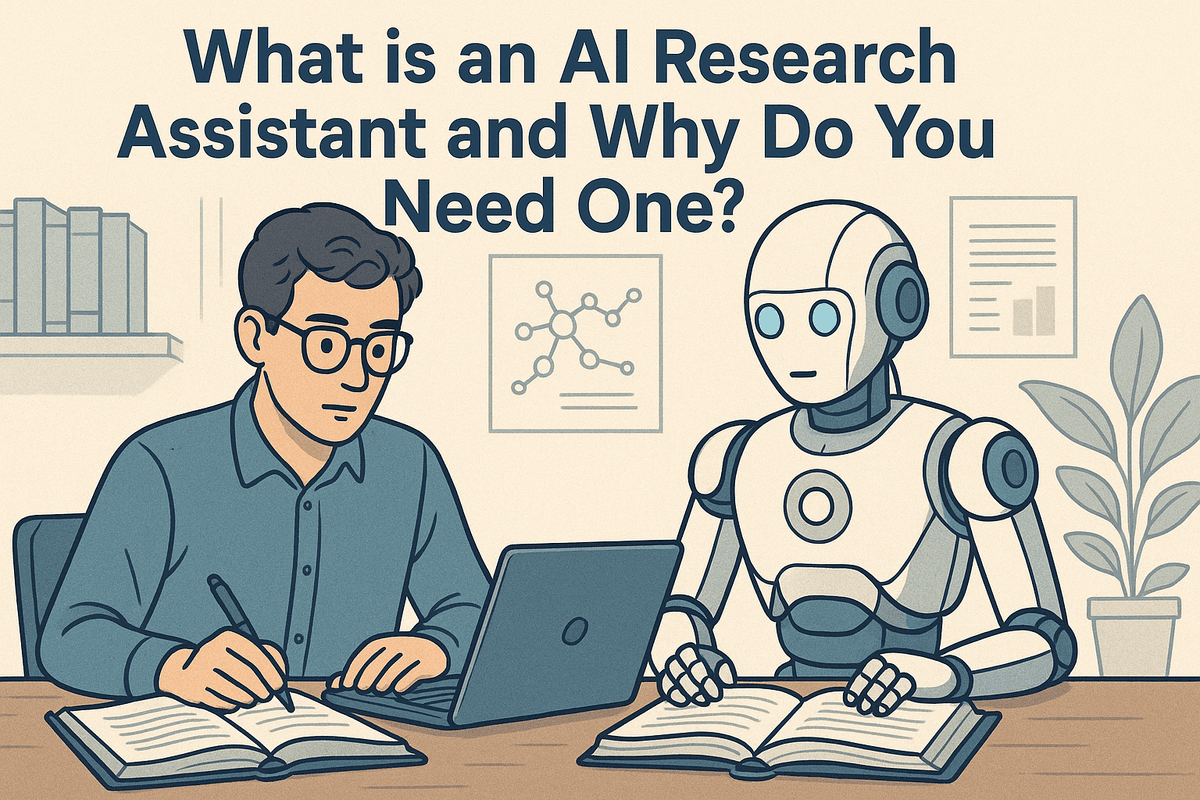
What is an AI Research Assistant and Why Do You Need One?
In an age of information overload, researchers, students, and professionals are drowning in a sea of data, academic papers, and complex reports. The traditional research process—painstakingly searching, sifting, and synthesizing information—is becoming unsustainable. This is where the AI research assistant emerges as a game-changing solution, designed not just to find information, but to help you understand it.
Defining the Modern AI Research Assistant
An AI research assistant is a sophisticated software tool that leverages artificial intelligence, particularly natural language processing (NLP) and machine learning, to automate and enhance the research workflow. Think of it not as a simple search bar, but as an intelligent partner that can read, comprehend, and organize vast amounts of text.
Unlike basic databases, these tools can perform complex tasks such as:
- Semantic Search: Understanding the context and intent behind your query to find the most relevant papers, even if they don't use your exact keywords.
- Automated Summarization: Condensing dense articles, long reports, and entire books into concise, easy-to-digest summaries.
- Data Extraction: Identifying and pulling specific information like methodologies, datasets, key findings, and author-defined limitations from documents.
- Thematic Analysis: Grouping sources by common themes or concepts to help you build a comprehensive understanding of a topic.
At its core, an AI research assistant is designed to handle the heavy lifting of research, freeing you up to focus on critical thinking, analysis, and generating novel insights.
How AI is Revolutionizing the Traditional Research Workflow
The contrast between traditional and AI-powered research is stark. For decades, the workflow has been linear and labor-intensive: formulate a question, search keywords across multiple databases, manually download and screen dozens of PDFs, read them one by one, and painstakingly synthesize notes. This process can take weeks or even months.
An AI research assistant fundamentally revolutionizes this workflow by introducing speed, efficiency, and depth. Instead of spending hours finding a single relevant paper, the AI can surface the top 10 in minutes. Rather than reading a 30-page article to see if it’s useful, you can get an AI-generated summary in seconds. This transformation allows you to:
- Accelerate Literature Reviews: Go from a broad topic to a well-supported thesis statement faster than ever before.
- Uncover Hidden Connections: AI algorithms can spot patterns and links between studies that a human researcher might miss.
- Democratize Access to Knowledge: Complex scientific or technical papers become more accessible through simplified summaries and direct Q&A features.
Beyond Search Engines: What Makes These Tools Different?
It’s easy to mistake an AI research assistant for a supercharged search engine like Google Scholar, but their functions are fundamentally different. A search engine is a tool for information retrieval. It matches your keywords to a vast index and returns a list of ranked documents. The analytical work—reading, interpreting, comparing, and synthesizing—is left entirely to you.
An AI research assistant is a tool for knowledge synthesis. It goes beyond retrieval by actively engaging with the content of the documents. The key difference lies in comprehension. While a search engine sees a PDF as a collection of keywords, an AI tool understands its structure, arguments, and data. You can ask it specific questions like, "What was the sample size in this study?" or "Summarize the key arguments against this theory," and it will provide answers sourced directly from your documents. This interactive, analytical capability turns your library of papers into a queryable database, making it a true collaborator in your research journey.
Core Features of a Powerful AI Research Assistant
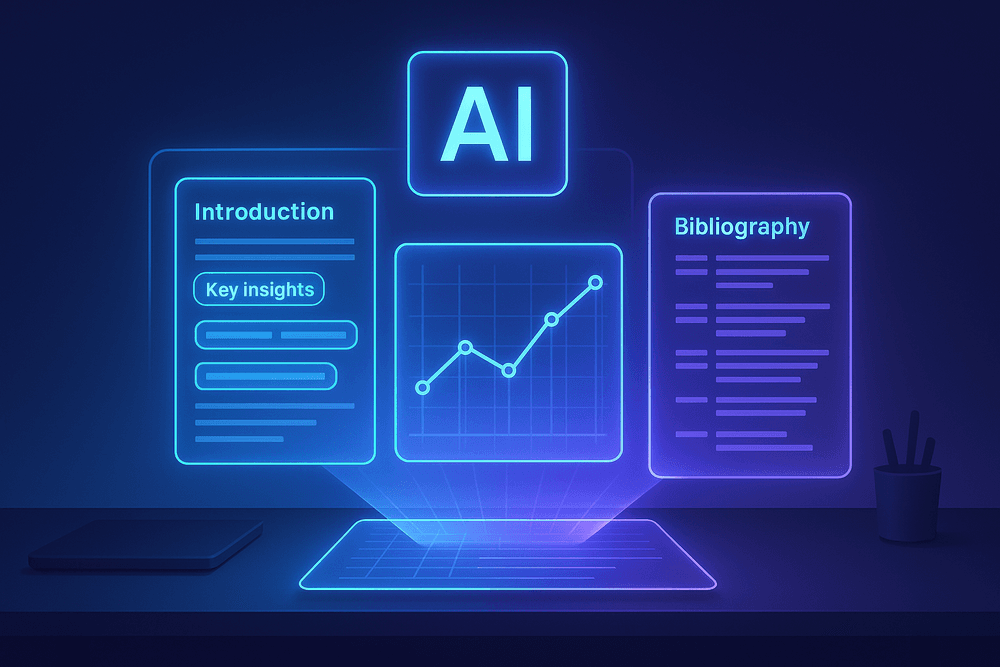
The digital landscape is flooded with tools promising to simplify research, but a truly effective AI research assistant is more than just a glorified search engine. It's a sophisticated partner that integrates seamlessly into your workflow, automating the most tedious tasks and uncovering insights you might have otherwise missed. The power of these tools lies in a distinct set of core features designed to accelerate discovery and enhance comprehension from start to finish. Let's explore the essential functionalities that separate a basic tool from an indispensable research ally.
Automated Literature Discovery and Systematic Reviews
Forget endless hours scrolling through databases with rigid keyword searches. A powerful AI research assistant revolutionizes literature discovery by using natural language processing and semantic search. Instead of just matching keywords, it understands the context and intent behind your query. You can ask a question like, "What are the latest treatments for neurodegenerative diseases involving protein aggregation?" and the AI will find relevant papers, even if they don't use your exact phrasing.
This capability is a game-changer for conducting systematic reviews. The AI can:
- Identify seminal papers and trace their academic influence.
- Surface related articles based on citation networks and conceptual overlap.
- Filter and categorize vast libraries of research based on methodology, outcomes, and publication date.
This automated process drastically reduces the time spent on initial screening, allowing you to focus your expertise on critical analysis and synthesis.
Intelligent Data Extraction and Analysis
Once you've found relevant papers, the next challenge is extracting key information from dense text, complex tables, and figures. An advanced AI research assistant acts as a meticulous data extractor. It can scan dozens of PDFs simultaneously and pull out specific data points you define, such as sample sizes, statistical results, measurement techniques, or chemical compounds. This isn't just a simple copy-paste function; the AI understands the structure of academic papers and can pinpoint the exact information you need, presenting it in an organized, structured format like a spreadsheet. This feature eliminates the risk of human error in manual data entry and frees up invaluable time for deeper analysis.
AI-Powered Summarization of Complex Papers
Wading through a 30-page research paper only to find it's not relevant is a common frustration. AI-powered summarization provides an immediate solution. A sophisticated AI can read a complex, jargon-filled article and distill its core arguments, methodology, and findings into a concise, easy-to-understand summary. Top-tier tools often provide different levels of summarization—from a one-paragraph abstract to a more detailed, bulleted breakdown of key sections. This allows you to quickly vet a paper's relevance, grasp its main contributions, and stay current on the latest research in your field without getting bogged down in unnecessary detail.
Streamlining Citation and Bibliography Creation
Properly managing citations and building a bibliography is a critical but often painstaking part of the research process. An integrated AI research assistant automates this entirely. As you save papers, the tool automatically captures all the necessary metadata. It can then generate perfectly formatted citations in any style you need (APA, MLA, Chicago, etc.) with a single click. Many of these platforms integrate directly with word processors like Microsoft Word and Google Docs, allowing you to insert citations as you write and automatically generate a complete, accurate bibliography at the end. This not only saves hours of tedious work but also ensures consistency and eliminates frustrating formatting errors.
Top AI Research Assistant Tools on the Market
The digital landscape is brimming with innovative tools designed to supercharge your research process. But with so many options, how do you know which one is the right fit? The best ai research assistant is the one that aligns perfectly with your workflow. Let's break down some of the leading platforms to help you decide.
Elicit vs. Scite: A Head-to-Head Comparison
Two of the most powerful names in the AI research space are Elicit and Scite, but they tackle the research challenge from different angles.
- Elicit: The Synthesizer: Think of Elicit as your personal literature review specialist. Its core strength lies in its ability to take a natural language question—like "What are the effects of mindfulness on student anxiety?"—and search a vast database of academic papers. It doesn't just give you a list of articles; it extracts key findings and presents them in an easy-to-digest summary table. This makes it an unparalleled ai research assistant for brainstorming, identifying themes, and rapidly synthesizing information across dozens of sources.
- Scite: The Validator: Scite’s superpower is its "Smart Citations" feature. While traditional tools show you how many times a paper has been cited, Scite shows you how. It analyzes the citation context to classify whether a new paper supports, contrasts with, or simply mentions the findings of the original. This is a game-changer for critically evaluating the credibility and impact of a study. If you need an ai research assistant to vet your sources and understand a paper's real standing in the academic community, Scite is your go-to.
The Verdict: Use Elicit for broad discovery and synthesizing answers. Use Scite for deep, critical analysis and verifying the claims of specific papers.
Connected Papers for Visualizing Research Networks
If you’re a visual thinker, Connected Papers will revolutionize how you explore your field. You start with a single "seed paper" that is central to your research. The platform then generates a dynamic, interactive graph of dozens of related papers, showing how they connect through citations. This visual map allows you to instantly identify seminal works, discover different schools of thought, and find relevant papers you might have otherwise missed. It’s an incredibly intuitive ai research assistant for mapping the academic landscape and ensuring you haven’t overlooked a crucial branch of literature.
Semantic Scholar: AI-Enhanced Academic Search
Powered by the Allen Institute for AI, Semantic Scholar is a free, powerful academic search engine on steroids. It goes far beyond a simple keyword search by incorporating AI-driven features designed to accelerate comprehension. These include:
- TLDRs: AI-generated, one-sentence summaries of papers.
- Citation Intent: Identifies whether a citation is for background information, methodology, or direct results.
- Author Influence: Provides metrics on an author's impact and publication history.
Semantic Scholar is an excellent all-around ai research assistant that enhances the traditional search process, making it faster and more insightful.
Choosing the Right Tool for Your Specific Field
- For Systematic Reviews & Synthesis: Elicit is your best bet for its question-based workflow and summary tables.
- For Critical Appraisal & Fact-Checking: Scite is essential for understanding the context and validation of research claims.
- For Field Mapping & Discovery: Connected Papers offers an unmatched visual approach to exploring academic networks.
- For a Powerful, Everyday Search: Semantic Scholar is a fantastic free starting point for any research query.
Ultimately, the most effective researchers often build a toolkit, using a combination of these platforms. You might start with Semantic Scholar for a broad search, use Connected Papers to visualize the key players, dive deep with Elicit to synthesize findings, and finally, validate your core sources with Scite.

Real-World Use Cases: An AI Research Assistant in Action
The theoretical benefits of an AI research assistant are compelling, but its true power is revealed in practical application. Across diverse fields, professionals are leveraging these intelligent tools to overcome long-standing challenges, accelerate discovery, and achieve unprecedented efficiency. Let’s explore how an AI research assistant is transforming workflows in four distinct, high-stakes environments.
Accelerating a PhD Candidate’s Literature Review
For any doctoral student, the literature review is a rite of passage—and a formidable bottleneck. Sifting through decades of academic papers can consume months, delaying the start of novel research. An AI research assistant fundamentally changes this dynamic. Instead of manually searching databases with rigid keywords, a PhD candidate can ask the AI complex questions in natural language, such as, "What are the primary criticisms of anomie theory in post-2010 criminology studies?" The tool scans millions of articles, dissertations, and books, returning a synthesized summary with direct citations. It can identify thematic gaps in the existing literature, highlight seminal papers, and even create a visual map of how different research concepts connect, turning a months-long marathon into a focused, week-long sprint.
Streamlining Market Research for Business Analysts
In the fast-paced world of business, timely and accurate market intelligence is the bedrock of strategic decision-making. Business analysts are often buried under an avalanche of data from industry reports, SEC filings, competitor press releases, and social media trends. An AI research assistant acts as a tireless analyst, capable of ingesting and making sense of this varied data. It can monitor competitor activities in real-time, perform sentiment analysis on customer feedback for a new product launch, and summarize lengthy financial reports into digestible bullet points. This allows human analysts to move beyond data collection and focus on higher-level strategic interpretation, identifying opportunities and threats far more quickly than the competition.
Enhancing Evidence-Based Medicine for Clinicians
Clinicians must base their patient care decisions on the latest and most robust scientific evidence. With thousands of new medical studies published weekly, keeping up is a humanly impossible task. A specialized medical AI research assistant provides a critical solution. A doctor preparing for a complex case can ask the AI to summarize the latest clinical trial outcomes for a specific therapy or pull up consensus guidelines for a rare disease. The system provides answers in seconds, complete with links to the source studies. This immediate access to vetted information at the point of care enhances diagnostic accuracy, optimizes treatment plans, and ultimately improves patient outcomes.
Powering Investigative Journalism with Data
Investigative journalism often involves uncovering a story hidden within vast troves of documents—leaked emails, public records, or corporate financial statements. The AI research assistant has become an indispensable partner in the modern newsroom. Journalists can feed thousands of pages of documents into the AI and ask it to find all communications between two individuals, identify patterns in financial transactions, or flag inconsistencies across different reports. The AI can cross-reference names, dates, and locations, building a web of connections that would take a team of reporters months to map out manually. This empowers journalists to break impactful stories faster and with greater factual certainty.
Best Practices for Maximizing Your Research Output
Unlocking the full potential of an AI research assistant goes beyond simply choosing the right platform; it requires a strategic approach. Adopting best practices for prompting, verification, and integration ensures that this powerful technology accelerates your work without compromising its quality or integrity.
Crafting Effective Prompts for Better Discoveries
The insights you receive from an AI research assistant are a direct reflection of the quality of your prompts. Vague questions yield vague answers. To get precise, relevant results, you need to master the art of the prompt.
- Be Specific and Contextual: Don’t just ask, "Find information on renewable energy." Instead, provide detail and constraints: "Summarize the key findings from peer-reviewed articles published since 2022 on the efficiency improvements of perovskite solar cells compared to traditional silicon-based cells."
- Assign a Role: Frame your request by asking the AI to adopt a persona. For example, "Acting as a skeptical academic reviewer, identify the primary limitations and potential weaknesses in the methodology of this research paper."
- Iterate and Refine: Your first prompt is often just a starting point. Use the AI’s initial response to ask follow-up questions. "Can you elaborate on the statistical analysis mentioned in the second study?" or "Which of these sources are most critical of this theory?" This iterative dialogue helps you drill down to the most valuable information.
Critically Evaluating and Verifying AI-Generated Insights
An AI research assistant is a powerful co-pilot, but you must remain the pilot in command. AI models can make mistakes, misinterpret sources, or generate "hallucinations"—plausible-sounding but factually incorrect statements.
- Trace Back to the Source: Never take an AI-generated summary at face value. A reliable ai research assistant will provide citations for its claims. Always click through to the original papers to confirm that the AI has accurately represented the source material.
- Fact-Check Key Data: Independently verify all critical data points, statistics, names, and dates using trusted primary sources. Treat AI-generated facts as leads, not as confirmed truths.
- Watch for Nuance and Bias: AI may flatten nuance or miss the subtle context of a complex argument. It’s your job as the researcher to read the original material and supply the critical analysis and deeper understanding that the AI cannot.
Integrating an AI Research Assistant into Your Daily Workflow
To truly transform your productivity, your ai research assistant must become a seamless part of your daily routine, not just a tool for special occasions.
- Start Your Literature Review: Begin your research sessions by asking the tool to identify seminal papers or recent high-impact studies in your field.
- Overcome Writer's Block: If you’re stuck, use the AI to brainstorm. Ask it to "outline three potential arguments against this thesis" or "suggest different ways to phrase this complex concept for a non-expert audience."
- Automate Tedious Tasks: Delegate time-consuming work like creating an annotated bibliography, formatting citations in a specific style, or extracting key data points from a dozen abstracts. This frees up your mental energy for more important analytical work.
Understanding Ethical Considerations and Avoiding Plagiarism
Using an ai research assistant ethically is paramount. The goal is to enhance your intellectual work, not replace it.
- Use for Ideation, Not Creation: The AI is an incredible tool for brainstorming, summarizing complex texts, and organizing your thoughts. It should never be used to write entire sections of your work. The final analysis, synthesis, and wording must be your own.
- Acknowledge and Attribute: Always adhere to your institution’s, conference’s, or journal’s policies on the use and citation of AI tools. Transparency is key.
- The Originality Test: The core intellectual contribution of your research must come from you. Using an AI to polish your grammar is an acceptable use; copying and pasting a generated paragraph is plagiarism. Treat your AI tool as an assistant—it can fetch the materials, but you must build the final structure.

Conclusion: The Future of Inquiry with Your AI Research Assistant
The research landscape is undergoing a monumental shift. The tedious, time-consuming tasks that once created bottlenecks in discovery are now being automated, streamlined, and enhanced by powerful new technology. The rise of the AI research assistant is not merely a passing trend; it is the dawn of a new era of inquiry, one defined by speed, depth, and unparalleled efficiency. By embracing these tools, you are not replacing human intellect but augmenting it, freeing yourself to focus on critical thinking, hypothesis generation, and groundbreaking insights. Let's recap the essential takeaways and map out your next steps toward a smarter research workflow.
Key Takeaways for Adopting AI in Research
Integrating an AI research assistant into your process unlocks transformative benefits that were once the domain of large, well-funded teams. As we've explored, the core advantages are clear:
- Accelerated Discovery: Slash the hours spent on literature reviews. An AI-powered tool can scan thousands of papers, identify relevant themes, and surface seminal works in minutes, not weeks.
- Enhanced Comprehension: Move beyond simple keyword searches. A sophisticated AI research assistant understands context, helping you distill complex articles into concise summaries, extract key data points, and identify conceptual links you might have otherwise missed.
- Streamlined Organization: Say goodbye to scattered notes and chaotic reference lists. These platforms help you build structured, annotated bibliographies, generate citations in any format, and create a centralized, searchable knowledge base for your projects.
- Democratized Access: Powerful research capabilities are no longer confined to elite institutions. Students, independent scholars, and professionals can now leverage enterprise-level tools to conduct comprehensive and rigorous research.
How to Choose Your First AI Research Assistant
Embarking on your AI-assisted research journey begins with selecting the right tool for your specific needs. With a growing market of options, it’s crucial to make an informed choice. Use these criteria to guide your decision:
- Define Your Core Workflow: Are you primarily focused on conducting systematic literature reviews, analyzing qualitative data, or summarizing market trends? Identify your most frequent and time-consuming task. A tool excelling in summarization may differ from one built for data extraction.
- Assess the Underlying Technology: Look for an AI research assistant that clearly explains its capabilities. Does it support natural language questions? Can it analyze PDFs, web pages, and datasets? A tool with robust NLP and multi-format support will be far more versatile.
- Prioritize User Experience: The most powerful features are useless if they are hidden behind a clunky, unintuitive interface. Seek out a clean, well-designed platform that minimizes the learning curve and integrates smoothly into your existing habits.
- Verify Source Integrity: A credible AI research assistant will always provide direct citations and links back to the original source material. This ensures you can easily verify its findings and maintain academic or professional integrity.
Start Your Journey into Smarter Research Today
The theoretical benefits of AI in research are compelling, but the true "aha" moment comes from firsthand experience. The future of knowledge work is a collaborative partnership between the curious human mind and the tireless efficiency of AI. By taking on the heavy lifting of data collection and synthesis, your AI research assistant empowers you to ask bigger questions, test more ambitious hypotheses, and ultimately, accelerate the pace of innovation.
The best way to grasp this potential is to put it into practice. Explore one of the top-rated AI research assistant platforms and sign up for a free trial. Upload a few key papers related to your current project and witness how quickly you can extract themes, generate summaries, and build a foundation for your next great discovery. Your journey to a faster, deeper, and more insightful research process starts now.