October 17, 2025
What is an AI Model Marketplace and Why is it a Game-Changer
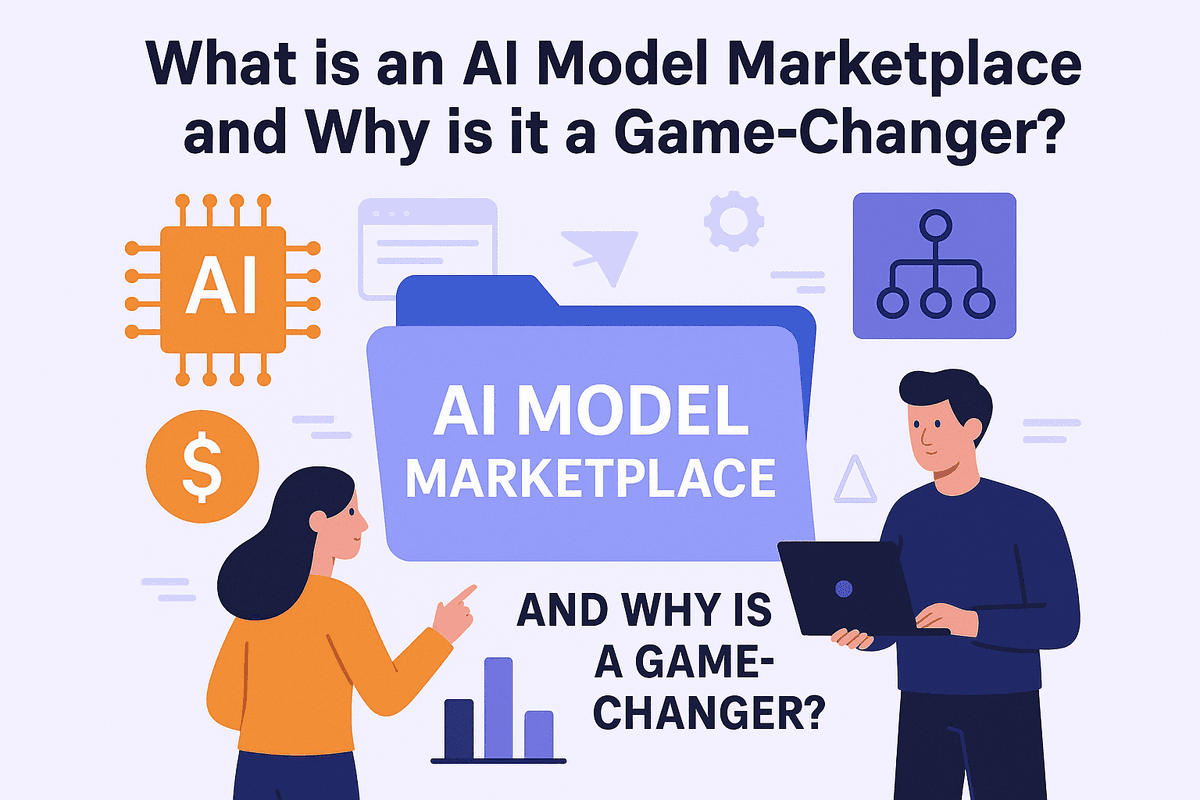
What is an AI Model Marketplace and Why is it a Game-Changer?
An AI model marketplace is a centralized digital platform where developers, data scientists, and businesses can discover, buy, sell, and deploy pre-trained machine learning models. Think of it as an app store, but for artificial intelligence. Instead of building a complex AI function from the ground up—a process that can take months and require massive resources—you can browse a catalog of ready-made solutions for tasks like natural language processing, image recognition, or predictive analytics.
This represents a fundamental shift in how we approach AI development, moving the industry away from bespoke, in-house creation towards a more efficient, collaborative, and accessible ecosystem.
The Shift from Building from Scratch to a Plug-and-Play Ecosystem
Historically, integrating AI into an application meant embarking on a long and costly journey. A company would need to:
- Collect and label massive datasets.
- Hire specialized (and expensive) AI/ML engineers.
- Invest in powerful and costly computing infrastructure.
- Spend months training, testing, and iterating on a single model.
An AI model marketplace completely upends this paradigm. It transforms the siloed, resource-intensive process into a plug-and-play experience. These platforms offer a vast repository of pre-trained AI models that have already been built and validated by experts on large-scale datasets. This democratizes access to powerful AI, allowing anyone to leverage state-of-the-art technology with a simple API call, effectively skipping the most difficult steps of the development lifecycle.
Core Benefits: Accelerating Development and Reducing Costs
The value proposition of an AI model marketplace is clear and compelling, revolving around two primary benefits:
- Accelerated Development: By providing ready-to-deploy models, marketplaces can slash development timelines from months to mere days or even hours. Developers can rapidly prototype new features, test ideas, and integrate sophisticated AI capabilities into their products without getting bogged down in the complexities of model training. This speed-to-market is a critical competitive advantage in today’s fast-paced digital landscape.
- Reduced Costs: The financial barrier to entry for AI is significantly lowered. Companies can avoid the enormous upfront investment in computing hardware, data acquisition, and specialized talent. Instead of budgeting hundreds of thousands of dollars for a custom model, they can license a high-performance, pre-trained model for a fraction of the cost, moving from a heavy capital expenditure (CapEx) to a predictable operational expenditure (OpEx).
Who Uses an AI Model Marketplace?
These platforms cater to a wide spectrum of users, each finding unique value in the ecosystem:
- Developers: Individual developers and small teams can integrate powerful AI features—like sentiment analysis or object detection—into their applications without needing a PhD in machine learning. They can focus on building great user experiences while relying on the marketplace for the underlying AI engine.
- Startups: For startups, an AI model marketplace levels the playing field. It provides access to the same caliber of AI technology used by tech giants, enabling them to build innovative, AI-powered products quickly and affordably, without needing a massive round of venture funding dedicated solely to R&D.
- Enterprises: Large organizations use marketplaces to augment their in-house data science teams. They can rapidly test hypotheses, deploy models for niche use cases, and avoid reinventing the wheel for common AI tasks. This frees up their internal experts to focus on creating proprietary models that solve core business challenges, boosting overall productivity and innovation.
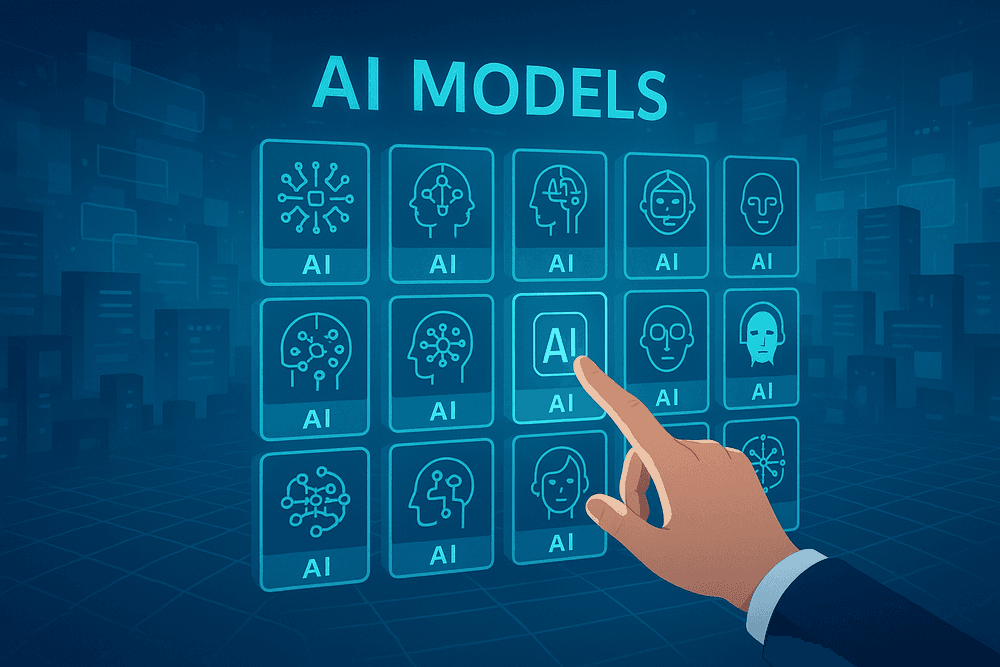
Exploring the Top AI Model Marketplace Platforms of 2024
The AI model marketplace landscape is vibrant and diverse, offering everything from massive open-source hubs to highly specialized commercial platforms. Choosing the right one depends entirely on your project's needs, technical stack, and scalability requirements. Let's dive into the key players shaping the industry in 2024.
Hugging Face: The Community-Driven Leader
Often called the "GitHub for machine learning," Hugging Face has become the de facto center of the open-source AI community. It's more than just a place to download models; it's a collaborative ecosystem. With hundreds of thousands of models (especially Transformers for NLP and Diffusers for image generation), datasets, and interactive "Spaces" for demos, it's an invaluable resource for researchers, developers, and hobbyists. Its strength lies in its community-driven approach, fostering rapid innovation and providing a vast, accessible library that empowers anyone to get started with state-of-the-art AI. For teams that prioritize flexibility and access to the latest open-source breakthroughs, the Hugging Face Hub is an essential AI model marketplace.
TensorFlow Hub: Best for Seamless Integration
For developers deeply embedded in the Google-backed TensorFlow ecosystem, TensorFlow Hub is a model of efficiency. This platform offers a curated library of reusable, pre-trained model components that can be easily dropped into a TensorFlow workflow. The primary advantage is seamless integration. Finding a model on TF Hub and deploying it for inference or fine-tuning with Keras is incredibly straightforward, significantly reducing development time. While its library isn't as vast as Hugging Face's, every model is optimized for the TF environment, making it the go-to AI model marketplace for projects that require a reliable, plug-and-play solution within a specific framework.
AWS, Azure, & Google AI Hub: The Cloud Giants
The major cloud providers offer powerful, enterprise-grade AI model marketplaces tightly integrated into their broader cloud service ecosystems.
AWS SageMaker Marketplace
A robust platform for AWS users, offering thousands of algorithms and pre-trained models from both third-party sellers and open-source libraries. Its key selling point is one-click deployment to SageMaker, streamlining the entire MLOps pipeline from discovery to production within a familiar environment.
Azure AI Model Catalog
Microsoft's offering emphasizes enterprise security, responsible AI principles, and integration with the Azure Machine Learning platform. It provides access to a curated collection of models from sources like Meta, Mistral, and OpenAI, making it simple to deploy and manage them alongside other Azure services.
Google Cloud's Vertex AI Model Garden
This platform provides access to a wide variety of foundation models, including Google's own powerful Gemini family. It's designed for easy discovery, tuning, and deployment on Google's optimized infrastructure, making it a premier choice for businesses invested in the Google Cloud ecosystem.
Niche Marketplaces for Specific Industries
Beyond the general-purpose giants, a growing number of specialized AI model marketplaces cater to the unique needs of specific industries. These platforms are critical where domain knowledge, regulatory compliance, and highly specialized data are paramount.
For example, in healthcare, marketplaces may offer HIPAA-compliant models pre-trained on medical imaging data like X-rays or MRIs, designed for tasks like tumor detection. In finance, you'll find platforms providing secure models for fraud detection, credit risk assessment, and algorithmic trading that meet stringent industry regulations. These niche marketplaces provide a level of expertise and assurance that broader platforms cannot, making them indispensable for organizations in regulated or highly specialized fields.
Key Features to Demand from Your AI Model Marketplace
Not all platforms are created equal. When selecting an ai model marketplace, you're not just choosing a library of algorithms; you're choosing a foundational component of your development stack. To ensure you’re building on solid ground, your chosen platform must deliver on several key fronts. Here are the non-negotiable features you should demand.
Evaluating Model Discovery, Search, and Filtering
A marketplace with thousands of models is useless if you can’t find the one you need. The discovery process should be intuitive and powerful, transforming a potential needle-in-a-haystack search into a precise, targeted query.
Demand a platform with:
- Advanced Search Capabilities: Go beyond simple keyword searches. You should be able to filter models by specific tasks (e.g., sentiment analysis, object detection), data types (text, image, audio), and frameworks (TensorFlow, PyTorch, ONNX).
- Granular Filtering: The ability to sort and filter by performance metrics like accuracy, latency, and resource consumption is crucial for finding a model that meets your application's specific operational requirements.
- Clear Categorization: A well-organized ai model marketplace structures its offerings logically, allowing you to browse by industry (e.g., healthcare, finance) or use case (e.g., customer support, predictive maintenance) to discover relevant solutions you might not have known to search for.
Understanding API Access, Deployment Options, and SDKs
Finding the right model is only half the battle; integrating it seamlessly is what delivers value. A top-tier marketplace prioritizes developer experience by removing friction between discovery and deployment.
Look for these critical integration features:
- Standardized API Access: Every model should be accessible via a clean, well-documented, and consistent REST API. This predictability dramatically accelerates development, as your team only needs to learn one integration pattern.
- Flexible Deployment Options: Your business needs dictate where your models run. The marketplace should support a range of targets, including cloud deployment (AWS, Google Cloud, Azure), on-premise servers for data-sensitive applications, and even edge devices for low-latency inference.
- Robust SDKs: Software Development Kits (SDKs) in popular languages like Python, JavaScript, and Java are a must. They provide pre-built functions and code snippets that handle authentication, API calls, and data formatting, saving your developers hundreds of hours.
Assessing Model Versioning, Licensing, and Security
Trust and governance are the bedrock of a reliable marketplace. Without clear rules and robust security, you expose your projects to significant technical and legal risks.
Insist on a platform that provides:
- Explicit Model Versioning: You must be able to pin your application to a specific model version. This ensures that unannounced updates or changes to a model don't break your production environment. A good platform offers a clear changelog and version history.
- Transparent Licensing: Every model must have a clearly stated license. Whether it's a permissive open-source license like MIT or a commercial license with specific usage terms, ambiguity is unacceptable.
- Comprehensive Security: The marketplace should have a vetting process for submitted models, including scans for security vulnerabilities and malicious code. Furthermore, it should be transparent about its data privacy and compliance standards.
The Importance of Community Support and Documentation
When you hit a roadblock, a strong support system is invaluable. The best platforms don't just sell models; they foster an ecosystem that empowers users to succeed. Excellent documentation is the minimum requirement, while an active community provides a powerful multiplier effect, making the entire ai model marketplace more valuable for everyone involved.
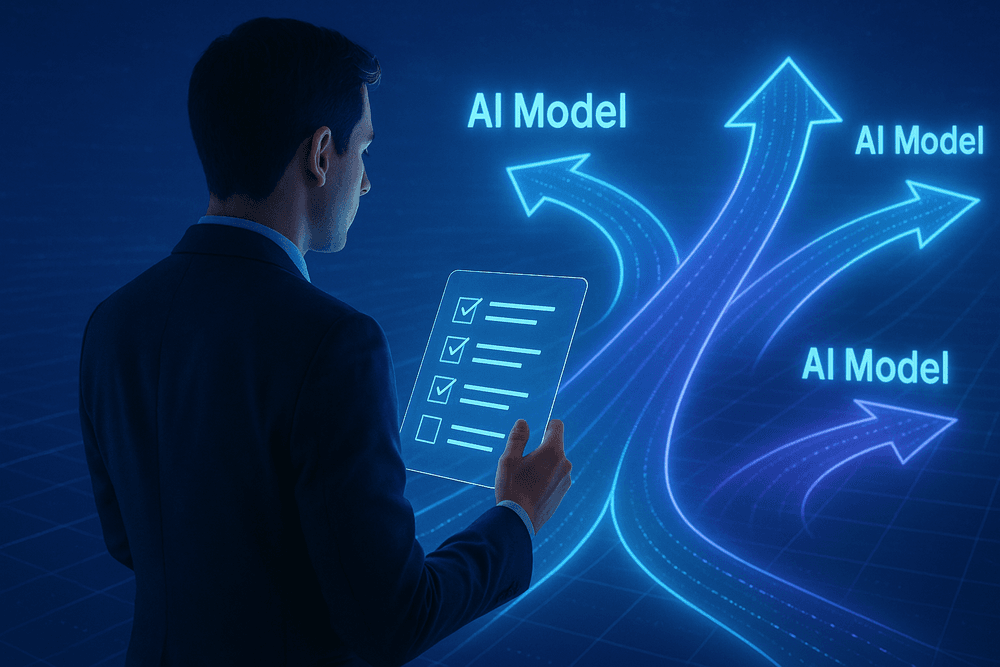
How to Choose the Right AI Model Marketplace for Your Needs
Navigating the world of AI can feel overwhelming, but selecting the right ai model marketplace doesn’t have to be. By breaking down the process into clear, manageable steps, you can confidently choose a platform that aligns with your technical needs, budget, and project goals. Here’s how to get started.
Step 1: Define Your Project Scope and Technical Requirements
Before you even start browsing, you need a clear blueprint of what you want to achieve. A well-defined scope acts as your compass, guiding you toward the most suitable models and platforms. Start by asking your team these critical questions:
- Problem Domain: What specific task will the AI solve? Is it natural language processing (NLP) for a chatbot, computer vision for product identification, or predictive analytics for sales forecasting?
- Data Specifics: What kind of data will the model process? Is it text, images, structured numerical data, or a mix? Consider the volume and quality of your data as well.
- Performance Benchmarks: What are your non-negotiables for performance? Define your required accuracy, latency (response time), and throughput (requests per second). A real-time application has vastly different needs than a batch processing job.
- Technical Stack: What programming languages (e.g., Python, JavaScript), frameworks, and cloud environments does your team use? The ideal model should integrate seamlessly into your existing workflow.
Answering these questions first will dramatically narrow your search within any ai model marketplace and prevent you from wasting time on incompatible solutions.
Step 2: Compare Pricing Models (Pay-Per-Use vs. Subscription)
Cost is a major factor, and marketplaces typically offer two primary pricing structures. Understanding the difference is key to managing your budget effectively.
Pay-Per-Use
This model, often called "pay-as-you-go," charges you based on consumption—per API call, per 1,000 characters processed, or per minute of audio transcribed.
- Best for: Startups, projects with fluctuating demand, or teams looking to test various models without a large upfront commitment.
- Downside: Costs can become unpredictable and escalate quickly as your application scales.
Subscription
A subscription model involves a recurring flat fee (monthly or annually) for a set quota of API calls or a specific level of access.
- Best for: Established businesses with predictable, high-volume usage that need stable costs and often benefit from premium features like dedicated support.
- Downside: You might pay for unused capacity if your usage is lower than the tier allows.
Step 3: Test Models with a Pilot Project or Proof of Concept
Never commit to a model based solely on its description. The only way to know if it works for your unique use case is to test it. A pilot project, or Proof of Concept (PoC), is a small-scale trial to validate a model’s real-world performance.
Select your top two or three models and run them against a representative sample of your own data. During this phase, measure everything: accuracy, speed, and the effort required for integration. How clear is the documentation? If you run into an issue, how responsive is the support team or community? This hands-on evaluation provides invaluable insight that no spec sheet can offer, de-risking your final decision.
A Quick Checklist for Making Your Final Decision
Once you’ve completed your research and testing, run through this final checklist to ensure you’ve covered all your bases before selecting an ai model marketplace and its offerings.
- [ ] Performance: Did the model meet or exceed the accuracy and latency benchmarks defined in your PoC?
- [ ] Scalability: Can the platform’s infrastructure handle your projected user growth and data volume?
- [ ] Documentation & Support: Is the documentation comprehensive and easy to follow? Is there a reliable support channel (community forum, dedicated support) available?
- [ ] Licensing & Usage: Are the model’s licensing terms clear and compatible with your intended commercial use?
- [ ] Total Cost of Ownership: Does the pricing model align with your long-term budget and usage patterns?
- [ ] Security & Compliance: Does the marketplace adhere to necessary data privacy and security standards (e.g., GDPR, SOC 2)?
Real-World Use Cases: Putting an AI Model Marketplace to Work
The theoretical benefits of an AI model marketplace are clear, but its true power is revealed in practical application. Across industries, businesses of all sizes are leveraging these platforms to accelerate innovation, solve complex problems, and gain a competitive edge. By providing access to ready-made intelligence, an ai model marketplace acts as a launchpad for transforming ideas into reality.
How Startups are Building MVPs Faster than Ever
For a startup, speed is everything. Limited funding and a small team mean that long, expensive R&D cycles for building AI from scratch are often impossible. This is where an ai model marketplace becomes a game-changer for developing a Minimum Viable Product (MVP).
Consider a new fintech startup aiming to create an app that scans receipts and automatically categorizes expenses. Building a robust Optical Character Recognition (OCR) and text classification model from the ground up could take a dedicated team six months or more. Instead, the founders can access a marketplace, find a proven, pre-trained receipt-parsing model, and integrate it via an API in a matter of days. This allows them to launch their MVP quickly, gather user feedback, and demonstrate traction to investors, all while saving tens of thousands of dollars in development costs. The marketplace de-risks the technical side of innovation, allowing startups to focus on their unique value proposition.
Enterprise Case Study: Enhancing Data Analytics with Pre-Trained Models
Large enterprises face different challenges. While they have resources, their data science teams are often overwhelmed with competing priorities. An established e-commerce giant, for instance, wanted to implement a more sophisticated product recommendation engine to increase customer lifetime value. Their internal team was tasked with maintaining existing analytics infrastructure and couldn't dedicate the time to research and build a state-of-the-art collaborative filtering model.
Turning to a trusted enterprise ai model marketplace, they licensed a powerful, pre-trained recommendation model. Their data scientists were then able to focus on the high-value task of fine-tuning the model with the company’s massive sales and user behavior datasets. The result? They deployed the new engine in one quarter instead of the projected three, leading to a measurable 15% uplift in cross-sell and upsell revenue. This hybrid approach allowed them to leverage external expertise without sacrificing the strategic advantage of their proprietary data.
From NLP to Computer Vision: Examples Across Industries
The applications unlocked by an ai model marketplace span a vast array of functions and sectors, demonstrating the platform's versatility.
- Natural Language Processing (NLP):
- Healthcare: A health-tech platform uses a pre-trained sentiment analysis model to monitor patient reviews and quickly identify areas for service improvement.
- Legal: A law firm integrates a Named Entity Recognition (NER) model to automatically scan thousands of legal documents, extracting key names, dates, and clauses to speed up due diligence.
- Computer Vision:
- Retail: An online fashion retailer employs a visual search model, allowing customers to upload a photo of an outfit to find similar items in the store's inventory.
- Manufacturing: A factory uses a pre-trained anomaly detection model on its assembly line cameras to instantly flag products with manufacturing defects, reducing waste and improving quality control.
From forecasting financial trends to transcribing audio for media companies, these use cases highlight how a centralized marketplace for AI models serves as a critical engine for modern development and business intelligence.

Conclusion: The Future is Collaborative in the AI Model Marketplace
We've journeyed through the dynamic landscape of the AI model marketplace, uncovering how these powerful platforms are democratizing access to cutting-edge technology. No longer the exclusive domain of large tech corporations, sophisticated AI is now a tangible, accessible tool for developers, startups, and enterprises of all sizes. The core takeaway is clear: leveraging an AI model marketplace isn't just an option; it's a strategic imperative for anyone looking to innovate, accelerate development, and maintain a competitive edge. This ecosystem thrives on shared knowledge, turning isolated breakthroughs into a collective engine for progress.
Final Recap: Key Factors for Success
As you embark on your journey, remember that success hinges on strategic selection. The ideal AI model marketplace for your needs will align perfectly with your project's goals. Keep these critical factors at the forefront of your decision-making process:
- Model Quality and Diversity: Does the platform offer a wide range of high-performing, well-documented models relevant to your industry? Look for robust community ratings and clear performance benchmarks.
- Licensing and Compliance: Always scrutinize the licensing agreements. Whether you need a model for commercial or research purposes, understanding the terms of use is non-negotiable to avoid legal complications.
- Integration and Usability: The best models are useless if they can't be easily integrated. Prioritize marketplaces that provide clear API documentation, SDKs, and a supportive developer community to smooth the implementation process.
- Security and Trust: Ensure the marketplace has a rigorous vetting process for its models to protect you from security vulnerabilities and ensure ethical, unbiased performance.
Your Next Step: How to Integrate Your First Model
Theory is powerful, but action is transformative. Don't let analysis paralysis hold you back. Integrating your first model is more straightforward than you might think. Follow these simple steps to get started:
- Identify a Low-Stakes Problem: Start small. Choose a simple, well-defined task within your organization that could benefit from AI, such as text summarization for internal reports or image tagging for a digital asset library.
- Explore a Marketplace: Dive into a leading AI model marketplace. Use filters to find models that match your specific task, programming language, and budget.
- Review the Documentation: Carefully read the model's "getting started" guide or API documentation. This is your blueprint for implementation.
- Test in a Sandbox: Before deploying to a live environment, use a test server or a platform like Google Colab to experiment with the model's API. Send it some sample data and analyze the outputs. This allows you to understand its capabilities and limitations risk-free.
Predicting the Evolution of AI Model Sharing
The AI model marketplace is not a static concept; it's a rapidly evolving frontier. Looking ahead, we can anticipate several exciting trends that will further shape the future of collaborative AI:
- Hyper-Specialization: Expect to see the rise of niche marketplaces dedicated to specific industries like healthcare, finance, or legal tech, offering highly tailored and compliant models.
- Enhanced Governance and "AI Nutrition Labels": As AI becomes more critical, marketplaces will introduce more sophisticated systems for verifying model fairness, explaining their decisions, and detailing the data they were trained on.
- Composable AI: The future lies in connecting models like building blocks. Marketplaces will facilitate the seamless chaining of multiple specialized models to create complex, end-to-end workflows with minimal coding.
- The Growth of Federated and Private Models: Privacy-preserving techniques will enable marketplaces to host models trained on sensitive, decentralized data, unlocking new possibilities without compromising user information.
The journey into the AI model marketplace is a journey toward efficiency, innovation, and collaboration. By embracing these platforms, you are not just adopting a new tool—you are joining a global movement that is building the future, one model at a time.