
October 7, 2025
What Is an AI Citation Generator and Why Is It a Game-
What Is an AI Citation Generator and Why Is It a Game-Changer?
Remember the late-night scramble before a deadline, squinting at a style guide, trying to figure out if a comma goes before or after the year? The tedious, mind-numbing process of manual citation is a universal frustration for students, researchers, and writers. It’s a necessary task that steals time and focus from what truly matters: the quality of your work. But what if you could eliminate that frustration entirely?
Enter the AI citation generator. This isn't just another online form-filler. It’s a sophisticated tool powered by artificial intelligence—specifically natural language processing (NLP) and machine learning—designed to automate the entire citation process. Instead of you manually typing in every author, title, and publication date, an AI citation generator intelligently scans sources—from web pages and journal articles to books and videos—extracts the necessary information, and instantly formats it into a perfect citation.
The End of Manual Citation Frustrations
For anyone who has ever lost points on a paper due to a misplaced period in a reference list, the value of this technology is immediately clear. It’s a game-changer because it tackles the biggest pain points of academic and professional writing:
- Accuracy: AI algorithms are trained on vast datasets of citation rules, significantly reducing the risk of human error. They correctly handle tricky formats for different source types, ensuring consistency and adherence to guidelines.
- Speed: What used to take hours of meticulous work can now be done in seconds. Simply provide a link, DOI, or ISBN, and the AI does the rest, freeing you up to focus on research, analysis, and writing.
- Stress Reduction: Say goodbye to deadline-day panic. With an automated tool managing your bibliography, you can write with confidence, knowing your references are being compiled correctly and efficiently in the background.
How AI Technology Automates APA, MLA, and Chicago Styles
The magic behind an AI citation generator lies in its ability to understand context. When you provide a source, the AI doesn't just see text; it identifies key bibliographic elements. It recognizes an author's name, distinguishes a journal title from an article title, and pinpoints the publication date and volume number.
Once it has this data, the AI applies the specific, complex rule sets for various citation styles. Whether you need the author-date system of APA 7, the streamlined format of MLA 9, or the detailed notes and bibliography of the Chicago Manual of Style, the tool instantly reconfigures the extracted data to match the required format perfectly.
Key Differences: AI vs. Traditional Citation Tools
While traditional citation tools have been around for years, AI-powered platforms represent a significant leap forward. Here’s how they differ:
- Data Input:
- Traditional Tools: Often rely on you to manually fill in a form for each field (author, title, year, etc.). If you make a typo, the tool won't catch it.
- AI Generators: Automatically pull and parse data directly from the source via a URL or DOI, or by scanning a PDF, minimizing manual entry and errors.
- Intelligence:
- Traditional Tools: Are rule-based. They function like a template, applying a fixed set of rules to the information you provide.
- AI Generators: Are adaptive. They use machine learning to better understand and categorize different source types, handle missing information, and even suggest potential corrections for incomplete data.
- Source Versatility:
- Traditional Tools: May struggle with non-standard sources like YouTube videos, podcasts, or social media posts, often requiring you to figure out the format yourself.
- AI Generators: Are continuously trained on new source types, making them far more capable of accurately citing a wide range of modern digital media.
Ultimately, an AI citation generator moves beyond being a simple formatting assistant to become an intelligent research partner, ensuring your work is not only well-written but also impeccably referenced.
The Best AI Citation Generator Tools for Students and Researchers
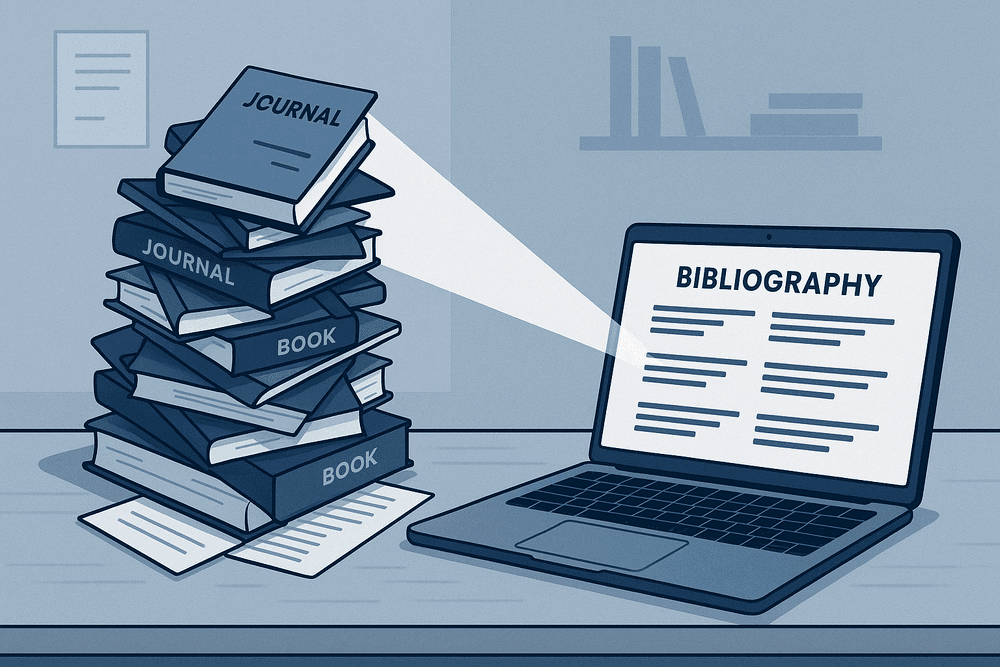
Navigating the world of academic referencing can be a daunting task, but the right ai citation generator can transform it from a chore into a seamless part of your workflow. With countless options available, how do you choose the best one? We’ve analyzed the top contenders based on accuracy, features, and user experience to help you find the perfect tool for your research papers, essays, and dissertations.
Top Pick for Overall Accuracy: Citation Machine
When it comes to sheer accuracy and database size, Citation Machine (powered by Chegg) stands out. Its AI-driven system excels at parsing information from a vast range of sources—from websites and YouTube videos to obscure academic journals. The platform cross-references multiple databases to ensure the metadata it pulls is correct, significantly reducing the risk of errors in your bibliography.
Key Strengths:
- Comprehensive Source Support: It reliably handles dozens of source types.
- Multiple Styles: Offers thousands of citation styles, including the latest editions of APA, MLA, and Chicago.
- Integrated Tools: The premium version includes a plagiarism checker and grammar suggestions, making it an all-in-one writing assistant.
While the free version is ad-supported, its core citation generation engine is powerful and dependable, making it our top choice for students who need consistently accurate results.
Comparing Free AI Citation Generator Options
You don’t need to break the bank to get high-quality citations. Several free tools offer exceptional performance, perfect for students on a budget.
- ZoteroBib: A lightweight, web-based tool from the creators of the powerful Zotero reference manager. It’s incredibly fast and easy to use—simply paste a URL, ISBN, or DOI, and it generates a perfect citation instantly. It's the ideal choice for creating a quick works cited page without the commitment of a full software download.
- MyBib: A completely free and surprisingly robust ai citation generator. It’s ad-free and offers features often found in paid tools, like creating project-based bibliographies and an excellent browser extension for one-click web citations.
- Scribbr: Known for its clean, intuitive interface, Scribbr’s free generator is a favorite among students. It guides you through the citation process with helpful tips and examples, making it fantastic for those still learning the nuances of formats like APA 7.
Which AI Tool is Best for Complex Sources?
For graduate students and professional researchers managing hundreds of sources, a simple generator isn't enough. This is where dedicated reference managers with sophisticated AI capabilities shine.
Zotero and Mendeley are the industry leaders for handling complex academic sources like journal articles, dissertations, and edited books. Their AI excels at:
- PDF Metadata Extraction: Simply drag and drop a PDF into the program, and the AI automatically pulls the author, title, journal, and DOI information to create a citation.
- Library Organization: They function as a digital library, allowing you to tag, sort, and search your entire research collection.
- Word Processor Integration: Both integrate directly with Microsoft Word and Google Docs, allowing you to insert in-text citations and generate a bibliography as you write.
While they have a steeper learning curve, their power to manage and cite complex research is unmatched.
Head-to-Head: Features, Pricing, and Ease of Use
| Tool | Key Features | Pricing | Ease of Use | Best For |
| :--- | :--- | :--- | :--- | :--- |
| Citation Machine | Plagiarism checker, grammar tools, vast style library | Freemium | ★★★☆☆ (Ad-supported) | Undergraduates needing an all-in-one tool. |
| Zotero | Full reference management, PDF reader, collaboration | Free (Paid storage upgrades) | ★★☆☆☆ (Powerful but complex) | Graduate students and professional researchers. |
| Scribbr | Intuitive UI, excellent guides, proofreading services | Freemium (Generator is free) | ★★★★★ | Students who value simplicity and clear guidance. |
| MyBib | Browser extension, project folders, ad-free | Completely Free | ★★★★☆ | Anyone looking for a powerful, no-cost solution. |
Must-Have Features of a Powerful AI Citation Generator
When you're searching for the best AI citation generator, it's easy to get overwhelmed. While many tools can create a basic citation, a truly powerful platform offers a suite of features designed to streamline your entire research and writing process. These key components separate a simple tool from an indispensable academic partner, saving you hours of work while bolstering the accuracy of your bibliographies.
Multi-Format Support (APA 7, MLA 9, Chicago 17)
Academic and professional writing isn't a one-size-fits-all world, and neither are citation styles. The first feature you must demand from an AI citation generator is comprehensive, up-to-date format support. Your tool should be fluent in the major citation styles, including:
- APA 7th Edition: The standard for psychology, education, and social sciences.
- MLA 9th Edition: Predominantly used in the humanities, including literature and the arts.
- Chicago Manual of Style 17th Edition: Common in history, business, and the fine arts.
A top-tier tool won’t just stop there. It will offer a vast library of other styles, from IEEE and Harvard to Vancouver, ensuring you're covered for any assignment or publication, no matter how niche the requirement. The platform must stay current with the latest editions, as style guides evolve over time.
URL, DOI, and ISBN Autofill Capabilities
This is where the artificial intelligence in an AI citation generator truly shines. The most tedious part of creating citations is manually finding and typing out every piece of information: author, title, publication date, journal volume, page numbers, and more. A powerful tool automates this entirely with its autofill function.
Simply by pasting a URL for a website, a DOI (Digital Object Identifier) for a journal article, or an ISBN for a book, the AI should instantly scan online databases and metadata to retrieve and populate all the required fields. This doesn't just save you from mind-numbing data entry; it dramatically reduces the risk of human error. A single typo in an author's name or the wrong publication year can compromise your citation's credibility. Autofill ensures precision and accuracy.
Bibliography Organizer and Exporter
A research paper is built on dozens of sources, not just one. A simple citation creator becomes unwieldy when you're juggling multiple projects. Look for an AI citation generator that functions like a digital research assistant. The best tools allow you to create separate project folders, keeping your sources for different papers neatly organized.
Within these projects, you should be able to sort your entries alphabetically, add personal annotations or notes, and see your works cited or reference list build in real-time as you add new sources. Crucially, a one-click export feature is non-negotiable. The ability to download your fully formatted bibliography directly into Microsoft Word, Google Docs, or a BibTeX file is a game-changing feature that integrates seamlessly with your final writing workflow.
Advanced Features: Plagiarism Scanners and Grammar Checkers
The most advanced platforms go beyond just citation. They aim to be an all-in-one writing solution. To safeguard your academic integrity, some elite AI tools bundle in a plagiarism checker. After you’ve compiled your sources and written your draft, you can run it through the scanner to catch any instances of unintentional plagiarism, ensuring every quote and paraphrase is properly attributed.
Similarly, an integrated AI-powered grammar checker transforms your citation tool into a holistic writing assistant. It can help you polish your prose, correct grammatical errors, and even offer suggestions to improve clarity and style. Choosing an AI citation generator with these built-in writing aids means you have a single, powerful platform to help you research, cite, and write your paper from start to finish.

How to Use an AI Citation Generator for Perfect Citations Every Time
Harnessing the power of an AI citation generator can save you hours of tedious work, but getting flawless results requires more than just a copy-paste. Following a simple three-step process ensures your bibliography is accurate, professional, and ready for submission. Think of the AI as your expert research assistant—it does the heavy lifting, but you provide the final approval.
Step 1: Inputting Your Source Material Correctly
The accuracy of your citation begins with the quality of the information you provide. The principle of "garbage in, garbage out" is especially true here. A sophisticated AI citation generator offers several ways to input a source:
- Unique Identifiers (Best Method): For academic journals, use the Digital Object Identifier (DOI). For books, use the ISBN. These codes are unique to a single source and pull the most precise metadata, minimizing the chance of errors.
- URL: Pasting the web address is perfect for online articles, blog posts, and websites. The AI will scan the page to extract key information like the author, title, and publication date.
- Keywords: You can also search by author and title, or just the title of the work. The tool will then present a list of possible matches for you to choose from.
- Manual Entry: If you have an obscure source, like a physical pamphlet or an unpublished manuscript, you can always input the details manually. The AI will then format this information into your chosen citation style.
For the best results, always start with the most specific identifier available (DOI or ISBN) before moving on to a URL or keyword search.
Step 2: Verifying the AI-Generated Output for Accuracy
This is the most critical step. An AI citation generator is an incredibly powerful tool, but it isn't infallible. It relies on the metadata provided by the source, which can sometimes be incomplete or incorrect. Before accepting a citation, always cross-reference it with your source material.
Create a quick mental checklist and verify the following:
- Author(s): Are all author names spelled correctly and in the right order?
- Title: Is the title accurate? Pay close attention to capitalization rules, which differ between styles (e.g., sentence case in APA vs. title case in MLA).
- Publication Date: Is the year correct? For sources like magazines or news articles, ensure the month and day are also included and accurate.
- Publisher/Journal Information: Check the name of the journal, publisher, volume number, and issue number.
- Page Numbers/URL/DOI: Confirm these details are correct and that any links are functional.
Taking 30 seconds to double-check this information is the difference between a good bibliography and a perfect one.
Step 3: Integrating Citations Seamlessly into Your Paper
A complete citation has two parts: the brief in-text citation (e.g., Smith, 2023) and the full entry in your reference list or bibliography. A top-tier AI citation generator provides both.
Most tools have a simple "copy" button for both the in-text and full citation. Use this feature to paste the formatted text directly into your document. This helps prevent transcription errors and preserves special formatting like italics. Once pasted, do a final check to ensure the font and spacing match the rest of your paper. Many word processors have a "Merge Formatting" or "Keep Text Only" paste option that can help with this integration.
Common Pitfalls to Avoid with any AI Citation Tool
- Blind Trust: The biggest mistake is assuming the AI is always 100% correct. Always complete Step 2 and verify the output.
- Ignoring Metadata Errors: If a website lists the wrong publication year in its code, the AI will likely replicate that error. You are the final authority; if you spot a discrepancy, manually correct the citation.
- Mismatched Source Type: An AI might occasionally misidentify a source, for example, labeling a blog post as a "journal article." Ensure the source type is correct, as this fundamentally changes the citation format.
- Forgetting Nuances: Certain citation styles have very specific rules for unique sources like social media posts, personal interviews, or legal documents. While an AI citation generator gets you 99% of the way there, you may need to make minor manual adjustments to meet these niche requirements.
Real-World Scenarios: Putting an AI Citation Generator to the Test
Theory is one thing, but how do these tools perform under pressure? The true value of an AI citation generator shines when applied to the specific, high-stakes tasks that writers and researchers face every day. Let’s explore three common scenarios where this technology isn’t just a convenience—it’s a game-changer.
For University Students: Finishing a Research Paper Faster
It’s 2 a.m., and the research paper is due in the morning. You have dozens of sources—journal articles, websites, PDFs, and a textbook—and the thought of manually formatting each one into perfect APA 7th edition style is daunting. This is where an AI citation generator becomes an undergraduate’s most valuable tool.
Instead of toggling between your document and a style guide, you simply feed the tool a URL, DOI, or ISBN. Instantly, it produces a formatted citation. Need to switch from APA to MLA for another class? A single click reformats your entire bibliography. The AI handles the tedious details like italicizing journal titles, correct punctuation, and alphabetizing the final list. This not only saves hours of painstaking work but also significantly reduces the risk of point deductions for formatting errors or accidental plagiarism from an uncited source. You can focus on strengthening your argument, not on whether a comma is in the right place.
For Professional Academics: Ensuring Journal Submission Accuracy
For scholars and researchers, the peer-review process is rigorous. Journals have incredibly specific and often unique citation style requirements, and a single mistake in the reference list can lead to a frustrating “desk rejection” before your research is even reviewed. Consistency and accuracy are paramount.
An advanced AI citation generator is purpose-built for this level of precision. Many of these platforms contain extensive databases with the exact formatting guidelines for thousands of academic journals. The AI can cross-reference your source data to ensure every detail—from volume and issue numbers to the proper abbreviation of a journal name—is correct. When a paper is rejected and must be reformatted for submission to a different journal, what used to be a multi-hour ordeal of reformatting every single reference becomes a task of minutes. This frees up valuable time for what truly matters: conducting and disseminating groundbreaking research.
For Content Creators: Citing Sources in Blog Posts and Articles
In the digital world, credibility is currency. Content creators, bloggers, and journalists need to back up their claims with reliable sources to build trust and authority with their audience. This practice, crucial for establishing E-E-A-T (Experience, Expertise, Authoritativeness, and Trustworthiness), can be a logistical headache.
An AI citation generator streamlines this process for online content. It allows a writer to quickly generate simple, reader-friendly citations or formatted reference lists to include at the end of an article. This not only bolsters the writer's credibility but also enhances the user experience by allowing readers to explore the source material for themselves. By making sourcing easy and consistent, the tool helps elevate a standard blog post into a well-researched piece of content, signaling professionalism and respect for both the audience and the original sources.
Conclusion: Make Your Writing More Efficient with an AI Citation Generator
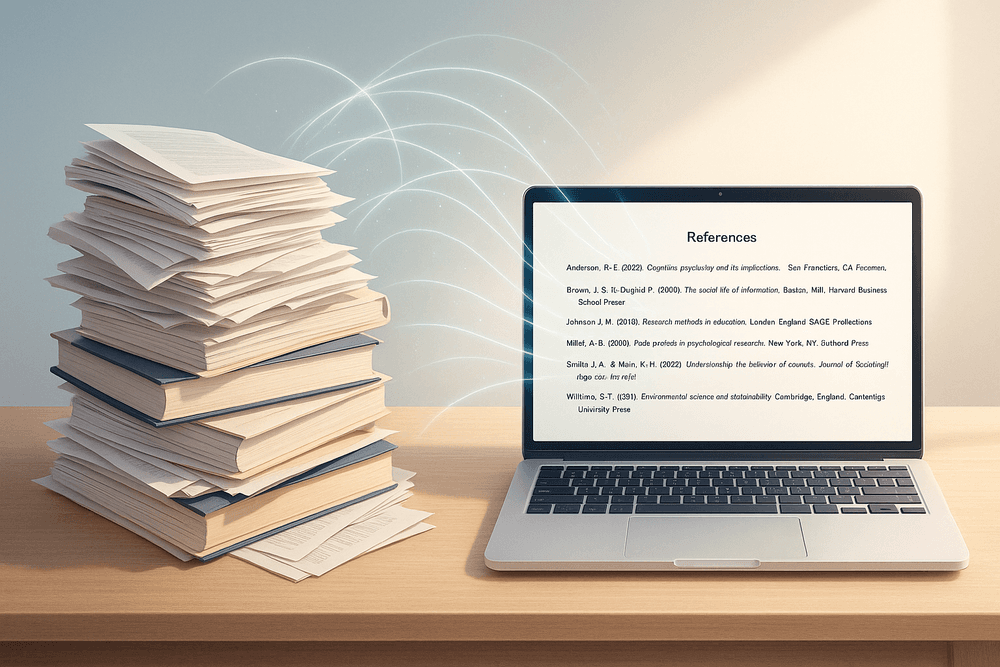
The days of painstakingly formatting bibliographies and losing precious hours to manual citation management are over. As we've explored, the modern research landscape has been transformed by the power of artificial intelligence. An AI citation generator is no longer just a convenient gadget; it's an essential tool for students, academics, and professionals who value accuracy, efficiency, and intellectual integrity. By automating the tedious task of creating citations, these platforms free you up to focus on what truly matters: developing strong arguments, conducting thorough research, and crafting compelling prose.
Moving from manual drudgery to automated precision allows you to reclaim your time, reduce stress, and submit your work with the confidence that every source is correctly attributed. Now, the final step is choosing the right partner for your academic journey.
Final Checklist: Choosing the Right Tool for Your Needs
Not all citation tools are created equal. To find the perfect AI citation generator for your specific workflow, use this checklist to evaluate your options:
- Comprehensive Style Support: Does the tool support all the citation formats you need? Look for essentials like APA 7, MLA 9, Chicago, and Harvard, but also consider if you need more specialized styles for certain disciplines.
- Versatile Source Types: Can it handle more than just books and journal articles? A top-tier generator should effortlessly cite websites, YouTube videos, podcasts, digital reports, and other modern sources.
- Accuracy and Verification: Does the tool pull metadata automatically and accurately? The best platforms cross-reference information from multiple databases to ensure the highest level of precision and minimize errors.
- User-Friendly Interface: Is the platform intuitive and easy to navigate? A clunky interface can be just as frustrating as manual citation. Look for features like a browser extension for one-click citing and a clean, organized project dashboard.
- Integration with Writing Software: Can it seamlessly integrate with your word processor of choice, such as Google Docs or Microsoft Word? Direct integration saves you from the copy-paste hassle and keeps your bibliography updated in real-time.
- Free vs. Premium Features: Evaluate what the free version offers. Is it sufficient for your needs, or do the premium features—like advanced grammar checks, plagiarism detection, and unlimited projects—provide a value that justifies the cost?
The Future of Academic Integrity and AI Tools
A common question surrounding AI tools is their impact on academic integrity. However, when used correctly, an AI citation generator becomes a powerful ally in upholding it. These tools are not about cutting corners; they are about eliminating human error that can lead to accidental plagiarism. By ensuring every piece of borrowed information is meticulously and correctly attributed, you are demonstrating a profound respect for the intellectual property of others.
Think of an AI citation tool like a sophisticated spell checker or grammar assistant. It doesn't write the paper for you, but it polishes the final product and handles a technical requirement with unparalleled accuracy. As technology evolves, these tools will become a standard part of the academic toolkit, recognized for their ability to strengthen, not weaken, the principles of scholarly work.
Ready to Start? Try the Top-Rated AI Citation Generator Today
You have the knowledge and the checklist. Now it’s time to take action. Stop letting tedious citations slow you down and introduce unnecessary risk into your work. Embrace the efficiency, precision, and peace of mind that comes with a powerful, AI-driven assistant.
Experience the future of academic writing for yourself. Try the top-rated AI citation generator today and transform your research process from frustrating to flawless.