
July 8, 2025
What Is an AI Chat Assistant and Why Do You Need One?
What Is an AI Chat Assistant and Why Do You Need One?
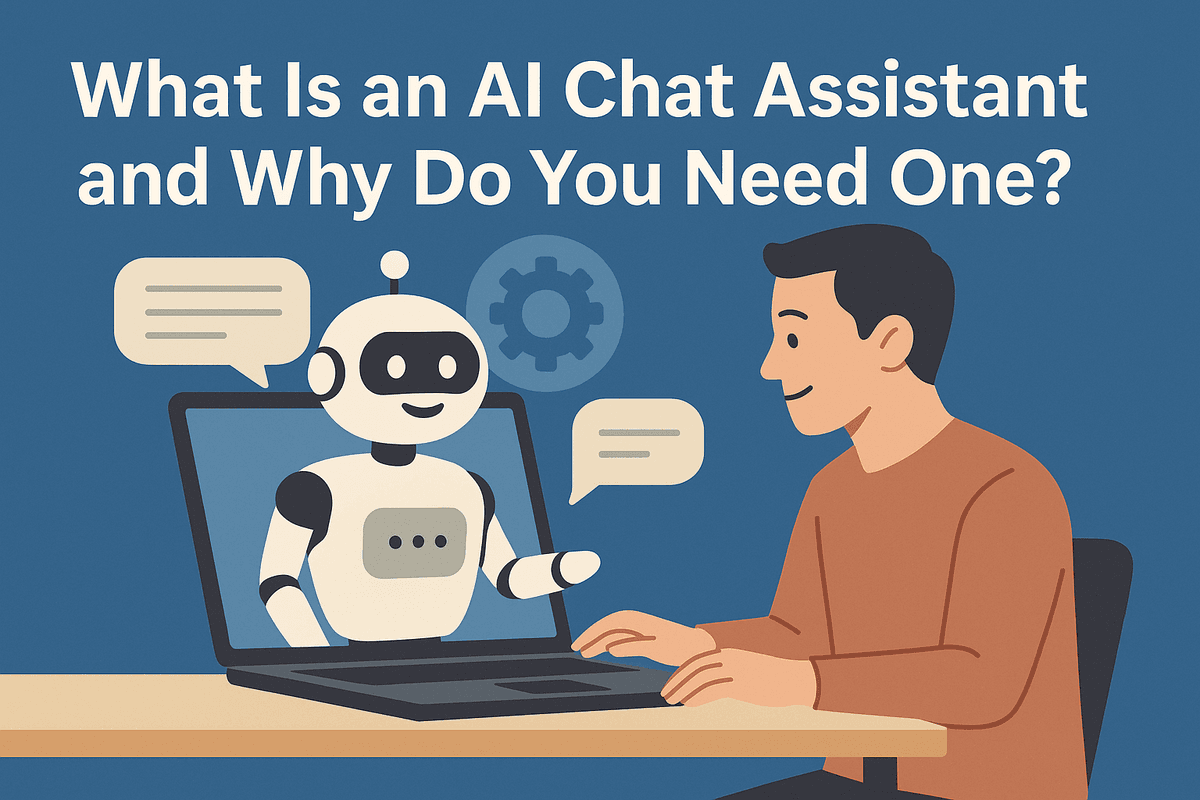
Gone are the days when artificial intelligence was purely the stuff of science fiction. Today, it’s a tangible and powerful tool. At its core, an ai chat assistant is a sophisticated software program you can interact with using everyday language. Think of it not just as a chatbot, but as a versatile partner designed to understand your requests, process vast amounts of information, and generate intelligent, human-like responses to help you with a wide array of tasks. It's your on-demand researcher, writer, coder, and creative collaborator, all rolled into one.
From Sci-Fi to Your Desktop: The Evolution of Chatbots
The concept of conversational AI has captivated us for decades, from HAL 9000 in 2001: A Space Odyssey to Iron Man’s J.A.R.V.I.S. The journey to today's advanced tools began with primitive chatbots like ELIZA in the 1960s, which simply matched keywords to spit out pre-programmed responses. Later, the internet age brought us rule-based chatbots on customer service websites. While functional, they were rigid, easily confused, and couldn't stray from their script.
The modern ai chat assistant represents a monumental leap forward. Instead of following strict rules, it operates on complex artificial intelligence, allowing it to understand nuance, remember context from your conversation, and generate entirely new content. The sci-fi dream of a helpful, intelligent digital companion is no longer a fantasy—it’s a practical reality available right on your desktop and smartphone.
How an AI Chat Assistant Can Revolutionize Your Workflow
The real question isn’t just what an ai chat assistant is, but what it can do for you. Integrating one into your daily routine can fundamentally transform your productivity and creativity. Here’s how:
- Supercharge Brainstorming: Overcome creative blocks by asking your assistant for blog post ideas, marketing angles, project names, or unique solutions to a difficult problem.
- Accelerate Content Creation: Drastically cut down the time it takes to write. Use it to draft emails, compose reports, generate social media content, write product descriptions, or even create a polished first draft of an article.
- Simplify Research: Instead of manually sifting through dense articles or long documents, you can ask your assistant to summarize the key findings, extract specific data points, or explain complex topics in simple terms.
- Automate Tedious Tasks: Streamline your work by offloading repetitive tasks. An ai chat assistant can help write and debug code snippets, create project timelines, translate languages, and organize your notes into structured formats.
Understanding the Core Technology: LLMs and NLP
The magic behind every powerful ai chat assistant lies in two groundbreaking technologies working in tandem: Natural Language Processing (NLP) and Large Language Models (LLMs).
- Natural Language Processing (NLP): This is the bridge between you and the machine. NLP is the field of AI that gives computers the ability to read, understand, and derive meaning from human language. It’s what allows you to type or speak a request as you would to a person, without needing to learn special commands.
- Large Language Models (LLMs): This is the powerhouse engine. An LLM is an enormous, complex neural network that has been trained on a massive dataset of text and code. This extensive training enables it to understand patterns, context, and subtleties in language. When you give it a prompt, the LLM uses its vast knowledge to predict the most logical and coherent sequence of words, generating a uniquely tailored and relevant response. Together, NLP and LLMs create the fluid, intelligent, and deeply useful conversational experience that defines the modern ai chat assistant.
Key Features to Look For in the Best AI Chat Assistant
The market is flooded with options, but not every ai chat assistant is created equal. To move beyond simple Q&A and unlock true productivity, you need a tool with a robust set of features. When evaluating your options, prioritize these four critical capabilities to ensure you're choosing a powerful and intuitive digital partner.
Contextual Understanding and Memory for Seamless Conversations
Have you ever had to repeat the same information to a chatbot over and over? A top-tier ai chat assistant eliminates this frustration with advanced contextual understanding and memory. This is the ability to remember previous parts of your current conversation—and in some cases, even past conversations—to provide more relevant and coherent responses.
Instead of treating each prompt as an isolated event, the AI builds on what's already been discussed. You can ask follow-up questions like "Can you make that more concise?" or "Expand on the second point" without restating the original topic. This creates a fluid, natural dialogue that feels less like talking to a machine and more like collaborating with a human assistant who truly understands your train of thought.
Integration Capabilities with Your Favorite Apps
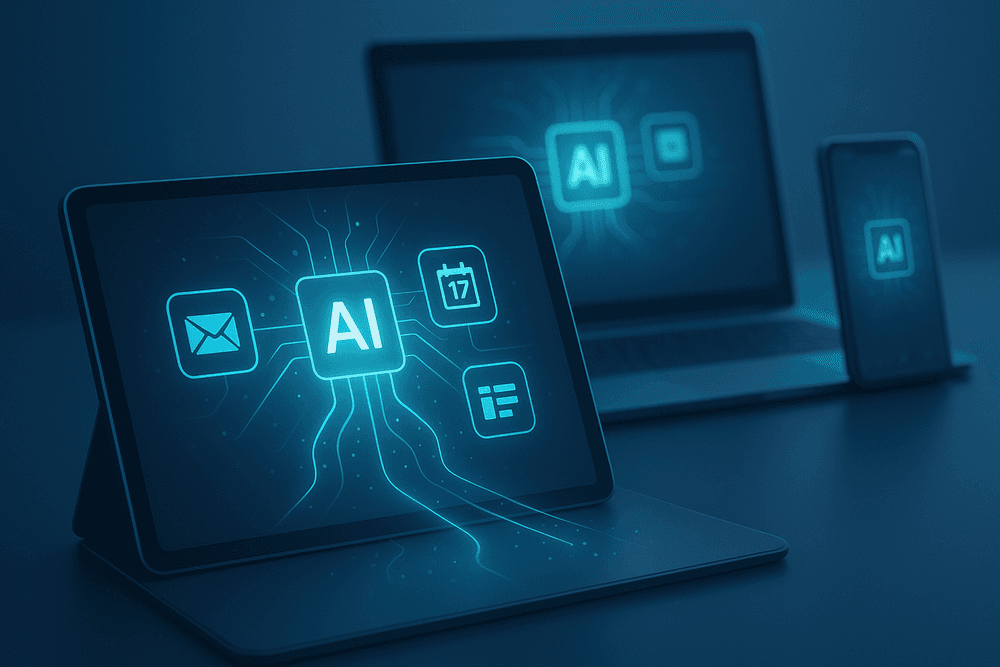
A standalone chatbot is useful, but an integrated one is a game-changer. The best ai chat assistant tools act as a central hub for your digital life by connecting directly to the apps and services you use every day. Imagine being able to:
- Draft an email and send it via your Gmail account.
- Schedule a meeting directly into your Google or Outlook Calendar.
- Add a task to your project management tool like Asana or Trello.
- Pull data from a Google Sheet to create a summary.
These integrations transform your assistant from a passive information source into an active command center. It breaks down the silos between your applications, allowing you to execute complex workflows with a single, simple command, saving you countless clicks and valuable time.
Customization and Persona Settings for a Personal Touch
Your needs are unique, and your ai chat assistant should be able to adapt. Look for robust customization options that allow you to tailor the AI's behavior, tone, and knowledge base. This goes far beyond choosing a light or dark mode. Advanced customization includes:
- Persona Settings: Instruct the AI to respond in a specific voice—be it a formal business consultant, a creative brainstorming partner, or a friendly, casual peer.
- Custom Instructions: Provide the AI with background information about yourself, your company, or your specific projects. This helps it generate more personalized and relevant output without needing a reminder each time.
- Skill Sets: Define the AI's role for a specific task, such as a "Python coding expert" or a "social media marketing strategist," to get specialized, high-quality assistance.
Cross-Device Syncing and Accessibility
In today's hybrid work environment, your workflow isn't confined to a single device. A crucial feature is the ability to access your ai chat assistant seamlessly across your desktop, laptop, tablet, and smartphone. True cross-device syncing ensures that your conversation history, custom instructions, and preferences are always up-to-date, no matter where you log in. You can start brainstorming an idea on your computer at the office and seamlessly pick up the conversation on your phone during your commute. This level of accessibility ensures your AI partner is always available and ready to assist whenever and wherever inspiration strikes.
Boosting Your Productivity: Real-World Use Cases for Your AI Chat Assistant
An AI chat assistant is more than just a technological novelty; it's a powerful engine for productivity waiting to be integrated into your daily workflows. The true value emerges when you move beyond simple queries and start applying its capabilities to real-world tasks. From vanquishing inbox overload to sparking creative genius, here are four practical ways you can leverage your assistant to save time, reduce friction, and achieve more.
Automating Repetitive Tasks: Email Drafting and Summarization
The modern inbox is a notorious time sink. Drafting routine emails, following up with clients, and deciphering long, convoluted threads can consume hours of your day. Your AI chat assistant can reclaim that time by acting as a diligent administrative partner.
Instead of staring at a blank composition window, simply give your assistant a prompt like, "Draft a polite but firm follow-up email to the marketing team about the overdue Q3 report. Remind them the deadline was last Friday and ask for a status update by the end of the day." The assistant will generate a professional draft in seconds, ready for you to review and send. Similarly, you can paste a lengthy email chain and ask it to "Summarize the key decisions and action items from this conversation." It will distill pages of text into a concise, actionable bulleted list, saving you significant cognitive energy.
Accelerating Research and Data Analysis in Minutes
Traditional research is a multi-step process: you search, you click, you read, you synthesize. An AI chat assistant collapses these steps into a single conversational command. It can scour the internet and its vast knowledge base to deliver synthesized answers, not just a list of links. Ask it to "Explain the core principles of behavioral economics and provide three real-world examples," and you’ll get a clear, structured explanation instantly.
This capability extends to data analysis. For those working with spreadsheets, you can ask your assistant to perform tasks that would otherwise require complex formulas or pivot tables. A prompt like, "Analyze this customer feedback data and identify the three most common complaints," can turn raw numbers into clear insights, helping you make data-driven decisions faster than ever before.
Brainstorming Content and Creative Ideas Instantly
Every creator, marketer, and strategist knows the feeling of hitting a creative wall. An AI chat assistant is the ultimate brainstorming partner, available 24/7 to help you overcome writer's block and generate fresh ideas on demand. It excels at divergent thinking, providing a wide array of options to get your own creative juices flowing.
Feed it a simple request like, "Give me 10 compelling blog post titles about the future of remote work," or "Brainstorm five unique names for a new eco-friendly cleaning product line." You can refine its suggestions, ask for different angles, or even provide a half-finished idea and ask for ways to expand upon it. This collaborative process turns the daunting blank page into a playground of possibilities.
Learning New Skills with a Personalized AI Tutor
Whether you're looking to master a new programming language, understand a complex scientific theory, or learn a historical event in detail, your AI chat assistant can function as a personalized, patient tutor. Unlike static courses or videos, it can tailor the learning experience directly to your questions and pace.
Start with a goal: "Create a 4-week study plan for me to learn the basics of SQL, focusing on practical application." The assistant will outline a curriculum. As you progress, you can ask for clarifications ("Explain the difference between a LEFT JOIN and an INNER JOIN using a simple analogy") or generate practice problems to test your knowledge. This interactive, on-demand learning model makes acquiring new skills more accessible and efficient than ever.

How to Choose the Right AI Chat Assistant for You
With a rapidly growing market, selecting the perfect AI chat assistant can feel like navigating a maze. The best tool for a student won't necessarily be the right fit for a corporate team. To make an informed decision, you need to look beyond the hype and evaluate each option based on your specific needs. Here’s a breakdown of the key factors to consider.
Free vs. Paid Tools: What's the Real Cost?
The "free" label is tempting, but it's crucial to understand the trade-offs.
- Free AI Chat Assistants: These are excellent entry points. They are perfect for casual users who need help with homework, drafting a friendly email, or satisfying a moment of curiosity. However, free versions often come with limitations, such as slower response times, lower daily usage caps, and access to older, less powerful AI models.
- Paid AI Chat Assistants: Subscribing to a paid plan is an investment in power and productivity. Paid tiers typically unlock access to the provider's most advanced models, ensuring faster, more accurate, and more nuanced responses. You also gain higher usage limits and priority access during peak times. Many paid plans include advanced features like image generation, data analysis capabilities, and the ability to upload files for summarization or review, making them essential for serious users.
Evaluating Security and Data Privacy
When you interact with an AI chat assistant, you are sharing data. Protecting that data, especially if it’s sensitive or proprietary, is non-negotiable. Before committing to a service, carefully review its privacy policy. Ask these critical questions:
- Is my conversation data used for training the AI model? Most services use user data to improve their models. Look for options that allow you to opt out or offer business-grade plans that explicitly prohibit using your data for training.
- How is my data stored and protected? Check for information on data encryption, both in transit and at rest. Reputable providers will be transparent about their security measures.
- What are the data retention policies? Understand how long your conversations are stored and if you have the ability to delete your history permanently.
For professional use, always lean towards an AI chat assistant that offers enterprise-level security and clear data handling agreements.
Assessing Ease of Use and the User Interface
A powerful engine is useless if the dashboard is impossible to navigate. The ideal AI chat assistant should feel intuitive and friction-free. When testing a tool, pay attention to:
- The Interface: Is it clean and uncluttered? Can you easily find your chat history and start a new conversation?
- Customization: Can you tweak settings or provide custom instructions to tailor the AI’s responses to your preferred tone and format?
- Accessibility: Is the tool available where you need it? Look for a seamless experience across web browsers, dedicated desktop apps, and mobile devices.
Personal vs. Professional Use: Aligning Features with Your Goals
Finally, the most important factor is how you plan to use the tool.
- For Personal Use: If your goals are learning, creativity, and general life admin, a versatile, user-friendly tool is best. Look for an AI chat assistant that excels at brainstorming ideas, planning trips, explaining complex topics simply, and helping with creative writing.
- For Professional Use: If you need a productivity powerhouse, your focus should be on features that streamline your workflow. This includes capabilities like generating and debugging code, summarizing lengthy reports, analyzing spreadsheets, drafting professional communications, and integrating with other business software. Choosing an AI chat assistant designed for professional environments will ensure you have the security, power, and specialized features needed to get the job done right.
Mastering Your AI Chat Assistant: Best Practices and Pro Tips
An ai chat assistant is like a brilliant but very literal apprentice. It has immense potential, but to unlock it, you need to become a skilled manager. Simply giving vague commands will yield generic results. Mastering your AI chat assistant involves learning how to communicate effectively, guiding its creative process, and critically evaluating its output. These best practices will transform your interactions from simple Q&A sessions into powerful, productive collaborations.
Crafting Effective Prompts for More Accurate Results
The quality of your output is directly tied to the quality of your input—a principle often called "garbage in, garbage out." To get the best results, think of your prompt as a detailed creative brief for your ai chat assistant.
Instead of a vague request like, "Write an email about our new feature," a more effective prompt would be: "Draft a promotional email to our existing customer list announcing our new 'Automated Reporting' feature. Highlight its top three benefits: saves time, reduces manual errors, and provides real-time insights. The tone should be exciting and professional, with a clear call-to-action to 'Try It Now' in their dashboard."
Specificity is key. Use strong action verbs (e.g., Analyze, Compare, Summarize, Draft), define the desired format (e.g., bullet points, table, blog post), and state the purpose and target audience clearly.
Providing Clear Context and Constraints to Guide the AI
An ai chat assistant lacks real-world experience and relies entirely on the information you provide. Giving context is like giving it a map and a compass. Before asking your question, provide relevant background information. You can also assign it a persona by starting your prompt with "Act as a [Job Title]," such as "Act as a senior financial analyst." This helps the AI adopt the appropriate tone, vocabulary, and perspective.
Equally important are constraints. Set boundaries to guide the output, such as:
- "Keep the response under 250 words."
- "Explain this concept simply, as if to a 10th-grader."
- "Avoid using technical jargon."
- "Write in the style of The Harvard Business Review."
How to Iterate on Responses to Refine and Perfect Output
Your first prompt rarely yields the perfect result, and that's by design. Treat your interaction with an ai chat assistant as a conversation. The real power lies in iteration. Use the initial response as a starting point and provide targeted feedback to refine it. Don't start a new chat; continue the thread. Simple follow-up commands can work wonders:
- "Make that more concise and formal."
- "Expand on the second point you made."
- "Can you rephrase that to be more persuasive?"
- "Now, generate five alternative headlines for this text."
This back-and-forth process allows you to sculpt the AI's output until it precisely matches your vision, turning a good draft into a great final product.
The Importance of Fact-Checking and Verifying AI-Generated Information
This is the golden rule of using any AI tool: Always verify critical information. While incredibly advanced, these models can make mistakes, misinterpret data, or "hallucinate"—confidently stating facts that are incorrect or entirely fabricated. They don't "know" things; they predict the next most likely word in a sequence based on their training data.
Treat all AI-generated content, especially statistics, dates, quotes, and technical data, as a first draft that requires human oversight. Cross-reference any claims with reputable, primary sources before publishing or making decisions based on the information. Your role is not just to prompt, but to be the final editor and arbiter of truth.

The Future Is Conversational: What's Next for the AI Chat Assistant?
The evolution of the AI chat assistant is happening at a breathtaking pace. We’ve moved beyond simple question-and-answer bots to sophisticated partners that can draft, code, and create. But this is just the beginning. The next leap forward isn't just about making the current model better; it's about fundamentally changing how we interact with technology. The future is proactive, autonomous, and deeply integrated into every facet of our digital lives.
The Rise of Proactive and Autonomous AI Agents
Imagine an assistant that doesn't wait for your command. This is the shift from a reactive to a proactive AI. The next-generation ai chat assistant will function as an autonomous agent, capable of anticipating your needs and executing complex, multi-step tasks across various platforms without constant supervision.
Think of it this way:
- Today: You ask your AI chat assistant, "Find me flights to Tokyo for next month."
- Tomorrow: Your AI agent sees a new conference added to your calendar, cross-references your known travel preferences, finds the most cost-effective flights that align with your schedule, researches hotels near the venue with high ratings, and presents you with a complete, bookable itinerary for one-click approval.
These AI agents will act as a central hub, orchestrating your digital tools. In a business context, an agent could monitor project management software, identify a bottleneck, analyze the relevant communications in Slack, and then draft a suggested solution to the project manager. The conversational interface of the ai chat assistant will be the cockpit from which you manage these powerful, autonomous operations.
How to Prepare for the Next Wave of AI Innovation
This future requires more than just adopting new software; it demands a new mindset and skillset. To stay ahead of the curve, focus on these key areas:
- Cultivate AI Literacy: You don't need to be a data scientist, but understanding what AI can and cannot do is crucial. Learn to see your AI assistant as a team member with a unique set of skills.
- Master the Art of Delegation: The most critical skill will be defining goals. Instead of giving simple prompts, you'll provide high-level objectives and constraints. Your role will shift from "doer" to "director," tasking your AI with outcomes, not just actions.
- Prioritize Integration: The power of future AI lies in its ability to connect disparate systems. When choosing tools, favor those with robust APIs and a commitment to building an interconnected ecosystem. Your ai chat assistant will only be as powerful as the data and tools it can access.
Take Your First Step: Integrating an AI Chat Assistant Today
The best way to prepare for this autonomous future is to start building a collaborative relationship with AI now. The tools available today are the perfect training ground for developing the habits and skills you'll need tomorrow.
Don't try to automate everything at once. Start small. Identify a few high-frequency, low-complexity tasks in your daily routine. Could an ai chat assistant help you draft your initial emails every morning? Can it summarize long reports or articles to save you reading time? Can it help you brainstorm marketing copy or structure a presentation?
By integrating an AI chat assistant into your workflow today, you’re doing more than just boosting your immediate productivity. You are actively learning the language of AI collaboration, refining your ability to delegate effectively, and building the foundational muscle memory for a future where your AI partner works not just for you, but with you. The journey to the next wave of innovation begins with a single, simple prompt.