
July 27, 2025
What is an AI Audit Trail and Why is it Crucial for
What is an AI Audit Trail and Why is it Crucial for Governance?
In the rapidly evolving landscape of artificial intelligence, accountability is no longer a "nice-to-have"—it's a business and regulatory imperative. At the heart of this new paradigm lies the AI audit trail, a concept that goes far beyond traditional system logs. An AI audit trail is a comprehensive, chronological, and immutable record that documents the entire lifecycle of an AI model, from its inception to its real-time operational decisions.
Think of it as a definitive "black box recorder" for your AI systems. It doesn't just log errors or access times; it captures the who, what, when, where, and why behind every significant action and decision made by or involving the AI. This detailed record is the cornerstone of effective AI governance.
More Than a Log: The Anatomy of a Modern AI Audit Trail
While a standard log file might tell you that a service was called at a certain time, a true AI audit trail provides a much richer, multi-dimensional view. It meticulously tracks critical information across the entire AI pipeline, including:
- Data Provenance: What specific datasets were used to train and validate the model? Where did this data originate, and how has it been cleaned, labeled, or transformed?
- Model Lineage: Which version of the model made a particular prediction? Who developed it, when was it trained, and what were the specific hyperparameters and configurations used?
- Decision Rationale: For any given output, what were the key inputs and features that influenced the AI’s decision? This is crucial for explainability and debugging.
- Operational History: Who deployed the model? What were the inputs for a specific inference? Were there any manual interventions or overrides of the AI's recommendation?
Without this level of detail, tracing an AI-driven outcome back to its source is a guessing game. A robust AI audit trail transforms guesswork into a clear, evidence-based process.
The Bedrock of Accountability in the Age of AI
Accountability is impossible without traceability. When an AI system makes a critical decision—such as approving a credit line, diagnosing a medical condition, or flagging a transaction for fraud—organizations must be able to answer for that outcome.
Imagine a customer disputes a loan denial issued by an AI. A comprehensive AI audit trail allows you to reconstruct the entire event. You can pinpoint the exact model version used, the specific customer data fed into it, and the key factors that led to the negative decision. This capability is not only essential for resolving customer issues but also for demonstrating compliance with regulations like the EU's AI Act or GDPR, which grant individuals a "right to an explanation." Without it, your organization is left in a vulnerable position, unable to defend or even understand the actions of its own technology.
Building Stakeholder Trust Through Radical Transparency
Ultimately, the most significant benefit of a meticulous AI audit trail is trust. Transparency is the currency of trust in the digital age, and an audit trail provides the verifiable proof needed to earn it from every stakeholder.
- For Regulators: It offers demonstrable evidence of compliance, due diligence, and risk management.
- For Customers and the Public: It provides assurance that the AI systems affecting their lives are fair, equitable, and non-discriminatory.
- For Internal Teams: It empowers developers to debug models, helps leadership manage risk, and gives everyone confidence in the AI solutions being deployed.
In an era where AI's influence is growing exponentially, a robust AI audit trail is no longer a technical option. It is a fundamental component of responsible innovation and a strategic asset for any enterprise serious about building a trustworthy and accountable AI-powered future.
Core Components of a Comprehensive AI Audit Trail
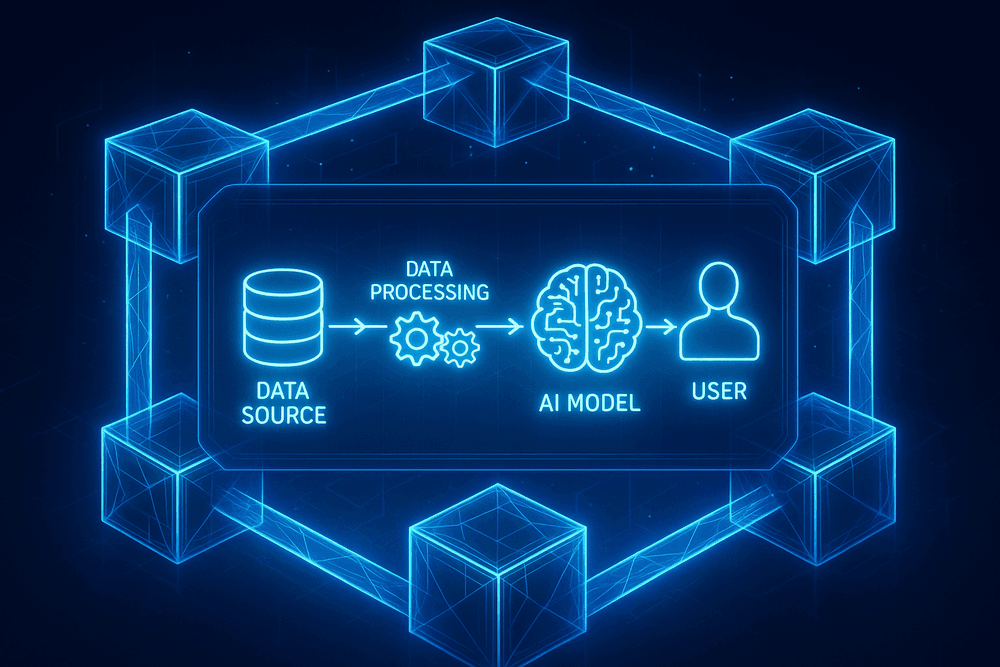
A truly effective ai audit trail is not a monolithic log file but a sophisticated, interconnected system of records. It’s designed to provide a complete, chronological history of every AI-driven process, from the initial data point to the final decision and beyond. To build a system that fosters trust and ensures accountability, you must focus on four indispensable components. These pillars work together to create a transparent and verifiable record of your AI's lifecycle.
Tracking Data Lineage: From Source to Decision
The journey of data is the foundation of any AI model's decision. A comprehensive ai audit trail must meticulously track data lineage, providing a clear map from the original data source to the final output. This involves logging:
- Data Origins: Where did the data come from? Document the source systems, databases, or third-party providers.
- Transformations: Record every preprocessing step, including cleaning, normalization, feature engineering, and labeling. This is critical for understanding how raw data was shaped into something the model could use.
- Data Used for Training and Inference: Capture the exact dataset version used to train a model and the specific data points used to generate a particular prediction or decision.
Complete data lineage is non-negotiable for debugging unexpected model behavior, identifying sources of bias, and satisfying regulatory requirements like GDPR's "right to explanation." It answers the fundamental question: "On what basis was this decision made?"
Monitoring AI Model Behavior and Versioning
AI models are not static assets; they evolve. They are retrained, updated, and replaced. An essential function of an ai audit trail is to serve as a model's "biography," capturing its entire operational history. This includes:
- Model Versioning: Logging a unique identifier for every model version deployed, along with its release date.
- Training Details: Recording the hyperparameters, algorithms, and training datasets associated with each version.
- Performance Metrics: Continuously monitoring and logging key performance indicators (KPIs) like accuracy, precision, fairness metrics, and latency. This helps detect "model drift," where a model's performance degrades over time as real-world data changes.
When an audit is required, you must be able to pinpoint exactly which model version made a specific decision at a specific time. Without this, assigning accountability is impossible.
Logging User Interactions and System Access
AI systems don't operate in a vacuum. Humans and other systems constantly interact with them. A robust audit trail must capture these interactions to provide context and ensure security. Key logs include:
- Access Logs: Who accessed the AI system, when, and from where? This includes both user logins to dashboards and API calls from other applications.
- Query Logs: What questions were asked of the AI? Log the specific inputs, queries, and prompts submitted to the model.
- Action Logs: What actions were taken based on the AI's output? This could include a user approving a loan, a system flagging a transaction, or a marketing tool launching a campaign. It’s crucial for understanding the real-world impact of the AI.
This component provides a clear record of who did what and when, which is vital for security incident response and internal governance.
Ensuring Data Immutability and Tamper-Proofing
The integrity of an audit trail is its most important attribute. If logs can be altered or deleted, they are worthless. The entire ai audit trail must be immutable and tamper-proof. This means implementing technical controls to guarantee that once a record is written, it cannot be changed. Common techniques include:
- Cryptographic Hashing: Using algorithms to create a unique, unchangeable "fingerprint" for log entries, often chaining them together so any modification would be immediately obvious.
- Write-Once, Read-Many (WORM) Storage: Storing logs in systems where data cannot be overwritten or erased.
- Blockchain or Distributed Ledger Technology: For high-stakes applications, leveraging a decentralized ledger provides the ultimate guarantee of immutability, as records are verified and distributed across multiple nodes.
By ensuring immutability, you create a source of truth that regulators, auditors, and internal stakeholders can unequivocally trust.
Implementing an AI Audit Trail: Best Practices for Success
Transitioning from theory to practice requires a structured approach. A robust AI audit trail isn’t a single piece of software you install; it's a strategic process woven into your entire AI lifecycle. By following these best practices, you can build a system that delivers true transparency, ensures compliance, and strengthens governance from the ground up.
Step 1: Define Your Auditing Scope and Compliance Needs
Before you write a single line of code or evaluate any tool, you must define what you need to audit and why. This foundational step prevents you from capturing too little data (risking non-compliance) or too much (creating noise and incurring unnecessary costs). Begin by answering these critical questions:
- Which AI systems are in scope? Not all models carry the same risk. Prioritize systems that make critical decisions, handle sensitive personal data, or have a direct financial or customer-facing impact. A model used for internal inventory management has different auditing needs than one used for credit scoring or medical diagnoses.
- What are your regulatory obligations? Identify all relevant regulations, such as GDPR, CCPA, HIPAA, or financial services rules like the Fair Credit Reporting Act. Each regulation imposes specific requirements on data logging, explainability, and data subject rights, which will directly shape your AI audit trail architecture.
- What specific events must be logged? Create a detailed list of data points to capture. This typically includes the input data used for a prediction, the model version, the timestamp, the resulting output or decision, confidence scores, and any human-in-the-loop overrides.
Step 2: Choose the Right Tools and Platforms for Your Stack
With a clear scope defined, you can select the technology to bring your AI audit trail to life. The market offers a range of options, and the right choice depends on your existing infrastructure, technical expertise, and budget.
- Native MLOps Platform Features: Major cloud and MLOps platforms (e.g., AWS SageMaker, Azure Machine Learning, Databricks) offer built-in logging and model monitoring capabilities. These are often the easiest to implement and are well-integrated but may lack the specialized governance features of dedicated tools.
- Dedicated AI Governance and Observability Platforms: A growing number of third-party vendors specialize in providing a comprehensive AI audit trail. These platforms offer advanced features for automated model monitoring, drift detection, bias analysis, and explainability, often with user-friendly dashboards designed for both technical and non-technical stakeholders.
- Custom-Built Solutions: For organizations with unique requirements or a desire for full control, building a custom solution is an option. This typically involves combining open-source tools like MLflow for tracking experiments with data warehouses and business intelligence tools for logging and visualization. This approach offers maximum flexibility but demands significant engineering resources to build and maintain.
Step 3: Integrate the Audit Trail into Your MLOps Pipeline
An AI audit trail is most effective when it is an automated and integral part of your MLOps pipeline, not a manual process tacked on at the end. Integration ensures that traceability is built-in from the very beginning. Key integration points include:
- Data Ingestion: Log the source, version, and metadata of all training and validation datasets.
- Model Training: Automatically capture the code version, hyperparameters, training environment, and final performance metrics for every model trained.
- Deployment: Log every model deployment, including which version was promoted to which environment (e.g., staging, production) and who authorized it.
- Inference: This is the most critical stage. Every API call to the model in production should generate a detailed log entry, creating an immutable record of its real-world behavior. This complete chain of evidence is the core of a functional AI audit trail.
Step 4: Establish Automated Alerts and Review Protocols
A log file that no one ever looks at is useless. The final step is to make your AI audit trail an active, operational system by establishing automated monitoring and clear human-in-the-loop review processes.
Set up automated alerts to flag critical events and anomalies in real-time. Key alerts should monitor for:
- Data and Concept Drift: When the statistical properties of incoming data change.
- Performance Degradation: When key metrics like accuracy or precision fall below a set threshold.
- Bias and Fairness Issues: When the model’s outputs disproportionately favor or penalize a particular demographic group.
- Security Threats: Such as an unusual volume of requests or outlier inputs that could signal an attempt to exploit the model.
Alongside alerts, define clear review protocols. Who is responsible for investigating an alert? What is the escalation path for critical issues? How are findings documented and remediation actions tracked? This closes the loop, transforming your AI audit trail from a passive record into an active defense for accountability and trust.

Real-World Impact: The AI Audit Trail in Key Industries
The concept of an AI audit trail moves from a theoretical necessity to a tangible, business-critical asset when we examine its application across different sectors. This immutable record of an AI's decision-making process is not just a technical feature; it's the bedrock of trust, compliance, and operational integrity. By providing a clear, chronological history of AI operations, organizations can unlock new levels of accountability. Let's explore how the AI audit trail is making a significant impact in some of the world's most regulated and high-stakes industries.
Financial Services: Fortifying Compliance and Trust
In the highly regulated world of FinTech and banking, an AI audit trail is non-negotiable. Financial institutions leverage AI for everything from credit scoring and loan approvals to algorithmic trading and fraud detection. Regulators, enforcing frameworks like the Sarbanes-Oxley Act (SOX), GDPR, and Know Your Customer (KYC) mandates, demand complete transparency. A robust AI audit trail provides a step-by-step, verifiable log of every automated decision. It can prove why a loan application was denied or a transaction was flagged as suspicious, demonstrating that the process was fair, unbiased, and compliant. This level of traceability is crucial for passing regulatory audits, avoiding hefty fines, and maintaining customer trust in an increasingly automated financial landscape.
Healthcare: Validating Decisions and Ensuring Patient Safety
When an AI system is involved in diagnosing a disease or recommending a treatment plan, the stakes are life and death. The "black box" problem is unacceptable. This is where a detailed AI audit trail becomes a cornerstone of medical AI governance. It allows clinicians, hospital administrators, and regulatory bodies like the FDA to reconstruct the AI's reasoning. The audit trail can show precisely which patient data, imaging features, or lab results led to a specific diagnostic conclusion. This validation is essential for gaining physician trust, ensuring patient safety, and securing regulatory approval for new AI-driven medical devices. Furthermore, in the event of an adverse outcome, the AI audit trail provides a clear, factual record for liability analysis and continuous model improvement.
Human Resources: Championing Fairness and Mitigating Bias
AI promises to revolutionize recruitment by rapidly screening thousands of candidates. However, this efficiency comes with the significant risk of perpetuating or even amplifying historical biases. An AI audit trail is a powerful tool for ensuring fairness and equity in automated hiring processes. By logging the data points and model logic used to evaluate each candidate, organizations can proactively audit their AI for bias related to gender, race, or age. If a hiring pattern is questioned, the AI audit trail provides concrete evidence to demonstrate compliance with Equal Employment Opportunity Commission (EEOC) guidelines and other anti-discrimination laws. This transparency not only mitigates legal risk but also helps build a more diverse and talented workforce.
Cybersecurity: Securing Operations with Transparent Anomaly Detection
In cybersecurity, AI systems are on the front lines, tasked with detecting and responding to threats in real time. But how can a security operations team trust an automated alert? The answer lies in the AI audit trail. When an AI flags a network activity as anomalous, the audit trail provides the "why" behind the alert, showing security analysts the sequence of events and data patterns that triggered it. This context is invaluable for quickly validating threats, reducing the noise from false positives, and accelerating incident response. By making AI-driven security explainable, the AI audit trail builds confidence in automated defense systems, enabling teams to secure critical infrastructure more effectively.
Unlocking Business Value with a Strategic AI Audit Trail
An AI audit trail is far more than a technical log file or a compliance checkbox; it’s a strategic asset that generates tangible business value. By moving beyond a reactive, compliance-focused mindset, organizations can leverage their AI audit trail to drive efficiency, build trust, and create a distinct competitive advantage. A detailed, immutable record of your AI system's lifecycle—from data ingestion and model training to real-time decision-making—transforms abstract governance principles into concrete operational and strategic benefits. This verifiable record is the foundation for unlocking deeper value across your entire enterprise.
Streamlining Regulatory Reporting and Simplifying Compliance
In an era of increasing regulatory scrutiny, with frameworks like the EU AI Act setting new global standards, demonstrating compliance is non-negotiable. Manually gathering evidence for audits is a resource-intensive and error-prone process. A comprehensive AI audit trail automates this critical function. It provides a centralized, chronological record of model versions, training datasets, user access permissions, and the rationale behind specific predictions. When regulators inquire why a certain decision was made, you can instantly provide a precise, time-stamped answer directly from the log. This not only dramatically simplifies audit preparations but also reduces the risk of non-compliance penalties, freeing up valuable resources to focus on innovation instead of paperwork.
De-risking AI Adoption and Building Stakeholder Confidence
The "black box" problem—where AI decision-making processes are opaque—is a major source of risk and a significant barrier to enterprise-wide AI adoption. Stakeholders, from the board of directors and investors to customers and employees, are rightly hesitant to trust systems they don't understand. An AI audit trail is a powerful tool for demystifying AI operations. By providing clear traceability and explainability, it proves that your AI systems are operating as intended, fairly, and securely. This transparency de-risks AI initiatives, builds crucial internal and external confidence, and fosters a culture of trust that is essential for scaling AI successfully and responsibly.
Accelerating Incident Response and Root Cause Analysis
When an AI model produces an unexpected or erroneous outcome, every moment counts. Without a clear record, technical teams are left scrambling to conduct slow, speculative digital forensics to understand what went wrong. An AI audit trail functions as the system's flight recorder, enabling rapid and precise incident response. If a model generates a biased loan decision, for example, the audit trail allows your team to immediately trace the event back to its source. They can pinpoint the exact data inputs, the specific model version used, and the algorithmic pathway that led to the flawed result. This capability dramatically shortens investigation times, facilitates faster remediation, and provides the critical insights needed to prevent similar incidents from recurring.
Gaining a Competitive Edge with Responsible AI Principles
In today's marketplace, trust is a powerful brand differentiator. Customers, partners, and top talent are increasingly drawn to organizations that can prove their commitment to ethical and responsible practices. Simply publishing a statement on Responsible AI is not enough; you must be able to demonstrate it. An AI audit trail provides that tangible proof. It is a verifiable testament to your commitment to fairness, transparency, and accountability in every AI-driven process. By embedding this level of integrity into your operations, you build a reputation as a trustworthy leader, attracting discerning customers and setting your brand apart in a crowded and competitive landscape.

The Future of Auditing and Your Next Steps in AI Governance
The era of periodic, manual audits for technology systems is rapidly becoming obsolete, especially in the dynamic world of artificial intelligence. AI models are not static software; they evolve with new data, leading to concepts like model drift and emergent behaviors that traditional spot-checks simply cannot capture. To maintain control and trust, your organization must shift from reactive, after-the-fact reviews to a proactive, continuous governance model. The cornerstone of this modern approach is a comprehensive AI audit trail, and the future is one where auditing is automated, embedded, and happens in real time.
The Inevitable Shift to Real-Time, Automated Auditing
Imagine trying to understand an airplane's flight path by only looking at its takeoff and landing positions. You’d miss all the critical events, turbulence, and course corrections that happened mid-flight. The same is true for AI. A periodic audit offers a mere snapshot, missing the thousands of daily predictions, data shifts, and performance fluctuations that truly define a model's behavior and risk profile.
The future of auditing is continuous and automated, powered by a granular AI audit trail. This means:
- Constant Monitoring: Instead of quarterly reviews, systems will automatically monitor every prediction, flagging anomalies, data drift, and potential bias as they occur.
- Proactive Alerts: Governance platforms will automatically alert compliance and data science teams to potential regulatory breaches or performance degradation, allowing for immediate intervention.
- Embedded Compliance: An AI audit trail provides immutable, timestamped evidence that a model is operating within predefined ethical and regulatory guardrails, transforming compliance from a manual task into an automated, verifiable state.
How to Select a Scalable AI Governance Platform
Implementing a robust AI audit trail is not a manual logging exercise; it requires a purpose-built platform. As you evaluate solutions, prioritize a platform that can grow with your AI initiatives and provide a single source of truth for all stakeholders. Look for these critical capabilities:
- Comprehensive Data Ingestion: The platform must be able to capture everything. This includes model inputs and outputs, feature data, explainability metrics (like SHAP values), model versions, user context, and environment details. This complete record forms the backbone of your AI audit trail.
- Scalability and Performance: Your platform must handle potentially billions of transactions from numerous models without impacting the performance of your production applications.
- Seamless Integration: Look for a solution with flexible APIs and pre-built connectors that can easily integrate into your existing MLOps pipelines, data warehouses, and business intelligence tools.
- Model Agnosticism: The platform should support all types of models you use or plan to use, from traditional machine learning and deep learning to the latest Large Language Models (LLMs).
- Role-Based Access and Reporting: It must provide intuitive dashboards and customizable reports for different audiences—from data scientists debugging a model to auditors verifying compliance and executives assessing risk.
Start Your AI Audit Trail Implementation Today
Building a mature AI governance practice is a journey, but you can—and should—start now. Delaying implementation only increases your exposure to regulatory, financial, and reputational risk. Take these concrete first steps:
- Identify a Pilot Project: Select a single, high-value AI system. A customer-facing model or one used for critical financial decisions is often a great starting point, as its risk profile justifies the initial investment.
- Define Core Requirements: In collaboration with legal, compliance, and data science teams, determine the essential information your AI audit trail must capture for this pilot project. Focus on what’s needed for key regulations like GDPR or industry-specific mandates.
- Evaluate Your Technology: Assess whether your current logging and monitoring tools can meet these requirements. More often than not, you will find that a specialized AI governance platform is necessary to achieve the required depth and scale.
By taking these measured steps, you can begin building the foundational AI audit trail necessary to secure your AI systems, foster trust with stakeholders, and turn governance into a competitive advantage.