
November 23, 2025
What Is an AI Audit Trail and Why Does It Matter Now?
What Is an AI Audit Trail and Why Does It Matter Now?
As artificial intelligence becomes the engine of modern business—making decisions in everything from loan approvals to medical diagnoses—the question is no longer if AI works, but how it works. We've moved past the "magic black box" era. Today, stakeholders, regulators, and customers are all demanding the same thing: accountability. This is where the AI audit trail emerges as a non-negotiable component of responsible AI governance.
Defining the Digital Paper Trail for AI Decisions
At its core, an AI audit trail is a detailed, immutable, and chronological record of an AI system’s entire lifecycle and operational history. Think of it as a flight data recorder for your AI. It’s far more than a simple log file; it’s a comprehensive narrative that captures every critical event, including:
- Data Lineage: The specific datasets used for training, testing, and validation.
- Model Versioning: Which version of the model was active when a decision was made.
- Parameters & Inputs: The exact data and settings fed into the model for a specific query.
- Decision Logic: The key factors and weights the model used to arrive at its conclusion.
- Outputs & Outcomes: The final decision or prediction generated by the system.
This detailed record provides a transparent, end-to-end view, making it possible to reconstruct any AI-driven decision with precision. A robust AI audit trail ensures that every action is traceable, verifiable, and explainable.
The High Stakes: Mitigating AI Bias, Errors, and Compliance Risks
The need for a comprehensive AI audit trail has become urgent due to the high stakes involved. As AI’s influence grows, so does its potential for significant negative impact. A lack of visibility creates unacceptable risks.
- Combating AI Bias: An AI is only as unbiased as the data it’s trained on. An AI audit trail allows organizations to trace biased outcomes—like unfair loan rejections or skewed hiring recommendations—back to their source in the data or model logic. This is the first step toward rectifying systemic fairness issues.
- Pinpointing Errors: When an AI system makes a critical error, the blame game is not an option. An audit trail provides the forensic evidence needed to conduct a root cause analysis, understand why the failure occurred, and implement fixes to prevent it from happening again.
- Ensuring Regulatory Compliance: With regulations like the EU AI Act on the horizon, “because the algorithm said so” is no longer a valid defense. Regulators will demand proof of due diligence, fairness, and transparency. An AI audit trail serves as the primary evidence that your organization is operating its AI systems responsibly and in full compliance with legal standards.
How a Strong AI Audit Trail Builds Trust and Transparency
Beyond mitigating risk, implementing a strong AI audit trail is a proactive strategy for building a foundation of trust. In a skeptical market, provable transparency is a powerful differentiator. It demystifies the AI decision-making process, making complex systems understandable to internal teams, external auditors, and even end-users.
When you can clearly explain why an AI made a particular decision, you build confidence among all stakeholders. Customers are more likely to trust a service they understand, executives can make more informed strategic decisions, and development teams can operate with greater assurance. Ultimately, an AI audit trail transforms accountability from a vague concept into a tangible, demonstrable practice, proving that your organization is in full control of its technology.
Core Components of a Comprehensive AI Audit Trail
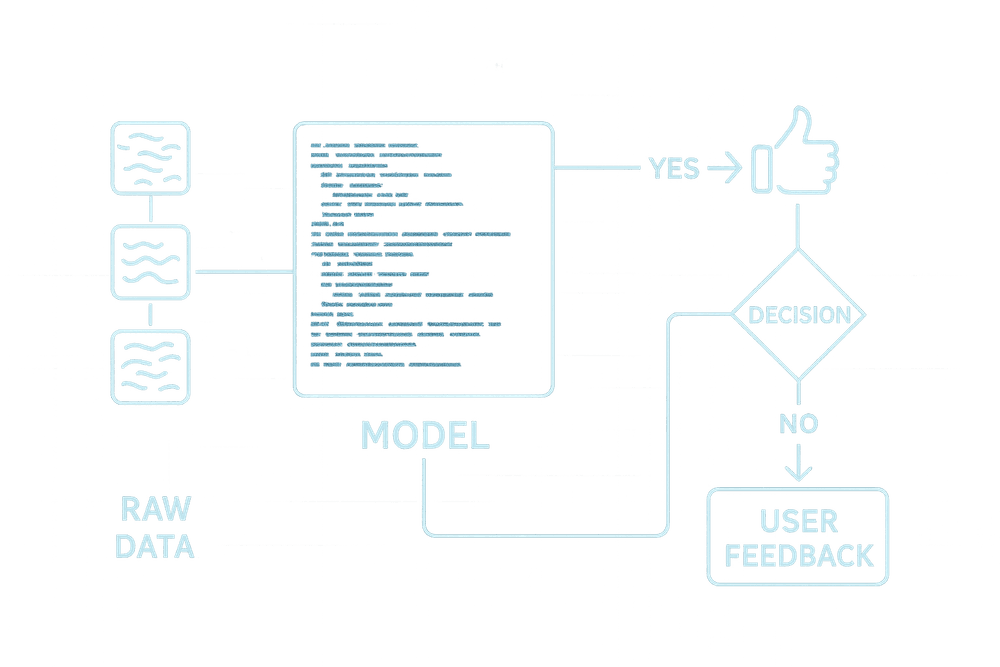
A truly effective AI audit trail is not a single, monolithic log file. Instead, it’s a detailed, multi-layered chronicle that captures the entire lifecycle of an AI system. To build a system that is transparent, accountable, and compliant, you must meticulously record information across four critical pillars. Each component provides a different lens through which to view the system’s behavior, creating a complete picture for developers, auditors, and regulators who need to understand how and why an AI system makes its decisions.
Tracking Data Provenance from Source to Model
Every AI model is a product of the data it was trained on. Data provenance, or data lineage, is the foundation of a trustworthy AI audit trail. It involves creating an unbroken, verifiable record of where your data comes from and every transformation it undergoes before being fed into a model. This is essential for tracing and mitigating bias, ensuring data quality, and complying with data privacy regulations like GDPR. Without a clear data trail, it's impossible to confidently answer the fundamental question: "On what information was this model's intelligence built?"
A robust provenance log should capture:
- Data Sources: The origin of each dataset (e.g., internal CRM, public datasets, IoT sensors).
- Preprocessing Steps: All cleaning, normalization, sampling, and transformation scripts applied to the data.
- Feature Engineering: The logic and code used to convert raw data into features the model uses.
- Data Versioning: Timestamps and unique identifiers for datasets used for training, validation, and testing.
Logging Model Versioning, Training, and Hyperparameters
AI models are not static; they are constantly evolving through retraining and fine-tuning. A comprehensive audit trail must capture every significant stage of a model’s development and deployment. This meticulous logging ensures reproducibility, simplifies debugging when issues arise, and allows your team to roll back to a previous, stable version if a new model underperforms or introduces unintended consequences.
Key details to record include:
- Model Version: A unique identifier (e.g., a semantic version number or a Git commit hash) for each trained model instance.
- Training Code & Environment: The exact version of the source code, libraries, and dependencies used.
- Hyperparameters: The specific settings that govern the training process, such as learning rate, batch size, and number of epochs.
- Performance Metrics: The model's final evaluation scores (e.g., accuracy, precision, F1-score) on a held-out test set.
Recording AI Predictions and Decision-Making Logic
This is where the AI system's operational behavior is made transparent. For every prediction or decision the model makes in a production environment, your AI audit trail must record not only the outcome but also the context. This is the core of accountability, enabling you to investigate specific incidents, explain results to customers, and demonstrate fairness to auditors. Simply logging "approved" or "denied" is not enough.
An effective prediction log must include:
- Input Data: The exact data points that led to a specific prediction.
- Model Output: The prediction, classification, or recommendation made, along with the model version that made it.
- Confidence Score: The model's stated certainty in its output.
- Explainability Data: Where possible, include feature importance scores (e.g., from SHAP or LIME) that illuminate why the model made its decision.
Capturing User Interactions and Feedback for Continuous Improvement
The AI lifecycle doesn't end after a prediction is made. A complete audit trail closes the loop by capturing how humans interact with the AI’s outputs. This information is invaluable for monitoring for concept drift, identifying edge cases the model handles poorly, and gathering data for continuous improvement. It transforms your AI system from a static tool into a dynamic one that learns from real-world application.
This feedback loop should capture:
- User Actions: Did the user accept, reject, or modify the AI's recommendation?
- System Overrides: Instances where a human operator manually overruled the AI’s decision, along with the reason.
- Explicit Feedback: Direct input from users, such as thumbs-up/down ratings, error reports, or qualitative comments.
The Business Case: Unlocking Compliance and Accountability with an AI Audit Trail
In today's competitive landscape, implementing an AI audit trail is more than a technical requirement—it's a strategic business imperative. Moving beyond a simple compliance checkbox, a robust audit trail becomes a powerful asset that drives operational efficiency, mitigates risk, and builds a foundation of trust. It transforms the abstract principles of AI governance into a tangible, value-generating function that protects and enhances your organization's bottom line.
Streamlining Compliance with Evolving AI Regulations
The global regulatory environment for AI is a complex and shifting tapestry, with frameworks like the EU AI Act setting new standards for transparency and accountability. Manually navigating these requirements is a resource-intensive and error-prone challenge. An AI audit trail automates and simplifies this process. By systematically logging every critical event in the AI lifecycle—from data sourcing and preprocessing to model training, versioning, and real-time inference—you create a single source of truth. When regulators inquire, you can readily produce detailed, immutable records to demonstrate due diligence and adherence to legal mandates, drastically reducing the cost and complexity of compliance audits.
Accelerating Debugging and Root Cause Analysis
When an AI model produces an unexpected or erroneous output, the clock starts ticking. Every moment spent trying to diagnose the problem translates to potential financial loss, operational disruption, or customer dissatisfaction. An AI audit trail acts as the definitive flight recorder for your system. It provides developers and data scientists with a complete, step-by-step replay of the events leading to an issue. Instead of grappling with an inscrutable "black box," your team can pinpoint the exact input data, model parameters, or decision logic that caused the failure. This accelerates root cause analysis from days or weeks to mere hours, enabling faster fixes, minimizing downtime, and ensuring greater system reliability.
Building Demonstrable Proof of AI Fairness and Ethics
Stating a commitment to ethical AI is easy; proving it is hard. An AI audit trail provides the concrete evidence needed to back up your claims. It allows you to move from aspiration to attestation. By capturing detailed logs of model inputs and outputs, you can conduct rigorous, ongoing analysis to detect and mitigate biases related to protected attributes like age, gender, or ethnicity. This historical record is crucial for demonstrating to auditors, customers, and internal ethics committees that your fairness-enhancing interventions are effective. It provides a verifiable log of your commitment to responsible AI, turning ethical principles into measurable, auditable practices.
Enhancing Stakeholder Confidence and Brand Reputation
Ultimately, trust is the most valuable currency in the digital economy. An AI audit trail is a cornerstone of building and maintaining that trust with every stakeholder. For customers, it signifies that your AI systems are fair and accountable. For investors and board members, it demonstrates robust risk management and a proactive approach to governance. For regulators, it proves compliance. By embracing this level of transparency, you differentiate your brand as a leader in responsible AI innovation. This commitment not only safeguards your reputation against the risks of AI missteps but also turns strong governance into a competitive advantage that attracts talent, partners, and loyal customers.

How to Implement an AI Audit Trail: A Step-by-Step Guide
Transitioning from theory to practice requires a structured approach. Implementing a robust AI audit trail is not a one-off task but a continuous process integrated into your AI lifecycle. By following these steps, you can build a system that enhances transparency, ensures accountability, and simplifies regulatory compliance.
Step 1: Define Your Audit Requirements and Scope
Before logging a single event, you must define what you need to track and why. The foundation of a successful AI audit trail is a clearly defined scope tailored to your specific needs. Start by identifying all relevant internal policies, industry standards, and regulatory obligations, such as GDPR, HIPAA, or the EU AI Act.
Consider the following questions to shape your requirements:
- What decisions does the AI system make? High-stakes decisions (e.g., in finance or healthcare) demand more granular logging.
- What data is being used? Track data lineage, from sources and preprocessing steps to the specific versions used for training and inference.
- Who needs access to the audit trail? Define roles and permissions for developers, auditors, and compliance officers.
- What specific events must be captured? This includes model version changes, training runs, hyperparameter adjustments, user access, and individual predictions with their inputs and outputs.
A well-defined scope prevents you from capturing too little (creating compliance gaps) or too much (creating noise and unnecessary storage costs).
Step 2: Choose the Right Tools for Automated Logging
Manual logging is not scalable, reliable, or sustainable. Automation is key to creating a comprehensive and consistent AI audit trail. The right tools will seamlessly capture events without burdening your data science and engineering teams.
Your technology stack may include:
- MLOps Platforms: Tools like MLflow, Kubeflow, and SageMaker Studio offer built-in capabilities for experiment tracking, model versioning, and metadata logging, forming the core of your AI audit log.
- Specialized AI Observability Platforms: Solutions from vendors like Arize AI, Fiddler AI, or WhyLabs provide advanced capabilities for monitoring model performance, drift, and explainability, automatically logging key events post-deployment.
- Centralized Logging Systems: Platforms like a Splunk or an ELK Stack (Elasticsearch, Logstash, Kibana) can be configured to ingest, store, and analyze logs from various components of your AI system, creating a unified view for auditors.
When selecting tools, prioritize those that offer version control integration, automated metadata capture, and powerful querying capabilities to make auditing efficient.
Step 3: Establish Secure, Immutable Logging Standards
For an AI audit trail to be trustworthy, it must be tamper-proof. Immutability ensures that once a log entry is recorded, it cannot be altered or deleted, providing a reliable record for forensic analysis and regulatory inquiries.
Implement security and integrity through:
- Immutable Storage: Use write-once-read-many (WORM) compliant storage solutions, such as configured buckets in AWS S3 or Google Cloud Storage.
- Cryptographic Hashing: Generate a unique hash for each log entry or batch of entries and chain them together (similar to a blockchain). Any modification would break the chain, making tampering immediately evident.
- Strict Access Controls: Implement role-based access control (RBAC) to ensure that only authorized personnel can view the audit logs. Write permissions should be highly restricted to automated system processes.
- Encryption: Encrypt logs both in transit and at rest to protect sensitive information contained within the audit trail itself.
Step 4: Integrate the AI Audit Trail into Your MLOps Pipeline
Finally, your AI audit trail should not be an afterthought; it must be a native component of your MLOps pipeline. By embedding logging directly into your CI/CD (Continuous Integration/Continuous Deployment) workflows for machine learning, you guarantee that every critical action is automatically and consistently captured.
Integrate logging at each stage:
- Data Ingestion: Log data sources, versions, and preprocessing steps.
- Model Training: Automatically capture code versions, environment details, hyperparameters, and performance metrics for every training run.
- Validation & Deployment: Record who approved the model for deployment, the validation results, and when and where it was deployed.
- Inference & Monitoring: Log every prediction request and its corresponding output. Continuously monitor for performance degradation or data drift and log these events as they occur.
This deep integration transforms your AI audit trail from a manual chore into a seamless, automated process that provides end-to-end traceability across the entire model lifecycle.
An AI Audit Trail in Action: Real-World Use Cases
The theoretical importance of an AI audit trail becomes concrete when we examine its application in high-stakes, real-world scenarios. Across industries, these detailed records are moving from a "nice-to-have" to a regulatory and operational necessity. They provide the irrefutable evidence needed to build trust, prove compliance, and debug complex automated decisions. Here’s how a robust ai audit trail is making a difference in critical sectors.
Ensuring Fairness in AI-Powered Lending and Credit Decisions
In finance, AI models can approve or deny loans in seconds, but this speed introduces the risk of perpetuating historical biases against protected groups. Regulators and consumers demand proof of fairness. An ai audit trail provides this by creating an immutable record for every single application.
This log captures the applicant's (anonymized) input data, the specific model version that processed it, the key features that influenced the outcome (feature importance), and the final decision with its confidence score. If a decision is challenged or audited, financial institutions can use this trail to demonstrate that their model did not use discriminatory variables and to explain precisely why a decision was made, ensuring compliance with regulations like the Equal Credit Opportunity Act (ECOA).
Validating AI Recommendations in Healthcare Diagnostics
When an AI system suggests a diagnosis from a medical scan, the stakes are life and death. Clinicians cannot blindly trust an algorithm; they need to understand its reasoning. An ai audit trail in a diagnostic tool logs the entire analytical process. It can record which version of the algorithm was used, the pre-processing steps applied to an image (e.g., an X-ray or MRI), and even visualize the specific pixels or regions the AI identified as significant (using techniques like saliency maps). This transparency allows a radiologist to validate the AI’s findings against their own expertise, building confidence in the tool and creating a defensible record for patient care and regulatory bodies like the FDA.
Auditing Content Moderation Algorithms on Social Platforms
Social media platforms use AI to moderate billions of posts, comments, and videos daily. Wrongful takedowns can suppress free speech, while missed violations allow harmful content to spread. A comprehensive ai audit trail is essential for accountability. For every piece of content flagged, the trail documents which policy it potentially violated, the specific classifier model that made the call, the confidence score of the prediction, and what action was taken. This detailed log is crucial for handling user appeals, demonstrating procedural fairness, and proving compliance with regulations like the EU's Digital Services Act (DSA), which mandates transparency in content moderation.
Tracing Autonomous Vehicle Decision Pathways
In the event of an accident involving an autonomous vehicle (AV), determining liability is incredibly complex. The vehicle's ai audit trail functions as a sophisticated "black box." It logs a continuous stream of data, including inputs from sensors like LiDAR and cameras, the AI's real-time interpretation of the environment (e.g., "pedestrian detected," "stop sign identified"), and the chain of decisions that led to an action. The trail can show why the AI chose to brake instead of swerve, providing invaluable data for accident investigators, insurance companies, and manufacturers to understand the event and improve future system safety.

Conclusion: Future-Proofing Your Strategy with a Robust AI Audit Trail
As artificial intelligence becomes more deeply embedded in business operations, the question is no longer if you need governance, but how you will implement it effectively. The era of treating AI models as inscrutable black boxes is over. A comprehensive AI audit trail is not merely a technical log; it is the cornerstone of responsible innovation, a strategic asset that builds trust, ensures compliance, and ultimately, protects your organization's future. It transforms abstract principles like fairness, transparency, and accountability into concrete, verifiable data points.
Your AI Governance Blueprint: Key Takeaways
Building a resilient AI governance framework begins with understanding the foundational role of a detailed audit log. As you move forward, keep these core principles at the forefront of your strategy:
- Transparency is the Currency of Trust: A complete AI audit trail demystifies model decision-making. It provides the necessary visibility for internal stakeholders, regulators, and customers to understand why a particular outcome occurred.
- Accountability Requires Verifiability: When an AI system produces an unexpected or adverse result, you must be able to trace its actions. Immutable logs of data inputs, model versions, and user interactions create a clear chain of custody, enabling effective incident response and accountability.
- Compliance is a Moving Target: AI regulations like the EU AI Act are setting new precedents. A dynamic and automated AI audit trail is your best defense, providing the evidence needed to demonstrate due diligence and adapt quickly to evolving legal landscapes.
- Data Integrity is Paramount: The value of your audit trail is directly proportional to the quality of the data it contains. Ensure that your logging mechanisms are robust, secure, and capture all relevant metadata consistently.
How to Assess Gaps in Your Current Auditing Process
Before you can build, you must assess. Many organizations have some form of logging, but it often falls short of a true AI audit trail. Ask yourself and your team these critical questions to identify potential blind spots:
- Decision Lineage: Can you instantly trace a specific model prediction back to the exact data, features, and model version that generated it?
- Access Control: Do you have a tamper-proof record of every individual who accessed, modified, or retrained your models, including timestamps?
- Performance & Drift: Are you automatically logging key performance metrics, fairness indicators, and data drift over the model's entire lifecycle, not just at deployment?
- Incident Readiness: If a model fails, is your root cause analysis a frantic, manual search through disparate logs, or can you query a centralized audit trail to get answers in minutes?
If you hesitate on any of these points, you have a critical governance gap that an AI audit trail solution is designed to fill.
Getting Started with an AI Audit Trail Solution
Implementing a robust audit system doesn't have to be an overwhelming overhaul. Begin with a targeted, strategic approach:
- Define Your Scope: Start with a single, high-impact AI system, such as a credit approval or medical diagnostic model. Identify the most critical events and data points that must be logged for compliance and risk management.
- Evaluate Solutions: Explore platforms that offer automated data capture, immutable storage, and intuitive dashboards for analysis and reporting. The right tool should integrate seamlessly into your existing MLOps pipeline.
- Automate Everything: A manual process is prone to error and omission. The most effective AI audit trail is one that is automated, capturing data in real-time without requiring manual intervention from your data scientists.
- Establish a Review Cadence: An audit trail is only useful if it's used. Schedule regular reviews with a cross-functional team—including legal, compliance, and technical leads—to analyze trends, investigate anomalies, and proactively strengthen your AI governance posture.