
September 2, 2025
What is AI Trend Forecasting and Why Does It Matter?
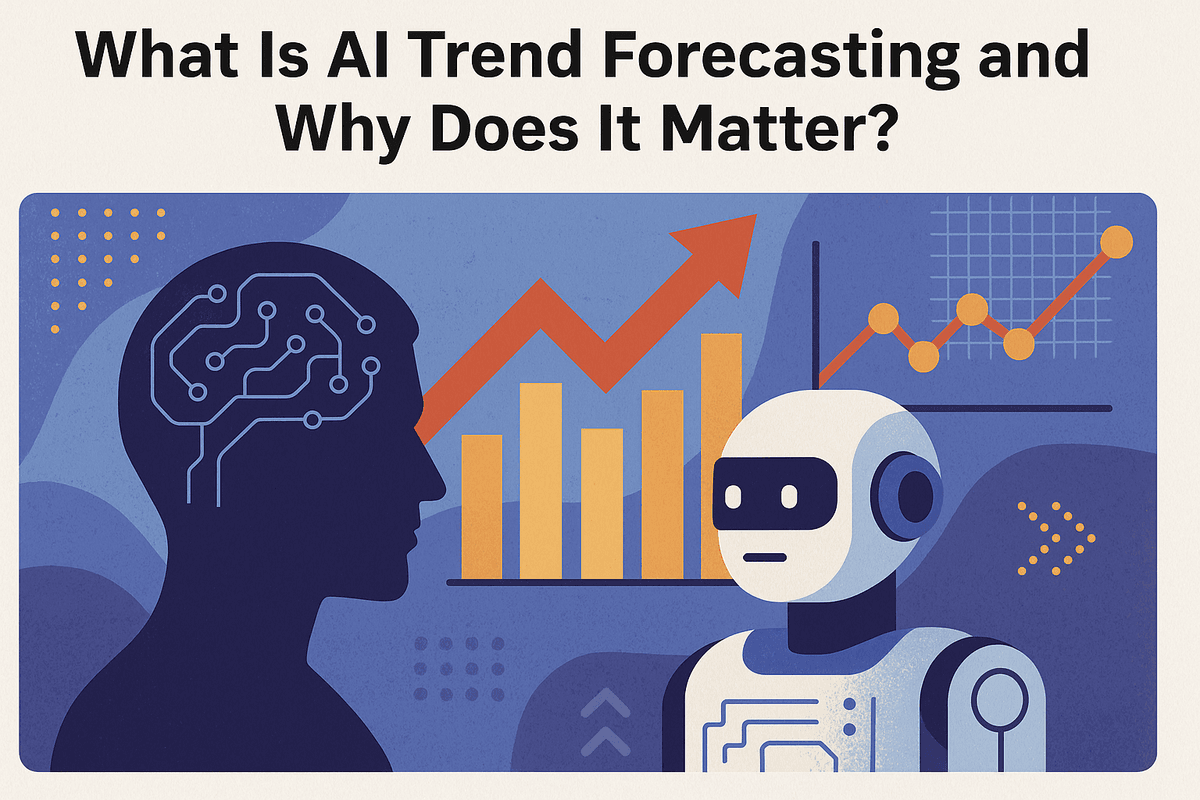
What is AI Trend Forecasting and Why Does It Matter?
For generations, predicting the future was more art than science. Business leaders relied on a mix of historical data, expert intuition, and plain old gut feelings to anticipate market shifts. While this approach had its successes, it was often slow, biased, and reactive. Today, we're in the midst of a profound shift, moving from educated guesses to data-driven certainty. This evolution is powered by AI trend forecasting, a revolutionary approach that transforms how we understand and prepare for what's next.
From Gut Feelings to Data-Driven Decisions
Traditionally, forecasting involved analyzing past sales figures, conducting limited consumer surveys, and keeping an eye on competitors. The problem? This method primarily looks in the rearview mirror. It can tell you what was popular, but it struggles to identify the nascent, under-the-radar shifts that define future markets. By the time a trend is obvious in sales data, the golden opportunity to innovate and lead has often already passed.
The digital age brought a flood of data, but humans can only process so much. This is where artificial intelligence enters the picture. AI trend forecasting doesn't just look at what you sold last quarter; it analyzes millions of data points in real-time to see what consumers are talking about, searching for, and feeling—right now.
Understanding the Core Concepts of AI-Powered Prediction
At its core, AI trend forecasting is the application of machine learning (ML) and other AI technologies to analyze massive datasets and identify patterns that signal an emerging trend. Unlike a human analyst, an AI system can sift through unstructured data from countless sources simultaneously.
Here’s how it works:
- Data Aggregation: The AI collects data from social media platforms, news articles, search engine queries, online forums, product reviews, and patent filings.
- Natural Language Processing (NLP): This technology allows the AI to understand the context, sentiment, and meaning behind human language. It can tell if a new ingredient mentioned online is being discussed with excitement or disgust.
- Pattern Recognition: Machine learning algorithms are trained to spot anomalies and correlations that a human would miss. It might notice a growing number of conversations linking "sustainable packaging" with "luxury cosmetics," signaling a new consumer expectation.
- Predictive Analytics: By analyzing the velocity, growth, and adoption rate of these patterns, the AI can forecast a trend's future trajectory, predicting whether it will be a fleeting fad or a long-term market shift.
How AI Trend Forecasting is Reshaping Industries
The ability to see around the corner is giving businesses an unprecedented competitive advantage. Instead of reacting to change, they are architecting it.
- In Retail and Fashion: Brands use AI trend forecasting to predict the next viral color, silhouette, or material, allowing them to design and stock products before demand peaks, minimizing waste and maximizing profit.
- In Consumer Goods (CPG): Companies identify emerging consumer health concerns or flavor preferences to innovate new products, from plant-based foods to eco-friendly cleaning supplies.
- In Finance: Investment firms analyze global news sentiment and social media chatter to predict market volatility and identify emerging investment opportunities that traditional models overlook.
- In Media and Entertainment: Streaming services predict which niche genres or storylines will resonate with audiences, informing content acquisition and production decisions.
Ultimately, AI trend forecasting matters because it closes the gap between what a business produces and what a customer truly wants. It empowers organizations to be more agile, innovative, and customer-centric in a world that changes faster than ever.
How AI Trend Forecasting Models Actually Work
It’s easy to think of AI trend forecasting as a digital crystal ball, but the reality is far more scientific and powerful. It’s not about magic; it’s about math, language, and massive amounts of data. At its core, AI trend forecasting works by combining three powerful technological pillars to find patterns and predict future outcomes with remarkable accuracy. Let's break down the engine room of this revolutionary technology.
Harnessing Machine Learning Algorithms for Predictive Analysis
The brain of any AI trend forecasting system is its set of machine learning (ML) algorithms. Think of these algorithms as tireless digital detectives trained to spot patterns in vast datasets that would be invisible to the human eye. They don’t just look at what happened in the past; they learn from it to predict what will likely happen next.
These models work by:
- Ingesting Historical Data: The system is fed years of data—sales figures, market performance, website traffic, seasonal changes, and more.
- Identifying Correlations: ML algorithms, such as regression and time-series analysis, identify complex relationships between different variables. For example, they might discover a correlation between a 10% increase in social media mentions and a 2% rise in sales two weeks later.
- Building Predictive Models: Based on these learned patterns, the AI builds a model of how the market behaves. The more high-quality data it processes, the more refined and accurate this model becomes, constantly improving its forecasting capabilities.
The Role of Natural Language Processing (NLP) in Analyzing Consumer Sentiment
While numbers tell us what is happening, they often can't tell us why. This is where Natural Language Processing (NLP) comes in. NLP is the branch of AI that gives machines the ability to read, understand, and interpret human language. In the context of AI trend forecasting, its primary role is to perform sentiment analysis at scale.
NLP models sift through millions of unstructured text sources like customer reviews, blog posts, news articles, and social media comments. They analyze the language to determine the emotional tone behind it—is it positive, negative, or neutral? This adds a critical layer of qualitative insight. For instance, an AI might detect a rising volume of chatter around a new sustainable material (the "what"), but NLP reveals that the sentiment is overwhelmingly positive, with consumers praising its ethical implications (the "why"). This combination provides a much richer, more actionable signal of an emerging trend.
Leveraging Big Data: From Social Media Listening to Market Reports
AI models are only as good as the data they are fed, and modern forecasting tools ingest a staggering amount and variety of it. This is the "Big Data" that fuels the entire process. A robust AI trend forecasting platform doesn't just look at one or two sources; it synthesizes information from a diverse ecosystem of data streams to create a holistic view.
Key data sources include:
- Social Media & Online Forums: Real-time data from platforms like X (Twitter), Instagram, TikTok, and Reddit to catch nascent trends as they bubble up.
- Search Engine Trends: Analyzing what millions of people are searching for provides direct insight into consumer curiosity and intent.
- E-commerce & Sales Data: Tracking what people are buying, browsing, and adding to their carts.
- Market Research Reports & News: Incorporating expert analysis, industry reports, and global news to provide macroeconomic context.
By connecting the dots between a viral TikTok video, a spike in Google searches for a specific product, positive online reviews, and rising sales figures, AI can identify and validate a trend with a high degree of confidence long before it becomes mainstream.
Unlocking Business Value: The Key Benefits of AI Trend Forecasting
Adopting AI trend forecasting is more than a technological upgrade; it's a fundamental shift from reactive decision-making to proactive strategy. By harnessing the power of machine learning and predictive analytics, businesses can move beyond analyzing what has already happened and start anticipating what will happen next. This foresight unlocks significant business value, creating a powerful competitive advantage that impacts everything from product development to risk management. Let's explore the core benefits that make this technology a game-changer.
Gaining a Competitive Edge with Proactive Market Insights
In today's fast-paced market, staying ahead of the curve is paramount. Traditional methods often rely on historical data, which means you're always looking in the rearview mirror. AI trend forecasting flips the script by analyzing massive, real-time datasets from diverse sources like social media conversations, news articles, search engine queries, and market reports. It identifies nascent patterns and "weak signals" that indicate an emerging trend long before it hits the mainstream. This allows businesses to:
- Innovate First: Develop products and services that meet future consumer demands.
- Capture Market Share: Launch marketing campaigns that resonate with emerging cultural shifts.
- Set the Pace: Become a market leader that defines trends rather than one that follows them.
Optimizing Inventory and Supply Chain Management
The classic challenge of supply chain management is balancing supply and demand. Overstocking leads to high carrying costs and waste, while understocking results in lost sales and frustrated customers. AI trend forecasting delivers a new level of demand-prediction accuracy. By analyzing not just past sales but also external factors like social sentiment, competitor actions, and even weather patterns, AI models can forecast demand with remarkable granularity. This precision enables companies to optimize inventory levels, reduce waste, improve fulfillment efficiency, and build a more agile and resilient supply chain that can adapt quickly to market volatility.
Personalizing Customer Experiences at Scale
Modern consumers expect personalized experiences, but delivering true personalization to millions of customers is a monumental task. Understanding future trends is key to anticipating what customers will want before they even know it themselves. AI trend forecasting can segment audiences based on predicted future behaviors and interests, allowing businesses to create hyper-relevant content, product recommendations, and marketing messages. Imagine a streaming service proactively acquiring rights to a sub-genre it predicts will surge in popularity, or a beauty brand developing a product line based on AI-detected shifts in wellness culture. This predictive personalization fosters deeper customer loyalty and significantly increases engagement.
Mitigating Risks by Identifying Potential Market Downturns
Just as AI can spot opportunities, it can also serve as a powerful early-warning system for potential threats. By continuously scanning for anomalies and negative sentiment, AI trend forecasting models can identify signals that may precede a market downturn, a decline in a product category's popularity, or a shift in public perception. This foresight provides leadership with the critical time needed to pivot strategies, divest from at-risk assets, or adjust financial planning. It transforms risk management from a reactive damage-control exercise into a proactive strategy for building long-term business resilience in an uncertain world.
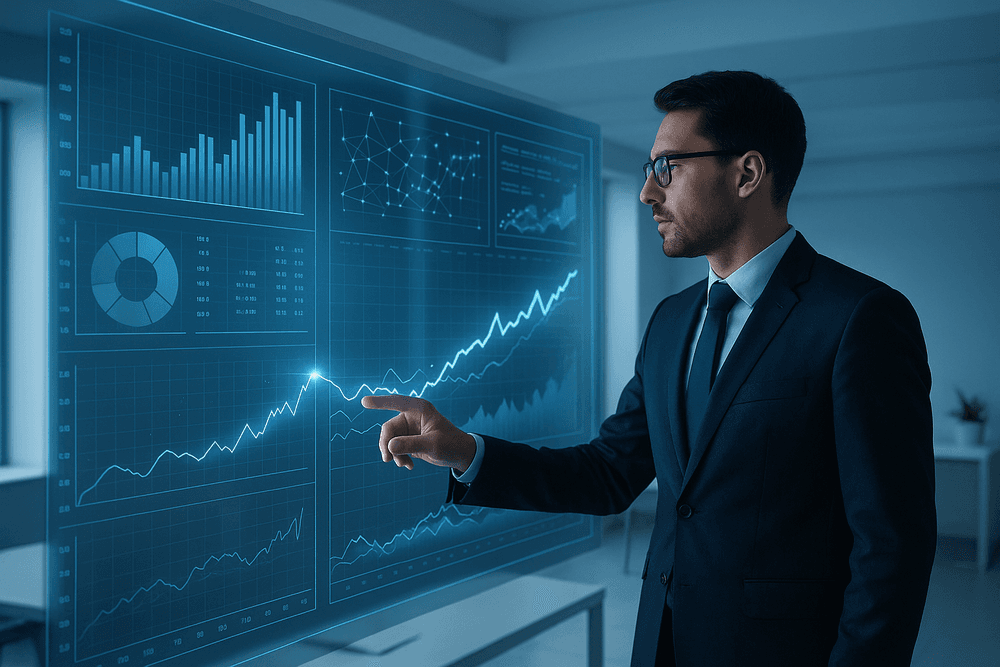
Top AI Trend Forecasting Tools and Platforms on the Market
Once you understand the power of AI trend forecasting, the next logical step is to explore the tools that make it possible. The market is filled with a diverse range of software, from massive enterprise suites to highly specialized niche platforms. Navigating this landscape is key to finding the perfect fit for your organization's unique needs.
Enterprise-Grade Solutions for Large-Scale Analysis
For large corporations handling vast datasets across multiple departments, enterprise-grade AI trend forecasting platforms are the go-to solution. These systems are built for scalability, security, and deep integration with existing business intelligence (BI) and ERP systems.
- IBM Watson Studio: A powerful suite that allows data scientists to build, run, and manage AI models at scale. It offers robust tools for predictive analytics and time-series forecasting, making it ideal for complex market analysis.
- Google Cloud AI Platform: Provides a comprehensive set of machine learning tools, including AutoML for building custom forecasting models with minimal coding. Its strength lies in its ability to process massive datasets and leverage Google’s powerful infrastructure.
- SAS Viya: A long-standing leader in analytics, SAS offers an open, cloud-native platform that excels in advanced analytics and interactive data discovery. It's a trusted choice for organizations that require high levels of accuracy and governance in their forecasting.
Niche Tools for Specific Industries
While enterprise solutions offer broad capabilities, specialized industries often require tools tuned to their specific data types and challenges.
Fashion, CPG, and Retail
In visually driven industries, AI trend forecasting involves analyzing images, social media posts, and runway shows. Platforms like Heuritech and Edited excel here. They use computer vision to identify emerging styles, colors, and patterns, allowing brands to predict what consumers will want to wear or buy months in advance, optimizing inventory and design decisions.
Finance and Investment
The financial sector relies on AI trend forecasting to analyze market sentiment, predict stock performance, and identify economic shifts. Tools like AlphaSense use Natural Language Processing (NLP) to scan millions of documents—from SEC filings to news articles and broker research—to surface critical insights and market-moving events in real-time.
Key Features to Look For in an AI Forecasting Platform
When evaluating any AI trend forecasting software, look for these essential features:
- Data Integration: The platform must easily connect to your diverse data sources, including sales data, social media APIs, market reports, and internal databases.
- Real-Time Analysis: The ability to process and analyze data as it comes in is crucial for staying ahead of fast-moving trends.
- Customizable Dashboards: An intuitive, visual interface that allows you to tailor reports and dashboards to your specific KPIs is non-negotiable.
- Model Transparency (Explainable AI): The best tools don’t just give you a prediction; they provide insight into why they made it, helping you trust and act on the results.
How to Choose the Right AI Trend Forecasting Software for Your Business
Selecting the right tool involves a strategic assessment of your business. Ask yourself these questions:
- What is our primary goal? Are you trying to optimize inventory, inform marketing campaigns, or guide product development? Your objective will determine the type of tool you need.
- What data do we have? Assess the volume, variety, and quality of your data to ensure the software you choose can handle it effectively.
- What is our team's skill set? Do you have data scientists who can manage complex models, or do you need a user-friendly, no-code platform?
- What is our budget and scale? Determine whether you need a comprehensive enterprise suite or if a more focused, and often more affordable, niche tool will deliver the ROI you need.
AI Trend Forecasting in Action: Real-World Success Stories
Theory is one thing, but the true power of AI trend forecasting is revealed in its real-world applications. Across diverse industries, companies are leveraging predictive analytics to gain a decisive competitive edge, optimize operations, and even save lives. These success stories demonstrate how AI is transforming decision-making from a reactive process into a proactive strategy.
How Retail Giants Predict Fast Fashion Hits
In the hyper-competitive world of fast fashion, staying ahead of the curve is everything. Companies like Zara and H&M are masters of this, and their secret weapon is AI trend forecasting. These retail giants deploy sophisticated algorithms that scan social media platforms, fashion blogs, and runway shows in real time. The AI identifies emerging patterns—a specific color gaining traction on TikTok, a silhouette popular with influencers on Instagram, or a recurring motif in designer collections. By analyzing this data alongside real-time sales figures, they can predict which styles will become bestsellers with remarkable accuracy. This allows them to fast-track production, optimize inventory, and get the next "must-have" item into stores before the trend even peaks, minimizing waste on unpopular items and maximizing profitability.
Forecasting Financial Market Shifts with AI
The financial world operates on razor-thin margins and split-second decisions. Here, AI trend forecasting is used by hedge funds and investment firms to navigate market volatility. AI systems analyze millions of data points far beyond traditional stock tickers, including news sentiment, corporate financial reports, geopolitical events, and even social media chatter. By identifying subtle correlations and anomalies invisible to human analysts, these models can predict short-term market movements and potential economic shifts. For example, an AI might detect a growing negative sentiment around a specific industry based on news analysis, flagging a potential downturn before it becomes obvious. This predictive power gives traders a critical advantage, enabling more informed and profitable investment strategies.
Inside Netflix: Using AI to Predict the Next Big Streaming Trend
Ever wonder how Netflix seems to know exactly what you want to watch next? That same powerful engine is a core part of its content strategy. Netflix’s use of AI trend forecasting goes beyond simple recommendations; it actively shapes the creation of its original series and films. The platform’s algorithms analyze immense datasets on viewing habits—what genres are binged most, which actors draw the biggest audiences, and even specific plot points where viewers lose interest. This analysis predicted a strong audience for "House of Cards" by correlating fans of the original British series with viewers of Kevin Spacey films and political dramas. By understanding emerging viewer tastes on a granular level, Netflix can greenlight projects with a high probability of success, ensuring its content library is packed with the next global hit.
Revolutionizing Healthcare by Predicting Disease Outbreaks
Beyond commerce and entertainment, AI trend forecasting is having a profound impact on global public health. Health organizations are now using AI models to predict the spread of infectious diseases like influenza and COVID-19. These systems process a wide array of non-traditional data, such as anonymized location data from smartphones, public transportation usage, social media posts mentioning symptoms, and even online search queries for "fever" or "cough." By synthesizing this information with clinical data, AI can forecast potential hotspots for an outbreak weeks in advance. This crucial lead time allows public health officials to allocate medical supplies, launch targeted public awareness campaigns, and implement preventative measures, effectively slowing the spread and saving countless lives.

The Future is Now: How to Get Started with AI Trend Forecasting
Understanding the power of AI trend forecasting is one thing; harnessing it is another. The good news is that you don’t need a massive data science department to begin. By following a structured approach, you can integrate this transformative technology into your strategic planning and gain a significant competitive edge. Let’s break down how to get started, overcome common hurdles, and empower your team for success.
A Simple Framework for Implementing AI Forecasting in Your Strategy
Adopting AI doesn't have to be a monumental leap. Think of it as a logical, step-by-step process that builds on your existing strategic foundation.
- Define Your Objectives: Start with the "why." What specific business question do you want to answer? Are you trying to anticipate shifts in consumer demand, predict the next viral marketing angle, or optimize inventory for seasonal products? A clear goal, such as "reduce stock-outs by 15%," will dictate the data you need and the models you employ.
- Aggregate Your Data Sources: An AI model is only as good as the data it’s fed. Compile a rich mix of internal data (sales figures, website analytics, customer feedback) and external data (social media conversations, search engine trends, competitor activities, economic indicators). The more diverse your dataset, the more robust and accurate your AI trend forecasting will be.
- Select the Right Tools: The market for AI tools is expanding rapidly. You can start with user-friendly, off-the-shelf SaaS platforms that offer pre-built models for specific industries. For more bespoke needs, an in-house team or a consultant can build custom algorithms using open-source libraries like TensorFlow or PyTorch.
- Analyze, Interpret, and Act: The final step is where data becomes a strategy. The forecasts generated by your AI should feed directly into decision-making for your marketing, product development, and operations teams. Continuously monitor the results, measure against your initial objectives, and refine your models based on real-world outcomes.
Overcoming Common Challenges: Data Privacy and Model Accuracy
As you venture into AI trend forecasting, you'll encounter two critical challenges. Addressing them proactively is key to long-term success.
- Navigating Data Privacy: In an era of GDPR, CCPA, and heightened consumer awareness, ethical data handling is non-negotiable. Prioritize using anonymized and aggregated data to protect individual privacy and ensure your collection methods are fully compliant. Transparency isn’t just a legal requirement; it’s a cornerstone of building and maintaining customer trust.
- Ensuring Model Accuracy: An AI prediction is a highly educated guess, not a crystal ball. To build confidence, you must validate your models relentlessly. This involves back-testing against historical data and running A/B tests to see how predictions perform in real time. The most effective approach involves a "human-in-the-loop," where domain experts interpret the AI's output, question its assumptions, and make the final strategic call.
Your Next Steps: Resources and Training for Your Team
Getting started is often the hardest part. Here are three actionable steps to build momentum.
- Invest in Upskilling: Empower your existing team by providing access to relevant training. Online platforms like Coursera, edX, and LinkedIn Learning offer excellent courses on data literacy, machine learning, and AI fundamentals.
- Launch a Pilot Project: Don’t try to revolutionize everything at once. Begin with a small, well-defined pilot project to prove the value of AI trend forecasting. For example, focus on predicting demand for a single product line next quarter. A successful pilot builds internal confidence and secures buy-in for broader implementation.
- Seek Expert Guidance: If you lack in-house expertise, consider partnering with an AI consultancy or a freelance data scientist. These specialists can help you set up your initial framework, choose the right tools, and train your team, significantly accelerating your journey toward predictive mastery.