October 5, 2025
What is AI Performance Monitoring and Why Does It Matter?
What is AI Performance Monitoring and Why Does It Matter?
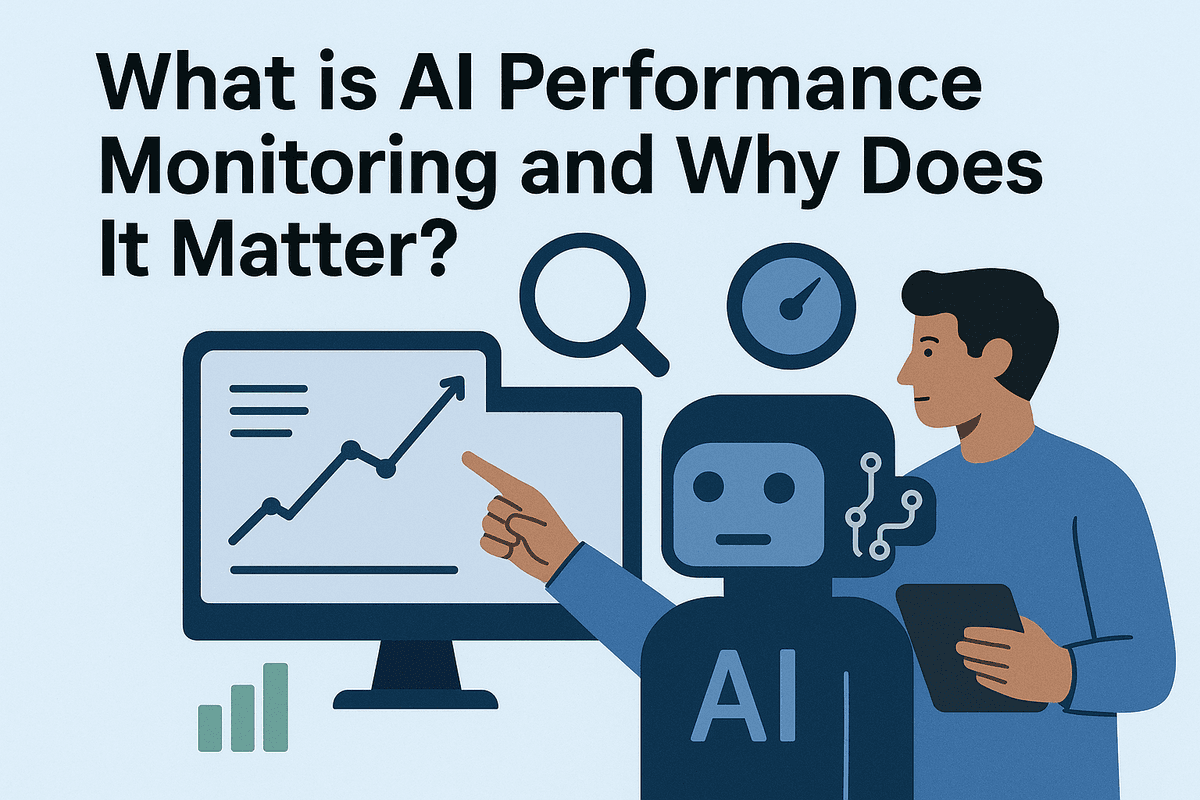
In today's complex digital ecosystems, simply watching dashboards is no longer enough. The sheer volume of data generated by applications, servers, and microservices has outpaced human capacity for analysis. This is where AI performance monitoring steps in, transforming the way we manage system health. It’s not just an upgrade to traditional monitoring; it's a fundamental shift from reactive observation to proactive, intelligent automation.
At its core, AI performance monitoring leverages machine learning and advanced analytics to automatically track, analyze, and optimize the performance of your entire IT stack in real-time. It moves beyond simple alerts for threshold breaches and instead provides deep, contextual insights into the "why" behind performance issues.
Beyond Dashboards: The Evolution from Traditional APM to AIOps
For years, Application Performance Monitoring (APM) has been the standard. It provided valuable data—CPU usage, response times, error rates—presented on dashboards. While useful, this approach placed the burden of correlation and analysis squarely on the shoulders of engineers. They had to manually sift through logs and connect disparate events to find the root cause of a problem, often after it had already impacted users.
AI performance monitoring represents the next stage of this evolution, forming the backbone of AIOps (AI for IT Operations). Instead of presenting raw data, it processes it. AI algorithms learn the normal operational patterns of your systems, creating a dynamic baseline. This allows them to:
- Correlate data across different sources (logs, metrics, traces) automatically.
- Identify subtle anomalies that would be invisible to the human eye.
- Filter out the noise of irrelevant alerts, surfacing only what truly matters.
This shift moves teams from a reactive "break-fix" cycle to a predictive and proactive operational model.
The Core Business Benefits: From Proactive Problem-Solving to Cost Reduction
Adopting an AI-driven approach to performance monitoring isn't just a technical upgrade; it delivers tangible business value. The primary benefits directly impact both your revenue and operational efficiency:
- Proactive Problem Resolution: AI can detect the subtle precursors to failure, allowing teams to address potential issues before they cause a system outage or degrade the customer experience.
- Reduced Mean Time to Resolution (MTTR): When an issue does occur, AI-powered root cause analysis pinpoints the exact source of the problem in minutes, not hours. This eliminates lengthy "war room" sessions and frees up valuable engineering time.
- Enhanced Customer Experience: By ensuring applications are consistently fast, reliable, and available, you improve user satisfaction and retention—critical metrics in a competitive market.
- Optimized Resource Allocation and Cost Reduction: AI performance monitoring provides insights into resource consumption, helping you identify and eliminate over-provisioned infrastructure in the cloud. This data-driven approach ensures you only pay for what you need, significantly reducing operational costs.
How AI Transforms Raw Data into Actionable Performance Insights
The magic of AI performance monitoring lies in its ability to convert an overwhelming flood of raw data into clear, actionable intelligence. It’s a sophisticated process that turns digital noise into a meaningful signal.
First, the AI platform ingests vast quantities of telemetry data—logs, metrics, and traces—from every component of your application and infrastructure. Machine learning models then analyze this data to establish a highly accurate baseline of what "normal" performance looks like.
Once this baseline is set, the system continuously watches for deviations. Using advanced anomaly detection, it can flag a minor increase in latency or an unusual error pattern that might otherwise go unnoticed. But it doesn't stop there. The AI then correlates this anomaly with other events happening simultaneously across the stack, instantly identifying dependencies and pinpointing the most likely root cause. The final output isn't another confusing graph; it's a clear, context-rich insight that tells your team exactly where to look and what to fix.
Key Features to Look For in an AI Performance Monitoring Solution
Navigating the market for monitoring tools can be overwhelming, but a true AI performance monitoring solution stands apart by offering intelligent, automated capabilities that legacy systems can't match. When evaluating your options, look beyond simple dashboards and static alerts. Focus on solutions that leverage machine learning to provide deep, actionable insights that empower your teams to be proactive, not just reactive. The right platform transforms raw data into a clear narrative of your system's health and its impact on your business.
Automated Anomaly Detection and Predictive Alerting
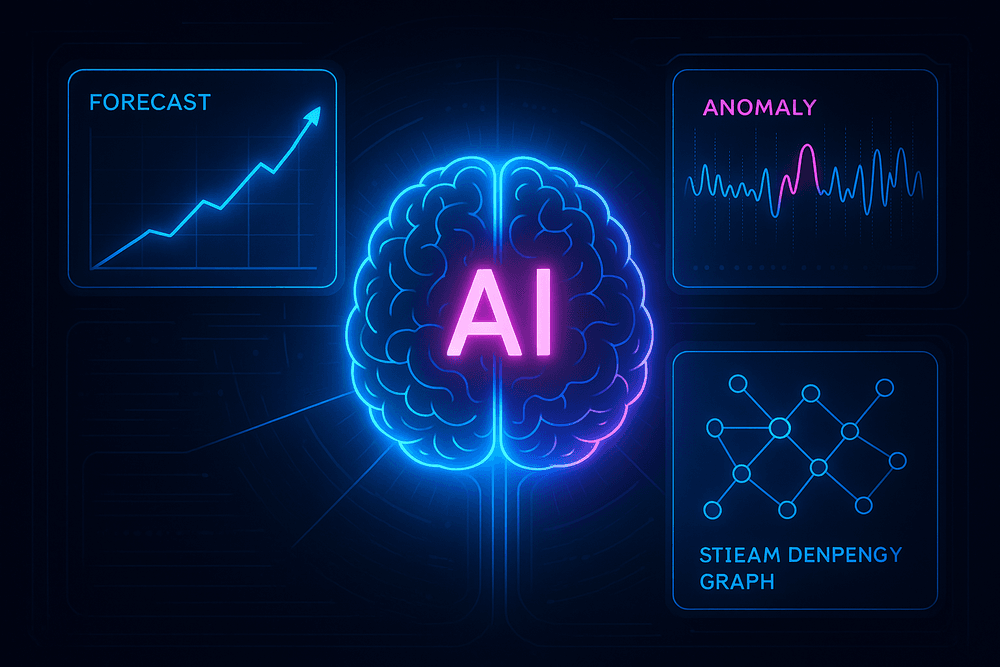
Traditional monitoring relies on manually configured, static thresholds (e.g., "alert when CPU is over 90%"). This approach is notorious for creating "alert storms" for trivial issues while missing subtle but critical deviations. Modern AI performance monitoring systems learn the normal, rhythmic behavior of your applications and infrastructure. They automatically identify true anomalies—significant departures from this learned baseline—that actually matter. This dramatically reduces alert fatigue. Furthermore, advanced platforms use predictive analytics to forecast potential issues, alerting you to degrading conditions before they impact end-users, turning firefighting into proactive problem prevention.
AI-Powered Root Cause Analysis for Faster MTTR
When an application fails, the most time-consuming task is often pinpointing the root cause. In a complex, distributed environment, sifting through terabytes of logs, metrics, and traces is a monumental challenge. This is where AI excels. An intelligent monitoring solution automatically correlates data from across your entire stack. It analyzes dependencies between services, code deployments, and infrastructure changes to identify the precise event or line of code that triggered the problem. By presenting a clear causal chain, AI-powered root cause analysis eliminates guesswork and slashes Mean Time to Resolution (MTTR) from hours or days to mere minutes.
Dynamic Baselining and Performance Forecasting
Your application's workload isn't static; it fluctuates with daily cycles, seasonal demand, and marketing campaigns. A key feature of effective AI performance monitoring is dynamic baselining. The system continuously learns and adjusts its understanding of "normal" performance for any given time, preventing false alarms during expected peak traffic. Beyond understanding the present, these tools provide performance forecasting. By analyzing historical trends, they can predict future resource needs, helping you with capacity planning and ensuring your infrastructure is prepared to handle future growth without performance degradation.
Business Transaction Monitoring and User Experience Scoring
Technical metrics like CPU usage or memory leaks are important, but they don't tell the whole story. The ultimate goal of performance monitoring is to protect the user experience and, by extension, business outcomes. Top-tier AI solutions provide business transaction monitoring, which tracks the performance of critical user journeys like "add to cart," "user login," or "process payment." The AI engine analyzes the performance of every step in these transactions to generate a consolidated User Experience Score. This allows you to prioritize engineering efforts on the issues that have the most significant impact on customer satisfaction and revenue.
Comparing the Top AI Performance Monitoring Tools on the Market
Selecting the right tool is a critical step in implementing a successful AI performance monitoring strategy. The market is filled with powerful platforms, each with a unique approach to leveraging AI for observability. To help you navigate the options, we’re breaking down the industry leaders, exploring open-source paths, and providing a framework for making the best choice for your organization.
Datadog vs. Dynatrace: A Head-to-Head AI Feature Review
At the forefront of enterprise solutions are Datadog and Dynatrace, two powerhouses that offer robust AIOps capabilities, but with different core philosophies.
- Datadog: Known for its unified, comprehensive platform, Datadog excels at bringing together metrics, traces, and logs from your entire stack. Its AI engine, Watchdog, automatically surfaces performance anomalies and outliers without manual configuration. Datadog’s strength lies in its vast integration ecosystem and its ability to provide a single pane of glass. It’s an excellent choice for teams that need broad visibility and want an AI assistant to flag potential issues across disparate systems.
- Dynatrace: Dynatrace takes a more deterministic approach with its AI engine, Davis. It’s built for automated, precise root-cause analysis. Instead of just flagging anomalies, Davis provides answers by mapping dependencies and identifying the exact source of a problem in real-time. This makes it ideal for complex, dynamic cloud environments where manual troubleshooting is nearly impossible. Dynatrace is the go-to for organizations prioritizing automation and reducing mean time to resolution (MTTR).
New Relic Applied Intelligence: Strengths and Weaknesses
New Relic has long been a leader in application performance monitoring (APM), and its Applied Intelligence layer is a mature and powerful component of its New Relic One platform.
- Strengths: New Relic shines at reducing alert fatigue. Its AI-driven engine automatically correlates alerts from multiple sources into single, digestible incidents, providing context and reducing noise. Proactive anomaly detection helps teams spot unusual behavior before it impacts users. This focus on incident intelligence makes it a strong contender for teams looking to streamline their on-call and incident response workflows.
- Weaknesses: While powerful, unlocking the full potential of New Relic's AI performance monitoring can involve a learning curve, especially for configuring advanced correlations. Furthermore, some of the most impactful AI features are often included in higher-priced tiers, which could be a consideration for smaller teams or those with tight budgets.
Exploring Open-Source Alternatives for AI Monitoring
For teams with deep engineering expertise and a desire for ultimate customization, an open-source stack is a viable path. A popular combination is Prometheus for time-series data collection and Grafana for visualization. To add the AI layer, teams can integrate machine learning libraries like TensorFlow or PyTorch to build custom models for anomaly detection and predictive analysis. While this approach offers unparalleled flexibility and cost savings on licensing, it comes with significant overhead in setup, maintenance, and the specialized knowledge required to build and manage an effective AI performance monitoring system from the ground up.
How to Choose the Right Platform for Your Tech Stack
The best tool is the one that aligns with your specific needs. Ask yourself these key questions:
- What is your primary goal? Are you trying to reduce alert noise (New Relic), achieve automated root-cause analysis (Dynatrace), or gain unified observability with AI assistance (Datadog)?
- What is your team’s skill set? Do you have the in-house expertise to manage a complex open-source solution, or do you need a platform that provides answers out of the box?
- How does it integrate? Ensure the platform has seamless, pre-built integrations for your critical infrastructure, cloud providers, and CI/CD pipelines.
- Can it scale with you? Evaluate the pricing model and architecture to ensure it supports your future growth without becoming prohibitively expensive.
Best Practices for Implementing AI Performance Monitoring
Adopting an AI performance monitoring solution is more than just flipping a switch; it requires a strategic approach to unlock its full potential. By following established best practices, you can transform your monitoring from a reactive chore into a proactive, intelligent engine for application excellence.
Integrating AIPM Seamlessly into Your CI/CD Pipeline
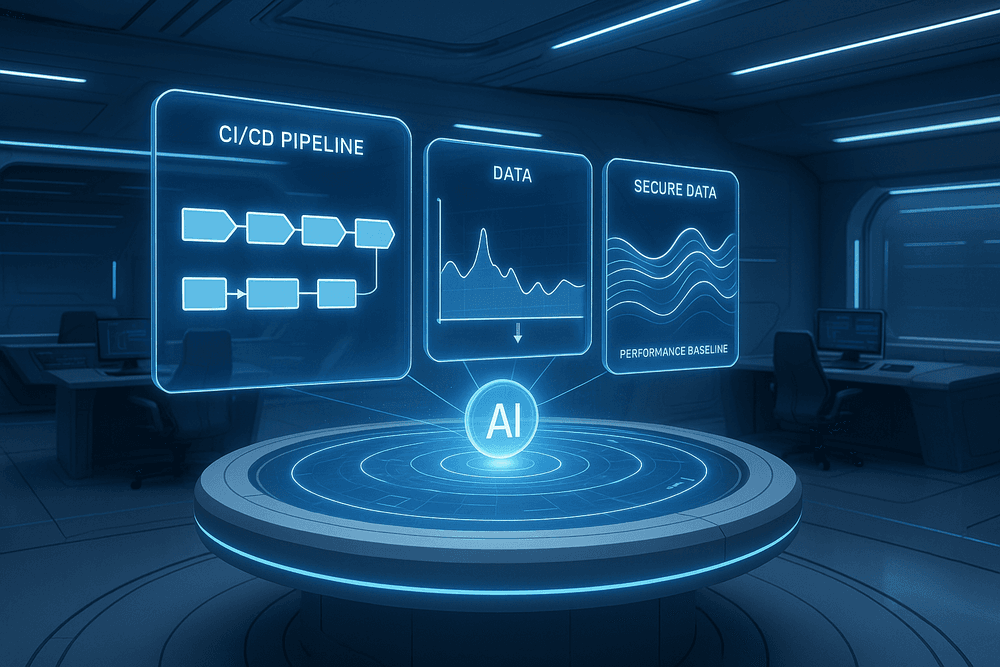
The most effective AI performance monitoring begins long before your code reaches production. By integrating AIPM tools directly into your Continuous Integration/Continuous Deployment (CI/CD) pipeline, you can “shift left” and catch performance regressions automatically.
Configure your pipeline to trigger performance tests on every build or pull request. The AI model can then analyze these test results against established baselines, flagging any new function or code change that introduces unacceptable latency, memory leaks, or excessive CPU usage. This automated quality gate prevents performance issues from ever reaching your users, creating a feedback loop that empowers developers to write more efficient code from the start.
Setting Up Smart Alerts That Reduce Alert Fatigue
Traditional monitoring systems are notorious for creating "alert storms," overwhelming teams with low-context notifications that make it impossible to find the signal in the noise. A core benefit of AI performance monitoring is its ability to deliver smart, context-rich alerts.
Instead of setting static thresholds (e.g., "alert when CPU is >90%"), let the AI learn the normal rhythm of your application. The system can then identify true anomalies, such as a gradual increase in memory usage that is abnormal for a Tuesday morning but normal during a month-end batch job. Furthermore, AI excels at correlating events across your stack. It can bundle dozens of related symptoms into a single, actionable alert that pinpoints the probable root cause, drastically reducing mean time to resolution (MTTR) and eliminating alert fatigue.
Training the AI: How to Establish an Accurate Performance Baseline
The intelligence of your AIPM system is only as good as its training data. Establishing an accurate performance baseline is the most critical step in the implementation process. A baseline is a model of your application’s normal behavior, against which the AI will compare real-time data to detect anomalies.
To create a robust baseline, you must:
- Collect Data: Allow the monitoring tool to gather metrics, traces, and logs over a representative period, such as a full business cycle (e.g., one or two weeks). This should include periods of high and low traffic.
- Clean the Data: Exclude any known incidents or anomalous events from the training data set to avoid teaching the AI that poor performance is normal.
- Train the Model: Initiate the machine learning process, which allows the AI to understand complex patterns and seasonalities in your application's performance. Remember that this is not a one-time event. As your application evolves, you must periodically retrain the model to ensure the baseline remains accurate.
Ensuring Data Privacy and Security in Your Monitoring Strategy
An effective AI performance monitoring strategy requires collecting vast amounts of operational data. This makes data privacy and security paramount. Start by choosing a monitoring solution that offers robust security features. Ensure that all data is encrypted both in transit and at rest.
Implement Personally Identifiable Information (PII) scrubbing and data masking to automatically redact sensitive information from logs and traces before they are ingested. Use Role-Based Access Control (RBAC) to ensure that team members can only view the data relevant to their roles. A secure monitoring strategy not only protects your customers and your business but also ensures compliance with regulations like GDPR, CCPA, and HIPAA.
Real-World Use Cases: AI Performance Monitoring in Action
Theory is one thing, but the true value of a technology is revealed in its application. AI performance monitoring isn't just an abstract concept; it's a powerful engine driving efficiency, reliability, and profitability across diverse industries. By moving beyond reactive fixes to proactive, intelligent optimization, businesses are transforming their operations. Here’s how leading sectors are putting AI performance monitoring to work.
How E-commerce Platforms Prevent Holiday Shopping Crashes
For online retailers, peak shopping seasons like Black Friday are make-or-break moments. A website crash, even for a few minutes, can translate into millions in lost revenue and lasting brand damage. This is where AI performance monitoring becomes a crucial line of defense. AI-powered platforms analyze historical traffic data, marketing campaign schedules, and real-time user activity to predict demand surges with incredible accuracy.
Instead of manual guesswork, the system automatically scales server resources up to handle the influx and, just as importantly, scales them down afterward to control costs. It performs constant anomaly detection, identifying subtle issues—like a payment gateway responding 100 milliseconds slower than normal—that could escalate into a full-blown outage. The result is a seamless, crash-free shopping experience that maximizes sales and customer satisfaction when it matters most.
Optimizing Cloud Infrastructure Costs in Financial Services
The financial services industry relies on complex, distributed cloud environments to run trading algorithms, process transactions, and secure sensitive data. The cost of this infrastructure can be staggering, especially with rampant over-provisioning. Financial institutions leverage AI performance monitoring to gain a deep, granular understanding of their cloud consumption.
AI algorithms analyze resource utilization patterns 24/7, identifying idle virtual machines, underused databases, and inefficient code. The platform provides actionable recommendations for "right-sizing" infrastructure without compromising the performance and compliance required for financial operations. By correlating performance metrics with cost data, these tools can pinpoint exactly which application feature or user action is driving up expenses, enabling a data-driven approach to cost optimization that can save millions annually.
Enhancing Mobile App Responsiveness for SaaS Companies
In the competitive SaaS market, user experience is everything. A slow, buggy mobile app leads directly to user churn. SaaS companies deploy AI performance monitoring to move beyond simple crash reporting and understand the nuanced reality of user interactions. The AI establishes dynamic baselines for what constitutes "normal" performance for every screen, feature, and API call.
When a new software update causes a subtle increase in login times for users on a specific device or network, the system flags it instantly—long before it triggers a flood of negative reviews. It helps developers pinpoint the root cause, whether it's a poorly optimized database query or a slow third-party API, allowing them to proactively resolve issues and continuously deliver a fast, fluid, and reliable user experience.
Improving IoT Device Reliability in Manufacturing
On a modern factory floor, thousands of interconnected IoT sensors and devices generate a relentless stream of data, controlling everything from robotic arms to environmental conditions. A single device failure can halt an entire production line. Manually monitoring this ecosystem is impossible. Manufacturers use AI performance monitoring to enable predictive maintenance and ensure operational continuity.
The AI analyzes telemetry data from every device, learning its unique operational fingerprint. It can detect minuscule deviations in temperature, vibration, or data transmission that signal an impending failure. This allows maintenance teams to service or replace components proactively during scheduled downtime, preventing catastrophic, unplanned outages. This application of AI performance monitoring directly translates to increased uptime, lower maintenance costs, and improved production efficiency.
The Future of Observability: Your Next Steps with AI Performance Monitoring
The shift from traditional monitoring to AI-driven observability isn't just an upgrade; it's a fundamental evolution in how we build, manage, and scale modern applications. As systems grow more complex and distributed, human-led analysis can no longer keep pace. AI performance monitoring bridges this gap, transforming vast streams of telemetry data into actionable intelligence. By embracing this technology, you empower your teams to move from a reactive "firefighting" mode to a proactive state of continuous optimization and innovation. The future is intelligent, automated, and predictive—and it starts with the right observability strategy.
Key Takeaways for Your Organization
Integrating an AI performance monitoring solution is a strategic move that delivers compounding returns across your technology stack and business operations. As you move forward, keep these core advantages in mind:
- Proactive Problem Resolution: AI algorithms excel at real-time anomaly detection, identifying subtle deviations from baseline performance long before they escalate into user-facing incidents. This preemptive approach drastically reduces system downtime and protects revenue.
- Accelerated Root Cause Analysis: Instead of manually sifting through logs, metrics, and traces, your engineers are guided by AI-powered insights that correlate events and pinpoint the exact source of a problem. This slashes Mean Time to Resolution (MTTR) and frees up valuable developer time.
- Automated Resource Optimization: AI can analyze resource utilization patterns to provide intelligent recommendations for scaling infrastructure up or down. This ensures you only pay for the resources you need, eliminating waste and significantly lowering cloud computing costs.
- Enhanced User Experience: By maintaining optimal application performance and stability, you directly impact customer satisfaction and retention. AI monitoring helps you understand the user journey and fix performance bottlenecks that could lead to churn.
Building a Business Case for AI-Driven Observability
To secure buy-in from stakeholders, frame the adoption of an ai performance monitoring platform not as an operational expense, but as a strategic investment in business resilience and growth. Your business case should be built on three pillars: cost reduction, productivity gains, and competitive advantage.
First, quantify the financial impact of downtime. Calculate the revenue lost per hour of an outage and demonstrate how proactive AI-powered detection can mitigate these losses. Second, highlight the productivity savings. Estimate the number of engineering hours currently spent on manual incident triage and troubleshooting; these are hours that AI can give back to your team to focus on developing new features. Finally, emphasize the competitive edge. Faster, more reliable applications lead to happier customers, better reviews, and a stronger market position. Presenting a clear ROI analysis that connects improved system performance to tangible business outcomes will make your case compelling and undeniable.
Get a Personalized Demo of Our AI Monitoring Solution
Reading about the future of observability is one thing—seeing it in action within your own environment is another. Stop guessing where performance issues are hiding and start getting definitive answers.
We invite you to schedule a personalized, no-obligation demo with one of our observability specialists. In this session, we will:
- Discuss your specific challenges and architectural complexities.
- Showcase how our AI engine can automatically detect anomalies in your live systems.
- Walk you through a real-world root cause analysis scenario.
- Answer any questions your team has about implementation and integration.
Take the definitive next step in your observability journey. Click here to book your personalized demo and discover how AI performance monitoring can transform your operations.