
August 11, 2025
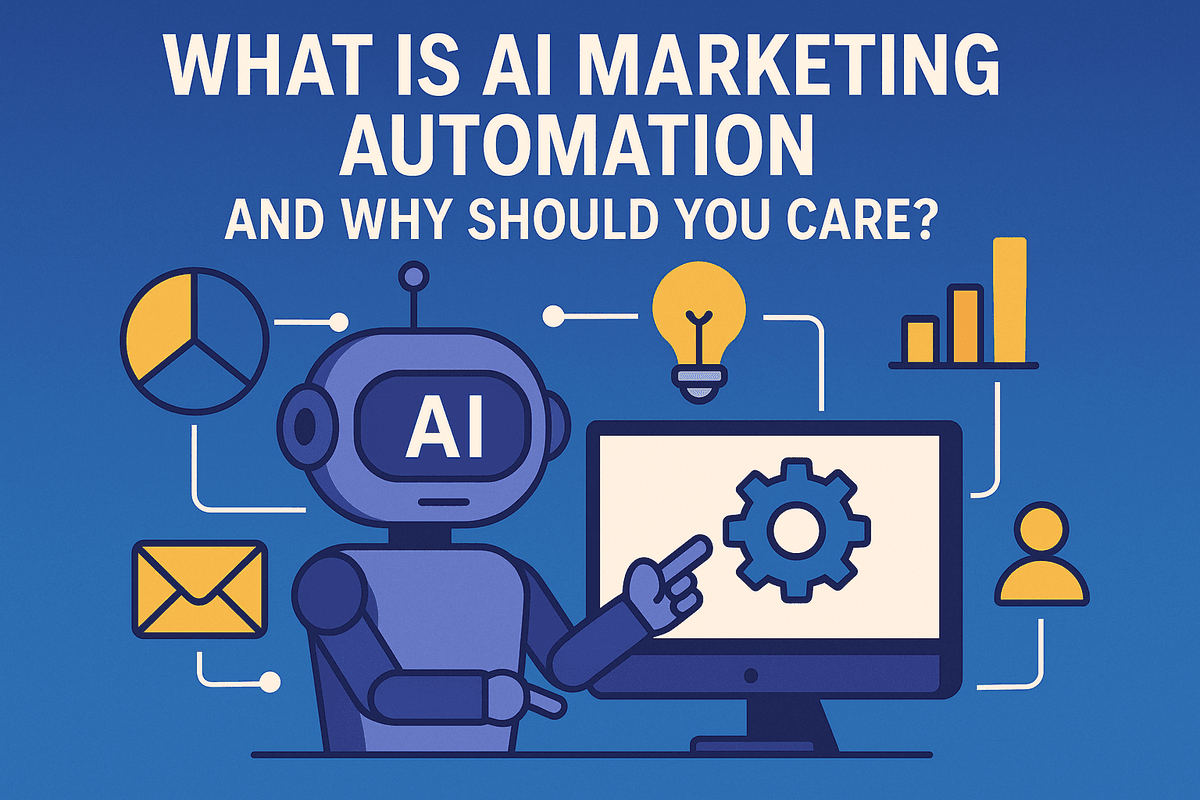
What Is AI Marketing Automation and Why Should You Care?
What Is AI Marketing Automation and Why Should You Care?
For years, marketing automation has been a game-changer, freeing up teams from repetitive tasks like sending welcome emails or scheduling social media posts. It operates on a simple, rule-based logic: if a user does X, then trigger Y. While effective, this is automation on rails—powerful, but rigid and unable to adapt on its own.
Enter AI marketing automation. This isn't just an upgrade; it's a complete paradigm shift. Think of traditional automation as a diligent assistant following a checklist. AI marketing automation, on the other hand, is a strategic partner that learns, predicts, and personalizes on the fly. It infuses artificial intelligence into automation workflows, allowing them to make intelligent, data-driven decisions in real-time, moving far beyond simple "if/then" commands. It’s the difference between a pre-programmed route and a GPS that reroutes you instantly based on live traffic.
Beyond Traditional Automation: A New Era for Marketers
The core distinction lies in the ability to learn and adapt. Traditional automation executes pre-defined workflows. AI marketing automation analyzes vast datasets—customer behavior, engagement patterns, conversion history, and even market trends—to optimize those workflows autonomously.
This intelligent layer empowers marketers to:
- Move from Reactive to Predictive: Instead of just reacting to a customer's action, AI can predict future behavior, such as which leads are most likely to convert or which customers are at risk of churning.
- Achieve True Personalization at Scale: AI can dynamically alter website content, product recommendations, and email messaging for each individual user based on their unique journey, creating a true one-to-one experience that was previously impossible to scale.
- Optimize Campaigns in Real-Time: AI algorithms can automatically adjust ad spend, shift budget to the best-performing channels, and A/B test creative elements continuously to maximize ROI without constant manual oversight.
How AI Solves the Biggest Challenges in Your Marketing Funnel
AI isn't just a high-level concept; it provides tangible solutions to persistent marketing challenges at every stage of the customer journey.
- Top of Funnel (Awareness & Discovery): AI tools can analyze search trends and competitor content to generate highly relevant topic ideas and even draft initial blog posts or ad copy. They can also identify high-potential lookalike audiences for social media ads, improving targeting precision.
- Middle of Funnel (Consideration & Nurturing): This is where AI marketing automation truly excels. It powers predictive lead scoring, prioritizing the hottest leads for your sales team. It drives hyper-personalized email nurturing, sending content based not on a fixed sequence, but on a user's real-time behavior and inferred interests.
- Bottom of Funnel (Conversion & Retention): AI powers the e-commerce recommendation engines that suggest the perfect next purchase. It can also analyze customer data to identify churn risks, allowing you to trigger retention campaigns proactively before a valuable customer is lost.
The Unstoppable Growth of AI in Marketing: Key Statistics
If you’re still wondering if this is a trend or a revolution, the numbers speak for themselves. The "why you should care" is rooted in a massive competitive shift.
- The global AI in marketing market is projected to skyrocket, demonstrating rapid and widespread adoption.
- A Salesforce report found that 70% of high-performing marketing teams are already using AI in their campaigns, a number that is growing year over year.
- It's not just about efficiency; it's about meeting customer expectations. Research from McKinsey shows that 76% of consumers are more likely to buy from brands that personalize.
Ignoring the rise of AI marketing automation is no longer an option. It's the key to unlocking unprecedented efficiency, deeper customer insights, and a decisive competitive edge in a crowded digital landscape.
Core Benefits of Integrating AI Marketing Automation
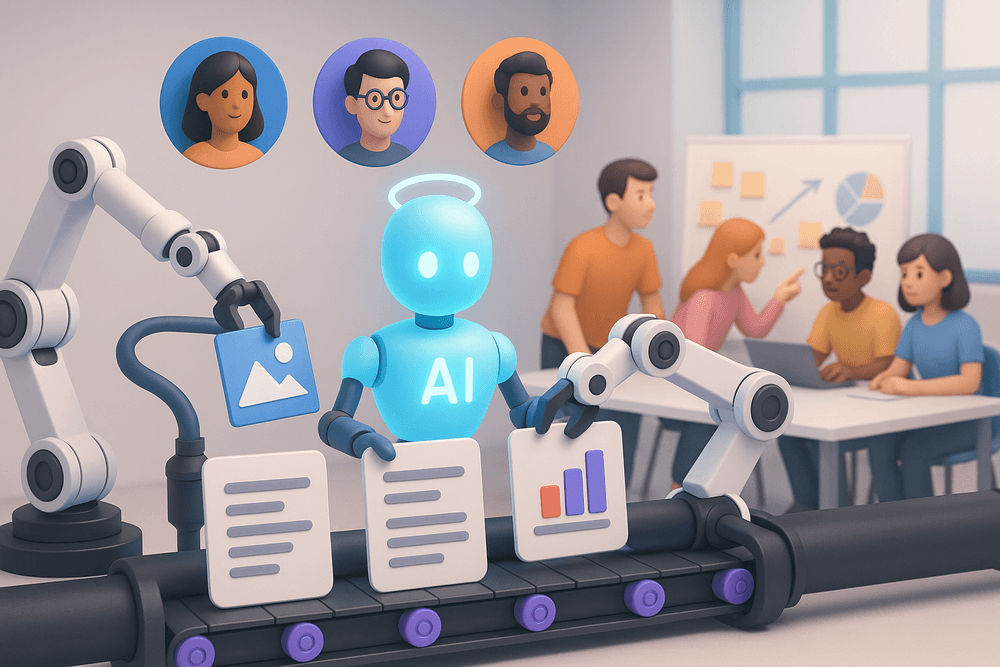
Moving beyond the theoretical, the practical application of AI in marketing automation delivers tangible, game-changing advantages. Businesses that embrace this technology aren't just doing things faster; they're doing them smarter, creating more meaningful connections with their audience and achieving a stronger return on their marketing investment. Let's explore the core benefits that an AI marketing automation strategy unlocks for your organization.
Achieving Hyper-Personalization at Scale
In today's crowded digital landscape, generic marketing messages are easily ignored. Customers expect brands to understand their individual needs and preferences. Hyper-personalization is the key, but delivering a unique experience to every single customer is a monumental task. This is where AI marketing automation shines. AI algorithms can process and analyze massive datasets in real-time—including browsing history, past purchases, and on-site behavior—to build a dynamic profile for each user. This enables you to:
- Customize website content to show visitors the most relevant products or articles.
- Send personalized email recommendations that genuinely match a user's interests.
- Tailor ad creatives and offers across different channels for maximum impact.
AI makes it possible to move beyond simple [First Name] tokens and create truly one-to-one marketing conversations, at a scale that would be impossible for any human team to manage.
Boosting Campaign ROI with Predictive Analytics
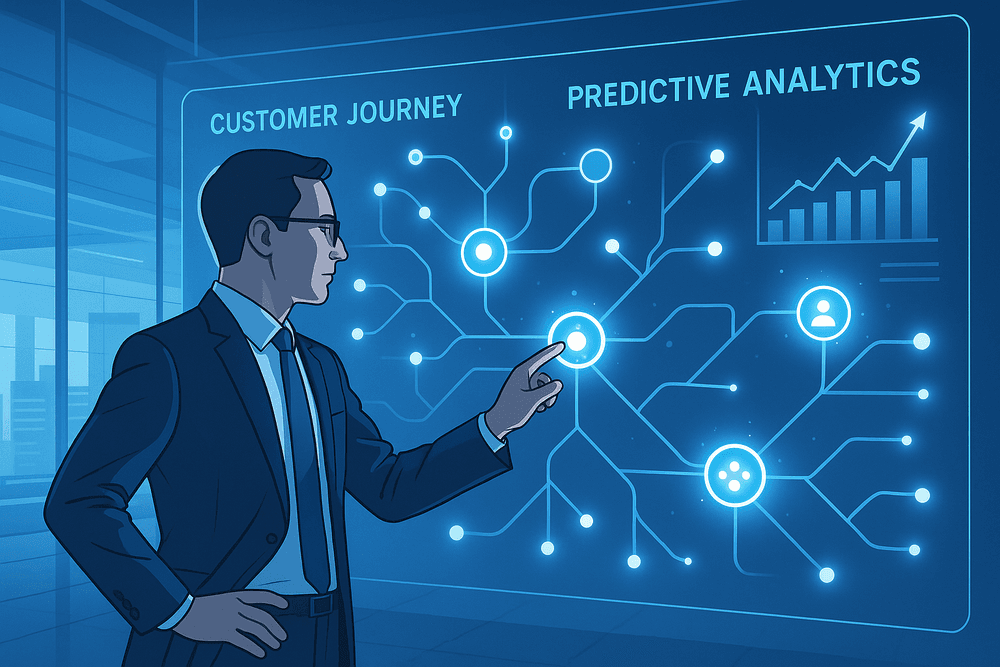
Are you spending your marketing budget in the right places? Predictive analytics, a core component of AI, takes the guesswork out of campaign planning. By analyzing historical data, AI models can identify subtle patterns and correlations to forecast future outcomes with remarkable accuracy. An AI marketing automation platform with predictive capabilities can help you:
- Identify high-value leads: The system can score leads based on their likelihood to convert, allowing your sales team to prioritize their efforts effectively.
- Optimize ad spend: AI can predict which channels and ad variations will perform best for a specific audience segment, minimizing wasted resources.
- Determine optimal timing: Predict the best time to send an email or post on social media for maximum engagement based on individual user habits.
This foresight allows you to allocate resources more intelligently, significantly boosting your overall campaign ROI.
Streamlining Repetitive Tasks to Empower Your Team
Marketers should be focused on strategy, creativity, and building customer relationships—not on tedious, manual tasks. A primary benefit of AI marketing automation is its ability to take over the repetitive work that consumes valuable time. This includes tasks like data segmentation, A/B testing setup, performance reporting, and even generating initial drafts of ad copy or email subject lines. By automating these processes, you empower your team to focus on what humans do best: strategic thinking and creative problem-solving. This not only increases productivity and reduces the risk of human error but also boosts team morale by freeing them from monotonous work.
Improving Customer Lifetime Value (CLV) with AI Insights
Acquiring a new customer is far more expensive than retaining an existing one. AI provides the deep insights necessary to nurture customer relationships and maximize their lifetime value (CLV). By continuously learning from customer interactions, an AI marketing automation system helps you understand customer health and satisfaction on a deeper level. It can identify early warning signs of potential churn, allowing you to proactively launch targeted re-engagement campaigns. Furthermore, by using AI to deliver consistently personalized and relevant experiences (as mentioned above), you build stronger brand loyalty. Customers who feel understood and valued are more likely to make repeat purchases and become long-term advocates for your brand, directly increasing your CLV.
AI Marketing Automation in Action: Real-World Use Cases
The theory behind AI in marketing is compelling, but its true power is revealed in its practical applications. Moving beyond basic automation, AI marketing automation allows for a level of precision and predictive insight that was previously unattainable. Here’s how leading businesses are leveraging this technology to drive real-world results.
Dynamic Content and Email Personalization
Generic, one-size-fits-all messaging is dead. Modern consumers expect content that speaks directly to their needs and interests. AI makes this possible at scale. Instead of simply inserting a contact's first name, AI algorithms analyze a user's entire digital footprint—browsing history, past purchases, time spent on a page, and real-time interactions—to deliver truly dynamic content.
For example, an e-commerce platform using AI marketing automation can show a returning visitor a homepage banner featuring products related to their last search. In email marketing, AI can personalize not just product recommendations but also subject lines, send times, and calls-to-action (CTAs) for each individual recipient to maximize the probability of engagement. This moves personalization from a simple tactic to a core, data-driven strategy.
Smarter Lead Scoring and Customer Segmentation
Traditional lead scoring relies on static, rule-based systems (e.g., "add 5 points for visiting the pricing page"). This approach is often inaccurate and slow to adapt. AI introduces predictive lead scoring. By analyzing thousands of data points from both successful and lost deals, AI models identify the subtle characteristics and behaviors of leads most likely to convert. This allows sales teams to prioritize their efforts on high-potential prospects, dramatically improving efficiency and conversion rates.
Similarly, AI revolutionizes customer segmentation. It can move beyond basic demographic or behavioral buckets to create dynamic, micro-segments based on predicted future actions, lifetime value, or churn risk. This enables hyper-targeted campaigns that resonate far more deeply with each specific audience group.
AI-Powered SEO and Content Creation Strategy
Dominating search engine results requires a sophisticated content strategy. AI tools act as powerful assistants for SEO specialists and content creators. They can analyze SERPs (Search Engine Results Pages) at a massive scale to identify content gaps, pinpoint valuable topic clusters, and perform advanced keyword research based on user intent.
Furthermore, AI marketing automation platforms can generate detailed content briefs, suggesting optimal word counts, headings, and key terms to include for a competitive edge. Generative AI can even produce initial drafts or outlines, freeing up creators to focus on adding unique insights, brand voice, and high-level strategy. This isn't about replacing human creativity; it's about augmenting it with data to ensure every piece of content has the best possible chance to rank and perform.
Optimizing Ad Spend with Automated Bidding
Managing paid advertising budgets is a high-stakes balancing act. AI-powered automated bidding, a cornerstone of platforms like Google Ads and Meta Ads, has transformed this process. Instead of marketers manually adjusting bids, AI algorithms analyze countless real-time signals for every single ad auction—including the user's device, location, time of day, and inferred intent.
Based on this analysis, the system automatically sets the optimal bid to achieve a specific goal, whether it's maximizing conversions, achieving a target cost-per-acquisition (CPA), or maximizing return on ad spend (ROAS). This not only leads to a more efficient allocation of budget but also frees up marketers from tedious manual tasks, allowing them to focus on creative development and strategic planning.

Evaluating the Top AI Marketing Automation Platforms
Choosing the right AI marketing automation platform is less about finding a single "best" solution and more about finding the best fit for your unique business goals, budget, and existing technology stack. The market is filled with powerful contenders, but three platforms consistently stand out for their distinct strengths. Let's break down what makes each a leader in its respective niche.
For All-in-One Power: HubSpot's AI Features
HubSpot has cemented its reputation as the go-to platform for businesses seeking a unified, user-friendly solution. Its strength lies in integrating a powerful CRM with marketing, sales, and service hubs, and its AI features are woven throughout this ecosystem. Known as Marketing Hub™, HubSpot’s AI marketing automation tools are designed for accessibility and immediate impact.
Key features include an AI Content Assistant that helps you brainstorm blog ideas, draft emails, and create social media copy in seconds. Predictive lead scoring uses machine learning to analyze customer data and identify which leads are most likely to convert, allowing sales teams to prioritize their efforts effectively. Furthermore, tools like AI-powered A/B testing optimize campaigns automatically, ensuring you’re always deploying the highest-performing version. For businesses that want a single source of truth without a steep learning curve, HubSpot offers a comprehensive and intelligent foundation.
For Deep CRM Integration: Salesforce Einstein
For enterprises already embedded in the Salesforce ecosystem, Salesforce Einstein is the undisputed heavyweight champion. Einstein isn't a separate product but a layer of artificial intelligence built directly into the core of the Salesforce platform. This deep integration allows it to leverage a massive amount of customer data to deliver incredibly accurate predictions and automate complex decisions.
Salesforce Einstein’s AI marketing automation capabilities are vast. Einstein Engagement Scoring predicts how likely an individual is to engage with your emails, while Einstein Send Time Optimization automatically delivers messages when subscribers are most likely to open them. For sales and marketing alignment, Einstein Lead Scoring prioritizes leads based on their conversion potential. The platform’s power is in its data-centric approach, making it the ideal choice for large organizations looking to extract maximum value from their extensive CRM data and operate at scale.
For E-commerce Growth: Klaviyo's Predictive Analytics
While other platforms serve a broad audience, Klaviyo has zeroed in on perfecting AI marketing automation for e-commerce and direct-to-consumer (DTC) brands. Its entire feature set is built around driving sales and increasing customer lifetime value (CLV). Klaviyo's core strength lies in its sophisticated predictive analytics.
The platform can accurately predict a customer's next order date, churn risk, and potential CLV. This isn't just interesting data; it's actionable intelligence that powers hyper-personalized marketing campaigns. Imagine automatically sending a "we miss you" campaign to customers at high risk of churning or targeting high-CLV customers with exclusive VIP offers. By turning historical purchase data into future revenue opportunities, Klaviyo empowers e-commerce businesses to build more profitable, long-term customer relationships.
How to Choose the Right Platform for Your Business
- For Small Businesses & Startups: Your focus should be on ease of use, affordability, and core functionality. Look for platforms with strong entry-level plans that can scale with you. HubSpot's free and starter tiers are excellent, as is Klaviyo if you are in e-commerce.
- For Mid-Market Companies: You need a balance of power, scalability, and integration capabilities. You likely have dedicated marketing teams that can leverage more advanced features. HubSpot's Professional and Enterprise tiers are built for this segment, offering robust automation and reporting.
- For Large Enterprises: Your primary needs are deep data integration, customization, security, and the ability to handle massive data volumes. Salesforce Einstein is tailor-made for this environment, especially if you already use Salesforce as your central CRM.
Best Practices for a Successful AI Marketing Automation Strategy
Implementing AI into your marketing is more than just flipping a switch on a new piece of software; it's about building a strategic framework that empowers the technology to deliver real results. An effective ai marketing automation strategy requires careful planning and a commitment to best practices. By focusing on the fundamentals, you can unlock the full potential of AI, driving efficiency, personalization, and significant ROI.
Start with Clean Data: The Foundation of Effective AI
The most sophisticated AI algorithm is useless if it's fed poor-quality information. Think of it as "garbage in, garbage out." Your AI marketing automation platform relies entirely on your data to learn, predict customer behavior, and personalize experiences. If your data is messy, incomplete, or inaccurate, the resulting insights and automated actions will be flawed.
To build a solid foundation, prioritize data hygiene. This involves:
- Auditing and Cleansing: Regularly review your databases to remove duplicate entries, correct inaccuracies, and standardize formats.
- Enriching Profiles: Fill in missing information to create comprehensive 360-degree views of your customers.
- Implementing Protocols: Establish clear data governance rules for how new information is collected and entered into your systems, ensuring quality from the start.
Clean, well-structured data is the fuel that powers a high-performance ai marketing automation engine.
Set Clear, Measurable Goals and KPIs
What does success look like for your business? Before you deploy any AI tool, you must define your objectives. Without clear goals, you’re flying blind and cannot accurately measure your return on investment. Instead of vague aspirations like "improve marketing," set specific, measurable, achievable, relevant, and time-bound (SMART) goals.
Examples of strong goals include:
- Increase lead-to-customer conversion rate by 20% within six months using AI-powered lead scoring.
- Reduce shopping cart abandonment by 15% in the next quarter through predictive, personalized email triggers.
- Improve customer lifetime value (CLV) by 10% over the next year by leveraging AI-driven product recommendations.
By tying your ai marketing automation efforts to concrete Key Performance Indicators (KPIs), you can effectively track progress and demonstrate its value to stakeholders.
Integrate AI Seamlessly with Your Existing MarTech Stack
Your new AI tool should not operate in a silo. For maximum impact, it must integrate flawlessly with your existing marketing technology (MarTech) stack, including your Customer Relationship Management (CRM), Content Management System (CMS), and analytics platforms.
A seamless integration creates a unified ecosystem where data flows freely between systems. This enables a truly holistic view of the customer journey, ensuring consistent messaging and experiences across all touchpoints. When your AI can access data from your CRM and push insights back, your sales and marketing teams can work in perfect sync. When choosing a platform, vet its integration capabilities. Look for native connectors and robust APIs to ensure it enhances, rather than complicates, your current workflow.
Ethical Considerations and Maintaining a Human Touch
As you harness the power of AI, it’s critical to operate ethically and transparently. Customers are increasingly aware of how their data is used. Be clear in your privacy policies and ensure your data handling practices comply with regulations like GDPR and CCPA. Furthermore, be vigilant about potential biases in AI algorithms that could lead to unfair or exclusionary marketing.
Most importantly, never forget the human element. AI marketing automation is designed to augment human creativity and strategic thinking, not replace it. Use AI to handle the data-heavy lifting and repetitive tasks, freeing up your team to focus on strategy, creative storytelling, and building genuine customer relationships. The most successful brands combine AI’s precision with an authentic, empathetic human touch to build lasting loyalty.
The Future Is Now: Your Next Steps in AI Marketing Automation
The journey into AI marketing automation isn't about overhauling your entire strategy overnight. It's about taking deliberate, intelligent steps toward a more efficient, personalized, and profitable future. The power to transform your marketing is already here; you just need a roadmap to get started. This section provides the key takeaways, a practical checklist, and the right mindset to not only begin but to thrive in this new era.
Key Takeaways for Driving Sustainable Growth
Adopting AI marketing automation is more than a technological upgrade—it's a strategic move toward sustainable business growth. Here are the core principles to remember:
- Hyper-Personalization at Scale: AI moves beyond basic segmentation (
{first_name}). It enables you to deliver unique experiences to thousands or millions of customers simultaneously based on their real-time behavior, predictive needs, and historical data. This deep level of personalization builds loyalty and increases customer lifetime value. - From Reactive to Predictive: Standard automation reacts to triggers. AI-powered marketing automation anticipates customer needs. By leveraging predictive analytics, you can identify at-risk customers before they churn, recommend products they’re likely to buy next, and optimize campaigns for future trends, not just past performance.
- Efficiency Unlocks Creativity: By automating repetitive and data-intensive tasks like A/B testing, audience segmentation, and performance reporting, AI frees up your team's most valuable resource: their creativity. Marketers can shift their focus from manual execution to strategic thinking, brand building, and crafting compelling narratives.
A Simple Checklist to Launch Your First AI Campaign
Feeling overwhelmed? Don't be. Starting with a small, focused project is the best way to build momentum and demonstrate value. Follow this simple checklist to launch your first AI-enhanced campaign.
- Define One Clear, Measurable Goal: What do you want to achieve? Don't try to solve everything at once. Choose a specific objective, such as "Increase email open rates by 15%" or "Improve ad click-through rates for our top-selling product."
- Identify a High-Impact Use Case: Select a low-risk, high-reward area to start. Great first steps include AI-powered email subject line generation, optimizing ad copy with an AI writer, or using a predictive analytics tool to identify a high-value audience segment for a targeted social media ad.
- Choose a User-Friendly Tool: You don't need a complex, enterprise-level platform for your first test. Many of your existing marketing tools may already have AI features built-in, or you can opt for a specialized, easy-to-use AI tool for your chosen use case.
- Run a Controlled Experiment: Use your AI tool to create one version of your asset (e.g., an AI-generated subject line) and test it against your human-created control version. This A/B test is crucial for measuring real impact.
- Analyze and Iterate: Did the AI version win? Why? What did you learn? Use these insights to inform your next experiment. The goal is continuous improvement, not a one-time victory.
Why You Should Embrace an Experimental Mindset
The most successful adopters of AI marketing automation treat it not as a plug-and-play solution, but as a powerful lab for discovery. Adopting an experimental mindset is non-negotiable. Some of your AI-driven tests will fail, and that’s a good thing. A failed experiment provides valuable data on what doesn't work for your audience, saving you time and money in the long run.
Encourage your team to be "data-curious." Ask questions, form hypotheses, and use AI to test them rapidly. This culture of experimentation is what separates companies that merely use AI from those that are truly transformed by it. The future of marketing isn't a fixed destination; it's a continuous process of learning, adapting, and optimizing. Start today, start small, and get ready to grow.