
September 15, 2025
What is AI Document Indexing and Why Does It Matter?
What is AI Document Indexing and Why Does It Matter?
Imagine an enormous library where none of the books have titles on their spines, and the card catalog is just a jumble of random words. Finding a specific piece of information would be an impossible, time-consuming task. For many businesses, this is the reality of their digital document management. They have vast repositories of valuable data locked away in contracts, invoices, emails, and reports, but no efficient way to search and retrieve it. This is where AI document indexing changes the game.
Beyond Manual Filing: The Evolution of Document Management
For decades, document management relied on manual labor. Employees would read a document, decide on a few relevant keywords or "tags," and file it under a specific folder. This system was slow, prone to human error, and fundamentally limited. If someone filed a contract under the client’s name but you needed to search for it by its renewal date, you were out of luck unless that specific tag was added.
The digital era introduced basic text search, but it was a clumsy tool. It could find exact keyword matches, but it couldn’t understand context, synonyms, or the actual meaning within the document. You couldn’t ask a system to "find all contracts with a liability clause over $1 million." You could only search for the word "liability," and then manually sift through hundreds of irrelevant results. The need for a smarter, more intuitive system became undeniable.
How AI Document Indexing Unlocks Unstructured Data
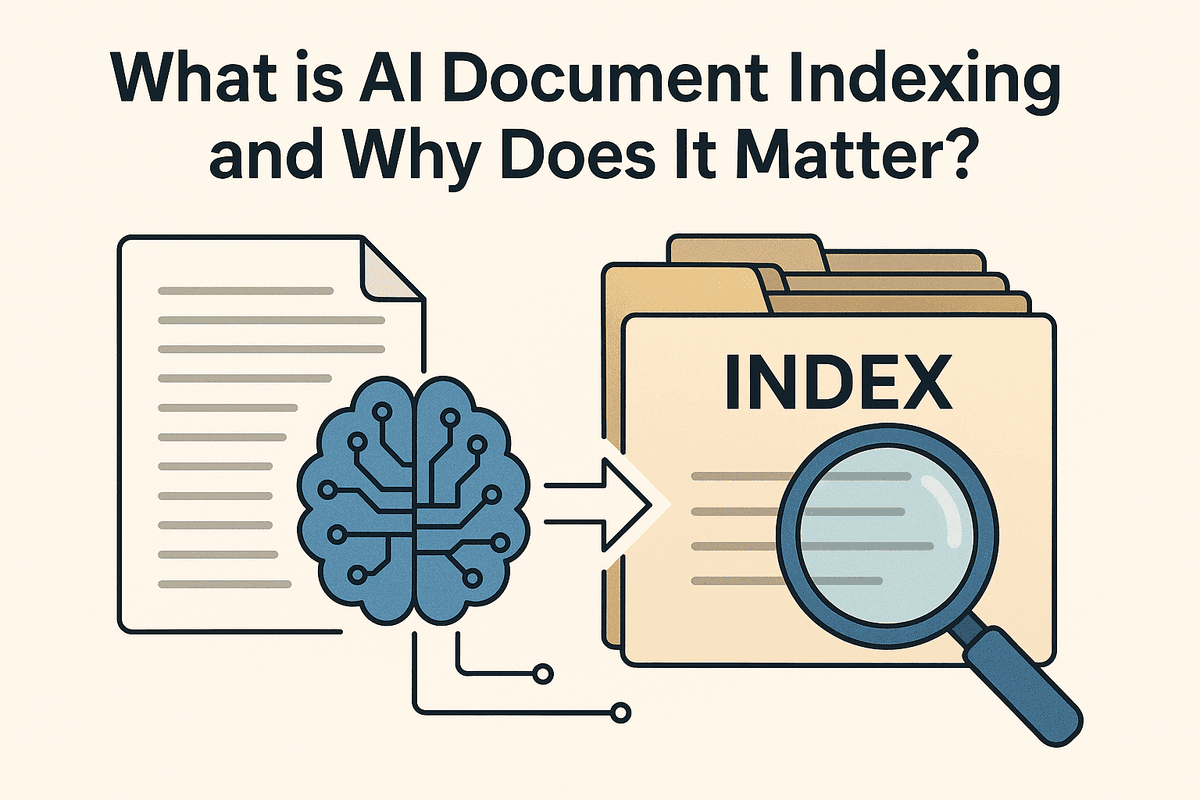
AI document indexing is the intelligent, automated process of analyzing, categorizing, and creating a searchable index for documents by understanding their content and context. Unlike traditional methods that rely on predefined keywords, AI uses technologies like Natural Language Processing (NLP) and machine learning to read and comprehend information like a human would.
Here’s how it works:
- Data Extraction: The AI scans documents—PDFs, Word files, scanned images, emails—and extracts not just text, but also identifies key entities like names, dates, organizations, and monetary values.
- Contextual Understanding: Using NLP, the system understands the relationships between these entities. It recognizes that "Termination for Cause" is a specific type of legal clause and that "Net 30" is a payment term.
- Intelligent Tagging: Instead of just a few manual tags, the AI generates a rich, comprehensive index of metadata. It automatically tags a document with every relevant concept, clause, person, and date it contains.
This process transforms your unstructured data—the 80% of business information that doesn’t fit neatly into spreadsheets—into a fully searchable, structured asset. Suddenly, that "impossible" library is perfectly organized, with every sentence and concept indexed and ready for retrieval.
Comparing Traditional vs. Automated Indexing Methods
The difference between manual indexing and AI document indexing is not just an upgrade; it's a complete paradigm shift. The benefits become crystal clear when you compare them side-by-side:
- Speed & Scalability: Manual indexing is a bottleneck. An employee can process a few dozen documents a day. An AI system can index thousands in an hour, effortlessly scaling as your data volume grows.
- Accuracy & Consistency: Humans make mistakes, get tired, and have subjective interpretations. AI applies the same logic and rules consistently to every document, dramatically reducing errors and ensuring a uniform index.
- Depth of Insight: A manual approach captures only the most obvious keywords. AI document indexing creates a deep, multi-layered index that allows for complex, contextual queries. This unlocks business intelligence, risk analysis, and compliance monitoring that was previously impossible.
- Cost-Effectiveness: While there is an initial investment, the long-term ROI is significant. By automating countless hours of manual labor and unlocking the hidden value in your data, AI provides a sustainable competitive advantage.

The Core Technologies Driving AI Document Indexing
At its heart, AI document indexing is not a single, monolithic technology but a sophisticated symphony of several core components working in harmony. This powerful combination transforms chaotic, unstructured data—from scanned invoices to lengthy legal contracts—into a structured, searchable, and incredibly valuable business asset. Let’s break down the three technological pillars that make this intelligent automation possible.
Natural Language Processing (NLP): Understanding Context and Meaning
Imagine trying to organize a library where you could only read the first word of every book title. That’s traditional, keyword-based indexing. Natural Language Processing (NLP) is the technology that teaches computers to read and comprehend human language with all its nuance, context, and complexity.
In the world of AI document indexing, NLP is the interpreter. It goes far beyond simple keyword matching to understand the meaning behind the words. Key NLP functions include:
- Named Entity Recognition (NER): This automatically identifies and extracts critical data points like names of people, company names, geographic locations, dates, and monetary values. For an invoice, it finds the vendor, due date, and total amount without being explicitly told where to look.
- Topic Modeling: NLP can analyze a document and determine its central themes, automatically assigning it to categories like "Legal," "Finance," or "Human Resources."
- Sentiment Analysis: It can even discern the tone of a document, flagging an incoming customer email as "Urgent Complaint" versus a "General Inquiry." This contextual understanding is what makes the index truly intelligent.
Machine Learning (ML): Training Models to Classify and Tag Documents
If NLP is the interpreter, Machine Learning (ML) is the brain that learns, adapts, and makes decisions. ML models are the engine behind the automation in AI document indexing, trained to recognize patterns and classify documents with astounding accuracy and speed.
The process is similar to how a person learns. Initially, you "teach" the ML model by showing it examples—this is what an invoice looks like, this is a purchase order, and this is a master service agreement. The model analyzes the structure, keywords, and data points unique to each document type. Once trained, it can:
- Automate Classification: When a new document enters the system, the ML model can instantly identify it and route it to the correct workflow or digital folder.
- Enable Intelligent Tagging: ML doesn’t just classify; it extracts key information (identified by NLP) and uses it to create rich, detailed metadata tags. A contract might be automatically tagged with the client's name, renewal date, and contract value, making it instantly findable through dozens of search combinations.
Optical Character Recognition (OCR): Digitizing Physical Paperwork at Scale
For the vast majority of businesses, a significant portion of information is still locked away in physical documents—filing cabinets filled with old records, stacks of paper invoices, and signed contracts. Optical Character Recognition (OCR) is the essential bridge between the physical and digital worlds.
Modern, AI-enhanced OCR is the first critical step for any paper-based information. It scans an image of a document and converts the printed or handwritten text into machine-readable digital text that NLP and ML can analyze. But it’s more than a simple text converter. Today’s OCR can:
- Recognize document layouts, identifying headers, footers, tables, and columns.
- Handle various fonts and even messy handwriting with increasing accuracy.
- Process thousands of pages rapidly, making it possible to digitize entire archives at scale.
Without OCR, your physical documents remain invisible to digital systems. With it, every piece of paper becomes a searchable, indexable part of your organization's knowledge base.
Key Benefits of Implementing AI Document Indexing
Moving beyond traditional, manual methods of document management unlocks a new level of operational excellence. Implementing AI document indexing is not just an upgrade; it’s a fundamental transformation of how your organization accesses and utilizes its most valuable asset: information. The benefits are immediate, measurable, and far-reaching, touching everything from daily productivity to long-term strategic advantage.
Achieve Faster and More Accurate Search Results
Imagine trying to find a specific clause in thousands of contracts using only a simple keyword search. The process is slow, frustrating, and often incomplete. Traditional systems rely on exact matches, failing to understand synonyms, context, or user intent. This is where AI document indexing revolutionizes information retrieval. By leveraging Natural Language Processing (NLP), the system understands the meaning behind a query, not just the words. It can locate relevant information based on concepts and context, even if the exact search term isn't present in the document. This means employees can find the precise information they need in seconds, not hours, dramatically boosting productivity and enabling more informed, faster decision-making.
Automate Data Extraction and Metadata Tagging
Manually tagging documents with metadata is a tedious, expensive, and error-prone task that rarely keeps pace with the volume of incoming information. An effective AI document indexing solution automates this entire process. AI models can read and comprehend documents—from invoices and legal agreements to reports and emails—to automatically identify and extract critical information. It can pull out names, dates, invoice numbers, contract values, and other key data points, converting them into structured, searchable metadata. This not only saves countless hours of manual labor but also ensures that tags are consistent and comprehensive, turning your unstructured document chaos into a highly organized and valuable data repository.
Enhance Data Security and Ensure Compliance
In an age of strict data privacy regulations like GDPR and HIPAA, failing to properly manage sensitive information can lead to severe penalties. Manually identifying Personally Identifiable Information (PII), financial data, or trade secrets across millions of files is nearly impossible. AI document indexing acts as a vigilant guardian for your data. The system can be trained to automatically detect and classify sensitive content as documents are ingested. This allows you to enforce security policies systematically, applying appropriate access controls, automating redaction, or flagging files for legal review. This proactive approach simplifies audits, strengthens your data governance framework, and ensures you remain compliant with industry and government regulations.
Reduce Operational Costs and Manual Errors
The cumulative effect of these benefits is a significant reduction in operational costs and risk. By automating repetitive tasks, you free up skilled employees to focus on high-value strategic work instead of manual data entry and document searches. This directly translates to lower labor costs and increased output. Furthermore, automation removes the element of human error. A misplaced decimal, a misfiled contract, or an overlooked compliance requirement can have costly consequences. The precision and consistency of an AI document indexing system minimizes these risks, safeguarding your organization from financial losses, legal liabilities, and reputational damage. It’s an investment that pays for itself through enhanced efficiency, strengthened security, and greater operational resilience.
AI Document Indexing in Action: Real-World Use Cases
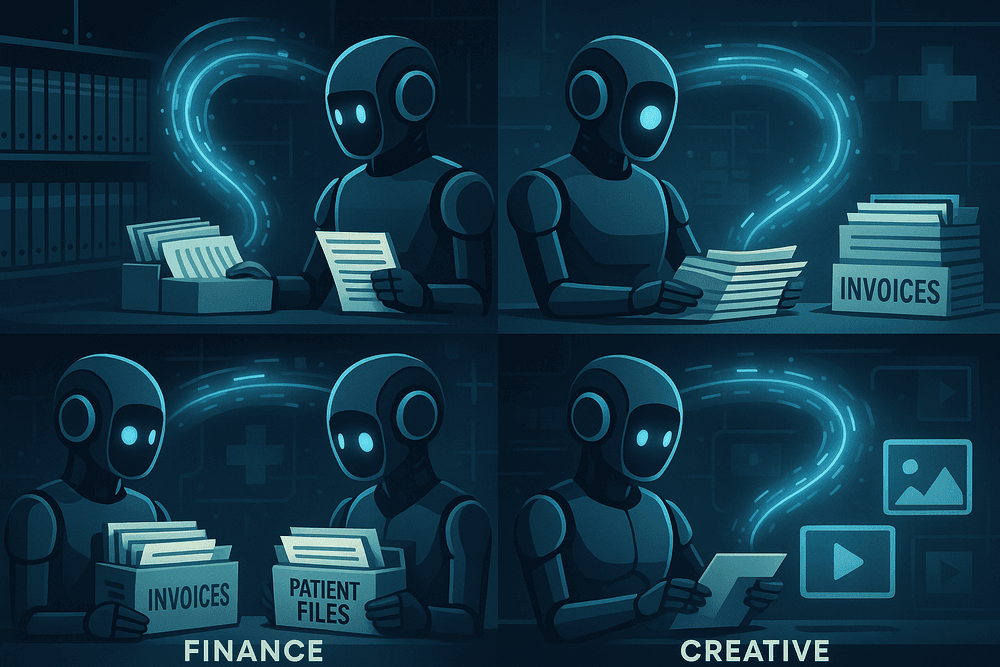
The theoretical benefits of AI are compelling, but its true power is revealed in practical application. Across industries, ai document indexing is transforming legacy workflows, unlocking new efficiencies, and turning data chaos into a strategic advantage. Let's explore how different professional fields are putting this technology to work.
Streamlining Discovery in the Legal Field
In the legal world, the eDiscovery process often involves sifting through millions of documents—emails, contracts, memos, and more—to find relevant evidence. This manual review is notoriously time-consuming, expensive, and prone to human error. AI document indexing revolutionizes this process by using Natural Language Processing (NLP) to understand the context and concepts within legal documents. The system can automatically identify, tag, and categorize files based on case relevance, privilege, and key entities like names, dates, and organizations. This allows legal teams to perform highly sophisticated conceptual searches, quickly pinpointing "smoking gun" documents that keyword searches would miss, drastically reducing review time and costs.
Automating Invoice and Receipt Processing for Finance Teams
Accounts Payable (AP) departments are frequently buried under a mountain of invoices, purchase orders, and receipts in various formats. Manual data entry is tedious and a common source of costly errors. By implementing ai document indexing, finance teams can automate the entire workflow. The AI can instantly extract critical information—such as vendor name, invoice number, line-item details, and totals—from any document, whether it's a scanned PDF or a digital file. It then validates this data, matches it against purchase orders, and routes it for approval. The result is a faster, more accurate payment cycle, reduced operational costs, and a fully searchable digital archive for seamless audits.
Managing Patient Records and Research in Healthcare
Healthcare generates a massive volume of unstructured data, from physicians’ handwritten notes and lab results to complex medical imaging reports and academic research papers. Making sense of this data is critical for both patient care and medical advancement. AI document indexing provides a powerful solution by creating a unified, searchable knowledge base. It can index patient histories, identifying symptoms, diagnoses, and treatments mentioned in clinical notes. This gives practitioners a more complete view of a patient's health. For researchers, the technology accelerates discovery by allowing them to instantly find relevant clinical trials, patient cohorts, and published studies based on highly specific criteria, speeding up life-saving innovation.
Organizing Digital Assets for Creative and Marketing Agencies
Creative and marketing teams manage a vast library of digital assets, including images, videos, design files, and campaign documents. Finding the right asset at the right time can feel like a treasure hunt. AI document indexing powers modern Digital Asset Management (DAM) systems by going beyond simple filenames. Using computer vision and NLP, the AI automatically analyzes and tags assets with rich, detailed metadata. It can identify objects, people, and logos within an image; transcribe spoken words in a video; and extract text from a design file. This creates a deeply searchable library where marketers can instantly find "all photos featuring our product used outdoors from the Q3 campaign," saving countless hours and boosting creative productivity.
Best Practices for a Successful AI Document Indexing Strategy
Implementing a new technology is more than just flipping a switch; it requires a strategic plan to unlock its full potential. A successful ai document indexing initiative depends on careful planning, thoughtful execution, and a clear understanding of your organizational needs. By following these best practices, you can ensure your transition to intelligent document management is smooth, effective, and delivers a significant return on investment.
Start by Defining Your Document Types and Goals
Before you even look at a single software solution, you must look inward. The first and most critical step is to map your document landscape and define what success looks like.
- Categorize Your Documents: What kinds of information are you dealing with? Identify your primary document types, such as contracts, invoices, customer support tickets, HR records, or technical manuals. Each type has a unique structure and set of key data points.
- Set Clear Objectives: What business problem are you trying to solve? Your goals will dictate your entire strategy. Are you aiming to accelerate customer service response times by finding information faster? Do you need to improve regulatory compliance by easily locating specific clauses in thousands of contracts? Or is your goal to extract data for business analytics? Clearly defined objectives will guide every subsequent decision.
How to Choose the Right AI Document Indexing Software
With your goals established, you can now evaluate technology partners. The market offers a wide range of tools, but the right one for you will align with your specific requirements. Look for a solution that excels in these key areas:
- Accuracy and NLP Capabilities: How well does the software understand the context and nuance of your specific documents? A powerful solution will use advanced Natural Language Processing (NLP) to go beyond simple keyword matching, accurately identifying entities, sentiment, and topics.
- Scalability: Your data volume will only grow. Choose a platform that can handle your current needs and scale effortlessly as your document repository expands.
- Integration: An ai document indexing tool should not be an island. Ensure it offers robust APIs and pre-built connectors to integrate seamlessly with your existing systems, such as your CRM, ERP, or cloud storage.
- User-Friendliness: The most powerful tool is useless if your team can’t use it. Prioritize an intuitive interface and a system that is easy to configure and manage.
Prepare and Clean Your Data for Optimal Results
The principle of "garbage in, garbage out" is especially true for AI systems. The accuracy of your indexing is directly dependent on the quality of your source documents. To set your system up for success, you must focus on data hygiene.
Start by consolidating your documents from disparate silos. Use high-quality Optical Character Recognition (OCR) tools to convert scanned images and low-quality PDFs into machine-readable text. Standardize file formats where possible and implement a process for identifying and removing duplicate or obsolete files. Investing time in this preparation phase will pay massive dividends in the speed and reliability of your ai document indexing results.
Integrate AI Indexing into Your Existing Workflows
To truly transform your operations, AI indexing must become an invisible, integrated part of your daily workflows, not an extra step. Automate the ingestion process so that new documents—like an incoming vendor invoice or a newly signed client agreement—are automatically indexed the moment they enter your system.
Train your team not just on how to use the new search interface, but on the new capabilities it unlocks. Finally, establish a "human-in-the-loop" feedback mechanism. Allow users to easily correct any misclassifications they find. This feedback doesn’t just fix a single error; it helps retrain and refine the machine learning model, making the entire system smarter and more accurate over time.

Conclusion: The Future of Your Data with AI Document Indexing
We've journeyed through the intricate world of AI document indexing, moving from manual, error-prone processes to an intelligent, automated future. The takeaway is clear: in an era defined by data, the ability to rapidly find, understand, and utilize information is no longer a competitive advantage—it's a fundamental necessity. Traditional methods are simply outmatched by the sheer volume and complexity of modern business documents. AI, powered by machine learning and Natural Language Processing (NLP), provides the only scalable solution. It transforms chaotic repositories of unstructured data into structured, searchable, and incredibly valuable assets, enhancing efficiency, ensuring compliance, and unlocking insights that were previously buried. Adopting AI document indexing isn't just an upgrade; it's a strategic evolution for any forward-thinking organization.
Your Roadmap to Getting Started with AI Indexing
Embarking on this transformative journey might seem daunting, but it can be broken down into manageable steps. A successful implementation begins with a clear strategy, not just a blind investment in technology.
- Assess Your Document Ecosystem: Start by auditing your current state. Identify your biggest document-related challenges. Are search times too long? Are you struggling with compliance? What types of documents (invoices, contracts, reports) create the most friction? Understanding your pain points is crucial for defining success.
- Define Clear Objectives: What do you hope to achieve? Your goals should be specific and measurable. Aim to "reduce invoice processing time by 40%" or "achieve 99% accuracy in contract clause identification." These concrete targets will guide your project and help you measure its return on investment.
- Launch a Pilot Project: Don't try to boil the ocean. Select a single, high-impact use case for a pilot program. This could be automating accounts payable for one department or indexing a specific archive of legal documents. A successful pilot provides a powerful proof-of-concept and builds momentum for wider adoption.
- Select the Right Technology Partner: Evaluate potential AI document indexing solutions based on your specific needs. Consider factors like ease of integration with your existing systems, scalability, security protocols, and the level of customization and support offered.
Find the Right AI Solution to Transform Your Business
The shift to intelligent document management is more than a technological upgrade—it's a catalyst for business transformation. By automating the foundational task of indexing, you free up your team to focus on higher-value work, from strategic analysis to customer engagement. The right AI solution doesn't just categorize your files; it creates a dynamic, intelligent knowledge base that fuels better decision-making across your entire organization. As you explore your options, look for a partner who understands your unique business challenges and can help you harness the full potential of your data. The future is intelligent, searchable, and efficient. With AI document indexing, you can ensure your business is ready for it.