
August 21, 2025
What Is AI Content Optimization and Why Is It a Game-Changer
What Is AI Content Optimization and Why Is It a Game-Changer?
In the relentless race for digital visibility, content is the engine and SEO is the roadmap. For years, navigating this map involved a mix of manual research, educated guesses, and painstaking adjustments. But the landscape is shifting dramatically. We’re moving from an era of manual tweaks to one of intelligent automation, and at the forefront of this revolution is AI content optimization.
From Manual Tweaks to Intelligent Automation: The Evolution of SEO
Remember the days of tedious keyword research in spreadsheets and manually combing through competitor articles? Marketers would rely on intuition to fill in the gaps, hoping their content would resonate with both search engine algorithms and human readers. While this approach had its merits, it was slow, subjective, and often hit-or-miss.
As search engines like Google grew more sophisticated, they began prioritizing user intent, contextual relevance, and overall content quality. Simple keyword matching was no longer enough. To rank, you needed to demonstrate comprehensive expertise and provide real value. This complexity created a massive data analysis challenge that human capabilities alone struggle to meet. The need for a smarter, faster, and more data-driven approach became undeniable, setting the stage for the rise of AI in SEO.
Defining AI Content Optimization: More Than Just Writing
It’s crucial to understand that AI content optimization is not simply about using AI to generate articles from scratch. While AI writers have their place, true optimization is a far more strategic and analytical process.
AI content optimization is the data-driven practice of using artificial intelligence to analyze, refine, and enhance content to achieve peak performance.
Think of it as having a super-powered SEO strategist that has analyzed thousands of top-ranking pages in seconds. These AI-powered platforms deconstruct the SERPs for your target keywords to provide a clear blueprint for success. They identify:
- Topical Gaps: Key subtopics and user questions your competitors cover that you’ve missed.
- Semantic Terms: Important related keywords and entities that build contextual authority.
- Content Structure: Optimal word count, heading distribution, and readability scores.
- Internal Linking: Opportunities to link to other relevant pages on your site to boost SEO value.
Essentially, AI content optimization transforms content creation from an art of guesswork into a science of data-backed precision, augmenting human creativity with machine intelligence.
The Core Benefits: Boosting Rankings, Engagement, and ROI
Adopting an AI-driven strategy isn't just about keeping up with trends; it’s about unlocking tangible business results that impact your bottom line.
- Boosted Search Rankings: By creating content that is perfectly aligned with proven ranking factors and user intent, you gain a significant competitive advantage. AI ensures your articles are comprehensive, authoritative, and contextually rich, signaling to search engines that your page is the best answer for a user’s query.
- Enhanced User Engagement: AI tools analyze more than just keywords. They assess readability, sentiment, and structure to help you craft content that captivates your audience. This leads to lower bounce rates, longer dwell times, and more social shares—all powerful signals of content quality.
- Accelerated ROI: The efficiency gained through AI content optimization is immense. Your team can slash research time and focus on creating higher-quality content, faster. This operational efficiency, combined with the increase in organic traffic and conversions from better-performing content, delivers a powerful and measurable return on investment.
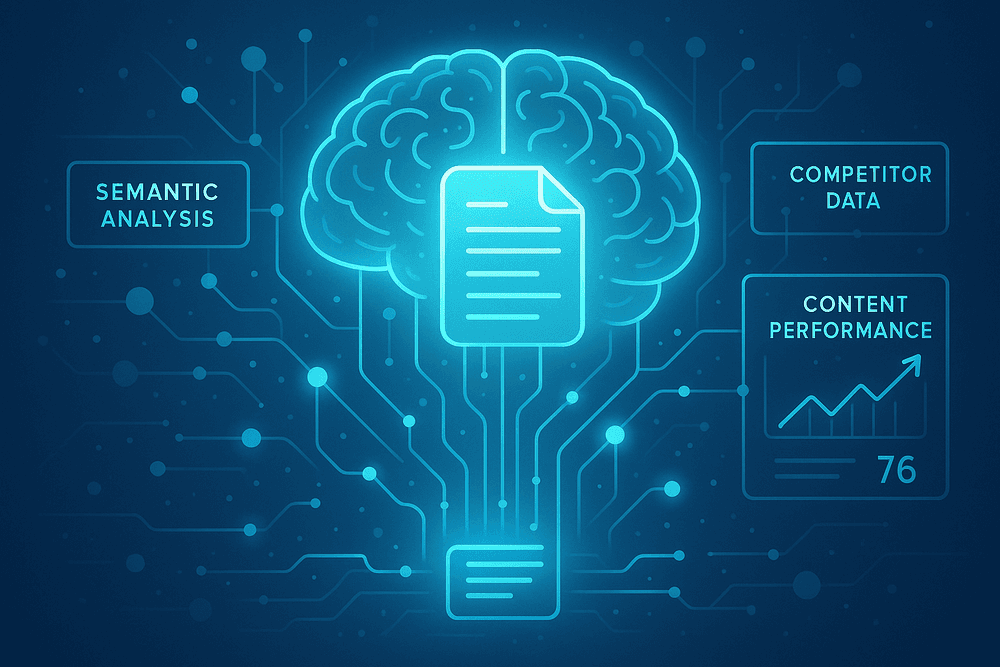
How AI Content Optimization Tools Actually Work
Ever wondered what’s going on under the hood of an AI content optimization platform? It’s not magic—it's a powerful combination of sophisticated technologies designed to deconstruct search engine algorithms and user intent. By understanding the core mechanics, you can better leverage these tools to create content that consistently wins. The process boils down to three key functions.
Leveraging NLP for Semantic Analysis and Topic Modeling
At the heart of any advanced ai content optimization tool is Natural Language Processing (NLP), a branch of artificial intelligence that gives computers the ability to read, understand, and interpret human language. Instead of just counting keywords, NLP allows the AI to perform deep semantic analysis.
- Semantic Analysis: The AI doesn’t just see words; it understands the relationships between them and the context in which they appear. It can differentiate between "apple" the fruit and "Apple" the tech giant. This allows it to grasp the true meaning and user intent behind a search query.
- Topic Modeling: The AI analyzes thousands of top-ranking pages on a given topic to identify core themes, sub-topics, and related concepts. It builds a "topic model" that maps out all the essential entities and ideas Google expects to see in a comprehensive piece of content. This is why AI tools can suggest relevant terms you might have missed, helping you build topical authority and satisfy both search engines and readers.
AI-Powered SERP and Competitor Analysis at Scale
Manually analyzing the Search Engine Results Page (SERP) for a competitive keyword is a monumental task. You’d have to open dozens of tabs, read through articles, and try to spot patterns—a process that is both time-consuming and prone to human error.
AI performs this competitor analysis at a scale and speed that is simply impossible for humans. In seconds, an ai content optimization tool can:
- Analyze the top 20, 30, or even 50 ranking results for your target keyword.
- Extract common structural elements, such as the most frequently used H2 and H3 headings.
- Identify key questions being answered, often pulled from "People Also Ask" boxes and forums.
- Determine the ideal word count range, readability level, and keyword density.
The result is a data-driven content brief that acts as a blueprint for success. It eliminates guesswork and provides a clear roadmap based on what is already proven to rank, giving you a significant competitive edge.
Using Predictive Analytics to Forecast Content Performance
This is where the most advanced tools truly shine. They don’t just analyze existing content; they use machine learning models to predict the performance of your content before you even publish it.
These predictive models are trained on vast datasets containing millions of articles and their corresponding performance data (e.g., rankings, traffic, and engagement). As you write, the AI scores your content in real-time against hundreds of known ranking factors benchmarked against top competitors. This "Content Score" or "Optimization Score" is a live forecast of your content's potential to rank. It dynamically updates as you incorporate the AI's suggestions, effectively turning content creation from a creative gamble into a strategic, data-backed exercise that dramatically increases your chances of success.
Key Features in Top AI Content Optimization Platforms
The market is flooded with tools claiming to leverage AI, but the true power of ai content optimization lies in a specific set of sophisticated features. These capabilities move beyond simple keyword suggestions to provide a comprehensive, data-driven framework for creating content that dominates search results. When evaluating platforms, look for these four game-changing features that separate the leaders from the pack.
Real-Time Content Scoring and On-Page Suggestions
Imagine an SEO expert guiding you as you type. That’s the power of real-time content scoring. This core feature dynamically analyzes your draft against the top-ranking pages for your target keyword. The AI provides a live, objective score based on dozens of on-page factors, including semantic keyword inclusion, heading structure, word count, and image density. As you write, the platform offers actionable suggestions—like "add the term 'user engagement metrics' to an H2 tag" or "expand on the topic of search intent"—allowing you to optimize your article before it ever goes live. This instant feedback loop dramatically shortens the editing process and maximizes your content's potential to rank from day one.
Automated Content Brief and Outline Generation
The foundation of high-ranking content is meticulous research, a process that can take hours or even days. AI-powered platforms automate this entirely. By simply entering a target keyword, the tool scours the SERPs to analyze what’s already successful. Within minutes, it generates a comprehensive content brief. This isn't just a list of keywords; it’s a strategic blueprint for success. This document typically includes a recommended word count, a logically structured outline with suggested H2 and H3 headings, common questions pulled from "People Also Ask" sections, and a rich list of semantically related terms to include. This foundational step in ai content optimization ensures your content comprehensively covers the topic and aligns perfectly with user intent from the very start.
Intelligent Internal Linking and Topic Cluster Recommendations
Building topical authority is critical for long-term SEO success, and a smart internal linking strategy is the architecture that supports it. Advanced ai content optimization tools use natural language processing (NLP) to understand the context of your entire website. They don't just find exact-match keywords; they identify conceptual relationships between your articles. The AI then suggests highly relevant internal linking opportunities, helping you connect new posts to established pillar pages and vice versa. Furthermore, it can analyze your existing content to identify gaps, recommending new article ideas to build out robust topic clusters. This strategic approach strengthens your site’s authority, improves crawlability for search engines, and keeps users engaged by guiding them to related content.
AI-Assisted Readability and Tone-of-Voice Analysis
Ranking is only half the battle; your content also needs to connect with your human audience. This is where AI-driven linguistic analysis shines. These tools go beyond basic grammar checks to provide deep insights into your writing style. They calculate readability scores (like the Flesch-Kincaid grade level), flag overly complex sentences, and identify excessive use of passive voice. More advanced platforms can even analyze your tone of voice—is it formal, conversational, confident, or analytical? They can compare it against top competitors or a predefined brand style guide, ensuring your messaging is not only clear and easy to read but also consistently on-brand. This final polish ensures your content engages and converts, completing the optimization cycle.

A Practical Guide to Your AI Content Optimization Strategy
Moving from theory to practice is where the real value of AI emerges. An effective AI content optimization strategy isn't about replacing your team; it's about augmenting their skills with powerful, data-driven insights. Here’s how to build a practical framework that integrates AI into your daily operations for maximum impact.
Integrating AI Tools into Your Existing Content Workflow
The key to successful adoption is integration, not disruption. Instead of overhauling your entire process, strategically insert AI tools at key stages of your existing content workflow:
- Ideation & Planning: Use AI-powered keyword research tools to move beyond single keywords. These platforms can identify entire topic clusters, uncover question-based queries your audience is asking, and analyze competitor strategies to find content gaps you can own.
- Briefing & Outlining: Before a single word is written, use an AI content briefing tool. It can generate a comprehensive outline based on top-ranking content, suggesting essential headings (H2s, H3s), semantic keywords, and user intent signals to target.
- Drafting & Editing: Treat AI as a co-pilot during the writing phase. AI writing assistants can help overcome writer's block, but their real strength is in real-time optimization. Use AI content editors that provide an SEO score as you write, suggesting improvements for keyword density, readability, and structure.
- Review & Publishing: The final human review remains critical. This is where you ensure the AI-optimized content aligns perfectly with your brand’s voice and standards.
Balancing AI Recommendations with Human Creativity
A successful AI content optimization strategy is a partnership between machine intelligence and human ingenuity. AI is brilliant at analyzing data patterns, but it lacks genuine creativity, empathy, and a deep understanding of your brand’s unique narrative.
Think of AI as the architect providing the data-driven blueprint for a skyscraper. It ensures the foundation is solid, the structure is sound, and it meets all technical requirements (SEO). However, it's the human content creator who acts as the interior designer—adding the personality, unique perspective, storytelling, and brand voice that make people want to stay. Always use AI recommendations as a guide, not a mandate. Your expertise and creativity are your ultimate competitive advantages.
Step-by-Step: Optimizing a New Blog Post with AI
- AI-Powered Topic Research: Start by using an AI tool to analyze a target topic. It will provide a primary keyword, a list of related long-tail keywords, and semantically related terms to include.
- Generate a Content Brief: Input your primary keyword into an AI brief generator. In minutes, you’ll have a structured outline with recommended headings, word count, and key questions to answer based on top SERP results.
- Draft with Real-Time Feedback: Write your article within an AI content editor. As you type, the tool will score your content against competitors, highlighting opportunities to add missing keywords, improve readability, and optimize your headings.
- Human Review and Polish: Once your SEO score is in the target range, conduct a final manual review. Fact-check all data, inject your brand’s unique tone, add personal anecdotes or case studies, and ensure the content flows naturally.
Using AI to Refresh and Update Your Existing Content
Your content library is a goldmine. AI content optimization makes it easier than ever to unlock its potential. Use AI tools to scan your website and identify pages suffering from "content decay"—a decline in rankings and traffic.
Once identified, run the old article through an AI content editor. The tool will instantly compare it to current top-ranking pages and provide a clear action plan. This often includes adding new sections to cover topics that have become relevant, updating outdated statistics, optimizing for newly discovered keywords, and improving the overall readability. This process can revive old content, turning it back into a powerful traffic-driving asset with a fraction of the effort required to create a new post from scratch.
Real-World Use Cases: AI Content Optimization in Action
Theory and tools are one thing, but the real test of any technology is its impact on the bottom line. Let's move beyond the abstract and explore how businesses are achieving tangible results by integrating AI content optimization into their workflows. These case studies highlight the versatility and power of AI across different industries.
Case Study: How a SaaS Company Doubled Its Organic Leads
The Challenge: A B2B SaaS company specializing in project management software had a blog filled with expert articles. Despite the high-quality information, their content was underperforming, struggling to rank for high-intent keywords and generating minimal organic leads. Their content creation process was based on intuition rather than data.
The Solution: The marketing team adopted an AI content optimization platform to revitalize their content strategy. Their approach was twofold:
- Content Refresh: They used AI to audit their top 50 existing blog posts. The tool analyzed each post against the current top-10 search results, providing a clear roadmap for improvement, including keyword gaps, semantic term suggestions, and optimal word count.
- New Content Creation: For new articles, writers used AI-powered content briefs. These briefs provided a data-driven outline, including target keywords, user intent analysis, and recommended headings, ensuring every new piece was built for SEO success from the start.
The Result: Within six months, the company saw a 110% increase in organic leads generated from their blog. Key articles like "best agile tools for developers" jumped from the third page to the top three positions in Google, proving the direct ROI of a systematic AI-driven approach.
E-commerce Success: Optimizing Thousands of Product Pages at Scale
The Challenge: An online fashion retailer with over 15,000 SKUs faced a monumental task: writing unique, compelling, and SEO-friendly descriptions for every single product. Their existing pages relied on generic, duplicated manufacturer descriptions, which hurt their search rankings and failed to engage shoppers.
The Solution: They integrated an AI platform specializing in e-commerce product descriptions. The tool connected to their product information management (PIM) system and used attributes like material, color, style, and fit to generate thousands of unique descriptions automatically. This process of AI content optimization also identified and incorporated long-tail keywords relevant to each product category, like "breathable linen summer shirt" instead of just "men's shirt."
The Result: The retailer achieved a 45% lift in organic traffic to product detail pages. More impressively, their conversion rate increased by 18%. The AI-generated descriptions were not only optimized for search engines but also more persuasive for human readers, answering key questions and highlighting benefits effectively.
Boosting a Publisher's Topical Authority and Ad Revenue
The Challenge: A digital media publisher in the competitive personal finance space wanted to establish themselves as the definitive authority on the topic of "early retirement." Their content was well-researched but lacked the structure and interconnectedness needed to signal deep expertise to search engines.
The Solution: Their strategy centered on using AI content optimization to build a comprehensive topic cluster. An AI tool analyzed the "early retirement" topic in its entirety, mapping out hundreds of essential sub-topics, user questions, and related entities. This created a data-backed content plan for a central pillar page and dozens of supporting cluster articles. The AI also facilitated a robust internal linking strategy, ensuring every piece of content was contextually linked to reinforce their authority.
The Result: Over nine months, the publisher’s topical authority score for "early retirement" skyrocketed. They began ranking for highly competitive head terms, which drove a 75% increase in organic traffic to that content hub. This surge in engaged visitors led directly to a 40% increase in ad revenue from those pages.

Conclusion: The Future is an AI-Human Partnership
The landscape of digital marketing is no longer on the cusp of change; it's in the midst of a full-blown revolution. As we've explored, AI content optimization is not a futuristic concept—it's the new standard for creating high-performing, resonant content. The fear of AI replacing human creativity is giving way to a more powerful reality: a symbiotic partnership where human strategy guides AI-driven execution. AI handles the heavy lifting of data analysis, pattern recognition, and repetitive tasks, freeing up marketers and creators to focus on what they do best: storytelling, empathy, and strategic thinking. This collaboration is the key to unlocking unprecedented levels of efficiency and effectiveness.
Choosing the Right AI Content Optimization Tool for Your Team
Embarking on your AI journey begins with selecting the right co-pilot. The market is flooded with tools, each promising to transform your SEO results. To cut through the noise, evaluate potential platforms based on your team's unique needs:
- Integration and Workflow: How seamlessly does the tool fit into your existing tech stack? Look for integrations with your CMS (like WordPress), Google Docs, and analytics platforms to create a frictionless workflow.
- Core Features: Identify your primary goals. Do you need robust keyword research and topic clustering, in-depth competitor analysis, real-time content scoring, or automated brief generation? Prioritize tools that excel in the areas most critical to your strategy.
- Scalability: Consider your future needs. A tool that works for a single writer may not suffice for a growing content team. Look for solutions with team management features, flexible pricing, and the ability to handle a large volume of content.
- User Experience (UX): A powerful tool is useless if your team finds it cumbersome. Opt for platforms with an intuitive interface and a shallow learning curve. Always take advantage of free trials and demos to test usability firsthand.
Preparing for the Next Wave of AI in SEO
The only constant in SEO is change, and AI is accelerating that pace. Search engines like Google are increasingly using sophisticated AI to understand context, user intent, and content quality. The era of simply matching keywords is over. The next wave of AI content optimization will focus on a more holistic understanding of user journeys.
To stay ahead, marketers must cultivate a mindset of continuous learning and adaptation. This means:
- Focusing on Topical Authority: Use AI to identify content gaps and build comprehensive topic clusters that signal your expertise to search engines.
- Prioritizing E-E-A-T: Leverage AI to analyze your content for signals of Experience, Expertise, Authoritativeness, and Trustworthiness, ensuring it meets Google's quality standards.
- Optimizing for Search Generative Experience (SGE): Prepare for a future where AI-powered search results answer user queries directly. This requires creating highly detailed, well-structured, and citable content that AI models can easily reference.
Your Next Step: Start Your AI Optimization Journey Today
Knowledge without action is merely potential. The time to theorize about AI's impact is over; the time to implement it is now. Waiting for the "perfect" moment means falling behind competitors who are already leveraging these powerful tools to capture market share.
Don't be overwhelmed by the possibilities. Start small and build momentum. Here’s your first step:
- Select one high-potential but underperforming piece of content.
- Run it through an AI content optimization tool.
- Implement the top recommendations—refine the title, add relevant keywords, improve readability, and fill any identified content gaps.
- Track the results. Monitor its rankings, traffic, and engagement over the next 90 days.
This simple experiment will provide the tangible proof you need to champion a wider adoption of AI within your organization. The future of content isn't about choosing between human and machine; it's about harnessing their combined power. Your journey to a smarter, more effective content strategy begins today.