
September 21, 2025
What Are AI Training Modules and Why Do They Matter Now?
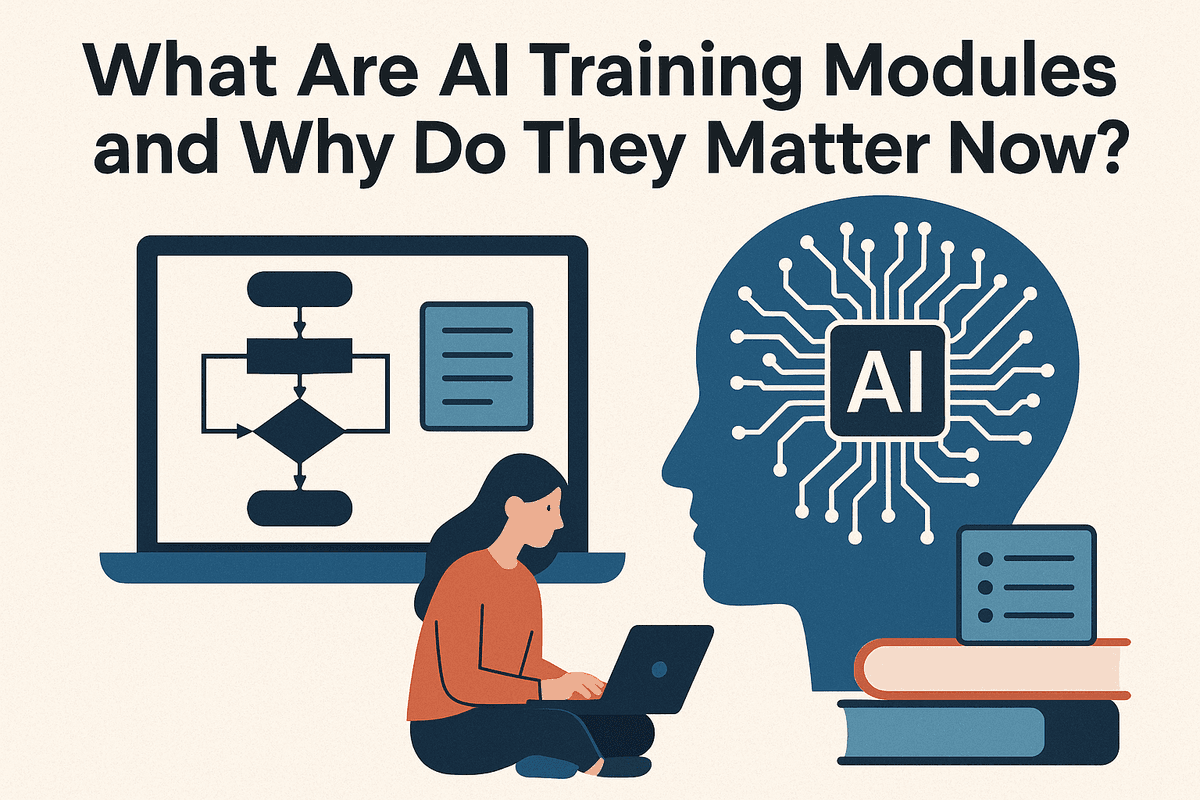
What Are AI Training Modules and Why Do They Matter Now?
In today's fast-paced business environment, the traditional "one-size-fits-all" approach to employee training is becoming obsolete. Enter AI training modules: intelligent, data-driven learning systems designed to deliver personalized educational experiences at scale. Unlike static e-learning courses that present the same videos and quizzes to everyone, these advanced modules use artificial intelligence to create a unique and adaptive learning journey for each individual.
This isn't just an upgrade; it's a fundamental shift in how we approach corporate skilling. We're moving away from passive content consumption and toward active, personalized development that directly addresses both individual and organizational needs. In an era where new skills become critical overnight, the ability to train teams efficiently and effectively is no longer a luxury—it's a competitive necessity.
From Rigid Curriculums to Adaptive Learning Journeys
The core power of AI training modules lies in their ability to adapt. Imagine a personal tutor for every employee—one that knows their strengths, weaknesses, and preferred learning style. That's the principle behind AI-driven education.
Here’s how it works:
- Initial Assessment: An employee begins by interacting with the module, which assesses their existing knowledge through diagnostic questions or simulations.
- Real-Time Analysis: As the employee progresses, the AI continuously analyzes their performance. It tracks which concepts they grasp quickly, where they hesitate, and what questions they answer incorrectly.
- Dynamic Adjustment: Based on this data, the AI personalizes the learning path on the fly. If a team member struggles with data analysis concepts, the module might serve up a foundational micro-learning video, followed by a practical exercise. Conversely, if another employee demonstrates mastery, the AI can present them with an advanced case study or allow them to test out of the section, saving valuable time.
This adaptive model ensures that employees spend their time exactly where it’s needed most: closing their specific knowledge gaps rather than reviewing material they already know.
The Bottom-Line Impact: Linking AI Training to Business Productivity
The ultimate goal of any corporate training initiative is to improve business outcomes. This is where AI training modules truly shine, creating a clear and measurable link between learning and productivity.
- Accelerated Skill Acquisition: By tailoring content, AI drastically reduces the "time-to-competency." Employees learn faster because their training is focused, relevant, and free of filler. This means new hires become productive sooner, and existing teams can upskill quickly to meet new challenges.
- Enhanced Knowledge Retention: Personalized and interactive content is inherently more engaging than a generic slideshow. This increased engagement leads to better knowledge retention, which translates into fewer on-the-job errors, improved decision-making, and higher-quality work.
- Scalable, Data-Driven Insights: AI platforms provide managers with powerful analytics. You can see not just who completed a course, but which specific skills your team has mastered and where gaps still exist. This allows for targeted interventions and proves the direct ROI of your learning and development investment, connecting training efforts to tangible improvements in performance metrics.
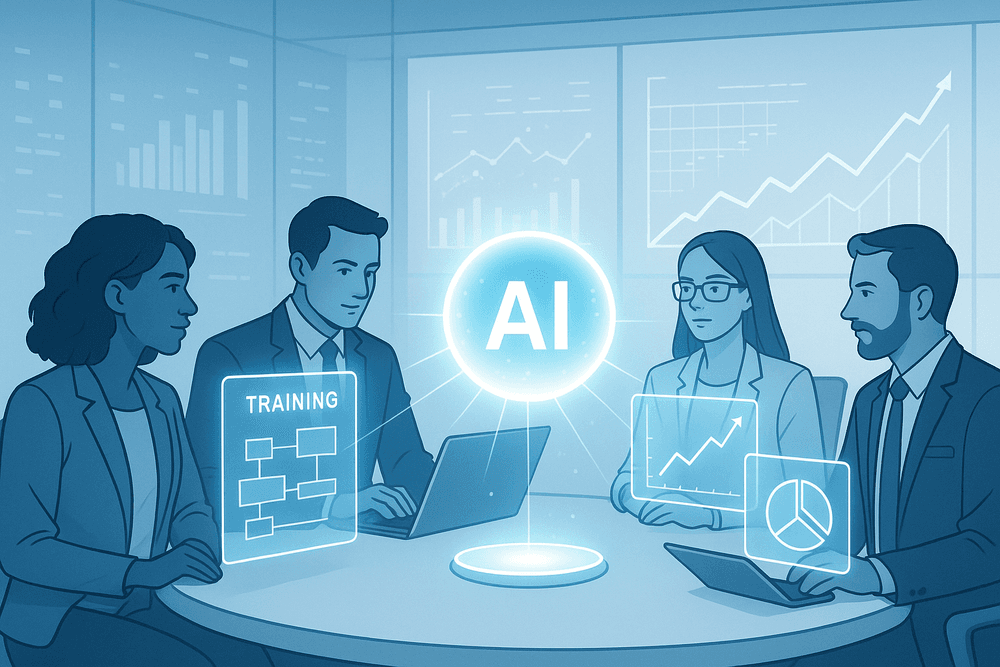
The Core Benefits of Integrating AI Training Modules in Your Business
Adopting AI in your learning and development (L&D) strategy is far more than a technological upgrade; it’s a fundamental shift that drives efficiency, engagement, and measurable growth. While traditional training methods struggle to keep pace with modern business demands, AI training modules deliver a suite of powerful benefits that directly impact your bottom line and empower your workforce for the challenges of tomorrow. By moving beyond a one-size-fits-all approach, you unlock a more strategic and impactful way to develop talent.
Achieve Personalized Learning at an Unprecedented Scale
Traditional corporate training often treats employees as a monolith, delivering the same content at the same pace to everyone. AI training modules completely dismantle this outdated model. By leveraging machine learning algorithms, these platforms create truly adaptive learning paths for each individual.
The AI assesses an employee’s existing knowledge, identifies their unique learning style, and tracks their progress in real-time. If a user quickly masters a concept, the module accelerates the curriculum. If they struggle, it provides additional resources, alternative explanations, or foundational content to reinforce their understanding. This hyper-personalization ensures that every employee’s time is used effectively, eliminating redundancy for advanced learners and providing crucial support for those who need it. It’s like providing every member of your team with a dedicated personal tutor, available 24/7.
Boost Employee Engagement and Long-Term Knowledge Retention
Disengaged learners don't retain information. AI-powered training combats this by transforming learning from a passive requirement into an active, engaging experience. Through elements like interactive simulations that mimic real-world job challenges, gamified quizzes that foster friendly competition, and personalized feedback, AI training modules keep learners motivated and invested.
More importantly, this heightened engagement directly translates to better knowledge retention. AI systems can implement proven cognitive science principles, such as spaced repetition, to reintroduce key concepts at optimal intervals—just before an employee is likely to forget them. This continuous, intelligent reinforcement embeds knowledge for the long term, ensuring the skills learned in the module are successfully applied on the job.
Close Critical Skill Gaps with Predictive Analytics
In a rapidly evolving market, staying ahead of skill gaps is crucial for maintaining a competitive edge. AI training modules empower organizations to be proactive rather than reactive. By analyzing performance data across teams, roles, and the entire organization, these systems can identify emerging competency gaps and even predict future skill requirements based on strategic business goals.
For example, the AI might detect that a significant portion of your project management team lacks proficiency in a new agile methodology. It can then automatically recommend or assign a specific micro-learning module to close that gap before it impacts project delivery. This predictive capability turns your L&D function into a strategic partner that builds the workforce your company will need tomorrow, not just the one it has today.
Measure Training ROI with Data-Driven Insights
One of the biggest challenges for L&D departments has always been demonstrating a clear return on investment (ROI). AI training modules solve this by providing granular, actionable data. You can move beyond simple completion rates to track meaningful metrics like time-to-proficiency, skill application confidence, and error reduction rates post-training.
These platforms provide sophisticated dashboards that connect learning outcomes directly to business KPIs. Imagine being able to show executives a chart correlating the completion of a sales training module with a 10% increase in quarterly conversions. This ability to quantify the impact of training elevates L&D from a cost center to a proven value driver, making it easier to secure budget and C-suite buy-in for future development initiatives.
Real-World AI Training Modules: Examples for Every Department
The true power of artificial intelligence in the workplace is unlocked when it's tailored to the unique challenges and goals of each department. A one-size-fits-all approach to training simply won’t cut it. To maximize productivity, organizations must deploy targeted AI training modules that equip specific teams with the exact skills they need. Here’s a look at how this plays out across key business functions.
For Sales Teams: AI-Powered Pitch Coaching and CRM Mastery
Modern sales teams are drowning in data but starving for insights. Effective AI training modules can transform a team’s relationship with its tools, turning a passive CRM into a proactive sales partner.
- AI-Powered Pitch Coaching: Imagine a tireless, objective sales coach available 24/7. These modules use conversation intelligence tools to analyze recorded sales calls or live simulations. The AI provides instant, data-driven feedback on key metrics like talk-to-listen ratio, pacing, clarity, and the use of persuasive language. Sales reps can practice and refine their pitch in a safe environment, leading to faster ramp-up times and more confident, effective conversations.
- CRM Mastery & Predictive Forecasting: Instead of basic data entry, this training teaches reps how to leverage the AI within their CRM. Modules cover how to interpret AI-driven lead scores, identify the "next best action" for a specific prospect, and automate routine tasks. This frees up reps to focus on building relationships and closing deals, not on administrative work.
For Marketing: Mastering Generative AI for Content and Campaign Strategy
The demand for high-quality, personalized content is insatiable. For marketing teams, generative AI is a game-changer, but only if they know how to wield it effectively. Specialized AI training modules are essential for harnessing this creative potential responsibly.
- Ethical Content Creation & Prompt Engineering: This training goes beyond basic "how-to" guides for tools like ChatGPT or Midjourney. It focuses on advanced prompt engineering to generate on-brand copy, images, and video scripts that align with the company's unique voice. Crucially, these modules also cover the ethical considerations, including fact-checking AI-generated content and avoiding plagiarism.
- AI-Driven Campaign Strategy: Marketers can learn to use AI for sophisticated audience segmentation, predictive analytics to forecast campaign success, and optimizing ad spend in real-time. This training empowers them to build data-backed strategies, moving from educated guesses to predictable outcomes and a higher marketing ROI.
For Customer Support: Training on AI Chatbots and Sentiment Analysis
The goal of AI in customer service isn’t to replace human agents but to augment their capabilities. The right AI training modules help agents transition from handling repetitive queries to managing complex, high-value customer interactions.
- Human-in-the-Loop Chatbot Management: This module trains agents to work alongside AI chatbots. They learn how to monitor bot conversations, seamlessly take over when human intervention is needed, and "teach" the AI by correcting its responses. This symbiotic relationship ensures customers get quick answers to simple questions while agents are reserved for issues requiring empathy and critical thinking.
- Sentiment Analysis for De-escalation: Modern support platforms use AI to analyze customer sentiment in real-time based on text or voice. This training teaches agents how to interpret these sentiment scores, recognize frustration before it escalates, and adapt their tone and language to create a more positive customer experience, boosting CSAT and loyalty.
For HR & Operations: AI Modules for Onboarding and Compliance
Human Resources and Operations teams handle processes that are vital to an organization's health and legal standing. AI training modules can bring new levels of efficiency, personalization, and rigor to these critical functions.
- Adaptive Employee Onboarding: Move beyond static handbooks and day-long presentations. AI-powered onboarding platforms can create personalized learning paths for new hires based on their role, department, and existing skill set. This can include interactive simulations of company software and an AI-powered helpdesk that instantly answers common questions about benefits, IT policies, and company culture.
- Dynamic Compliance Training: Standard compliance training is often seen as a chore. AI modules can transform it into an engaging, interactive experience. Using AI-generated scenarios, the system can test an employee’s understanding of policies in a real-world context and adapt the difficulty based on their performance, ensuring true comprehension and mitigating organizational risk.

How to Choose the Right AI Training Modules for Your Company
Selecting the right educational tools is just as critical as choosing the right AI technology. The market is filled with options, but the most effective AI training modules are those that align perfectly with your unique business objectives and workforce needs. Follow this four-step process to make a strategic, informed decision that guarantees a high return on your investment.
Step 1: Conduct a Skill Gap Analysis to Identify Needs
Before you even browse a single catalog, look inward. The goal is to bridge the gap between your team's current capabilities and the skills required to leverage AI for peak productivity. A thorough skill gap analysis is your roadmap.
- Assess Current Roles: Evaluate existing job descriptions and identify tasks that can be augmented or automated with AI. Where are the biggest productivity bottlenecks?
- Define Future Skills: What new roles or responsibilities will AI create? Identify the competencies needed to manage AI-driven workflows, interpret AI-generated data, and use new generative AI tools effectively.
- Survey Your Team: Ask your employees where they feel they need the most support. They are on the front lines and can provide invaluable insights into day-to-day challenges that the right AI training modules can solve.
Step 2: Compare Off-the-Shelf vs. Custom AI Training Solutions
Once you know what you need, you can decide how to get it. Your choice generally falls into two categories: pre-built (off-the-shelf) or custom-developed solutions.
- Off-the-Shelf Modules: These are ready-to-use courses covering general AI topics and popular software (e.g., "Introduction to ChatGPT for Marketing" or "Using AI for Data Analysis"). They are cost-effective, quick to deploy, and ideal for foundational knowledge across the organization.
- Custom AI Training Modules: If your company uses proprietary AI tools or has highly specialized workflows, a custom solution is a better fit. These are tailored specifically to your processes, data, and business goals. While the initial investment is higher, the direct applicability often leads to a faster and more significant impact on productivity.
Step 3: Key Features to Look For
Not all learning platforms are created equal. As you evaluate potential AI training modules, prioritize these three technical and functional features to ensure a seamless and future-proof experience.
- Integration: Can the modules integrate with your existing Learning Management System (LMS), HR software, or communication platforms like Slack and Microsoft Teams? Seamless integration reduces friction and encourages adoption by embedding learning directly into the flow of work.
- Analytics and Reporting: You can't manage what you can't measure. Look for a solution with a robust analytics dashboard. You should be able to track completion rates, assessment scores, and user engagement to measure the program's effectiveness and demonstrate ROI.
- Scalability: Your company will grow, and your AI needs will evolve. Choose a platform that can scale with you. It should be able to support a growing number of users, accommodate new departments, and allow for the easy addition of new training content as technology advances.
Step 4: Questions to Ask Vendors Before Committing
You've done your research and narrowed down your options. Now, it's time to talk to vendors. Arm yourself with these critical questions to ensure there are no surprises down the line.
- Can you share case studies from companies in our industry?
- What does the implementation and onboarding process look like? What level of support do you provide?
- How do you keep your AI training modules updated with the latest AI advancements?
- What is your pricing model? Are there per-user fees, a flat rate, or other hidden costs?
- What security and data privacy measures are in place to protect our company and employee information?
Best Practices for a Successful AI Training Module Rollout
Implementing new technology can be challenging, but a strategic rollout can make all the difference between a stalled initiative and a transformative success. Launching AI training modules is no exception. It requires a thoughtful approach that builds momentum, secures support, and integrates learning into your company's DNA. Follow these best practices to ensure your AI training program delivers maximum impact on workforce productivity.
Start Small, Prove Big: The Pilot Program Approach
Before a company-wide deployment, launch a pilot program with a select group or department. This controlled test serves several critical functions. It allows you to identify potential technical glitches, gauge employee reactions, and refine the content of your AI training modules in a low-risk environment. Choose a team that is open to innovation and whose work can show clear, measurable benefits from AI adoption, such as a marketing team using AI for content creation or a customer service team leveraging AI-powered response tools.
Track key performance indicators (KPIs) meticulously during this phase. Measure metrics like task completion times, project output quality, and employee satisfaction. This data is invaluable, transforming your pilot into a powerful internal case study that demonstrates tangible ROI and builds a compelling argument for a broader rollout.
Secure Leadership Buy-In and Communicate the 'Why'
Executive sponsorship is non-negotiable for a successful rollout. Use the compelling data from your pilot program to present a clear business case to leadership. Frame the investment in AI training modules not as a cost, but as a strategic move to boost efficiency, foster innovation, and future-proof your workforce.
Once you have leadership support, communication with employees is paramount. Don’t just announce the new training; explain the "why" behind it. Address potential concerns about AI replacing jobs by framing it as a tool for augmentation and empowerment. Emphasize how these skills will make their roles more strategic, reduce tedious tasks, and enhance their professional value. A clear, transparent communication plan that highlights benefits for both the company and the individual will foster enthusiasm and drive voluntary adoption.
Implement a Feedback Loop for Continuous Improvement
The initial launch is just the beginning. To ensure your AI training modules remain effective and relevant, you must establish a robust feedback loop. The learning landscape, especially in AI, evolves rapidly, and your training program must be agile enough to keep pace.
Create multiple channels for employees to share their thoughts, such as post-module surveys, regular check-in sessions, and a dedicated chat channel for questions and suggestions. Actively listen to this feedback. Is the content too technical? Are the examples relevant to their daily work? Are there new AI tools they want to learn about? Use these insights to iteratively refine and update your training content, ensuring it continuously meets the evolving needs of your workforce and the business.
Foster a Culture of AI-Powered Lifelong Learning
Ultimately, the goal is to move beyond a one-time training event and cultivate a culture where continuous, AI-driven learning is the norm. Encourage this shift by integrating AI literacy into your company's core values and professional development pathways.
Recognize and reward "AI champions"—employees who actively apply their new skills and help their peers. Create spaces for knowledge sharing, like internal forums or lunch-and-learn sessions where teams can showcase their AI-powered wins. When employees see that AI proficiency is a celebrated and essential part of their career growth within the organization, your AI training modules transform from a simple program into the foundation of a more innovative, agile, and productive workforce.

Conclusion: Future-Proof Your Workforce with AI Training Modules
The digital transformation isn’t a distant event on the horizon; it’s the landscape we operate in today. In this dynamic environment, the single greatest competitive advantage is a workforce that can adapt, learn, and grow at the speed of change. As we've explored, the traditional one-size-fits-all approach to corporate training is no longer sufficient. The key to unlocking sustained growth and innovation lies in leveraging intelligent, personalized, and scalable learning solutions. This is where ai training modules transition from a futuristic concept to a foundational business strategy.
Why AI-Driven Training is No Longer Optional
The choice to integrate AI into your learning and development is no longer about gaining a slight edge—it's about ensuring relevance and survival. AI-driven training platforms deliver a level of personalization that traditional methods simply cannot match, tailoring content to individual learning paces, roles, and existing skill levels. This targeted approach not only accelerates employee development but also significantly boosts engagement and knowledge retention. By automating administrative tasks and providing deep, actionable analytics on learner progress, these modules free up L&D teams to focus on strategy rather than logistics. In a world where new skills become critical overnight, relying on outdated training methods is a direct risk to your workforce productivity and market position.
Your Next Steps to Building a Smarter, More Productive Team
Embracing this transformation is a strategic journey, not a single leap. To begin future-proofing your team, follow this clear roadmap:
- Assess Your Needs: Start by conducting a thorough analysis to pinpoint the most critical skill gaps across your departments. Where are the knowledge deficits that are currently hindering productivity and growth?
- Explore Solutions: Research and select the right platform. Look for high-quality ai training modules with a relevant content library, robust analytics, and seamless integration capabilities to ensure a positive user experience.
- Launch a Pilot Program: Roll out the training to a targeted group or department first. This allows you to gather feedback, measure initial ROI, and build a strong case for a company-wide implementation.
- Measure and Iterate: Use the rich data from your AI platform to track key metrics like skill acquisition and impact on performance. Continuously refine and scale your program based on these actionable insights.
The Future is Intelligent, and So is Your Team
The future of work is not about replacing humans with technology, but about augmenting human potential. By investing in ai training modules, you are not just purchasing software; you are investing in a culture of continuous improvement and intellectual curiosity. You are empowering your employees with the tools they need to not only meet the demands of today but to anticipate and master the challenges of tomorrow. A smarter, more agile, and more productive workforce is within your reach.
Ready to move from theory to practice and see firsthand how AI can revolutionize your company’s learning and development? Stop imagining a more efficient workforce and start building one. See how tailored learning paths, real-time feedback, and data-driven insights can elevate your team's performance.
[Get a Personalized Demo of AI Training Modules for Your Business]