
August 12, 2025
What Are AI Training Modules and Why Are They a Game-Changer
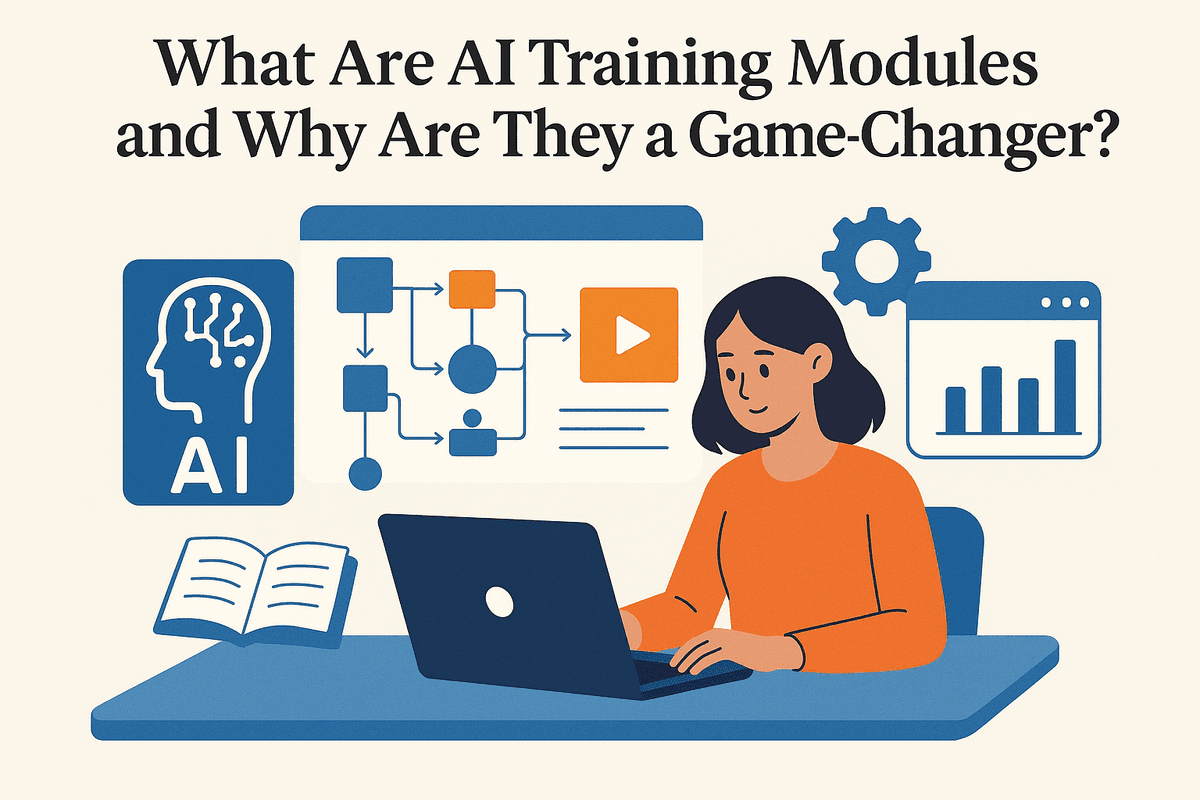
What Are AI Training Modules and Why Are They a Game-Changer?
The world of artificial intelligence has long been dominated by a monolithic approach. Imagine building a skyscraper from a single, massive block of concrete—slow, inflexible, and incredibly difficult to modify once set. For years, AI development mirrored this process. Data scientists and engineers would construct complex, end-to-end models from scratch for each new project. This meant painstakingly coding every component, from data ingestion and preprocessing to feature engineering, model architecture, and final deployment. Any change, no matter how small, could require a complete rebuild, consuming vast amounts of time and computational resources. This is the old way: rigid, resource-intensive, and slow to adapt.
This legacy approach is rapidly giving way to a more agile and efficient paradigm, centered on AI training modules.
Defining AI Training Modules: Beyond the Buzzwords
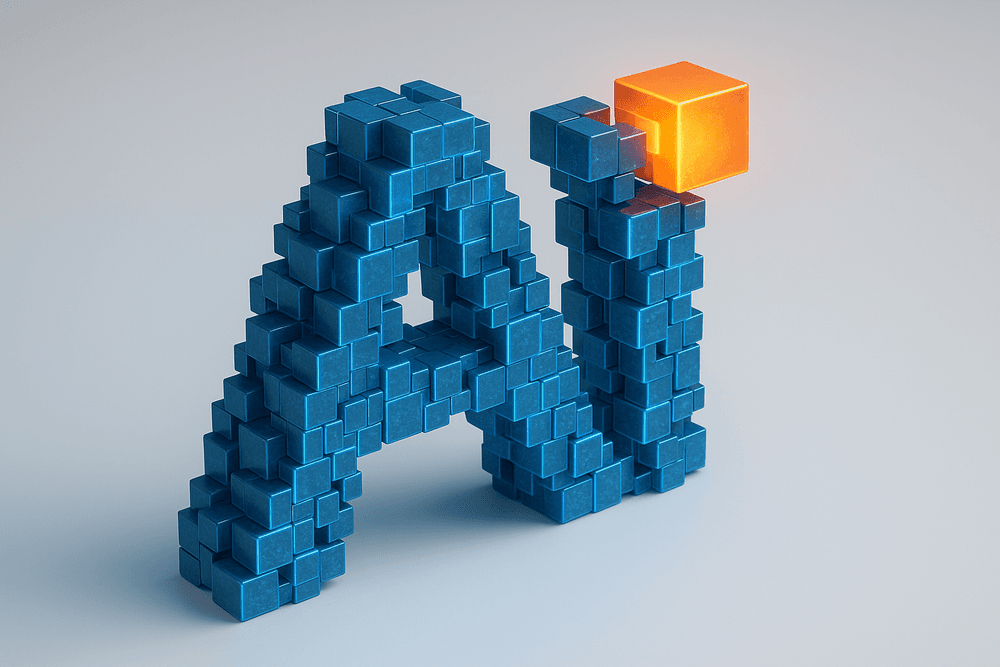
So, what exactly are AI training modules? Think of them not as a single block of concrete, but as a set of high-quality, prefabricated LEGO bricks for building AI systems. Each module is a self-contained, reusable, and specialized component designed to perform a specific task within the AI development lifecycle.
These modules can be:
- Data Processors: Standardized components for cleaning, normalizing, or augmenting data.
- Feature Extractors: Pre-trained models (like a portion of a computer vision model) that excel at identifying relevant features from raw data, such as edges and textures in images.
- Model Architectures: Reusable network layers or entire model backbones (e.g., a ResNet or Transformer block) that can be plugged into a larger system.
- Evaluation Components: Standardized tools for measuring model performance using specific metrics like F1-score or Mean Absolute Error.
By assembling these proven, pre-built components, development teams can move away from reinventing the wheel and focus on innovation and customization.
How Reusable Components Accelerate the AI Lifecycle
The shift to using AI training modules isn't just an incremental improvement; it's a fundamental game-changer that revolutionizes the entire AI workflow. The primary advantage is a dramatic acceleration in development speed. Instead of spending weeks building a data pipeline from scratch, a team can simply plug in a trusted data processing module. This modularity fosters parallel development, allowing different teams to work on separate components simultaneously before integrating them.
Furthermore, this approach enhances reliability and performance. Each module can be independently tested, optimized, and validated, ensuring a high standard of quality throughout the system. When a better technique for a specific task emerges, you don't have to tear down the entire model. You can simply swap out the old module for the new, upgraded one, making maintenance and innovation far more manageable. This flexibility is key to staying competitive, allowing for rapid experimentation and easier customization to solve unique business problems. In essence, AI training modules transform AI development from a slow, artisanal craft into a fast, scalable engineering discipline.
The Core benefits of Adopting Modular AI Training
Shifting from a monolithic to a modular approach isn’t just a change in architecture; it’s a strategic move that unlocks significant advantages. By breaking down complex systems into manageable, independent components, you create a more agile, powerful, and efficient AI development lifecycle. Adopting ai training modules fundamentally transforms how you build, deploy, and maintain your models, offering four core benefits that drive competitive advantage.
Streamline Development and Reduce Time-to-Market
Imagine building a car. Instead of forging every nut and bolt from raw metal, you use pre-fabricated, expertly engineered parts like the engine, transmission, and chassis. This is the essence of modular AI development. Instead of coding every function from scratch for each new project, your team can leverage a library of reusable ai training modules.
A pre-built module for data preprocessing, another for feature extraction, and another for a specific classification task can be quickly assembled and configured. This plug-and-play methodology drastically cuts down on redundant work, allowing developers to focus on integrating these components and fine-tuning the overall solution. The result is a massively accelerated development cycle, faster prototyping, and a significantly reduced time-to-market for new AI-powered features and products.
Enhance Model Performance with Specialized Functions
A single, monolithic model trying to handle everything from data ingestion to natural language understanding and image recognition is a jack-of-all-trades and master of none. Its performance is often a compromise. In contrast, a modular system is like a team of specialists. Each of the ai training modules is designed and optimized for a single, specific function.
You can have one module that excels at cleaning and normalizing text data, another built on a state-of-the-art algorithm for sentiment analysis, and a third that’s fine-tuned for anomaly detection. By combining these best-in-class components, the performance of the entire system is elevated. Each module can be independently optimized and tested, ensuring it contributes peak efficiency and accuracy to the final model. This specialization leads to more robust, reliable, and powerful AI outcomes.
Simplify Customization and Future-Proof Your AI Models
The AI landscape evolves at a breakneck pace. A cutting-edge algorithm today can become obsolete tomorrow. With a monolithic model, adapting to change is a monumental task, often requiring a complete rebuild. A modular architecture, however, is inherently flexible and future-proof.
Need to upgrade your image recognition capabilities? Simply swap out the old module for a new one with a better algorithm—the rest of your AI pipeline remains untouched. This "hot-swappable" nature makes maintenance and upgrades faster, cheaper, and far less risky. Furthermore, it simplifies customization. You can easily tailor an AI solution for a new client or use case by reconfiguring or substituting specific ai training modules, creating bespoke models without starting from zero.
Lowering the Barrier to Entry for Complex AI Projects
Historically, building sophisticated AI systems required vast resources and deep, specialized expertise, limiting innovation to a few large corporations. AI training modules are democratizing the field. They lower the barrier to entry by allowing smaller teams and organizations to stand on the shoulders of giants.
By leveraging open-source or commercially available modules, a small team can assemble a powerful AI system that would have been impossible to build from the ground up. This frees them from the burden of foundational research and allows them to focus on unique applications and business logic. This accessibility fosters a more vibrant and competitive ecosystem, empowering more innovators to solve real-world problems with advanced AI.
Key Components of a Modern AI Training Module
Building effective and reusable AI training modules isn't about just saving a model file. A truly modular component is a sophisticated, self-contained unit that encapsulates the entire logic needed for a specific task. To achieve this level of "plug-and-play" functionality, modern AI training modules are constructed from several essential components that work in harmony. Let's break down the core anatomy of these powerful building blocks.
Data Ingestion and Preprocessing Layers
Before any model can learn, it needs clean, well-structured data. The data ingestion and preprocessing layer is the front door to your module. It’s responsible for:
- Ingestion: Connecting to data sources, whether they are local files, cloud storage buckets, or databases.
- Cleaning: Handling missing values, removing duplicates, and correcting errors.
- Transformation & Normalization: Converting raw data into a numerical format the model can understand. This includes tasks like scaling numerical features, one-hot encoding categorical variables, or tokenizing text.
- Augmentation: (Optional but powerful) Artificially expanding the dataset by creating modified copies of existing data, which helps the model generalize better.
By encapsulating this entire data pipeline within the module, you ensure that any project using it will apply the exact same transformations, eliminating inconsistencies and dramatically accelerating setup for new experiments.
Encapsulated Model Architectures
This is the heart of your AI training module—the learning engine itself. An encapsulated model architecture is more than just a set of layers; it’s a self-contained solution to a problem. A prime example of this is leveraging transfer learning. Instead of training a massive model from scratch, you can encapsulate a pre-trained model (like BERT for language understanding or ResNet for image classification) within your module. This component includes:
- The core model architecture (e.g., Transformer, CNN).
- Pre-trained weights that capture general knowledge.
- Fine-tuning logic that allows the model to adapt to a specific, narrower task.
This approach makes AI training modules incredibly efficient, allowing you to achieve state-of-the-art performance with less data and computational power.
Standardized Input/Output Interfaces
For a module to be truly reusable, it must be easy to connect to other parts of your workflow. Standardized Input/Output (I/O) interfaces act like universal adapters. They define a strict contract for how data enters the module and how predictions or embeddings exit. Think of it as a well-documented API for your model. A standardized interface ensures that a developer can swap one module for another (e.g., replacing an object detection module with a different version) without having to rewrite the surrounding code, as long as both adhere to the same I/O format. This predictability is the key to building flexible and scalable AI systems.
Version Control and Dependency Management
A professional-grade AI training module must be reproducible and reliable. This is where version control and dependency management become non-negotiable.
- Version Control: Using tools like Git and DVC (Data Version Control), you can track every change to the module’s code, model weights, and even the training data itself. This creates a complete, auditable history, allowing you to revert to previous versions or understand exactly what changed between experiments.
- Dependency Management: The module must specify its software dependencies (e.g., TensorFlow/PyTorch versions, specific libraries like NumPy or Pandas). By using files like
requirements.txtorenvironment.yml, you ensure that the module will run consistently in any environment, from a developer’s laptop to a production server.

How to Implement AI Training Modules in Your Workflow
Transitioning from monolithic scripts to a modular approach requires a strategic shift in how you build, manage, and deploy your models. Implementing AI training modules effectively means knowing when to build, when to borrow, and how to connect everything into a seamless, automated system. Here’s a practical guide to integrating modularity into your AI development lifecycle.
Finding and Leveraging Pre-Built Modules
Why reinvent the wheel when you can stand on the shoulders of giants? The AI community has produced a wealth of high-quality, pre-built modules that can drastically accelerate your development process. Leveraging these resources allows you to focus on the unique aspects of your problem instead of building foundational components from scratch.
- TensorFlow Hub (TF Hub): A comprehensive repository for reusable machine learning components. You can find everything from individual embedding layers (like BERT or Universal Sentence Encoder) to complete, pre-trained models for image classification (e.g., MobileNet, Inception) that can be fine-tuned on your specific data. These modules are packaged for easy integration, often requiring just a few lines of code to load.
- PyTorch Hub: Similar to TF Hub, PyTorch Hub provides a simple API to discover and use pre-trained models and other AI training modules directly from a GitHub repository. It’s an excellent source for state-of-the-art models in computer vision, NLP, and audio processing, allowing you to quickly benchmark performance or use transfer learning as a powerful starting point.
Using these hubs is a strategic first step. They provide battle-tested, optimized components that save significant time and computational resources.
Best Practices for Building Your Own Custom AI Training Modules
When pre-built solutions don't fit your unique needs, building custom AI training modules is the next step. Following best practices ensures your modules are reusable, maintainable, and scalable.
- Embrace the Single Responsibility Principle: Each module should do one thing and do it well. For example, create separate modules for data loading, data augmentation, feature extraction, model architecture, and the training loop itself. This isolation makes them easier to debug, test, and reuse.
- Define Clear and Stable Interfaces: A module’s value lies in its reusability. Ensure that its inputs and outputs are well-documented and consistent. Use configuration files (e.g., YAML, JSON) to pass parameters like learning rates, batch sizes, or image dimensions, rather than hardcoding them.
- Decouple Logic from Data: Your module should be data-agnostic wherever possible. For instance, a data augmentation module should accept a data tensor and a configuration object, without needing to know the original source of that data.
- Prioritize Documentation and Unit Testing: An undocumented module is a temporary solution. For each module, provide a clear description of its purpose, inputs, outputs, and dependencies. Accompany this with rigorous unit tests to verify its functionality and prevent regressions.
Integrating Modules into a Continuous Training (CI/CT) Pipeline
The true power of modular design is realized in automation. AI training modules are perfect building blocks for a Continuous Integration/Continuous Training (CI/CT) pipeline.
In a CI/CT setup, your workflow is automated. When you update and push a change to a specific module (e.g., improving a feature engineering component), the pipeline can automatically trigger a series of actions:
- Run unit tests for the updated module.
- Trigger downstream integration tests to ensure the change doesn’t break the full model.
- Initiate a new training run with the updated component.
- Evaluate the new model's performance against a baseline.
- Version and register the new model if it meets performance criteria.
This MLOps practice turns your modular components into a dynamic, evolving system that continuously improves with minimal manual intervention.
Avoiding Common Pitfalls in Modular Design
- Over-Engineering: Don't create modules that are too granular. If you have dozens of tiny modules with complex interdependencies, the overhead of managing them can outweigh the benefits. Find a balanced level of abstraction.
- Leaky Abstractions: A module should be a black box. If a user needs to understand the internal workings of your module to use it correctly, the abstraction has failed. Keep the interface simple and hide the implementation complexity.
- Neglecting Versioning: Without proper versioning (e.g., Semantic Versioning), you risk creating "dependency hell." A small change in one module could unexpectedly break multiple downstream models. Use versioning to manage dependencies explicitly.
Real-World Success Stories: AI Training Modules in Action
The theoretical benefits of a modular approach are compelling, but its true power is revealed in practical application. Across industries, organizations are leveraging specialized AI training modules to build sophisticated, efficient, and highly effective systems. These real-world examples showcase how reusable components are not just a developer's convenience but a strategic business advantage.
Use Case: Powering Personalized E-commerce Recommendations
The challenge for online retailers is cutting through the noise to present customers with products they’ll actually want to buy. Generic, one-size-fits-all recommendations fail to drive engagement and can hurt conversion rates. Leading e-commerce platforms now solve this by constructing their recommendation engines from a set of interconnected AI training modules.
Instead of a single, monolithic model, they use a modular architecture. One module might be an expert in processing user clickstream data to understand immediate browsing intent. Another module could specialize in natural language processing (NLP) to extract features from product descriptions and reviews. A third, a collaborative filtering module, identifies patterns among similar users. By combining the outputs of these specialized modules, the platform can deliver hyper-personalized recommendations that dynamically adapt to a user's behavior, purchase history, and even the context of their current session. The result is a significant uplift in key metrics like click-through rates, average order value, and customer loyalty.
Use Case: Accelerating Drug Discovery with Biological Data Modules
Drug discovery is a notoriously slow and expensive process, involving the analysis of massive and complex biological datasets. AI is changing the game, and a modular approach is key to managing this complexity. Pharmaceutical and biotech firms are building powerful discovery pipelines using pre-trained and custom AI training modules designed for specific scientific tasks.
For example, a pipeline might start with a module trained to process and normalize genomic sequence data. Its output then feeds into a separate, highly specialized protein structure prediction module. Another module, trained on vast chemical libraries, could be used to simulate how potential drug compounds might interact with a target protein. By chaining these purpose-built modules together, researchers can rapidly screen millions of compounds and identify promising candidates for further testing in a fraction of the time it would take traditionally. This modularity allows scientists to easily swap out or update a single component—like an improved protein folding model—without having to rebuild the entire system.
Use Case: Building Smarter Customer Service Chatbots with NLP Modules
Customers today expect immediate, helpful support, and clunky, script-based chatbots often cause more frustration than they resolve. The most effective customer service bots are built using a collection of fine-tuned NLP modules, each handling a distinct part of the conversational puzzle. This modular design allows for the creation of sophisticated, empathetic, and truly helpful virtual agents.
A typical advanced chatbot architecture includes several core modules. An intent recognition module is trained to understand the user's goal (e.g., "track my order," "request a refund"). A sentiment analysis module gauges the customer's emotional state, allowing the bot to adjust its tone. An entity extraction module pulls out key details like order numbers or product names. Finally, a dialogue management module orchestrates the conversation, pulling information from a knowledge base and using a language generation module to form a coherent, human-like response. By combining these AI training modules, businesses can automate a huge range of queries, freeing up human agents for more complex issues and providing customers with 24/7, intelligent support.

Conclusion: The Future is Composable and Powered by AI Training Modules
We've journeyed through the architecture of modern AI development, and the destination is clear: the era of monolithic, inflexible models is giving way to a more dynamic, composable future. At the heart of this revolution are AI training modules. These powerful, reusable components are not just a novel concept; they are a fundamental necessity for any organization aiming for scalable, efficient, and cutting-edge AI. By breaking down complex models into interchangeable parts—from data ingestion and preprocessing to feature extraction and final output layers—you unlock unprecedented agility. This modular approach moves us beyond reinventing the wheel for every new project, establishing a sustainable framework that accelerates development, enhances collaboration, and ultimately leads to more robust and reliable AI systems.
Your Path to Modular Mastery: Getting Started
Transitioning to a modular workflow might seem daunting, but it’s an incremental journey that yields immediate returns. Embracing AI training modules is about working smarter, not harder. Here are your next practical steps to integrate this paradigm into your workflow:
- Audit and Identify: Begin by analyzing your current AI projects. Where do you find repetition? Is it in data cleaning, a specific type of data augmentation, or a common model architecture layer? These repetitive tasks are prime candidates for your first AI training module.
- Start Small and Isolate: Don’t try to modularize an entire pipeline at once. Choose a single, well-defined component. Build it, test it, and document it as a standalone module. This initial win will build momentum and demonstrate the value of the approach to your team.
- Leverage the Ecosystem: You don't have to build everything from scratch. Explore platforms like TensorFlow Hub, PyTorch Hub, and Hugging Face. These repositories are treasure troves of pre-built AI training modules that can be plugged directly into your projects, saving you hundreds of development hours.
- Foster a Culture of Reusability: Create a centralized, internal repository for your team's custom modules. By making these components easy to find, share, and reuse, you transform modular development from an individual practice into a core organizational competency.
Build Better, Faster: Download Your Starter Kit
Reading about the benefits of modularity is one thing; implementing it is another. To help you bridge that gap, we’ve created the Starter Kit for Modular AI Projects. This exclusive package is designed to fast-track your adoption of AI training modules. Inside, you'll find practical code templates, a detailed checklist for identifying modularization opportunities, and best-practice guides for structuring your reusable components. Stop building from zero. Start composing with intelligence. This kit provides the foundational tools you need to build more scalable, adaptable, and powerful AI solutions today.
Don't let your AI initiatives get bogged down by legacy workflows. Download your free starter kit now and take the first definitive step toward a future powered by composable AI training modules.