
October 14, 2025
What Are AI Decision Support Systems and Why Do They Matter?
What Are AI Decision Support Systems and Why Do They Matter?
In a world overflowing with data, the quality of your decisions separates industry leaders from the followers. But how can organizations consistently make the right call when faced with unprecedented complexity and speed? The answer lies in the evolution of data analysis, culminating in a powerful new category of tools: AI decision support systems. These systems are more than just an upgrade; they represent a fundamental shift in how we leverage information to drive business strategy.
From Data to Decisions: The Evolution of Business Intelligence
For decades, Business Intelligence (BI) was the gold standard for data-informed operations. Traditional BI tools excelled at collecting historical data and presenting it in dashboards and reports. They were fantastic at answering the question, "What happened?" Managers could see last quarter's sales figures, track website traffic, or review inventory levels.
However, this approach was largely reactive. The analysis was backward-looking, and the heavy lifting of interpreting the data, identifying trends, and deciding on a course of action fell squarely on human shoulders. While valuable, traditional BI left a critical gap: it couldn't reliably answer "Why did it happen?" and, more importantly, "What will happen next?"
Defining the Modern AI Decision Support System
Enter the modern AI decision support system. This is not simply a more advanced dashboard; it is an active, intelligent partner in the decision-making process. At its core, an AI decision support system is an integrated software solution that combines data management with advanced AI technologies like machine learning, predictive analytics, and optimization algorithms.
Unlike its predecessors, this system doesn't just present data—it interprets it. It moves beyond historical reporting to:
- Predict Future Outcomes: By analyzing vast datasets, it can forecast sales demand, identify potential supply chain disruptions, or predict customer churn with remarkable accuracy.
- Provide Actionable Recommendations: It can suggest the optimal pricing for a new product, recommend the most efficient logistics route, or identify the best marketing channel for a specific customer segment.
- Simulate Scenarios: It allows leaders to ask "what-if" questions, modeling the potential impact of different decisions before they are made in the real world.
Essentially, an AI decision support system elevates the conversation from "What happened?" to "What should we do next, and why?"
The Critical Role of AI in Today's Data-Driven World
The importance of these systems cannot be overstated. Today’s businesses are drowning in data from countless sources—customer interactions, IoT sensors, market trends, and internal operations. The sheer volume and velocity of this information make it impossible for humans to analyze manually in a timely fashion.
AI decision support systems are the critical bridge between this raw data and effective action. They cut through the noise to deliver clear, data-backed insights at a speed that matches the pace of modern business. By augmenting human intelligence, they empower organizations to:
- Increase Speed and Agility: Make critical decisions in hours or minutes, not weeks.
- Enhance Accuracy: Reduce the impact of human bias and gut-feel, leading to more consistent and reliable outcomes.
- Solve Complex Problems: Tackle multifaceted challenges like dynamic inventory management and personalized customer experiences that are beyond the scope of traditional analysis.
In today's hyper-competitive landscape, leveraging AI decision support systems is no longer a luxury—it’s a strategic imperative for any organization aiming to build a resilient, proactive, and truly data-driven future.
How AI Decision Support Systems Revolutionize Analysis
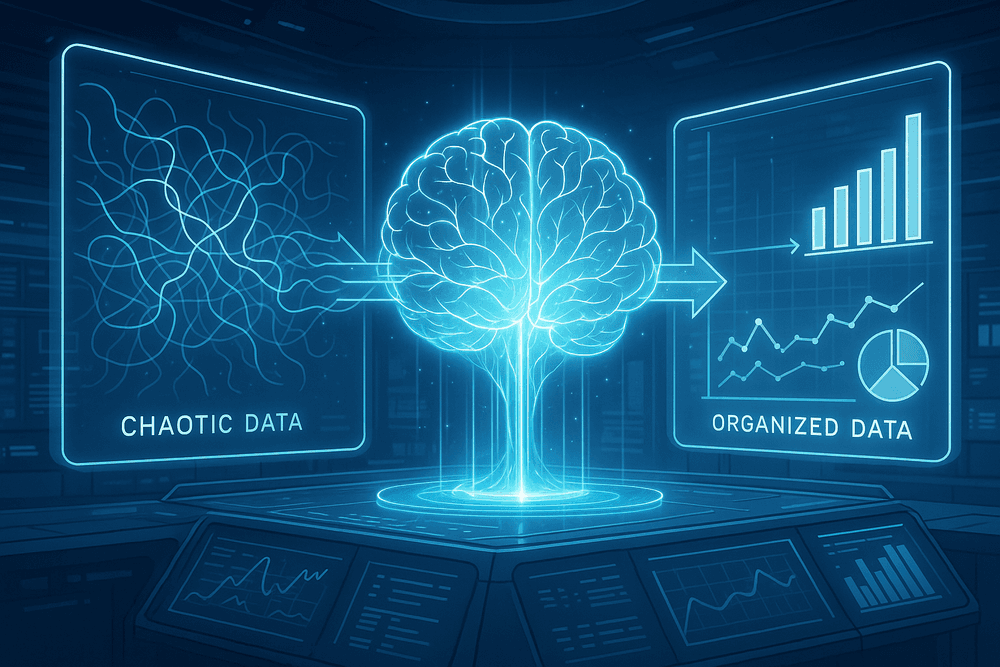
At their core, AI decision support systems aren't just about processing data faster; they're about understanding it on a deeper, more predictive level. They transform the traditional role of a Decision Support System (DSS) from a passive data repository into an active, intelligent partner in strategic planning. This revolution is powered by a combination of sophisticated technologies and a streamlined workflow that turns raw information into a competitive advantage.
Core Components: The Engine of Intelligence
The power of AI decision support systems comes from the synergy of three critical components that work in concert to deliver unparalleled analytical depth:
- Data Mining: This is the discovery phase. Data mining algorithms sift through vast and often disparate datasets—from sales figures and customer feedback to website traffic and supply chain logs—to identify hidden patterns, anomalies, and correlations that a human analyst might never find. It answers the question, "What interesting relationships exist in our data that we didn't know about?"
- Predictive Analytics: Going beyond historical reporting, predictive analytics uses statistical models and forecasting techniques to determine the probability of future outcomes. By analyzing past trends, it can anticipate future customer behavior, market shifts, or operational bottlenecks. This component moves businesses from a reactive ("What happened?") to a proactive ("What is likely to happen?") stance.
- Machine Learning (ML): This is the brain of the operation. Machine learning algorithms allow the system to learn from new data and experience without being explicitly reprogrammed. As it processes more information and outcomes, the system’s models become more accurate and its recommendations more refined. This adaptive capability ensures that the AI decision support system evolves alongside your business.
The Workflow: From Raw Data to Actionable Insights
To understand how these systems function, consider their end-to-end workflow, a structured process designed to convert noise into clarity:
- Data Ingestion: The system gathers structured and unstructured data from multiple sources, such as ERPs, CRMs, social media feeds, and IoT sensors.
- Data Processing & Cleansing: Raw data is cleaned, standardized, and prepared for analysis, ensuring accuracy and consistency.
- AI-Powered Analysis: The core components—data mining, predictive analytics, and ML—are applied to the processed data to uncover insights, forecast trends, and model potential outcomes.
- Insight Generation & Visualization: The system translates its complex findings into user-friendly formats, like interactive dashboards, natural language summaries, and clear visualizations, making the insights accessible to non-technical decision-makers.
- Recommendation & Action: Finally, the system provides data-backed recommendations or automated alerts, empowering users to take swift, informed action.
Comparing AI-Powered vs. Traditional Decision Support Systems
The leap from traditional DSS to AI decision support systems represents a fundamental shift in analytical capability.
- Traditional DSS: These systems are largely static and rule-based. They rely on pre-defined models and historical data to answer specific "what-if" queries posed by a user. They are excellent for structured reporting and analyzing past performance but struggle with ambiguity and discovering novel insights.
- AI-Powered DSS: These systems are dynamic and adaptive. Instead of just answering questions, they proactively identify opportunities and threats. They can process unstructured data (like text and images), learn from new inputs, and provide not just predictive insights ("what will happen") but also prescriptive guidance ("what should we do about it"). This elevates the system from a simple tool to a strategic advisor.
Unlocking Key Business Benefits with AI Decision Support Systems
Implementing AI decision support systems is more than a technological upgrade; it's a strategic move to fundamentally transform your organization's performance. By integrating intelligent analysis into core operations, businesses can move beyond intuition-based choices to data-driven strategies that deliver measurable results. These systems act as a powerful co-pilot for your teams, augmenting human intelligence to unlock new levels of accuracy, efficiency, and market responsiveness. Let’s explore the core benefits that make these systems indispensable in today's competitive landscape.
Enhancing Accuracy and Reducing Human Error in Forecasting
Even the most experienced professionals are susceptible to cognitive biases, emotional influences, and the sheer impossibility of manually processing millions of data points. This is where AI decision support systems create a paradigm shift. They analyze historical and real-time data from countless sources—market trends, customer behavior, supply chain disruptions, and economic indicators—to identify complex patterns invisible to the human eye.
By applying sophisticated machine learning models, these systems generate highly accurate forecasts for everything from sales demand and inventory needs to financial projections. The result is a dramatic reduction in costly errors caused by guesswork or incomplete information. Businesses can optimize stock levels to avoid overstocking or stockouts, allocate budgets with greater confidence, and anticipate market shifts before they happen, turning forecasting from an art into a data-backed science.
Boosting Operational Efficiency and Productivity
Inefficiencies often hide in complex, data-heavy processes that bog down your team’s time and resources. AI decision support systems are designed to streamline these workflows and supercharge productivity. They automate the tedious tasks of data gathering, cleansing, and analysis, freeing up your skilled employees to focus on high-value strategic initiatives—interpretation, innovation, and implementation.
Consider a logistics manager optimizing delivery routes. An AI system can instantly analyze traffic patterns, weather conditions, fuel costs, and delivery windows to recommend the most efficient route, saving time and money. In manufacturing, it can optimize production schedules to minimize downtime and maximize output. By providing clear, actionable recommendations, these systems eliminate bottlenecks, reduce operational costs, and empower your workforce to achieve more with less effort.
Gaining a Competitive Edge with Faster, Smarter Decisions
In the modern business world, speed is a critical advantage. The ability to react swiftly and intelligently to emerging opportunities or threats can define market leaders. This is where the real-time processing power of AI decision support systems provides an unmatched competitive edge. While a human team might take days or weeks to analyze a situation, an AI system can deliver deep insights and data-backed recommendations in minutes or even seconds.
This agility allows businesses to implement dynamic pricing strategies based on real-time demand, launch hyper-personalized marketing campaigns that resonate with individual customers, and quickly assess financial risks. By consistently making faster, better-informed decisions than competitors, you can capture market share, build stronger customer loyalty, and solidify your position as an industry innovator. You’re no longer just reacting to the market; you're actively shaping it.

Real-World Applications of AI Decision Support Systems Across Industries
The theoretical power of AI decision support systems becomes tangible when we see them in action. Across diverse sectors, these intelligent tools are not just optimizing processes but fundamentally changing how professionals work, decide, and deliver value. From the operating room to the warehouse floor, AI-driven insights are empowering experts to navigate complexity with greater confidence and precision.
Transforming Patient Outcomes in Healthcare
In the high-stakes world of healthcare, accuracy and speed can be life-saving. AI decision support systems are becoming indispensable co-pilots for clinicians. These systems can analyze vast quantities of medical data—including medical images like MRIs and CT scans, electronic health records (EHRs), and genomic data—to identify subtle patterns that might elude the human eye.
For instance, a clinical decision support system can flag potential drug interactions for a patient with a complex medication regimen or assist radiologists by highlighting suspicious areas in a mammogram, leading to earlier cancer detection. They also power personalized medicine by analyzing a patient's unique profile to recommend the most effective treatment protocols. The result is not the replacement of doctors but the augmentation of their expertise, leading to more accurate diagnoses, reduced medical errors, and ultimately, better patient outcomes.
Optimizing Supply Chains and Logistics in Retail
The retail industry operates on razor-thin margins where efficiency is paramount. AI decision support systems are the engine behind modern, agile supply chains. By analyzing historical sales data, current market trends, weather forecasts, and even social media sentiment, these systems provide remarkably accurate demand forecasting. This allows retailers to optimize inventory, ensuring shelves are stocked with the right products at the right time, preventing both costly overstock and frustrating stockouts.
Beyond the storeroom, these systems revolutionize logistics. An AI-powered tool can plan the most efficient delivery routes for a fleet of trucks in real-time, factoring in traffic, fuel costs, and delivery windows. This not only cuts operational expenses but also enhances customer satisfaction with faster, more reliable deliveries.
Powering Risk Assessment and Fraud Detection in Finance
In the fast-paced financial sector, decisions involving billions of dollars are made in seconds. AI decision support systems are critical for managing risk and maintaining security. Their ability to process and analyze massive datasets in real-time makes them ideal for fraud detection. A system can monitor millions of transactions simultaneously, instantly flagging any activity that deviates from a customer's normal behavior, thereby preventing fraudulent charges before they are even completed.
Furthermore, these systems are transforming lending and investment. For loan applications, an AI model can assess creditworthiness with far more nuance than traditional scoring methods, leading to fairer and more accurate risk assessments. In trading, they analyze market data, news sentiment, and economic indicators to provide traders with data-driven insights, helping them navigate market volatility and identify investment opportunities.
Best Practices for Implementing an AI Decision Support System
Successfully deploying an AI decision support system goes far beyond plugging in new software. It requires a strategic, holistic approach that aligns technology with people and processes. To unlock the full potential of these powerful tools and ensure a positive return on investment, organizations must follow a clear implementation roadmap. Ignoring these best practices can lead to underutilized technology, poor user adoption, and a failure to achieve desired business outcomes.
Define Clear Objectives and Success Metrics
Before evaluating a single vendor or writing a line of code, you must answer a fundamental question: "What specific business problem are we trying to solve?" A successful implementation begins with clear, measurable objectives. Vague goals like "improving efficiency" are not enough. Instead, define precise targets.
Examples of strong objectives include:
- Reducing supply chain logistics costs by 15% within the first year.
- Increasing the accuracy of sales forecasting by 20% each quarter.
- Decreasing customer support resolution times by 30% by identifying root causes faster.
Once objectives are set, establish Key Performance Indicators (KPIs) to track progress. These metrics will be your benchmark for success, allowing you to quantify the impact of your AI decision support system and justify its ongoing value to stakeholders.
Prioritize Data Quality and Governance
An AI system is only as intelligent as the data it learns from. The "garbage in, garbage out" principle is especially true for AI decision support systems. Poor-quality data will lead to flawed insights and unreliable recommendations, eroding user trust and undermining the entire project.
Focus on establishing a robust data foundation by:
- Ensuring Data Quality: Your data must be accurate, complete, consistent, and timely. Implement processes for data cleansing, validation, and enrichment.
- Establishing Data Governance: Create clear policies for data ownership, access controls, privacy, and security. A strong governance framework ensures that the right people have access to the right data at the right time, maintaining compliance and integrity.
Choose the Right Tools and Technology Stack
The market offers a wide range of solutions, from comprehensive off-the-shelf platforms to customizable frameworks. The right choice depends entirely on your specific objectives, in-house technical expertise, and budget.
Consider the following when selecting your technology:
- Build vs. Buy: Do you have the internal resources to build a custom solution, or would a pre-built, industry-specific platform be more effective?
- Scalability: Will the system be able to handle growing volumes of data and users as your business expands?
- Integration: How easily can the tool integrate with your existing systems, such as your CRM, ERP, or data warehouses? A seamless integration is crucial for a unified workflow.
Foster User Adoption Through Training and Change Management
The most sophisticated AI decision support system is worthless if your team doesn't use it. User adoption is a critical, yet often overlooked, component of implementation. To ensure your team embraces the new technology, you must actively manage the transition.
- Involve End-Users Early: Include the managers and analysts who will be using the system in the selection and design process. Their feedback is invaluable for ensuring the tool is practical and user-friendly.
- Provide Comprehensive Training: Go beyond basic "how-to" sessions. Train your team on how to interpret the AI's recommendations, understand its limitations, and use its insights to make smarter, more confident decisions.
- Build Trust: Frame the system as a tool to augment, not replace, human expertise. Highlight early wins and success stories to demonstrate its value and build momentum across the organization.

The Future of Decision-Making: Your Next Steps with AI
We've explored the immense potential of AI decision support systems, from their inner workings to their transformative impact across industries. The journey, however, doesn't end with understanding. The true value lies in application. Moving from theory to practice is the critical step that separates market leaders from the rest. The future of business isn't just about having data; it's about having the wisdom to act on it decisively. This is your roadmap to harnessing that wisdom and embedding intelligent decision-making into the core of your operations.
Embracing AI for Strategic Advantage
The most crucial takeaway is this: AI is not merely a technological upgrade; it's a fundamental strategic shift. Integrating AI decision support systems is about creating a symbiotic relationship between human expertise and machine intelligence. While human intuition, experience, and creativity remain invaluable, AI provides the data-driven foundation to validate, challenge, and enhance those instincts.
Embracing this technology means fostering a culture of data-centricity where decisions are backed by predictive insights and robust analysis. It's about empowering your teams to move faster, reduce critical errors, and uncover opportunities that were previously hidden in complex datasets. The companies that thrive in the coming decade will be those that view AI not as a cost center, but as their most powerful strategic partner for innovation and growth.
How to Evaluate if Your Business is Ready for an AI Decision Support System
Before diving in, a candid assessment of your organization's readiness is essential. This evaluation will help you identify strengths and address potential roadblocks, setting you up for a successful implementation. Ask yourself these key questions:
- Do we have a clear, high-impact problem to solve? Don't adopt AI for its own sake. Identify a specific, persistent challenge where better, faster decisions would create significant value. This could be optimizing supply chain logistics, personalizing marketing campaigns, or predicting equipment failure. A well-defined use case is the cornerstone of a successful project.
- Is our data accessible and of sufficient quality? AI decision support systems are fueled by data. Evaluate your data infrastructure. Is your data collected, stored, and organized in a way that an AI model can access and process it? While perfect data isn't required, a plan for data cleansing and governance is crucial.
- Is there strong leadership buy-in? A successful AI initiative requires more than just IT involvement. It needs champions at the executive level who understand its strategic value and can advocate for the necessary resources and cultural changes.
- Do we have the right skills on board? You'll need a blend of domain experts, data scientists, and IT professionals. Assess your internal talent and identify any skill gaps that may need to be filled through hiring or strategic partnerships.
Getting Started with a Pilot Project
A full-scale, enterprise-wide rollout is a recipe for disaster. The most effective approach is to start with a focused, manageable pilot project. This allows you to demonstrate value, learn from experience, and build momentum for broader adoption.
- Select a Contained Use Case: Choose the high-impact problem you identified during your evaluation. Ensure its scope is narrow enough to be completed within a reasonable timeframe (e.g., 3-6 months).
- Define Clear Success Metrics: How will you measure success? Be specific. Your goal isn't just to launch a tool; it's to achieve a business outcome. Metrics could include "a 15% reduction in inventory holding costs" or "a 10% increase in customer retention."
- Assemble a Cross-Functional Team: Bring together stakeholders from IT, data science, and the relevant business unit. This collaboration ensures the final solution is both technically sound and practically useful.
- Iterate and Learn: Your first model won't be perfect. The goal of a pilot is to learn. Collect feedback, measure performance against your metrics, and continuously refine the system. This iterative process is key to building powerful and reliable AI decision support systems that deliver lasting competitive advantage.