
November 5, 2025
What Are AI Decision Support Systems and Why Are They a Game
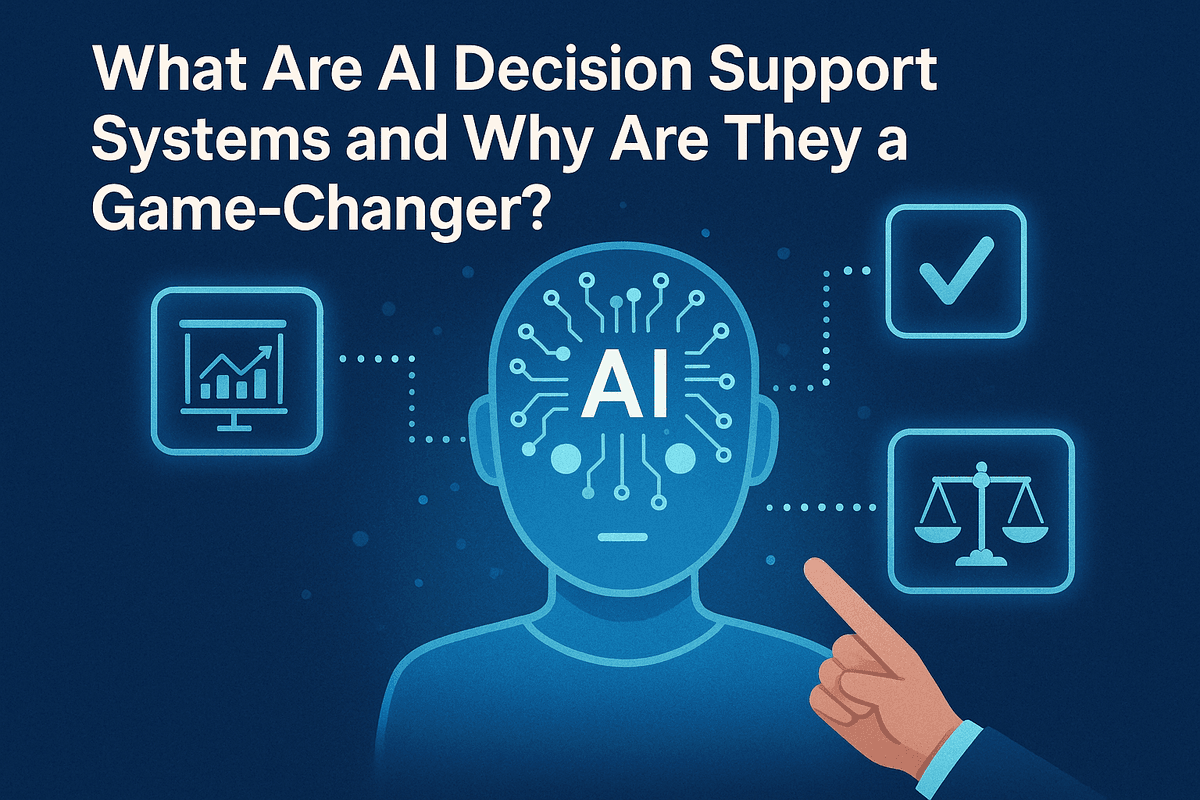
What Are AI Decision Support Systems and Why Are They a Game-Changer?
For decades, business leadership was a blend of experience, intuition, and analysis of historical reports. Executives made critical "gut feeling" calls, and while many were successful, they were inherently limited by human bias and the sheer inability to process the ever-growing mountains of data. The shift to data-driven decision-making began with spreadsheets and basic business intelligence tools, but these instruments often only told us what had already happened. They were a rearview mirror.
Today, the business landscape moves too fast for that. We need a forward-looking GPS. This is where modern AI decision support systems come into play, fundamentally changing the nature of strategic thinking.
From Gut Feeling to Data-Driven: The Evolution of Business Decisions
The journey from intuition to intelligent insight has been a rapid one.
- Phase 1: Experience-Based Decisions: Decisions were made by seasoned leaders based on their personal expertise and historical anecdotes. This was effective in slower, more predictable markets but struggled with unprecedented volatility.
- Phase 2: Data-Informed Decisions: The rise of databases and spreadsheets allowed managers to analyze past performance. This was a massive leap forward, enabling basic trend analysis and reporting. However, the analysis was manual, time-consuming, and reactive.
- Phase 3: AI-Powered Decisions: We are now in an era where the volume, velocity, and variety of data have overwhelmed human capabilities. AI decision support systems act as a cognitive partner, capable of sifting through billions of data points in real-time to uncover patterns, predict outcomes, and recommend actions that a human would never find alone.
Defining the Modern AI Decision Support System (DSS)
At its core, an AI Decision Support System (DSS) is an interactive software-based system that leverages artificial intelligence—including machine learning, natural language processing, and advanced analytics—to help humans make better and more effective decisions.
It’s crucial to understand that a DSS is not about replacing the human decision-maker; it’s about augmenting their intelligence. Think of it as a co-pilot for your business. You, the pilot, are still in control, but you’re equipped with an incredibly advanced dashboard that analyzes complex variables, anticipates turbulence, and suggests the most efficient flight path. These systems integrate three key components:
- Data Management: Accessing and managing vast internal and external datasets.
- Model Management: Utilizing AI and machine learning models to analyze the data (e.g., for forecasting, optimization, or classification).
- User Interface: Presenting complex insights through intuitive dashboards, visualizations, and natural language queries.
How AI Elevates Traditional Decision Support Models
Traditional decision support systems were powerful but rigid. They operated on pre-programmed rules and "if-then" logic. They could answer questions like, "What would happen to our profit margin if we increased the price by 5%?"
The power of AI decision support systems lies in their ability to go far beyond these static models. AI introduces a dynamic, learning layer that transforms their capabilities:
- Predictive Power: Instead of just running scenarios, AI models can predict future outcomes with a high degree of accuracy. They can forecast customer churn, anticipate supply chain disruptions, or identify sales trends before they become obvious.
- Adaptive Learning: An AI DSS learns from new data and the outcomes of past decisions. This means its recommendations become smarter and more accurate over time, constantly adapting to changing market conditions.
- Handling Complexity and Ambiguity: AI can analyze unstructured data like customer reviews, social media comments, and news reports, extracting valuable sentiment and insights that traditional systems could never process. It finds the "unknown unknowns"—the critical patterns hidden in the noise.
The Core Architecture of Modern AI Decision Support Systems
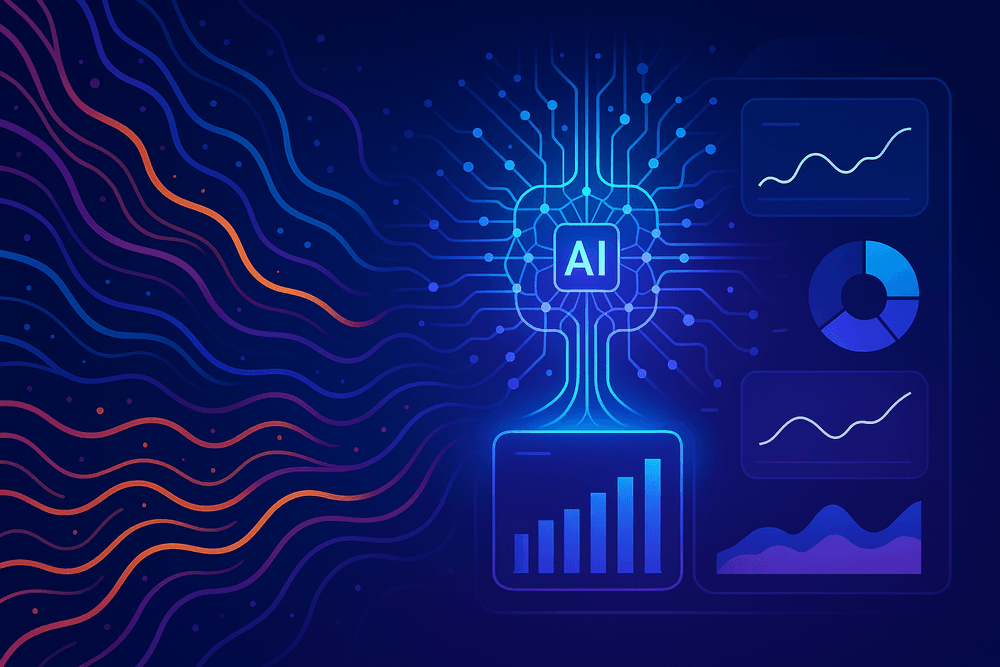
Behind every powerful, insight-driven recommendation lies a sophisticated yet logical architecture. While the technologies can be complex, modern AI decision support systems are universally built upon three fundamental pillars. These components work in concert to ingest raw information, apply intelligent analysis, and present clear, actionable guidance. Understanding this core structure demystifies how these platforms transform scattered data points into a decisive competitive advantage.
The Data Component: Aggregating Your Single Source of Truth
The foundation of any effective AI decision support system is its data component. This is not merely a database; it is a comprehensive data management layer responsible for creating a unified and reliable "single source of truth." In today's fragmented business environment, data flows from countless sources: CRM platforms, ERP systems, supply chain logs, IoT sensors, social media feeds, and external market reports.
The data component’s primary job is to:
- Aggregate: Pull data from these disparate silos into a centralized repository, like a data warehouse or data lake.
- Cleanse and Transform: Standardize formats, remove duplicates, correct errors, and structure the information for analysis. This process, often called ETL (Extract, Transform, Load), is critical. Without high-quality, consistent data, even the most advanced AI algorithms will produce flawed insights.
By establishing this clean, consolidated data foundation, the system ensures that all subsequent analysis is based on accurate and comprehensive information, eliminating the "garbage in, garbage out" problem.
The AI & Analytics Engine: Where Machine Learning Works its Magic
This is the brain of the operation. The AI & Analytics Engine takes the pristine data from the foundational layer and applies a spectrum of analytical techniques and machine learning models to uncover patterns, predict outcomes, and recommend actions. This is what elevates AI decision support systems beyond traditional business intelligence (BI) tools, which primarily focus on historical reporting.
The engine typically performs several layers of analysis:
- Descriptive & Diagnostic Analytics: It first answers "What happened?" and "Why did it happen?" by summarizing historical data and identifying root causes.
- Predictive Analytics: Leveraging machine learning, it then forecasts future trends. This could involve predicting customer churn, forecasting inventory needs, or identifying potential equipment failures.
- Prescriptive Analytics: This is the most advanced capability. The engine goes beyond prediction to recommend specific actions to achieve a desired outcome. For example, it might suggest the optimal pricing strategy to maximize profit or recommend the next-best-action for a sales representative to close a deal.
The User Interface: Visualizing Insights for Clear Action
The most brilliant analysis is worthless if it cannot be understood and acted upon by human decision-makers. The User Interface (UI) is the critical bridge between the system's complex computations and the end-user. The goal is to present insights in a format that is intuitive, accessible, and immediately actionable for managers, analysts, and front-line employees—not just data scientists.
A well-designed UI for an AI decision support system includes:
- Interactive Dashboards: Customizable views that display key performance indicators (KPIs) and critical alerts at a glance.
- Data Visualizations: Charts, graphs, heatmaps, and geographical maps that make complex relationships and trends easy to grasp.
- Natural Language Interaction: Many modern systems allow users to ask questions in plain language (e.g., "Show me the top-performing products in the western region last quarter") and receive immediate, visualized answers.
This final layer ensures that the data-driven intelligence generated by the engine empowers users to make faster, more confident, and ultimately smarter decisions.
Key Business Benefits of Implementing AI Decision Support Systems
Integrating artificial intelligence into the core of your decision-making process is more than a technological upgrade; it's a strategic move that delivers a powerful competitive edge. By leveraging AI decision support systems (DSS), organizations can transform their operations, foster innovation, and drive sustainable growth. These sophisticated platforms go beyond simple data analysis, providing actionable intelligence that empowers leaders at every level. Let's explore the fundamental benefits that make implementing an AI DSS a game-changing investment.
Achieve Unprecedented Accuracy and Speed in Decision-Making
In today's fast-paced market, the speed and quality of your decisions directly impact your bottom line. Human analysts, while brilliant, are limited in the volume of data they can process. An AI DSS can sift through terabytes of information—from sales figures and customer feedback to market trends and sensor data—in mere seconds. By applying complex machine learning algorithms, these systems identify subtle patterns and correlations that are invisible to the human eye. This allows businesses to move from educated guesses to data-validated conclusions, dramatically increasing the accuracy of their choices while reducing decision-making time from days to minutes.
Reduce Human Bias and Improve Consistency
Every human decision is susceptible to cognitive biases, emotions, and even fatigue. These factors can lead to inconsistent and sometimes unfair outcomes, particularly in critical areas like hiring, lending, or project evaluation. AI decision support systems provide a crucial layer of objectivity. They operate strictly on the data and predefined logic they are given, ensuring that every decision is evaluated against the same criteria. This doesn't eliminate the human element; instead, it augments it by providing an unbiased, data-driven recommendation. The result is a more equitable, consistent, and defensible decision-making framework across the entire organization.
Forecast Future Trends with Predictive Analytics
One of the most transformative capabilities of an AI DSS is its power to look into the future. By analyzing historical data, these systems use predictive analytics to forecast future trends, behaviors, and outcomes with remarkable accuracy. Imagine being able to anticipate customer churn before it happens, predict inventory needs for the next quarter with precision, or identify potential supply chain disruptions weeks in advance. This foresight allows businesses to shift from a reactive to a proactive stance. Instead of just responding to problems, you can anticipate and mitigate them, seize opportunities before competitors do, and confidently craft long-term strategies.
Unlock New Levels of Operational Efficiency
Ultimately, the combination of speed, accuracy, consistency, and foresight translates into a massive boost in operational efficiency. By automating routine and complex decision-making tasks, AI decision support systems free up your most valuable asset—your people—to focus on strategic initiatives, innovation, and customer relationships. Processes become streamlined, as predictive insights optimize everything from resource allocation and logistics to marketing campaigns and product development. This reduction in manual effort and error correction leads to significant cost savings, increased productivity, and a more agile, resilient, and competitive enterprise.
Real-World Applications of AI Decision Support Systems Across Industries
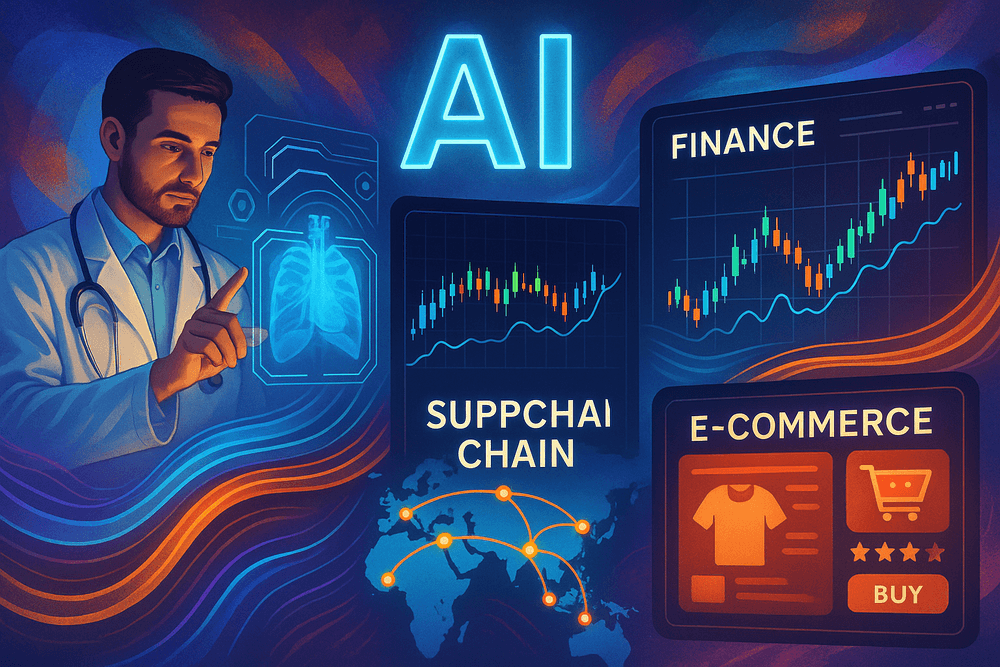
The theoretical power of AI decision support systems comes to life through their practical application across a diverse range of industries. These intelligent platforms are not just futuristic concepts; they are actively reshaping operations, driving efficiency, and creating unprecedented value. By augmenting human expertise with data-driven insights, ai decision support systems are becoming indispensable tools for modern enterprises. Let's explore how they are making a tangible impact in four key sectors.
Optimizing Patient Outcomes in Healthcare
In healthcare, where decisions can have life-altering consequences, AI decision support systems act as a crucial co-pilot for clinicians. These systems can process and analyze vast datasets—including electronic health records (EHRs), medical imaging, genomic data, and clinical trial results—at a scale impossible for humans.
- Diagnostic Assistance: AI-powered tools assist radiologists in identifying subtle anomalies in X-rays, CT scans, and MRIs, leading to earlier and more accurate diagnoses of conditions like cancer.
- Personalized Treatment Plans: By analyzing a patient's unique genetic profile and medical history against a backdrop of cutting-edge research, a DSS can recommend the most effective treatment protocols and drug combinations, paving the way for personalized medicine.
- Predictive Analytics: These systems can forecast patient admissions, predict the likelihood of disease outbreaks in a population, or identify patients at high risk for conditions like sepsis, enabling proactive intervention.
Powering High-Frequency Trading in Finance
The financial world operates at lightning speed, and the slightest delay can result in significant financial loss. Here, ai decision support systems are the engine behind high-frequency trading (HFT) and sophisticated risk management. They analyze market data, news feeds, and social media sentiment in real-time to identify trading opportunities and execute transactions in fractions of a second. Beyond trading, they are instrumental in:
- Risk Management: A DSS can continuously monitor a firm's portfolio, simulating thousands of market scenarios to identify potential vulnerabilities and recommend hedging strategies to mitigate risk.
- Fraud Detection: By learning normal transaction patterns, these systems can instantly flag anomalous activities, preventing fraudulent transactions and protecting both financial institutions and their customers.
Streamlining Inventory and Logistics in Supply Chain Management
Modern supply chains are intricate networks of suppliers, manufacturers, distributors, and retailers. Managing this complexity efficiently is a monumental task. AI decision support systems bring clarity and control by optimizing key processes:
- Demand Forecasting: By analyzing historical sales data, seasonality, market trends, and even external factors like weather patterns, a DSS can predict future product demand with remarkable accuracy, preventing costly stockouts or overstock situations.
- Inventory Optimization: Based on demand forecasts and supplier lead times, the system recommends optimal inventory levels for every product at every location, minimizing carrying costs while ensuring availability.
- Route Planning: Logistics companies use AI to calculate the most efficient delivery routes in real-time, factoring in traffic conditions, fuel costs, delivery windows, and vehicle capacity to reduce expenses and improve delivery times.
Personalizing the Customer Journey in E-commerce
In the competitive e-commerce landscape, personalization is the key to customer acquisition and retention. AI decision support systems are the brains behind the tailored experiences that modern consumers expect.
- Recommendation Engines: The familiar "You might also like" feature is a classic example. A DSS analyzes a user's browsing history, past purchases, and the behavior of similar users to suggest products they are highly likely to be interested in.
- Dynamic Pricing: These systems can adjust product prices in real-time based on factors like competitor pricing, demand, inventory levels, and even the time of day, helping businesses maximize revenue and stay competitive.
- Customer Segmentation: By identifying distinct customer groups based on their behavior and preferences, a DSS enables businesses to create highly targeted marketing campaigns, promotions, and personalized communications that resonate far more effectively than a one-size-fits-all approach.
Best Practices for Integrating an AI Decision Support System
Implementing an AI-powered system is more than a technical upgrade; it's a strategic business transformation. To unlock the full potential of ai decision support systems and ensure a significant return on investment, a thoughtful and methodical approach is essential. Following these best practices will help you navigate the integration process smoothly and build a system that truly empowers your team.
Start with a Clearly Defined Business Problem
Don't fall into the trap of adopting AI for its own sake. The most successful implementations begin with a sharp focus on a specific, high-value business challenge. What decision-making process is currently inefficient, slow, or based on guesswork? Are you trying to optimize inventory levels, predict equipment failure, or identify high-potential sales leads? Clearly defining your objective—for example, "reduce patient readmission rates by 20%" or "improve marketing campaign ROI by 15%"—provides a clear target. This problem-first approach ensures your ai decision support system is built with a purpose, making it easier to measure success and demonstrate value from day one.
Focus on Data Quality and Governance Above All Else
An AI system is only as smart as the data it learns from. The old adage "garbage in, garbage out" has never been more relevant. Before you even think about algorithms, you must prioritize the integrity of your data. This means ensuring your data is clean, accurate, complete, and relevant to the problem you're solving. Establish a robust data governance framework that defines who owns the data, who can access it, and how it is managed and protected. High-quality, well-governed data is the non-negotiable foundation upon which powerful and trustworthy ai decision support systems are built. Without it, your insights will be flawed and your decisions misguided.
Choose the Right AI Models for Your Specific Goals
The term "AI" is a broad umbrella covering a vast array of models and techniques. A one-size-fits-all approach simply doesn't work. The key is to select the AI model that aligns perfectly with your defined business problem. If you need to forecast future sales, a predictive analytics model based on time-series analysis is appropriate. If you need to categorize customer feedback, a Natural Language Processing (NLP) classification model is the right tool. For identifying complex, hidden patterns in large datasets, you might leverage unsupervised machine learning. Partnering with data scientists to match the right algorithm to your goal is critical for ensuring the outputs of your ai decision support system are not just interesting, but truly actionable.
Champion User Adoption with Training and a Feedback Loop
The most sophisticated AI decision support system will fail if your team doesn't trust it or know how to use it. User adoption is not an afterthought—it's a critical component of the integration strategy. Invest in comprehensive training that goes beyond the technical "how-to." Help your employees understand why the system makes certain recommendations and how to use these insights to augment their own expertise. Crucially, establish a continuous feedback loop. Create simple channels for users to ask questions, report inaccuracies, and suggest improvements. This not only helps you refine the system over time but also fosters a sense of ownership and trust, turning skeptical users into enthusiastic advocates.

The Future is Now: Your Next Steps with AI Decision Support Systems
You've seen the power, the potential, and the tangible benefits. Moving from understanding AI decision support systems to implementing one is the critical leap that separates market leaders from followers. This isn't just about adopting new technology; it's about fundamentally rewiring your organization's decision-making DNA for a new era of business. The journey starts with a clear business case and a forward-looking strategy that embraces the next wave of innovation.
Recap: Making the Business Case for an AI DSS
Before diving into vendor selection, solidify your "why." The business case for an AI DSS is built on a foundation of strategic advantage. It’s about empowering your teams to move beyond gut feelings and historical spreadsheets to make consistently brilliant, data-driven choices. The core value lies in:
- Enhanced Accuracy: Reducing human error and bias in critical forecasts and operational plans.
- Operational Efficiency: Automating complex data analysis to free up your experts for high-level strategic thinking.
- Proactive Strategy: Shifting from reactive problem-solving to anticipating market shifts, identifying opportunities, and mitigating risks before they materialize.
Ultimately, investing in robust AI decision support systems is an investment in resilience and a sustainable competitive edge. It’s the engine that will power smarter growth and smarter decisions across your entire organization.
Emerging Trends: The Rise of Generative AI in DSS
The landscape of decision support is undergoing a seismic shift, thanks to Generative AI. Traditional AI DSS excels at analyzing existing data to predict outcomes. Generative AI takes it a step further by creating new data, scenarios, and strategies. Imagine an AI partner that doesn't just tell you what might happen but helps you brainstorm what you could make happen.
This evolution transforms a DSS from a passive analyst into an active collaborator. For instance, a supply chain manager could ask, "Generate three cost-effective logistics models to navigate the upcoming port closures, including risk assessments for each." The system would then produce novel, data-backed operational plans. This conversational, creative capability is making AI decision support systems more intuitive, powerful, and indispensable than ever before.
How to Choose the Right AI Partner for Your Business Needs
Selecting the right partner is as crucial as selecting the technology itself. A successful implementation depends on collaboration, expertise, and a shared vision. Use these criteria to guide your evaluation:
- Define Your Core Problem: Start with a specific, high-value business problem you need to solve. Do you need to optimize pricing, improve inventory management, or enhance customer targeting? A clear use case prevents you from buying a solution in search of a problem.
- Assess Scalability and Integration: Your chosen platform must integrate seamlessly with your existing technology stack (CRM, ERP, data lakes). An isolated system creates data silos and headaches. Ensure the partner’s solution can scale with your data volume and business growth.
- Evaluate Industry-Specific Expertise: A generic AI platform may not understand the unique nuances of your industry. Look for a partner with a proven track record in your sector. They will speak your language and configure the system to solve your specific challenges, not just general ones.
- Prioritize the User Experience (UX): The most sophisticated AI is worthless if your team finds it unusable. Demand an intuitive interface that presents complex insights in a clear, actionable format. The goal is empowerment, not intimidation.
- Scrutinize Data Security and Transparency: Your data is one of your most valuable assets. Vet your partner's security protocols rigorously. Furthermore, ask about model transparency. Understanding how the AI reaches its conclusions (explainability) is vital for building trust and ensuring ethical, unbiased decision-making.