
August 26, 2025
What Are AI Decision Support Systems and How Do They
What Are AI Decision Support Systems and How Do They Revolutionize Business?
For generations, business leadership was a blend of experience, intuition, and calculated risk. The "gut feel" of a seasoned executive was often the deciding factor in major strategic moves. While this approach built empires, the modern business landscape—inundated with data and moving at unprecedented speed—demands more. The evolution from instinct-driven choices to data-backed strategy has led us to a transformative new tool: the AI decision support system.
Defining the Core of AI Decision Support Systems
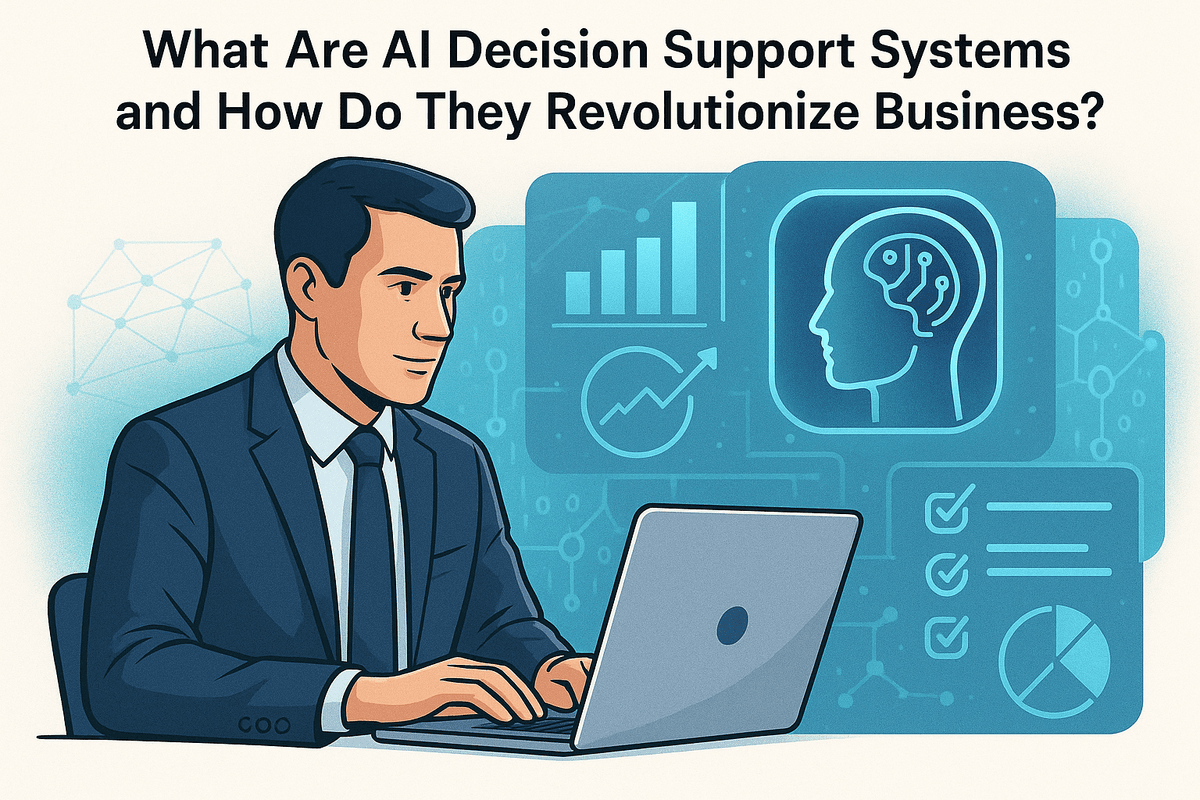
At its heart, an AI decision support system (DSS) is a sophisticated, interactive software system that combines data, analytical models, and artificial intelligence to augment human decision-making. It’s not about replacing human judgment; it’s about supercharging it.
Think of it as the ultimate intelligent advisor. These systems sift through immense volumes of complex data—from sales figures and customer feedback to market trends and operational logs—that would be impossible for a human team to process effectively. Using machine learning algorithms, they identify subtle patterns, predict future outcomes, and recommend optimal courses of action. The core function is to transform raw data into actionable intelligence, presenting it to decision-makers in an intuitive format so they can make faster, more accurate, and more confident choices.
Traditional vs. AI-Powered DSS: A Paradigm Shift
While decision support systems aren't new, the infusion of AI marks a fundamental revolution. The difference between a traditional DSS and an AI-powered one is like the difference between a simple calculator and a supercomputer.
- Data Processing & Scope: Traditional systems primarily worked with structured, historical data and followed pre-programmed rules. In contrast, modern AI decision support systems can analyze a vast array of data types, including unstructured text, images, and real-time streams. They don’t just report on what happened; they understand context and nuance.
- Analytical Capability: A traditional DSS could answer specific "what-if" questions posed by a user. An AI DSS goes further. It provides predictive analytics (what is likely to happen?) and prescriptive analytics (what should we do about it?). It can proactively identify opportunities or risks that a human analyst might never think to look for.
- Learning and Adaptation: Traditional systems are static. Their rules and models must be manually updated. AI decision support systems, however, are dynamic. They learn continuously from new data, refining their algorithms and improving the accuracy of their recommendations over time. This adaptive capability ensures the system remains relevant and effective in a constantly changing business environment.
By bridging the gap between overwhelming data and clear, strategic action, AI decision support systems are fundamentally changing the way businesses operate, compete, and win.
The Core Components Powering AI Decision Support Systems
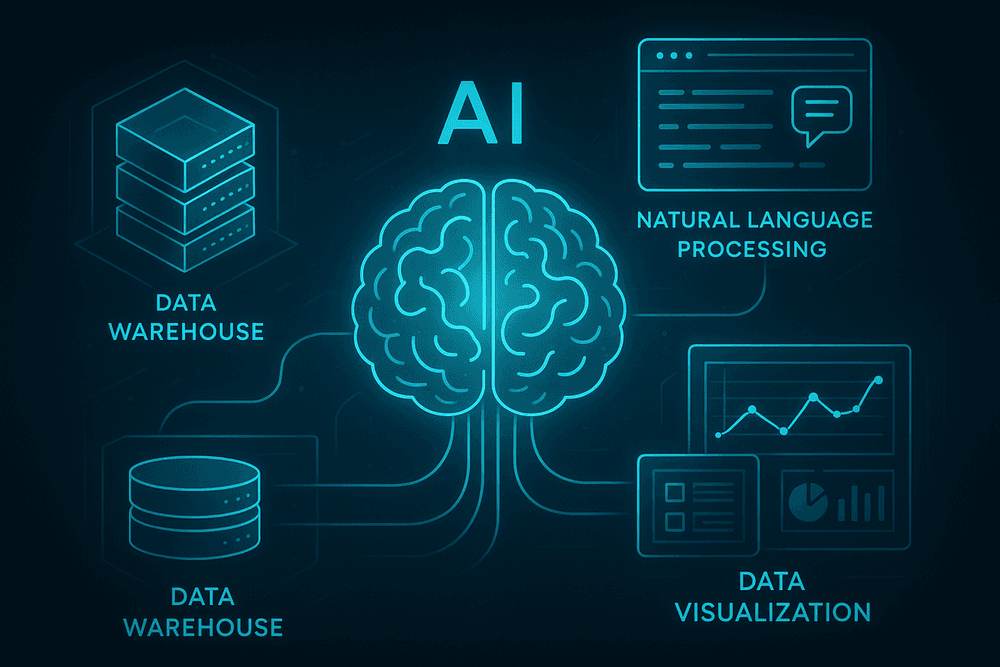
To truly understand the transformative power of AI decision support systems, we need to look under the hood. These platforms aren’t monolithic black boxes; they are sophisticated architectures built from several interconnected technologies working in concert. Each component plays a distinct and critical role in the journey from raw data to strategic, actionable intelligence. Let's break down the essential pillars that make these systems work.
Machine Learning Algorithms for Predictive Insights
At the heart of any modern decision support system lies the "brain"—the machine learning (ML) algorithms. These are the engines that sift through vast amounts of historical data to uncover hidden patterns, subtle correlations, and critical anomalies that a human analyst could easily miss. Unlike traditional business intelligence that focuses on what happened in the past, ML powers predictive insights.
- Forecasting: Regression algorithms can predict future sales figures, inventory needs, or market demand with increasing accuracy.
- Classification: These models can identify which customers are at high risk of churning or which sales leads are most likely to convert.
- Clustering: By grouping similar customers or products, these algorithms enable hyper-targeted marketing and personalized recommendations.
This forward-looking capability is what elevates a standard reporting tool into a true AI decision support system, empowering leaders to act proactively.
Data Warehousing and Real-Time Analytics
If machine learning is the engine, then high-quality data is the fuel. The effectiveness of any AI model is directly dependent on the data it’s trained on. This is where a robust data infrastructure becomes non-negotiable. A central data warehouse or data lake acts as a single source of truth, consolidating information from disparate sources like your CRM, ERP, supply chain logs, and marketing platforms.
Coupled with this is the necessity for real-time analytics. In today's fast-paced environment, decisions must be made based on the most current information available. Real-time data pipelines feed the system with up-to-the-minute information, ensuring that the insights and recommendations it generates are timely, relevant, and reflect the current business reality.
Natural Language Processing (NLP) for User-Friendly Queries
One of the most significant advancements in AI decision support systems is the integration of Natural Language Processing (NLP). This technology acts as a translator, bridging the gap between complex data science and the everyday business user. Instead of requiring users to learn a specialized query language like SQL, NLP allows them to ask questions in plain, conversational language.
A manager can simply type or speak a query like, "Compare our revenue from the new product line in North America versus Europe for the last quarter." The NLP engine interprets the intent, retrieves the correct data, and presents the answer. This democratization of data access empowers non-technical decision-makers across the organization to self-serve and get the answers they need instantly.
Interactive Dashboards and Data Visualization
The final, crucial component is the user interface. An AI’s brilliant insight is useless if it’s presented as a wall of numbers or a complex statistical formula. Interactive dashboards and advanced data visualization tools are the storytellers that translate complex findings into intuitive, easily digestible formats. Through charts, graphs, heat maps, and geographical overlays, decision-makers can instantly grasp trends and outliers. The "interactive" element is key—users can drill down into specific data points, apply filters, and pivot their view to explore the "why" behind the numbers, turning passive information consumption into an active, exploratory decision-making process.
Strategic Benefits: Why Your Business Needs an AI Decision Support System
Moving beyond theory, the true value of ai decision support systems lies in their tangible impact on business outcomes. Integrating these intelligent tools isn't just a technological upgrade; it's a fundamental strategic shift that empowers organizations to operate with greater precision, speed, and foresight. From optimizing daily operations to shaping long-term strategy, the benefits are transformative, creating a clear case for adoption in any forward-thinking enterprise.
Enhance Decision Accuracy and Reduce Human Error
Even the most experienced professionals are susceptible to cognitive biases, stress, and information overload, which can lead to costly errors in judgment. AI decision support systems act as a powerful co-pilot, mitigating these inherent human risks by providing an objective, data-centric perspective. These systems analyze all available variables without emotion or preconceived notions, flagging inconsistencies and presenting a range of potential outcomes based purely on evidence. This doesn't replace human expertise; it augments it, creating a human-machine partnership where critical decisions are vetted, validated, and significantly more reliable.
Boost Operational Efficiency and Automate Complex Analyses
How much time does your team spend gathering data, running reports, and performing complex "what-if" scenarios? AI decision support systems can execute these tasks in a fraction of the time. They automate the heavy lifting of data processing and modeling, allowing for continuous analysis of operational workflows, supply chain logistics, and financial performance. Imagine instantly simulating the bottom-line impact of a price change or identifying the most efficient resource allocation for a project in real-time. By automating these complex analyses, you free up your most valuable assets—your people—to focus on high-level strategy, innovation, and creative problem-solving.
Gain a Competitive Edge with Faster, Smarter Strategies
In today's fast-paced market, the ability to decide and act quickly is paramount. Businesses relying on traditional, slower decision-making cycles are often left reacting to market shifts rather than leading them. An AI decision support system changes the game by enabling rapid, informed decision-making at scale. It can process real-time market data, competitor actions, and consumer sentiment to provide immediate strategic recommendations. This agility allows your business to seize emerging opportunities before they become mainstream, anticipate potential threats, and deploy resources with surgical precision, creating a sustainable and proactive competitive advantage.
Unlock Actionable Insights from Big Data
Many companies are drowning in data but starving for wisdom. Vast reserves of information from CRM systems, IoT devices, social media, and sales logs often sit untapped, their potential unrealized. AI decision support systems are the key to unlocking this treasure trove. Using sophisticated machine learning algorithms, they can sift through terabytes of information to identify subtle patterns, hidden correlations, and emerging trends that are impossible for humans to spot. This transforms a chaotic sea of big data into clear, actionable insights—like pinpointing the primary driver of customer churn or forecasting regional product demand with unprecedented accuracy. It turns your data from a passive asset into your most powerful strategic weapon.

Real-World Applications of AI Decision Support Systems Across Industries
The theoretical power of AI decision support systems comes to life when we examine their practical applications. Across diverse sectors, these intelligent tools are no longer futuristic concepts but integral components of daily operations, driving efficiency, accuracy, and strategic advantage. From streamlining global supply chains to personalizing individual patient care, AI is empowering human experts to make better, faster, and more data-driven decisions.
Optimizing Logistics and Supply Chain Management
The modern supply chain is a web of immense complexity. AI decision support systems act as the central nervous system for logistics operations, sifting through vast datasets to find optimal solutions.
- Predictive Demand Forecasting: By analyzing historical sales data, market trends, seasonal variations, and even external factors like weather patterns, AI models can predict future product demand with remarkable accuracy. This allows businesses to optimize inventory levels, preventing costly overstock situations and frustrating stockouts.
- Dynamic Route Optimization: For delivery and freight companies, these systems calculate the most efficient routes in real-time. They continuously process traffic conditions, fuel costs, vehicle capacity, and delivery windows to minimize travel time and operational expenses, ensuring goods arrive on schedule.
Improving Patient Outcomes in Healthcare Diagnostics
In healthcare, where decisions carry life-or-death weight, AI decision support systems serve as a powerful ally for clinicians. They augment human expertise, not replace it, leading to more precise diagnoses and effective treatments.
- Enhanced Medical Imaging Analysis: AI algorithms trained on millions of medical images can analyze X-rays, MRIs, and CT scans to detect subtle anomalies—such as early-stage tumors or hairline fractures—that might be missed by the human eye. This provides radiologists with a crucial "second opinion," increasing diagnostic confidence and enabling earlier intervention.
- Personalized Treatment Plans: By processing a patient's genetic information, medical history, and lifestyle data, these systems can help oncologists and other specialists identify the most effective treatment protocols. This moves healthcare away from a one-size-fits-all approach toward highly personalized medicine.
Personalizing Customer Experiences in Retail
Retailers are leveraging AI decision support systems to understand their customers on a deeper level and deliver tailored experiences that build loyalty and drive sales.
- Hyper-Personalized Recommendations: The product suggestions you see on e-commerce sites like Amazon are a prime example. These systems analyze your browsing history, past purchases, and the behavior of similar users to recommend items you are highly likely to be interested in, significantly increasing conversion rates.
- Intelligent Price Optimization: AI tools monitor competitor pricing, inventory levels, demand signals, and market trends to recommend optimal product prices in real-time, helping businesses maximize revenue and maintain a competitive edge.
Mitigating Risk in Financial Services and Trading
The financial world operates on speed and precision. AI decision support systems are indispensable for managing risk and capitalizing on opportunities in this high-stakes environment.
- Real-Time Fraud Detection: Financial institutions use AI to monitor billions of transactions. These systems instantly identify anomalous patterns that deviate from a customer's normal spending behavior, flagging potentially fraudulent activity and preventing financial loss before it escalates.
- Advanced Credit Scoring: AI models can assess creditworthiness by analyzing a much broader set of data than traditional methods. This leads to more accurate risk assessments, enabling lenders to make fairer decisions and expand access to credit for deserving applicants.
How to Successfully Implement an AI Decision Support System
Integrating a powerful tool into your workflow is one thing; making it a core driver of business success is another. A successful rollout of ai decision support systems hinges on a strategic, multi-faceted approach that goes far beyond the technology itself. By following a clear implementation roadmap, you can transform your system from a sophisticated piece of software into an indispensable strategic asset. Here’s how to do it right.
Step 1: Define Clear Business Objectives and KPIs
Before you evaluate a single vendor or line of code, you must answer a fundamental question: What specific problem are we trying to solve? An AI decision support system isn't a magic wand; it’s a precision tool. Your first step is to define the exact business outcomes you want to achieve.
Are you aiming to reduce operational costs in your supply chain by 15%? Do you want to increase customer lifetime value by improving personalization? Or perhaps you need to optimize inventory to reduce carrying costs while avoiding stockouts.
Once you have clear objectives, establish Key Performance Indicators (KPIs) to measure success. These tangible metrics—such as reduced shipping times, higher marketing conversion rates, or improved forecast accuracy—will serve as your north star, guiding the project and validating its ROI down the line.
Step 2: Ensure High-Quality Data and Governance
AI systems are powered by data. The old adage "garbage in, garbage out" has never been more relevant. The insights and recommendations generated by your AI decision support system will only be as reliable as the data it analyzes. This makes data readiness a non-negotiable prerequisite.
Start by conducting a thorough data audit. Ensure your data is clean, accurate, complete, and relevant to your defined objectives. Establish robust data governance policies that dictate how data is collected, stored, managed, and secured. This framework ensures data integrity and compliance, building a foundation of trust in the system's outputs. Without a solid data strategy, even the most advanced ai decision support systems will fail to deliver meaningful results.
Step 3: Choose the Right Solution (Custom vs. Off-the-Shelf)
With your objectives and data in order, it's time to select the right technology. The choice generally comes down to two paths:
- Off-the-Shelf Solutions: These pre-built systems are often faster to deploy and more cost-effective upfront. They are ideal for standard business challenges where a proven, industry-tested solution exists, such as dynamic pricing or demand forecasting.
- Custom-Built Solutions: If your business challenges are highly unique or a source of competitive advantage, a custom solution may be necessary. While more expensive and time-consuming to develop, a bespoke system can be perfectly tailored to your specific workflows, data models, and strategic goals.
Your decision should be based on your objectives, budget, timeline, and the availability of in-house technical talent.
Step 4: Drive User Adoption Through Training and Support
The most sophisticated AI decision support system is worthless if your team doesn't use it. User adoption is the final—and most critical—hurdle. A successful change management strategy is key.
Begin by involving end-users early in the process to build a sense of ownership. Develop a comprehensive training program that focuses not just on how to use the tool, but why it’s valuable and how it will enhance their roles. Communicate the benefits clearly and consistently. Designate internal champions who can advocate for the system and provide peer-to-peer support. Finally, establish clear feedback channels and a dedicated support system to address questions and resolve issues quickly, ensuring your team feels confident and empowered by their new AI co-pilot.

The Future Is Now: Your Next Move with AI Decision Support Systems
The era of relying solely on intuition or cumbersome manual data analysis is over. As we've explored, AI decision support systems are no longer a futuristic concept but a tangible, powerful tool that is actively reshaping industries. They are the engine driving businesses from reactive problem-solving to proactive, predictive strategy. The question is no longer if you should adopt this technology, but how and when. The time for strategic implementation is now, and your next move will determine your competitive standing in the years to come. This is your roadmap to turning insight into action.
Key Takeaways: The Transformative Impact of AI DSS
Before charting your course, let’s solidify the core value propositions. Integrating sophisticated AI decision support systems into your operations unlocks a new tier of strategic capability. Remember these key transformations:
- From Guesswork to Precision: Replace gut feelings with data-validated recommendations, significantly increasing the accuracy and reliability of your most critical decisions.
- From Overload to Efficiency: Automate the heavy lifting of data collection, processing, and analysis. This frees your most valuable asset—your people—to focus on high-level strategy, innovation, and execution.
- From Reactive to Proactive: Leverage predictive analytics to foresee market shifts, identify potential supply chain disruptions, or anticipate customer behavior before it happens, allowing you to act instead of react.
- From Silos to Synergy: Democratize data-driven insights across your organization. Empower teams at every level with the clear, actionable intelligence they need to make smarter, more aligned decisions every day.
How to Evaluate and Select the Right Vendor
Choosing a partner to implement an AI DSS is as critical as the decision to adopt the technology itself. A methodical evaluation process ensures you select a solution that fits your unique ecosystem and drives real-world results.
- Clearly Define Your 'Why': Begin internally. What specific business challenge are you trying to solve? Are you optimizing inventory, personalizing marketing campaigns, or mitigating financial risk? A clear problem statement is your North Star.
- Assess Technical Prowess and Scalability: Look under the hood. Does the vendor’s platform integrate seamlessly with your existing data sources (CRMs, ERPs)? Is their AI model adaptable and capable of learning from your unique data? Ensure the system can scale with your business as it grows.
- Prioritize an Intuitive User Experience (UX): The most advanced AI decision support systems fail if they are too complex for your team to use. Request a walkthrough of the interface. Look for clean dashboards, intuitive data visualizations, and clear, understandable outputs.
- Scrutinize Support and Partnership: You are not just buying software; you are entering a partnership. Evaluate the vendor’s onboarding process, training programs, and ongoing technical support. Look for a team with proven expertise in your industry who can act as a strategic advisor.
Take the First Step: Request a Demo or Consultation
Reading about the potential of AI is one thing; seeing it applied to your specific challenges is another. The single most effective next step is to schedule a personalized demo or consultation. This is your opportunity to move from the theoretical to the practical. In a tailored session, you can see firsthand how an AI platform can ingest your type of data, analyze your specific use cases, and deliver the kind of actionable insights we've discussed.
Don't let analysis paralysis hold you back. This isn't just a sales pitch; it's a strategic exploration to see if the technology is the right fit to unlock your company's potential. The future of decision-making is here. It’s time to take your place at the forefront.