
August 30, 2025
What Are AI Decision Support Systems & How Do They
What Are AI Decision Support Systems & How Do They Revolutionize Business?
For decades, critical business decisions were a blend of experience, intuition, and the best-available (but often limited) data. Leaders relied on their "gut feel," poring over spreadsheets and static reports to chart a path forward. While this approach built empires, today’s hyper-competitive landscape, flooded with an unimaginable volume of data, demands a more sophisticated strategy. The challenge is no longer a lack of information but the overwhelming task of finding the signal in the noise. This is where the evolution from gut-feel to data-driven intelligence takes a quantum leap.
Defining the Modern AI Decision Support System (DSS)
At its core, an AI decision support system (DSS) is an intelligent software platform that combines data science, machine learning, and artificial intelligence to augment and improve human decision-making. It’s not a simple dashboard that visualizes past performance; it’s an interactive, cognitive partner.
Think of it as a senior analyst, a data scientist, and a strategist rolled into one, available 24/7. These systems ingest and process vast amounts of structured and unstructured data from diverse sources—sales figures, supply chain logistics, customer feedback, market trends, and even social media sentiment. Using sophisticated algorithms, they can:
- Identify subtle patterns and correlations invisible to the human eye.
- Predict future outcomes with a calculated degree of confidence.
- Simulate the potential impact of various decisions.
- Prescribe the optimal course of action to achieve a specific goal.
The final output isn’t a mountain of raw data but a clear, concise, and actionable recommendation, empowering leaders to act with speed and precision.
Key Differences: Traditional vs. AI-Powered Systems
The leap from a traditional Decision Support System to modern AI decision support systems is as significant as the jump from a calculator to a supercomputer. While both aim to aid decision-making, their capabilities are worlds apart.
| Feature | Traditional DSS | AI-Powered DSS |
| :--- | :--- | :--- |
| Logic | Rule-Based & Static: Operates on pre-programmed rules and "if-then" scenarios. Requires manual updates to adapt. | Learning & Adaptive: Uses machine learning to continuously learn from new data, improving its accuracy and insights over time without human intervention. |
| Data Scope | Primarily Structured: Relies on clean, organized data from databases and spreadsheets. | Structured & Unstructured: Can analyze complex, messy data like emails, images, customer reviews, and sensor readings. |
| Analytical Focus | Descriptive & Diagnostic: Answers "What happened?" and "Why did it happen?" based on historical data. | Predictive & Prescriptive: Answers "What will happen?" and "What should we do about it?" by forecasting future trends and recommending actions. |
| User Interaction | Passive: Presents data and requires the user to perform the analysis and draw conclusions. | Proactive: Actively surfaces insights, highlights potential risks, and provides clear, evidence-backed recommendations. |
This evolution marks a fundamental shift from passive data reporting to active, intelligent guidance. AI decision support systems don’t just present the facts; they interpret them, provide foresight, and help you navigate the complexities of modern business.
Core Components of Modern AI Decision Support Systems
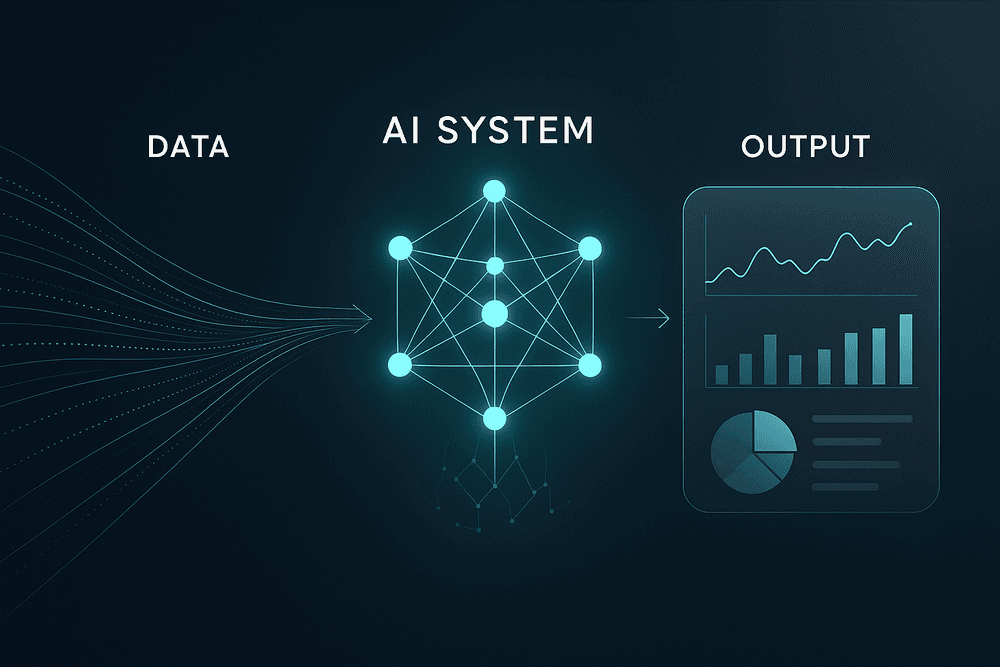
What’s under the hood of a powerful AI decision support system? While the technology can seem complex, these sophisticated platforms are typically built on three interconnected pillars. Each component plays a critical role, working in concert to transform vast oceans of raw data into a clear, strategic advantage. Understanding this architecture is key to appreciating how these systems deliver such impactful results for modern businesses, moving beyond simple data reporting to offer genuine intelligence.
The Data Engine: Aggregating and Managing Your Most Valuable Asset
Data is the fuel that powers any AI. The data engine is the foundational component responsible for collecting, processing, and organizing this fuel. It acts as a centralized hub, pulling information from a multitude of sources—from internal ERP and CRM systems to external market data, social media trends, and IoT sensor readings. Its primary tasks include data ingestion (gathering the data), data cleansing (removing errors and inconsistencies), and data transformation (structuring it for analysis). A robust data engine ensures that the information fed into the analytical models is accurate, timely, and relevant. Without a high-quality, well-managed data foundation, even the most advanced AI decision support systems will falter, underscoring the old adage: "garbage in, garbage out." This component ensures the integrity and accessibility of your organization’s most valuable asset.
The AI & Analytics Brain: Machine Learning and Predictive Models at Work
If the data engine provides the fuel, the AI and analytics brain is the high-performance engine. This is where the "intelligence" in AI decision support systems comes to life. This core component houses a suite of algorithms, machine learning (ML) models, and statistical techniques designed to analyze the prepared data. It goes far beyond simple reporting to uncover hidden patterns, forecast future trends, and simulate potential outcomes. For example, it might use regression models to predict future sales, natural language processing (NLP) to analyze customer feedback, or classification algorithms to identify potential fraud. This analytical powerhouse is what allows the system to answer complex "what-if" questions, recommend optimal courses of action, and provide the deep, predictive insights that elevate decision-making from reactive to genuinely proactive.
The User Interface: Visualizing Insights for Actionable Intelligence
The most brilliant analysis is useless if it can't be understood by the people who need it. The User Interface (UI) is the final, crucial link in the chain, translating the complex outputs of the AI brain into intuitive, human-readable formats. A well-designed UI is more than just a pretty dashboard; it's a strategic tool for exploration and communication. Through interactive charts, dynamic graphs, geographic maps, and even natural language summaries, the UI presents key findings in a way that highlights what matters most. It allows decision-makers to drill down into specific data points, filter information, and explore different scenarios with ease. Ultimately, the UI’s goal is to bridge the gap between sophisticated data science and practical business application, turning powerful insights into actionable intelligence that empowers users to make faster, smarter, and more confident decisions.
Real-World Use Cases: AI Decision Support Systems in Action
The theoretical power of AI decision support systems comes to life when we see them applied to complex, real-world challenges. These systems are not futuristic concepts; they are actively transforming industries by augmenting human expertise with data-driven insights. From the factory floor to the hospital ward, AI DSS is empowering professionals to make faster, more accurate, and more strategic decisions. Let's explore some of the most impactful applications.
Optimizing Supply Chains and Logistics with Predictive Analytics
In the intricate web of global supply chains, even small inefficiencies can lead to significant costs. AI decision support systems act as the central nervous system for modern logistics. By analyzing vast datasets—including historical sales figures, weather patterns, shipping lane traffic, and geopolitical events—these systems provide critical recommendations.
- Demand Forecasting: Machine learning models predict future product demand with remarkable accuracy, allowing managers to optimize inventory levels, prevent stockouts, and reduce carrying costs.
- Route Optimization: An AI DSS can calculate the most efficient delivery routes in real-time, considering traffic, fuel costs, and delivery windows, thereby cutting transportation expenses and improving delivery times.
Enhancing Diagnostic Accuracy in Healthcare
In healthcare, the stakes are incredibly high, and timely, accurate decisions can save lives. AI decision support systems serve as invaluable assistants to medical professionals, particularly in diagnostics. By processing complex medical data, such as MRI scans, CT scans, and patient records, these systems can identify patterns that might be invisible to the human eye. For example, an AI algorithm trained on thousands of radiological images can highlight potential tumors or anomalies for a radiologist's review, acting as a crucial second opinion. This enhances diagnostic confidence, reduces the chance of human error, and accelerates the time to treatment.
Personalizing Customer Journeys in E-commerce and Marketing
Today's consumers expect personalized experiences. AI decision support systems are the engines behind this hyper-personalization. They analyze customer behavior—browsing history, purchase patterns, click-through rates, and social media interactions—to help marketers make optimal decisions.
- Product Recommendations: Systems like Netflix's recommendation engine suggest content based on viewing habits, keeping users engaged.
- Dynamic Pricing: E-commerce platforms can adjust prices in real-time based on demand, competitor pricing, and customer profile to maximize revenue.
- Targeted Campaigns: Marketers can identify the best audience segments for a specific campaign, optimizing ad spend and increasing conversion rates.
Mitigating Risk in Finance and Insurance
The finance and insurance sectors are built on risk assessment. An AI DSS can process thousands of variables in seconds to provide a comprehensive risk profile, empowering underwriters and analysts to make more informed choices. In banking, these systems analyze loan applications by looking at more than just a credit score; they assess transaction history and behavioral data to predict a borrower's likelihood of default. In insurance, an AI DSS can detect fraudulent claims by flagging inconsistencies and unusual patterns that would take a human analyst hours to uncover, saving companies millions in potential losses.

The Strategic Business Benefits of Implementing an AI Decision Support System
Integrating AI into your decision-making framework is more than a technological upgrade; it's a fundamental business transformation. Companies that leverage AI decision support systems move from reactive problem-solving to proactive strategy, unlocking significant value across the entire organization. By turning raw data into actionable intelligence, these systems provide a clear and sustainable path to market leadership. Let’s explore the core benefits that make this technology a strategic imperative.
Achieve Unprecedented Speed and Accuracy in Your Decisions
In today’s fast-paced business environment, the speed of your decisions can be as critical as their quality. Traditional decision-making often gets bogged down by manual data collection and analysis, leading to delays and missed opportunities. AI decision support systems shatter this bottleneck. They can process and analyze petabytes of complex data from disparate sources—market trends, internal performance metrics, customer feedback, and more—in a fraction of the time it would take a human team. This rapid analysis is not only fast but also incredibly accurate. The system eliminates human error and cognitive biases from the analytical process, ensuring that the insights you receive are objective, consistent, and reliable.
Gain a Sustainable Competitive Advantage Through Predictive Insights
The most powerful feature of AI decision support systems is their ability to look into the future. By applying machine learning models to historical and real-time data, these systems can identify patterns and forecast future outcomes with remarkable precision. This predictive capability allows you to:
- Anticipate Market Shifts: Identify emerging consumer trends or potential market disruptions before they happen, allowing you to pivot your strategy proactively.
- Forecast Demand: Optimize inventory, staffing, and resource allocation by accurately predicting future customer demand.
- Mitigate Risk: Pinpoint potential risks in your supply chain, financial operations, or project timelines, giving you time to implement preventative measures.
This foresight transforms your organization from a follower into a trendsetter, creating a durable competitive edge that is difficult for rivals to replicate.
Enhance Operational Efficiency and Reduce Costs
Inefficiencies are often hidden within complex operational workflows. An AI DSS acts as a powerful diagnostic tool, continuously monitoring processes to uncover areas for improvement. By analyzing operational data, the system can recommend specific actions to streamline workflows, optimize resource allocation, and automate routine tasks. For instance, it can optimize logistics routes to reduce fuel consumption, identify the ideal maintenance schedule for machinery to prevent costly downtime, or refine pricing strategies in real-time to maximize revenue. These data-driven optimizations lead directly to significant cost reductions and a leaner, more agile operation.
Empower Your Team to Make Confident, Data-Backed Choices
Implementing an AI decision support system does not replace human expertise; it enhances it. These tools act as a powerful co-pilot for your team, democratizing access to sophisticated analytics. Instead of relying on gut feelings or incomplete information, employees at all levels are equipped with clear, contextualized insights to support their choices. This fosters a data-driven culture where decisions are made with confidence and can be clearly justified. By handling the heavy lifting of data analysis, the system frees up your team's time and cognitive energy to focus on higher-value activities like strategic planning, creative problem-solving, and building customer relationships.
Best Practices for Integrating AI Decision Support Systems Successfully
Implementing ai decision support systems is more than a technological upgrade; it's a strategic transformation that requires a clear roadmap. To move from a promising pilot to a company-wide asset, you must look beyond the algorithms and focus on the foundational elements of strategy, data, and people. Following these best practices will help you navigate the complexities of integration, maximize your return on investment, and ensure your new system empowers your team from day one.
Start with a Clear Business Problem to Solve
The most common pitfall in AI adoption is implementing technology for technology's sake. Before you even evaluate a vendor, you must pinpoint the specific, high-value business challenge you want to address. A vague goal like "improve efficiency" is not enough. Instead, define a concrete objective:
- Are you trying to reduce supply chain disruptions by predicting delays?
- Do you want to decrease customer churn by identifying at-risk clients?
- Is the goal to optimize marketing spend by improving lead scoring accuracy?
A well-defined problem provides a clear target for the ai decision support system, establishes measurable KPIs for success, and aligns the entire project with tangible business outcomes. Start with a single, impactful use case to prove value and build momentum before expanding.
Ensure High-Quality Data and Robust Governance
An AI system is only as smart as the data it learns from. The principle of "garbage in, garbage out" is absolute. Before implementation, conduct a thorough audit of your data. Ensure it is clean, accurate, relevant, and available in sufficient volume. This foundational work is non-negotiable for building a reliable system.
Equally important is establishing robust data governance. This framework includes clear policies for:
- Data Management: How data is collected, stored, and processed.
- Access Control: Who can view and use sensitive information.
- Privacy and Security: Ensuring compliance with regulations like GDPR and protecting data from breaches.
Strong governance builds institutional trust in the system's outputs and ensures the ethical and responsible use of your ai decision support systems.
Focus on User Adoption and Change Management
The most sophisticated AI DSS is useless if your team doesn’t trust it or use it. Change management is not an afterthought—it's a core part of the integration strategy.
- Communicate the "Why": Clearly articulate how the system will augment employee capabilities, not replace them. Frame it as a tool that handles tedious analysis, freeing them up for more strategic, creative work.
- Involve End-Users Early: Include the people who will use the system daily in the selection and testing process. Their feedback is invaluable for ensuring the user interface is intuitive and solves their real-world problems.
- Provide Comprehensive Training: Go beyond a single launch-day workshop. Offer ongoing training sessions, accessible documentation, and a clear support channel for questions and troubleshooting.
How to Choose the Right AI DSS Vendor or Platform
Selecting a partner is a critical decision that will impact the project's success for years. Look beyond the sales pitch and evaluate potential vendors on these key criteria:
- Scalability and Integration: Can the solution grow with your business needs? How easily does it integrate with your existing technology stack, such as your ERP, CRM, and data warehouses?
- Industry Expertise: Does the vendor have proven experience and successful case studies in your specific industry? They should understand your unique challenges and data nuances.
- Explainability (XAI): A "black box" system erodes trust. Ensure the platform can provide clear, understandable reasons for its recommendations. This is vital for validation, debugging, and regulatory compliance.
- Support and Partnership: Evaluate the level of ongoing technical support, training resources, and strategic guidance the vendor offers. You are choosing a long-term partner, not just a piece of software.

The Future of Business: Your Next Steps with AI Decision Support Systems
We've explored the what, why, and how of AI Decision Support Systems (DSS). Now, we arrive at the most critical juncture: translating knowledge into action. The digital landscape is no longer a level playing field; it's a dynamic arena where speed, accuracy, and foresight determine the winners. The question is no longer if your business will adopt intelligent decision-making, but when and how. This final step is about creating a deliberate, strategic path forward.
Why AI Decision Support Systems Are No Longer Optional
In today's hyper-competitive market, intuition and experience, while valuable, are no longer enough. Businesses are drowning in data, and the organizations that can effectively harness it to make faster, smarter decisions are pulling ahead at an unprecedented rate. Relying on traditional methods is like navigating a superhighway with a paper map—you might eventually get there, but your competitors using GPS have already captured the market.
Adopting ai decision support systems is not merely a technological upgrade; it's a fundamental strategic imperative. It's the key to unlocking predictive insights, optimizing complex supply chains, personalizing customer experiences, and pre-empting market shifts. Companies that delay this integration risk being outmaneuvered, becoming less efficient, and ultimately, losing their competitive edge. The future doesn't belong to the biggest companies, but to the most agile and intelligent ones.
Evaluating Your Business's Readiness for AI-Driven Decisions
Embarking on an AI journey requires a clear understanding of your starting point. A successful implementation of an ai decision support system is built on a solid foundation. Ask yourself these critical questions to assess your organization's readiness:
- Data Maturity: Is your data accessible, centralized, and clean? Do you have robust data governance policies to ensure quality and security? An AI system is only as good as the data it learns from.
- Technological Infrastructure: Can your current IT environment support the demands of AI and machine learning workloads? Are you leveraging cloud platforms that offer the scalability and processing power required?
- Strategic Alignment: Have you clearly defined the business problems you want to solve? Identify 2-3 high-impact areas—such as inventory management, demand forecasting, or customer churn—where AI-driven insights could deliver the greatest return on investment.
- Organizational Culture: Is your leadership team championing a data-first mindset? Are your employees prepared and willing to trust and collaborate with AI-powered recommendations? Fostering a culture of continuous learning and adaptation is crucial for success.
Schedule a Consultation to Build Your Decision Intelligence Roadmap
A self-assessment is the first step, but a clear, actionable plan is what transforms potential into profit. Navigating the complexities of AI implementation alone can lead to costly missteps and stalled projects. That's where a strategic partner can make all the difference.
Don't leave your most critical business evolution to chance. Let our experts help you chart a course to success. We'll work with you to build a customized Decision Intelligence Roadmap—a strategic blueprint that aligns the power of ai decision support systems directly with your unique business goals.
[Schedule Your Complimentary Consultation Today] to identify your highest-impact opportunities, avoid common pitfalls, and create a phased implementation plan that delivers measurable value from day one.