
August 11, 2025
What Are AI Bias Mitigation Strategies and Why Are They
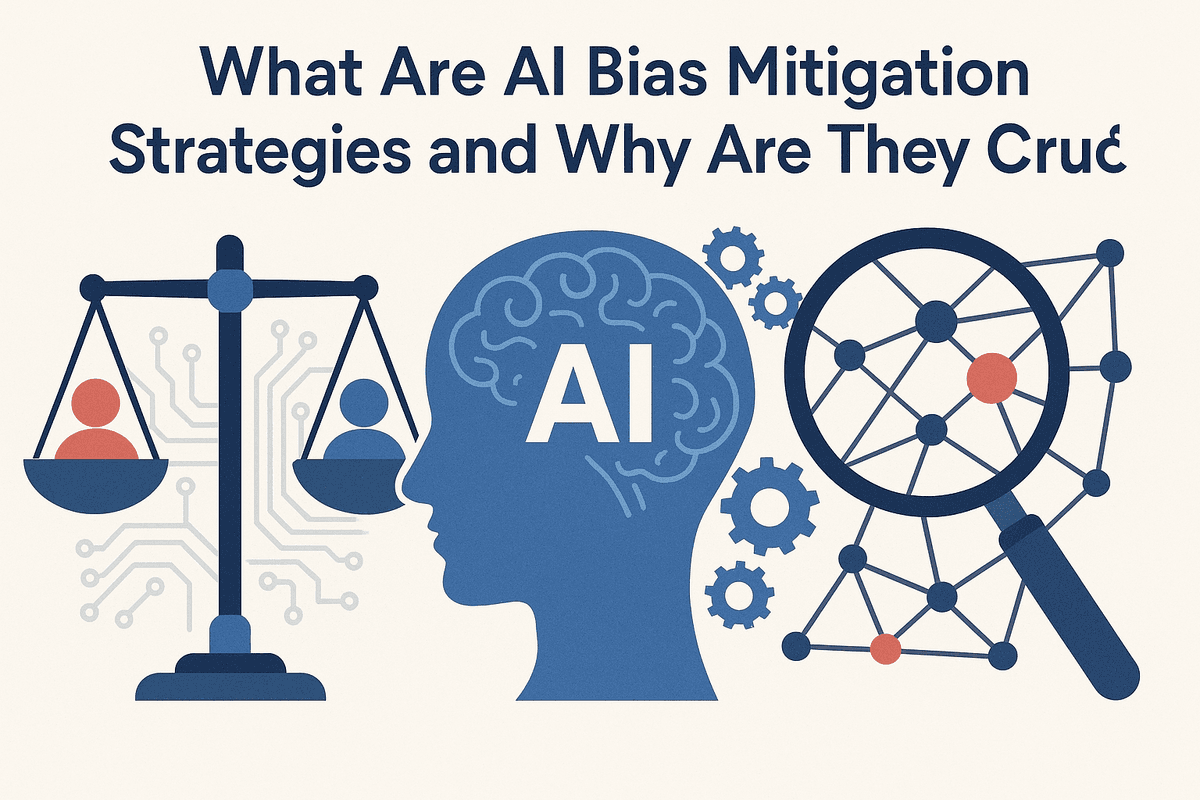
What Are AI Bias Mitigation Strategies and Why Are They Crucial?
Artificial intelligence is no longer a futuristic concept; it’s a present-day reality shaping critical decisions in hiring, finance, healthcare, and criminal justice. But what happens when these powerful systems inherit our own societal prejudices? The consequences can be severe, reinforcing systemic inequality and eroding trust. This is where AI bias mitigation strategies become not just important, but absolutely essential. They are the tools and techniques we use to build fairer, more equitable, and more reliable AI.
The Real-World Impact of Unchecked AI Bias
An AI system is only as good as the data it’s trained on. When that data reflects historical or societal biases, the AI model learns and often amplifies them. We've seen this happen in numerous high-profile cases:
- Biased Hiring Tools: An AI trained on historical hiring data from a male-dominated industry might learn to penalize resumes containing words associated with women, such as "women's chess club captain."
- Discriminatory Loan Approvals: If a model is trained on data where certain neighborhoods were historically denied loans, it may perpetuate that discrimination by flagging applicants from those same areas, regardless of their individual creditworthiness.
- Flawed Facial Recognition: Systems trained predominantly on images of light-skinned men have shown significantly higher error rates when identifying women and people of color, leading to false accusations and security risks.
These failures aren't just technical glitches; they have profound human and business consequences, leading to legal challenges, reputational damage, and the perpetuation of harmful stereotypes.
Defining Fairness: What Does an Unbiased AI System Look Like?
Before we can fix bias, we must define what "fairness" means in the context of our AI system. It's not a one-size-fits-all concept. A truly unbiased AI is an ideal, but a fair AI is a practical goal. Fairness can mean different things depending on the application:
- Demographic Parity: Aims for outcomes to be equal across different demographic groups. For example, a loan approval model would approve an equal percentage of qualified applicants from all racial groups.
- Equal Opportunity: Ensures the model performs equally well for all groups. For instance, a diagnostic AI should have the same true positive rate for men and women.
- Individual Fairness: Stipulates that similar individuals should be treated similarly by the model.
Choosing the right fairness metric is a critical first step in developing effective AI bias mitigation strategies.
An Overview of the Three Main Types of Mitigation
AI bias mitigation strategies are deliberate interventions that can be applied at different stages of the machine learning lifecycle. They are generally categorized into three main types:
Pre-processing
This is the first line of defense. Pre-processing techniques focus on fixing the data before it’s used to train the model. The goal is to create a more balanced and representative dataset by modifying, re-weighing, or re-sampling the training data to remove the biases learned by the model.
In-processing
These strategies are implemented during the model training process. They work by modifying the learning algorithm itself to reduce bias. This is often done by adding constraints to the model’s optimization function, forcing it to learn patterns that are not only predictive but also fair according to a chosen metric.
Post-processing
If you cannot modify the training data or the algorithm (perhaps you're using a pre-trained, black-box model), post-processing techniques can help. These methods adjust the model’s outputs after it has made a prediction. A common approach is to calibrate the model's decision threshold differently for various demographic groups to achieve more equitable outcomes.
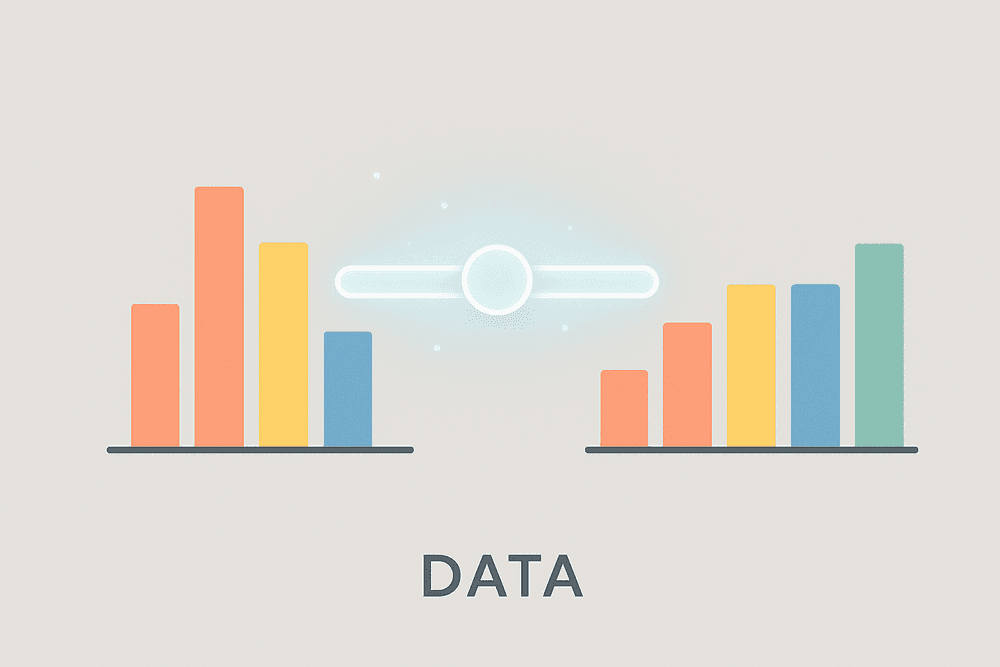
Pre-Processing AI Bias Mitigation Strategies: Preventing Bias at the Source
The most effective way to build fair AI is to address potential issues before a single line of model code is trained. Since AI models learn from the data they are given, biased data inevitably leads to biased outcomes. Pre-processing ai bias mitigation strategies focus on cleaning, balancing, and enriching your dataset to create a fair foundation. By preventing bias at the source, you can significantly reduce the need for more complex and costly interventions later in the development lifecycle.
How to Audit Your Training Data for Hidden Biases
Before you can fix a problem, you must find it. A thorough data audit is the critical first step in identifying imbalances and systemic skews that could compromise your model's fairness. This goes beyond simply checking for missing values; it involves a deep, investigative dive into the composition of your data.
Start by performing a statistical analysis of your dataset's demographics. Measure the distribution of data points across sensitive attributes like race, gender, age, and location. Are certain groups significantly underrepresented or overrepresented? For example, in a dataset for a hiring tool, does the data for "successful hires" disproportionately feature one gender or ethnic group?
Tools like IBM’s AI Fairness 360 and Google’s What-If Tool can help automate this process, allowing you to slice data and visualize distributions. Key metrics to watch for include:
- Class Imbalance: Ensure minority groups are adequately represented in all outcome classes.
- Representation Gaps: Identify if entire subgroups are missing from the data.
- Proxy Variables: Look for seemingly neutral features (like ZIP codes) that correlate strongly with sensitive attributes and could introduce bias indirectly.
Mastering Data Augmentation and Re-sampling Techniques
Once you've identified imbalances, your next task is to correct them. Re-sampling and data augmentation are powerful techniques for creating a more balanced dataset for your model to train on. These methods are cornerstone ai bias mitigation strategies at the pre-processing stage.
- Re-sampling: This technique adjusts the class distribution of your training data directly.
- Oversampling: This involves duplicating samples from the underrepresented minority class to give them more weight during training. More advanced methods, like the Synthetic Minority Over-sampling Technique (SMOTE), create new, synthetic data points that are similar to existing minority class samples, providing richer information for the model.
- Undersampling: This involves removing samples from the overrepresented majority class. While effective, it should be used cautiously as it can lead to the loss of valuable information.
- Data Augmentation: Instead of just duplicating data, augmentation creates new, modified data points. For image data, this could mean rotating, flipping, or adjusting the brightness of images of an underrepresented group. For text, it could involve replacing words with synonyms to create new sentences.
Best Practices for Collecting Diverse and Representative Data
While fixing existing data is crucial, the ultimate goal is to collect fair and representative data from the very beginning. Proactive data collection is the most robust defense against AI bias. Adopting a "fairness-by-design" approach means embedding equity into your data gathering processes.
- Define and Stratify: Clearly define the populations your AI will impact and create a stratified sampling plan to ensure all relevant subgroups are included in proportion to their real-world presence, or even oversampled if they are a critical minority.
- Diversify Your Sources: Avoid collecting data from a single source, which is likely to have its own inherent biases. Pull data from different geographic locations, cultural contexts, and platforms to create a more holistic and balanced view.
- Engage Domain Experts and Communities: Collaborate with sociologists, ethicists, and leaders from the communities your AI will affect. They can provide invaluable insights into potential blind spots, cultural nuances, and historical inequities that may not be visible in raw data alone.
In-Processing Strategies: Building Fairness Directly Into Your Models
While pre-processing focuses on fixing data, in-processing strategies modify the machine learning algorithm itself during the training phase. These powerful ai bias mitigation strategies integrate fairness directly into the model's learning process, compelling it to find less discriminatory patterns from the outset. This approach intervenes at the heart of the system, aiming to build fairer models from the ground up rather than correcting them after the fact. By adjusting how the model learns, we can proactively steer it toward equitable outcomes.
Using Adversarial Debiasing to Train Fairer Models
One of the most innovative in-processing techniques is adversarial debiasing. Imagine a game between two competing neural networks: a "Predictor" and an "Adversary."
- The Predictor Model works to make accurate predictions based on the input data (e.g., forecasting job performance).
- The Adversary Model simultaneously tries to guess a sensitive attribute (e.g., race or gender) using only the Predictor's output.
The goal is to train the Predictor to succeed at its task while causing the Adversary to fail. During training, the Predictor is penalized if the Adversary can successfully identify the sensitive attribute from its predictions. This forces the Predictor to learn representations of the data that are not only accurate but also scrubbed of information correlated with protected characteristics. The result is a model whose decisions are demonstrably more independent of the sensitive attributes it was trained to ignore.
Applying Regularization and Constraints to Reduce Discriminatory Outcomes
A more direct method for enforcing fairness is to incorporate it into the model's core objective through regularization. In standard machine learning, a model is trained to minimize a "loss function," which is essentially a measure of its prediction error. Fairness-aware regularization adds a second component to this function: a penalty for unfairness.
This penalty is calculated based on a chosen fairness metric. For example, you could add a term that penalizes the model if the rate of positive outcomes (like loan approvals) differs significantly between demographic groups. The algorithm must then find a balance, minimizing both the prediction error and the fairness penalty. This explicitly makes fairness a part of the optimization problem. These ai bias mitigation strategies are highly tunable, allowing data scientists to control the trade-off between model accuracy and adherence to specific fairness constraints.
How to Choose the Right Fairness-Aware Algorithm for Your AI Project
Selecting the right in-processing strategy isn't a one-size-fits-all decision. It requires a thoughtful approach tailored to your specific project, data, and ethical goals.
- Define Your Fairness Metric First: Before you choose an algorithm, your team must decide what "fairness" means in your context. Are you aiming for demographic parity (equal outcomes across groups), equal opportunity (equal true positive rates), or another definition? Your chosen metric will guide your selection, as some algorithms are designed to optimize for specific fairness definitions.
- Consider Your Model Architecture: The complexity of your model matters. Adversarial debiasing is highly effective but best suited for complex neural networks. Regularization and constraint-based methods are more versatile and can be applied to a wider range of models, including logistic regression and gradient-boosted trees.
- Acknowledge the Accuracy-Fairness Trade-off: Actively reducing bias can sometimes lead to a slight decrease in the model's overall predictive accuracy. It is crucial to quantify this trade-off and for business stakeholders to determine what constitutes an acceptable balance. This is not just a technical decision but an ethical and business one.
- Prototype, Test, and Iterate: The best approach is often discovered through experimentation. Implement two or three promising in-processing techniques, train the models, and rigorously evaluate their performance on a held-out test set. Compare not only their accuracy but also their results against your chosen fairness metrics to make an evidence-based decision.

Post-Processing AI Bias Mitigation Strategies: Adjusting a Trained Model’s Predictions
Once a model has been trained, its predictions aren't set in stone. Post-processing ai bias mitigation strategies operate directly on the model's output, adjusting its predictions to achieve fairer outcomes without altering the underlying model architecture or retraining it. This approach is particularly valuable when you have limited access to the training data or the model itself, treating it as a "black box."
The most common post-processing technique is calibrating the model's decision threshold. In a binary classification task, a model often outputs a probability score (e.g., the likelihood of a loan applicant defaulting). A single threshold (typically 0.5) is used to convert this score into a decision (e.g., approve or deny). However, a one-size-fits-all threshold can impact different demographic groups unequally. For instance, it might lead to a significantly higher rate of false negatives (wrongly denying qualified applicants) for one group compared to another. Post-processing corrects this by setting different decision thresholds for different groups to equalize performance.
A Practical Guide to Equalized Odds and Equal Opportunity
To apply group-specific thresholds effectively, we need to define our fairness goals using precise metrics. Two of the most prominent are Equal Opportunity and Equalized Odds.
- Equal Opportunity: This metric focuses on ensuring that the model performs equally well for the "advantaged" or positive class across groups. It mandates that the True Positive Rate (TPR), or sensitivity, is the same for each group. In a hiring context, this means that qualified candidates from all demographic groups have an equal probability of being correctly identified by the model. To implement this, you would adjust the decision threshold for each group until their TPRs are as close as possible.
- Equalized Odds: This is a stricter and more comprehensive fairness criterion. It requires that both the True Positive Rate (TPR) and the False Positive Rate (FPR) be equal across all groups. Continuing the hiring example, this means not only do qualified candidates have an equal chance of being correctly identified (equal TPR), but unqualified candidates also have an equal chance of being incorrectly identified as qualified (equal FPR). Achieving Equalized Odds ensures that the model's predictions are statistically independent of group membership, providing a stronger guarantee of fairness.
When to Use Post-Processing Over Other Mitigation Approaches
While pre-processing (fixing data) and in-processing (modifying the algorithm) are powerful, post-processing is the ideal choice in specific scenarios:
- When Working with Black-Box Models: If you are using a proprietary, third-party model where you cannot access the training data or internal parameters, post-processing is often the only feasible method for bias mitigation.
- To Minimize Development Costs: Retraining a complex, resource-intensive model can be prohibitively expensive and time-consuming. Post-processing offers a lightweight, computationally cheaper alternative to improve fairness on an existing model.
- For Rapid Deployment and Intervention: When a bias is discovered in a production model, post-processing provides a quick fix. It allows you to immediately correct for unfair outcomes while your team works on a more permanent, long-term solution like data collection or model redesign.
It’s important to note the primary trade-off: post-processing can sometimes reduce the model's overall accuracy. By adjusting thresholds to satisfy a fairness constraint, you might inevitably misclassify some individuals who would have been correctly classified by the original, uncalibrated model. This highlights the delicate balance that must be struck when implementing ai bias mitigation strategies.
Bringing It All Together: Real-World Use Cases and Best Practices
Theory is essential, but the true test of any framework is its application in the real world. Moving from abstract concepts to concrete actions is where the most impactful progress is made. Implementing robust ai bias mitigation strategies requires a combination of technical diligence, human oversight, and a commitment to continuous improvement. Let's explore how these elements converge in practical scenarios.
Case Study: How a Healthcare AI Reduced Diagnostic Bias
A leading medical imaging company developed an AI model to help dermatologists detect early signs of melanoma. During internal audits, they discovered a critical flaw: the model’s accuracy was significantly lower for patients with darker skin tones. The root cause was a training dataset overwhelmingly composed of images from light-skinned individuals.
To address this, the team implemented a multi-faceted mitigation strategy:
- Data Augmentation & Sourcing: They launched a targeted initiative to ethically source more high-quality images of skin conditions on diverse skin tones. In parallel, they used generative AI techniques (GANs) to synthesize realistic training images of underrepresented skin types, carefully validated by clinical experts.
- Algorithmic Re-weighting: They adjusted the model's learning algorithm to assign a higher "weight" or importance to the images from underrepresented groups. This forced the model to pay closer attention to learning the features specific to these groups, rather than treating them as outliers.
The result was a transformed model. Post-mitigation, the diagnostic accuracy for patients with darker skin tones increased by over 15%, achieving parity with other groups. This case highlights how proactive auditing and targeted technical interventions can directly lead to more equitable and life-saving healthcare outcomes.
Creating a Human-in-the-Loop (HITL) Feedback System
An AI model is never truly "finished." A Human-in-the-Loop (HITL) system builds a bridge between automated decisions and human expertise, creating a powerful, ongoing feedback cycle. This is one of the most effective ai bias mitigation strategies for dynamic environments.
Here’s how to structure an HITL system for fairness:
- Flag for Review: The system automatically flags predictions for human review based on specific triggers. This could be when the AI’s confidence score is low, when the decision involves a historically disadvantaged group, or when the output is an outlier compared to previous decisions.
- Diversify Your Experts: The "humans" in the loop shouldn't be a monolithic group. For a loan application AI, this group should include not just data scientists but also loan officers, compliance specialists, and even sociologists who can identify subtle, context-specific biases that a purely technical review might miss.
- Structured Feedback Mechanism: Experts don’t just correct an outcome; they provide structured reasons for the correction. Was the data misleading? Did the model misinterpret a cultural nuance? This qualitative data is gold. It’s fed back into the system to retrain and refine the model, ensuring it continuously learns and adapts.
A Checklist for Continuous Monitoring and Regular Auditing
Deploying a "fair" model is just the beginning. Bias can creep back in as data patterns shift and the world changes. A rigorous monitoring and auditing schedule is non-negotiable.
- ✅ Monitor for Data and Concept Drift: Regularly track the statistical properties of your input data. Are the demographics of your user base changing? This "data drift" can invalidate your initial fairness assumptions.
- ✅ Segment Performance Metrics: Don't rely on overall accuracy. Continuously monitor key performance metrics (like false positive/negative rates) for different demographic subgroups (e.g., by age, gender, race, location). Set up alerts to be notified immediately of any significant performance gaps.
- ✅ Track Fairness Metrics: Define key fairness metrics relevant to your use case (e.g., Demographic Parity, Equal Opportunity). Plot these metrics on a dashboard over time to ensure they remain within acceptable, pre-defined thresholds.
- ✅ Conduct Regular Audits: Schedule periodic, in-depth audits. It’s a best practice to involve third-party, independent auditors to provide an unbiased assessment of your model’s fairness and the effectiveness of your mitigation efforts.
- ✅ Review Model Explainability: Regularly use tools like SHAP or LIME to ensure that you can still explain the model’s decisions, especially for sensitive or high-impact predictions. If the model becomes a "black box," you lose the ability to govern it effectively.

Conclusion: The Future of Fair and Ethical AI Is Continuous Mitigation
The journey to ethical AI is not about reaching a final destination where bias is completely eradicated. Instead, it’s about embracing a continuous, vigilant process of improvement. As we've explored, AI bias stems from deeply ingrained societal patterns reflected in our data, the design of our algorithms, and the very questions we ask our systems to answer. The most effective ai bias mitigation strategies are not a single solution but a comprehensive framework built on awareness, action, and adaptation.
Treating fairness as a one-time checklist item is a recipe for failure. The true goal is to embed ethical considerations into the entire AI lifecycle, from initial concept to long-term deployment and monitoring. This requires a cultural shift—one that prioritizes equity alongside accuracy and efficiency.
Key Takeaways and Your First Steps
To turn theory into practice, let’s distill our discussion into core principles and immediate actions you can take to foster fairness in your AI initiatives.
Core Principles to Remember:
- Bias is multifaceted: It can be introduced at any stage—through biased training data, flawed algorithmic assumptions, or human-in-the-loop feedback loops. A successful strategy must address all potential sources.
- Context is king: There is no universal definition of "fairness." You must define what fairness means for your specific application and the communities it impacts, considering different metrics like demographic parity or equal opportunity.
- Proactivity over reactivity: It is far more effective and less costly to design for fairness from the outset than to remediate a biased system after it has caused harm.
Your First Steps:
- Assemble a Diverse Team: Go beyond data scientists and engineers. Include ethicists, sociologists, domain experts, and representatives from the communities your AI will affect.
- Conduct a Bias Audit: Before you build, analyze your data. Use exploratory data analysis to identify skews and underrepresentation. If you have an existing model, audit its predictions across different demographic groups.
- Establish Governance: Create clear policies for data handling, model development, and ongoing monitoring. Document your fairness metrics and mitigation decisions to ensure transparency and accountability.
Essential Tools to Help Implement AI Bias Mitigation Strategies
You don't have to start from scratch. A growing ecosystem of open-source tools can help you detect, measure, and mitigate bias in your machine learning models.
- IBM AI Fairness 360: A comprehensive and extensible open-source toolkit containing over 70 fairness metrics and 10 state-of-the-art bias mitigation algorithms. It’s an excellent starting point for both diagnosing and treating bias.
- Google's What-If Tool: Integrated into TensorBoard, this tool provides an interactive visual interface for probing model behavior. You can analyze counterfactuals, understand model performance across different subgroups, and identify fairness issues.
- Microsoft's Fairlearn: This Python package empowers developers to assess and improve the fairness of their systems. It focuses on group fairness, ensuring that a model’s benefits or harms are not disproportionately distributed across different populations.
Embracing an Ongoing Commitment to AI Fairness
Ultimately, building fair and ethical AI is a reflection of our values. It's an ongoing commitment to vigilance, humility, and continuous learning. The models we deploy today will shape the world of tomorrow, influencing everything from loan applications to medical diagnoses. By embedding robust ai bias mitigation strategies into our workflows, we move beyond simply building functional AI and start building trustworthy AI. This continuous cycle of measuring, mitigating, and monitoring is the only sustainable path toward an AI-powered future that is equitable for everyone.