
July 12, 2025
How AI in Identity and Access Management is Redefining
The Unseen Guardian: How AI in Identity and Access Management is Redefining Security
In the digital world, identity is the new perimeter. Every login, every data request, and every system interaction hinges on one critical question: "Are you who you say you are, and should you be doing what you're trying to do?" For decades, the discipline of Identity and Access Management (IAM) has been our primary answer to this question.
The Foundation: Understanding Traditional IAM
At its core, traditional Identity and Access Management is a framework of policies and technologies designed to ensure that the right individuals have the right access to the right resources at the right times. Think of it as the digital gatekeeper for an organization. Its primary functions are:
- Authentication: Verifying a user's identity, typically with something they know (a password), something they have (a security token), or something they are (a fingerprint). This is the "who you are" part.
- Authorization: Granting or denying specific permissions based on a user's verified identity. This determines what an authenticated user is allowed to see and do.
Legacy IAM systems rely heavily on predefined, static rules. A system administrator manually configures policies, such as "Users in the 'Marketing' group can access the CRM, but not the development servers." This rule-based approach, which includes technologies like Single Sign-On (SSO) and Multi-Factor Authentication (MFA), has served as a foundational layer of corporate security for years. But the landscape it was built to protect has changed dramatically.
The Cracks in the Armor: Why Legacy IAM is Falling Short
The rigid, rule-based nature of traditional IAM is struggling to keep pace with the modern threat landscape. The "castle-and-moat" security model, where everything inside the network was trusted and everything outside was not, is obsolete. Today, businesses operate in a borderless environment of cloud applications, remote workforces, and countless IoT devices.
This new reality exposes the critical weaknesses of legacy IAM:
- Static Rules vs. Dynamic Threats: Attackers use sophisticated, evolving tactics. They don't follow a predictable script. A rule-based system cannot adapt to a novel phishing attack or detect an insider threat based on subtle deviations in behavior.
- Manual Overload and Human Error: Manually provisioning, reviewing, and de-provisioning access for thousands of users across hundreds of applications is a monumental task. This process is slow, inefficient, and ripe for human error, leaving dangerous security gaps like orphaned accounts or excessive privileges.
- Alert Fatigue: Legacy systems often generate a high volume of low-context security alerts. Overwhelmed IT teams struggle to distinguish real threats from false positives, leading to critical incidents being missed.
The Evolution: A New Era of AI in Identity and Access Management
This is where the paradigm shifts. The evolution from manual rules to intelligent systems marks the arrival of AI in identity and access management. Instead of relying solely on what a human administrator has programmed, an AI-powered IAM solution learns, adapts, and makes decisions in real time.
By analyzing massive datasets—including login times, geographic locations, device types, user behavior, and network requests—AI can build a dynamic, contextual understanding of what constitutes "normal" for every single user. It moves beyond static rules to provide risk-based, probabilistic security. It doesn't just ask if the password is correct; it asks if this login attempt makes sense based on a thousand other data points.
This infusion of AI in identity and access management transforms the gatekeeper from a rigid sentry into an intelligent, unseen guardian. It works silently in the background, capable of spotting the faintest signs of a compromise, automating complex access decisions, and strengthening security without creating friction for legitimate users. It represents a fundamental leap forward, promising a more resilient, adaptive, and efficient way to manage identity in an increasingly complex digital world.
Core Capabilities: How AI in Identity and Access Management Enhances Security
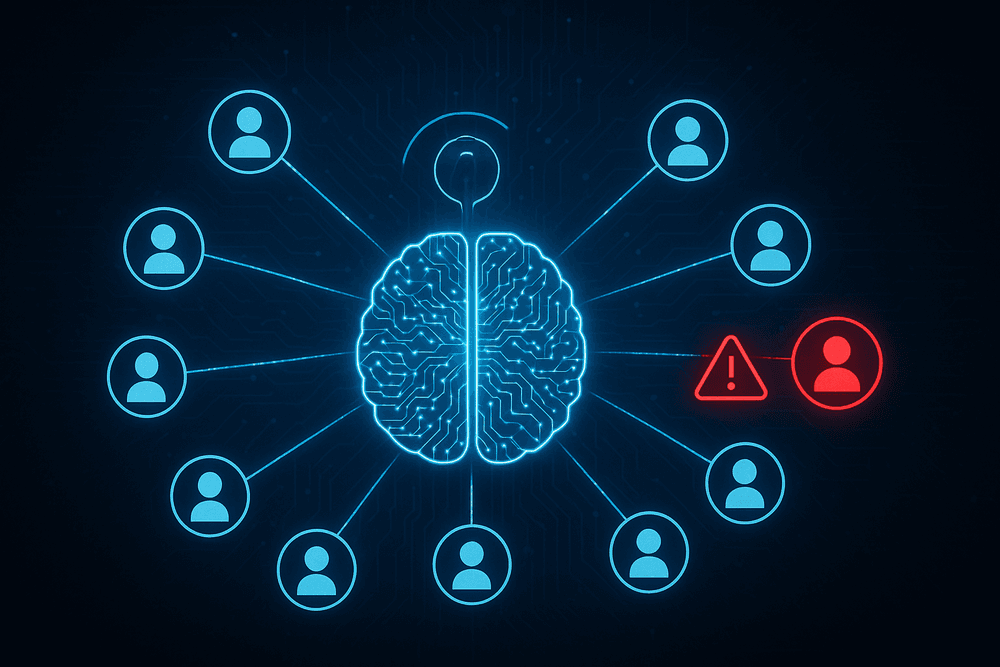
Traditional Identity and Access Management (IAM) systems operate on a rigid, rules-based framework. They’re good at what they do, but they struggle to keep pace with the dynamic and sophisticated nature of modern cyber threats. This is where the integration of AI in identity and access management creates a paradigm shift, transforming static defenses into a proactive, intelligent security nervous system. By leveraging machine learning algorithms and advanced analytics, AI-powered IAM solutions can understand context, predict risks, and automate complex processes, delivering a level of security and efficiency previously unattainable.
Let's explore the core capabilities that make this technology a game-changer.
Implementing Adaptive Authentication Based on User Behavior
Static passwords and basic multi-factor authentication (MFA) are no longer enough. AI introduces adaptive, or risk-based, authentication. Instead of treating every login attempt the same, an AI-powered system continuously analyzes a wide array of contextual signals in real-time. These can include:
- Geographic location and IP address: Is the user logging in from a familiar location or a new country?
- Device health and fingerprint: Is this the user's usual, trusted device?
- Time of day and user behavior: Is the login attempt consistent with the user's normal working hours and digital habits?
- Network intelligence: Is the request coming from a known malicious network?
The AI engine calculates a real-time risk score based on these signals. A low-risk login from a trusted device and location might proceed seamlessly, while a high-risk attempt from an unusual location could trigger a step-up authentication challenge, like biometrics or a security key. This enhances security without adding unnecessary friction for legitimate users.
Automating User Provisioning and Access Reviews
The employee lifecycle—onboarding, role changes, and offboarding—is a critical IAM function fraught with potential for error. Manual provisioning is slow and can lead to "privilege creep," where users accumulate unnecessary access rights over time. AI in identity and access management automates and optimizes this entire process. AI can analyze a new employee's role, department, and team structure to automatically grant the appropriate "birthright" permissions.
Furthermore, AI streamlines periodic access reviews. Instead of burdening managers with manually reviewing long lists of permissions, AI can analyze usage patterns and provide intelligent recommendations, flagging dormant accounts or excessive privileges that should be revoked. This dramatically improves operational efficiency and reduces the attack surface.
Detecting Insider Threats with AI-Powered Behavioral Analytics
Some of the most damaging threats come from within. Malicious insiders or compromised accounts can be incredibly difficult to detect with traditional tools that look for known bad signatures. AI-powered IAM excels here by using User and Entity Behavior Analytics (UEBA). The system first establishes a baseline of normal behavior for every user. It then continuously monitors for anomalies and deviations from this baseline, such as:
- Accessing sensitive data for the first time or outside of normal job functions.
- Logging in at unusual hours or from multiple locations in a short period.
- Attempting to escalate privileges or bypass security controls.
By flagging these suspicious activities in real-time, AI enables security teams to investigate and neutralize insider threats before a major breach occurs.
Streamlining Compliance with Intelligent Reporting and Controls
Meeting compliance mandates like GDPR, SOX, and HIPAA requires meticulous record-keeping and proof of control. AI-powered platforms make audits less painful by automating the generation of detailed access reports and logs. They provide a clear, auditable trail of who accessed what, when, and why. More importantly, AI in identity and access management can proactively enforce compliance policies. It can automatically identify and remediate policy violations, such as toxic combinations of access rights (separation of duties conflicts), ensuring the organization maintains a state of continuous compliance rather than scrambling before an audit.
Real-World Use Cases of AI in Identity and Access Management
The theoretical power of AI becomes tangible when applied to real-world security challenges. Across industries, organizations are moving beyond traditional, static IAM systems to embrace intelligent, adaptive frameworks. These examples showcase how the practical application of AI in identity and access management is not a future concept but a present-day necessity for robust security and operational agility.
Fortifying Finance: How Banks Use AI to Prevent Fraudulent Access
For financial institutions, the stakes are incredibly high. A single compromised account can lead to significant financial loss, reputational damage, and regulatory penalties. Here, AI-driven IAM acts as a vigilant, 24/7 security analyst. Instead of relying on a simple password, AI algorithms continuously analyze a rich tapestry of contextual data for every login attempt and transaction.
This includes:
- Behavioral Biometrics: Analyzing typing cadence, mouse movements, and device handling to create a unique user profile.
- Geospatial Analysis: Flagging logins from unusual or impossible travel locations.
- Device Fingerprinting: Assessing the reputation and security posture of the device used for access.
When a user attempts to log in from a new device in a different country just minutes after a session in their home city, the AI model instantly recognizes the anomaly. Rather than an outright block, it can trigger adaptive authentication, demanding a biometric scan or a one-time code. This real-time risk assessment is critical for preventing account takeover (ATO) fraud and ensuring a secure yet frictionless customer experience.
Securing Patient Data: Intelligent IAM Policies in Healthcare
In healthcare, protecting patient data is paramount. Regulations like HIPAA mandate stringent controls over who can access Protected Health Information (PHI). Traditional Role-Based Access Control (RBAC) is a good start, but it can be rigid. The application of AI in identity and access management introduces a much-needed layer of dynamic, context-aware security.
AI-powered systems learn the typical access patterns of every user. For example, a nurse accessing a patient’s chart on their assigned floor during their shift is normal behavior. However, if that same nurse’s credentials are used to access hundreds of records for patients they aren't treating, late at night from an unrecognized network, the AI flags this as high-risk activity. The system can automatically revoke access and alert security teams, mitigating a potential data breach—whether from an external attacker or a malicious insider—before sensitive data is compromised. This intelligent enforcement of the principle of least privilege ensures that access is granted not just based on role, but on legitimate need and context.
Enabling the Modern Workforce: AI-Driven Access for Remote Teams
The shift to remote and hybrid work has dissolved the traditional corporate perimeter, introducing complex security challenges. AI-powered IAM is the cornerstone of modern security models like Zero Trust, which operate on the principle of "never trust, always verify." For a distributed workforce, AI in identity and access management creates a dynamic, individual security perimeter around each user.
Instead of a one-time login granting broad network access, AI continuously evaluates risk for every single access request. It assesses dozens of signals in real time: Is the employee on a secure home Wi-Fi network or a risky public hotspot? Is their laptop’s antivirus software up to date? Are they trying to access a low-risk document or a highly sensitive financial database? Based on this composite risk score, the AI can grant, deny, or limit access. For instance, it might allow access to email but block a download from the CRM if the user is on an untrusted network. This granular, risk-based approach enables employees to work securely and productively from anywhere, without compromising corporate data.
Best Practices for Implementing AI in Your IAM Strategy
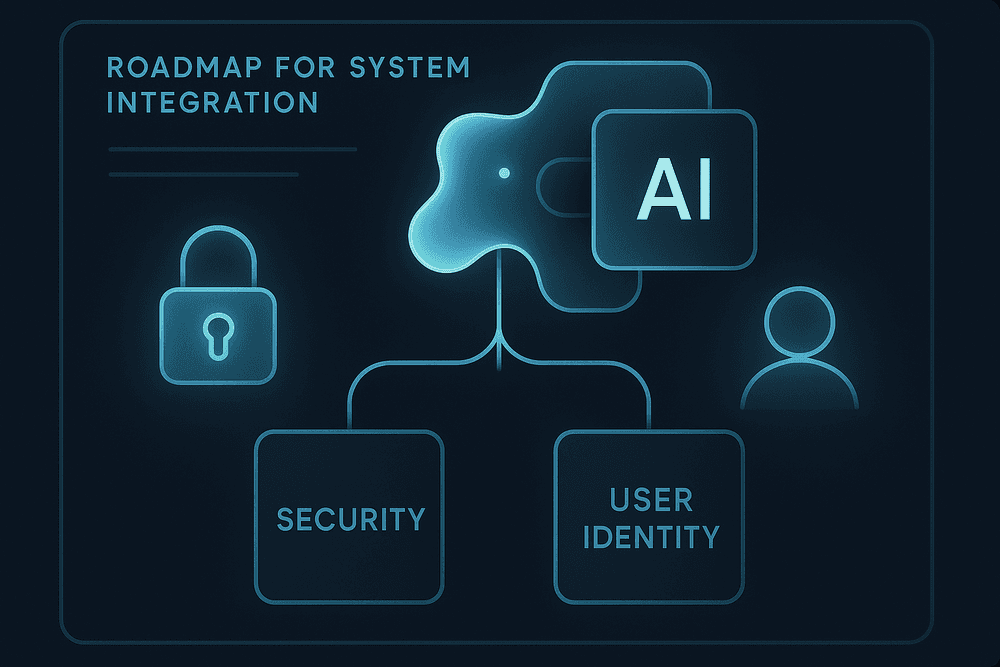
Integrating artificial intelligence into your Identity and Access Management framework is a powerful move, but it requires a thoughtful and strategic approach. A successful implementation goes beyond just plugging in new software; it involves careful planning, ethical considerations, and a commitment to change management. Follow these best practices to ensure your transition to AI in identity and access management is smooth, secure, and effective.
Choose the Right Partner and Tools
The market for AI-powered IAM solutions is growing, and not all vendors are created equal. Your first step is to conduct a thorough evaluation to find a partner that aligns with your organization's specific needs and values.
- Look for Transparency: Avoid "black box" solutions. Ask potential vendors how their algorithms work. A trustworthy partner will be transparent about their AI models, data sources, and decision-making processes, offering what is often called Explainable AI (XAI).
- Assess Integration Capabilities: The right tool must integrate seamlessly with your existing IT ecosystem, including HR systems, cloud platforms, and legacy applications. Verify the vendor’s API capabilities and track record with similar integrations.
- Prioritize Scalability: Your IAM needs will evolve. Choose a solution that can scale with your organization, whether you’re adding more users, applications, or data sources.
Execute a Phased and Strategic Rollout
A "big bang" approach to implementing AI in identity and access management is a recipe for disruption. Instead, adopt a phased rollout to minimize risk and maximize buy-in.
- Start with a Pilot Program: Identify a specific, low-risk use case to test the new system, such as adaptive authentication for a single department or automated provisioning for a non-critical application.
- Define Success Metrics: Establish clear Key Performance Indicators (KPIs) before you begin. This could include a reduction in help desk tickets for password resets, faster user onboarding times, or a measurable decrease in false-positive security alerts.
- Monitor, Gather Feedback, and Iterate: Closely monitor the pilot's performance against your KPIs. Actively solicit feedback from both the IT team and the end-users. Use these insights to fine-tune configurations and processes before expanding the rollout.
- Scale Incrementally: Once the pilot is successful, gradually expand the AI capabilities to other departments, applications, and use cases across the organization.
Confront Privacy and Algorithmic Bias Head-On
AI's ability to analyze vast amounts of data is its greatest strength, but it also presents significant ethical challenges. Proactively addressing privacy and bias is non-negotiable.
- Ensure Data Privacy: Understand how the AI tool collects, processes, and stores user data. Ensure its practices are fully compliant with regulations like GDPR and CCPA. Data used to train AI in identity and access management models should be anonymized where possible.
- Audit for Algorithmic Bias: AI models learn from the data they are given. If historical data contains biases, the AI will perpetuate them, potentially flagging certain user demographics unfairly. Regularly audit your AI models for bias and work with your vendor to ensure the training data is diverse and representative.
Invest in Your Team and Manage the Change
Technology is only half the equation. Your people are critical to success.
- Train Your Technical Teams: Your IT and security staff need to understand how to manage, interpret, and, when necessary, override the AI's recommendations. Provide comprehensive training on the new platform's dashboard, alert systems, and analytical tools.
- Communicate with End-Users: For most employees, the change will be positive—think fewer passwords and seamless access. Communicate these benefits clearly to foster enthusiasm rather than resistance. Explain why the changes are being made, focusing on enhanced security and improved user experience.
- Foster a New Culture: Implementing AI in identity and access management shifts the security paradigm from reactive to proactive. Encourage a culture where employees see themselves as partners in security, supported by intelligent, unobtrusive technology.
The Future is Now: Emerging Trends in AI and IAM
The landscape of cybersecurity is in constant flux, and the evolution of AI in identity and access management is accelerating this change. While current applications like adaptive MFA and automated provisioning have already proven their value, a new wave of innovation is on the horizon, promising to create even more intelligent, proactive, and user-centric security paradigms. These emerging trends aren't science fiction; they are the next logical steps in securing our digital world.
The Rise of Truly Passwordless Authentication
The password has long been the weakest link in digital security. While biometrics have offered a glimpse of a passwordless future, AI is poised to make it a seamless and continuous reality. The next generation of passwordless authentication goes beyond a one-time fingerprint or facial scan. Instead, it relies on AI to perform continuous, invisible authentication based on a rich tapestry of behavioral biometrics.
AI-powered IAM systems can build a unique, dynamic profile for each user, analyzing dozens of data points in real-time. These include:
- Typing cadence and speed: How a user types on their keyboard.
- Mouse movement patterns: The unique way a user navigates their screen.
- Device location and network: The typical geographic locations and networks a user connects from.
- Application usage habits: The order and time of day a user accesses specific applications.
If any of these patterns deviate significantly, the AI can instantly increase the risk score and trigger a step-up authentication challenge, like a push notification. This creates a frictionless experience for legitimate users while erecting an invisible, highly effective barrier against impostors.
Predictive Analytics for Proactive Threat Identification
Traditionally, security teams have operated in a reactive mode, responding to alerts after a potential breach has already been initiated. The future of AI in identity and access management lies in shifting from reaction to prediction. By leveraging machine learning models, predictive analytics can identify threats before they fully materialize.
These AI engines sift through massive datasets, correlating subtle signals that would be impossible for a human analyst to spot. They learn the baseline of normal behavior for every user and entity—from an executive's travel schedule to a service account's API calls. When the AI detects micro-anomalies—such as an employee beginning to access and download files they’ve never touched before, or a login from an uncharacteristic location following a phishing email campaign—it can predict a high probability of an impending account takeover. This allows IAM systems to proactively intervene by automatically isolating the user, restricting access to sensitive data, or notifying a security analyst to investigate before any damage is done.
Integrating Decentralized Identity with AI-Powered IAM
A paradigm-shifting trend is the rise of Decentralized Identity (DID) and Self-Sovereign Identity (SSI), where users control their own identity data in a personal digital wallet. This gives individuals unprecedented control and privacy. However, it also presents a new challenge for organizations: how do you trust these user-provided credentials?
This is where AI becomes the critical bridge. An AI-powered IAM framework can intelligently verify these decentralized credentials. The AI won’t just check the cryptographic signature; it will assess the risk of the transaction in real-time. It can analyze the reputation of the credential issuer, correlate the request with contextual data (Is this user trying to access a financial system from a brand-new device?), and use behavioral analytics to ensure the person presenting the DID is the legitimate owner. This powerful combination allows organizations to embrace a user-centric identity model without sacrificing security, ensuring trust in a decentralized digital ecosystem.

Conclusion: Fortify Your Defenses with AI-Powered IAM
The digital perimeter has dissolved. Your data, applications, and users are everywhere, creating an attack surface that is vast and constantly in flux. Traditional, rule-based Identity and Access Management systems, once the bedrock of enterprise security, are now struggling to keep pace with the sophistication of modern threats. As we've explored, the integration of AI in identity and access management isn't just an incremental upgrade; it's a fundamental paradigm shift. It transforms your IAM program from a static gatekeeper into a dynamic, intelligent, and predictive defense system capable of securing your organization for the future.
The Unmistakable Advantages of AI-Powered IAM
By moving beyond static rules and embracing intelligent automation, your organization can unlock a host of transformative benefits. This evolution reinforces security from the core, ensuring that the right individuals have the right access, at the right time, for the right reasons.
- Proactive Threat Neutralization: AI moves beyond reactive alerts. By analyzing behavioral patterns in real time, it detects anomalies and potential threats—like impossible travel scenarios or unusual access requests—and can automatically trigger mitigating actions before they escalate into breaches.
- Streamlined Operational Efficiency: Imagine reclaiming countless hours lost to manual provisioning, deprovisioning, and access certification. AI automates these repetitive tasks with precision, freeing up your valuable IT and security teams to focus on high-impact strategic initiatives.
- Frictionless User Experience: Security and convenience are no longer at odds. AI-powered adaptive authentication intelligently assesses the risk of each login attempt, providing seamless, passwordless access for low-risk users while stepping up verification only when suspicious activity is detected.
- Intelligent Compliance and Governance: AI simplifies the complex process of proving compliance. It provides deep visibility into who has access to what, automates cumbersome access reviews, and generates detailed audit trails to ensure you're always prepared for regulatory scrutiny.
Your Roadmap to a Smarter Security Posture
Embarking on this journey requires a strategic approach. Follow these steps to build a robust and intelligent identity framework:
- Evaluate Your Foundation: Begin with an honest audit of your current IAM infrastructure. Where are the gaps? What are your most significant pain points? Understanding your current state is the critical first step.
- Define Your Strategic Goals: What do you want to achieve? Are you aiming to eliminate credential theft, reduce operational overhead, or enhance user productivity? Clear objectives will guide your implementation of AI in identity and access management.
- Choose the Right Partner: Not all AI solutions are created equal. Look for a provider with a proven track record in applying machine learning to IAM challenges. Prioritize solutions that offer seamless integration, scalability, and transparent AI models.
- Implement and Iterate: Don't try to boil the ocean. Start with a pilot program focused on a high-impact area, such as securing privileged accounts or a critical cloud application. Demonstrate value, gather feedback, and scale your deployment intelligently across the organization.
Request Your Personalized AI-IAM Readiness Assessment
The theoretical benefits are clear, but how does this translate to your unique environment? Understanding your organization’s specific vulnerabilities and opportunities is the key to a successful transition.
Take the definitive next step toward a more secure and efficient future. We invite you to request a complimentary, personalized AI-IAM Readiness Assessment. Our experts will work with you to analyze your current identity framework, identify key areas for improvement, and create a tailored roadmap that aligns with your business objectives. Discover precisely how leveraging AI in identity and access management can fortify your defenses and unlock new levels of operational excellence.
Contact our team today to schedule your assessment and begin building a truly intelligent security foundation.