
June 16, 2025
An Introduction to API Integration AI
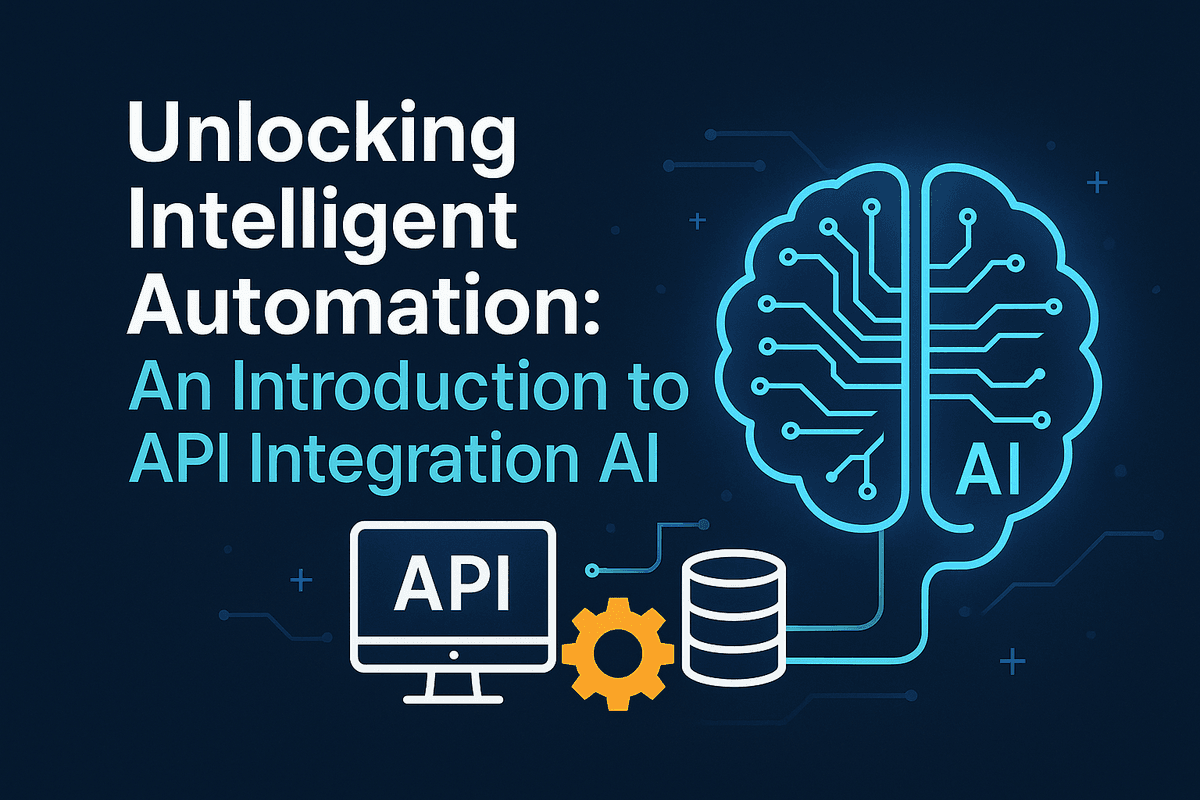
Unlocking Intelligent Automation: An Introduction to API Integration AI
In today's fast-paced digital landscape, businesses and users alike demand software that isn't just functional, but intelligent. This is where the power of API Integration AI comes into play, transforming how applications are built and how businesses operate. But what exactly does this buzzworthy term mean, and why is it rapidly becoming indispensable?
Deconstructing API Integration AI: The How and Why
At its core, API Integration AI is the strategic use of Application Programming Interfaces (APIs) to seamlessly connect Artificial Intelligence capabilities with various software applications and business processes. Let's break that down:
- Artificial Intelligence (AI): This refers to systems or machines that mimic human intelligence to perform tasks like learning, problem-solving, decision-making, understanding language, and recognizing patterns.
- Application Programming Interface (API): Think of an API as a messenger or a contract that allows two separate pieces of software to communicate and exchange data. It defines the "calls" or "requests" one application can make to another, and the "responses" it can expect.
So, API Integration AI means using these APIs as conduits to infuse sophisticated AI functionalities—such as machine learning models, natural language processing (NLP), computer vision, or predictive analytics—into existing or new software.
How does it work? Typically, an application sends a request containing data (e.g., text for translation, an image for analysis, user data for a prediction) to an AI API endpoint. The AI service, often hosted in the cloud, processes this data using its underlying models and algorithms. It then sends a response—the translation, image tags, or prediction—back to the application through the API. This "plug-and-play" approach allows developers to leverage advanced AI without needing to build or maintain the complex AI models themselves, significantly accelerating development cycles and democratizing access to cutting-edge technology.
AI APIs: The Engine Driving Modern Software and SaaS Innovation
The role of API Integration AI in modern software development, particularly for Software-as-a-Service (SaaS) platforms, is nothing short of pivotal. SaaS companies, like the forward-thinking Aethera, are increasingly relying on AI APIs to deliver superior value, enhance user experience, and drive operational efficiency.
For a SaaS solution such as Aethera, API Integration AI can unlock a multitude of benefits:
- Enhanced Feature Sets: Aethera could integrate a third-party AI API to offer intelligent chatbots for customer support, sophisticated data analytics with predictive insights, personalized content recommendations for users, or automated moderation of user-generated content.
- Rapid Innovation: Instead of investing heavily in building proprietary AI models from the ground up—a costly and time-consuming endeavor—SaaS providers can quickly deploy advanced features by integrating pre-built, specialized AI APIs.
- Personalization at Scale: AI APIs can analyze user behavior and data to enable highly personalized experiences within the SaaS application, boosting engagement and customer satisfaction.
- Streamlined Operations: Internally, AI APIs can automate routine tasks, optimize workflows, and provide data-driven insights to improve decision-making for the SaaS provider itself.
By leveraging API Integration AI, SaaS businesses can focus on their core competencies while still offering state-of-the-art, intelligent features that keep them competitive and cater to the evolving demands of their users.
The AI API Revolution: Why Your Business Can't Afford to Ignore It
The move towards AI-infused applications isn't merely a fleeting trend; it's a fundamental shift in how businesses operate and deliver value—an AI API revolution. For any business aiming for sustained growth, efficiency, and a competitive edge, overlooking the transformative potential of API Integration AI is a risk too significant to take.
Here’s why your business needs to be part of this revolution:
- Unprecedented Productivity Gains: Automate manual, repetitive tasks, from data entry and analysis to customer service inquiries, freeing up your valuable human talent for more strategic, high-impact work.
- Data-Driven Decision Making: Harness the power of AI through APIs to analyze vast datasets, uncover hidden patterns, predict future trends, and make more informed, timely decisions.
- Superior Customer Experiences: Deliver hyper-personalized interactions, offer 24/7 intelligent customer support, and create more intuitive and engaging user journeys that foster loyalty.
- Accelerated Innovation Cycles: Rapidly prototype and deploy new AI-powered products, services, or features, allowing you to respond nimbly to market changes and explore new revenue streams.
- Maintaining Competitive Parity (and Beyond): Your competitors are likely already exploring or implementing API Integration AI. To stay relevant and thrive, you need to not just match their capabilities but seek opportunities to innovate beyond them.
The era of intelligent automation is here, and API Integration AI is the key to unlocking its vast potential. Ignoring this revolution means willingly ceding ground in efficiency, innovation, and customer satisfaction. The critical question for your business is no longer if you should adopt AI via APIs, but how quickly you can strategically integrate these powerful tools to redefine your future.
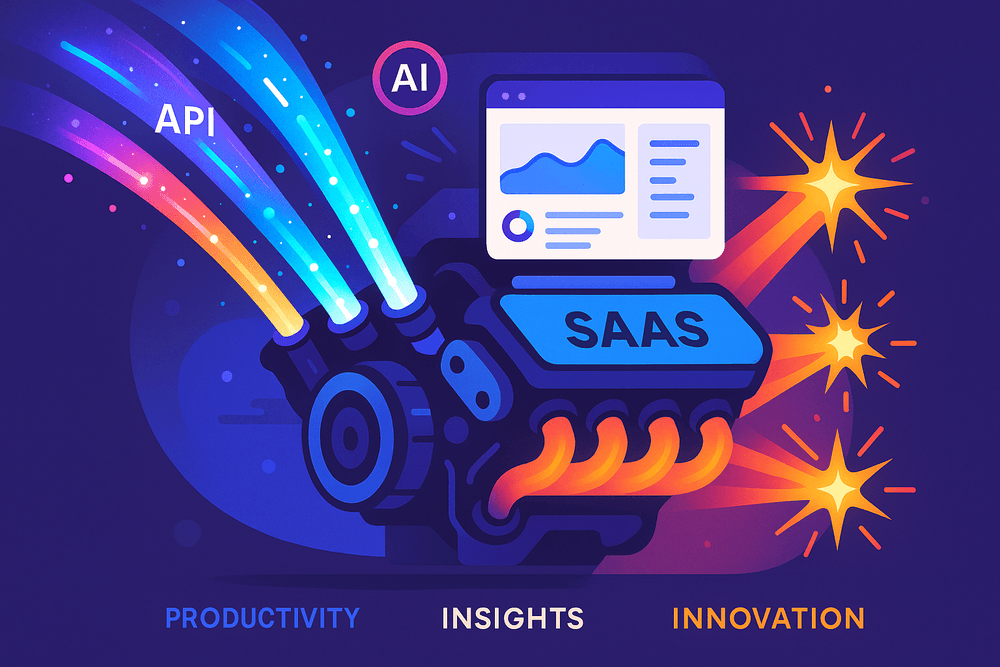
Supercharge Your SaaS: Key Benefits of API Integration AI
The digital landscape is evolving rapidly, and for Software-as-a-Service (SaaS) providers, staying competitive means embracing transformative technologies. A potent catalyst for this is API integration AI. By seamlessly weaving artificial intelligence capabilities into your applications and workflows via APIs, you unlock significant benefits that redefine operational efficiency, product intelligence, and market standing. Let's explore how api integration ai is a fundamental strategy for SaaS success.
Skyrocket Productivity & Streamline Workflows with API Integration AI
In today's fast-paced business world, productivity is paramount. API integration AI acts as a powerful accelerant, automating mundane tasks and streamlining complex workflows. Imagine your team, liberated from manual data entry, repetitive customer inquiries, or time-consuming report generation. AI-powered APIs can manage these processes with impressive speed and accuracy. For instance, natural language processing (NLP) APIs can fuel intelligent chatbots to handle common customer support issues 24/7, reducing human intervention and improving response times. Document processing APIs can automatically extract vital information from invoices or contracts, feeding it directly into your systems. This automation, driven by robust api integration ai, boosts output and allows your human talent to focus on strategic initiatives and high-value interactions, fostering a more agile organization.
Unlock Enhanced Decision-Making & Smarter Applications
Beyond automation, api integration AI elevates your SaaS platform to true intelligence. By leveraging AI APIs, you access sophisticated data analysis, predictive capabilities, and personalization engines previously requiring dedicated data science teams. Integrating machine learning APIs, for example, allows analysis of vast user behavior datasets within your SaaS to predict churn, identify upsell opportunities, or personalize user experiences in real-time. An e-commerce SaaS could use an AI recommendation API to suggest relevant products, boosting conversions. Furthermore, api integration ai lets you embed intelligence directly into your application's core features—think AI-powered search understanding user intent, or intelligent dashboards surfacing critical insights. This results in smarter applications delivering more value, fostering deeper user engagement, and enabling data-driven decision-making.
Achieve Unprecedented Scalability & Drive Innovation in Your SaaS
For SaaS solutions targeting rapid growth and continuous improvement, api integration AI provides a clear path to scalability and innovation. Instead of heavily investing in building and maintaining complex AI infrastructure, you can leverage specialized AI APIs from leading providers. This "plug-and-play" model allows you to scale AI capabilities based on demand, often with a pay-as-you-go structure, making advanced AI accessible without prohibitive upfront costs. This agility is vital. Consider a platform like Aethera; by strategically using api integration ai, it could rapidly introduce cutting-edge features like sentiment analysis for customer feedback or predictive maintenance alerts, without diverting significant resources from its core development. This ability to quickly experiment with and integrate new AI functionalities keeps your SaaS offering competitive and future-proof. Embracing api integration ai allows SaaS companies to focus on their core value while enhancing products with the latest AI, fostering innovation and ensuring long-term market relevance.
Your Roadmap to Successful API Integration AI Implementation
Embarking on an API integration AI project can transform your software's capabilities and streamline business processes. This roadmap will guide you through integrating AI functionalities via APIs, selecting the right tools, and navigating potential hurdles.
Charting Your Course: A Step-by-Step Guide to API Integration AI
A structured approach is key to a successful API integration AI implementation. Follow these steps to seamlessly embed AI into your applications:
- Define Clear Objectives & Scope:
- Identify the "Why": What specific problem will AI solve? Which AI capabilities (e.g., natural language processing, image recognition, predictive analytics) are required?
- Quantify Success: How will you measure the impact of the API integration AI? Define clear KPIs, such as improved efficiency, enhanced user engagement, or cost reduction.
- Start Small: For initial projects, especially within SaaS solutions like Aethera, begin with a well-defined, manageable scope.
- Research and Select AI APIs:
- Explore Options: Investigate available AI APIs from providers like Google AI, OpenAI, AWS AI, or specialized APIs that might be offered by platforms relevant to your domain.
- Evaluate Fit: Assess APIs based on functionality, accuracy, ease of integration, documentation quality, pricing models, scalability, and security. Consider how well they support your API integration AI goals.
- Plan the Integration Architecture:
- Data Flow: Map out how data will flow between your application and the AI API.
- Authentication & Authorization: Understand and implement the API's security mechanisms.
- Error Handling: Plan for potential API errors, timeouts, and unexpected responses. Robust error handling is crucial for a stable API integration AI.
- Develop and Test:
- Set Up Environment: Configure your development environment, obtain API keys, and install any necessary SDKs.
- Build the Connector: Write the code to make API calls, send data, receive responses, and parse the results.
- Iterative Testing: Conduct thorough testing, including unit tests, integration tests, and user acceptance testing (UAT). Test with various data inputs and edge cases.
- Deploy and Monitor:
- Go Live: Deploy the integrated AI functionality to your production environment.
- Continuous Monitoring: Track API performance (latency, error rates), usage, and costs. Monitor the AI's impact on your defined KPIs.
- Iterate and Optimize: Based on performance data and user feedback, continuously refine your API integration AI implementation.
Navigating the AI API Landscape: Selection and Management Best Practices
Choosing and managing AI APIs effectively is paramount for long-term success and cost-efficiency in your API integration AI strategy.
Best Practices for Selecting AI APIs:
- Prioritize Functionality and Accuracy: Ensure the API delivers the specific AI capabilities you need with a proven level of accuracy for your use case.
- Scrutinize Documentation and Support: Comprehensive, clear documentation and responsive developer support significantly smooth out the API integration AI process.
- Assess Scalability and Reliability: The API must be able to handle your current and projected future loads with high uptime and consistent performance. Check for Service Level Agreements (SLAs).
- Verify Security and Compliance: Ensure the API provider adheres to robust security practices (e.g., encryption in transit and at rest) and complies with relevant data privacy regulations (GDPR, CCPA, HIPAA).
- Understand the Pricing Model: Analyze the API’s pricing structure (e.g., pay-as-you-go, tiered, subscription). Choose a model that aligns with your budget and expected usage patterns to avoid surprises in your API integration AI costs.
- Evaluate Ease of Integration: Look for well-defined API endpoints, clear request/response formats, and available SDKs in your preferred programming languages.
Best Practices for Managing AI APIs:
- Secure API Key Management: Store API keys and credentials securely. Implement policies for key rotation and limit access.
- Monitor Usage and Costs Vigilantly: Regularly track API call volumes, response times, and associated costs. Set up budget alerts to prevent unexpected overruns.
- Implement Robust Error Handling and Retries: Design your API integration AI to gracefully handle API errors, network issues, and rate limits. Implement intelligent retry mechanisms.
- Stay Informed About API Versioning and Updates: AI APIs evolve. Subscribe to vendor communications and plan for managing API version changes to avoid service disruptions.
- Consider an API Gateway: For complex API integration AI scenarios involving multiple APIs, an API gateway can simplify management, security, and traffic control.
Anticipating Roadblocks: Overcoming Common API Integration AI Challenges
While API integration AI offers immense benefits, being aware of common challenges can help you proactively address them:
- Data Quality and Preparation:
- Challenge: AI models are sensitive to input data. Inconsistent or poor-quality data can lead to inaccurate AI outputs.
- Solution: Implement rigorous data validation and pre-processing steps before sending data to the AI API. Ensure data formats align with API specifications. For SaaS platforms like Aethera, this might involve cleaning user-generated content.
- Integration Complexity:
- Challenge: Connecting your existing systems with external AI APIs, especially managing authentication, data transformation, and asynchronous operations, can be complex.
- Solution: Start with a focused proof-of-concept for your API integration AI. Utilize SDKs and well-documented API client libraries. Consider middleware or integration platforms for more complex orchestrations.
- Latency and Performance:
- Challenge: API response times can impact user experience, particularly for real-time applications.
- Solution: Choose APIs known for low latency. Optimize your application's API calls. Implement asynchronous processing where possible, so your application doesn't freeze while waiting for an AI API response. Consider caching frequently requested, non-dynamic AI results.
- Security and Compliance:
- Challenge: Transmitting potentially sensitive data to third-party APIs raises security and compliance concerns.
- Solution: Always use HTTPS. Employ robust authentication mechanisms (e.g., OAuth 2.0). Understand the API provider's data handling and security policies. For your API integration AI, ensure compliance with regulations like GDPR or HIPAA if applicable.
- Cost Management and Scalability:
- Challenge: Unmonitored API usage, especially with pay-as-you-go models, can lead to unexpected cost escalations.
- Solution: Closely monitor API consumption. Implement rate limiting or throttling on your end if necessary. Choose appropriate pricing tiers and set up budget alerts. Design your API integration AI to scale efficiently with demand.
- Vendor Lock-in and API Evolution:
- Challenge: Heavy reliance on a single AI API provider can lead to vendor lock-in. APIs also evolve, with features being deprecated or changed.
- Solution: Design your integration with an abstraction layer if possible, making it easier to switch providers if needed. Stay updated with the API provider's roadmap and plan for periodic maintenance to adapt to API changes.
By understanding these steps, best practices, and potential challenges, you can confidently navigate your API integration AI journey, unlocking powerful new capabilities for your applications and business processes.

Real-World Wins: Powerful Use Cases for API Integration AI
The true potential of Artificial Intelligence is unlocked when it's seamlessly woven into the fabric of our everyday applications and business processes. This is where API integration AI steps into the spotlight, offering a practical and powerful way to infuse intelligence into diverse systems. Let's explore some compelling real-world use cases where API integration AI is not just a concept, but a catalyst for transformative results.
Revolutionizing Customer Support with Intelligent Automation
Imagine slashing customer wait times and empowering your support team to focus on complex, high-value interactions. This isn't a futuristic vision; it's the current reality for businesses embracing API integration AI in their customer support operations. By integrating sophisticated AI APIs, companies can automate a significant portion of their customer service workflows.
Think intelligent chatbots, supercharged by Natural Language Processing (NLP) APIs, that can understand nuanced customer queries, provide accurate answers, and offer assistance 24/7. Through API integration AI, these bots can securely access relevant customer history, understand the context of an inquiry, and deliver personalized solutions or intelligently escalate issues to human agents when necessary. Beyond chatbots, AI APIs can automate the tedious process of ticket routing, ensuring queries reach the right department swiftly. They can also generate concise summaries of lengthy customer interactions for agents, saving valuable time, and even analyze customer sentiment in real-time to prioritize urgent requests. The benefits are clear and compelling: dramatically reduced response times, lower operational costs, consistent service quality across all touchpoints, and ultimately, a significant boost in customer satisfaction and loyalty. This intelligent automation, deeply embedded within existing support platforms, is driven by effective api integration ai.
Crafting Hyper-Personalized SaaS Experiences: The Aethera Example
In today's crowded SaaS market, generic, one-size-fits-all user experiences fall flat. Users increasingly expect and demand digital products that adapt to their individual needs, preferences, and workflows. This is a domain where API integration AI truly excels, enabling SaaS providers to deliver hyper-personalized user journeys that drive engagement and retention.
Consider a dynamic SaaS application like Aethera. By strategically implementing api integration ai, Aethera can transform its user experience from standard to outstandingly bespoke. For instance, Aethera could integrate with a powerful recommendation engine API. This AI, constantly learning from user behavior data—features used, content accessed, goals achieved—could proactively suggest the most relevant tools, templates, or insightful articles tailored to each user's specific project or skill level. Imagine Aethera's dashboard dynamically reconfiguring itself, highlighting the data visualizations and functionalities most pertinent to a user's role or current tasks, all thanks to AI APIs analyzing usage patterns. Furthermore, api integration ai can power personalized in-app onboarding flows, deliver customized educational content, and even fine-tune feature suggestions. The outcome for SaaS solutions like Aethera is a win-win: significantly increased user engagement, higher feature adoption rates, reduced customer churn, and a powerful competitive differentiator, all built on the foundation of smart api integration ai.
Unlocking Deeper Insights: AI-Enhanced Data Analysis and Prediction
Data is the new oil, but its true value is only realized when you can refine it into actionable insights and accurate predictions. API integration AI is revolutionizing the fields of data analysis and predictive modeling, empowering businesses to transition from reactive responses to proactive, data-informed strategies. By integrating specialized AI APIs—such as those designed for machine learning model deployment, advanced natural language processing for unstructured data, or complex statistical computations—into existing data ecosystems, organizations can uncover hidden patterns, generate deeper insights, and build sophisticated predictive models with unprecedented ease and speed.
Picture your business effortlessly feeding sales data through an AI API that accurately forecasts future demand, allowing for optimized inventory management and reduced waste. Consider the power of an NLP API that can sift through thousands of customer reviews, social media comments, and support tickets, automatically identifying emerging sentiment trends or critical product issues before they escalate. From predicting customer churn with remarkable accuracy and identifying high-potential sales leads, to detecting subtle fraudulent transactions in real-time and optimizing marketing campaign spend for maximum ROI, the applications of api integration ai in analytics are virtually limitless. This approach democratizes access to cutting-edge AI capabilities, enabling teams—even those without extensive in-house data science expertise—to harness the power of predictive analytics, gain a significant competitive advantage, and make truly data-driven decisions that propel business growth.
Navigating the AI Landscape: Selecting the Optimal API Integration AI for Your Needs
Choosing the right Artificial Intelligence (AI) API provider is a critical decision that can significantly impact your project's success, scalability, and overall cost. With a burgeoning market of AI solutions, finding the perfect fit for your specific needs, especially for a sophisticated SaaS platform like Aethera, requires careful consideration. This guide will help you navigate the landscape and select an api integration ai solution that truly empowers your application.
Key Factors in Choosing Your API Integration AI Provider
Before diving into specific APIs, establish your criteria. Here are crucial factors to evaluate:
- Core Functionality and Performance: Does the API offer the precise AI capabilities you need—be it natural language processing (NLP), computer vision, predictive analytics, or generative AI? Assess the accuracy, speed, and reliability of its models. For an api integration ai, performance benchmarks and case studies can be insightful.
- Scalability and Elasticity: Your chosen API must be able to handle your current workload and scale seamlessly as your user base and data volume grow. Look for providers that offer robust infrastructure and can accommodate fluctuating demand without performance degradation.
- Ease of Integration and Documentation: A smooth api integration ai process is paramount. Evaluate the clarity, comprehensiveness, and quality of the API documentation. Are there SDKs available for your preferred programming languages? Is the API designed logically and intuitively?
- Reliability and Uptime (SLAs): What Service Level Agreements (SLAs) does the provider offer regarding uptime and availability? Downtime can cripple your application’s AI features, so ensure the provider has a strong track record.
- Security and Compliance: Data security is non-negotiable. Verify that the AI API provider adheres to relevant data protection regulations (e.g., GDPR, CCPA, HIPAA) and employs robust security measures to protect sensitive information processed through their api integration ai.
- Developer Support: When issues arise, prompt and effective technical support is invaluable. Investigate the types of support channels offered (e.g., email, chat, phone, community forums) and their responsiveness.
- Cost-Effectiveness: Look beyond the sticker price. Consider the total cost of ownership, including an_api integration ai_ usage fees, data transfer costs, potential charges for custom model training, and support tiers. Transparent pricing models are crucial.
Comparing Popular AI APIs for SaaS Development: Features and Pricing
When you begin comparing specific AI APIs, focus on how their offerings align with your SaaS development goals. Different providers excel in different areas:
- Feature Sets: Some APIs provide highly specialized, pre-trained models for common tasks (e.g., sentiment analysis, object detection), while others offer platforms to train and deploy custom models tailored to your unique datasets. For complex api integration ai scenarios, flexibility in model customization can be a key differentiator. Consider features like model versioning, monitoring, and explainability.
- Pricing Considerations for API Integration AI:
- Pay-As-You-Go: This model charges based on usage (e.g., per API call, per character processed, per image analyzed). It’s often ideal for startups or applications with variable workloads.
- Subscription Tiers: Fixed monthly or annual fees for a set quota of API calls or features. These can offer predictability for established usage patterns.
- Free Tiers and Trials: Many providers offer limited free tiers or trial periods, allowing you to test the api integration ai and its suitability before committing.
- Volume Discounts: As your usage scales, check if providers offer discounts for higher volumes.
- Additional Costs: Be aware of potential hidden costs related to data storage, egress fees, or premium support.
Thoroughly model your expected usage to estimate costs accurately across different providers.
Ensuring Your Chosen AI API Aligns with Aethera's (or Your Solution's) Architecture
Integrating an external AI API into your existing system, such as Aethera, demands careful architectural planning:
- Technical Compatibility: The chosen api integration ai must seamlessly fit into your current tech stack. Verify compatibility with your programming languages, data formats (e.g., JSON, XML), authentication mechanisms (e.g., OAuth 2.0, API keys), and communication protocols (e.g., REST, gRPC).
- Latency Impact: API calls introduce latency. Assess how this will affect your application's user experience. Consider the geographic location of the API provider's data centers relative to your users or your Aethera servers to minimize response times.
- Data Flow and Management: Map out how data will be exchanged between your solution and the AI API. Define clear data schemas, transformation processes, and ensure secure data transmission and storage, respecting privacy policies.
- Error Handling and Resilience: Your application must be designed to gracefully handle API errors, timeouts, or temporary unavailability. Implement robust error handling, retry mechanisms, and potentially fallback strategies to maintain a good user experience.
- Resource Management: Understand the resource implications of the api integration ai. Will it require significant changes to your server infrastructure or client-side application to manage API calls and process responses efficiently?
- Vendor Lock-in and Future-Proofing: While deep integration can be beneficial, consider the implications of vendor lock-in. Does the provider have a clear product roadmap? Is their technology based on open standards where possible, allowing for easier migration if necessary in the future?
By meticulously evaluating these factors, you can confidently select an api integration ai solution that not only meets your immediate needs but also supports the long-term vision and growth of Aethera or your specific application.
Conclusion: Embark on Your API Integration AI Journey with Confidence
The journey through the landscape of API integration AI has illuminated a clear path forward: a future where your SaaS solutions are not just functional, but truly intelligent. We've explored how leveraging the power of Artificial Intelligence through APIs can revolutionize your operations, unlock unprecedented levels of productivity, and create deeply engaging user experiences. From automating complex tasks to deriving actionable insights from data, api integration ai is the catalyst transforming good applications into game-changing platforms. This isn't just about adding features; it's about fundamentally redefining what your software can achieve, giving you a distinct competitive edge in a rapidly evolving digital world. The era of intelligent SaaS is here, and api integration ai is your key to unlocking its full potential.
Feeling inspired? Ready to infuse your SaaS platform with the transformative capabilities of AI? Taking the first step towards successful api integration ai might seem daunting, but with a structured approach, it's entirely achievable. Here’s how you can begin your journey:
Charting Your Course: Initial Steps for AI API Integration
- Define Your 'Why' and 'Where': Before diving into the technicalities, clearly identify the specific business challenges you want to solve or the opportunities you aim to seize with AI. Which processes in your SaaS solution would benefit most from intelligent automation, enhanced analytics, or personalized user interactions through api integration ai? A clear vision will guide your choices and ensure your AI initiatives deliver tangible value.
- Explore the AI API Ecosystem: The world of AI APIs is vast and constantly expanding. Research providers offering functionalities like natural language processing (NLP), computer vision, machine learning model deployment, or predictive analytics. Evaluate them based on capabilities, ease of integration, comprehensive documentation, scalability to match your growth, and transparent pricing models.
- Strategize Your Integration Blueprint: A successful api integration ai project requires careful planning. Map out how the chosen AI API will connect with your existing SaaS architecture. Consider crucial aspects like data flow integrity, robust security protocols (especially for sensitive data), potential points of failure, and how your system will gracefully handle API responses and exceptions. This blueprint is foundational to a smooth api integration ai process.
- Prototype, Test, and Iterate: Start with a focused pilot project. Integrate a single AI API for a specific, manageable use case. This approach allows you to test the waters, understand an API's behavior in your environment, gather crucial user feedback, and refine your integration strategy before committing to a larger-scale api integration ai deployment. Iteration is key to perfection.
- Prioritize Security and Ethical Considerations: Integrating AI, especially when handling user data, demands a robust security posture and unwavering adherence to ethical guidelines and data privacy regulations (like GDPR, CCPA, or industry-specific mandates). Ensure your api integration ai strategy incorporates these critical aspects from day one to build trust and ensure compliance.
While these steps provide a solid roadmap, navigating the nuances of api integration ai can present unique challenges and opportunities tailored to your specific SaaS solution. This is where Aethera steps in. We specialize in crafting bespoke api integration ai strategies and solutions, designed to seamlessly meld the power of artificial intelligence with your existing platform and core business goals.
Partner with Aethera for Your API Integration AI Success
At Aethera, we understand that one-size-fits-all doesn't apply to true innovation. Our team of seasoned experts works collaboratively with you to:
- Identify the most impactful AI opportunities within your SaaS offering.
- Select and integrate the optimal AI APIs that align perfectly with your unique needs and future vision.
- Ensure a secure, scalable, and efficient api integration ai architecture that stands the test of time.
- Unlock the full potential of AI to drive substantial growth, operational efficiency, and a superior, differentiated user experience.
Don't let the perceived complexity of api integration ai hold you back from building a smarter, more capable, and market-leading SaaS solution. Let Aethera be your trusted partner on this transformative journey, providing the expertise and support you need to innovate with confidence.
Ready to explore how Aethera can tailor an API Integration AI solution specifically for you? Contact us today to schedule a consultation and take the confident next step towards an AI-powered future for your business.