
June 24, 2025
An Introduction to Automatic Indexing and Abstracting of
Unlocking Information Overload: An Introduction to Automatic Indexing and Abstracting of Document Texts
In an era defined by an ever-accelerating influx of information, individuals and organizations alike are grappling with the challenge of managing and making sense of vast digital document libraries. The sheer volume of reports, articles, emails, and records can feel overwhelming, making it difficult to pinpoint critical information when it's needed most. This is where the transformative potential of automatic indexing and abstracting of document texts emerges, offering a sophisticated, AI-driven solution to navigate this data deluge effectively.
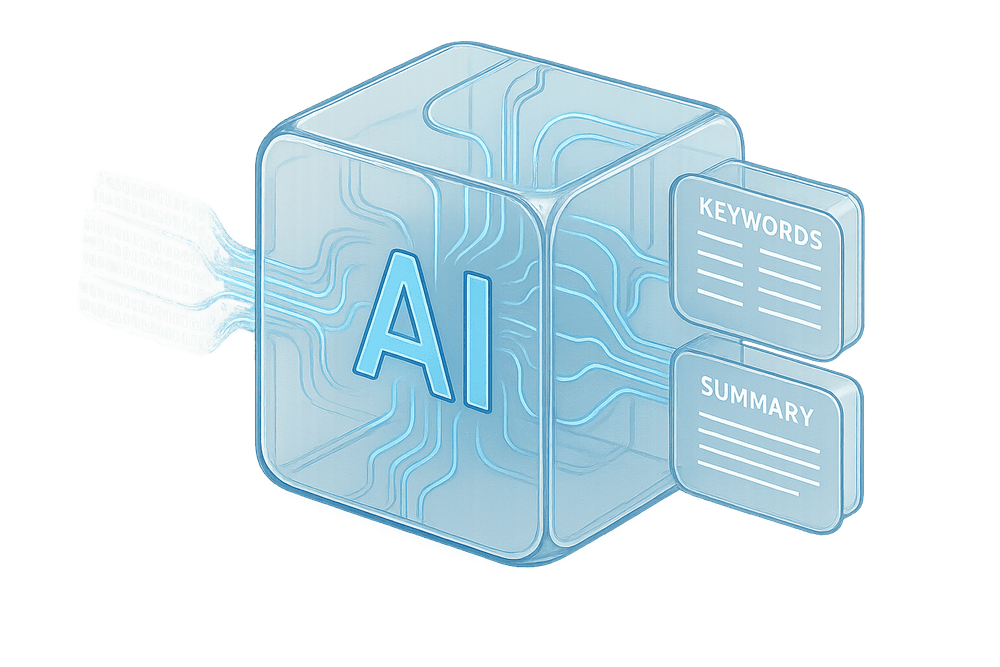
So, what exactly is automatic indexing and abstracting of document texts? At its core, it’s a powerful two-pronged approach. Automatic indexing involves AI algorithms meticulously scanning through documents to identify and categorize key terms, concepts, and entities. This process creates a detailed, searchable roadmap – much like an intelligent, hyper-linked index – that points directly to where specific information is located within a document or across an entire collection. Complementing this, automatic abstracting (often called automatic summarization) employs AI to generate concise, coherent summaries that capture the essence of a document. Instead of wading through pages of text, users get a brief yet comprehensive overview of the main arguments, findings, and conclusions. Together, these automated processes ensure you can not only find relevant documents quickly but also grasp their core content almost instantly.
The urgency for such intelligent solutions is underscored by the escalating difficulties in managing today's massive document repositories. The digital universe is expanding at an exponential rate, and traditional manual methods of sifting, categorizing, and summarizing content are simply no longer viable. Manual indexing is painstakingly slow, resource-intensive, and prone to human error and inconsistency. As document volumes swell, locating specific information feels increasingly like searching for a needle in a digital haystack, leading to wasted time, missed insights, and mounting frustration. This challenge is compounded by information often being siloed across various platforms, hindering a unified view and efficient retrieval, which can, in turn, pose significant compliance and operational risks.
Herein lies the promise of Artificial Intelligence. AI is revolutionizing document text management by powering sophisticated automatic indexing and abstracting of document texts. This technology directly tackles the chaos of information overload by offering unparalleled speed and scalability; AI can process and organize millions of documents in a fraction of the time it would take humans. It brings a level of consistency and accuracy to indexing and summarization that minimizes human bias and error. The result? Significantly enhanced searchability, allowing users to unearth relevant information with precision, and dramatically improved comprehension, as AI-generated abstracts provide quick insights. By taming information chaos, AI-driven automatic indexing and abstracting of document texts empowers organizations to unlock the true value hidden within their documents, fostering better decision-making and operational efficiency.
Peeking Under the Hood: Core AI Techniques for Automatic Indexing and Abstracting of Document Texts
Ever wondered what powers the intelligent systems that can sift through mountains of documents, categorize them, and give you a bite-sized summary in seconds? The magic lies in a sophisticated interplay of Artificial Intelligence techniques, primarily focused on understanding and processing human language. Let's delve into the core components that make automatic indexing and abstracting of document texts a reality.
Natural Language Processing (NLP): The Engine Driving Document Understanding
At the very heart of AI's ability to process documents is Natural Language Processing (NLP). Think of NLP as the essential engine that allows computers to "read," comprehend, and derive meaning from human language – whether it's a legal contract, a research paper, or a customer review. For effective automatic indexing and abstracting of document texts, NLP performs several crucial initial tasks:
- Tokenization: Breaking down text into smaller units like words or sentences.
- Part-of-Speech (POS) Tagging: Identifying the grammatical role of each word (noun, verb, adjective, etc.).
- Named Entity Recognition (NER): Locating and categorizing key information like names of people, organizations, locations, dates, and more.
- Dependency Parsing: Analyzing the grammatical structure of sentences to understand how words relate to each other.
Without NLP, documents would remain an incomprehensible jumble of characters to a machine. It’s this foundational understanding that paves the way for more advanced analysis.
Machine Learning Models: From TF-IDF to Transformers in Analyzing Document Texts
Once NLP has preprocessed the text, Machine Learning (ML) models step in to learn patterns, identify important information, and make predictions. The journey of ML in automatic indexing and abstracting of document texts has seen significant evolution:
- TF-IDF (Term Frequency-Inverse Document Frequency): An earlier, yet still relevant, statistical measure used to evaluate how important a word is to a document within a collection or corpus. It was a cornerstone for basic keyword extraction, crucial for initial forms of automatic indexing. While useful for identifying prominent terms, TF-IDF lacks a deep understanding of context or semantic meaning.
- Word Embeddings (e.g., Word2Vec, GloVe): These techniques represent words as dense vectors in a multi-dimensional space. The key innovation here is that words with similar meanings are located closer to each other in this space. This marked a significant step towards capturing semantic relationships, improving the quality of indexing and providing a better foundation for summarization.
- Transformer Models (e.g., BERT, GPT, T5): The current state-of-the-art, Transformer-based models have revolutionized NLP and, consequently, automatic indexing and abstracting of document texts. Their attention mechanisms allow them to weigh the importance of different words in a sentence (and across sentences) when processing information. This enables an unprecedented understanding of context, nuance, and long-range dependencies in text, leading to highly accurate indexing and remarkably coherent abstractive summaries.
Extractive vs. Abstractive Summarization: Key Differences for Precise Abstracting
When it comes to automatic abstracting of document texts, AI employs two primary strategies for generating summaries:
- Extractive Summarization: This method works by identifying and selecting the most important sentences or phrases directly from the original document. These are then combined to form a summary.
- Pros: Factually consistent with the source text, generally faster to compute.
- Cons: Can sometimes result in summaries that lack coherence or flow, as sentences are plucked without rephrasing.
- Abstractive Summarization: This more advanced approach aims to generate new phrases and sentences that capture the core essence of the original text, much like a human would. It involves a deeper understanding and rephrasing of information.
- Pros: Produces more fluent, readable, and often more concise summaries.
- Cons: Computationally more intensive and complex; historically carried a higher risk of "hallucinating" or generating information not present in the source, though newer models are mitigating this.
The choice between extractive and abstractive methods often depends on the specific application, the required level of fidelity, and computational resources.
How Semantic Analysis Enhances Automatic Indexing Beyond Keywords
Traditional indexing often relies on keywords. While helpful, keyword-based systems can miss relevant documents that use different terminology for the same concept (synonyms) or misinterpret words with multiple meanings (polysemy). This is where semantic analysis makes a profound difference in automatic indexing.
Semantic analysis is concerned with understanding the meaning and context behind words, phrases, and entire documents. Instead of just matching keywords, AI powered by semantic analysis can:
- Identify Concepts: Understand the underlying topics and ideas discussed, even if they're not explicitly stated using specific keywords.
- Disambiguate Word Meanings: Determine the correct meaning of a word based on its surrounding context (e.g., "bank" as a financial institution vs. "bank" as a river edge).
- Recognize Relationships: Uncover connections between different entities and concepts within the text.
Techniques like Latent Semantic Analysis (LSA), topic modeling (e.g., Latent Dirichlet Allocation - LDA), and the deep contextual understanding provided by modern Transformer models, all contribute to robust semantic analysis. This richer understanding leads to far more accurate and relevant search results, enabling users to find precisely what they need, even if they don't use the exact jargon present in the documents. This deeper comprehension is pivotal for truly effective automatic indexing and abstracting of document texts, moving beyond surface-level processing to genuine information intelligence.
The Transformative Benefits of Automatic Indexing and Abstracting of Document Texts
In an era defined by an overwhelming deluge of information, the capacity to swiftly locate, comprehend, and leverage critical data is no longer a luxury—it's a necessity. Traditional, manual methods for sifting through vast document repositories are increasingly inefficient and unsustainable. This is precisely where the capabilities of automatic indexing and abstracting of document texts deliver transformative results, offering a suite of benefits that redefine how organizations interact with their textual assets. By harnessing the power of Artificial Intelligence, these advanced processes don't merely accelerate workflows; they fundamentally elevate our ability to extract actionable insights and value from the written word.
Slash Research Time: Instant Information Access
Imagine the countless hours, even days, traditionally lost to manually combing through mountains of documents, desperately searching for a single critical piece of information. Advanced automatic indexing, a cornerstone of modern AI document processing, relegates this painstaking process to a relic of the past. Instead of relying on hit-or-miss keyword guessing or laborious page-by-page scanning, automatic indexing and abstracting of document texts meticulously constructs a comprehensive, deeply structured map of your entire document corpus. This intelligent framework means that complex queries can return hyper-relevant results almost instantaneously. Whether you're a legal professional meticulously seeking case precedents, a scientific researcher pinpointing specific studies, or a business analyst tracking emergent market trends, the power to locate precise information within seconds dramatically boosts productivity and accelerates informed decision-making. This isn't merely about enhanced speed; it's about surgical precision, ensuring you consistently find what you need, precisely when you need it, liberating you from the frustration of data graveyards.
Improve Comprehension: Understand More, Faster
Beyond the crucial first step of finding documents, the ability to rapidly understand their core message is paramount, especially when confronted with complex, lengthy, or numerous texts. This is where the ingenuity of AI-powered abstracting comes into its own. Sophisticated algorithms meticulously analyze documents, identifying key concepts, central arguments, and essential takeaways to generate concise, coherent, and human-readable summaries. Instead of investing significant time reading a full document only to discover its irrelevance, users can now grasp the fundamental gist in mere seconds. This capability for rapid comprehension, significantly enhanced by integrated automatic indexing and abstracting of document texts, empowers users to quickly assess relevance, strategically prioritize their reading, and absorb vital information far more efficiently. This is an invaluable asset for professionals across all fields who must stay informed across a broad spectrum of topics, enabling them to make well-informed decisions without becoming bogged down in extraneous detail. The clarity afforded by AI-generated abstracts effectively cuts through the noise, delivering distilled knowledge on demand.
Enhance Data Discoverability: Unearth Hidden Insights
Many organizations sit atop vast, underutilized archives of documents, rich with invaluable data and insights. However, much of this potential remains untapped simply because the information is difficult to find, correlate, or even know exists. Automatic indexing and abstracting of document texts acts as a powerful catalyst, transforming these dormant archives from passive storage repositories into dynamic, actively searchable knowledge bases. By systematically cataloging content, extracting key metadata, and identifying semantic relationships between diverse documents and concepts, these AI-driven systems enhance data discoverability on an unprecedented scale. Information that was once buried deep within unstructured text, or siloed across disparate systems, becomes readily accessible and interconnected. This heightened discoverability can reveal previously hidden patterns, emergent trends, and critical connections that would be virtually impossible for humans to identify manually across large volumes of text. For instance, automatic indexing can seamlessly link disparate reports which, when viewed together through the lens of their concise abstracts, might reveal a larger strategic opportunity or an overlooked risk. This capability truly unlocks the latent potential of your organization's collective intelligence.
Achieve Significant Cost Savings: Optimize Your Resources
The manual labor intrinsically associated with traditional document processing—the meticulous reading, categorizing, summarizing, and indexing—is not only exceptionally time-consuming but also represents a substantial operational expense. Employing dedicated teams or diverting existing staff to these tasks incurs significant costs in terms of salaries, training, and opportunity cost. Automatic indexing and abstracting of document texts offers a compelling and powerful solution by automating these labor-intensive, repetitive processes. By drastically reducing the need for manual intervention, organizations can realize significant and sustainable cost savings. These financial benefits are not solely about reducing headcount; more strategically, they are about reallocating precious human resources—your skilled employees—to more complex, high-value tasks that demand critical thinking, creativity, and nuanced judgment. These are precisely the areas where human intelligence excels and provides the greatest return. The profound efficiency gains derived from AI-powered automatic indexing and abstracting of document texts translate directly into a healthier bottom line, a more agile operational model, and a more productive, engaged workforce, empowering your organization to achieve more with optimized resources.
The cumulative effect of these benefits signifies a paradigm shift in how we manage, interpret, and leverage textual information. By embracing the power of automatic indexing and abstracting of document texts, organizations can unlock new frontiers of efficiency, gain deeper insights, and secure a significant competitive advantage in today's data-driven world.

Where AI Shines: Real-World Applications of Automatic Indexing and Abstracting of Document Texts
Artificial Intelligence is no longer a futuristic concept but a practical tool revolutionizing how we interact with vast quantities of information. One of its most impactful applications is the automatic indexing and abstracting of document texts, a technology transforming workflows and decision-making across diverse sectors. By intelligently processing and organizing textual data, AI offers unprecedented speed and efficiency in information retrieval and comprehension. Let's explore some key arenas where this technology is making a significant difference.
Academic Research: Navigating the Ocean of Scholarly Knowledge
The academic world thrives on information, but the sheer volume of scholarly articles, research papers, historical archives, and dissertations can be overwhelming. Researchers often spend countless hours sifting through dense texts to find relevant studies. Here, automatic indexing and abstracting of document texts acts as a powerful navigator. AI algorithms can rapidly scan and categorize vast repositories of academic literature, creating comprehensive, searchable indexes. Furthermore, AI-generated abstracts provide concise summaries, allowing researchers to quickly assess the relevance of a document without reading it in its entirety. This accelerates literature reviews, helps uncover novel connections between disparate research fields, and ensures researchers can stay abreast of the latest findings, significantly boosting the pace and quality of academic discovery.
Legal E-Discovery: Revolutionizing Case Preparation
In the legal field, e-discovery is a critical yet often laborious process, involving the identification, collection, and review of vast amounts of electronic information. Legal teams can be inundated with thousands, sometimes millions, of documents, from emails and contracts to internal memos. Manually reviewing this data is not only astronomically expensive and time-consuming but also prone to human error. AI-powered automatic indexing and abstracting of document texts is a game-changer for legal e-discovery. These systems intelligently sift through extensive document sets, flagging relevant information, identifying key entities, and even generating concise summaries of lengthy legal briefs or depositions. This automation drastically reduces review time and costs, allows for quicker case preparation, and helps legal professionals build stronger cases by pinpointing crucial evidence more effectively.
Business Intelligence: Unlocking Insights from Corporate Data
Businesses today are data-rich but often insight-poor. Market reports, competitor analyses, customer feedback, internal communications, and financial statements form a complex web of information. Extracting actionable intelligence from this deluge is vital for strategic decision-making and maintaining a competitive edge. This is where the strategic application of automatic indexing and abstracting of document texts provides immense value. AI tools can process and analyze diverse business documents, automatically creating structured indexes for easy retrieval and generating succinct abstracts that highlight key findings, trends, and sentiment. This empowers organizations to quickly understand market dynamics, gauge customer opinions, monitor competitor activities, and streamline internal knowledge sharing, leading to more informed strategies and improved operational efficiency.
Healthcare: Enhancing Patient Care and Medical Discovery
The healthcare sector relies on timely access to accurate and comprehensive information for both patient care and medical advancement. Patient records are increasingly detailed, and the volume of new medical research and literature grows exponentially. Automatic indexing and abstracting of document texts offers transformative solutions to these challenges. In clinical settings, AI can help organize and summarize patient histories, enabling healthcare providers to quickly grasp essential information for diagnosis and treatment planning. For medical researchers, AI systems can process and categorize vast quantities of medical journals and clinical trial data, generating abstracts that highlight key findings and methodologies. This accelerates the discovery process, supports evidence-based medicine, and ultimately contributes to improved patient outcomes and more efficient healthcare systems by making critical medical information more accessible and digestible.
Getting Started: Best Practices for Implementing Automatic Indexing and Abstracting of Document Texts
Embarking on the journey of automatic indexing and abstracting of document texts can transform how your organization manages information. To ensure a smooth and successful implementation, follow these best practices, from defining your objectives to integrating the solution into your daily operations.
Defining Your Needs: What Problems Will Automatic Indexing and Abstracting Solve for You?
Before diving into AI-powered document analysis, clearly define your specific needs. What challenges will it solve? Implementing automatic indexing and abstracting of document texts isn't just adopting technology; it's solving business problems. Consider common pain points:
- Information Overload: Are your teams struggling to pinpoint relevant information quickly from vast document repositories?
- Time-Consuming Manual Processes: Is valuable employee time spent manually reading, categorizing, and summarizing documents instead of on core strategic tasks?
- Inconsistent Knowledge Tagging: Do different individuals or departments index and summarize information differently, leading to retrieval gaps and knowledge silos?
- Underutilized Knowledge Assets: Do you suspect critical insights are buried and untapped within your organization's documents?
- Compliance & eDiscovery Burdens: Are meeting regulatory requirements or responding to legal discovery requests slow and arduous processes?
Pinpointing which of these (or other unique) problems automatic indexing and abstracting of document texts can address for your organization will guide your entire implementation strategy, from tool selection to integration.
Evaluating AI Tools for Document Indexing and Summarization: Key Features to Look For
With clear objectives, select the right AI tool. The market for automatic indexing and abstracting of document texts is growing, so evaluate solutions on features aligning with your needs:
- Accuracy & Relevance: How effectively does the AI identify key concepts for indexing? Are the generated abstracts coherent, concise, and reflective of the original document's core message? Aim for high precision in both indexing and summarization.
- Scalability: Can the solution handle your current document volume and anticipated future growth efficiently?
- Customization: Can you define custom taxonomies, ontologies, or keywords? Can you adjust abstract length or style? Effective automatic indexing and abstracting of document texts often requires this level of tailoring.
- Integration Capabilities: How easily will the tool fit into your existing tech stack? Look for robust APIs or pre-built connectors for your Document Management System (DMS), Content Management System (CMS), or other enterprise platforms.
- Language Support: Does the tool proficiently support all the languages present in your documents?
- Security & Compliance: Ensure the vendor adheres to data security best practices (e.g., encryption, access controls) and can support your industry-specific compliance needs (e.g., GDPR, HIPAA).
- User-Friendliness: Is the interface intuitive? Will your team be able to use it effectively with minimal training?
- Vendor Support: Comprehensive documentation and responsive customer support are crucial for a smooth implementation and ongoing success.
Preparing Your Document Texts for Optimal AI Processing
The adage "garbage in, garbage out" holds particularly true for AI systems. The quality of your input documents directly impacts the effectiveness of automatic indexing and abstracting of document texts. To ensure optimal AI processing:
- Format Standardization: Convert your documents into AI-friendly formats (e.g., plain text, PDF, DOCX). Consistency can improve processing, but ensure no critical information is lost during conversion.
- Data Cleaning: Remove irrelevant elements like extensive headers, footers, or boilerplate text that might skew the AI's understanding, unless they provide essential context. Correct OCR errors in scanned documents diligently.
- High-Quality OCR: For scanned documents or image-based PDFs, use a reliable Optical Character Recognition (OCR) tool to ensure accurate text extraction. Errors in OCR will lead to poor indexing and abstracting results.
- Document Structuring (if applicable): If documents are lengthy and unstructured, breaking them into logical sections or chapters can sometimes help the AI better grasp the context of different parts.
- Character Encoding: Ensure all documents use a standard character encoding (like UTF-8) to avoid issues with special characters or different languages.
Taking these preparatory steps will significantly enhance the performance of your chosen solution for automatic indexing and abstracting of document texts.
Integrating AI Solutions for Automatic Indexing and Abstracting into Existing Workflows
Successfully implementing automatic indexing and abstracting of document texts goes beyond just installing software; it requires thoughtful integration into your existing operational workflows. The goal is to make these AI capabilities a seamless and value-adding part of how your organization works with information.
- Phased Rollout: Instead of a big-bang approach, consider a pilot program. Start with a specific department or a limited set of documents to test the solution, gather feedback, and refine processes before a full-scale deployment.
- API-Driven Integration: Leverage Application Programming Interfaces (APIs) provided by the AI tool to connect it with your existing systems, such as Document Management Systems (DMS), Content Management Systems (CMS), enterprise search platforms, or business intelligence tools. This allows for automated data flow.
- Workflow Automation: Identify points in your current workflows where automatic indexing and abstracting of document texts can introduce efficiencies. For example, automatically index new documents upon ingestion into a repository or generate summaries for review queues.
- User Training and Change Management: Equip your team with the necessary knowledge and skills to use the new AI tools effectively. Address any concerns, highlight the benefits, and foster a culture that embraces AI-assisted work.
- Establish Feedback Loops and Iterate: Continuously monitor the performance of the AI system. Collect user feedback on the quality of indexes and abstracts. Use this information to fine-tune configurations, update custom terminologies, and improve the overall process, ensuring the solution remains effective and aligned with evolving business needs.
By strategically planning the integration, you can maximize the return on investment from your automatic indexing and abstracting of document texts initiative.

Embrace the Future: Next Steps with Automatic Indexing and Abstracting of Document Texts
The world of document management is undergoing a profound transformation, largely driven by the relentless evolution of Artificial Intelligence. Gone are the days of manual sifting and simplistic keyword searches. Today, AI, particularly advancements in Natural Language Processing (NLP) and Large Language Models (LLMs), is revolutionizing how we interact with textual data. This progress is supercharging the capabilities of automatic indexing and abstracting of document texts, moving us towards systems that not only find information but truly understand and synthesize it. Imagine AI that can grasp context, identify nuanced relationships between concepts, and generate summaries so accurate they feel human-crafted. This isn't science fiction; it's the rapidly advancing reality of AI in text analysis, paving the way for unprecedented efficiency and insight.
Embarking on your journey to leverage automatic indexing and abstracting of document texts might seem daunting, but it's an accessible path to unlocking significant value from your document repositories. The key is a structured approach.
Charting Your Course: Getting Started with Automated Insights
- Assess Your Document Ecosystem: Begin by thoroughly evaluating your current document challenges. Are you struggling with information overload, slow retrieval times, compliance risks, or missed insights buried in vast text volumes? Clearly define the pain points that automatic indexing and abstracting of document texts could alleviate. Identify the types of documents (e.g., legal contracts, research papers, customer feedback, technical manuals) that hold the most potential for AI-driven analysis and the specific outcomes you desire, such as faster research, improved decision-making, or enhanced knowledge discovery.
- Explore and Experiment: With your needs defined, research the diverse AI tools and platforms available. Consider factors like integration with your existing systems, scalability to handle future growth, data security protocols, and user-friendliness. Don't aim for a complete overhaul immediately. Instead, initiate a pilot project with a manageable subset of documents. This allows you to test the chosen solution for automatic indexing and abstracting of document texts, gather initial feedback, and understand its practical impact.
- Measure, Iterate, and Scale: Crucially, establish metrics to measure the success of your pilot. Are you seeing improvements in search accuracy, time saved, or the quality of generated abstracts? Use these insights to refine your approach, tweak configurations, and then strategically scale the solution across your organization. Remember, adopting AI is an iterative process of learning and improvement.
Deepen Your Expertise: Resources for Mastery
To truly master AI-driven automatic indexing and abstracting of document texts, continuous learning is essential. A wealth of resources can support your journey and keep you at the forefront of this dynamic field:
- Online Courses & Certifications: Platforms like Coursera, edX, and specialized AI training providers offer comprehensive courses on Artificial Intelligence, Natural Language Processing, machine learning, and data science, often with practical applications.
- Industry Publications & Blogs: Stay updated with leading articles, journals (e.g., Journal of Information Retrieval), and blogs from reputable sources that focus on AI in document management, text analytics, and information science.
- Professional Communities & Forums: Engage in online communities and forums (such as those on LinkedIn, Reddit, or dedicated AI/NLP platforms) to exchange ideas, ask questions, and learn from the experiences of peers and experts.
- Vendor Resources & Case Studies: Explore whitepapers, detailed case studies, and webinars from AI solution providers. While promotional, they often provide valuable insights into real-world applications and the benefits achieved in various industries.
- Academic Research & Conferences: For a deeper dive into cutting-edge techniques and theoretical advancements, consult research papers from prominent AI conferences (e.g., ACL, NeurIPS, EMNLP) and academic journals specializing in computational linguistics and information retrieval.
Take the Leap: Transform Your Document Management
The future of efficient, intelligent document handling is here, powered by sophisticated automatic indexing and abstracting of document texts. Don't let your organization get left behind by clinging to outdated, manual processes. The potential to unlock unprecedented levels of productivity, derive deeper insights from your data, and make more informed decisions is within your grasp.
The time to act is now. Discover the right AI solution for your unique document challenges and unlock a new era of productivity and insight. Explore your options, consult with experts if needed, and begin your transformation towards a smarter, more automated document workflow today. Embrace the future, and let AI empower your organization to achieve more.