January 8, 2026
Unlocking Efficiency with AI Training Modules
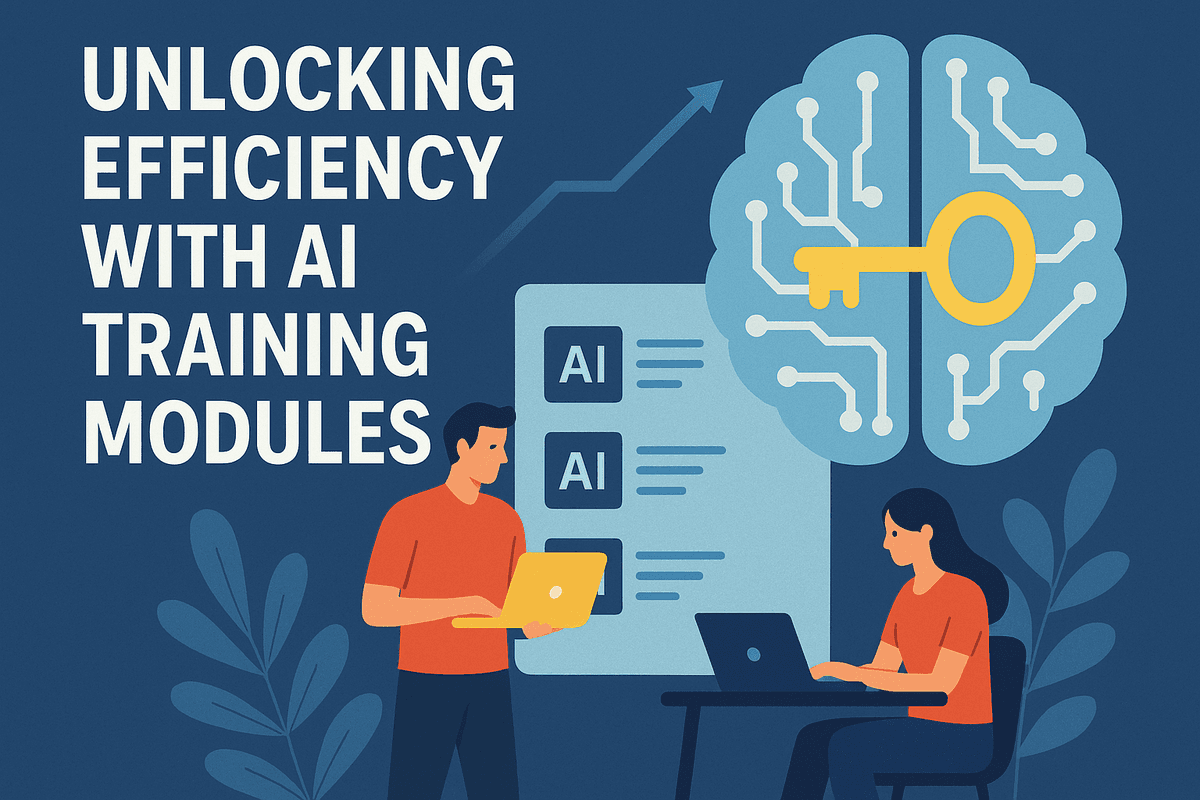
Unlocking Efficiency with AI Training Modules
In the rapidly evolving landscape of enterprise technology, artificial intelligence has shifted from a novelty to a necessity. However, simply deploying a generative AI tool is rarely enough to secure a competitive advantage. To truly leverage the power of machine learning, businesses must move beyond out-of-the-box capabilities and invest in specialized ai training modules.
In a business context, ai training modules are structured educational datasets and feedback loops designed to teach a machine learning algorithm the specific nuances of a company’s operations. Think of a generic Large Language Model (LLM) as a brilliant university graduate: they possess vast general knowledge but lack the specific context of your industry, your brand voice, and your internal protocols. Training modules serve as the onboarding process, transforming that generalist intelligence into a specialist capable of handling niche business tasks with precision.
The Limitations of Generic AI Models
While foundation models like GPT-4 or Claude are impressive, they suffer from inherent limitations when applied to specialized corporate environments without fine-tuning. A generic model relies on broad, internet-based training data. Consequently, when asked to draft a technical legal contract for a fintech startup or generate code compliant with legacy banking systems, the output often falls short.
The primary issues with generic models include:
- Hallucinations and Inaccuracies: Without specific parameters, models may invent facts or cite non-existent regulations to fill gaps in their knowledge.
- Tone Inconsistency: Off-the-shelf AI often struggles to replicate a specific corporate identity, alternating between robotic formality and overly casual conversation.
- Lack of Domain Expertise: General models may misunderstand industry-specific jargon or acronyms, leading to critical errors in communication or data analysis.
By implementing custom ai training modules, organizations can bridge the gap between general capability and operational necessity. These modules restrict the AI's focus, forcing it to prioritize vetted internal data over generalized internet knowledge.
Key Benefits: From Hyper-Accuracy to Ironclad Security
The transition from generic prompting to utilizing specific ai training modules yields immediate ROI in operational efficiency. The benefits generally fall into two critical categories: output relevance and data sovereignty.
Precision and Operational Relevance
When an algorithm is trained on modules containing your historical customer support logs, technical documentation, or sales scripts, the accuracy of its output increases strictly. The AI stops guessing and starts retrieving. For example, a marketing team using a module trained on the last five years of successful campaigns can generate copy that intrinsically understands the brand's unique selling propositions, significantly reducing the human time required for editing and review.
Enhanced Data Security
Perhaps the most compelling argument for custom training modules is data security. Many enterprises hesitate to embrace AI fully due to fears of leaking proprietary intellectual property into a public model.
By developing internal ai training modules, businesses can fine-tune models within a closed environment (local or private cloud). This ensures that sensitive data—such as financial projections or patient records—is used solely to educate the organization's private instance of the AI, without ever becoming part of a public dataset. This approach allows companies to unlock the efficiency of automation while remaining compliant with strict regulatory standards like GDPR or HIPAA.

The Mechanics of Custom AI Training Modules
Imagine hiring a brilliant polymath who has read every book in the library but knows absolutely nothing about your company’s internal jargon, coding standards, or customer service protocols. This is the state of a "base model" foundation AI. To move from a generic genius to a specialized asset, businesses must look under the hood at the mechanics of customization. This process relies heavily on specific ai training modules designed to bridge the gap between general intelligence and niche application.
How Fine-Tuning Transforms Base Models
Fine-tuning is the process of taking a pre-trained model—which has already learned the structure of language and logic from massive datasets—and continuing its training on a smaller, domain-specific dataset. It is effectively a form of transfer learning.
Rather than teaching the AI how to write or reason from scratch, you are adjusting its internal parameters (weights) to favor specific types of outputs. For example, a legal firm doesn’t need an AI that writes poetry; it needs one that understands contract clauses. By deploying ai training modules focused on legal precedents and firm-specific syntax, the model learns to mimic the style and accuracy required for that specific industry. This transformation ensures that the AI stops guessing based on general internet knowledge and starts predicting based on expert-level domain constraints.
The Role of Supervised and Reinforcement Learning
To shape the behavior of an AI, training modules typically utilize two distinct pedagogical approaches:
- Supervised Learning: This is the foundational layer of customization. Here, the AI is fed labeled datasets consisting of input-output pairs. If you are building a tool to automate customer support, the training module might contain thousands of past email threads where the "input" is the customer complaint and the "output" is the ideal resolution drafted by your best support agent. The model learns to map specific patterns to the correct responses.
- Reinforcement Learning (RL): While supervised learning teaches the AI what to know, reinforcement learning refines how it acts. Often implemented as Reinforcement Learning from Human Feedback (RLHF), this involves a reward-penalty system. Human reviewers rank different AI outputs, and the model updates its policy to maximize the "reward." This is crucial for nuances like tone of voice, safety adherence, and strategic decision-making.
Integrating Proprietary Data into Your AI Training Modules
The true competitive advantage of custom AI lies in the data you feed it. Off-the-shelf models are trained on public data; your custom solution should be trained on your corporate memory.
Integrating proprietary data involves more than just uploading PDFs. It requires a structured data pipeline where unstructured information—such as internal wikis, Slack logs, CRM entries, and technical documentation—is cleaned and tokenized. Effective ai training modules ingest this proprietary data to create a "knowledge moat." This ensures the AI understands context that no competitor can access, such as your specific product acronyms or historical project outcomes. By securely integrating this data, you turn a standard algorithm into a bespoke engine of operational efficiency that reflects the unique DNA of your business.
Top Applications for AI Training Modules by Industry
While general machine learning models offer a broad baseline of intelligence, true operational efficiency is unlocked when algorithms are schooled in the nuances of specific sectors. Generic models may understand language or recognize objects, but they often lack the context required for high-stakes business decisions. Integrating specialized ai training modules allows organizations to move from generic automation to hyper-relevant, high-value outputs.
By focusing on industry-specific datasets, businesses can fine-tune their AI to master the distinct challenges of customer service, manufacturing, and finance.
Optimizing Customer Support with NLP Training Modules
In the realm of customer experience, generic chatbots often frustrate users with robotic, irrelevant responses. The solution lies in deploying Natural Language Processing (NLP) ai training modules specifically designed to understand company jargon, product specifications, and customer sentiment.
Rather than relying on broad language models, support teams can curate training datasets composed of historical chat logs, support tickets, and email correspondence. This process allows the AI to learn the specific phrasing customers use when reporting a bug or requesting a refund. Furthermore, advanced NLP modules can be trained on sentiment analysis, enabling the system to detect frustration or sarcasm. This ensures that the AI knows exactly when to resolve a query autonomously and when to escalate the issue to a human agent, significantly reducing resolution times and boosting customer satisfaction scores.
Enhancing Visual Inspection in Manufacturing with Computer Vision
For the manufacturing sector, the margin for error is microscopic. Traditional quality control relies heavily on human inspection, which is subject to fatigue and inconsistency. Computer vision modules are transforming this landscape by automating visual inspection with superhuman precision.
To achieve this, manufacturers utilize ai training modules populated with thousands of annotated images depicting both perfect products and various defect types—scratches, misalignments, or color variances. By fine-tuning the algorithm on this niche visual data, the system learns to identify anomalies that are invisible to the naked eye. This application not only speeds up the production line but also reduces waste by catching defects early in the assembly process. Beyond quality control, these modules can also be applied to safety monitoring, training AI to recognize when workers are not wearing proper protective gear or when machinery is behaving erratically.
Streamlining Financial Forecasting with Predictive Analytics
The financial industry thrives on the ability to anticipate market movements and manage risk. However, off-the-shelf algorithms often struggle to interpret the complex, volatile variables unique to specific financial markets. Customizing productivity in this sector requires predictive analytics modules trained on proprietary historical data and real-time market indicators.
Financial institutions use these specialized ai training modules to digest decades of market trends, economic reports, and even social media sentiment affecting stock prices. By narrowing the scope of the training data to relevant financial instruments, the AI can generate forecasts with much higher accuracy. This tailored approach allows analysts to streamline portfolio management, automate fraud detection by recognizing subtle spending anomalies, and predict cash flow requirements with greater confidence. The result is a more agile financial strategy that reacts to data rather than speculation.

Best Practices for Deploying AI Training Modules
Implementing custom AI solutions is less about flipping a switch and more about cultivating a sophisticated digital ecosystem. While the potential for enhanced operational efficiency is immense, the success of these initiatives relies heavily on how you manage the lifecycle of your ai training modules. To transform a standard machine learning algorithm into a specialized asset for your niche business tasks, you must adhere to a rigorous set of deployment best practices involving data curation, human oversight, and continuous maintenance.
Curating High-Quality Datasets
The adage "garbage in, garbage out" has never been more relevant than in the context of customizing AI. The foundation of any effective training module is the dataset it ingests. For niche business applications, quantity rarely trumps quality. Feeding an algorithm terabytes of irrelevant or noisy data will only dilute its ability to perform specific tasks.
To ensure your ai training modules are learning the right lessons, focus on data hygiene and relevance:
- Data Cleansing: Before training begins, rigorously scrub your data. Remove duplicates, correct formatting errors, and redact sensitive information (PII) to maintain security compliance.
- Domain Specificity: If you are training a model for legal contract review, general internet text is insufficient. You must curate a dataset comprised specifically of verified legal documents, case law, and internal company precedents.
- Diversity and Balance: Ensure the data represents the full spectrum of scenarios the AI will encounter. If a customer service AI is only trained on successful interactions, it will fail remarkably when faced with a frustrated client.
Establishing Feedback Loops (RLHF) to Minimize Hallucinations
Even with pristine data, AI models can occasionally generate confident but factually incorrect information—a phenomenon known as "hallucinating." To mitigate this, particularly in professional environments where accuracy is non-negotiable, you must implement Reinforcement Learning from Human Feedback (RLHF).
RLHF bridges the gap between raw computational prediction and human nuance. It involves a "human-in-the-loop" strategy where subject matter experts review the AI's outputs during the fine-tuning phase.
- Output Ranking: Experts grade multiple AI responses based on accuracy, tone, and relevance.
- Correction: When the model fails, humans rewrite the response to demonstrate the ideal output.
- Reward Modeling: The system uses this feedback to adjust its parameters, essentially "learning" which behaviors yield positive rewards.
This iterative process is crucial for deploying ai training modules that align with company policy and industry regulations, drastically reducing the risk of errors in live operations.
Monitoring Performance and Retraining
Deployment is not the finish line; it is merely the start of the maintenance phase. Machine learning models suffer from "model drift"—a gradual degradation in performance as real-world data evolves and diverges from the initial training data. Market trends shift, customer vocabulary changes, and new operational challenges arise.
To combat this, organizations must establish a schedule for continuous monitoring and retraining. Define clear KPIs for your AI, such as resolution time, accuracy rates, or user satisfaction scores. When these metrics dip below a pre-set threshold, it serves as a trigger to revisit your ai training modules. By feeding the model fresh data from recent interactions and re-applying RLHF, you ensure the system remains sharp, relevant, and a genuine driver of productivity rather than a legacy burden.
Real-World ROI: AI Training Modules in Action
While the theoretical potential of artificial intelligence is vast, business leaders are ultimately driven by tangible Return on Investment (ROI). The difference between a generic AI tool and a high-performing asset often lies in the quality of customization. By implementing specific ai training modules, organizations can transform off-the-shelf models into specialized experts that understand the nuances of their industry, jargon, and operational goals.
To truly understand the impact of this customization, we must look at how targeted training translates into measurable efficiency gains across different sectors.
Precision in Practice: Reducing Legal Review Time
In the legal sector, time is quite literally money. A mid-sized corporate law firm recently faced a bottleneck during the discovery phase of a massive merger. Standard Natural Language Processing (NLP) tools were effective at flagging keywords but struggled with context, often generating false positives that required manual verification.
By utilizing ai training modules fed with decades of the firm’s historical case files and specific contract syntax, the firm fine-tuned their algorithm to recognize proprietary legal structures and risk clauses.
- The Adjustment: The model was trained to differentiate between standard boilerplate language and non-standard liability clauses unique to the client's industry.
- The ROI: The firm reported a 40% reduction in document review time. This allowed senior associates to focus on strategy rather than billable hours spent on reading standard text, significantly increasing client satisfaction and internal margins.
Scaling Personalization in E-commerce
Generic recommendation engines often fail to convert because they lack context regarding a brand's specific inventory and customer archetypes. A luxury fashion retailer sought to overcome this by moving beyond "customers who bought this also bought that" logic.
They implemented ai training modules focused on visual attributes and stylistic coherence rather than just purchase history. The AI was trained on the principles of color theory, fabric texture, and current fashion trends specific to the brand's aesthetic.
- The Adjustment: Instead of pushing popular items, the algorithm curated outfits based on the stylistic DNA of the user’s previous purchases.
- The ROI: The retailer saw a dramatic increase in average order value. By personalizing recommendations at scale, the AI acted less like a database and more like a digital personal shopper, boosting cross-selling revenue and customer retention rates.
Streamlining Development: Automating Complex Coding
For software development teams, productivity is often hampered by the need to maintain legacy code or adhere to strict internal style guides. Generic coding assistants are helpful, but they often suggest code that conflicts with a company’s proprietary architecture.
A fintech enterprise tackled this by fine-tuning a code-generation model using ai training modules comprised of their internal repositories and architectural documentation.
- The Adjustment: The AI learned the specific security protocols and syntax preferences of the company's legacy systems.
- The ROI: The model successfully automated complex refactoring tasks that previously consumed senior developer cycles. By handling the heavy lifting of updating legacy code to modern standards, the team accelerated their sprint cycles, reducing time-to-market for new features while maintaining strict security compliance.
These cases demonstrate that the true value of machine learning is unlocked not just by adoption, but by adaptation. Custom training turns potential into performance.

Conclusion: Future-Proofing with AI Training Modules
As the landscape of enterprise technology evolves, the difference between a generic automated tool and a true competitive advantage often lies in customization. Throughout this guide, we have explored how specific ai training modules can transform standard machine learning algorithms into highly specialized assets. However, understanding the theory is only the first step. To truly future-proof your organization, you must transition from understanding concepts to executing a strategic deployment plan.
Assessing Your Organization's Readiness
Before integrating advanced ai training modules into your workflow, it is crucial to conduct a comprehensive audit of your current infrastructure. Implementing custom AI is not merely a software update; it is a fundamental shift in how your company processes data.
To ensure your organization is prepared for this transition, consider the following readiness factors:
- Data Integrity: Custom AI thrives on high-quality, relevant data. Do you have historical datasets that are clean, structured, and accessible? Without robust data, even the most sophisticated training modules cannot effectively fine-tune algorithms for niche business tasks.
- Technical Bandwidth: Does your IT team possess the necessary skills to manage and maintain these models, or will you need to hire specialists?
- Defined Objectives: Have you identified the specific operational bottlenecks you aim to solve? Implementing AI without a clear use case often leads to wasted resources.
Selecting the Right Tools and Partners
The market is saturated with AI vendors, but not all are equipped to handle the nuances of custom training. When selecting tools to facilitate your ai training modules, look beyond the hype of generative text and focus on functional adaptability.
Your ideal technology partner should offer platforms that prioritize data security and algorithmic transparency. Ask potential vendors about their support for "human-in-the-loop" training, which allows your subject matter experts to intervene and correct the AI, ensuring the output remains relevant to your specific industry standards. Furthermore, the toolset must support iterative learning; as your business changes, your AI should be able to ingest new training data without requiring a complete rebuild.
Scaling Your AI Strategy for Long-Term Success
The journey toward enhanced operational efficiency does not end with a successful pilot program. Scaling your strategy involves expanding the scope of your ai training modules from isolated tasks to enterprise-wide solutions.
Start by analyzing the metrics from your initial deployment. specific KPIs—such as time saved per task, error reduction rates, or customer satisfaction scores—will dictate where to apply the next layer of training. As you scale, create a feedback loop where end-users can flag irrelevant outputs. This continuous stream of real-world data serves as the best material for ongoing training sessions.
Ultimately, the goal of customizing productivity is to create a symbiotic relationship between your workforce and your technology. By investing in the right ai training modules today, you are building an intelligent infrastructure capable of adapting to the challenges of tomorrow, ensuring that your business remains agile, efficient, and perpetually ahead of the curve.