
May 19, 2025
An Introduction to Content Orchestration Platforms
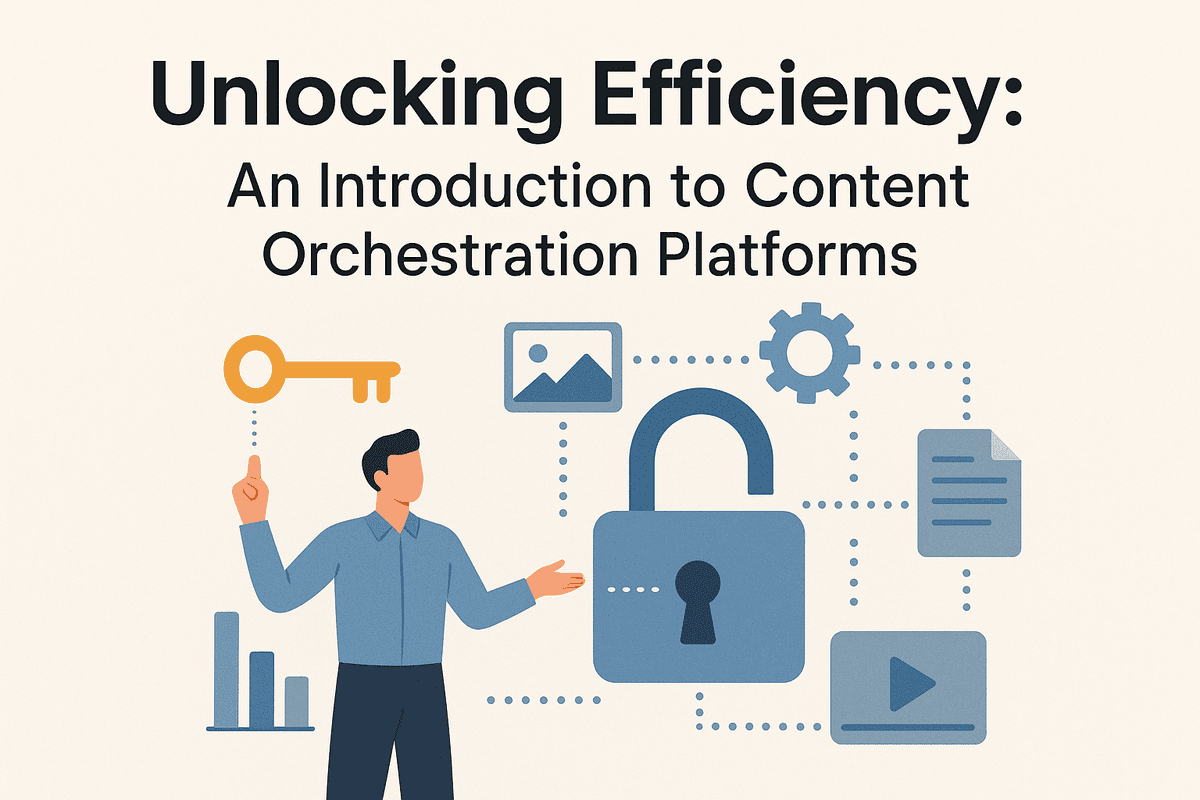
Unlocking Efficiency: An Introduction to Content Orchestration Platforms
In today's fast-paced digital landscape, the sheer volume of information can be overwhelming. Researchers and content creators alike are constantly seeking ways to work smarter, not just harder. This is where the concept of orchestration becomes crucial, extending beyond individual tasks to encompass entire content ecosystems. While tools like an ai research assistant dramatically boost efficiency in gathering and analyzing information, what happens to the valuable content and insights generated? This section delves into Content Orchestration Platforms (COPs) – the systems designed to manage your content strategy with intelligence and agility.
What are Content Orchestration Platforms and Why Do They Matter Now?
So, what exactly is a Content Orchestration Platform? Think of it as the central nervous system for your entire content lifecycle. Unlike traditional systems that might handle one piece of the puzzle (like storing articles), a COP integrates and streamlines every stage: from planning and creation (where insights from your ai research assistant might feed in) to management, distribution, and analysis.
Why do they matter, especially now?
- Information Overload: The digital world is saturated with content. COPs help cut through the noise by ensuring your carefully researched and crafted content – perhaps developed with the aid of an ai research assistant – reaches the intended audience effectively.
- Demand for Personalization: Audiences expect content tailored to their specific needs and interests. COPs enable personalization at scale, delivering the right piece of content to the right person on the right channel.
- Need for Speed and Agility: Markets change rapidly. COPs allow organizations to adapt their content strategies quickly, repurpose existing assets, and deploy new content efficiently. Imagine your ai research assistant uncovers a new trend; a COP helps you swiftly disseminate related content.
- Maximizing Content Value: Creating high-quality content, especially research-driven pieces, requires significant investment. COPs help maximize the ROI of this content by facilitating its reuse, adaptation, and strategic distribution across multiple platforms.
In essence, Content Orchestration Platforms matter because they bring order, intelligence, and efficiency to the complex world of content, ensuring that the valuable outputs, including those derived from using an ai research assistant, achieve their maximum impact.
The Evolution from Basic CMS to Intelligent Content Orchestration
For years, Content Management Systems (CMS) were the go-to solution for handling digital content. Basic CMS platforms primarily focused on storing and publishing content, often in a website-centric manner. While revolutionary in their time, their limitations have become increasingly apparent in today's multifaceted content landscape:
- Siloed Operations: Traditional CMS often operate in isolation, making it difficult to manage content cohesively across different channels or for various purposes.
- Limited Flexibility: Adapting content for diverse audiences, platforms, or formats can be cumbersome and manual.
- Lack of Strategic Oversight: They often provide limited tools for planning content strategically or analyzing its performance comprehensively across the entire lifecycle.
Intelligent Content Orchestration represents a significant leap forward. It’s not just about storing content; it’s about strategically managing and leveraging it as a valuable asset. This evolution is characterized by:
- Integration: COPs connect with various tools and platforms (e.g., analytics, marketing automation, CRMs, and potentially even inputs from your ai research assistant's findings) to create a unified content ecosystem.
- Automation: Just as an ai research assistant automates tedious aspects of research, COPs automate many content-related workflows, such as content tagging, summarization (akin to how an ai research assistant might summarize findings), distribution scheduling, and performance tracking. This frees up human teams to focus on higher-value strategic tasks.
- Intelligence: Modern COPs often incorporate AI and machine learning capabilities to offer smarter content recommendations, predictive analytics, and enhanced personalization – principles that resonate with the intelligent assistance provided by an ai research assistant.
- Modularity and Reusability: Content is often treated as modular components that can be easily mixed, matched, and reused across different channels and campaigns, maximizing efficiency.
This shift mirrors the broader trend towards smarter, more integrated technological solutions, where tools like an ai research assistant optimize specific tasks (like research) and COPs optimize the entire content value chain.
Key Benefits: How These Platforms Transform Your Content Strategy
Adopting a Content Orchestration Platform isn't just about new software; it's about fundamentally transforming how you approach and manage your content strategy. The benefits are far-reaching, especially when dealing with the rich, data-driven content an ai research assistant can help you produce:
- Dramatically Increased Efficiency:
- Automate repetitive tasks in content creation, management, and distribution.
- Streamline workflows, reducing manual handoffs and bottlenecks. This means the insights your ai research assistant helps you uncover can move from raw data to published content much faster.
- Enhanced Collaboration:
- Provide a centralized hub for all content-related activities, improving communication and coordination among teams (researchers, writers, marketers, designers).
- Ensure version control and consistent messaging across all outputs.
- Superior Personalization and Customer Experience:
- Deliver targeted content to specific audience segments based on data and behavior.
- Create more relevant and engaging experiences, increasing audience satisfaction and conversion rates.
- Improved Content ROI and Performance:
- Gain deeper insights into how content is performing across different channels.
- Easily repurpose and reuse high-performing content, extending its lifespan and value – especially important for evergreen research findings.
- Make data-driven decisions to optimize your content strategy continually.
- Greater Agility and Scalability:
- Quickly adapt to changing market demands and new content opportunities.
- Scale content operations efficiently as your needs grow, without a proportional increase in manual effort. The efficiency your ai research assistant brings to research can be matched by the COP's ability to handle the resulting output at scale.
- Consistent Brand Voice and Compliance:
- Ensure all content aligns with brand guidelines and regulatory requirements.
- Maintain control over how and where your content is published.
By orchestrating your content with intelligence, these platforms empower you to move beyond simply producing content to strategically leveraging it as a core asset, amplifying the value generated by every part of your information workflow, including the powerful capabilities of an ai research assistant.
Choosing Your Engine: A Comparison of Leading Content Orchestration Platforms
Once your ai research assistant starts unearthing valuable insights and fueling content creation, you need a robust system to manage, refine, and distribute this output effectively. Content orchestration platforms act as the central engine for your content operations, ensuring that every piece of information reaches the right audience, through the right channel, at the right time. While not AI research assistants themselves, these platforms are critical for leveraging the intelligence an ai research assistant provides. Let's explore some leading options:
Sitecore Content Hub: Strengths in Enterprise Scalability and DAM
Sitecore Content Hub is a powerhouse for large organizations that require comprehensive control over the entire content lifecycle. Its standout features include:
- Enterprise Scalability: Designed to handle vast volumes of content and complex organizational structures, Sitecore can support global teams and extensive digital ecosystems. If your ai research assistant is generating a high velocity of data and diverse content assets, Sitecore provides the infrastructure to manage this scale.
- Digital Asset Management (DAM): A core strength is its sophisticated DAM capabilities. This allows for centralized storage, meticulous metadata tagging, rights management, and easy retrieval of all digital assets – from images and videos (perhaps sourced or inspired by your research) to documents and 3D models. This is crucial for maintaining brand consistency and maximizing the ROI of your content.
- Content Marketing Platform (CMP) & Product Content Management (PCM): Beyond DAM, it offers tools for content planning, creation, collaboration, and product information management, creating a unified content ecosystem.
Best for: Large enterprises needing a holistic, scalable solution for managing a high volume of diverse content assets and complex marketing operations.
Aprimo: Focus on Integrated Workflow and Productivity
Aprimo excels in streamlining marketing workflows and enhancing team productivity, making it a strong contender for organizations looking to optimize their content operations from planning to execution.
- Integrated Workflow Management: Aprimo offers robust tools for planning marketing activities, managing budgets, and orchestrating complex workflows across different teams and projects. This means the insights and raw content an ai research assistant helps generate can be seamlessly funneled into predefined workflows for enrichment, review, approval, and distribution.
- Productivity and Collaboration: By centralizing project management, resource allocation, and collaborative tasks, Aprimo helps teams work more efficiently. It aims to break down silos and provide clear visibility into every stage of the content and marketing lifecycle.
- Performance Tracking: Aprimo provides analytics to measure content and campaign performance, helping you understand what resonates and refine your strategy—a perfect complement to the data-driven insights from your research phase.
Best for: Marketing organizations focused on optimizing complex workflows, improving cross-team collaboration, and boosting overall productivity in content creation and campaign management.
Contentful: API-first Approach for Headless Architectures
Contentful is a leading headless content platform, offering unparalleled flexibility for businesses that need to deliver content to a multitude of digital channels and devices.
- API-first and Headless: Unlike traditional CMSs, Contentful decouples content management from content presentation. This means your content, potentially curated or drafted with the help of an ai research assistant, is stored as structured data and can be delivered via APIs to any frontend—websites, mobile apps, IoT devices, voice assistants, and more.
- Developer-Friendly: Its API-centric nature makes it highly attractive to development teams who want the freedom to choose their preferred frontend technologies and build custom digital experiences.
- Scalability and Customization: Contentful is built for modern, scalable cloud architectures. It allows for highly customizable content models, enabling you to structure your information precisely as needed for various applications.
Best for: Businesses embracing a headless architecture, requiring content to be delivered flexibly across diverse digital touchpoints, and those with strong development teams looking to build custom experiences.
Key Differentiators: What to Look for Based on Your Business Needs
Choosing the right content orchestration platform depends heavily on your specific requirements, team structure, technical capabilities, and how you plan to leverage tools like an ai research assistant. Consider these factors:
- Scale and Complexity of Content Operations:
- Large Enterprise, High Volume DAM: Sitecore Content Hub often shines here.
- Complex Marketing Workflows: Aprimo's strengths in workflow automation can be a significant advantage.
- Multi-channel, Headless Delivery: Contentful is purpose-built for this.
- Primary Use Case:
- Are you primarily looking to manage digital assets?
- Is improving marketing project efficiency your main goal?
- Is flexible, future-proof content delivery to various endpoints the priority?
- Integration with AI Research Assistant Outputs:
- How will you feed insights or content drafts from your ai research assistant into the platform? API capabilities (strong in Contentful, but available in others) are key here.
- Does the platform support the types of assets and data structures your research tools will generate?
- Technical Expertise:
- Headless platforms like Contentful generally require more developer involvement for the presentation layer.
- Consider the learning curve and the resources needed for implementation and ongoing management.
- Existing Tech Stack:
- How well does the platform integrate with your current CRM, marketing automation tools, analytics, and other systems?
- Budget and Total Cost of Ownership (TCO):
- Factor in licensing fees, implementation costs, training, and ongoing maintenance.
Ultimately, the best "engine" for your content is one that seamlessly integrates with your processes, empowers your teams, and allows you to maximize the value of the insights and content your ai research assistant helps you discover and create. Evaluate your needs carefully, request demos, and consider pilot projects to make an informed decision.
Powering Your Strategy: Core Features of Content Orchestration Platforms
To maximize the impact of insights and content developed with your ai research assistant, a robust content orchestration platform is indispensable. These platforms provide the operational backbone, transforming raw research and initial drafts into polished, high-impact content. Here are the core features that power your strategy:
Streamlined Workflow Automation: From Ideation to Distribution
Imagine your ai research assistant uncovers a groundbreaking insight. How quickly can you act on it? Content orchestration platforms excel at automating workflows, from initial brief creation and content development to reviews, approvals, and multi-channel distribution. This means the valuable outputs from your ai research assistant are rapidly channeled through a predefined, efficient process. By minimizing manual handovers and bottlenecks, you can significantly accelerate your content lifecycle, ensuring timely delivery of research-backed narratives. This automation allows your team to focus on strategic tasks, leveraging the ai research assistant for discovery and the platform for execution.
Advanced Collaboration Tools for Seamless Teamwork
Research and content creation are rarely solo endeavors. Even with a powerful ai research assistant aiding in discovery and drafting, human collaboration is crucial for refinement, fact-checking, and ensuring brand alignment. Content orchestration platforms offer sophisticated collaboration tools, including real-time co-editing, version control, contextual commenting, and shared calendars. This enables your team to seamlessly work together on content derived from or inspired by your ai research assistant, ensuring that expert knowledge and diverse perspectives enrich the final output. Clear communication pathways reduce misunderstandings and speed up the entire content production cycle.
Robust DAM Capabilities for Centralized Asset Management
The research, data, images, and draft documents generated or curated with the help of your ai research assistant are valuable assets. A robust Digital Asset Management (DAM) system, often integrated within content orchestration platforms, provides a centralized, searchable repository for all your content-related files. This ensures that research findings, supporting data, approved visuals, and various content versions are easily accessible, properly tagged, and readily available for reuse. By centralizing assets, you maintain brand consistency, protect intellectual property, and empower your team to efficiently leverage the knowledge base built with your ai research assistant.
Personalization and Omnichannel Delivery Features
Your ai research assistant can help you understand diverse audience segments and identify opportunities for tailored messaging. Content orchestration platforms take this further by enabling sophisticated personalization and efficient omnichannel delivery. They allow you to adapt core content, informed by your research, for different personas and distribute it effectively across various channels—be it your blog, social media, email newsletters, or partner portals. This ensures that the valuable insights uncovered by your ai research assistant are transformed into compelling narratives that resonate with specific audiences, wherever they are.
Analytics and Performance Tracking for Content ROI
How do you know if the research topics explored with your ai research assistant are truly engaging your audience and driving results? Content orchestration platforms come equipped with powerful analytics and performance tracking capabilities. These tools allow you to measure content engagement, track conversions, and understand the overall return on investment (ROI) of your content initiatives. By analyzing this data, you can identify high-performing content, understand which research areas yield the best results, and continuously refine your strategy. This feedback loop is invaluable for optimizing how you utilize your ai research assistant and ensuring your content efforts consistently deliver measurable business impact.
Maximizing Impact: Best Practices for Content Orchestration Platform Success
An AI research assistant can revolutionize how your organization uncovers insights and generates valuable information. However, to truly harness the power of these discoveries and ensure they drive decisions and innovation, effective content orchestration is crucial. Implementing a platform or system to manage, distribute, and leverage the outputs from your AI research assistant requires a strategic approach. Here are key best practices to ensure your content orchestration efforts deliver maximum impact.
Defining Clear Goals and KPIs Before Implementation
Before you dive into platform selection or workflow design, it's paramount to define what success looks like. What do you aim to achieve by orchestrating the rich content and data generated by your AI research assistant?
- Clarify Objectives: Are you looking to speed up the dissemination of critical research findings? Do you want to improve the consistency and quality of content built upon insights from your AI research assistant? Is the goal to foster better collaboration by making research accessible across departments? Clearly articulated goals will guide your entire strategy.
- Establish Measurable KPIs: Vague goals lead to vague results. Set specific, measurable, achievable, relevant, and time-bound (SMART) Key Performance Indicators (KPIs). Examples could include:
- Reduction in time from insight discovery (via your AI research assistant) to content publication.
- Increase in the usage of research-backed content in marketing campaigns.
- Improved ROI from your AI research assistant investment, evidenced by wider adoption and application of its findings.
- Higher engagement rates for content developed using orchestrated research insights. Without clear goals and KPIs, you'll struggle to measure the effectiveness of your orchestration platform and its contribution to leveraging your AI research assistant.
Integrating with Your Existing Martech Stack (CRM, Analytics, etc.)
Your content orchestration platform shouldn't operate in a silo, especially when dealing with valuable intelligence from an AI research assistant. Seamless integration with your existing marketing technology (Martech) stack is vital for amplifying reach and measuring impact.
- Connect to CRMs: Feed insights directly into your Customer Relationship Management (CRM) system to empower sales and customer service teams with the latest research. Imagine your sales team having instant access to market trends or competitor analysis unearthed by your AI research assistant, right within their CRM.
- Link with Analytics Platforms: Track how the orchestrated content performs. By integrating with web analytics, social media analytics, and business intelligence tools, you can understand which insights resonate most, how they influence audience behavior, and the overall ROI of your research-driven content.
- Automate Workflows: Integration enables automation. For instance, a new insight flagged by your AI research assistant could automatically trigger a task in your project management tool for content creation, which then gets scheduled via your marketing automation platform. This interconnected ecosystem ensures that the intelligence gathered by your AI research assistant flows efficiently to where it’s needed most, maximizing its utility.
Training Your Team for Optimal Platform Adoption
A sophisticated platform is only as good as the team using it. Proper training is essential for ensuring your team can effectively use the content orchestration platform to manage and leverage the outputs of your AI research assistant.
- Comprehensive Training Programs: Go beyond basic feature demonstrations. Provide training that covers how the platform supports specific workflows related to your AI research assistant – from ingesting research summaries to distributing final reports.
- Focus on Value: Help your team understand why this new process and platform are important. Highlight how it makes their jobs easier, enhances the impact of their work, and better utilizes the powerful capabilities of the AI research assistant.
- Ongoing Support and Resources: Learning doesn't stop after initial training. Offer ongoing support, readily accessible documentation, and refresher sessions. Encourage a culture of learning and sharing best practices for using both the AI research assistant and the orchestration platform. Successful adoption hinges on your team's confidence and competence in using these tools to their full potential.
Establishing Governance and Content Lifecycle Management
The insights and content generated with the help of an AI research assistant are valuable assets, but they need proper management to maintain quality, relevance, and compliance.
- Define Clear Governance Policies: Who can access certain research data? What are the approval workflows for content derived from AI research assistant findings? What are the branding and compliance guidelines? Document these policies clearly and make them accessible.
- Implement Content Lifecycle Management: Not all research remains relevant forever. Establish processes for:
- Creation: How new insights from the AI research assistant are developed into usable content.
- Review & Approval: Ensuring accuracy, quality, and compliance.
- Distribution: Getting the right content to the right audience through the right channels.
- Maintenance: Regularly reviewing and updating content to ensure it remains current, especially as your AI research assistant provides new data.
- Archival/Retirement: Defining when and how outdated content is removed or archived. Strong governance and lifecycle management ensure that the information flowing through your orchestration platform is trustworthy, compliant, and impactful, safeguarding the integrity of your AI research assistant's contributions.
Iterating and Optimizing Your Orchestration Strategy Post-Launch
Launching your content orchestration platform is not the end goal; it’s the beginning of a continuous improvement cycle. The landscape of AI tools and market needs is constantly evolving, and so should your strategy.
- Monitor Performance Against KPIs: Regularly track the KPIs you defined in the initial phase. Are you meeting your goals? Where are the bottlenecks or areas for improvement in how you handle content from your AI research assistant?
- Gather User Feedback: Your team members are on the front lines. Solicit their feedback on the platform, the workflows, and how well the system supports their use of the AI research assistant's outputs.
- Stay Agile and Adapt: Be prepared to make adjustments. This could involve refining workflows, updating governance rules, exploring new integrations, or even re-evaluating the features of your AI research assistant and how its outputs are best orchestrated.
- Test and Experiment: Don't be afraid to try new approaches for distributing or repurposing the insights gathered. For example, experiment with different content formats or channels for information discovered by your AI research assistant. By committing to an iterative approach, you ensure that your content orchestration strategy remains effective, efficient, and continually maximizes the value derived from your AI research assistant.
Content Orchestration Platforms in Action: Real-World Success Stories
Content Orchestration Platforms (COPs) are masters of managing and distributing content, but what fuels their most impressive victories? The answer increasingly lies in the powerful capabilities of an ai research assistant. By supercharging the discovery, analysis, and synthesis of critical information, an ai research assistant provides the foundational intelligence that transforms COPs from mere distributors into strategic powerhouses. Let's delve into how this dynamic duo achieves remarkable results in the real world.
Global Marketing Campaign Coordination and Execution
Imagine launching a product simultaneously in ten countries. Each market has unique cultural nuances, competitor landscapes, and regulatory hurdles. Manually researching this is a Herculean task. Enter the ai research assistant. It rapidly scans global data sources, delivering localized insights on consumer behavior, trending topics, and competitive messaging. Content Orchestration Platforms then use this intelligence to tailor campaign assets, ensuring resonant messaging and compliant execution across borders. The result? Global campaigns that hit the mark, driving engagement and minimizing costly missteps, all because the underlying strategy was informed by swift, accurate research.
Delivering Personalized Customer Experiences Across Multiple Touchpoints
Today's customers don't just want personalization; they expect it. But how do you personalize at scale across countless touchpoints? An ai research assistant dives deep into customer data, uncovering granular insights into preferences, behaviors, and intent. It can identify emerging micro-segments and research the specific information and content angles that resonate most with them. This rich, nuanced understanding, when fed into a COP, allows for the automated delivery of hyper-relevant content – from email and social media to website interactions. Businesses leveraging this synergy see customer loyalty soar and conversion rates climb, transforming generic interactions into meaningful connections.
Streamlining Product Information Management (PIM) for E-commerce
For e-commerce businesses, accurate and compelling product information is paramount. Yet, managing details for thousands of SKUs can be a logistical nightmare. An ai research assistant acts as a tireless product intelligence expert. It can meticulously scan competitor sites for feature comparisons, gather up-to-date specifications, identify crucial keywords for discoverability, and even help ensure product descriptions meet industry and regulatory standards. This meticulously researched and validated data then seamlessly populates PIM systems and, by extension, e-commerce storefronts via COPs. The outcome is enhanced product visibility, fewer customer queries, reduced return rates, and a smoother path to purchase, significantly boosting online sales.
Scaling Content Production for Effective B2B Lead Generation
B2B success hinges on a steady flow of authoritative content that attracts and nurtures leads. But consistently producing high-quality, insightful material is resource-intensive. This is where an ai research assistant truly shines for content teams. It can accelerate the entire pre-production pipeline by identifying emerging industry trends, pinpointing prospect pain points through forum and discussion analysis, gathering compelling statistics and data for whitepapers, and even summarizing lengthy reports to extract key takeaways. This research groundwork empowers content creators and strategists, whose outputs are then managed and amplified by COPs. The impact? A dramatically accelerated content pipeline, a stronger reputation for thought leadership, and a surge in qualified B2B leads ready for engagement.
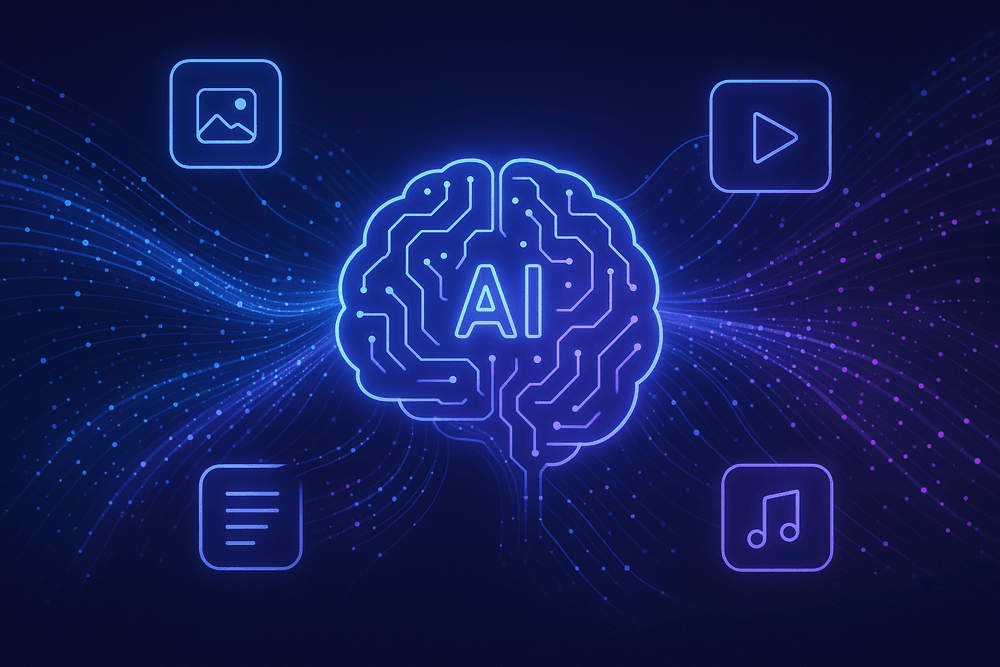
Next-Level Content: Emerging Trends in Content Orchestration Platforms
The landscape of content is ever-evolving, and so are the platforms designed to manage it. Content orchestration is moving beyond simple scheduling and distribution. The next wave is about intelligent, agile, and predictive systems that empower organizations to deliver truly impactful content experiences. For teams leveraging an ai research assistant, these trends offer even greater potential, as insights gleaned can directly fuel these advanced orchestration capabilities. Let's explore the emerging trends shaping the future.
AI and Machine Learning: Revolutionizing How Content is Orchestrated
Artificial Intelligence (AI) and Machine Learning (ML) are no longer futuristic concepts but core components revolutionizing content orchestration. These technologies are infusing platforms with unprecedented intelligence, automating complex tasks, and enabling hyper-personalization at scale. Imagine AI algorithms that automatically tag content with nuanced metadata, suggest optimal distribution channels based on performance data, or even assist in generating content variations tailored to specific audience segments.
This is where the synergy with an ai research assistant becomes incredibly powerful. An ai research assistant can delve deep into market trends, competitor analysis, and audience sentiment, unearthing critical insights. This intelligence, when fed into the AI/ML engines of content orchestration platforms, supercharges their effectiveness. For instance, an ai research assistant might identify an emerging niche topic; the orchestration platform's AI can then prioritize content creation and distribution around it, ensuring relevance and impact. This collaboration transforms orchestration from a logistical process into an intelligent, insight-driven operation.
The Composable Shift: Headless CMS and Agile Content Orchestration
The future of content architecture is increasingly composable. Headless Content Management Systems (CMS) decouple content creation and storage from its presentation, allowing content to be treated as modular, reusable "atoms." This flexibility enables businesses to deliver consistent yet contextually appropriate content across a multitude of channels – websites, mobile apps, IoT devices, and beyond.
Content orchestration platforms are pivotal in this composable world. They act as the central nervous system, managing the flow of these content atoms to the right front-ends at the right time. An ai research assistant can significantly enhance this process. It can help content teams and researchers swiftly locate specific content components within a vast headless repository, analyze their past performance across different channels, and identify opportunities for reuse or an atomic design approach to content creation. By streamlining the discovery and strategic deployment of modular content, an ai research assistant ensures that the agility promised by headless architecture is fully realized through sophisticated orchestration.
Foresight is Power: Predictive Analytics for Proactive Content Adjustments
Why wait for content to underperform when you can anticipate challenges and opportunities? Predictive analytics is emerging as a game-changer in content strategy, and orchestration platforms are beginning to integrate these capabilities. By analyzing historical data, user behavior patterns, and external market signals, these platforms can forecast content performance, identify potential engagement drops, or highlight topics likely to trend.
An ai research assistant plays a crucial upfront role in feeding these predictive models. It acts as a sophisticated discovery tool, scanning the digital horizon for early indicators of change—subtle shifts in search intent, emerging competitor tactics, or evolving audience preferences. These insights, often buried in vast datasets, are surfaced by the ai research assistant and can then be used by the orchestration platform’s predictive analytics engine to make more accurate forecasts. This empowers content strategists to move from a reactive stance to a proactive one, making data-informed adjustments to their content plans before issues arise or opportunities are missed, ensuring their orchestration efforts yield maximum ROI.
Conclusion: Elevate Your Content Strategy with the Right Content Orchestration Platform
The journey through the capabilities of an ai research assistant reveals a fundamental shift in how we approach information, analysis, and content creation. To truly capitalize on this evolution, it's vital to integrate these powerful tools thoughtfully into your broader content strategy. This isn't just about adopting new technology; it's about fundamentally enhancing how your content is conceived, researched, and delivered, leading to more impactful results.
Recap: Why an AI Research Assistant is a Cornerstone of Modern Content Strategy
In today's fast-paced digital landscape, the demand for high-quality, deeply researched, and timely content is relentless. Traditional research methods, often laborious and time-consuming, can no longer keep up with the sheer volume of information or the speed required to maintain a competitive edge. This is where an ai research assistant becomes not just beneficial, but non-negotiable.
By automating tedious data collection, sifting through vast datasets in minutes, and uncovering nuanced insights that might elude human researchers, an ai research assistant empowers your team to focus on strategic thinking and creative execution. This enhanced efficiency and the ability to produce consistently data-driven, authoritative content are critical components of a smart content strategy. Integrating an AI research assistant means you're not just creating content faster; you're building a more agile, informed, and effective content engine that truly orchestrates the flow from raw data to compelling narrative.
Choosing Your Engine: Key Questions for Selecting an AI Research Assistant
Selecting the right ai research assistant is pivotal to successfully integrating it into your content operations and reaping its full benefits. Not all platforms are created equal, and the ideal choice will align closely with your specific needs, team capabilities, and strategic objectives. As you evaluate your options, consider asking the following critical questions:
- Scope and Relevance: Does the ai research assistant access and analyze the data sources most relevant to your industry and research topics?
- Usability and Integration: How intuitive is the user interface? Can it seamlessly integrate with your existing content creation tools, project management systems, and overall workflow?
- Analytical Power: What are its core capabilities in terms of data synthesis, trend identification, summarization, and the generation of actionable insights? Does it go beyond simple information retrieval?
- Accuracy and Reliability: How does the platform ensure the accuracy of the information provided? What mechanisms are in place for source verification and bias detection?
- Customization and Scalability: Can the tool be customized to your specific research parameters and workflows? Will it scale to meet your growing content demands?
- Learning Curve and Support: How much training will be required for your team? What kind of customer support, documentation, and community resources are available?
- Cost and ROI: Does the pricing model align with your budget? More importantly, can you define a clear return on investment in terms of time saved, improved content quality, and enhanced research outcomes?
Answering these questions will guide you toward an ai research assistant that doesn’t just add another tool to your stack, but genuinely enhances your content orchestration capabilities.
Take the Next Step: Supercharge Your Content Operations with an AI Research Assistant
The era of AI-augmented research is no longer on the horizon; it's here. The decision to integrate an ai research assistant into your content operations is a decisive step towards transforming your entire approach to content. This isn't merely about adopting a new piece of technology; it's about unlocking new levels of efficiency, creativity, and impact.
Imagine your research process transformed from a potential bottleneck into a powerful catalyst for exceptional content. Envision your team, freed from the drudgery of manual data sifting, dedicating their expertise to crafting compelling narratives and strategic insights. An ai research assistant can make this a reality, helping you discover hidden patterns, understand complex topics more deeply, and produce content that not only informs but also captivates and converts.
Don't let your content strategy be constrained by outdated research methods. Take the initiative to explore the ai research assistant tools available today. Pilot a solution, empower your team, and witness firsthand the transformative power of AI in your content creation workflow. Elevate your content strategy from merely functional to truly groundbreaking, and position your organization as a leader in your field by harnessing the intelligence of an AI research assistant.