
June 17, 2025
An Introduction to AI Decision Support Systems
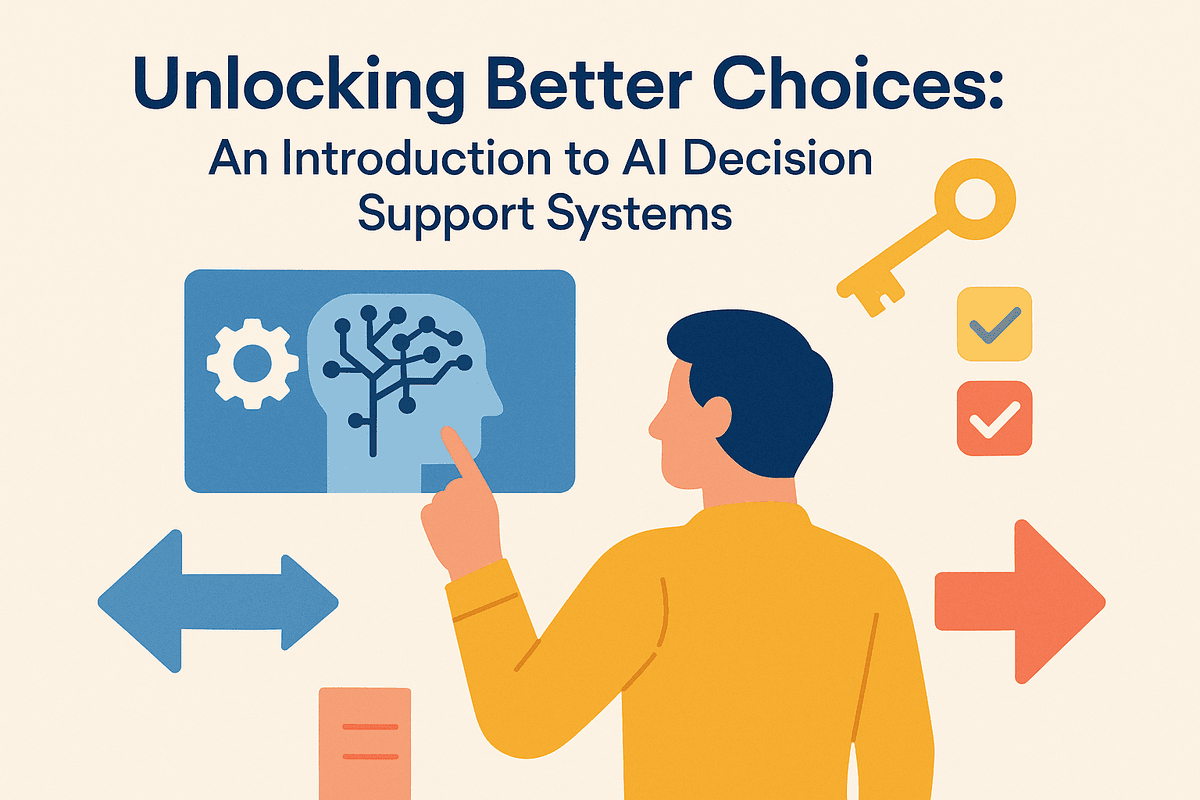
Unlocking Better Choices: An Introduction to AI Decision Support Systems
In today's fast-paced, data-rich environment, making the right decision at the right time can be the difference between success and stagnation. But what if you had an intelligent partner to help navigate the complexities? Enter AI decision support systems, a transformative technology poised to redefine how businesses approach challenges and opportunities.
Decoding AI Decision Support Systems: Your Intelligent Co-Pilot
Ever wished you had a crystal ball for your business decisions? While not quite magic, AI decision support systems come remarkably close. But what exactly are they? At their core, AI decision support systems are sophisticated software tools that leverage artificial intelligence to help humans make better, more informed choices. Think of them as intelligent co-pilots, sifting through vast amounts of data, identifying patterns, and presenting actionable insights that might be missed by the human eye alone.
How do they work? Typically, these systems ingest large datasets – from historical sales figures and market trends to real-time operational data. Then, AI algorithms, including machine learning models, analyze this information to predict outcomes, suggest optimal actions, or highlight potential risks and opportunities. The crucial aspect is support; these systems don't make decisions for you. Instead, they empower you by providing data-driven recommendations, freeing up your cognitive resources to focus on strategic thinking and final judgment. They enhance human intuition with the power of intelligent data analysis, making AI decision support systems an indispensable ally in navigating complex scenarios.
From Gut Feel to Data-Driven: The AI Revolution in Business Decisions
For centuries, business decisions often relied on a blend of experience, intuition, and limited data. While valuable, this traditional approach can struggle with the sheer volume and velocity of information in today's digital world. This is where AI decision support systems mark a revolutionary leap. They represent a fundamental shift from 'gut-feel' leadership to truly data-driven strategies.
Why is this a game-changer for businesses? Firstly, AI can process and analyze information at a scale and speed far beyond human capability. This means quicker identification of emerging trends or urgent issues. Secondly, AI decision support systems enhance accuracy by minimizing human bias and error in data interpretation. They can handle incredible complexity, modeling intricate scenarios with numerous variables to provide a clearer picture of potential outcomes. For businesses, this translates into more efficient operations, optimized resource allocation, improved risk management, and ultimately, a stronger competitive edge. By transforming raw data into strategic intelligence, AI decision support systems are not just tools; they are catalysts for smarter, faster, and more impactful decision-making across all levels of an organization.
Under the Hood: Key Components of AI-Powered Decision Support
To truly appreciate the power of AI decision support systems, it's helpful to understand their inner workings. While specific architectures can vary, most systems share a few core components that work in concert:
- Data Management & Input Layer: This is the foundation. It involves collecting, cleaning, and organizing vast amounts of data from diverse sources – databases, spreadsheets, IoT devices, APIs, and more. The quality and relevance of this input data are paramount, as the adage 'garbage in, garbage out' profoundly applies to AI decision support systems.
- AI Models & Algorithms (The 'Brain'): Herein lies the intelligence. This component houses the AI algorithms, often including machine learning (ML) models, natural language processing (NLP) capabilities, and optimization techniques. Trained on historical data, these models recognize patterns, make predictions, classify information, or generate recommendations tailored to the decision-making context.
- User Interface (UI) & Output Layer: This is the human-system interaction point. An effective UI presents complex information clearly and intuitively—through dashboards, reports, visualizations, or even natural language alerts. The goal is to make the outputs of the AI decision support system accessible and easy to interpret, enabling users to confidently factor them into their decision-making process.
These elements work together, transforming raw data into strategic guidance, establishing AI-powered decision support as vital for modern business intelligence and a cornerstone for unlocking better choices.
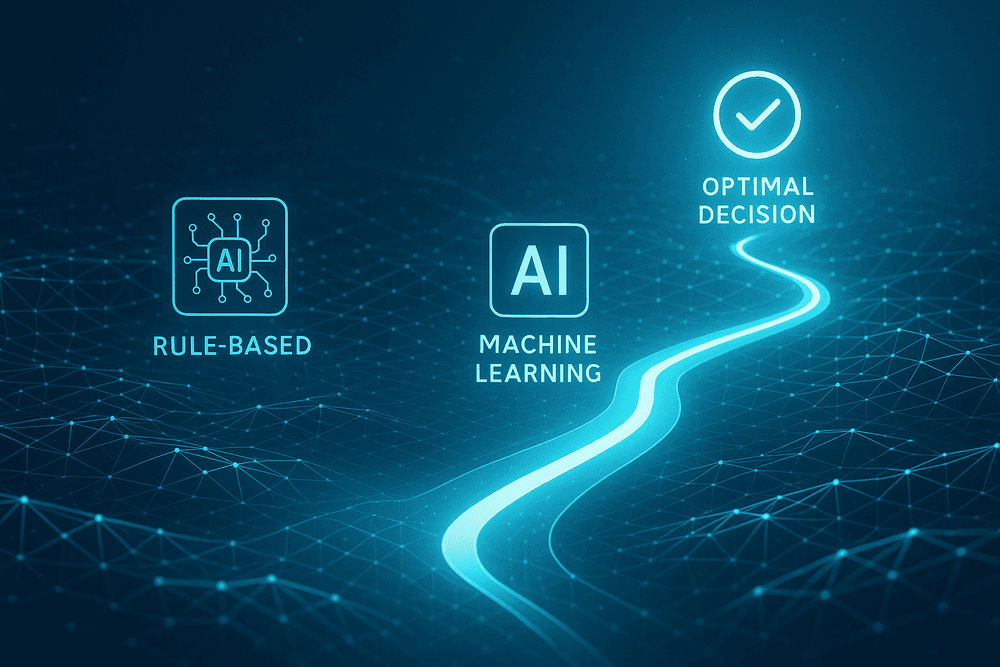
Exploring the Landscape: Types and Benefits of AI Decision Support Systems
The world of AI decision support systems is diverse, offering a range of tools to enhance human judgment. Understanding their different forms and compelling advantages is key to harnessing their full potential for smarter, faster decision-making.
Navigating the Spectrum: Key Types of AI Decision Support Systems
AI decision support systems manifest in several primary forms, each suited to different challenges:
Rule-Based Systems: Logic and Clarity
These foundational AI decision support systems operate on predefined "if-then" rules. Crafted by experts, they excel where logic is well-understood and transparency is key—like compliance checks or standardized diagnostic procedures. Their strength is predictability and explainability, though they can be less flexible when facing novel situations not covered by existing rules.
Machine Learning (ML) Models: Adaptive Intelligence
ML-powered AI decision support systems learn from data rather than relying solely on pre-programmed instructions. They analyze vast datasets to identify patterns, make predictions, and adapt over time. Key approaches include supervised learning (predicting outcomes from labeled data), unsupervised learning (finding patterns in unlabeled data), and reinforcement learning (learning via trial-and-error). These systems excel in complex, dynamic environments, handling tasks like advanced risk assessment or personalized recommendations, often using Natural Language Processing (NLP) for better human interaction.
Unlocking Key Benefits: How AI Decision Support Systems Elevate Performance
Integrating AI decision support systems into organizational workflows yields significant improvements in accuracy, efficiency, and overall productivity, transforming how businesses operate.
Enhanced Accuracy and Streamlined Efficiency
Key advantages of AI decision support systems include boosted decision accuracy—achieved by processing vast data, reducing human bias for reliable outcomes in areas like finance or healthcare—and enhanced efficiency. They automate laborious data tasks and routine decisions, freeing human experts for strategic work and accelerating decision cycles.
Boosting Productivity Through Intelligent Automation
Intelligent automation within AI decision support systems also directly enhances productivity. By handling repetitive tasks and low-risk decisions, AI enables teams to achieve more. Human experts, augmented with powerful insights, can focus on complex challenges, increasing output and allowing focus on higher-value strategic work.
Choosing Your Navigator: Matching AI Decision Support to Specific Needs
Selecting the right type of AI decision support system is crucial. The optimal choice hinges on your specific problem, data landscape, and desired level of automation and explainability.
When Rule-Based Systems Are the Right Fit
Opt for rule-based AI decision support systems when:
- Decision logic is clear, stable, and can be explicitly codified.
- Transparency and explainability are critical (e.g., regulatory adherence).
- The problem domain is well-structured, like standardized customer service protocols.
When to Harness Machine Learning Models
Leverage ML-powered AI decision support systems when:
- You need to uncover complex patterns in large, dynamic datasets.
- The system must adapt to new information and evolving conditions.
- Predictive accuracy is paramount for tasks like fraud detection or demand forecasting.
- Personalization is a key driver, such as in recommendation engines.
In many cases, a hybrid approach, blending rule-based clarity with ML's adaptability, offers the most robust AI decision support system for diverse business challenges, tailoring solutions to precise organizational needs.
Core Capabilities: What to Look For in AI Decision Support Systems
Choosing the right AI decision support system can be a game-changer for your organization, but it’s crucial to understand the foundational capabilities that truly deliver value. Not all systems are created equal. When evaluating options, look beyond the hype and focus on these core features that empower smarter, faster, and more effective decision-making.
Unlocking Insights: Advanced Data Analysis and Pattern Recognition
In today's data-deluged world, the ability to swiftly and accurately analyze vast datasets is paramount. Sophisticated AI decision support systems excel here, employing machine learning algorithms to sift through complex information at a scale and speed no human team could match. They are adept at identifying subtle patterns, correlations, and anomalies that might otherwise go unnoticed. This isn't just about processing numbers; it's about uncovering the "why" behind the data. Look for systems that can handle diverse data types – structured, unstructured, and semi-structured – to provide a holistic view. The power of an AI decision support system in this regard lies in its capacity to transform raw data into actionable intelligence, revealing hidden opportunities and potential risks before they escalate.
Peering into Tomorrow: Predictive Analytics and Forecasting
Why react when you can anticipate? A hallmark of powerful AI decision support systems is their predictive analytics and forecasting capabilities. By leveraging historical data, identifying trends, and applying advanced statistical models, these systems can project future outcomes with remarkable accuracy. This could mean forecasting sales demand to optimize inventory, predicting market shifts to stay ahead of competitors, or identifying potential equipment failures before they cause downtime. Effective AI decision support systems provide not just a single prediction, but often a range of possibilities with associated probabilities, enabling businesses to make proactive, data-informed strategic choices, allocate resources more efficiently, and mitigate future risks.
Speaking Your Language: Natural Language Processing (NLP) for Intuitive Interaction
The most powerful insights are useless if they aren't accessible. This is where Natural Language Processing (NLP) becomes a critical component of modern AI decision support systems. NLP enables users to interact with complex systems using everyday language. Imagine asking your system, "What were our top-performing products in the last quarter in the European market?" and receiving a clear, concise answer, perhaps even with visualizations. NLP also allows AI decision support systems to understand and process unstructured data sources like customer reviews, social media comments, or technical reports, extracting valuable sentiment and information. This intuitive interaction model democratizes data access, empowering non-technical users to independently query data and derive insights, making the system a truly collaborative tool.
Tailored for You: Customization and Seamless Integration Capabilities
Your business is unique, and your AI decision support system should reflect that. One-size-fits-all solutions rarely deliver optimal results. Therefore, look for systems that offer robust customization options. This includes the ability to tailor algorithms, dashboards, and reporting to your specific industry, business processes, and Key Performance Indicators (KPIs). Equally important is the system's capacity to integrate seamlessly with your existing business workflows and technology stack, such as CRM, ERP, and data warehousing solutions. A well-designed AI decision support system should offer flexible APIs and connectors to ensure smooth data flow, prevent information silos, and maximize the return on your existing technology investments, ultimately embedding intelligent decision support directly into your daily operations.

Best Practices for Implementing AI Decision Support Systems Successfully
Successfully integrating AI decision support systems into your operations requires more than just deploying new technology. It demands a strategic approach, focusing on clear goals, quality data, empowered users, and ethical frameworks. By adhering to best practices, businesses can unlock the full potential of AI to enhance decision-making, boost productivity, and drive innovation.
Define Crystal-Clear Objectives
Before implementing AI decision support systems, laying a strong foundation with well-defined objectives is paramount. What specific challenges will your AI address? Are you aiming to improve diagnostic accuracy, optimize supply chains, or reduce operational risks? Vague goals lead to unfocused projects. Instead, articulate SMART (Specific, Measurable, Achievable, Relevant, Time-bound) objectives. Involve key stakeholders from various departments to ensure these objectives align with broader business strategies. Clearly defined goals will not only guide the selection and configuration of your AI decision support systems but also provide a benchmark for measuring success and demonstrating ROI. Without this clarity, even the most advanced AI decision support system can miss its intended mark.
Prioritize Data Quality and Robust Governance
The adage "garbage in, garbage out" is especially true for AI decision support systems. The reliability of the insights and recommendations generated by these systems hinges entirely on the quality of the data they are fed. High-quality data is accurate, complete, consistent, timely, and relevant to the decisions at hand. To achieve this, establishing robust data governance practices is non-negotiable. This involves defining clear policies, procedures, and responsibilities for data collection, storage, processing, and security. Implement rigorous data cleansing and validation processes, ensure data lineage is traceable, and conduct regular audits. Poor data quality can lead your AI decision support system to produce misleading or outright incorrect suggestions, undermining trust and potentially leading to costly errors. Investing in data integrity is investing in the success of your AI decision support systems.
Empower Your Team Through Comprehensive Training
An AI decision support system is a powerful tool, but its true potential is only unlocked when your team knows how to use it effectively. Simply deploying new technology without adequate training can lead to underutilization, user frustration, and even resistance. Comprehensive training programs are essential to empower your employees. This training should go beyond basic system functionalities; it must cover how to interpret the outputs of AI decision support systems, understand their limitations, and integrate AI-driven insights into their existing workflows. Encourage a mindset of collaboration with AI, where human expertise is augmented, not replaced. Address any anxieties and foster a culture of continuous learning, as AI decision support systems and their capabilities will evolve. Effective change management and ongoing support are crucial for successful adoption and maximizing the benefits.
Navigate Ethical Waters and Mitigate Bias
As AI decision support systems increasingly influence critical decisions, addressing ethical considerations and actively working to mitigate bias becomes a fundamental responsibility. AI models can inadvertently perpetuate or even amplify existing societal biases if trained on skewed data or if algorithms are not carefully designed. This can lead to unfair or discriminatory outcomes in areas like hiring, lending, or healthcare. Organizations must proactively identify potential sources of bias – whether in data, algorithms, or human interpretation. Strategies to mitigate bias include using diverse and representative training datasets, employing bias detection tools, ensuring algorithmic transparency (explainability), implementing robust human oversight, and fostering diverse development teams. Beyond bias, consider broader ethical implications such as accountability for AI-driven decisions, data privacy, and ensuring fairness. Building trustworthy AI decision support systems requires a commitment to ethical principles from the outset.
AI Decision Support Systems in Action: Real-World Success Stories
The true power of ai decision support systems isn't just theoretical; it's actively reshaping industries and delivering tangible results. Across diverse sectors, these intelligent tools are empowering professionals to make faster, more accurate, and data-driven decisions. Let's explore some compelling real-world applications where AI is making a significant impact.
Transforming Healthcare with AI-Driven Diagnostics and Treatment
In the high-stakes world of healthcare, ai decision support systems are becoming invaluable allies. For diagnostics, these systems can analyze medical images like X-rays, CT scans, and MRIs with incredible speed and precision, often identifying subtle patterns indicative of disease that might be challenging for the human eye to detect early on. This leads to quicker diagnoses and allows for earlier intervention. For instance, AI algorithms trained on thousands of retinal scans can detect signs of diabetic retinopathy, enabling timely treatment to prevent vision loss. Beyond diagnostics, ai decision support systems assist in personalizing treatment plans. By processing vast datasets encompassing patient history, genetic information, medical literature, and treatment outcomes, these systems can suggest optimal therapeutic pathways, tailored to the individual patient. This supports clinicians in choosing the most effective treatments, minimizing side effects, and improving patient outcomes, acting as a sophisticated assistant to medical professionals.
Optimizing Financial Services: AI in Risk Management and Investment
The financial services industry, with its vast amounts of data and critical need for accuracy, is a natural fit for ai decision support systems. In risk management, these systems excel at fraud detection by analyzing transaction patterns in real-time, flagging anomalies that suggest illicit activity far quicker than manual reviews. Lenders also utilize AI to assess creditworthiness with greater nuance, looking beyond traditional scores to incorporate a wider array of data points for more equitable and accurate lending decisions. When it comes to investment strategies, ai decision support systems process enormous volumes of market data, news sentiment, economic indicators, and historical trends to identify potential opportunities and risks. Algorithmic trading platforms use AI to execute trades at optimal times, while robo-advisors leverage these systems to offer personalized investment advice and manage portfolios based on an individual's financial goals and risk tolerance, empowering both institutional and retail investors.
Revolutionizing Retail: Enhancing Customer Experience and Supply Chains
Retail is undergoing a significant transformation, thanks in large part to the implementation of ai decision support systems. To enhance customer experience, AI powers personalized recommendation engines that suggest products based on browsing history, purchase behavior, and even real-time interactions. AI-driven chatbots provide 24/7 customer support, resolving queries instantly and efficiently. Dynamic pricing models, guided by AI, adjust prices based on demand, competition, and inventory levels, maximizing revenue while remaining competitive. Behind the scenes, ai decision support systems are revolutionizing retail supply chains. AI algorithms analyze sales data, weather patterns, social media trends, and economic indicators to create highly accurate demand forecasts. This allows retailers to optimize inventory levels, reduce overstocking and stockouts, streamline logistics, and ensure products are in the right place at the right time, ultimately leading to greater operational efficiency and customer satisfaction.
Manufacturing Excellence Through AI-Powered Predictive Maintenance and Quality Control
In the manufacturing sector, ai decision support systems are pivotal in achieving operational excellence. Predictive maintenance is a key application, where AI analyzes data from sensors on machinery to forecast potential equipment failures before they happen. This allows maintenance to be scheduled proactively, minimizing costly unplanned downtime and extending the lifespan of critical assets. Furthermore, AI significantly enhances quality control processes. AI-powered vision systems, for example, can inspect products on assembly lines with superhuman speed and accuracy, identifying minute defects or inconsistencies that might be missed by human inspectors. This not only ensures a higher standard of product quality but also reduces waste and rework. By leveraging ai decision support systems, manufacturers can optimize production schedules, improve resource allocation, and maintain a competitive edge through superior product quality and operational efficiency.

The Future is Intelligent: Your Next Steps with AI Decision Support Systems
The journey into leveraging AI decision support systems is not just about adopting new technology; it's about fundamentally transforming how your organization navigates complexity and seizes opportunities. As these intelligent tools become increasingly sophisticated, understanding their trajectory and how to effectively integrate them is paramount for sustained success.
Emerging Trends: What to Expect from AI Decision Support Systems
The landscape of AI decision support systems is dynamic, with innovations continually pushing the boundaries of what's possible. Keep an eye on these pivotal trends:
- Explainable AI (XAI): As AI models become more complex, the demand for transparency is growing. XAI aims to make the reasoning behind AI-driven recommendations understandable to human users. This is crucial for building trust and ensuring accountability, especially in critical decision-making processes powered by AI decision support systems.
- Hyper-automation: Expect deeper integration of AI decision support systems into broader automation strategies. This involves automating not just tasks, but entire processes, with AI making adaptive decisions along the way, reducing manual intervention and accelerating workflows.
- Generative AI's Role: Generative AI is poised to revolutionize how AI decision support systems create solutions. Beyond analysis, these systems will increasingly generate novel scenarios, creative strategies, and even draft communications based on complex data inputs, offering proactive rather than just reactive support.
- Enhanced Human-AI Collaboration: The future isn't about AI replacing humans, but augmenting them. Future AI decision support systems will feature more intuitive interfaces, better contextual understanding, and capabilities for more natural dialogue, fostering a truly collaborative decision-making environment.
- Edge AI and Real-time Decisioning: Processing data closer to its source (at the "edge") will enable AI decision support systems to provide real-time insights and automated responses, critical for applications in manufacturing, logistics, and customer service where speed is essential.
Choosing the Right AI Decision Support System for Your Business
Selecting the optimal AI decision support system requires a strategic approach tailored to your unique business context. Consider these factors:
- Define Your Needs Clearly: What specific decisions do you need support with? What are your key pain points and desired outcomes? A well-defined problem statement is the first step to finding the right solution.
- Assess Data Infrastructure: AI decision support systems thrive on data. Evaluate your current data quality, accessibility, and governance. Does the system you're considering align with your data capabilities and security requirements?
- Scalability and Flexibility: Your business will evolve, and so should your AI tools. Choose a system that can scale with your growth and adapt to changing needs. Look for modularity and the ability to integrate with other existing or future technologies.
- Integration Capabilities: How well will the AI decision support system integrate with your current software ecosystem (ERPs, CRMs, etc.)? Seamless integration is key to maximizing value and minimizing disruption.
- Vendor Expertise and Support: Partner with a vendor who has a proven track record in AI decision support systems and offers robust support, training, and a clear roadmap for future development.
- User-Friendliness and Adoption: A powerful system is useless if your team can't use it effectively. Prioritize systems with intuitive interfaces and consider the change management required for successful adoption.
Getting Started: A Roadmap for Integrating AI into Your Decision-Making
Implementing AI decision support systems is a journey. This roadmap can guide your initial steps:
- Identify Key Decision Points: Pinpoint high-impact decisions where AI can offer the most significant improvements in efficiency, accuracy, or insight.
- Start Small with a Pilot Project: Don't try to overhaul everything at once. Select a specific, manageable use case for a pilot project. This allows you to test the AI decision support system, gather learnings, and demonstrate value.
- Data Preparation and Governance: Ensure your data is clean, relevant, and properly governed. This is a critical prerequisite for any successful AI implementation.
- Configure and Integrate: Work with your vendor or internal IT team to configure the AI decision support system and integrate it with relevant data sources and existing workflows.
- Train Your Team: Invest in comprehensive training to ensure your users understand how to use the system, interpret its outputs, and trust its recommendations.
- Monitor, Iterate, and Scale: Continuously monitor the performance of the AI decision support system. Gather feedback, make adjustments, and gradually scale the implementation to other areas of the business as you gain confidence and see positive results.
Continuous Learning: Staying Ahead in the Evolving World of AI Decision Support
The field of artificial intelligence, and specifically AI decision support systems, is advancing at an unprecedented pace. To maintain a competitive edge and maximize the benefits of these technologies, a commitment to continuous learning is non-negotiable.
- Stay Informed: Encourage your teams to stay updated on the latest research, emerging technologies, new algorithms, and best practices in AI decision support systems. This can be achieved through industry publications, academic journals, webinars, and conferences.
- Invest in Skills Development: Provide ongoing training and development opportunities for your employees. This includes not only technical skills for those directly working with the AI systems but also literacy for all users to understand how AI can augment their roles.
- Foster a Culture of Experimentation: Create an environment where exploring new AI features and applications is encouraged. Learn from both successes and failures as you refine how your organization utilizes AI decision support systems.
- Network and Collaborate: Engage with peers, industry experts, and AI communities. Sharing experiences and insights can provide valuable perspectives and accelerate your learning curve.
By embracing these next steps, your organization can not only implement AI decision support systems effectively but also ensure they remain a powerful and evolving asset, driving intelligent decisions well into the future.