
May 29, 2025
What is an AI Collaboration Platform?
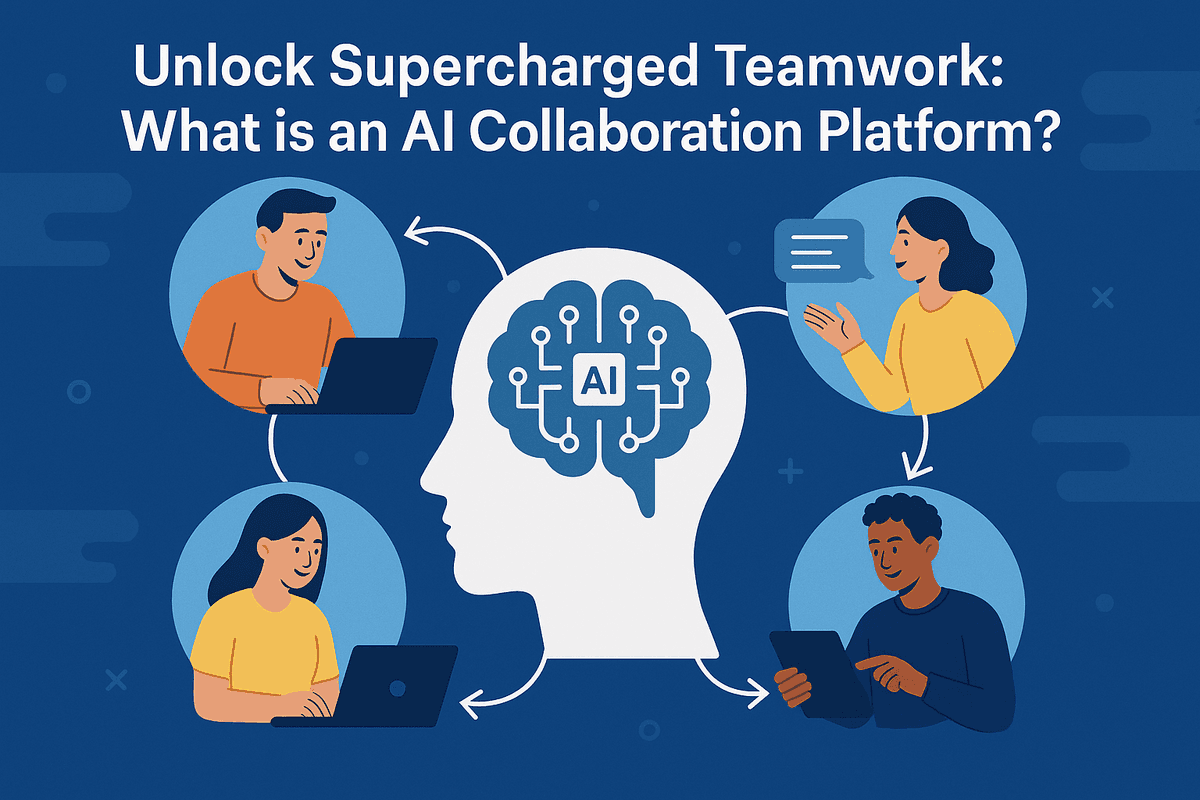
Unlock Supercharged Teamwork: What is an AI Collaboration Platform?
In an era where agility and efficiency define market leaders, the tools your team uses to collaborate can either be a powerful catalyst or a frustrating bottleneck. We’ve moved beyond the era where simple chat applications and basic file-sharing suffice. Today, the spotlight is on a more sophisticated, intelligent approach to teamwork. But what exactly is an AI collaboration platform, and how does it elevate your team beyond the basics?
Beyond Basic Chat: Defining the Modern AI Collaboration Platform
Tired of juggling countless apps and still feeling disconnected? Basic chat tools and file-sharing systems were revolutionary once, but today's complex work demands more. Enter the AI collaboration platform – a quantum leap beyond these foundational tools. So, what exactly sets a modern AI collaboration platform apart? It's not just about adding a chatbot to your existing setup. Instead, it's an integrated environment where artificial intelligence actively works to enhance how your team communicates, creates, and completes tasks.
Think of it as having an intelligent co-pilot embedded within your collaborative workspace. This platform leverages AI for features like automated task management, smart meeting summaries that capture key decisions and action items, proactive information retrieval that surfaces relevant documents before you even search, and even personalized workflow suggestions tailored to individual and team habits. An AI collaboration platform understands context, anticipates needs, and empowers your team to work smarter, not just harder, by transforming raw data from disparate sources into actionable insights and streamlining complex, multi-step processes. It’s about infusing intelligence into every interaction and workflow.
Why Every Forward-Thinking Team Needs an AI Collaboration Platform Now
In today's hyper-competitive, fast-paced business landscape, standing still means falling behind. If "good enough" is your team's collaboration mantra, you might be overlooking a critical engine for growth and innovation. This is precisely why every forward-thinking team needs an AI collaboration platform – and they need it now. The modern workplace is characterized by an overwhelming deluge of information, increasingly common geographically dispersed or hybrid teams, and the relentless pressure to deliver faster, more impactful results.
An AI collaboration platform directly addresses these pressing challenges. It's no longer a futuristic luxury; it's a present-day necessity for teams aiming to unlock peak efficiency and maintain a distinct competitive edge. By automating routine administrative tasks that consume valuable time, providing data-driven insights for more informed and quicker decision-making, and fostering a more connected, transparent, and agile work environment, these platforms free up your team's invaluable human capital. This allows them to focus on high-value strategic initiatives, creative problem-solving, and innovation. Adopting an AI collaboration platform isn't just about upgrading your technology stack; it's about strategically future-proofing your team's ability to collaborate effectively, innovate consistently, and outperform the competition.
The Core Problem: Overcoming Collaboration Silos with Intelligent Tools
One of the most persistent and insidious drains on team productivity, morale, and innovation is the dreaded "collaboration silo." What does this mean in practical terms? It's when vital information, critical institutional knowledge, and even entire team members or departments become isolated, trapped within separate digital tools, disconnected communication channels, or rigid organizational structures. This fragmentation inevitably leads to a cascade of debilitating problems: frustratingly duplicated efforts, costly miscommunications, significantly delayed projects, and brilliant ideas or crucial insights lost in the digital shuffle, never reaching the people who could benefit most.
The core problem many organizations face is that traditional collaboration tools, while often useful in their specific, narrow functions, can inadvertently create or reinforce these damaging silos. This is where the transformative power of an AI collaboration platform truly shines. These platforms are engineered from the ground up with intelligent tools specifically designed to dismantle these barriers and foster a more unified, cohesive working environment. Imagine a sophisticated system that automatically connects disparate conversations from various channels, links related documents from different storage locations, and aggregates project updates from multiple management tools, providing a single, easily searchable, and contextually rich knowledge base. An AI collaboration platform uses intelligent features like natural language processing and machine learning to surface relevant information from across the entire organization, regardless of where it originated. This ensures everyone has access to the insights they need, precisely when they need them, dramatically improving cross-functional communication and providing a holistic, real-time view of projects and workflows. In essence, an AI collaboration platform transforms fragmented efforts into powerfully cohesive, supercharged teamwork.
Decoding the Magic: Key Features of an Effective AI Collaboration Platform
An AI collaboration platform isn't just another tool; it's a dynamic partner designed to amplify your team's potential. But what truly sets a powerful AI collaboration platform apart? It's the intelligent fusion of features that streamline workflows, provide deep insights, enhance communication, and integrate flawlessly. Let's explore the core components that transform an ordinary platform into an engine for smarter teamwork.
Smart Task Management and AI-Powered Workflow Automation
Forget manual task juggling. An effective AI collaboration platform revolutionizes task management with intelligence. Imagine tasks automatically prioritized by AI based on urgency, impact, and team workloads. This isn't just assigning tasks; it's smart assignment, suggesting the best person based on skills and availability. Furthermore, AI-powered workflow automation within your AI collaboration platform handles routine processes like approvals and reminders, freeing your team for strategic work. The AI learns and optimizes workflows, making your AI collaboration platform a proactive assistant for smooth project progression and consistent deadline achievement.
AI-Driven Insights: Uncovering Team Performance and Bottlenecks
Data is abundant, but insights are golden. A standout AI collaboration platform transforms collaboration data into actionable intelligence, moving beyond simple dashboards. By analyzing communication patterns, task completion, and resource allocation, the platform identifies performance trends. Is a project phase consistently slow? Is workload imbalanced? An AI collaboration platform surfaces these critical details. More importantly, it uses AI to pinpoint hidden bottlenecks – perhaps an approval stage or communication gap. These AI-driven insights empower leaders to make data-backed decisions and proactively refine processes, ensuring your AI collaboration platform actively optimizes work.
Intelligent Communication: Enhancing Meetings with Your AI Collaboration Platform
Meetings are vital but can be time drains. An AI collaboration platform supercharges team communication. Leveraging Natural Language Processing (NLP), it automatically transcribes meetings. The AI then intelligently summarizes transcripts, highlighting key decisions and takeaways. Imagine concise, AI-generated summaries delivered almost instantly. Furthermore, an intelligent AI collaboration platform identifies and assigns action items discussed, even suggesting due dates. This ensures clarity and accountability post-meeting. By automating these follow-ups, your AI collaboration platform reduces miscommunication, saves time, and swiftly translates discussions into tangible actions.
Seamless Integrations: Connecting Your AI Collaboration Platform with Existing Toolsets
An AI collaboration platform shouldn't be a silo; its power is unlocked through seamless integration with tools your team already uses. The best platforms offer robust APIs and pre-built connectors for CRMs, project management software, communication channels, and cloud storage. This interconnectedness within your AI collaboration platform prevents data silos and context switching. It acts as a central hub, augmenting existing tools rather than replacing them, creating a unified digital workspace where information flows freely. Seamless integration ensures your AI collaboration platform enhances, not complicates, your tech ecosystem, streamlining workflows across systems.
Navigating the Options: How to Select the Best AI Collaboration Platform
Choosing the right ai collaboration platform is a pivotal decision that can significantly impact your team's productivity and innovation. With a myriad of options available, a structured approach is essential. This guide will help you navigate the selection process, ensuring you find a platform that truly empowers your team.
Comparing Top AI Collaboration Platforms: A Feature-by-Feature Breakdown
The market for AI collaboration platforms is dynamic and crowded, with solutions offering a wide array of functionalities. To make an informed choice, a meticulous feature-by-feature comparison is crucial. Don’t be swayed by marketing jargon alone; delve into the specifics of what each ai collaboration platform offers. Key areas to scrutinize include:
- Intelligent Task & Project Management: How does the AI assist in assigning tasks, tracking progress, predicting roadblocks, and optimizing workflows?
- AI-Enhanced Communication: Look for features like automated meeting summaries, real-time translation, sentiment analysis in team chats, and intelligent noise cancellation.
- Smart Content Creation & Co-editing: Does the platform offer AI assistance for drafting documents, generating ideas, summarizing content, or improving written communication within collaborative documents?
- Automation Capabilities: Can the ai collaboration platform automate routine tasks, notifications, or data entry, freeing up human intellect for more strategic work?
- Analytics and Insights: What kind of data-driven insights does the AI provide regarding team performance, collaboration patterns, or project efficiency?
- Integration Ecosystem: How well does the platform integrate with your existing tools (e.g., CRM, cloud storage, calendars)? A seamless integration is vital for a cohesive ai collaboration platform experience.
Evaluate how genuinely and effectively AI is embedded into these features rather than being a superficial add-on.
Assessing Your Team's Unique Requirements for an AI Collaboration Platform
Before you get lost in comparing features, the most critical step is an internal assessment. No ai collaboration platform is a one-size-fits-all solution. Understanding your team's specific needs, workflows, and pain points is paramount. Consider asking the following questions:
- What are our biggest collaboration challenges currently? (e.g., information silos, inefficient meetings, difficulty tracking remote work).
- Which specific tasks or processes do we want AI to augment or automate? Be precise about your goals.
- What is our team size and structure? (e.g., small team, large enterprise, fully remote, hybrid). This impacts licensing and feature requirements.
- What is the technical proficiency of our team members? The chosen ai collaboration platform should be user-friendly and intuitive to ensure high adoption rates.
- What are our must-have integrations? List the critical software your new platform needs to connect with.
- What are our data privacy and compliance needs?
Answering these questions will create a clear requirements document, enabling you to filter options and identify an ai collaboration platform that truly aligns with your operational realities and strategic objectives.
Scalability and Security: Non-Negotiables for Your Chosen AI Collaboration Platform
When investing in an ai collaboration platform, long-term viability is key. Two non-negotiable factors that underpin this are scalability and security.
Scalability: Your business is likely to evolve – teams may grow, project complexity might increase, and data volumes can expand. A scalable ai collaboration platform can adapt to these changes seamlessly, accommodating more users, handling increased workloads, and integrating new functionalities without performance degradation. Choosing a platform that cannot scale will inevitably lead to future disruptions and the costly process of migrating to a new solution.
Security: AI collaboration platforms will inevitably handle sensitive information, from internal strategic discussions to confidential project data and potentially customer information. Therefore, robust security is not just a feature; it’s a fundamental requirement. When evaluating an ai collaboration platform, scrutinize its security architecture. Look for:
- End-to-end encryption for data in transit and at rest.
- Granular role-based access controls.
- Multi-factor authentication (MFA).
- Regular third-party security audits and penetration testing.
- Compliance with relevant industry standards and data protection regulations (e.g., SOC 2, ISO 27001, GDPR, HIPAA). Thoroughly vet the security posture of any ai collaboration platform to safeguard your valuable digital assets.
Understanding Pricing Models of AI Collaboration Platform Solutions
The financial aspect of adopting an ai collaboration platform is a significant consideration. Pricing models can vary considerably, so a clear understanding is necessary to ensure the chosen solution fits your budget while delivering optimal value. Common pricing structures include:
- Per-User/Per-Month (or Per-Year): This is a common model, straightforward to understand. Costs scale directly with the number of users.
- Tiered Pricing: Platforms often offer several tiers (e.g., Basic, Pro, Enterprise) with escalating features and capabilities at different price points. Carefully assess which tier genuinely meets your needs to avoid overpaying for unused advanced features.
- Freemium Models: Some platforms offer a free basic version with limited functionality, allowing you to test the waters before committing to a paid plan. Be mindful of the limitations and the cost implications of upgrading.
- Usage-Based Pricing: Costs may be tied to the consumption of specific AI resources, data storage, or the number of automated actions performed. This can be cost-effective if usage is predictable.
- Custom/Enterprise Pricing: For larger organizations with unique or extensive requirements, vendors may offer tailored pricing packages.
Beyond the advertised subscription fees, inquire about potential hidden costs. These might include one-time setup fees, charges for specific integrations, data storage overages, or fees for premium support. The goal is to find an ai collaboration platform with a transparent pricing model that reflects the value it brings to your team's enhanced productivity and collaborative efficiency.

Real-World Wins: Success Stories with an AI Collaboration Platform
The true power of an ai collaboration platform isn't just theoretical; it's demonstrated in tangible improvements and transformative outcomes for businesses. Let's explore how organizations are leveraging these intelligent tools to achieve significant gains.
Case Study: How Agile Teams Boosted Sprint Velocity with an AI Collaboration Platform
The Challenge: Innovatech Solutions, a dynamic software development firm, prided itself on its agile methodology. However, their sprint cycles were frequently hampered by communication bottlenecks, inefficient daily stand-ups, and delays in identifying critical roadblocks. Task tracking was cumbersome, and valuable engineering time was lost trying to synchronize efforts across various disconnected tools.
The Solution: Innovatech implemented "SynergyAI," a cutting-edge ai collaboration platform designed to streamline agile workflows. This platform introduced several game-changing features:
- AI-Powered Task Management: SynergyAI automatically suggested task assignments based on developer skills and current workload, even predicting potential bottlenecks before they impacted the sprint.
- Intelligent Meeting Assistance: Daily stand-ups became more focused and efficient. The ai collaboration platform provided real-time transcription, automatically identified action items, and updated relevant task boards, freeing up the Scrum Master and team members.
- Proactive Roadblock Detection: By analyzing communication patterns and progress updates, the platform flagged potential impediments, allowing for quicker resolution.
The Results: The impact was immediate and profound. Innovatech Solutions witnessed a 35% increase in their average sprint velocity within three months. Time spent in status meetings was halved, and the ai collaboration platform fostered a more transparent and proactive team environment. Developers reported higher satisfaction as they could focus more on coding and less on administrative overhead.
Case Study: Streamlining Global Marketing Campaigns using an AI Collaboration Platform
The Challenge: GlobeConnect Marketing, an international agency, faced significant hurdles in coordinating complex marketing campaigns across multiple continents, time zones, and languages. Their distributed teams struggled with siloed information, leading to duplicated efforts, inconsistent messaging, and protracted approval cycles that delayed campaign launches.
The Solution: GlobeConnect Marketing turned to "ConnectSphere AI," a comprehensive ai collaboration platform equipped to handle the complexities of global operations. Key AI functionalities included:
- AI-Driven Content Localization: The platform assisted with culturally nuanced content adaptation and provided instant translation for internal communications, bridging language gaps.
- Automated Workflow Management: ConnectSphere AI streamlined the entire campaign lifecycle, from content creation and review to regional approvals, ensuring everyone stayed on the same page.
- Centralized Smart Asset Hub: An AI-powered digital asset management system within the ai collaboration platform enabled intelligent tagging and search, making it easy for teams worldwide to find and reuse approved marketing materials.
The Results: By leveraging their new ai collaboration platform, GlobeConnect Marketing slashed average campaign launch times by 28%. Global brand consistency improved markedly, and collaboration between regional teams became seamless. The platform also helped identify inefficiencies, leading to better resource allocation and significant cost savings.
Measuring ROI: Quantifying the Productivity Gains from an AI Collaboration Platform
Investing in an ai collaboration platform is a strategic move, and understanding its return on investment (ROI) is key to justifying the decision and maximizing its benefits. While the full spectrum of advantages includes qualitative improvements like enhanced team morale, many gains can be quantified.
Key Areas for Measuring ROI:
- Time Savings:
- Reduced Administrative Burden: Track the hours saved on tasks like scheduling meetings, taking notes, searching for information, and generating reports – all areas where an ai collaboration platform excels.
- Faster Project Completion: Measure the reduction in project lifecycles and time-to-market for new products or services.
- Efficient Meetings: Quantify the decrease in meeting durations and the time saved by AI-generated summaries and action items.
- Cost Reduction:
- Tool Consolidation: Calculate savings from discontinuing redundant software subscriptions now handled by the unified ai collaboration platform.
- Reduced Rework: Fewer errors stemming from miscommunication or outdated information lead to less rework, saving both time and resources.
- Optimized Resource Allocation: AI insights can help assign tasks more effectively, ensuring optimal use of talent and minimizing downtime.
- Productivity Increases:
- Enhanced Output: Monitor increases in key performance indicators (KPIs) relevant to your teams, such as features deployed per sprint, content pieces produced, or customer issues resolved.
- Improved Decision-Making: Faster access to information and AI-driven insights can accelerate decision-making, directly impacting project momentum and outcomes.
Many advanced ai collaboration platform solutions include built-in analytics dashboards that provide data on usage patterns, task completion rates, and communication efficiency, making it easier to gather the necessary metrics for ROI calculation. By systematically tracking these quantitative benefits, organizations can clearly demonstrate the substantial value an ai collaboration platform brings to their bottom line and overall operational excellence.
Maximize Your Investment: Best Practices for Your AI Collaboration Platform
Investing in an ai collaboration platform is a significant step towards transforming your team's productivity and innovation. However, the true value is unlocked not just by acquiring the technology, but by strategically implementing and nurturing its use. Here’s how to ensure you get the most out of your investment.
Onboarding Your Team: Ensuring Smooth Adoption of the AI Collaboration Platform
The initial experience with your new ai collaboration platform sets the stage for its long-term success. A well-planned onboarding process is crucial for smooth adoption and minimizing resistance to change. Move beyond simply distributing login credentials; develop a comprehensive strategy. This should include:
- Tailored Training: Create role-specific training sessions that demonstrate how the ai collaboration platform addresses individual user needs and simplifies their specific daily tasks. Focus on practical application rather than just feature lists.
- Highlighting Quick Wins: Showcase immediate benefits and easy-to-use features that provide instant value. This helps build enthusiasm and demonstrates the platform's power early on.
- Cultivating Champions: Identify and empower internal champions or super-users within different teams. These individuals can provide peer-to-peer support, share best practices, and advocate for the ai collaboration platform’s benefits.
- Accessible Resources: Provide a rich library of support materials, such as video tutorials, comprehensive FAQs, best practice guides, and clear channels for technical support.
- Feedback Mechanisms: Establish a continuous feedback loop from the outset. Gather insights during and after onboarding to address any concerns, identify areas for improvement in training, and ensure your team feels heard and supported as they integrate the ai collaboration platform into their work.
Fostering a Culture of AI-Assisted Teamwork with your AI collaboration platform
Technology alone doesn't create transformation; culture does. To fully leverage your ai collaboration platform, you need to foster a workplace environment that embraces AI as a collaborative partner. This involves a mindset shift across the organization:
- Encourage Experimentation: Create a safe space for employees to explore the features of the ai collaboration platform without fear of making mistakes. Curiosity and learning are key.
- Lead by Example: Leadership adoption is paramount. When managers and executives actively use and visibly champion the ai collaboration platform, it signals its importance and encourages wider uptake.
- Share Success Stories: Regularly highlight instances where the ai collaboration platform has led to tangible benefits – improved efficiency, innovative solutions, or better team cohesion. Internal case studies can be powerful motivators.
- Integrate, Don't Isolate: Weave the ai collaboration platform into existing workflows and processes. It should feel like a natural extension of how work gets done, not an additional, disconnected tool.
- Promote Open Dialogue: Address any anxieties about AI by fostering open conversations about its role in augmenting human capabilities, not replacing them. Emphasize how the ai collaboration platform acts as an intelligent assistant.
- Establish Clear Guidelines: Develop and communicate clear policies regarding data privacy, ethical AI use, and security within the ai collaboration platform to build trust and ensure responsible innovation.
Continuously Optimizing: Tips for Getting the Most from Your AI Collaboration Platform Features
Your ai collaboration platform is likely to evolve with new features and capabilities. Your usage of it should evolve too. Continuous optimization ensures you're always extracting maximum value:
- Monitor Usage Analytics: Regularly review the analytics and reports provided by your ai collaboration platform. These insights can reveal adoption patterns, underutilized features, or areas where teams might need additional support or training.
- Stay Updated: Keep abreast of new feature releases, updates, and enhancements to the ai collaboration platform. Vendors often introduce improvements based on user feedback and technological advancements.
- Encourage Advanced Use: Motivate your teams to explore beyond the basic functionalities. Many AI-powered features can unlock significant productivity gains once users become proficient.
- Solicit Ongoing Feedback: Periodically gather feedback from users about their experience with the ai collaboration platform. What’s working well? What are their pain points? What features would they like to see?
- Regular Refresher Training: Consider offering periodic refresher training or workshops, especially when significant new features are rolled out or if you notice certain powerful tools within the ai collaboration platform are being underused.
Integrating AI Collaboration Platform Insights into Strategic Decision-Making
A sophisticated ai collaboration platform does more than streamline daily tasks; it generates valuable data that can inform strategic business decisions. By harnessing these insights, you can drive broader organizational improvements:
- Uncover Performance Trends: Your ai collaboration platform can provide data on project progress, team communication patterns, task completion rates, and resource utilization. Analyze these trends to identify successes and areas needing attention.
- Identify Bottlenecks: AI-driven analytics can help pinpoint bottlenecks in workflows or communication breakdowns that might be hindering productivity, allowing you to address them proactively.
- Inform Resource Allocation: Insights from the ai collaboration platform regarding workload distribution and team capacity can lead to more informed decisions about resource allocation and project assignments.
- Enhance Project Planning: Understanding historical performance data and team dynamics through the platform can improve the accuracy of future project planning and forecasting.
- Data-Driven Strategy Meetings: Use AI-generated summaries, trend analyses, and sentiment reports from your ai collaboration platform to enrich strategic discussions and ensure decisions are grounded in data. By thoughtfully implementing these best practices, your ai collaboration platform will become an indispensable asset, driving efficiency, fostering innovation, and delivering a strong return on your investment.

Conclusion: Step into the Future of Work with an AI Collaboration Platform
The journey through the landscape of AI-driven collaboration has illuminated a clear path forward for businesses aiming to thrive in the modern era. We've seen how artificial intelligence is not just an auxiliary tool but a fundamental catalyst for transforming how teams connect, create, and conquer challenges. The age of siloed efforts and cumbersome workflows is rapidly giving way to a more integrated, intelligent, and intuitive approach to teamwork, largely thanks to the rise of the AI collaboration platform.
Recap: Why an AI Collaboration Platform is a Game-Changer for Modern Teams
Throughout this exploration, the resounding message is clear: an AI collaboration platform is far more than a mere upgrade to existing tools; it represents a paradigm shift. These platforms are engineered to break down communication barriers, automate mundane tasks that drain valuable time, and provide data-driven insights that were previously out of reach. Imagine teams where information flows seamlessly, projects stay on track with intelligent oversight, and every member is empowered with the information they need, precisely when they need it.
An AI collaboration platform acts as a central nervous system for your team, intelligently orchestrating workflows, fostering clearer communication through features like automated summaries and translation, and even assisting in creative brainstorming. By offloading repetitive administrative burdens and providing smart suggestions, these platforms free up human talent to focus on higher-value strategic work. The benefits are tangible: increased productivity, enhanced decision-making, reduced errors, and a significant boost in overall team morale and engagement. For modern teams grappling with distributed workforces, complex projects, and the relentless pace of business, an AI collaboration platform isn't just beneficial—it's becoming essential for competitive advantage and sustainable success.
Ready to Transform Your Teamwork? Explore Top AI Collaboration Platform Solutions Today
Understanding the transformative power of an AI collaboration platform is the first step. The next, more crucial step, is embracing this change and actively seeking out the solution that can redefine your team's potential. The market is now rich with innovative AI collaboration platform options, each offering unique features and catering to diverse business needs, from startups to large enterprises.
Don't let an outdated approach to teamwork hold your organization back. Now is the time to research, demo, and identify an AI collaboration platform that aligns with your specific goals, existing workflows, and team culture. Consider factors like ease of integration, the sophistication of its AI features (such as intelligent scheduling, task automation, or knowledge management), scalability, and user support. By taking proactive steps today, you can unlock unprecedented levels of efficiency and innovation, empowering your team to achieve more, faster, and with greater synergy than ever before. The future of work is collaborative and intelligent, and it’s accessible now.
The Evolving Landscape: What's Next for AI Collaboration Platform Technology and Team Synergy?
The current capabilities of an AI collaboration platform are already impressive, but the horizon gleams with even more exciting possibilities. The technology is far from static; it's a dynamic and rapidly evolving field. We can anticipate AI becoming even more deeply embedded and intuitive within these platforms. Future iterations will likely feature more sophisticated predictive analytics, capable of identifying potential bottlenecks or resource conflicts before they impact projects. AI assistants within these platforms will become more personalized, learning individual work styles and preferences to offer truly bespoke support.
Imagine an AI collaboration platform that not only transcribes meetings but also gauges sentiment, suggests optimal team compositions for specific tasks based on skills and past performance, or even facilitates more nuanced cross-cultural communication. We may see enhanced capabilities in areas like AI-driven project management, where the platform autonomously adjusts timelines and resources in response to real-time data. Furthermore, the integration with other emerging technologies, such as augmented and virtual reality, could create more immersive and engaging remote collaboration experiences, all orchestrated by a central AI. As AI continues to advance, the synergy between human talent and artificial intelligence within an AI collaboration platform will undoubtedly reach new heights, further revolutionizing how we conceptualize and execute teamwork for decades to come. The journey is just beginning.