
May 27, 2025
An Introduction to AI Grammar Correction
Unlock Flawless Writing: An Introduction to AI Grammar Correction
Ever hit 'send' on a crucial email, only to spot a glaring typo seconds later? Or wrestled with a sentence, unsure if it's clear? We've all been there. But imagine an intelligent assistant dedicated to perfecting your prose. This is the power of AI grammar correction.
What is AI Grammar Correction and Why Should You Care?
Fundamentally, AI grammar correction is far more than a basic spell-checker. It's sophisticated technology driven by artificial intelligence, utilizing machine learning (ML) and natural language processing (NLP). These advanced systems don't just flag misspellings; they analyze sentence structure, contextual meaning, punctuation, style, and even tone to offer holistic suggestions. Think of it as your personal digital editor, understanding language nuances to help you fix errors and enhance clarity.
Why is this important? In today's digital world, error-free communication is vital. Polished writing builds credibility, projects professionalism, and ensures your message lands as intended. An effective AI grammar correction tool saves proofreading time, acts as a subtle writing coach by explaining suggestions, and boosts your confidence in all written communication, from social media posts to business proposals.
The Evolution of Grammar Checkers: From Simple Rules to Sophisticated AI
The evolution of grammar checkers is a story of technological leaps. Decades ago, rule-based software in early word processors offered basic error detection. These tools caught some subject-verb disagreements or obvious misspellings but often missed contextual nuances, leading to false positives or overlooked mistakes.
Later, statistical models brought slight improvements by identifying text patterns, yet a true understanding of language remained elusive. The real revolution came with artificial intelligence. Modern AI grammar correction tools are vastly superior. Powered by machine learning algorithms and deep learning neural networks, these systems are trained on billions of sentences. This extensive training enables them to grasp not just grammar rules but also semantics, context, style, and even intent. The shift from simple rule-based checkers to intelligent, context-aware AI grammar correction assistants represents a profound advancement, empowering writers to achieve greater precision and fluency.
Who Can Benefit from AI Grammar Correction Technology?
The true strength of AI grammar correction technology lies in its universal utility. It's not just for professional writers; anyone who communicates in writing can benefit significantly. Consider its impact:
- Students: From essays to dissertations, AI grammar correction helps refine academic work, potentially improving grades and fostering a deeper understanding of formal language.
- Professionals: In business, clear communication is paramount. AI tools ensure emails, reports, and presentations are polished, professional, and easily understood.
- Content Creators: Bloggers and marketers use AI grammar correction to produce engaging, error-free content that captivates audiences and maintains brand integrity.
- Non-Native English Speakers: For ESL/EFL learners, these tools offer invaluable guidance, explaining errors and building confidence in using English accurately.
- Job Seekers: A flawless resume and cover letter are crucial. AI grammar correction helps applicants present their best, error-free selves.
- Everyday Users: For social media or personal emails, it ensures thoughts are conveyed clearly and correctly.
In essence, if you write, an AI grammar correction tool can be your indispensable partner for achieving clarity, accuracy, and enhanced writing confidence.
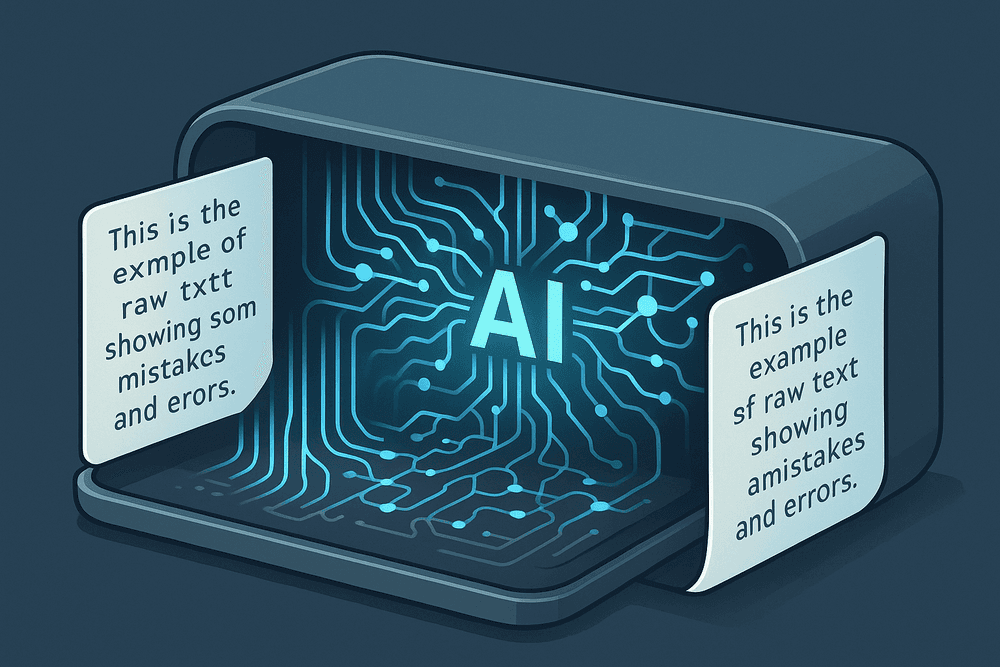
Unveiling the Tech: How AI Grammar Correction Tools Actually Work
Ever wondered what magical gears turn inside an ai grammar correction tool when you feed it your text? It’s not quite magic, but a sophisticated blend of cutting-edge technologies. Let's lift the hood and explore the core components that empower these intelligent writing assistants.
Natural Language Processing (NLP) in AI Grammar Correction Explained
At the heart of any advanced ai grammar correction system lies Natural Language Processing (NLP). Think of NLP as the crucial bridge that allows computers to understand, interpret, and even generate human language in a way that's meaningful. For an ai grammar correction tool, NLP is the absolute bedrock. It's how the software first deciphers the complex tapestry of words, sentences, and ideas you’ve put down.
Several key NLP techniques come into play:
- Tokenization: This is the initial step where your text is broken down into smaller, manageable units called tokens, which can be words, sub-words, or punctuation marks.
- Part-of-Speech (POS) Tagging: Once tokenized, each word is meticulously labeled with its grammatical role – is it a noun, a verb, an adjective, an adverb, a preposition? This tagging is vital for understanding sentence structure.
- Parsing (Syntactic Analysis): Beyond individual word roles, parsing analyzes the grammatical structure of your sentences. It creates a hierarchical tree-like representation (a parse tree) showing how words group together to form phrases and clauses, and ultimately, complete sentences. This helps the AI understand the relationships between words.
- Named Entity Recognition (NER): While not solely for grammar, NER identifies and categorizes named entities like persons, organizations, locations, and dates. This can help in contextual understanding and proper noun capitalization.
These NLP processes collectively enable an ai grammar correction system to move beyond simple dictionary lookups. It begins to comprehend the syntax and, to some extent, the semantics of your writing, which is crucial for identifying nuanced grammatical errors and proposing contextually appropriate suggestions.
Machine Learning Models: Training AI to Spot and Fix Errors
Understanding the structure of language is one thing, but how does an ai grammar correction tool learn what’s "right" and "wrong," and how to suggest improvements? This is where Machine Learning (ML) models make their grand entrance. These aren't explicitly programmed with every single grammar rule in existence; instead, they learn these rules and patterns from vast amounts of data.
Imagine training an incredibly diligent student: you provide them with enormous libraries of text – millions, even billions, of sentences. This dataset contains a mix of grammatically perfect text and text riddled with various errors, along with their corrected versions. This massive, annotated corpus serves as the textbook for the ML models.
While early ai grammar correction tools often relied heavily on hand-crafted, rule-based systems, modern solutions predominantly leverage sophisticated ML approaches:
- Statistical Machine Translation (SMT) inspired models: Some systems treat grammar correction as a translation task – translating text from "incorrect English" to "correct English."
- Neural Networks: More recently, advanced neural network architectures, particularly sequence-to-sequence models like LSTMs (Long Short-Term Memory networks) and Transformers, have become the powerhouses. These models are exceptionally adept at capturing long-range dependencies within text, understanding subtle contextual cues, and learning the intricate patterns of correct language usage.
Through this intensive training process, the ai grammar correction AI becomes incredibly skilled at spotting a wide array of errors – from subject-verb agreement and tense consistency to punctuation misuse and awkward phrasing – and then suggesting accurate, context-aware fixes. The models are constantly refined as they are exposed to more data, improving their performance over time.
Beyond Basic Spelling: Contextual Understanding in AI Grammar Correction
The true evolution of ai grammar correction is most evident in its ability to transcend basic spell-checking and rudimentary grammar fixes. While older tools might catch an obvious typo, they often struggled with homophones (words that sound alike but have different meanings and spellings, like 'their,' 'there,' and 'they're') or words that are spelled correctly but used inappropriately within the sentence. This is where contextual understanding, a hallmark of today's sophisticated ai grammar correction software, truly shines.
How do these tools achieve such a nuanced understanding? Advanced AI algorithms don't just scrutinize words in isolation. Instead, they meticulously analyze:
- Surrounding words and phrases: The context provided by adjacent words is paramount.
- Sentence structure: The grammatical role a word plays within the larger sentence influences its appropriateness.
- Broader discourse: Some tools can even consider the flow and consistency across multiple sentences or paragraphs.
This deep-dive analysis allows the ai grammar correction tool to grasp the intended meaning and identify subtle errors that would otherwise go unnoticed. It’s not just about whether a word exists in a dictionary; it's about whether it fits logically and grammatically within the specific sentence and the broader context of your writing.
This enhanced comprehension enables the AI to flag issues such as:
- Incorrect word choice (e.g., "affect" vs. "effect," "less" vs. "fewer").
- Awkward or convoluted phrasing.
- Inconsistencies in style or tone (though this often bleeds into more advanced AI writing assistants).
- Complex punctuation errors that depend on clause relationships.
The ultimate goal is to help you produce writing that is not only grammatically flawless but also clear, coherent, concise, and contextually appropriate. This leap in contextual awareness is what elevates modern ai grammar correction from a simple proofreading utility to an indispensable writing partner, empowering you to communicate your ideas with greater precision and impact.
Top Features to Demand from Your AI Grammar Correction Tool
Choosing the right AI grammar correction tool can transform your writing from good to great. But with so many options available, what features truly matter? It's not just about catching typos anymore. Modern AI tools offer a suite of capabilities designed to elevate every aspect of your text. Let's explore the essential features to look for to ensure you get the most out of your chosen solution.
Assessing Accuracy: The Cornerstone of Effective AI Grammar Correction
The primary function of any AI grammar correction tool is, of course, to identify and correct errors. Therefore, accuracy is non-negotiable. A tool that frequently misses mistakes or, worse, introduces new ones, is more of a hindrance than a help. Look for tools with a reputation for high precision. How can you assess this?
- Test it thoroughly: Use sample texts, especially those with known, tricky errors or nuanced grammatical points. See how the tool performs.
- Read reviews and comparisons: Look for independent reviews that specifically discuss the accuracy of different AI grammar correction platforms.
- Contextual understanding: The best tools don't just apply rigid rules. They understand context, helping to distinguish between a genuine error and stylistic choice. Advanced AI grammar correction leverages sophisticated natural language processing (NLP) to achieve this.
- Explanation of suggestions: Tools that explain why a correction is suggested are invaluable for learning and improving your own skills, reinforcing the value of accurate AI grammar correction.
Without a high degree of accuracy, even the most feature-rich AI grammar correction tool will fall short. Prioritize solutions that demonstrate a deep understanding of linguistic nuances.
Beyond Basic Fixes: Style, Tone, and Clarity with AI Grammar Correction
While impeccable grammar is crucial, truly effective writing also captivates and communicates clearly. The leading AI grammar correction tools have evolved beyond simple error flagging to become comprehensive writing assistants. Key features to seek include:
- Style Enhancement: Does the tool suggest ways to make your writing more engaging? This could involve rephrasing passive voice to active, recommending stronger verbs, or improving sentence structure for better flow. An AI grammar correction tool that polishes your style is a powerful asset.
- Tone Adjustment: The appropriate tone can vary wildly depending on your audience and purpose – from formal academic papers to casual blog posts. Some AI tools can analyze your text's tone and suggest adjustments to make it more persuasive, confident, friendly, or objective as needed.
- Clarity Improvement: Vague language and convoluted sentences can obscure your message. Look for AI grammar correction features that help simplify complex phrasing, eliminate jargon where inappropriate, and ensure your points are easily understood.
- Vocabulary Enhancement: Some tools offer synonym suggestions or highlight overused words, helping you to diversify your vocabulary and make your writing more dynamic.
These advanced features transform an AI grammar correction tool from a simple proofreader into a genuine writing coach.
Seamless Writing: Integration and Usability in AI Grammar Correction Software
Even the most powerful AI grammar correction software won't be effective if it's cumbersome to use or doesn't fit into your existing workflow. Consider these practical aspects:
- Integration Options: Where do you do most of your writing? The best AI grammar correction tools offer a range of integrations:
- Browser extensions (Chrome, Firefox, Safari, Edge) for online writing.
- Desktop applications for offline work.
- Add-ins for popular word processors like Microsoft Word and Google Docs.
- Mobile apps for on-the-go corrections.
- User Interface (UI) and User Experience (UX): The software should be intuitive and easy to navigate. Suggestions should be clearly presented, and accepting or rejecting them should be straightforward. A cluttered or confusing interface can slow you down.
- Speed and Performance: The AI grammar correction process should be quick and responsive, without significantly lagging or slowing down your computer.
- Customization: Can you add words to a personal dictionary (like names or specific jargon)? Can you set style preferences? Customization allows the tool to adapt better to your specific needs.
Choosing an AI grammar correction solution that integrates smoothly and is a pleasure to use will ensure you actually use it consistently.
Free vs. Paid AI Grammar Correction Solutions: What’s Worth It?
The market offers both free and paid AI grammar correction tools, and the right choice depends on your specific needs and budget.
- Free AI Grammar Correction Tools: These are excellent starting points for casual users or those with basic proofreading needs. They typically catch common grammatical errors, spelling mistakes, and punctuation issues. However, free versions often come with limitations, such as:
- Restricted number of checks or word count limits.
- Fewer advanced features (style, tone, plagiarism detection are often premium).
- Potential for ads or less robust privacy policies.
- Paid AI Grammar Correction Solutions: Subscription-based tools usually offer a far more comprehensive suite of features. For professional writers, students, businesses, or anyone serious about improving their writing quality, the investment can be well worth it. Benefits include:
- Significantly higher accuracy and more nuanced suggestions.
- Access to advanced style, tone, clarity, and fluency enhancements.
- Plagiarism checkers.
- Better integration options and customer support.
- Often, more generous usage limits or unlimited access.
When deciding, consider the volume and importance of your writing. If clear, error-free, and impactful communication is vital for your work or studies, a paid AI grammar correction tool often provides superior value and a more significant return on investment. Many paid services offer free trials, allowing you to experience the full range of features before committing.
Best Practices: Getting the Most Out of AI Grammar Correction
Harnessing the full potential of AI grammar correction tools goes beyond simply hitting "accept all." To truly elevate your writing, it’s about smart integration, critical evaluation, and maintaining your authentic voice. These best practices will help you transform your AI grammar checker from a simple proofreader into an indispensable writing partner.
Proactive Proofreading: Weaving AI Grammar Correction into Your Workflow
Don't relegate your ai grammar correction tool to a mere final checkpoint. Integrate it proactively throughout your writing process for maximum benefit. Consider running a check after completing your first draft; this initial pass can catch glaring errors and highlight areas needing structural refinement, allowing you to address them before you get too deep into revisions. For longer or more complex documents, like research papers or detailed reports, using an ai grammar checker section by section can be incredibly effective. This iterative approach helps you spot recurring mistake patterns, learn from them in real-time, and improve your writing skills as you go. By making ai grammar correction an ongoing part of your drafting and revision stages, you’ll produce cleaner, more coherent text more efficiently, saving valuable time during final edits.
Decoding the Digital Editor: When to Accept or Reject AI Grammar Correction Suggestions
While ai grammar correction technology is impressively advanced, it's not infallible. The true art lies in discerning when to accept its suggestions and when to trust your own judgment. Think of your AI tool as a highly knowledgeable but sometimes overly prescriptive assistant. Critically evaluate every suggestion. Accept changes that genuinely fix objective errors – misspellings, punctuation mistakes, subject-verb disagreements, or clear issues with sentence structure that impede clarity. However, be prepared to reject suggestions that might:
- Alter your intended meaning or subtle nuance.
- Conflict with your established authorial voice or stylistic choices.
- Misinterpret context-specific jargon or creative language.
- Over-simplify complex ideas unnecessarily.
Before clicking "accept," ask yourself why the ai grammar correction tool is flagging a particular item. Understanding the reasoning behind a suggestion empowers you to make informed decisions, ensuring the final text is not only grammatically pristine but also authentically reflects your intent and style.
Tailoring the Tech: Customizing Your AI Grammar Checker for Precision
Many leading ai grammar correction platforms offer robust customization options that can significantly enhance their utility for your specific needs. To get the most precise feedback, explore your tool's settings. You can often:
- Specify Writing Styles: Designate whether your text is academic (requiring formality and adherence to specific citation styles), business (valuing conciseness and professionalism), creative (allowing more linguistic freedom), or casual.
- Create Custom Dictionaries: Add industry-specific jargon, brand names, technical terms, or even uniquely spelled character names to prevent them from being incorrectly flagged as errors.
- Select Style Guides: Some tools allow you to align corrections with established style guides like APA, MLA, Chicago, or your own company’s guide.
- Adjust Tone Preferences: Fine-tune suggestions based on the desired tone, such as formal, informal, confident, or persuasive.
By personalizing your ai grammar correction settings, you’ll receive more relevant, targeted advice, reduce the number of irrelevant suggestions, and make the AI a more efficient and valuable ally in crafting polished, purpose-driven content.
The Human Element: Avoiding Over-Reliance and Preserving Your Unique Voice with AI Grammar Correction
The ultimate goal of using ai grammar correction is to augment your writing skills, not to let the AI dictate your style. While these tools are excellent for refining clarity and catching errors, an over-reliance can inadvertently homogenize your writing, stripping it of its unique personality. AI algorithms often favor standard phrasing and may not appreciate deliberate stylistic deviations or subtle humor.
To safeguard your distinct voice:
- Treat AI suggestions as proposals, not mandates. You are the final arbiter.
- After applying AI corrections, always re-read your work. Does it still sound like you? Does it convey the precise tone and nuance you intended?
- Don't be afraid to retain unique phrasings or sentence structures if they serve your communicative purpose, even if the AI offers a more "standard" alternative.
- Continuously develop your own grammar and style understanding. Use the AI as a learning tool, not a crutch.
By consciously balancing the power of ai grammar correction with your own critical judgment and creative instincts, you ensure that your writing is not only error-free but also authentically and compellingly yours.
Real-World Wins: How AI Grammar Correction Elevates Various Texts
The transformative power of AI grammar correction isn't just theoretical; it's making a tangible difference across diverse writing endeavors. From the hallowed halls of academia to the fast-paced world of business and the imaginative realms of creative writing, AI-powered tools are refining texts and empowering communicators. Even those learning English as a second language find a steadfast ally in this technology. Let's explore how AI grammar correction delivers real-world wins for various users.
Academic Excellence: Using AI Grammar Correction for Flawless Papers and Theses
The pressure to produce pristine academic work is immense. For students and researchers, the clarity and correctness of term papers, essays, dissertations, and theses are non-negotiable. Here, AI grammar correction tools serve as an indispensable ally. Submitting work free from distracting grammatical errors, typos, and awkward phrasing significantly enhances its credibility, allowing the strength of your arguments and research to shine through. An effective AI grammar correction system goes beyond simple spell-checking; it offers insightful suggestions for improved sentence structure, appropriate academic tone, and adherence to stringent writing conventions. This meticulous attention to detail not only contributes to achieving higher grades but also saves valuable time in the demanding proofreading process. By leveraging AI grammar correction, academics can focus more on the core content and critical thinking aspects of their work, ensuring their scholarly contributions are presented with the precision and polish they truly deserve.
Business Communication: Enhancing Reports, Emails, and Marketing Copy with AI
In the competitive business landscape, every word carries weight. Professional communication—whether in internal reports, client-facing emails, persuasive presentations, or compelling marketing copy—directly impacts reputation, client relationships, and ultimately, the bottom line. Utilizing AI grammar correction is no longer a mere option but a fundamental necessity for maintaining a polished, authoritative, and trustworthy brand voice. An advanced AI grammar correction solution ensures that all business correspondence is clear, concise, and error-free, thereby preventing costly misunderstandings and bolstering credibility with stakeholders. Imagine sending out a crucial business proposal or launching a widespread marketing campaign; even minor grammatical slip-ups can undermine your message's professionalism and dilute its impact. By seamlessly integrating AI grammar correction into daily workflows, businesses can significantly enhance the quality of their written output, improve client trust, and ensure their communications achieve their intended strategic objectives effectively and efficiently.
Creative Writing: How Authors and Bloggers Leverage AI Grammar Correction
For authors, bloggers, and content creators, the primary goal is to captivate, engage, and immerse their readers. While unbridled creativity and compelling storytelling are paramount, persistent grammatical errors or clunky, unclear sentences can unfortunately pull readers out of the narrative or obscure a brilliant idea. This is where AI grammar correction becomes a valuable, unobtrusive partner in the intricate creative process. Rather than stifling creativity, these intelligent tools act as a meticulous digital editor, adept at catching subtle mistakes, awkward phrasing, and inconsistencies that even a tired or rushed writer might overlook during self-editing. AI grammar correction helps refine prose, improve overall readability, and ensure the technical mechanics of writing are sound. This allows writers to confidently focus on developing their unique voice, crafting compelling plots, or delivering insightful articles. The result is a more polished, professional final product, ready to engage its intended audience without the distraction of preventable errors, ultimately empowering creators to share their best work with the world.
ESL Learners: Improving English Fluency with AI-Powered Grammar Assistance
Mastering the English language, with its complex grammar rules, nuanced vocabulary, and idiomatic expressions, presents a significant yet rewarding challenge for English as a Second Language (ESL) learners. In this educational journey, AI grammar correction tools offer invaluable, accessible support, effectively acting as a patient and readily available language tutor. These sophisticated platforms provide immediate, constructive feedback on written English, meticulously highlighting errors in areas such as verb conjugation, preposition use, article agreement, and sentence structure. More than just pointing out mistakes, advanced AI grammar correction systems often explain the reasoning behind the suggested corrections. This helps learners understand their common error patterns and internalize correct grammatical forms more effectively. This consistent, contextualized feedback accelerates the learning process, builds writing confidence, and empowers ESL students and professionals to communicate more clearly, accurately, and fluently in English, whether for academic pursuits, professional advancement, or personal enrichment.
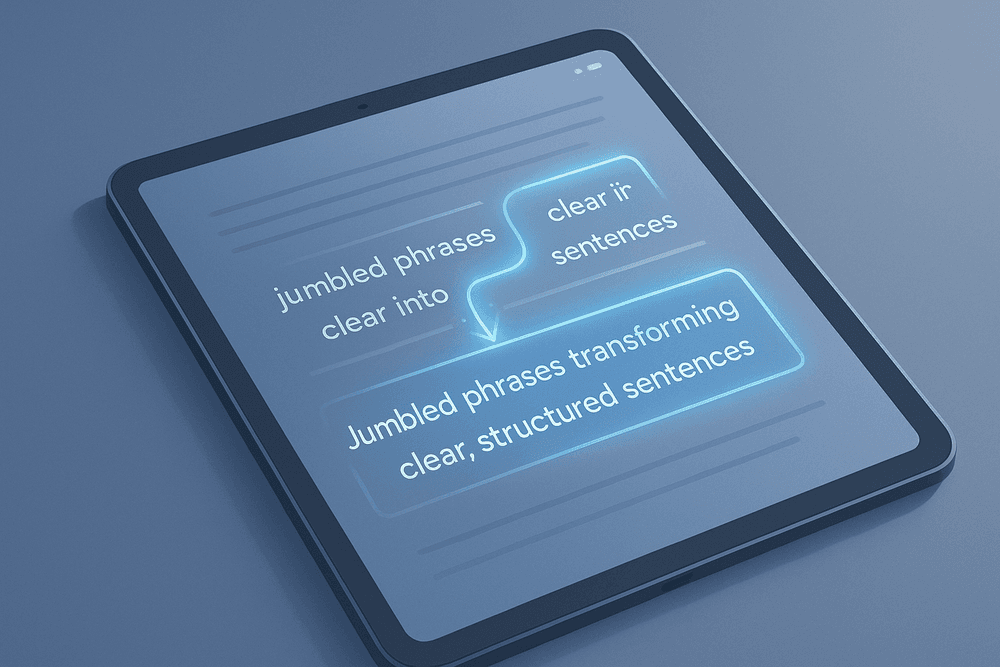
Your Next Step: Embrace Flawless Communication with AI Grammar Correction
You've seen how AI grammar correction can revolutionize your writing, transforming it from good to great. Now, it's time to take that knowledge and put it into action. This isn't just about adopting new technology; it's about committing to clearer, more impactful communication in every email, report, and creative piece you produce.
The Power of Polished Prose: Recapping AI Grammar Correction Benefits
We've explored the transformative impact of AI grammar correction, and the advantages are clear. Integrating this technology into your writing workflow isn't just about eliminating typos; it's about fundamentally elevating your communication. Remember, effective AI grammar correction tools act as your digital proofreader, tirelessly working to:
- Enhance Clarity and Readability: Ensuring your message is understood precisely as intended, free from confusing phrasing or ambiguity.
- Boost Professionalism: Presenting error-free documents, emails, and online content that build credibility and make a strong positive impression.
- Save Valuable Time: Automating the meticulous and often tedious task of proofreading, allowing you to focus your energy on content creation and strategic thinking.
- Increase Writing Confidence: Knowing your work is polished and grammatically sound before you hit send or publish, reducing anxiety about potential errors.
- Improve Writing Skills Over Time: By consistently highlighting recurring errors and suggesting improvements, AI grammar correction subtly teaches better writing habits, making you a more proficient writer.
Embracing AI grammar correction means embracing a higher standard for all your written communication, effortlessly improving text quality and impact.
Take the Plunge: Finding Your Perfect AI Grammar Correction Partner
Ready to experience these benefits firsthand? The market offers a diverse range of AI grammar correction tools, each with unique strengths tailored to different needs. Popular options like Grammarly, ProWritingAid, and LanguageTool provide robust features, often available as convenient browser extensions, dedicated desktop applications, or easily accessible web-based editors. Furthermore, many modern word processors, including Microsoft Word and Google Docs, now incorporate increasingly sophisticated native AI grammar correction capabilities.
When choosing an AI grammar correction solution, consider these key factors:
- Features: Do you require basic grammar and spell-checking, or are you looking for more advanced assistance with style, tone, clarity, conciseness, and even plagiarism detection?
- Integration: Will the tool work seamlessly with your preferred writing platforms, such as your email client, social media dashboards, content management systems, or specific word processors?
- Pricing: Many tools offer excellent free versions for core corrections, with premium tiers unlocking more advanced functionalities, deeper analysis, and team features.
- User Interface: Is the tool intuitive, easy to navigate, and does it present suggestions in a clear, understandable manner?
The best way to start is by trying a free version or a trial period of a reputable AI grammar correction tool. Experiment with a few different options to see which one best fits your individual needs, writing style, and daily workflow. This small, proactive step can make a significant, immediate difference in the overall quality and impact of your writing.
Beyond the Red Pen: The Future of AI in Writing Assistance
While current AI grammar correction technology is already impressively powerful, it's merely the tip of the iceberg in the realm of AI-driven writing support. The field of AI in writing assistance is rapidly evolving, promising even more sophisticated and nuanced support for writers in the very near future. Imagine AI grammar correction tools that don't just fix errors but also act as intelligent writing partners that:
- Offer Nuanced Tone and Style Suggestions: Helping you adapt your writing dynamically for specific audiences, platforms, and communicative goals – from crafting a persuasive formal report to an engaging, casual blog post.
- Provide Deeper Contextual Understanding: Grasping the subtleties of language, intent, cultural nuances, and even emotional undertones far more effectively than current systems.
- Assist with Fluency, Flow, and Cohesion: Recommending phrasing changes, transitional sentences, and structural adjustments to make your writing more engaging, persuasive, and natural-sounding, particularly beneficial for those writing in a second language.
- Enable Advanced Real-Time Collaboration: Facilitating seamless, intelligent feedback and suggestions within team writing environments, ensuring consistency and quality across multiple contributors.
- Personalize Feedback Loops and Learning: Adapting to your common mistakes and writing patterns, offering tailored advice and exercises to help you proactively improve specific aspects of your writing skill set.
The journey of AI grammar correction is steadily transforming into a broader, more integrated AI-powered writing partnership. As these technologies continue to mature, they will become truly indispensable allies, empowering us all to communicate more effectively, creatively, and confidently than ever before. The future of writing is undeniably intelligent, and AI grammar correction is at the forefront, paving the way for this exciting evolution.