
January 1, 2026
Understanding AI Cost Optimization for Modern Enterprises
Understanding AI Cost Optimization for Modern Enterprises
In the current volatile economic landscape, the concept of financial efficiency has evolved. For decades, businesses viewed cost reduction as a painful necessity—often synonymous with reduced headcounts, stalled innovation, or lower product quality. However, the emergence of artificial intelligence has introduced a paradigm shift. AI cost optimization is not about shrinking the business to survive; it is about leveraging intelligent automation to refine resource allocation so the enterprise can thrive.
At its core, AI cost optimization moves beyond traditional, static cost-cutting measures. Traditional audits are reactive; they look at past spending to find errors after the money has already left the account. In contrast, AI-driven strategies are predictive and proactive. They transform cost management from a quarterly defensive tactic into a continuous, strategic growth lever. By integrating AI into financial and operational workflows, organizations can transition away from blunt "flat cuts"—such as slashing departmental budgets by 10% across the board—toward surgical precision that preserves value while eliminating inefficiency.
The Role of Machine Learning in Identifying Hidden Waste
The modern enterprise generates terabytes of operational data daily, far exceeding the processing capacity of human analysts. This data complexity is where hidden financial waste thrives. This is also where machine learning (ML) proves indispensable.
Think of ML algorithms as forensic accountants that never sleep. They are designed to ingest massive datasets across disparate systems—cloud infrastructure, supply chain logistics, procurement, and energy consumption—to identify anomalies that human oversight invariably misses.
For example, in the realm of cloud computing, AI cost optimization tools can detect "zombie" resources—servers that are running and billing the company but performing no actual work. While a human engineer might miss a stray instance amidst thousands of line items, an AI model spots the idle pattern instantly. Similarly, in procurement, ML models can analyze historical pricing trends to flag invoice discrepancies or identify opportunities where bulk purchasing could have saved 5% to 15%. This technology shines a light on the granular, "invisible" expenses that cumulatively drain millions from the bottom line.
Quantifying the ROI: Speed, Accuracy, and Scalability
Implementing AI for cost control requires investment, but the Return on Investment (ROI) becomes evident when comparing the capabilities of AI against manual analysis. The ROI of AI cost optimization is defined by three critical vectors:
speed vs. Latency
Manual cost analysis is inherently latent. By the time a finance team compiles a variance report at the end of the month, the wasteful spending has been occurring for weeks. AI operates in real-time. It provides immediate alerts when spending thresholds are breached or when anomalous usage spikes occur, allowing teams to remediate issues minutes after they arise, not weeks later.
Precision vs. Estimates
Manual forecasting often relies on averages and "rule of thumb" estimates because the data is too messy to parse perfectly. AI eliminates this guesswork. By analyzing historical data with high fidelity, AI provides accurate demand forecasting. This prevents costly over-provisioning (buying too much capacity "just in case") and expensive under-provisioning (scrambling to buy resources at premium rates during a surge).
Scalability vs. Human Limitations
As an enterprise grows, its financial complexity increases non-linearly. Adding more human analysts to a spreadsheet-based process yields diminishing returns. AI, however, scales effortlessly. Whether analyzing ten thousand transactions or ten million, the software maintains the same level of rigorous scrutiny without requiring a proportional increase in headcount. This scalability ensures that as the business expands, the cost structure remains lean and optimized.

Core Mechanisms of AI Cost Optimization
Implementing AI cost optimization isn't merely about cutting corners; it is about fundamentally restructuring how an organization consumes resources. By transitioning from reactive budgeting to proactive, data-driven management, businesses can plug financial leaks that human auditors might miss. This transformation relies on three primary mechanisms: predictive analytics in the supply chain, autonomous cloud financial operations (FinOps), and Intelligent Process Automation (IPA).
Streamlining Supply Chains with Predictive Analytics
Inventory management has historically been a balancing act between the risk of stockouts and the cost of overstocking. Traditional forecasting methods, often relying solely on historical sales data, fail to account for the volatile variables of the modern market. AI changes this dynamic by processing vast datasets—including weather patterns, social media trends, and geopolitical shifts—to predict demand with granular accuracy.
By leveraging predictive analytics, companies can optimize their "Just-in-Time" inventory strategies. AI algorithms analyze lead times and supplier performance to recommend precise reorder points. This minimizes the capital tied up in warehousing excess stock and reduces waste, particularly in industries dealing with perishable goods. Furthermore, AI can optimize logistics routes in real-time, reducing fuel consumption and shipping delays, thereby lowering the cost per unit and enhancing the overall margin.
Automating Cloud Resource Management (FinOps)
As digital transformation accelerates, cloud spending has become a significant line item for many enterprises. However, "cloud sprawl"—where resources are provisioned but eventually abandoned or underutilized—is a massive source of wasted budget. This is where AI-driven FinOps becomes essential.
Manual monitoring of cloud environments (such as AWS, Azure, or Google Cloud) is nearly impossible due to the complexity of dynamic workloads. AI tools continuously monitor resource usage patterns to identify inefficiencies. For example, an AI system can automatically:
- Right-size Instances: Identify over-provisioned virtual machines and downgrade them to an appropriate tier without impacting performance.
- Manage Spot Instances: Predict when to switch workloads to cheaper spot instances based on availability trends.
- Auto-Scheduling: Automatically shut down non-production environments (like dev and test servers) during nights and weekends when they are not in use.
By automating these adjustments, businesses prevent overspending before the monthly bill arrives, ensuring that they only pay for the compute power they actually generate value from.
Reducing Labor Overhead via Intelligent Process Automation (IPA)
While Robotic Process Automation (RPA) has existed for years to handle repetitive tasks, it is strictly rule-based. If a variable changes, the bot breaks. Intelligent Process Automation (IPA) combines RPA with machine learning and natural language processing (NLP) to handle complex, unstructured tasks.
IPA directly contributes to AI cost optimization by reducing the labor hours required for high-volume operational tasks. For instance, in accounts payable, IPA can scan invoices, extract data regardless of the format, match it against purchase orders, and flag anomalies for human review. This drastically reduces the cost per invoice processed.
More importantly, IPA allows organizations to decouple revenue growth from headcount growth. Instead of hiring more staff to handle increased administrative loads, businesses can deploy AI agents to manage the scale. This allows human talent to be reallocated toward high-value, strategic initiatives that drive ROI, rather than being bogged down by routine maintenance.
Top Tools and Technologies for AI Cost Optimization
Implementing a successful strategy for AI cost optimization requires more than just policy changes; it demands a robust stack of specialized software capable of analyzing vast datasets in real-time. While manual audits can identify obvious wastage, they lack the speed and predictive capabilities necessary to manage complex, dynamic enterprise environments. To maximize ROI, organizations must leverage a blend of cloud management, intelligent procurement, and SaaS oversight tools.
Cloud Cost Management: Native vs. AI-Enhanced Platforms
One of the most significant battlegrounds for operational efficiency is cloud spending. Organizations often debate between utilizing native tools provided by hyperscalers (such as AWS Cost Explorer, Azure Cost Management, or Google Cloud Billing) and investing in third-party, AI-driven platforms.
Native tools are essential for baseline reporting. They provide granular visibility into current spend and offer basic forecasting based on historical trends. However, they are often reactive. By the time a native alert notifies you of a budget overrun, the money has already been spent.
In contrast, AI-enhanced third-party platforms (often referred to as FinOps platforms) take a proactive approach. These tools utilize machine learning algorithms to:
- Detect Anomalies Instantly: Instead of waiting for a monthly report, AI monitors usage patterns to flag cost spikes in real-time, such as a runaway script provisioning expensive instances.
- Automate Rate Optimization: AI tools can automatically manage Reserved Instances (RIs) and Savings Plans, buying and selling commitments dynamically to ensure the lowest effective rate without human intervention.
- Predictive Scaling: Advanced algorithms analyze workload history to predict future demand, rightsizing resources automatically to prevent over-provisioning during quiet periods.
AI-Driven Procurement for Smarter Negotiation
Procurement has traditionally been a relationship-heavy, manual process. Today, AI-driven procurement software is revolutionizing how companies buy goods and services, turning data into leverage. These tools play a critical role in AI cost optimization by removing the guesswork from vendor negotiations.
AI procurement platforms ingest millions of market data points to benchmark pricing. When a business prepares to renew a contract or issue an RFP, the AI analyzes the terms against current market rates for similar services. It can identify if a vendor is charging a premium compared to what they charge competitors of a similar size. Furthermore, some autonomous negotiation bots can handle "tail spend"—low-value, high-volume contracts—by automatically emailing vendors to request discounts or standardizing terms, capturing savings that human procurement teams simply don't have the bandwidth to pursue.
SaaS Management Platforms (SMPs)
As organizations adopt a "best-of-breed" software approach, SaaS sprawl—the uncontrolled proliferation of software subscriptions—has become a massive financial drain. SaaS Management Platforms (SMPs) leverage AI to bring visibility back to IT and finance teams.
These platforms integrate with Single Sign-On (SSO) providers and financial systems to build a comprehensive inventory of all applications in use. Through AI analysis, SMPs drive cost reduction by:
- Identifying Zombie Licenses: The system highlights user seats that are being paid for but haven't been accessed in 30, 60, or 90 days, prompting automated de-provisioning.
- Consolidating Duplicate Tools: AI categorizes apps by function (e.g., project management or file sharing) and flags redundancy. If one department uses Trello and another uses Asana, the platform highlights the opportunity to consolidate onto a single enterprise license for volume discounts.
- Shadow IT Detection: By analyzing expense reports and browser extensions, SMPs uncover unauthorized software purchases that bypass standard procurement channels, mitigating both security risks and unmanaged costs.

Best Practices for Implementing AI Cost Optimization
Investing in artificial intelligence to reduce operational spend can be a paradoxical endeavor; without a strategic approach, the implementation itself can become a significant expense. To truly unlock the value of AI cost optimization, organizations must move beyond viewing AI as a "plug-and-play" solution. Instead, it should be treated as a sophisticated infrastructure project that requires high-quality fuel (data), strict traffic rules (governance), and a manageable roadmap (gradual scaling).
Ensuring Data Quality for Accurate Financial Modeling
The old adage "garbage in, garbage out" is the greatest threat to AI initiatives. Artificial intelligence models are only as effective as the data they are trained on. When applied to financial modeling, even minor inaccuracies in historical data can lead to skewed predictions and erroneous budget allocations.
For an AI cost optimization tool to identify waste effectively—whether it is redundant software licenses, inefficient cloud instance usage, or supply chain leakage—it requires a unified, clean dataset.
- Standardize Data Sources: AI struggles with fragmented data. Ensure that financial logs, operational metrics, and procurement records share a common format and taxonomy. Inconsistent tagging (e.g., labeling a server as "Dev" in one system and "Development" in another) can blind the AI to consolidation opportunities.
- Historical Depth: To forecast future spending accurately, the AI needs historical context. Ensure your dataset covers enough fiscal quarters to account for seasonality and market fluctuations, preventing the model from interpreting a temporary spike as a permanent trend.
Establishing Governance Policies to Monitor Automated Decisions
One of the most attractive features of AI is its ability to take autonomous action, such as automatically downscaling cloud resources during off-hours or reordering stock when prices dip. However, unchecked automation introduces operational risk. Governance is the safety layer that ensures AI cost optimization does not come at the expense of performance or customer experience.
Defining the Boundaries of Autonomy
Organizations must establish clear "guardrails" for automated decisions. For high-impact actions—such as terminating instances or renegotiating vendor contracts—a "human-in-the-loop" approach is recommended. In this model, the AI identifies the saving opportunity and suggests the action, but a human manager must approve it.
For lower-risk tasks, such as clearing cache files or minor load balancing, a "human-on-the-loop" model may be appropriate, where the AI acts autonomously but logs every action for retroactive audit. This governance structure ensures that the pursuit of efficiency does not inadvertently disrupt critical business functions.
Scaling AI Solutions Gradually to Manage Implementation Costs
A "Big Bang" approach to implementing AI often leads to bloated initial costs and ROI friction. To manage the capital expenditure associated with deployment, businesses should adopt a phased scaling strategy.
Start with a pilot program in a specific, data-rich environment, such as cloud infrastructure management or logistics. This allows the organization to validate the ROI of the AI cost optimization strategy on a smaller scale before rolling it out enterprise-wide.
By securing "quick wins" in the pilot phase, the savings generated can effectively fund the expansion of the AI solution into other departments. This self-funding model mitigates the financial risk of implementation and allows the technical team to refine the algorithms based on real-world performance, ensuring that when the solution inevitably scales, it is both cost-effective and operationally mature.
Real-World Use Cases of AI Cost Optimization
While understanding the theory behind algorithmic efficiency is crucial, the true value of these technologies becomes apparent when observing them in action. Across diverse industries, companies are moving beyond experimental pilots and deploying sophisticated models to tackle their most significant financial leaks. AI cost optimization is no longer a futuristic concept; it is a tangible operational strategy that is actively rescuing margins and redefining profitability in the global market.
By analyzing vast datasets and identifying patterns invisible to human analysts, AI allows businesses to make micro-adjustments that lead to macro-level savings. Below are three key sectors where artificial intelligence is currently revolutionizing the cost structure.
Manufacturing: The Era of Predictive Maintenance
In the manufacturing sector, the most significant drain on capital is often unplanned downtime. When critical machinery fails, production halts, labor costs continue to accrue, and expensive emergency repairs become necessary. Traditional maintenance schedules are often inefficient, leading to unnecessary servicing of healthy machines or, worse, missing early warning signs of failure.
AI-driven predictive maintenance utilizes Internet of Things (IoT) sensors to monitor equipment health in real-time, analyzing variables such as vibration, temperature, and acoustic anomalies. By processing this data, AI models can predict component failure days or weeks before it occurs. This allows facility managers to schedule repairs during non-production hours and order parts only when needed. The result is a drastic reduction in maintenance overhead and a significant extension of asset lifecycles, proving that ai cost optimization is as much about preservation as it is about reduction.
Retail: Precision in Inventory and Pricing
For retailers, the twin enemies of profitability are "dead stock" (unsold inventory) and lost sales due to stockouts. AI solves this balancing act through advanced demand forecasting. By analyzing historical sales data, seasonal trends, local weather patterns, and even social media sentiment, AI systems can predict exactly what products will be needed, where, and in what quantities. This allows retailers to adopt a "Just-in-Time" inventory approach, significantly lowering warehousing costs and reducing capital tied up in slow-moving goods.
Furthermore, AI powers dynamic pricing strategies. Rather than relying on static markups, algorithms adjust prices in real-time based on competitor pricing, demand surges, and inventory levels. This ensures that stock moves efficiently while maximizing the margin on every unit sold, effectively automating revenue management to offset operational costs.
The Tech Sector: Automating Cloud and Energy Efficiency
For software companies and large enterprises, cloud computing bills and energy consumption often represent the second-largest operating expense after payroll. "Cloud waste"—paying for idle servers or over-provisioned storage—is rampant.
Tech leaders are leveraging AI to implement autonomous resource management. Intelligent agents monitor server loads continuously, automatically spinning down unused instances during low-traffic periods and scaling up instantly when demand spikes. Beyond just server management, AI is optimizing the physical energy consumption of data centers. By managing cooling systems to match real-time heat generation rather than keeping the thermostat at a static low, tech giants are slashing energy bills by substantial percentages. This application of ai cost optimization ensures that companies only pay for the computing power they actually use, converting fixed infrastructure costs into truly variable, efficient expenses.
Conclusion: The Future of AI Cost Optimization
Throughout this guide, we have established that ai cost optimization is not merely a tactic for tightening belts—it is a strategic lever for sustainable growth. The businesses that thrive in the coming decade will not be those that simply cut costs the deepest, but those that manage their resources the smartest. By transitioning from reactive, manual audits to proactive, automated efficiency, organizations gain a distinct competitive advantage: the agility to pivot instantly when market conditions change.
The true value of implementing artificial intelligence lies in its ability to turn raw data into actionable intelligence. When you automate the identification of waste—whether it is idle cloud instances, redundant SaaS subscriptions, or supply chain inefficiencies—you liberate capital. That recovered capital can then be reinvested into innovation, R&D, and talent acquisition, creating a cycle of continuous improvement that competitors relying on traditional spreadsheets cannot match.
Generative AI: The New Frontier of Financial Planning
As we look toward the horizon, the technology driving ai cost optimization is evolving rapidly. We are moving beyond simple predictive analytics into the era of Generative AI (GenAI). While traditional AI is excellent at flagging anomalies, GenAI is poised to revolutionize how financial planning and analysis (FP&A) teams operate.
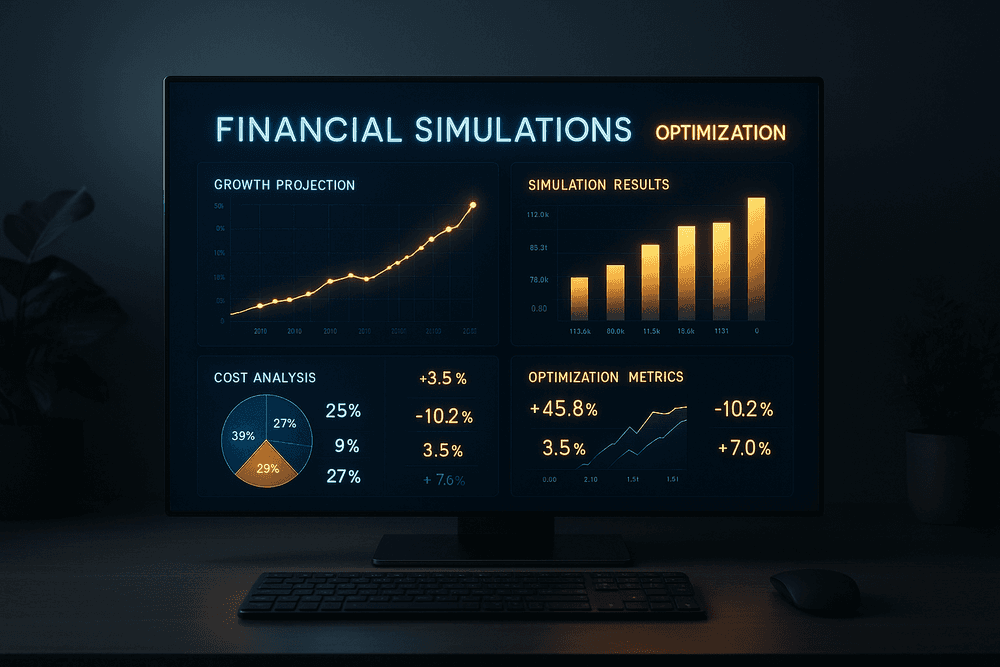
Emerging trends suggest that GenAI will soon act as a strategic co-pilot for CFOs. Instead of just highlighting a budget overrun, generative models will be able to run complex, multi-variable simulations to suggest corrective actions. For example, future systems will likely be able to draft renegotiation emails for vendor contracts based on market price benchmarks or auto-generate three distinct budget scenarios (optimistic, conservative, and stagnant) in seconds based on real-time global economic news.
Furthermore, the integration of Natural Language Processing (NLP) means that unstructured data—such as invoice footnotes, contract clauses, and internal communication logs—will become a structured asset for cost control. This holistic view ensures that no potential saving is left on the table due to human oversight or data silos.
Actionable Next Steps: Audit Your OpEx Today
Understanding the potential of ai cost optimization is the first step; implementing it is where the ROI is realized. You do not need to overhaul your entire enterprise architecture overnight to begin seeing results.
To transition from theory to practice, consider taking these immediate steps to audit your current operational expenses:
- Centralize Your Data: AI cannot optimize what it cannot see. Ensure your financial data—from cloud spend to utility bills—is accessible via API or centralized data lakes.
- Run a Pilot Audit: Choose one high-volume expense category, such as cloud computing or marketing ad spend. Deploy a specialized AI tool to analyze the last 12 months of transactions to identify immediate waste.
- Establish a Baseline: Document your current manual hours spent on cost analysis. This will serve as your benchmark to measure the efficiency gains of your new automated tools.
- Democratize Cost Accountability: Use AI dashboards to give department heads real-time visibility into their spending. When leaders see the impact of their decisions instantly, culture shifts toward efficiency.
The future of financial health is automated, intelligent, and real-time. By embracing these strategies today, you position your organization to navigate economic uncertainty with confidence and precision.