
May 27, 2025
An Introduction to AI Image Generation Tools
The Visual Revolution: An Introduction to AI Image Generation Tools
The way we create and interact with visual content is undergoing a seismic shift. At the heart of this transformation are AI image generation tools, a groundbreaking technology poised to redefine creativity, design, and digital communication. But what exactly are these tools, and how are they making such a profound impact? Let's dive in.
What Exactly Are AI Image Generation Tools and How Do They Work?
At their core, AI image generation tools are sophisticated software applications that leverage artificial intelligence to create entirely new, original images from textual descriptions, commonly known as "prompts." Imagine typing "a serene alien landscape with bioluminescent flora under a double moon," and within moments, seeing that vision materialized as a digital image. That's the magic these platforms offer.
The process typically begins with a user providing a detailed text prompt. The AI, trained on vast datasets containing billions of image-text pairs, then interprets this prompt. It analyzes the words, their relationships, and the desired artistic style (if specified) to generate a visual representation. Think of it as a highly advanced digital artist that understands language and can translate abstract concepts into concrete pixels. While text-to-image is the most common function, many advanced ai image generation tools also offer capabilities like image-to-image translation (transforming an existing image), inpainting (filling in missing parts), and outpainting (extending an image's borders).
Why AI Image Generation Tools Are a Game-Changer for Creatives and Businesses
The advent of AI image generation tools isn't just an incremental improvement; it's a paradigm shift with far-reaching implications. For creatives – artists, designers, and content creators – these tools unlock unprecedented potential. They serve as powerful brainstorming partners, allowing for rapid visualization of ideas and storyboards. Stuck on a concept? An AI image generation tool can provide numerous visual interpretations in minutes, sparking new avenues of thought. They democratize visual creation, empowering individuals without traditional artistic skills to bring their visions to life, and offer a limitless source of unique assets, reducing reliance on generic stock photography and boosting originality.
For businesses, the benefits are equally compelling. AI image generation tools are revolutionizing marketing by enabling the creation of unique, attention-grabbing visuals for ad campaigns, social media, and websites at a fraction of traditional costs and timelines. Imagine generating bespoke product mockups in diverse settings or creating personalized imagery for targeted customer segments on the fly. Beyond marketing, these tools aid in product design, architectural visualization, and even game development. The ability to generate high-quality, custom visuals quickly makes AI image generation tools an invaluable asset for companies aiming to innovate and maintain a competitive edge in our visually-driven world.
Understanding the Magic: A Brief Look at the AI Behind Image Creation
So, what powers these incredible AI image generation tools? The "magic" lies in complex artificial intelligence, specifically within machine learning (ML) and deep learning. At the heart of these systems are sophisticated neural networks—computational models inspired by the human brain's structure—trained to find patterns and relationships in data.
Two primary types of deep learning models have become prominent. Early pioneers often utilized Generative Adversarial Networks (GANs). A GAN consists of two neural networks: a "generator" that creates images and a "discriminator" that distinguishes between real images (from training data) and those created by the generator. These networks engage in a continuous game, with the generator getting progressively better at creating realistic images to fool the discriminator.
More recently, Diffusion Models have gained significant traction and now power many leading ai image generation tools. These models work by first gradually adding "noise" (randomness) to training images until they become pure static. Then, the AI learns to reverse this process: starting with random noise and a text prompt, it meticulously refines the image, step by step, removing the noise to construct a picture matching the description. Both GANs and diffusion models require training on massive datasets, learning intricate connections between text and visuals to conjure up stunning images, making ai image generation tools increasingly powerful.
Navigating the Canvas: A Comparative Look at Top AI Image Generation Tools
The world of ai image generation tools is exploding with options, each offering a unique palette for your creative endeavors. Understanding their individual strengths, weaknesses, and ideal applications is key to transforming your textual visions into compelling visuals. Let's explore some of the leading contenders shaping the future of digital art and design.
Reviewing Midjourney: Strengths, Weaknesses, and Ideal Use Cases for AI Image Generation Tools
Midjourney has carved a niche for itself by consistently producing highly artistic, often painterly, and breathtakingly beautiful images. Its strength lies in interpreting prompts with an aesthetic flair, making it a favorite among artists and designers seeking inspiration or unique visual styles. Operating primarily through Discord, Midjourney fosters a vibrant community where users share creations and learn prompting techniques. However, this Discord-centric approach can present a learning curve for newcomers, and achieving precise control over minute details sometimes requires sophisticated prompting.
- Strengths: Exceptional artistic output, strong community engagement, excels at stylistic and abstract interpretations.
- Weaknesses: The Discord-only interface can be a barrier for some users; mastering advanced prompting and commands takes time and practice.
- Ideal Use Cases: Perfect for concept art, book illustrations, album covers, generating unique artistic visuals, and for those who appreciate a more "dreamlike" or surreal aesthetic from their ai image generation tools. It's a fantastic platform for sparking creative ideas and exploring unconventional visual styles.
Deep Dive into DALL-E 3: Advanced Features and Creative Possibilities with AI Image Generation Tools
DALL-E 3, developed by OpenAI, represents a significant leap in prompt understanding and image coherence. Its integration with ChatGPT allows for a more conversational and intuitive prompting experience, where users can refine their ideas through natural language, making complex requests easier to articulate. A standout feature is its improved ability to accurately render text within images and follow intricate instructions regarding object placement, count, and relationships. DALL-E 3 excels at generating photorealistic images and detailed scenes, opening up vast creative possibilities for various applications.
- Advanced Features: Superior prompt adherence, robust and often accurate text generation within images, seamless ChatGPT integration for iterative and conversational prompting.
- Creative Possibilities: Ideal for storyboarding, creating marketing visuals with embedded text, developing product mockups, architectural visualizations, and generating highly specific and detailed scenes. DALL-E 3 is a powerful choice among ai image generation tools for projects requiring clarity, precision, and narrative coherence.
Exploring Stable Diffusion: Open-Source Power and Customization for AI Image Generation
Stable Diffusion stands out as a formidable open-source player in the ai image generation landscape. Its primary advantage is the unparalleled freedom and customization it offers. Users can run Stable Diffusion locally on their own hardware, ensuring privacy and complete control over the generation process. The open-source nature has fostered a massive and active community, leading to a plethora of custom models (trained on specific aesthetics, characters, or subjects), user interfaces (like Automatic1111 and ComfyUI), and powerful extensions such as ControlNet for precise image manipulation through depth maps, Canny edges, or human pose detection. While it demands a more technical setup and has a steeper learning curve for harnessing its full potential, the rewards in terms of flexibility are immense.
- Open-Source Power & Customization: Free to use and modify, can be run locally for enhanced privacy, vast community support and resources, extensive control over all generation parameters, robust inpainting and outpainting capabilities, and the powerful ability to train custom models (e.g., LoRAs, Dreambooth).
- Ideal Use Cases: Suited for users seeking maximum control and flexibility, developers integrating AI image generation into their own applications, artists wanting to create highly specific or niche art styles with custom-trained models, and those keen on experimenting with the cutting edge of ai image generation tools and techniques.
Discovering Other Promising AI Image Generation Tools on the Market
Beyond these titans, the ecosystem of ai image generation tools is constantly expanding with innovative solutions catering to diverse needs:
- Adobe Firefly: Integrated directly into Adobe's Creative Cloud suite, Firefly emphasizes ethically sourced training data and is designed to be commercially safe. It's an excellent option for designers already within the Adobe ecosystem, offering features like Generative Fill in Photoshop and Text to Vector Graphic in Illustrator.
- Leonardo.Ai: Built upon Stable Diffusion, Leonardo.Ai provides a user-friendly platform with a strong focus on game asset creation. It offers a library of pre-trained, fine-tuned models and allows users to train their own, streamlining the workflow for game developers and artists.
- Ideogram AI: This tool has gained significant attention for its impressive ability to generate images with coherent, legible, and stylistically integrated text, often outperforming many other models in this specific and challenging niche.
The field of ai image generation tools is dynamic, rapidly evolving, and incredibly exciting. The best tool for you will ultimately depend on your specific project requirements, technical comfort level, desired artistic output, and budget. Don't be afraid to explore and experiment with different platforms to find the perfect digital brush for your imagination.
Beyond the Prompt: Essential Features of Modern AI Image Generation Tools
While your text prompt is the starting line, unlocking the full potential of modern ai image generation tools means venturing "beyond the prompt." These platforms offer a suite of sophisticated features that provide granular control, enabling you to refine, remix, and radically transform your visuals. Understanding these capabilities is key to elevating your creations from interesting outputs to truly compelling art.
Mastering Text-to-Image: Crafting Photorealistic Visions
Achieving photorealistic results with ai image generation tools is an art form in itself. It's about translating your mental image into a language the AI can precisely interpret. This involves moving beyond simple descriptions. Consider specifying:
- Camera Angles and Lenses: "Worm's-eye view," "Dutch angle," "telephoto lens," or "macro shot" can dramatically alter composition.
- Lighting Conditions: "Golden hour," "dramatic studio lighting," "bioluminescent glow," or "moonlit" sets the mood.
- Artistic Styles & Mediums: Even for photorealism, hinting at "hyperrealistic digital painting" or "shot on Portra 400 film" can guide the AI.
- Detail and Specificity: The more precise your nouns, adjectives, and even verbs, the better. "A contemplative elderly man with weathered hands" is better than "old man."
- Negative Prompts: Crucially, tell the AI what not to include (e.g., "no blur," "no text," "no extra limbs") to refine the output and avoid common artifacts. Modern ai image generation tools are adept at parsing these layered instructions, allowing you to sculpt digital light and form with astonishing accuracy.
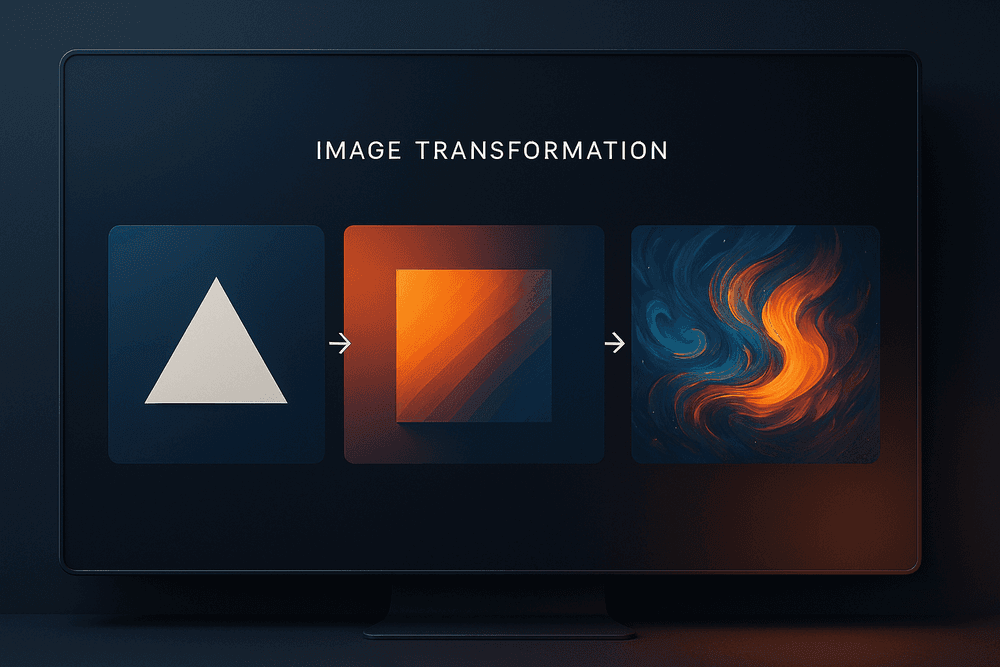
Exploring Image-to-Image Generation: Transforming Existing Visuals
Many advanced ai image generation tools offer robust image-to-image (img2img) functionality, allowing you to use an existing image as a foundational reference. You can upload a sketch, a photograph, or even a previous AI generation, and then use a text prompt to guide its transformation. Imagine:
- Turning a simple line drawing into a richly detailed oil painting.
- Changing the season or time of day in a landscape photo.
- Applying a completely different artistic style (e.g., "transform this portrait into a cyberpunk character").
- Adding or modifying elements within an existing scene.
Image-to-image gives you a powerful starting point, enabling iterative refinement and greater control over the final composition and style. It’s an excellent way to explore variations on a theme or to integrate AI-driven enhancements into your existing visual workflows, all while leveraging the sophisticated understanding of ai image generation tools.
Understanding Inpainting and Outpainting: Precision Editing and Expansion
Your creative journey doesn't end with the initial image generation. Two indispensable features offered by leading ai image generation tools for post-generation refinement are inpainting and outpainting.
- Inpainting (Generative Fill): This powerful feature allows you to selectively edit portions of your image. Simply mask an area you wish to change – perhaps an unwanted object, an awkward detail, or an empty space – and provide a prompt for what should replace it. The AI will then intelligently generate new content that seamlessly integrates into the surrounding pixels. It's perfect for removing blemishes, adding new elements, or correcting imperfections.
- Outpainting (Generative Expand): Ever wished your image extended just a bit further? Outpainting allows you to expand the canvas of your creation beyond its original borders. The AI analyzes the existing image and intelligently generates new content to fill the expanded areas, maintaining coherence in style and subject matter. This is invaluable for creating wider aspect ratios, panoramic scenes, or simply exploring what might lie just outside the frame.
These tools provide an incredible level of precision, turning ai image generation tools into versatile editing platforms.
Leveraging Style Transfer and Artistic Filters: Imbue Your Art with Distinct Flavors
To quickly imbue your creations with specific aesthetic qualities, many ai image generation tools incorporate style transfer and a diverse range of artistic filters.
- Style Transfer: This fascinating technique allows you to take the stylistic DNA of one image (the "style image," e.g., a Van Gogh painting) and apply it to the content of another image (the "content image," e.g., your generated portrait). The AI then re-renders your content image in the visual style of the reference, creating a unique fusion.
- Artistic Filters: These are often pre-set effects that can transform your image with a single click. Common filters might include "watercolor," "sketch," "comic book," "pixel art," "vintage photo," or "sci-fi glow." They provide a fast track to achieving a particular look or mood without needing to craft complex prompts for that specific style.
Both style transfer and artistic filters are excellent for experimentation, allowing you to rapidly explore different visual interpretations and find the perfect artistic voice for your image, making sophisticated transformations readily accessible through ai image generation tools.
From Novice to Picasso: Best Practices for Using AI Image Generation Tools Effectively
Unlocking the full potential of ai image generation tools goes beyond simply typing a few words. To truly transform your ideas into visual masterpieces, you need to master the art of communication with the AI, understand its nuances, and embrace an iterative creative process. Let's dive into the best practices that will elevate your creations.
Crafting the Perfect Prompt: Tips for Clear and Descriptive Instructions
The heart of any successful image created with ai image generation tools lies in the prompt. Think of it as art direction for a literal, talented AI. Vague prompts yield vague results.
- Be Specific: Instead of "a dog," try "a golden retriever puppy playing in a field of wildflowers, soft morning light." The more detail you provide about the subject, action, and environment, the better the AI can interpret your vision.
- Artistic Style & Medium: Specify styles like "impressionistic painting," "photorealistic," "sci-fi concept art," "pixel art," or "watercolor sketch." Mentioning specific artists (e.g., "in the style of Van Gogh") can also guide the AI, but always consider the ethical implications discussed later.
- Mood & Atmosphere: Use evocative words like "serene," "chaotic," "mysterious," "joyful," or "eerie" to set the desired tone for your image.
- Composition & Lighting: Describe the viewpoint ("close-up," "wide shot," "bird's-eye view") and lighting conditions ("dramatic studio lighting," "golden hour," "neon glow," "moonlit"). The more descriptive keywords you thoughtfully combine, the better ai image generation tools can translate your abstract ideas into compelling visuals.
Experimenting with Parameters: How to Fine-Tune Your AI Image Output
Beyond the text prompt, most ai image generation tools offer a suite of parameters that can dramatically alter your output. Don't be afraid to experiment with these settings to refine your results.
- Aspect Ratio: Control the dimensions of your image (e.g., 16:9 for cinematic or widescreen displays, 1:1 for social media profile pictures, 9:16 for stories).
- Negative Prompts: This powerful feature allows you to specify what you don't want to see in the image. If your "beautiful forest scene" keeps generating unwanted modern structures, add "buildings, roads, cars" to your negative prompt.
- Seed Number: This number initializes the image generation process. Using the same seed with the same prompt will (usually) produce a very similar image, which is excellent for achieving replicable results or making slight variations. Changing the seed offers entirely new interpretations of your prompt.
- Guidance Scale (or CFG Scale): This parameter determines how strictly the AI adheres to your text prompt. Higher values mean more adherence, but can sometimes lead to less creative or overly "literal" results. Lower values give the AI more artistic freedom.
- Steps/Iterations: More steps generally mean more detail and refinement in the final image, but also longer generation times. Finding the sweet spot for quality and efficiency is key. Understanding and manipulating these settings will allow you to fine-tune your images with greater precision when using ai image generation tools.
Ethical Considerations: Responsible Use of AI Image Generation Tools and Copyright
The incredible power of ai image generation tools comes with significant responsibilities. Navigating the ethical landscape is crucial for respectful, creative, and sustainable use.
- Copyright: The legal status of AI-generated images is still an evolving area of law. Generally, images generated purely by AI without substantial human authorship may not be eligible for copyright protection by the user in some jurisdictions. Always check the terms of service of the specific ai image generation tools you use, as policies can vary.
- Bias: AI models are trained on vast datasets, which can inadvertently contain and perpetuate societal biases related to race, gender, and other characteristics. Be mindful of this and actively work to create diverse and inclusive imagery by consciously guiding your prompts.
- Misinformation and Harmful Content: It is imperative to never use these tools to create deepfakes for malicious purposes, spread misinformation, or generate hateful, explicit, or otherwise harmful content.
- Respecting Artists: While AI can mimic artistic styles, be extremely cautious about generating images "in the style of" living artists, especially for commercial purposes, without their explicit permission. Focus on learning from various styles to develop your own unique voice, rather than creating direct pastiches that could undermine an artist's livelihood and intellectual property. Responsible use of ai image generation tools prioritizes originality, creativity, and respect for the artistic community.
Iterative Refinement: The Secret to Polishing Your AI-Generated Masterpieces
Rarely does the first image generated by an ai image generation tool perfectly match your intricate vision. The true magic, and often the most rewarding part of the process, happens through iteration and refinement.
- Analyze and Adjust: Look critically at your initial outputs. What elements work well? What parts miss the mark? Refine your prompt based on these observations—add more descriptive detail, change keywords, adjust the emphasis, or tweak the parameters you learned about earlier.
- Image-to-Image (img2img): Many advanced ai image generation tools offer an "image-to-image" feature. This allows you to upload an initial AI-generated image (or even your own rough sketch or photograph) and use it as a structural or stylistic starting point for further refinement with a new or modified prompt. This is exceptionally powerful for guiding the AI more precisely towards your desired outcome.
- Inpainting and Outpainting: Need to fix a small, imperfect detail or wish to expand the canvas of your creation? Inpainting allows you to select a specific area of an image and regenerate just that part with a new prompt, seamlessly blending it with the rest. Outpainting intelligently extends the image beyond its original borders, creating a larger scene based on the existing content.
- Combine with Traditional Tools: Don't hesitate to take your AI-generated images into familiar photo editing software like Adobe Photoshop, GIMP, or Procreate for final touches, color correction, compositing multiple AI elements, or adding hand-drawn details. Embrace the iterative cycle; it’s a core part of the creative journey with ai image generation tools, transforming promising starts into truly polished and unique masterpieces.
Real-World Impact: Inspiring Use Cases for AI Image Generation Tools
The theoretical potential of AI image generation tools is rapidly translating into tangible, real-world applications across diverse industries. From revolutionizing marketing strategies to empowering artists and streamlining e-commerce, these tools are not just a novelty but a powerful engine for innovation and efficiency. Let's explore some of the most inspiring ways AI image generation tools are making an impact today.
Revolutionizing Marketing: Ad Campaigns and Social Media with AI Image Generation Tools
The marketing landscape is being dramatically reshaped by ai image generation tools. Marketers are leveraging these powerful platforms to create highly specific, engaging visuals for ad campaigns at an unprecedented speed. Imagine A/B testing dozens of ad creatives, each with unique imagery tailored to different audience segments, without the traditional costs and time constraints of photoshoots or graphic design. AI image generation tools empower brands to produce eye-catching social media content that stands out in crowded feeds, quickly generating visuals for promotions, announcements, or daily engagement. This ability to rapidly iterate and customize visual assets not only enhances campaign performance but also significantly reduces production bottlenecks, allowing marketing teams using ai image generation tools to be more agile and responsive to market trends.
AI-Generated Art: Forging New Frontiers for Digital Artists and Designers
For digital artists and designers, ai image generation tools are not a replacement but a revolutionary collaborator, opening up new frontiers of creativity. These tools act as powerful assistants, helping to rapidly visualize concepts, generate unique textures and patterns, or explore entirely new aesthetic styles that might be difficult to achieve manually. Designers can use ai image generation tools for mood boarding, creating initial sketches, or even generating diverse elements to incorporate into larger projects. This synergy between human artistic vision and AI's generative capabilities is leading to a new era of digital art, where the limits are defined more by imagination than by technical skill or time. AI image tools are becoming an indispensable part of the modern digital artist's toolkit, fostering experimentation and pushing the boundaries of visual expression with the support of sophisticated ai image generation tools.
Streamlining E-commerce: Product Prototyping and Visualization with AI Image Generation Tools
In the competitive world of e-commerce, ai image generation tools are proving to be a game-changer for product prototyping and visualization. Businesses can now generate realistic product mockups in diverse settings and styles without the need for expensive photoshoots or physical prototypes. Want to see your new product in ten different lifestyle scenarios or with various colorways and materials? AI image generation tools can deliver these visuals quickly and cost-effectively. This capability drastically speeds up the product development cycle, allowing for faster iterations and feedback. Furthermore, for online storefronts, these tools can create compelling and varied product imagery, enhancing listings and providing customers with a richer visual experience, ultimately boosting engagement and conversion rates. AI image generation tools are thus streamlining processes from conception to customer-facing presentation, making them invaluable for modern e-commerce.
Powering Narratives: AI Images in Content Creation, Blogging, and Media
Effective storytelling hinges on compelling visuals, and ai image generation tools are empowering content creators, bloggers, and media outlets to enhance their narratives like never before. Gone are the days of endlessly searching for the perfect, often generic, stock photo. With ai image generation tools, creators can generate unique, highly relevant images that precisely match the tone and subject matter of their content. Whether it's a custom header image for a blog post, unique illustrations for an article, or conceptual visuals to explain abstract ideas in presentations, these generation tools provide a limitless wellspring of visual creativity. This ability to craft bespoke images not only improves audience engagement but also strengthens brand identity and helps content stand out. AI image generation tools are democratizing visual creation, allowing even small creators to produce professional-quality, original imagery for their stories, truly transforming how visual content is produced and consumed.
Embark on Your Creative Journey: Next Steps with AI Image Generation Tools
The world of AI-powered visuals is at your fingertips, and your creative journey is just beginning. Now that you understand the potential of ai image generation tools, let's explore how to choose the right one, get started quickly, find inspiration, and look towards the exciting future of this technology.
Choosing the Right AI Image Generation Tool for Your Specific Project Needs
Navigating the vibrant landscape of ai image generation tools to find your perfect match starts with understanding your project's core needs. With a diverse array of options available, each with unique strengths, consider these key factors before you commit:
- Usability vs. Customization: Are you looking for a simple, intuitive interface for quick results, or do you crave advanced controls and parameters for fine-tuning every aspect of your image? Some ai image generation tools are designed for beginners, while others cater to experienced digital artists.
- Desired Artistic Style: What aesthetic are you aiming for? Photorealism for product mockups, whimsical illustrations for a children's book, abstract art for a website background, or perhaps a specific painterly style? Different ai image generation tools excel in varied artistic domains. Research which tools are renowned for the styles you need.
- Budget and Pricing Models: Evaluate the costs involved. Many ai image generation tools offer free trials or limited free tiers, which are excellent for initial experimentation. For more extensive use or advanced features, you might encounter credit-based systems, monthly subscriptions, or one-time purchase options.
- Crucial Features and Capabilities: Identify if your projects require specific functionalities. Do you need inpainting (editing parts of an existing image), outpainting (extending an image beyond its original borders), image-to-image generation (using an existing image as a base for a new prompt), specific output resolutions, or particular aspect ratios?
By carefully matching these aspects of your project with the offerings of various platforms, you'll be well-equipped to select the most effective ai image generation tool to bring your creative visions to life.
Quick Start Guide: Your First Steps into AI Image Creation with Online Tools
Eager to start creating? Online ai image generation tools offer a surprisingly straightforward entry point into the world of AI-assisted art. Here’s your quick start guide to making your first visual masterpiece:
- Access & Explore: Most online tools require a simple sign-up. Once you're in, take a moment to get familiar with the user interface. Locate the primary prompt input area, any style selection menus, and settings panels for image generation.
- Craft Your First Prompt: This is where you instruct the AI. Be descriptive and clear! Instead of a vague term like "dog," try something more evocative like "a fluffy Samoyed puppy joyfully chasing a bright red ball in a snowy park, dynamic action shot, photorealistic." Specificity significantly helps the ai image generation tool understand your intent.
- Generate & Iterate: Click the 'generate' button and see what the AI produces! Your first output might not be perfect, and that’s a normal part of the creative process. Refine your prompt by adding more details, trying different keywords for style or mood, or using negative prompts (specifying elements you want to exclude) if the tool supports them. Iteration is key to achieving your desired result.
- Adjust Tool Settings: Many ai image generation tools offer options to tweak parameters such as aspect ratio (e.g., square, landscape, portrait), the number of images generated per prompt, or guidance scale (how strictly the AI adheres to your prompt). Play around with these settings to see how they influence the outcome.
- Save Your Creations: Once you’ve generated a visual you’re happy with, look for the download or save option. Images are typically available in common formats like JPG or PNG.
Mastering ai image generation tools is an experimental journey. Don't be afraid to try unusual prompts, combine different styles, and learn from each generation. Enjoy the process of discovery!
Where to Find Inspiration and Communities for AI Image Generation Enthusiasts
Embarking on your AI art adventure doesn’t mean going it alone. A vibrant and rapidly growing global community of enthusiasts, artists, and developers has formed around ai image generation tools. Tapping into these communities can supercharge your learning, provide endless inspiration, and help you stay updated on the latest techniques:
- Official Tool Communities & Discord Servers: Many leading ai image generation tools like Midjourney, DALL-E, or Leonardo.AI host their own official Discord servers, forums, or community hubs. These are invaluable resources for seeing what others are creating, asking specific questions about the tool, sharing your work, and getting direct updates from the developers.
- Social Media Platforms: Platforms such as Instagram, X (formerly Twitter), Pinterest, Facebook groups, and even TikTok are brimming with AI-generated art. Search for relevant hashtags like #AIart, #AIcommunity, #generativeart, #AIimage, #neuralart, or hashtags specific to the tools you're using (e.g., #StableDiffusion, #MidjourneyGallery).
- Online Forums & Groups: Reddit hosts numerous active subreddits (e.g., r/aiArt, r/StableDiffusion, r/Midjourney, r/generative) where users share prompts, fascinating results, helpful tips, tutorials, and troubleshoot issues. These are great places for deeper discussions.
- Dedicated AI Art Galleries & Websites: Several websites and online galleries are now dedicated to showcasing AI-generated art. Exploring these can provide a curated look at high-quality creations, highlight emerging trends, and introduce you to new artists and styles.
Engaging with these communities allows you to discover innovative prompting techniques, explore diverse artistic styles you might not have considered, receive constructive feedback on your creations, and stay motivated as you continue to explore the vast potential of ai image generation tools.
The Future of Visuals: What's Next for AI Image Generation Tools and Technology?
The current capabilities of ai image generation tools are already astounding, capable of producing breathtaking and complex visuals from simple text prompts. However, we are truly only scratching the surface of what this technology can achieve. The future of AI-powered visuals is poised for even more groundbreaking advancements that will continue to redefine creative workflows and visual media:
- Unprecedented Realism, Nuance, and Control: Expect future ai image generation tools to achieve even higher levels of photorealism and artistic nuance. We'll likely see finer, more intuitive control over minute details such as texture, lighting, material properties, and even subtle emotional expressions in generated characters.
- Enhanced Coherence & Long-Form Visual Storytelling: AI will become significantly better at maintaining character consistency, style, and context across multiple images or even scenes. This will pave the way for more sophisticated AI-assisted visual storytelling, from graphic novels to storyboards for film.
- Beyond Static Images: AI Video, 3D, and Interactive Content: The leap from static images to dynamic, AI-generated video is already well underway. Soon, creating short animations, motion graphics, or even basic 3D models and environments directly from text prompts using ai image generation tools (or their evolved counterparts) will become increasingly accessible.
- Evolving Ethical Frameworks & Content Provenance: As the technology matures and its adoption widens, so too will the discussions and development of robust solutions around copyright, intellectual property, authenticity, deepfakes, and ethical usage. We can anticipate better tools for content provenance and clear industry standards.
- Seamless Integration and Democratization: AI image generation tools will likely become more deeply integrated into existing creative software suites (like Adobe Creative Cloud or 3D modeling programs), making them an indispensable and seamless part of the digital artist's and designer's toolkit, further democratizing high-quality visual creation.
The trajectory is clear: ai image generation tools are set to fundamentally revolutionize how we create, consume, and interact with visual media, unlocking new frontiers for creativity, communication, and innovation across countless industries. The journey ahead promises to be as exciting as the images these tools help us create.