
May 22, 2025
Why Your Audit Trail Matters More Than Ever
The Unseen Guardian: Why Your Audit Trail Matters More Than Ever
In the intricate digital ecosystem of modern business, an often-underestimated component works tirelessly behind the scenes: the audit trail. It's the silent chronicler of every action, every change, and every access within your systems. But the audit trail of today is far more than a dusty logbook; it’s evolving into a dynamic and indispensable asset for security, compliance, and operational intelligence. Understanding its modern capabilities is no longer optional—it's a fundamental necessity.
Defining the Modern Audit Trail: Beyond Basic Logs
For too long, the term audit trail might have conjured images of simple, chronological event logs – a basic list of timestamps and actions, often overwhelming and consulted only after a disaster. However, the modern audit trail has transcended these rudimentary beginnings. It's no longer just about what happened and when, but also who initiated the action, where it originated, how it was performed, and even the impact of that event.
A contemporary audit trail provides a rich, contextualized narrative of system activity. This means capturing granular details beyond basic login attempts, encompassing:
- Data access and modifications: Who viewed sensitive data? Who changed critical records?
- System configuration changes: What settings were altered, by whom, and what was the previous state?
- User activity and permissions: Tracking privilege escalations, failed access attempts, and changes in user roles.
- API calls and inter-system communications: Monitoring the flow of data and commands between different applications.
This comprehensive digital footprint transforms the audit trail from a passive record into an active source of truth, offering unparalleled visibility into the inner workings of your IT environment. It’s the foundation upon which accountability and transparency are built.
The Growing Imperative for Robust Audit Trail Capabilities in a Data-Driven World
The need for a robust and comprehensive audit trail has never been more acute. We operate in an increasingly data-driven world, where information is both a critical asset and a significant liability. Several converging factors amplify this imperative:
- Exploding Data Volumes: As organizations generate and process unprecedented amounts of data, the surface area for potential security incidents and compliance breaches expands dramatically. A detailed audit trail is essential to navigate this complexity.
- Sophisticated Cyber Threats: Adversaries are constantly evolving their tactics. A thorough audit trail is a cornerstone of effective cybersecurity, enabling not only the detection of malicious activity but also crucial forensic analysis during incident response to understand the breach's scope and origin.
- Stringent Regulatory Landscapes: Compliance mandates like GDPR, HIPAA, SOX, CCPA, and numerous industry-specific regulations demand meticulous record-keeping and the ability to demonstrate due diligence. An inadequate audit trail can lead to severe penalties, reputational damage, and loss of customer trust.
- Demand for Operational Insights: Beyond security and compliance, a well-structured audit trail can yield valuable operational insights, helping to identify system inefficiencies, troubleshoot performance issues, and monitor adherence to internal policies.
In essence, a powerful audit trail system is no longer a 'nice-to-have'; it’s a critical infrastructure component that underpins trust, security, and regulatory adherence in the digital age.
Teaser: How AI is Upgrading Your Audit Trail from a Record-Keeper to a Proactive Sentinel
While a comprehensive audit trail is undeniably vital, manually sifting through potentially millions of log entries to find a needle in a haystack is a monumental task. The sheer volume can be overwhelming, often relegating the audit trail to a reactive tool used primarily for post-incident investigations.
But what if your audit trail could do more? What if it could evolve from a passive historian into an intelligent, proactive guardian?
This is precisely where Artificial Intelligence (AI) is set to revolutionize the audit trail. Imagine an audit trail that doesn’t just record events but actively analyzes them in real-time, learns normal patterns of behavior, and intelligently flags anomalies that could indicate a security threat or compliance violation before significant damage occurs. AI promises to transform your audit trail from a mere record-keeper into a vigilant, proactive sentinel, capable of identifying subtle threats and providing predictive insights. The era of the AI-enhanced audit trail is dawning, and it’s poised to redefine how we approach security and operational intelligence.

AI-Powered Audit Trail: From Reactive Logs to Predictive Security
The traditional audit trail, while foundational for security and compliance, often operates in a reactive mode – a historical record reviewed after an incident. However, the integration of Artificial Intelligence (AI) is transforming the humble audit trail from a passive chronicler into an active, predictive guardian of your digital assets. This evolution means moving beyond simple log collection to intelligent analysis, offering unprecedented levels of insight and proactive defense. AI doesn't just enhance the audit trail; it redefines its potential, making it a cornerstone of modern, adaptive security strategies.
Revolutionizing Audit Trail Data Collection and Accuracy with AI
Manually sifting through disparate log sources to construct a comprehensive audit trail is a Herculean task, prone to errors, omissions, and inconsistencies. AI steps in to automate and significantly improve this critical first step. AI-driven agents can tirelessly and accurately collect audit trail data from a multitude of sources in real-time – be it servers, applications, network devices, IoT endpoints, or cloud services. This automated approach ensures a far more complete audit trail, capturing events that might otherwise be missed.
Furthermore, AI excels at standardizing diverse log formats. Different systems speak different languages, but AI can act as a universal translator, normalizing data into a consistent structure. This makes the subsequent analysis of your audit trail far more efficient and effective. The result is a high-fidelity, accurate audit trail that serves as a reliable source of truth, minimizing the human error inherent in manual processes and bolstering the integrity of your entire security posture. This enhanced data quality is paramount, as the insights derived from an audit trail are only as good as the data it contains.
Unlocking Predictive Insights: Machine Learning for Anomaly Detection in Your Audit Trail
Once a robust and accurate audit trail is established, Machine Learning (ML), a subset of AI, unlocks its true power: the ability to move from reactive review to predictive security. ML algorithms analyze your audit trail data to learn the normal patterns of behavior for users, systems, and network activities. This establishes a dynamic baseline of "what's normal" for your specific environment.
The real magic happens when deviations from this baseline occur. ML-powered anomaly detection systems constantly monitor the audit trail, flagging unusual activities in real-time. This could be anything from an employee accessing sensitive files at an odd hour, an unfamiliar process initiating network connections, to a sudden spike in failed login attempts targeting a critical server. Instead of discovering a breach days or weeks later by manually reviewing logs, an ML-enhanced audit trail can identify suspicious indicators as they happen, or even predict potential threats based on subtle precursors. This proactive stance allows security teams to investigate and neutralize threats before they escalate into significant incidents, drastically reducing response times and potential damage. This intelligent filtering also helps combat alert fatigue by prioritizing the most critical anomalies within the audit trail.
Deciphering the Details: NLP for Interpreting Complex Audit Trail Narratives
Audit trails are not just timestamps and IP addresses; they often contain a wealth of unstructured text data – error messages, user-generated comments, system event descriptions, and free-form narratives. Manually interpreting this qualitative data across a vast audit trail can be incredibly time-consuming and requires significant expertise. This is where Natural Language Processing (NLP), another branch of AI, provides a significant advantage.
NLP algorithms can parse, understand, and extract meaningful information from the textual components of your audit trail. Imagine being able to automatically identify key entities (like usernames, file paths, or specific commands), actions performed, and even the sentiment expressed within log entries. For example, NLP can help distinguish a routine error message from one indicating a critical system failure or a malicious attempt to obfuscate activity within the audit trail. It can also empower security analysts and auditors to query the audit trail using plain language, asking questions like, "Show all administrator actions on the finance database between 2 AM and 4 AM last Tuesday." This capability dramatically speeds up investigations, makes the audit trail more accessible to a wider range of personnel, and uncovers nuances that might be missed by purely structured data analysis. By making sense of the narratives, NLP adds a crucial layer of contextual understanding to your audit trail.
Essential Features to Look For in an AI-Enhanced Audit Trail Solution
Choosing the right AI-enhanced audit trail solution is pivotal for bolstering your security and compliance posture. Not all solutions are created equal, and focusing on key features will ensure you select a system that truly leverages artificial intelligence to transform your audit trail management. Here’s what to prioritize:
Real-time Monitoring and Alerting for Your Digital Audit Trail
In today's dynamic digital environment, rapid response to security events is crucial. An AI-enhanced audit trail solution must provide robust real-time monitoring. This transforms your digital audit trail from a mere historical log into a live stream of system activity. AI algorithms continuously analyze this audit trail data, identifying subtle suspicious patterns and anomalies that human oversight might miss. Upon detecting potential threats, such as unauthorized access or unusual data changes, the system should issue immediate, intelligent alerts. These AI-powered alerts offer context and prioritize threats by impact, allowing security teams to act decisively on genuine risks. This proactive capability minimizes attack windows and turns your audit trail into an active defense mechanism.
Advanced Analytics and Visualization of Audit Trail Data
An audit trail generates immense data, making manual analysis for insights nearly impossible. AI's analytical strength is key here. Seek an AI-enhanced audit trail solution offering advanced analytics to uncover hidden patterns, correlations, and anomalies within your audit trail data. AI performs sophisticated behavioral analysis, establishing normal baselines and flagging deviations for improved threat detection. These analytics also support forensic investigations by helping pinpoint incident root causes. Crucially, visualizing this complex audit trail information through interactive dashboards, heatmaps, and trend graphs converts raw logs into understandable insights. This empowers teams to grasp system activity, spot security gaps, and prove compliance, making your audit trail data truly actionable.
Seamless Integration with Existing Security and Compliance Frameworks
Your AI-enhanced audit trail solution must not be a silo; its power amplifies through seamless integration with your existing security and compliance framework. Prioritize solutions that connect effortlessly with vital tools like Security Information and Event Management (SIEM) systems, Security Orchestration, Automation and Response (SOAR) platforms, Governance, Risk, and Compliance (GRC) tools, and Identity and Access Management (IAM) systems. This integration centralizes security event views and enriches your audit trail data, offering a holistic activity perspective. Correlating audit trail logs with SIEM alerts, for instance, clarifies attack progressions. AI can aid these integrations by standardizing data and optimizing flows. Such interoperability streamlines workflows, boosts overall security, and simplifies demonstrating compliance with frameworks like HIPAA or GDPR, ensuring your audit trail is comprehensive.
Scalability and Customization: Tailoring Your AI Audit Trail to Business Needs
Businesses evolve, and so must their AI-enhanced audit trail solutions. Scalability is essential, ensuring the system handles growing volumes of audit trail data from new users and systems without performance loss as your digital footprint expands. Your audit trail must keep pace. Customization is equally vital. Choose a platform allowing you to tailor AI models, alert thresholds, and reporting to match your specific industry regulations, risk profile, and workflows. "Anomalous behavior" definitions vary, so an AI-driven audit trail needs granular configuration for relevant, actionable alerts. Customizing your AI audit trail guarantees it delivers targeted insights, proving its value and optimizing your investment in a robust audit trail system.
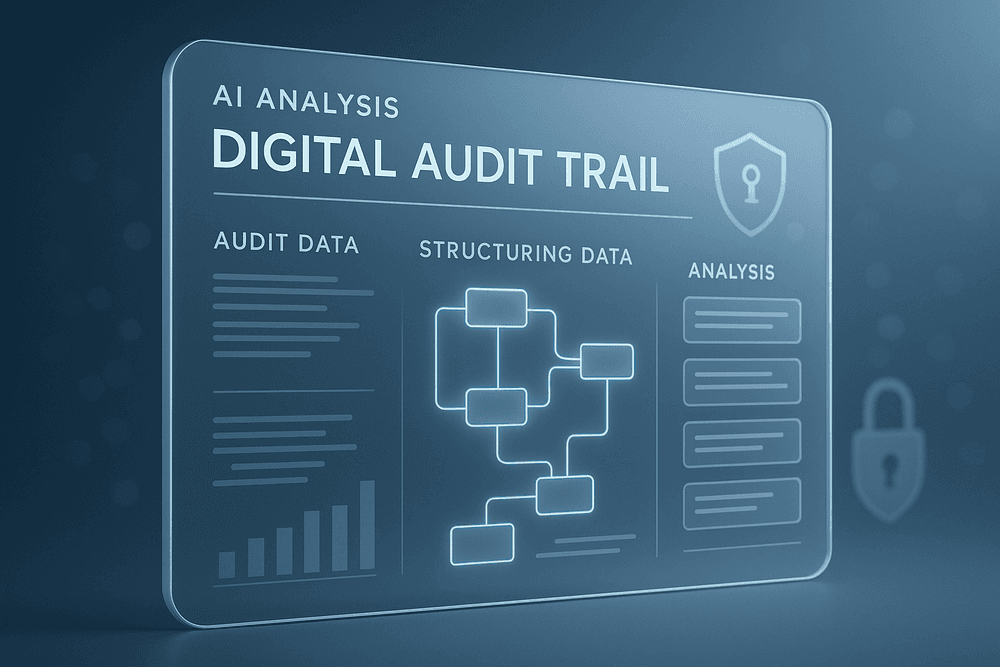
Maximizing Value: Best Practices for Your AI-Driven Audit Trail
An AI-enhanced audit trail system is a powerful asset, but like any advanced technology, its full potential is realized through strategic implementation and ongoing management. To truly harness the capabilities of AI in your audit processes, adopting best practices is key. This ensures your AI audit trail not only meets current demands but also evolves to provide sustained value in security, compliance, and operational efficiency.
Defining Clear Objectives for Your AI-Enhanced Audit Trail Implementation
An AI-enhanced audit trail offers transformative potential, but unlocking its value begins with defining clear objectives. Without precise goals, your AI audit trail implementation can lack focus. Ask: what specific outcomes do you want your AI audit trail to achieve? Are you bolstering regulatory compliance (SOX, GDPR, HIPAA) through automated evidence gathering from your audit trail? Is your focus enhancing security, using AI for proactive threat identification based on audit trail data? Or is operational efficiency paramount, using your AI audit trail to uncover process bottlenecks? Aligning these objectives with specific AI capabilities—like machine learning for advanced threat detection within your audit trail or natural language processing to understand unstructured log data—is crucial for a targeted and effective AI audit trail strategy. Ensure your objectives for the AI audit trail are SMART: Specific, Measurable, Achievable, Relevant, and Time-bound, providing a clear roadmap for success.
Ensuring Data Integrity and Privacy in Your AI Audit Trail
The insights derived from your AI audit trail are only as reliable as the data it ingests. Therefore, ensuring unwavering data integrity and robust privacy measures for your audit trail is non-negotiable. Data integrity for your audit trail means guaranteeing the accuracy, completeness, and consistency of every log and event recorded. While AI can assist in identifying data quality issues, foundational practices like standardized data formats and secure logging mechanisms are essential. In parallel, data privacy within your AI audit trail must be paramount, especially when dealing with sensitive information. Adherence to regulations like GDPR and CCPA is a baseline. Implement techniques such as data minimization (collecting only necessary audit trail data), anonymization, or pseudonymization where appropriate to protect identities. Secure your audit trail data itself with strong encryption, both in transit and at rest, and enforce stringent access controls. An ethical AI approach, ensuring fairness and transparency in how audit trail data is used, will further build trust and compliance in your AI-driven audit trail system.
Training Your Team to Utilize and Interpret AI-Powered Audit Trail Insights
Your AI audit trail system's true power is unlocked when your team can proficiently utilize its insights. Technology augments human expertise; effective training is vital to translate AI capabilities into actionable intelligence from your audit trail. Equip your team—auditors, security analysts, compliance officers, and IT personnel—to understand AI processing of audit trail data, navigate the AI audit trail platform, and interpret AI-generated alerts and visualizations. Critical thinking is essential to validate findings from the AI audit trail and distinguish genuine issues from potential false positives. Tailored training modules should cover role-specific use cases, such as how to leverage the AI audit trail for forensic investigations or for continuous compliance monitoring. Foster a culture of continuous learning, encouraging your team to stay updated as AI technologies and your audit trail functionalities evolve. This ensures they can consistently extract maximum value from the AI-powered audit trail insights.
Regularly Reviewing and Refining Your AI Audit Trail Strategy
An AI-enhanced audit trail is a dynamic asset, not a static installation. To continuously maximize its value and ensure it remains aligned with your organizational goals, a strategy of regular review and refinement is essential. The threat landscape, regulatory requirements, and business processes are constantly evolving, and your AI audit trail must adapt accordingly. Establish a periodic review cycle to assess the performance and relevance of your AI audit trail. Key triggers for review include new compliance mandates, significant changes in your IT infrastructure, emerging security threats, advancements in AI technology, and valuable feedback from your team using the audit trail system. During these reviews, critically evaluate whether your initial objectives are still being met. Analyze the effectiveness of your AI models: are false positive or negative rates acceptable? Is the audit trail data quality consistently high? Are privacy safeguards robust and up-to-date? Based on these findings, refine your AI audit trail strategy. This might involve tweaking AI algorithms, updating training materials, enhancing dashboards for better usability, or even expanding the scope of your audit trail data collection. This iterative process of review and refinement ensures your AI audit trail remains a potent tool for security, compliance, and operational insight.
AI in Action: Real-World Success with an Advanced Audit Trail
The theoretical benefits of AI-enhanced audit trails are compelling, but their true value shines in real-world applications. Across diverse industries, organizations are leveraging AI to transform their audit trail data from passive records into active intelligence, driving significant improvements in security, compliance, and operational efficiency. Let's explore some key examples.
Enhancing Financial Compliance and Fraud Detection with an AI Audit Trail
The financial sector, facing relentless cyber threats and stringent regulations, finds a powerful ally in AI-enhanced audit trail systems. Traditional audit trails buckle under the weight of massive transaction volumes. An AI audit trail, however, meticulously sifts through this data in real-time, identifying subtle anomalies indicative of fraud that humans might miss. This intelligent analysis of the financial audit trail means AI learns normal behavior, flagging deviations instantly. This proactive approach to audit trail analysis revolutionizes fraud detection, moving from reactive investigations to preventative security. Furthermore, AI-powered audit trails simplify compliance (e.g., SOX, PCI DSS) by automating evidence collection from audit trail data, ensuring institutions stay ahead of threats and maintain impeccable compliance.
Securing Healthcare Data: The Role of AI in Patient Information Audit Trails
In healthcare, protecting patient information is paramount, with regulations like HIPAA and GDPR mandating strict data handling. An AI-driven audit trail is becoming vital for safeguarding sensitive electronic health records (EHR). Every access or modification to patient data is logged in the audit trail, but AI transforms this log into an active guardian. AI algorithms analyze access patterns within the patient information audit trail, instantly detecting suspicious activities like unauthorized access attempts. If an employee tries to access records outside their usual scope, the AI-enhanced audit trail can flag this potential breach. This proactive monitoring helps providers comply with data privacy laws and build patient trust through a smarter audit trail for their personal information.
Improving Operational Efficiency in Manufacturing via Intelligent Audit Trail Analysis
Beyond security, AI-enhanced audit trails unlock operational efficiencies in manufacturing. Production processes generate vast data from machinery and quality control, all captured in a comprehensive audit trail. An intelligent audit trail system, powered by AI, analyzes this complex data to uncover inefficiencies. For instance, AI can scrutinize machine performance logs from the audit trail to predict equipment failures, enabling proactive maintenance and minimizing downtime. It can also identify production bottlenecks by analyzing workflow patterns in the operational audit trail, suggesting improvements. By converting raw audit trail data into actionable insights, manufacturers streamline operations and reduce waste, making the audit trail a strategic asset.
Case Study: How [Company X] Transformed Their Security with an AI-Powered Audit Trail
[Company X], a multinational logistics firm, faced challenges with its sprawling IT infrastructure and the limitations of its conventional audit trail. Detecting insider threats and sophisticated external attacks across their diverse systems was slow and resource-intensive, with vital clues often lost in the sheer volume of audit trail logs.
Seeking a proactive security posture, [Company X] deployed an AI-powered audit trail solution. This system integrated audit trail feeds from various sources, applying machine learning to establish baseline behaviors for users and systems. Soon after implementation, the AI audit trail identified a compromised account exhibiting anomalous data exfiltration patterns – an incident that would have likely gone unnoticed for weeks with their old audit trail system. The intelligent audit trail provided precise alerts, drastically reducing investigation times. [Company X] reported a significant decrease in security incidents and a 70% faster response to critical alerts, showcasing the transformative power of an AI-driven audit trail in bolstering enterprise security and improving overall audit trail management.

Future-Proofing Your Operations: The Evolving Landscape of the AI Audit Trail
The digital world doesn't stand still, and neither should your approach to operational oversight. As AI continues its rapid evolution, its impact on the audit trail is transformative, promising unprecedented levels of security, compliance, and insight. Staying ahead means understanding these changes and preparing your organization to leverage the power of an AI-enhanced audit trail.
Emerging Trends in AI and Their Impact on Audit Trail Capabilities
The synergy between artificial intelligence and audit trail technology is unlocking new frontiers. Several key AI trends are poised to redefine what your audit trail can achieve, enhancing its role as a cornerstone of operational integrity:
- Explainable AI (XAI) in Audit Trails: Transparency is paramount. XAI is making AI-driven audit trail analysis understandable. You'll not only see what AI flags as an anomaly or a compliance risk within your audit trail but also why. This clarity builds trust, simplifies regulatory reporting for your audit trail, and enables more informed, decisive actions.
- Federated Learning for Enhanced Privacy and Insight: Imagine leveraging collective intelligence from multiple audit trail datasets without ever centralizing sensitive information. Federated learning allows AI models to be trained across distributed audit trail sources. This approach improves detection accuracy and insight generation from your audit trail while meticulously preserving data privacy—a game-changer for collaborative security.
- Predictive Auditing with AI: Why wait for a breach or a compliance failure to surface in your audit trail? AI is shifting the paradigm from reactive review to proactive prediction. By analyzing historical audit trail data and identifying subtle patterns, AI can forecast potential risks, allowing you to implement preventative measures before issues escalate, making your audit trail a forward-looking tool.
- Generative AI for Robust Anomaly Detection: Training AI to spot truly novel threats requires advanced techniques. Generative AI can create synthetic yet highly realistic anomalous audit trail entries. This allows for more rigorous testing and training of your detection systems, ensuring your audit trail monitoring is prepared for sophisticated, never-before-seen attack vectors.
- Advanced NLP for Deeper Audit Trail Understanding: Much of the valuable information in an audit trail can be unstructured. Advanced Natural Language Processing (NLP) capabilities are empowering AI to understand, query, and extract insights from free-text logs and complex event descriptions within your audit trail, transforming raw data into actionable intelligence.
Preparing for Proactive Threat Hunting with Your Advanced Audit Trail
An AI-enhanced audit trail is far more than a passive record-keeping system; it's a dynamic instrument for proactive threat hunting. As cyber threats grow in sophistication, relying solely on reactive measures is insufficient. An advanced audit trail, supercharged by AI, equips you to take the offensive:
- Shifting from Spectator to Hunter: Traditional audit trail reviews often occur post-incident. An AI-powered audit trail facilitates a continuous, proactive search for indicators of compromise (IoCs) and suspicious activities that might otherwise go unnoticed. This fundamentally transforms your security posture, using the audit trail to actively seek out threats.
- AI: Your Eyes in the Data Haystack: Human analysts can be easily overwhelmed by the sheer volume of audit trail data. AI algorithms excel at sifting through terabytes of logs, correlating disparate events from the audit trail, and identifying subtle anomalies that deviate from established normal behavioral patterns.
- The Power of a Comprehensive Audit Trail: For AI to effectively hunt threats, it requires rich, high-quality data. Ensure your audit trail captures comprehensive information across all critical systems, applications, and network devices. The more context your audit trail provides to AI, the more accurate its threat detection capabilities become.
- Amplifying SIEM/SOAR Capabilities: An AI-enhanced audit trail serves as a potent intelligence feed for your Security Information and Event Management (SIEM) and Security Orchestration, Automation, and Response (SOAR) platforms. This integration leverages audit trail insights for faster, more accurate alert triage and automated incident response, significantly reducing threat dwell time.
Take the Next Step: How to Begin Your Journey Towards an AI-Enhanced Audit Trail Today
Embracing an AI-enhanced audit trail is a strategic imperative for a more secure, compliant, and efficient future. It’s a journey that starts with decisive action. Here’s how to begin building your advanced audit trail capabilities:
- Assess Your Current Audit Trail Landscape: Before enhancing your audit trail, gain a clear understanding of your existing processes, data sources, and limitations. Identify gaps where AI could deliver the most significant impact to your audit trail functionality.
- Define Clear Objectives for Your AI Audit Trail: What specific outcomes do you aim to achieve? Is it enhanced threat detection via your audit trail, streamlined compliance reporting, or deeper operational insights? Clear goals will guide your audit trail strategy and technology choices.
- Start Small, Scale Smart: Avoid attempting a complete overhaul at once. Begin with a pilot project focusing on a specific use case for your AI-enhanced audit trail, such as detecting unusual user access patterns. Learn from this initial phase, demonstrate value, and then gradually expand your audit trail AI integration.
- Select the Right AI Tools and Platforms: Evaluate AI solutions that integrate seamlessly with your existing infrastructure and offer the specific capabilities you need for your audit trail analysis, such as anomaly detection, NLP, or predictive analytics.
- Prioritize Data Governance and Quality for Your Audit Trail: AI is only as effective as the data it processes. Establish robust data governance practices to ensure your audit trail data is accurate, complete, consistent, and readily accessible for AI.
- Invest in Your Team: Equip your personnel with the necessary skills and training to manage and interpret the insights generated by an AI-enhanced audit trail. This investment ensures you can fully leverage your advanced audit trail.
The evolution of the audit trail is inextricably linked with AI's progress. By understanding these emerging trends and taking proactive steps, you can future-proof your operations, transforming your audit trail from a simple log into a powerful strategic asset.