
August 13, 2025
An Introduction to AI Tools for Business
The Transformation Begins: An Introduction to AI Tools for Business
The term "Artificial Intelligence" is no longer a futuristic buzzword whispered in tech circles; it's a powerful, tangible force reshaping the modern workplace. At its core, AI tools for business are sophisticated software applications that leverage machine learning, natural language processing, and data analytics to perform tasks that traditionally required human intelligence. This goes far beyond simple automation. We're talking about systems that can learn, adapt, predict, and even create, acting as a powerful co-pilot for your entire organization.
Why are they a game-changer? Because they fundamentally shift the ceiling of what a business can achieve. By automating repetitive processes, from data entry to customer service inquiries, these tools free up your most valuable asset—your people—to focus on strategy, innovation, and complex problem-solving. This shift doesn't just improve efficiency; it boosts employee morale and unlocks new avenues for growth that were previously buried under the weight of manual operational tasks.
Moving Beyond the Hype: The Real ROI of AI Integration
While the excitement around AI is palpable, savvy leaders know that true value lies in measurable results. Integrating AI tools for business is not about chasing trends; it's a strategic investment with a clear and compelling return on investment (ROI). The tangible benefits extend across every department:
- Drastic Cost Reduction: Automate routine tasks like invoice processing, scheduling, and first-line customer support to significantly lower operational overhead.
- Enhanced Data-Driven Insights: AI can analyze vast datasets in minutes, uncovering hidden patterns, predicting market trends, and identifying customer behaviors that would be impossible for human analysts to spot. This empowers smarter, faster decision-making.
- Increased Productivity and Output: By handling the grunt work, AI allows your teams to accomplish more in less time. Marketing teams can personalize campaigns at scale, while operations can optimize supply chains with predictive analytics.
- Improved Compliance and Risk Management: A crucial, yet often overlooked, benefit is AI's role in governance. Modern AI platforms with model explainability features can document their decision-making processes, providing a clear audit trail essential for meeting regulatory compliance and managing risk effectively.
How to Navigate the Crowded Market of AI Solutions
The market for AI tools for business is exploding, and the sheer number of options can feel overwhelming. To cut through the noise and find the right solution, adopt a problem-first approach. Instead of asking, "What AI tool should we buy?" ask, "What is our biggest operational bottleneck or strategic challenge?"
Start by identifying a specific, high-impact problem. Is it slow customer response times? Inefficient inventory management? A lack of actionable marketing data? Once you’ve defined your pain point, you can search for tools designed specifically to solve it. Prioritize solutions that integrate seamlessly with your existing technology stack (your CRM, ERP, etc.) to avoid creating data silos. Finally, start small. Launch a pilot program with a single department to measure the impact, gather feedback, and build a strong business case before committing to a company-wide rollout. This strategic, measured approach ensures you're not just adopting technology, but truly transforming your business operations from the ground up.
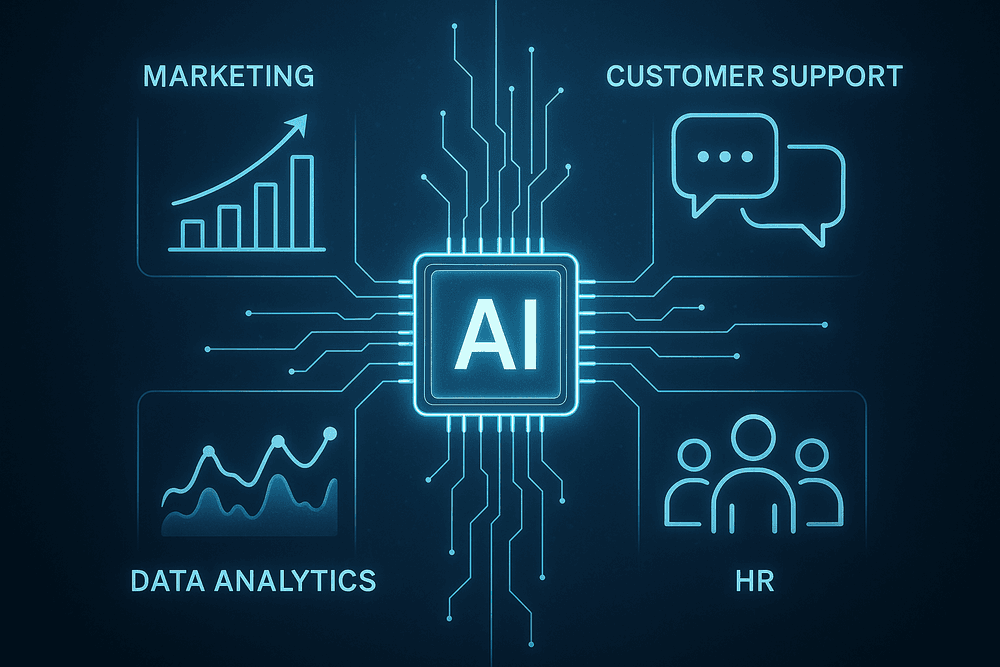
Decoding the Ecosystem: Key Categories of AI Tools for Business
The landscape of AI is vast and can feel overwhelming. To truly harness its power, it’s essential to understand how different solutions are designed to solve specific business challenges. By breaking down the ecosystem into key functional categories, you can strategically identify and implement the right AI tools for business operations, transforming core processes from the ground up. Let's explore the primary domains where AI is making a significant impact.
AI for Marketing and Sales Automation
In the competitive world of marketing and sales, AI acts as a force multiplier. These tools automate time-consuming tasks and deliver a level of personalization that was previously unattainable. For instance, AI-powered CRM systems can analyze customer interactions to predict future buying behavior and identify high-value leads. Generative AI creates compelling ad copy, social media posts, and email campaigns in seconds, while other platforms optimize ad spend in real-time for maximum ROI. By automating lead scoring, follow-up sequences, and customer segmentation, sales teams can focus their energy on building relationships and closing deals, making these some of the most impactful AI tools for business growth.
AI-Powered Platforms for Customer Support Excellence
Modern customers expect instant, 24/7 support, and AI is the key to meeting that demand without scaling your team exponentially. AI-powered chatbots and virtual assistants are the front line of customer service, capable of resolving common queries, guiding users through troubleshooting steps, and collecting initial information around the clock. This immediate assistance drastically improves customer satisfaction and frees up human agents to handle more complex, nuanced issues. Behind the scenes, AI tools analyze support tickets for sentiment and urgency, automatically routing them to the right department. This ensures faster resolution times and provides valuable data on common pain points, allowing you to proactively improve your products and services.
AI in Data Analytics and Business Intelligence
Data is the new currency, but its value is only unlocked through analysis. This is where AI transforms business intelligence (BI). Traditional BI relies on historical data, but AI-powered analytics platforms move from retrospective to predictive. These sophisticated AI tools for business can sift through massive, unstructured datasets—from sales figures to social media comments—to uncover hidden patterns, identify market trends, and forecast future outcomes with remarkable accuracy. They empower leaders to make proactive, data-driven decisions instead of reactive ones. Furthermore, with natural language processing (NLP), executives can simply ask questions in plain English (e.g., "What were our top-selling products in the Northeast last quarter?") and receive instant, visualized answers, democratizing access to critical insights.
Leveraging AI Tools for HR and Streamlined Operations
A business's internal efficiency is just as critical as its external performance. AI is revolutionizing human resources and daily operations by automating administrative burdens and optimizing workflows. In HR, AI tools can screen thousands of resumes in minutes, identifying the most qualified candidates based on predefined criteria, which reduces bias and saves significant time. For existing employees, AI can personalize onboarding processes and recommend internal training. Operationally, AI-driven platforms can automate invoice processing, manage inventory levels, schedule resources, and even optimize supply chains by predicting demand fluctuations. By taking over these repetitive, rule-based tasks, AI allows your team to focus on strategic initiatives that drive innovation and growth.
Core Features That Define the Best AI Business Tools
Choosing the right AI solution isn't just about flashy features; it's about finding a strategic partner that enhances your existing operations. The market is saturated with options, but the truly transformative AI tools for business share a few non-negotiable characteristics. When evaluating your choices, look for a foundation built on integration, insight, scalability, and usability. These four pillars ensure that the tool you select will deliver long-term value rather than short-term frustration.
Seamless Integration with Your Current Tech Stack
The most powerful AI tool is useless if it operates in a vacuum. The best solutions are designed to become a natural extension of your current technology ecosystem. They don’t force you to abandon the CRM, ERP, and marketing automation platforms your team already knows and relies on.
Look for robust API (Application Programming Interface) capabilities and a wide array of pre-built connectors. This ensures a smooth, two-way flow of data, preventing information silos and eliminating the need for manual data entry. When an AI tool can seamlessly pull data from your sales platform, analyze it, and push insights directly back into your project management software, you create a unified, intelligent system. This level of integration is a hallmark of superior AI tools for business, turning disparate applications into a cohesive, efficient machine.
Actionable, Data-Driven Insights and Predictive Analytics
Data is the fuel for AI, but raw data alone doesn't drive growth. The primary function of a business-focused AI is to transform complex datasets into clear, actionable intelligence. Go beyond tools that simply present historical data in a dashboard. The elite tier of AI solutions provides predictive analytics, using machine learning models to forecast future trends, identify potential risks, and highlight opportunities you might otherwise miss.
These insights should be specific and relevant, empowering your team to make proactive, data-driven decisions. For example, instead of just showing a dip in Q3 sales, a great tool would identify the contributing factors (e.g., a competitor's marketing campaign, a drop in a specific lead source) and predict Q4 performance based on current trends, allowing you to pivot your strategy effectively.
Scalability: Finding Tools That Grow with Your Company
Your business isn't static, and your tools shouldn't be either. Scalability is crucial, whether you're a startup poised for rapid growth or an established enterprise expanding into new markets. A scalable AI solution can handle increasing volumes of data, users, and operational complexity without faltering.
Evaluate the tool’s architecture and pricing models. Does it operate on a cloud-based infrastructure like AWS or Azure that can easily scale resources up or down? Are the subscription tiers flexible, allowing you to add users or unlock advanced features as your needs evolve? Investing in a tool that can grow with you prevents the costly and disruptive process of migrating to a new system just a few years down the line.
Intuitive Interfaces for Maximum Team Adoption
The most sophisticated AI algorithm will fail to deliver ROI if your team finds it too complicated to use. User adoption is the final, and perhaps most critical, hurdle. The best AI tools for business prioritize an intuitive user interface (UI) and a smooth user experience (UX).
Look for clean dashboards, drag-and-drop functionality, and clear data visualizations that make complex information easy to digest for non-technical users. The goal is to empower every member of your team—from marketing to operations—to leverage the power of AI without needing a degree in data science. When a tool is accessible and easy to navigate, it encourages widespread adoption, ensuring its benefits are realized across the entire organization.
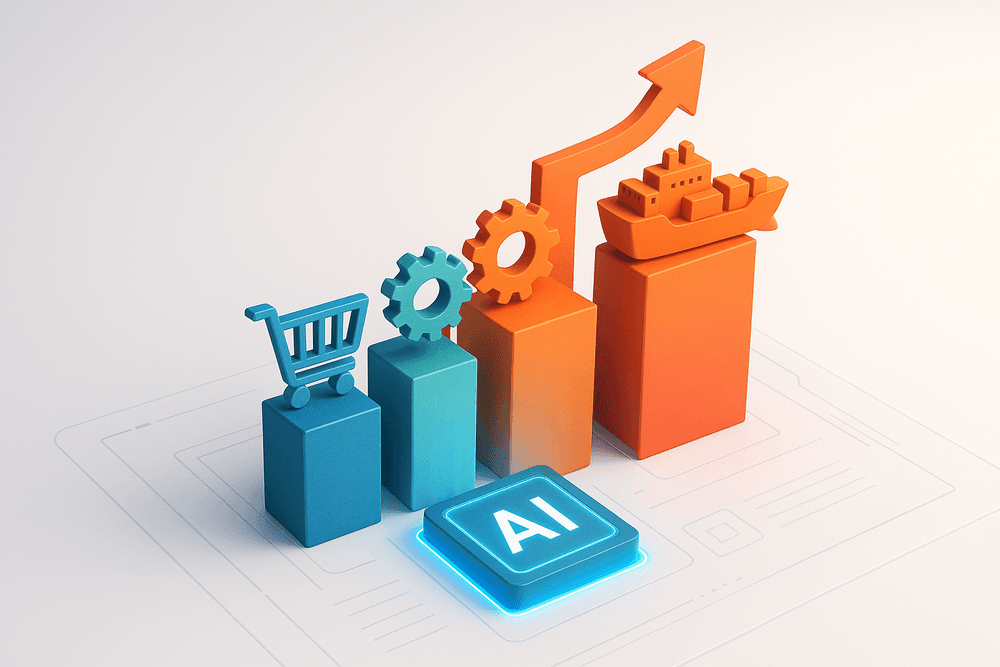
Success Stories: How Companies Thrive Using AI Tools for Business
The theoretical benefits of artificial intelligence are compelling, but its true value is proven in real-world application. Across industries, companies are transforming their operations, boosting revenue, and gaining a competitive edge by strategically implementing AI. These success stories demonstrate how targeted AI tools for business can solve specific challenges and unlock unprecedented growth. From personalized customer journeys to streamlined internal processes, AI is no longer a futuristic concept—it's a practical and powerful engine for success. Let's explore how different types of businesses are leveraging these solutions.
Case Study: How a Retailer Boosted Sales with AI-Powered Personalization
An online fashion retailer, "StyleSphere," was facing intense market competition and struggling with cart abandonment rates. To re-engage customers and drive sales, they integrated a sophisticated AI-powered personalization engine into their e-commerce platform. This tool went beyond basic recommendations, analyzing a rich tapestry of data in real-time, including browsing history, past purchases, items lingered on, and even regional fashion trends.
By leveraging these insights, StyleSphere delivered a hyper-personalized shopping experience. Customers were greeted with curated homepages featuring products that matched their unique style profiles. The platform’s recommendation algorithm suggested complementary items to complete an outfit, significantly increasing the average order value. Furthermore, the AI-powered dynamic pricing models offered targeted, time-sensitive discounts to customers who had abandoned their carts, successfully nudging them toward completing their purchase. The results were transformative: StyleSphere saw a 25% increase in conversion rates and a 20% lift in customer lifetime value within six months of implementing these AI tools for business.
Startup Spotlight: Scaling Operations with AI Automation Tools
For a fast-growing tech startup named "Connectly," rapid expansion brought significant operational challenges. Their small team was overwhelmed by a rising tide of customer support tickets and manual administrative tasks, which diverted focus from core product development. To scale efficiently without ballooning their headcount, Connectly turned to AI automation tools.
First, they implemented an AI chatbot on their website and app. Trained on their knowledge base, the bot successfully resolved over 70% of common customer queries instantly, 24/7. For more complex issues, the AI intelligently routed the ticket to the appropriate human agent with a full conversation summary. Internally, they used AI to automate project management workflows, assigning tasks and sending reminders based on project progress. This strategic use of AI automation freed up an estimated 30 hours per week for their team, reduced customer response time from hours to seconds, and allowed the startup to scale its user base by 300% without compromising service quality.
Enterprise Wins: Enhancing Decision-Making with AI Data Models
A global logistics enterprise, "VeriRoute," operated a highly complex supply chain vulnerable to disruptions from weather, port congestion, and geopolitical shifts. Their decision-making was largely reactive, leading to costly delays. To shift to a proactive model, VeriRoute invested in building predictive AI data models.
Their new system ingested vast datasets—from satellite imagery and weather forecasts to shipping manifests and market indicators. Using machine learning, the model could accurately forecast potential bottlenecks and demand fluctuations weeks in advance. More importantly, they utilized explainable AI (XAI) frameworks, ensuring that every prediction came with a clear, auditable explanation. This was crucial for risk management and gaining trust from senior leadership. With these powerful insights, VeriRoute could proactively reroute shipments, adjust inventory levels across their network, and optimize fuel consumption. This application of advanced AI tools for business led to a 15% reduction in shipping delays and a 10% decrease in operational costs, fundamentally enhancing their resilience and strategic agility.
A Practical Framework for Implementing AI Tools in Your Business
Adopting new technology can feel overwhelming, but a structured approach demystifies the process and maximizes your return on investment. Successfully integrating AI tools for business isn't about a massive, company-wide overhaul overnight. It's about a deliberate, strategic implementation that builds momentum and proves value at every stage. This practical framework breaks down the journey into four manageable steps, guiding you from initial testing to measuring long-term success.
Start with a Pilot: Testing AI Solutions for a Strong Business Case
Before committing significant resources, launch a pilot program. The goal is to test the waters with a specific, well-defined problem. Identify a process within a single department—such as automating customer service responses or analyzing sales data for a specific product line—that is ripe for improvement. Choose an AI tool that directly addresses this pain point. By starting small, you can:
- Isolate variables: Clearly see the impact of the AI tool without other factors muddying the results.
- Build a strong business case: Gather concrete data on efficiency gains, cost savings, or revenue impact. This evidence is crucial for securing buy-in from leadership for a wider rollout.
- Learn and adapt: A pilot project is a low-risk environment to understand the nuances of the new technology and your team's interaction with it.
Ensuring Model Explainability for Compliance and Risk Management
In an era of strict data privacy regulations like GDPR, the "black box" problem—where an AI's decision-making process is opaque—is a significant liability. Explainability, or the ability to understand and articulate why an AI model made a particular decision, is non-negotiable. When evaluating AI tools for business, prioritize solutions that offer transparency. This is critical for:
- Compliance: You must be able to demonstrate to auditors and regulators that your AI processes are fair, unbiased, and compliant with legal standards.
- Risk Management: Understanding an AI's logic helps you identify potential biases or errors before they lead to financial or reputational damage.
- Building Trust: Stakeholders, from customers to employees, are more likely to trust and adopt a technology they can understand.
Training Your Team to Work Alongside AI Effectively
The most powerful AI tools for business are those that augment human capabilities, not replace them. Successful integration depends on your team. Address this head-on by investing in comprehensive training that focuses on collaboration. Reframe AI as a co-pilot that handles repetitive tasks, analyzes vast datasets, and surfaces insights, freeing up your employees for strategic thinking, creativity, and complex problem-solving. Effective training should cover the "how" (using the tool's interface) and the "why" (how it benefits their role and the company). Fostering this collaborative culture reduces fear and resistance, transforming your workforce into a team of AI-empowered professionals.
Measuring Success: KPIs to Track for Your AI Integration
How do you know if your AI investment is paying off? You need to define and track the right Key Performance Indicators (KPIs) from the start. Go beyond simple ROI and measure the specific impact on the process you aimed to improve. Key metrics to consider include:
- Efficiency Gains: Time saved per task or project, reduction in manual data entry hours.
- Accuracy and Quality: Decrease in error rates, improvement in quality control scores.
- Operational Costs: Reduction in costs associated with the targeted process.
- Customer Impact: Higher Customer Satisfaction (CSAT) scores, faster response times, or improved personalization.
- Employee Adoption: User engagement rates with the new tool and positive feedback from the team.
Tracking these KPIs will not only prove the value of your initial pilot but also provide invaluable data to guide your future AI strategy.

Conclusion: Future-Proofing Your Company with the Right AI Tools
The journey into artificial intelligence is no longer a futuristic concept—it's a present-day business imperative. Integrating AI is not just about adopting new technology; it's about fundamentally re-engineering your operations for greater efficiency, deeper insights, and a sustainable competitive advantage. As we've explored, the right AI tools for business can transform everything from customer service and marketing to complex data analysis and risk management, creating a more agile and intelligent enterprise. But the key lies in making strategic, informed choices that align with your unique goals.
Recap: How to Choose the Right AI Tool for Your Needs
Selecting the ideal AI solution isn't about chasing the latest trend. It’s a strategic decision rooted in a clear understanding of your operational needs. The most effective approach begins with identifying specific pain points and opportunities within your organization. Are you aiming to automate repetitive tasks, derive predictive insights from your data, or ensure regulatory compliance with explainable AI models?
Your evaluation must also consider crucial factors like scalability—will the tool grow with your business?—and seamless integration with your existing technology stack. Crucially, in an era of heightened data sensitivity, prioritizing platforms with robust security protocols and transparent, explainable AI is non-negotiable. By balancing these considerations, you can select powerful AI tools for business that deliver tangible ROI and serve as a foundation for future innovation.
The Future Outlook for AI in the Workplace
The trajectory of AI is pointing toward deeper, more symbiotic integration into the workplace. We are moving beyond simple task automation into an era of hyper-automation, where AI orchestrates complex, end-to-end business processes. The future of AI in business isn't about replacing human talent but augmenting it. These tools will increasingly act as co-pilots, handling an immense volume of data analysis to provide strategic insights that empower employees to make faster, more informed decisions.
Generative AI will continue to evolve, revolutionizing content creation, software development, and product design. As these technologies become more sophisticated and accessible, the companies that thrive will be those that foster a culture of continuous learning, upskilling their workforce to collaborate effectively with their new digital colleagues. Future-proofing your company means investing not only in the right tools but also in the people who will use them.
Take the Next Step to Empower Your Business Operations
Understanding the potential of AI is the first step; taking decisive action is what creates transformation. The path to AI integration doesn't have to be an overwhelming, company-wide overhaul. It can begin with a single, strategic initiative.
Start by conducting an internal audit to identify one or two high-impact, low-risk processes that are ripe for AI-driven improvement. Assemble a small, agile team to research and pilot a specific tool that addresses this need. This focused approach allows you to build momentum, demonstrate clear value to stakeholders, and gather crucial learnings before a broader rollout. By taking this deliberate next step, you move from insight to implementation, laying the groundwork for a more resilient, data-driven, and forward-thinking organization. The best time to invest in AI tools for business was yesterday; the next best time is now.