
May 24, 2025
Your Indispensable Partner in Productivity
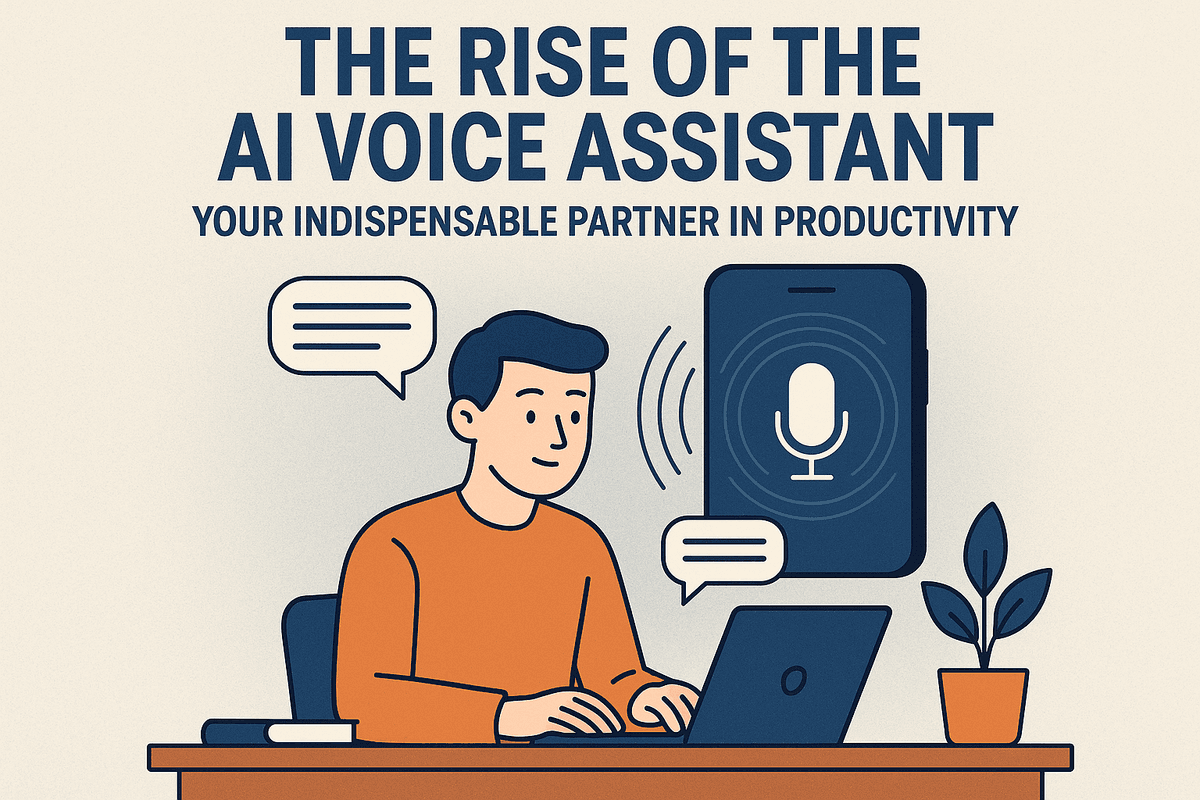
The Rise of the AI Voice Assistant: Your Indispensable Partner in Productivity
The digital landscape is constantly evolving, and at the forefront of this transformation is the AI voice assistant. No longer a futuristic novelty, these intelligent companions are rapidly becoming an integral part of our daily lives, fundamentally changing how we manage tasks, access information, and boost our overall productivity.
Defining the Modern AI Voice Assistant: More Than Just Talk
Forget the clunky, limited voice command systems of the past. The modern AI voice assistant has transcended its early image as a simple novelty. It's no longer just about asking for the weather or playing a song. Today, an AI voice assistant is a sophisticated, AI-powered entity capable of understanding complex commands, learning your preferences, and integrating seamlessly with a vast ecosystem of applications and devices. Think of it less as a voice-activated remote control and more as an intelligent, proactive partner. Powered by cutting-edge technologies like Natural Language Processing (NLP) to understand your speech, Automatic Speech Recognition (ASR) to convert it to text, and Machine Learning (ML) to continuously improve its responses and capabilities, these assistants are designed to comprehend context, anticipate needs, and execute tasks with increasing precision. This evolution marks a significant leap, transforming the AI voice assistant from a mere "talker" into a genuine productivity powerhouse, an indispensable ally in navigating the complexities of modern life and work.
Why is Everyone Talking About AI Voice Assistants?
So, what's behind the explosive growth and widespread buzz surrounding the AI voice assistant? It seems like everyone, from tech enthusiasts to busy professionals and even casual users, is incorporating these intelligent helpers into their daily routines. Several factors contribute to this surge in popularity. Firstly, accessibility has skyrocketed. Most smartphones now come with a built-in AI voice assistant, and affordable smart speakers have brought this technology into millions of homes, making the AI voice assistant readily available to a global audience. Secondly, the technology itself has matured significantly. Today's AI voice assistant boasts dramatically improved accuracy in understanding natural language, a far cry from the frustratingly clunky systems of the past. They can handle nuanced requests and maintain conversational context far more effectively. Furthermore, the expanding ecosystem of integrations means your AI voice assistant can control a wider array of smart home devices, connect with your favorite apps, and manage various aspects of your digital life. The tangible productivity gains users are experiencing are undeniable, making the AI voice assistant a compelling tool for efficiency and convenience, moving it beyond a gimmick to a genuinely useful technology that streamlines everyday interactions.
How an AI Voice Assistant Can Revolutionize Your Daily Tasks and Workflow
But how exactly can an AI voice assistant revolutionize your daily tasks and workflow, transforming you into a productivity maestro? The impact is multifaceted and profound. Imagine starting your day by simply asking your AI voice assistant for your schedule, the latest news, and traffic updates while you prepare breakfast – hands-free and efficient. Throughout your workday, an AI voice assistant can become an extension of your professional capabilities. Dictate emails and documents with remarkable accuracy, quickly schedule meetings without navigating clunky calendar interfaces, and set crucial reminders so nothing falls through the cracks. An AI voice assistant can transcribe voice notes from brainstorming sessions, control smart office equipment, and even integrate with specialized business software to streamline complex processes. For personal tasks, an AI voice assistant can manage your shopping lists, make calls while you're driving, control your smart home environment, and instantly answer questions, freeing up valuable mental bandwidth. This delegation of tasks not only saves significant time but also reduces cognitive load, allowing you to focus on more strategic and creative endeavors. By seamlessly handling routine operations, the AI voice assistant truly empowers you to multitask more effectively and reclaim control over your day, solidifying its role as your indispensable partner in achieving peak productivity.
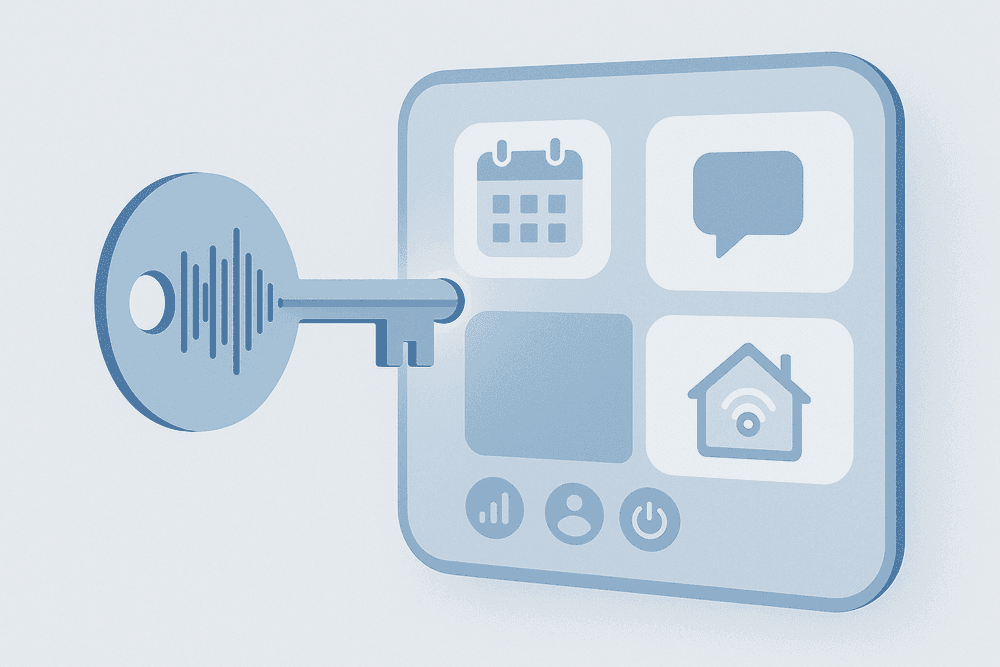
Unlocking Peak Productivity: Core Functionalities of Your AI Voice Assistant
Streamline Your Workflow with Smart Commands
An AI voice assistant is a powerful tool to reclaim your time and sharpen focus. Imagine effortlessly navigating daily tasks without constant app-switching or typing. With an AI voice assistant, voice commands become efficient shortcuts. "Hey [Assistant Name], add 'finalize quarterly report' to urgent tasks," or "Remind me to call the supplier before lunch." A sophisticated AI voice assistant understands natural language, allowing you to set reminders, create to-do lists, dictate notes, and initiate actions in compatible apps. This hands-free task management reduces manual input, enabling effective multitasking and dedicating cognitive energy to strategic work. Your AI voice assistant significantly boosts productivity by simplifying how you manage your workload and execute routine operational functions.
Manage Schedules and Communications Hands-Free
Keeping schedules and communications flowing smoothly is vital. Your AI voice assistant acts as a diligent, hands-free coordinator, making these demands manageable. Check availability with, "What does my afternoon look like?" Book meetings by saying, "Schedule a project review with the team for Wednesday at 2 PM." The benefits extend to communication: initiate calls like "Call Sarah" or send texts and emails by dictating, such as "Send an email to customer support about order 123." This capability to manage your calendar and communications entirely via your AI voice assistant is invaluable, especially when driving or multitasking. It ensures you remain organized and responsive without disrupting your workflow.
Access Information Instantly with Voice Queries
In today's fast-paced environment, rapid information access is critical. Your AI voice assistant serves as an on-demand knowledge source, providing instant answers without manual searches. Ask, "What are today's top news headlines?" or "What is the current population of Tokyo?" Need a conversion? "How many kilometers are in 5 miles?" An AI voice assistant performs calculations, offers definitions, provides stock updates, weather forecasts, or translations through simple voice queries. This immediate access empowers faster, informed decision-making and keeps you updated with minimal interruption. Your AI voice assistant thus becomes an indispensable tool for quick research and staying knowledgeable throughout your day.
Seamlessly Integrate with Other Smart Tools
The true productivity potential of your AI voice assistant is unlocked when it orchestrates your broader digital ecosystem. Modern AI voice assistants are designed for robust connectivity, offering seamless integration with numerous smart devices, applications, and platforms. Imagine telling your AI voice assistant, "Dim the lights and play my focus playlist." Link it with project management tools like Trello or Asana to add tasks or get project updates using voice commands. Connect it to your CRM to log client interactions or retrieve contact details efficiently. Even smart home devices like thermostats or coffee makers can often be controlled via your AI voice assistant. This interconnectedness creates a unified, intelligent environment, automating routines and streamlining complex workflows, transforming your AI voice assistant into the central command hub of your hyper-efficient workspace.
AI Voice Assistant in Action: Real-World Success Stories and Use Cases
The theoretical benefits of an AI voice assistant are compelling, but its true power is revealed through real-world applications. From streamlining complex business operations to simplifying daily personal tasks, the AI voice assistant is proving to be an indispensable tool across various domains. Let's explore how this technology is making a tangible impact.
Transforming Business Efficiency: How Companies Leverage the AI Voice Assistant
Businesses are increasingly leveraging the AI voice assistant to revolutionize their operational efficiency and customer engagement. Imagine customer service centers where an AI voice assistant handles routine inquiries around the clock, freeing human agents for complex problems and significantly boosting satisfaction. Internally, companies use AI voice assistant technology for seamless meeting scheduling, transcribing minutes, and even accelerating data entry, effectively reducing administrative overhead. Logistics firms employ voice-activated systems for real-time inventory tracking, while financial services deploy secure AI voice assistant solutions to provide clients with instant, authenticated access to account information. The impact is clear: an AI voice assistant streamlines workflows, enhances enterprise-wide productivity, and fosters a more agile business environment.
The AI Voice Assistant as Your Personal Productivity Powerhouse at Home and Work
Your AI voice assistant is a potent personal productivity tool, enhancing efficiency both at home and work. Overwhelmed by tasks? Command your AI voice assistant to add items to your to-do list, set crucial reminders, and manage your calendar with simple voice prompts. Need instant information while multitasking? Ask your AI voice assistant for web searches, weather updates, or definitions. Professionally, an AI voice assistant can help draft emails, initiate calls, or find important documents, minimizing distractions. It acts as a dedicated virtual assistant, helping you stay organized and focused, ultimately transforming how you manage daily responsibilities and boosting your overall productivity thanks to your AI voice assistant.
From Smart Homes to On-the-Go: Everyday Scenarios Where Your AI Voice Assistant Shines
The convenience of an AI voice assistant extends far beyond work, seamlessly integrating into daily life. In smart homes, your AI voice assistant acts as a central hub, controlling lights, thermostats, security, and entertainment with voice commands like, "Hey assistant, play my morning playlist." On the move, the AI voice assistant in your smartphone or car keeps you connected hands-free. Get directions, send texts, make calls, or find nearby amenities using your AI voice assistant, all while focusing on your current activity. This effortless, voice-first interaction simplifies everyday tasks, making the AI voice assistant an indispensable companion for modern living, enhancing both convenience and safety.
Innovative Uses of AI Voice Assistant Technology Across Industries
The adaptability of AI voice assistant technology is sparking innovation across diverse industries. In healthcare, an AI voice assistant aids doctors with clinical documentation and provides patients with medication reminders. The retail sector embraces voice commerce, allowing customers to shop using their AI voice assistant. Educational institutions explore AI voice assistant tools as interactive learning aids. In manufacturing, voice-directed warehousing systems improve accuracy and efficiency. Even in hospitality, an AI voice assistant can manage room controls or guest service requests. These examples highlight the AI voice assistant's transformative potential to reshape processes and create new efficiencies in nearly every field, proving its wide-ranging applicability.
The Magic Unveiled: Understanding the Technology Powering Your AI Voice Assistant
Ever wondered how your AI voice assistant seems to magically understand your requests and respond intelligently? It’s not quite magic, but a sophisticated blend of cutting-edge technologies working in harmony. Let's lift the curtain and explore the core components that make your AI voice assistant so capable.
A Layman’s Guide to Natural Language Processing (NLP) in Your AI Voice Assistant
The secret sauce behind your AI voice assistant's ability to "understand" you is Natural Language Processing (NLP). Think of NLP as the sophisticated language center for your smart assistant. It’s a branch of artificial intelligence that empowers machines to comprehend, interpret, and even generate human language—both spoken and written. Without robust NLP, your AI voice assistant would struggle to make sense of your everyday commands.
When you speak to your AI voice assistant, a fascinating NLP sequence unfolds:
- Speech-to-Text (STT): First, your spoken words, with all their unique nuances like accents or varying speeds, are meticulously converted into digital text. This step must accurately capture your words despite background noise or unclear speech.
- Natural Language Understanding (NLU): This is where the deep comprehension happens. NLU algorithms analyze the transcribed text to decipher your intent. For example, it distinguishes between "What's the weather forecast?" (a request for information) and "Play some upbeat music" (a command to perform an action). Your AI voice assistant uses NLU to figure out precisely what you want to achieve.
- Natural Language Generation (NLG): Once your intent is clear, the AI voice assistant needs to craft an appropriate and coherent response. NLG constructs a grammatically sound and natural-sounding sentence.
- Text-to-Speech (TTS): Finally, this machine-generated text response is converted back into audible speech, delivered in the familiar voice of your assistant.
It's this seamless, rapid execution of NLP tasks that makes interacting with your AI voice assistant feel so conversational and intuitive.
The Engine Room: Machine Learning's Role in AI Voice Assistant Smarts
But how does NLP become so effective, and how does your AI voice assistant appear to learn and adapt over time? The driving force here is Machine Learning (ML). ML is a subset of AI where systems learn from vast quantities of data to improve their performance on specific tasks, without being explicitly programmed for every conceivable scenario. For an AI voice assistant, ML acts as a tireless, ever-improving trainer.
Machine Learning significantly enhances each component of NLP:
- Sharper Hearing (STT): ML models are trained on millions of hours of diverse human speech. This extensive training helps your AI voice assistant become better at distinguishing your voice from ambient noise, understanding a wide array of accents, and accurately transcribing your words.
- Smarter Comprehension (NLU): By analyzing countless user interactions, ML algorithms enable the AI voice assistant to become more adept at recognizing your intentions, even if your phrasing is unconventional or incomplete. It learns your preferences, common requests, and the broader context of your commands, making your AI voice assistant feel more personalized.
- More Natural Conversations (NLG/TTS): ML also refines how your AI voice assistant communicates back. It learns the subtleties of human speech patterns, leading to more natural intonation, rhythm, and even a touch of personality in its voice, moving far beyond robotic responses.
The remarkable aspect of ML is its capacity for continuous improvement. The more you interact with your AI voice assistant, the more data it gathers, allowing it to refine its understanding and responsiveness. This data-driven learning cycle is what makes your AI voice assistant feel like it's constantly evolving to serve you better.
Peeking Under the Hood: Key Hardware and Software of an AI Voice Assistant
So, what’s actually inside that smart speaker, your phone, or other devices that allows your AI voice assistant to spring to life? It's a carefully orchestrated interplay of specialized hardware and highly intelligent software.
Key Hardware Components:
- Microphone Arrays: It’s rarely just a single microphone. Most devices hosting an AI voice assistant feature an array of microphones. These work in concert, often using sophisticated techniques like beamforming (to focus on the speaker's voice) and noise cancellation, to clearly capture your commands, even from across a room or in a noisy environment.
- Processors: A powerful "brain" is essential. This typically includes Central Processing Units (CPUs) for general operations, and increasingly, specialized chips like Digital Signal Processors (DSPs) or Neural Processing Units (NPUs). These AI-optimized processors efficiently handle the complex calculations required for voice processing and machine learning tasks. Some processing might occur locally on the device (edge computing) for faster responses and enhanced privacy, while more computationally intensive tasks are often offloaded to powerful cloud servers.
- Speakers: To deliver clear and audible responses, from a simple confirmation to playing your favorite podcast.
- Connectivity: Wi-Fi and/or Bluetooth are crucial for connecting to the internet (where much of the AI's heavy lifting often occurs) and for communicating with other smart devices in your ecosystem.
Core Software Elements:
- The AI Voice Assistant Platform: This is the central software, such as Amazon Alexa, Google Assistant, or Apple's Siri. It manages the overall interaction flow, integrates various services, and provides the user interface.
- NLP/ML Algorithms: These are the sophisticated software programs, frequently running on powerful cloud infrastructure, that perform the critical tasks of speech recognition, language understanding, and response generation previously discussed.
- Operating System (OS): Just like your computer or smartphone, the device running the AI voice assistant has an underlying OS to manage its hardware resources and software applications.
- APIs (Application Programming Interfaces): These are vital gateways that allow third-party developers to create "skills" (for Alexa) or "actions" (for Google Assistant). APIs vastly expand the capabilities of your AI voice assistant, enabling it to control smart home devices, order food, provide custom information, and much more.
This tight integration of purpose-built hardware and intelligent software is what empowers your AI voice assistant to listen attentively, understand accurately, and respond effectively.
The Next Wave: Future Advancements in AI Voice Assistant Technology
The journey of the AI voice assistant is far from complete. The technology is advancing at a breathtaking pace, promising even more intuitive, personalized, and powerful interactions in the years to come. Get ready for an AI voice assistant that evolves from a mere reactive tool to a truly proactive and deeply integrated partner in your daily life.
Here’s a glimpse of the exciting developments on the horizon:
- Proactive and Predictive Assistance: Imagine your AI voice assistant not just responding to commands, but anticipating your needs. This could involve suggesting you leave early for an appointment based on real-time traffic or offering to reorder household supplies it knows you're running low on.
- Deeper Contextual Understanding & Memory: Future assistants will possess a more robust memory of past conversations and a greater ability to understand complex, multi-turn dialogues. This will make interactions feel significantly more natural and less like a series of disconnected commands.
- Enhanced Emotional Intelligence (EQ): Researchers are actively working on enabling an AI voice assistant to detect subtle emotional cues in a user's voice (such as frustration, excitement, or sadness) and respond with greater empathy and appropriateness.
- Seamless Multimodal Interactions: Voice will not be the sole mode of interaction. Expect tighter integration with screens, gestures, and even gaze tracking, allowing you to communicate with your AI voice assistant using the most convenient and natural method for any given situation.
- Improved Ambiguity Handling and Clarification: Assistants will become more adept at understanding vague or ambiguous requests, and will more intelligently ask clarifying questions when necessary, leading to fewer misunderstandings and more successful interactions.
- On-Device AI Prowess: A significant trend is the shift towards more AI processing happening directly on your device (edge AI) rather than solely in the cloud. This will lead to faster response times, enhanced user privacy (as less data needs to leave your device), and improved offline functionality for your AI voice assistant.
The future of the AI voice assistant is one of augmented intelligence, profound personalization, and seamless integration into the fabric of our lives, fundamentally transforming how we interact with technology and manage our daily routines.
Choosing and Maximizing Your AI Voice Assistant: A Practical Guide
So, you’re ready to harness the power of an ai voice assistant? Making the right choice and optimizing its use can dramatically boost your productivity and streamline daily tasks. This guide will walk you through selecting the best solution and fine-tuning it for peak performance.
Essential Features to Look For When Selecting an AI Voice Assistant Solution
When selecting an ai voice assistant, prioritize features that ensure a productive and intuitive experience. At the top of your checklist should be stellar voice recognition accuracy; an assistant that frequently misunderstands you will hinder rather than help. Next, critically assess its integration capabilities: can it seamlessly connect with your most-used apps, smart home devices, and digital calendars? A truly capable ai voice assistant leverages sophisticated Natural Language Processing (NLP), allowing it to understand conversational nuances, context, and follow-up questions, not just rigid commands.
Explore the customization options available. Can you change the wake word, select different voices, or switch languages easily? Cross-platform compatibility is also crucial, ensuring your ai voice assistant is accessible whether you're on your smartphone, smart speaker, or computer. While not always standard, basic offline functionality for essential commands can be a significant advantage. Lastly, investigate the breadth of its developer ecosystem and third-party app support (often referred to as "skills" or "actions"), as this dramatically expands its utility. Consistent software updates are also vital, indicating that your ai voice assistant will continue to evolve and improve over time.
Expert Tips for Optimizing Your AI Voice Assistant for Peak Performance and Accuracy
Once you've chosen your ai voice assistant, optimizing it is key to unlocking its full potential and ensuring it operates at peak performance. Begin by thoroughly training your ai voice assistant; most platforms offer a voice calibration process which helps it better recognize your unique speech patterns and accent. When issuing commands, speak clearly and at a natural, even pace—shouting or mumbling can confuse the system. Minimize background noise as much as possible, as competing sounds are a common cause of errors.
For smart speaker devices, consider their strategic placement within a room. Avoid tucking them into corners or enclosed spaces which might muffle sound or create distorting echoes. While many modern assistants are becoming more conversational, it’s still beneficial to learn some of the specific command phrasing that your ai voice assistant responds to most reliably. If your chosen assistant offers the feature, make it a habit to review and correct misunderstandings; this helps the AI learn and improve over time. Always keep the device's software updated, as updates frequently include enhancements to accuracy and overall performance. Finally, proactively explore and enable relevant skills or actions that align with your productivity needs to truly get the most out of your ai voice assistant.
Best Practices for Ensuring Privacy and Security with Your AI Voice Assistant
While an ai voice assistant can be an incredible productivity partner, vigilance regarding your privacy and security is paramount. Start by thoroughly reviewing the privacy settings and data usage policies provided by the developer of your ai voice assistant. It's crucial to understand precisely how your voice data is collected, stored, processed, and utilized. Many assistants offer the ability to regularly review and delete your voice recordings – make this a routine practice.
Secure all associated accounts with strong, unique passwords and enable two-factor authentication wherever it’s offered. Be conscious of "hot mic" situations; cultivate the habit of muting your ai voice assistant when it's not actively in use or during sensitive conversations. Carefully manage third-party app permissions, granting access only to trusted services and only the data that is absolutely necessary for their function. Exercise caution when sharing sensitive personal or financial information via voice commands. Lastly, enable any available security features, such as voice authentication for making purchases or accessing personal information, to add an essential extra layer of protection when interacting with your ai voice assistant.
Customizing Your AI Voice Assistant to Fit Your Unique Needs and Preferences
Transform your ai voice assistant from a generic tool into a truly personal productivity powerhouse through thoughtful customization. Begin by personalizing wake words (if an option) and voice options to make your interactions feel more natural and engaging. Integrate your essential services: link your preferred news sources, music streaming platforms, and digital calendars for tailored information, entertainment, and scheduling.
A significant game-changer for efficiency is creating custom routines or shortcuts. For example, a "Good morning" routine could prompt your ai voice assistant to give you the weather forecast, read your top headlines, and even start your smart coffee maker, all with a single command. Define your home and work locations for accurate traffic updates, commute times, and relevant local information. Don’t overlook adjusting language, region, and even measurement units to match your specific preferences. Explore accessibility features if needed, as these can significantly enhance usability for many individuals. By meticulously tailoring these settings, your ai voice assistant becomes an intuitive and indispensable extension of your workflow, proactively assisting you in a way that’s uniquely yours.
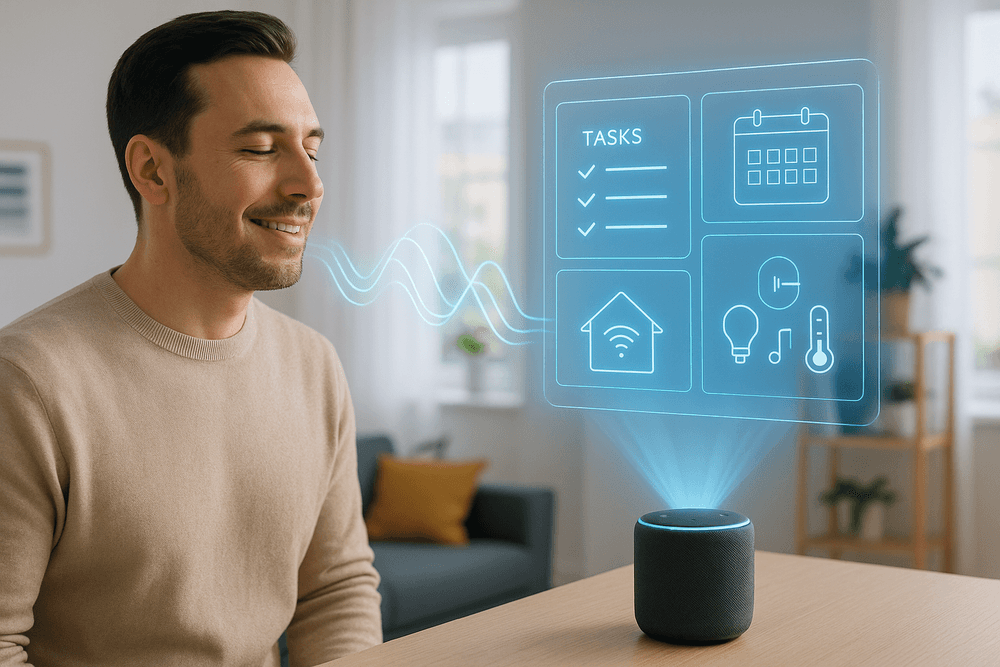
The Future is Vocal: Embrace Your AI Voice Assistant and Transform Your Productivity
The journey with your AI voice assistant is just beginning. As these sophisticated tools evolve, they promise to become even more integral to our daily lives, offering unprecedented levels of efficiency and convenience. Let's explore what's on the horizon, how you can get started today, and where to find more knowledge to master your digital companion.
Emerging Trends: What’s Next for AI Voice Assistant Capabilities?
The world of the AI voice assistant is anything but static. The future promises an even more intuitive, integrated, and intelligent experience, pushing the boundaries of what we thought possible. Imagine your AI voice assistant not just reacting to your commands, but proactively offering suggestions based on your established habits, your calendar, and perhaps even your current emotional state. We're looking at AI voice assistant capabilities that extend far beyond setting simple timers or playing music.
Expect more nuanced, human-like conversations, where your assistant understands context across multiple interactions, remembering previous parts of a discussion. Advanced AI voice assistants will likely feature enhanced emotional intelligence, allowing them to tailor responses and actions to better suit your mood or the situation's urgency. Deeper integration with a wider array of applications and Internet of Things (IoT) devices will solidify your AI voice assistant as the central hub of your digital and physical environment, managing tasks seamlessly across platforms. Furthermore, significant improvements in natural language processing (NLP) will mean even better understanding of complex queries, diverse accents, and performance in noisy environments, making your AI voice assistant more reliable and versatile than ever before. The potential for specialized AI voice assistants tailored for professional fields, like healthcare or legal services, is also enormous, set to revolutionize how we approach work and specialized tasks.
Getting Started Today: Simple Steps to Integrate an AI Voice Assistant into Your Life
Ready to harness the power of an AI voice assistant but not sure where to begin? Integrating an AI voice assistant into your daily routine is simpler than you might think and can immediately boost your productivity. Here’s a straightforward guide to get you started:
- Choose Your Platform: The first step is identifying where you'll primarily interact with your AI voice assistant. Most modern smartphones come with one built-in (Siri on iOS, Google Assistant on Android). Dedicated smart speakers like Amazon Echo (which uses Alexa) or Google Nest devices are also incredibly popular choices for home or office use.
- Activate and Set Up: Once you've chosen your device, follow the simple on-screen or voice-guided prompts to activate your AI voice assistant. This process usually involves a brief voice training session so it can better recognize your specific voice and commands.
- Start with the Basics: Begin by familiarizing yourself with basic commands. Ask your AI voice assistant for the current weather forecast, to set a kitchen timer, play your favorite genre of music, or make a quick hands-free call. This helps you get comfortable with voice interaction and learn its responsiveness.
- Explore Productivity Features: Once you're comfortable with simple tasks, it's time to dive deeper into how an AI voice assistant can streamline your workflow. Use it to set reminders for important deadlines, schedule appointments directly into your calendar, create and manage to-do lists, or dictate and send messages and emails.
- Connect, Customize, and Conquer: Maximize your AI voice assistant’s utility by linking it to other compatible apps and services, such as your preferred music streaming service, smart home devices (lights, thermostats, etc.), or note-taking applications. Don’t forget to explore its settings to personalize its voice, understand its shortcut capabilities (like routines on Alexa or Google Assistant), and tailor its preferences for a truly customized and efficient experience. Your journey to enhanced productivity with an AI voice assistant starts with these easy steps!
Call to Action: Share Your Favorite AI Voice Assistant Tips and Tricks
Now that you're on your way to becoming an AI voice assistant power user, let's tap into the collective wisdom! The community of users is vast, and everyone discovers unique ways to leverage these powerful tools. What are your go-to commands that save you time? Have you discovered a particularly ingenious way your AI voice assistant boosts your productivity or simplifies a complex daily task?
Perhaps you have a clever workaround for a common challenge, a specific custom routine that automates a series of actions, or an unexpected integration that has made a real difference. We’d love to hear your favorite AI voice assistant tips and tricks! Share them in the comments section below or join the conversation on social media using the hashtag #AIVoiceAssistantHacks. Your insights could be the game-changer someone else is looking for to truly unlock the potential of their AI voice assistant and integrate it more deeply into their quest for efficiency. Let's build a community of smart AI voice assistant users, sharing knowledge and inspiring each other!
Unlock More Insights: Resources for Mastering Your AI Voice Assistant
Your journey to mastering your AI voice assistant doesn't end here. The landscape of AI voice assistant technology is dynamic and constantly evolving, meaning there's always something new to learn or a more efficient way to do things. To deepen your understanding, discover advanced functionalities, and stay ahead of the curve, here are some valuable resources:
- Official Support Pages and Blogs: Manufacturers like Apple (for Siri), Google (for Google Assistant), and Amazon (for Alexa) offer comprehensive online support sections. These include detailed user guides, frequently asked questions (FAQs), troubleshooting tips, and blogs announcing new features for their respective AI voice assistant platforms.
- Dedicated Tech Blogs and Review Sites: Stay updated on the latest AI voice assistant features, device comparisons, privacy considerations, and breaking news by following reputable technology publications and expert reviewers. They often provide in-depth analyses, practical use cases, and comparisons between different AI voice assistant ecosystems.
- Online Courses and Video Tutorials: Platforms like YouTube, Udemy, Skillshare, or Coursera host a multitude of tutorials. You can find everything from beginner guides on setting up your AI voice assistant to advanced courses on developing custom skills or integrating them with other technologies.
- Community Forums and Groups: Engage with other AI voice assistant users on forums like Reddit (e.g., r/googlehome, r/alexa), dedicated product community forums, or social media groups. These are excellent places to ask specific questions, share your unique experiences, troubleshoot issues, and discover new tips and tricks from a diverse user base.
By actively tapping into these resources, you can continuously enhance your skills, discover new capabilities, and ensure you're getting the absolute most out of your AI voice assistant for peak productivity and convenience.