
August 29, 2025
Beyond Language Barriers
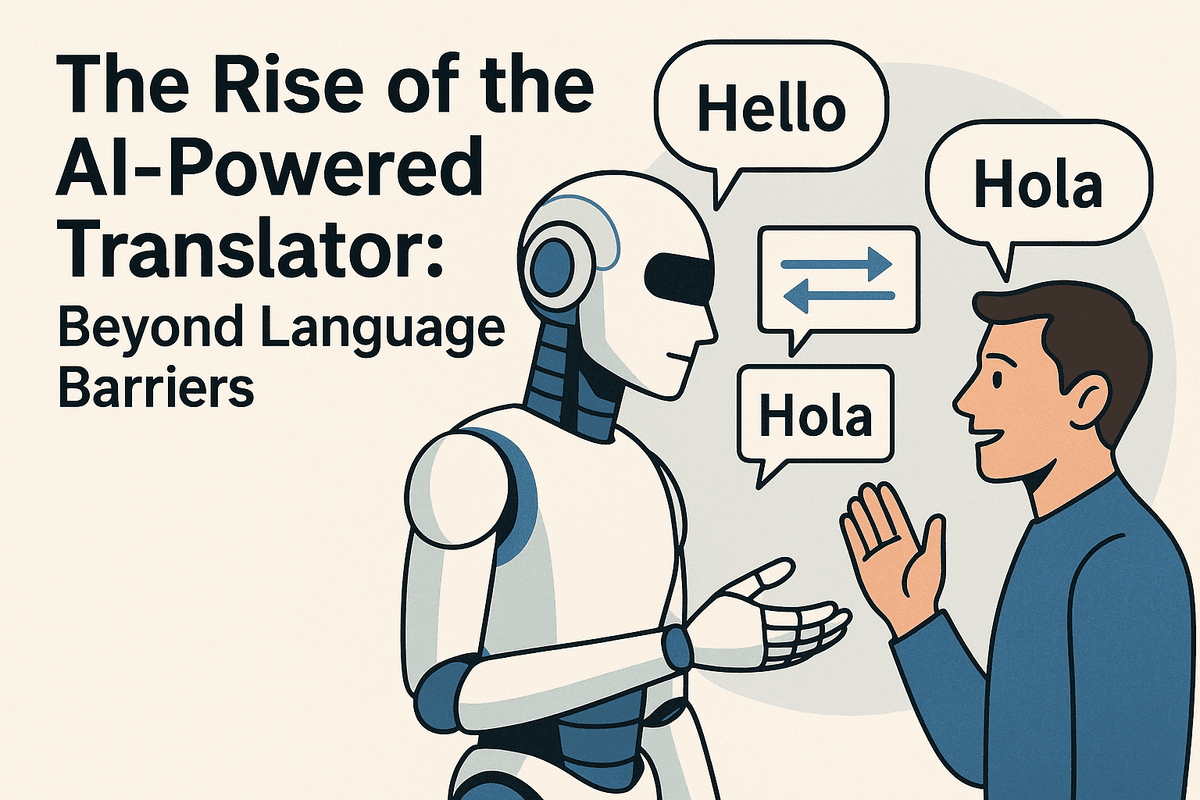
The Rise of the AI-Powered Translator: Beyond Language Barriers
In our hyper-connected global village, the need for instant, seamless communication has never been greater. For decades, we’ve relied on digital tools to bridge linguistic divides, but the results have often been clunky, literal, and prone to embarrassing errors. Enter the modern AI-powered translator, a sophisticated tool that does more than just swap words—it understands meaning.
At its core, an AI-powered translator is a system that uses artificial intelligence, specifically complex algorithms and deep learning models, to translate text or speech from one language to another. Unlike its predecessors that relied on rigid, rule-based systems, this new generation of translators processes language with a remarkable degree of contextual awareness, nuance, and fluency, making digital translation more reliable and human-like than ever before.
The Neural Network Revolution
The quantum leap in translation quality can be attributed to one major breakthrough: Neural Machine Translation (NMT). Before NMT, the dominant technology was Statistical Machine Translation (SMT). SMT systems worked by analyzing massive bilingual texts and calculating the statistical probability of a word or phrase in one language corresponding to another. While functional, this approach often resulted in disjointed, grammatically awkward sentences because it processed text in small, isolated chunks.
NMT, the engine behind virtually every modern AI-powered translator, revolutionized the field. Inspired by the structure of the human brain, NMT models use artificial neural networks to process and translate entire sentences at once. This holistic approach allows the AI to:
- Grasp the full context: It understands how words relate to each other within a sentence.
- Capture complex grammar and syntax: It learns the intricate rules and structures of a language.
- Produce more natural and fluent output: The final translation reads less like a machine’s work and more like a human’s.
This shift from statistical chunks to contextual sentences is the fundamental reason why today’s translations are incredibly accurate.
AI vs. Traditional Tools: A Leap in Intelligence
The difference between a modern AI-powered translator and a traditional translation tool is like the difference between a fluent interpreter and a pocket dictionary. While both serve a purpose, their capabilities are worlds apart.
- Context over Literalism: Traditional tools were notorious for literal, word-for-word translations that ignored context. They might translate the English idiom “break a leg” into its literal, and confusing, equivalent in another language. An AI-powered translator, however, understands it’s an expression of good luck and finds a culturally appropriate equivalent.
- Superior Fluency: Because NMT processes whole sentences, the output is smooth and grammatically sound. Older SMT systems often produced robotic, disjointed text that was difficult to read and required heavy editing.
- Continuous Learning and Improvement: This is perhaps the most significant advantage. Traditional translation systems were static; their rules and databases had to be updated manually. An AI-powered translator is dynamic. It constantly learns from the billions of sentences it translates and the vast amount of new data published online, refining its algorithms to become progressively smarter and more accurate over time.
Comparing the Best AI-Powered Translator Tools on the Market
With a crowded market, choosing the right ai powered translator can feel overwhelming. While many tools perform the same basic function, the leaders distinguish themselves through accuracy, integration, and specialization. Let’s break down the top contenders to help you find the perfect fit for your needs.
DeepL vs. Google Translate: A Head-to-Head Analysis for Accuracy
This is the heavyweight bout of the translation world. While both are exceptional, they cater to slightly different priorities.
Google Translate is the undisputed champion of accessibility and breadth. Supporting over 130 languages, it’s integrated across the entire Google ecosystem, from Chrome to Android. It’s incredibly fast and perfect for on-the-fly translations of web pages, signs, or quick conversations. For sheer volume and everyday convenience, Google Translate is an indispensable tool.
DeepL, on the other hand, has built its reputation on superior nuance and contextual accuracy. Often lauded for producing more natural-sounding and human-like translations, DeepL excels at understanding idiomatic expressions and complex sentence structures, particularly in European languages. It achieves this by using a more advanced neural network architecture.
The Verdict: If you need a quick, reliable translation for a vast range of languages, Google Translate is your go-to. However, for professional documents, creative content, or any text where subtle meaning is critical, DeepL frequently delivers a more polished and accurate result.
Microsoft Translator: The Business Integration Powerhouse
While DeepL and Google battle for consumer accuracy, Microsoft Translator has carved out a powerful niche in the corporate world. Its primary strength lies in its seamless integration with the Microsoft 365 suite. This ai powered translator is built directly into Word, PowerPoint, and Outlook, allowing users to translate entire documents or presentations with a single click without ever leaving the application.
Its standout features are designed for collaboration. The live conversation feature can translate a multi-person meeting in real-time, displaying each participant’s dialogue in their chosen language on their own device. For businesses deeply embedded in the Microsoft ecosystem, this level of integration streamlines international communication and boosts productivity in a way standalone apps cannot.
Beyond the Giants: Niche Translators for Specialized Industries
Sometimes, a generalist tool isn’t enough. For fields with highly specific and complex terminology, specialized translators are essential for maintaining precision.
- Medical Translators: Professionals in healthcare and life sciences rely on tools trained on massive databases of clinical studies, pharmaceutical documents, and medical journals. An ai powered translator like Reverso (with its specialized dictionaries) can accurately differentiate between lay terms and precise clinical terminology, a crucial requirement for patient safety and research integrity.
- Legal Translators: The legal field demands absolute precision. A single misplaced word can alter the meaning of a contract or clause. Legal AI translators are trained on case law, statutes, and legal correspondence. They understand the rigid syntax and specific jargon of the profession, ensuring that translations are not only accurate but legally sound.
For these high-stakes industries, investing in a specialized tool isn’t a luxury—it's a critical component of professional practice, ensuring compliance, clarity, and credibility.
Essential Features of a Modern AI-Powered Translator
While basic text translation is useful, the true power of a modern ai powered translator lies in its advanced, multifaceted capabilities. Today’s leading tools go far beyond simple word replacement, offering a suite of features designed to handle the complexities of global communication in any format. When evaluating a translation solution, these are the essential features that separate a basic tool from a powerhouse platform.
Real-Time Voice and Conversational Translation
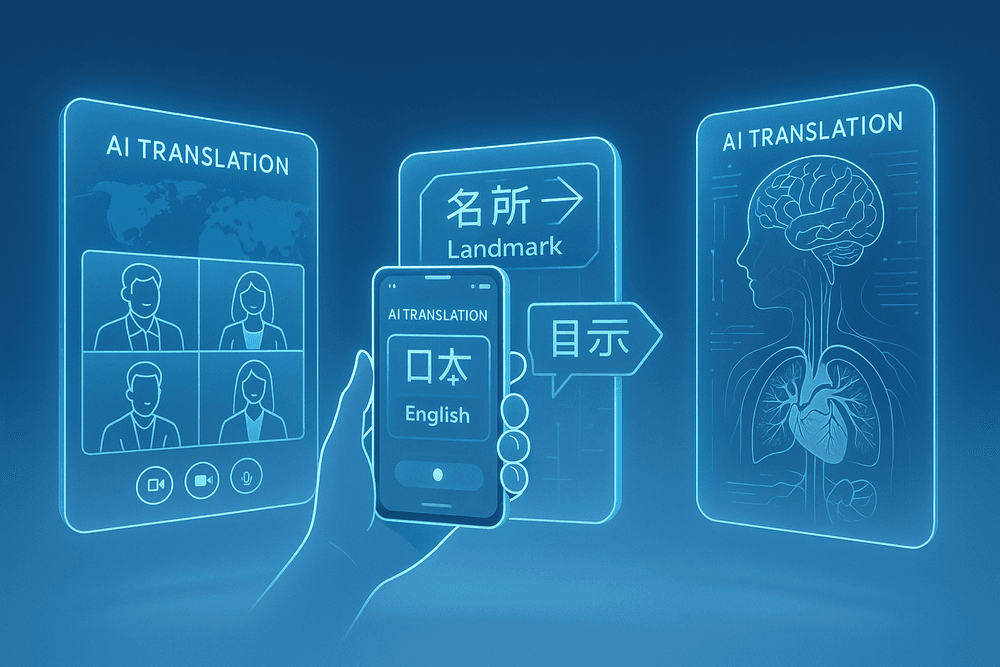
The ultimate goal of language is connection, and nothing achieves that more directly than spoken conversation. A top-tier ai powered translator shatters language barriers in real-time. This feature uses a sophisticated combination of speech-to-text, neural machine translation, and text-to-speech technologies to create a fluid, two-way dialogue. Imagine traveling abroad and effortlessly conversing with a local shop owner, or participating in a multilingual business meeting where every participant understands and is understood instantly. This isn't science fiction; it's a core function that makes a translator an indispensable companion for travelers, international professionals, and global teams.
Seamless Document, Image, and Website Translation
Communication isn't limited to text boxes. A truly versatile ai powered translator can ingest and process information from virtually any source. This includes:
- Document Translation: The ability to upload entire files (like PDFs, Word documents, or PowerPoint presentations) and receive a fully translated version that retains the original formatting is a massive time-saver for businesses and academics.
- Image Translation: Using Optical Character Recognition (OCR), the translator can "read" text within an image and overlay the translation. This is perfect for instantly understanding street signs, restaurant menus, product labels, and infographics.
- Website Translation: Integrated browser extensions or dedicated website translation tools allow users to browse the web in their native language, providing a completely localized and immersive online experience with just one click.
API Access and Customization for Developers
For businesses looking to scale their global operations, the ability to integrate translation technology directly into their existing products and workflows is critical. An Application Programming Interface (API) allows developers to plug the power of an ai powered translator into their own websites, mobile apps, customer support platforms, or internal software. This unlocks endless possibilities for customization, from building multilingual e-commerce stores to providing real-time translation in a customer service chat, all powered by the same advanced translation engine.
Glossary and Style Guide Integration for Brand Consistency
For professional use, consistency is key. A generic translation can often miss the specific nuance of industry jargon or a company's unique brand voice. Advanced AI translators address this by allowing users to create and integrate custom glossaries. This ensures that specific product names, technical terms, and branded phrases are always translated correctly. Furthermore, style guide integration helps the AI learn and adapt to a specific tone—whether formal, casual, or technical—ensuring that all translated content aligns perfectly with the brand's established voice across every language.
Practical Use Cases: How an AI-Powered Translator Boosts Efficiency
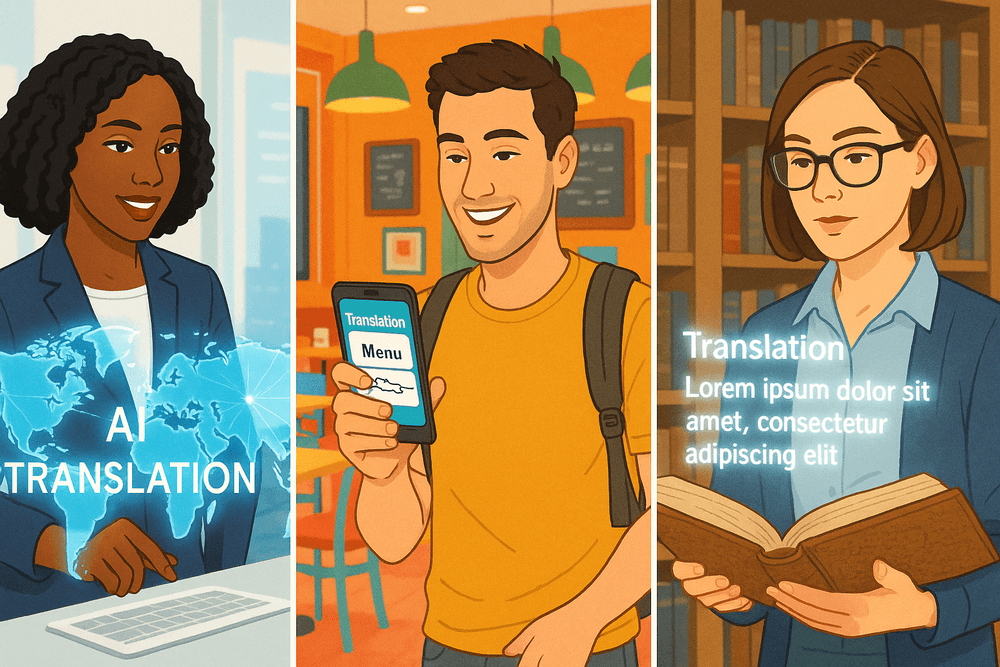
The true power of AI translation technology isn't just theoretical; it's demonstrated daily across various industries and personal scenarios. By automating and enhancing communication, an AI-powered translator acts as a catalyst for efficiency, breaking down language barriers that once hindered progress and connection. From corporate boardrooms to bustling foreign markets, these tools are revolutionizing how we interact with the world. Let's explore some of the most impactful, real-world applications.
Empowering Global Marketing Teams with Localized Content
In the world of global marketing, speaking your customer's language is non-negotiable. But true success lies in localization—adapting content to fit cultural nuances, idioms, and local preferences. This is where an AI-powered translator becomes an indispensable asset. Marketing teams can rapidly translate and adapt website copy, social media campaigns, product descriptions, and ad creatives for dozens of markets simultaneously.
Instead of waiting weeks for manual translations, teams can generate high-quality drafts in minutes, freeing up human linguists to focus on nuanced review and cultural refinement. This agile workflow allows businesses to test new markets with minimal investment, maintain brand voice consistency across regions, and launch global campaigns at an unprecedented speed. The result is a more resonant message, higher engagement, and a significantly faster path to international growth.
Assisting Travelers with On-the-Go Communication
For the modern traveler, an AI-powered translator is the ultimate pocket-sized companion. The anxiety of navigating a foreign country with a significant language gap is rapidly becoming a thing of the past. Imagine effortlessly reading a restaurant menu in Tokyo by simply pointing your phone's camera at it, or having a real-time, two-way voice conversation with a taxi driver in Rome.
These on-the-go tools are not just for convenience; they are for deeper, more authentic travel experiences. They empower tourists to step off the beaten path, ask for local recommendations, understand public transport announcements, and handle emergencies with confidence. Whether it's through text, voice, or image translation, this technology dismantles communication barriers, fostering genuine human connection and transforming a potentially stressful trip into a seamless adventure.
Streamlining Academic Research and International Collaboration
The academic world thrives on the global exchange of ideas. However, language has often been a formidable barrier, siloing groundbreaking research within linguistic communities. An AI-powered translator is fundamentally changing this dynamic. Researchers can now access and understand scholarly articles, journals, and historical texts published in languages they don't speak, dramatically expanding their pool of knowledge.
Furthermore, these tools are vital for fostering international collaboration. Scientists and scholars from different countries can communicate more effectively over email, in virtual meetings, and on shared documents. While nuanced academic discourse still benefits from human expertise, an AI-powered translator provides a powerful foundation for understanding, allowing collaborators to quickly grasp core concepts, share data, and co-author papers with greater efficiency. This accelerates the pace of innovation and discovery on a global scale.
Best Practices for Getting Accurate Results from Your AI Translator
An ai powered translator is a phenomenal tool for breaking down language barriers, but its output is only as good as your input. The principle of "garbage in, garbage out" is especially true for machine translation. To move from getting a merely understandable translation to a precise and effective one, you need to be a strategic partner in the process. By adopting a few best practices, you can significantly enhance the quality and accuracy of your results.
Structure Your Source Text for Optimal Clarity
Think of yourself as a clear communicator for the AI. The more straightforward your source text is, the less room there is for misinterpretation. An ai powered translator thrives on clear patterns and unambiguous language.
- Keep Sentences Short and Simple: Avoid long, rambling sentences with multiple subordinate clauses. Break complex ideas into shorter, more direct statements. Instead of "Our software, which was developed over five years to address key market needs, offers a robust solution," try "Our software offers a robust solution. We developed it over five years to address key market needs."
- Avoid Jargon, Slang, and Idioms: Phrases like "hit a home run" or "bite the bullet" have meanings that aren't literal. While some advanced AI can recognize common idioms, it’s a gamble. Whenever possible, state the meaning directly to ensure nothing gets lost in translation.
- Proofread Meticulously: A simple typo or grammatical error can completely alter the context of a sentence, sending the AI down the wrong path. Always run a quick spelling and grammar check before hitting "translate."
Understand and Correct for Cultural Nuances
Language is deeply intertwined with culture, and this is where AI can sometimes stumble. A technically perfect translation might still feel awkward, inappropriate, or even offensive if it ignores cultural context.
- Formality and Politeness: Many languages have different levels of formality (e.g., the formal usted vs. the informal tú in Spanish). Your AI translator might default to one, which may not be appropriate for your audience. Be prepared to review and adjust for the correct level of respect and social distance.
- Local References: A reference to a local holiday, a popular TV show, or a national celebrity will likely mean nothing to a global audience. The AI will translate the words, but the meaning and impact will be lost. Consider replacing these with more universal examples or adding a brief explanation.
- Humor and Sarcasm: These are among the most difficult elements to translate, as they rely heavily on tone, shared cultural knowledge, and subtle cues. What’s hilarious in one language can be confusing or offensive in another. It’s often best to avoid them in text destined for AI translation.
Know When to Combine AI with a Human Translator
The ultimate best practice is knowing the limits of the technology. An ai powered translator is an efficiency engine, not a foolproof replacement for human expertise. For certain tasks, a hybrid approach is non-negotiable.
- High-Stakes Content: If a mistake could have legal, financial, or medical consequences, you must involve a professional human translator. This includes contracts, patient-facing medical documents, user manuals for heavy machinery, and financial reports.
- Branding and Marketing Copy: Slogans, ad copy, and brand manifestos rely on emotion, wordplay, and deep cultural connection. An AI can provide a literal translation, but a human expert is needed to capture the brand's voice and make it resonate with the target market.
- Highly Specialized Content: For dense academic papers, scientific research, or advanced technical documentation, a subject-matter expert who is also a translator is essential to ensure a precise and accurate final product.
In these cases, use the AI translator to produce a fast first draft, and then have a human professional perform Post-Editing Machine Translation (PEMT) to refine, contextualize, and perfect it.
Conclusion: Integrating an AI-Powered Translator into Your Workflow
We’ve journeyed through the intricate world of AI-powered translation, from the complex neural networks that drive it to the practical tools that are reshaping global communication. The key takeaway is clear: the right ai powered translator is no longer a luxury but a powerful and accessible asset for individuals and businesses alike. It’s a tool that breaks down barriers, accelerates workflows, and unlocks unprecedented access to information and markets. The question is no longer if you should use one, but which one you should integrate into your daily operations.
Finding Your Perfect AI Translation Partner
Choosing the ideal AI-powered translation tool is not about finding a single "best" solution, but rather the one that aligns perfectly with your unique requirements. As you make your decision, consider the core factors we've discussed:
- Accuracy and Nuance: Do you need technically precise translations for legal documents, or are you looking for a tool that can handle conversational language for customer support? Assess the engine's proficiency in your specific domain.
- Integration and Workflow: How will the tool fit into your existing processes? Look for API access for your applications, browser extensions for quick lookups, or document-handling features that save you from endless copy-pasting.
- Language Support: Ensure your chosen platform comprehensively covers the language pairs you need, both now and for future expansion.
- Security and Confidentiality: For business use, especially with sensitive data, always prioritize a translator with robust data privacy policies and security protocols.
The perfect tool for a student researching a paper will be vastly different from the enterprise-level solution needed by a multinational corporation localizing its entire product line. Take the time to test free trials and evaluate features against your specific goals.
The Future is Fluent: What's Next for AI Translation?
The rapid evolution of AI means we are only at the beginning of this linguistic revolution. The future of the ai powered translator is moving beyond simple text-to-text conversion. Imagine real-time voice translation delivered seamlessly through earbuds, making international conferences and travel truly immersive. Picture AI that not only translates words but also interprets cultural context, tone, and even humor, preventing miscommunication and fostering deeper understanding. We are heading toward a future where technology acts as an invisible, instantaneous interpreter, empowering anyone to communicate and collaborate with others, regardless of their native tongue.
Your Next Step: Start Translating Smarter Today
The knowledge you've gained is your launchpad. Now is the time to put it into action. Don't let language be the barrier that holds you back from new knowledge, new markets, or new connections. Revisit the tools we've explored, identify a key area in your personal or professional life where communication could be improved, and take the first step.
Whether you're expanding your business, collaborating with an international team, or simply exploring a new culture, an AI-powered translator is your key to a more connected world. Embrace the technology, enhance your efficiency, and start translating smarter today.