June 16, 2025
Understanding AI Marketing Automation
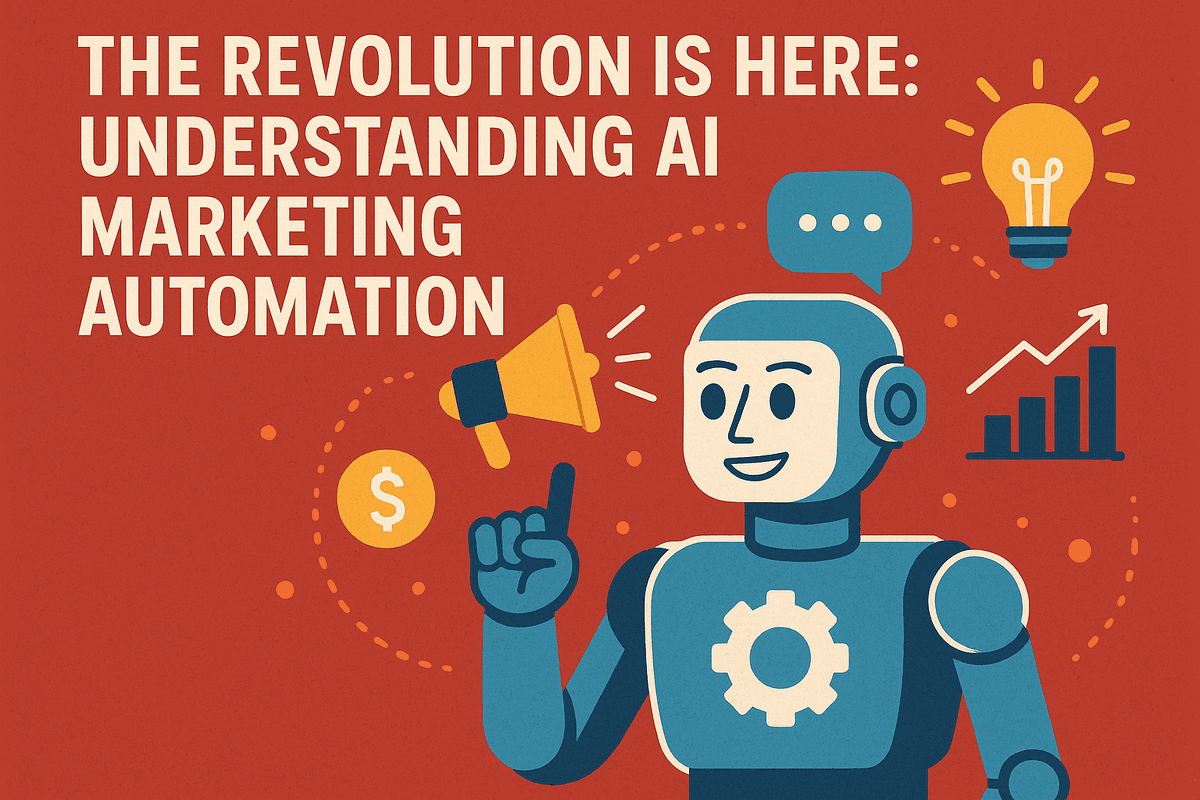
The Revolution is Here: Understanding AI Marketing Automation
What is AI Marketing Automation and Why Does It Matter Now?
At its core, AI marketing automation represents the fusion of artificial intelligence (AI) capabilities with traditional marketing automation platforms. It’s about upgrading your marketing from rule-based execution to intelligent, adaptive strategies. Traditional automation excels at pre-defined tasks like scheduled emails or segmenting lists based on simple criteria. However, AI marketing automation goes further, leveraging machine learning, natural language processing, and predictive analytics to not just execute tasks, but to learn, adapt, and make smart decisions in real-time.
Why does this revolutionary shift matter so profoundly now? Firstly, the sheer volume of customer data available today is overwhelming for manual processing. AI thrives on this data, uncovering hidden patterns and insights that would otherwise remain invisible. Secondly, customer expectations for personalized, relevant, and timely interactions have skyrocketed – something AI marketing automation is uniquely equipped to deliver at scale. Consumers no longer tolerate generic messaging. Finally, in a fierce competitive landscape, businesses embracing AI marketing automation gain a significant edge, enabling them to operate more efficiently, understand their customers more deeply, and ultimately, achieve superior results. It's no longer a futuristic concept but a present-day necessity for businesses aiming for significant growth and improved customer engagement.
From Manual to Intelligent: The Evolution of Marketing Automation with AI
The journey of marketing automation has been one of continuous refinement, but the integration of artificial intelligence marks its most significant evolutionary leap. Early marketing automation tools were groundbreaking in their time, liberating marketers from repetitive manual tasks. They allowed for scheduled email campaigns, basic lead scoring, and simple workflow automation based on "if-this-then-that" logic. While beneficial, these systems were largely reactive and required considerable human setup and ongoing management. Marketers meticulously defined the rules, and the system diligently executed them.
The advent of AI marketing automation has fundamentally altered this paradigm, transforming these systems from mere executors to intelligent partners. Instead of relying solely on pre-programmed rules, AI-powered platforms can analyze vast datasets to identify optimal campaign timings, predict customer churn, dynamically segment audiences based on nuanced behaviors, and even generate personalized content suggestions. This evolution is akin to moving from a manually tuned instrument to a self-tuning orchestra that adapts to the audience's mood. The "intelligent" aspect means the system continuously learns from new data, refines its strategies, and optimizes performance autonomously. This shift means AI marketing automation isn't just doing tasks faster; it's doing them smarter, paving the way for proactive, predictive, and highly personalized marketing efforts that were previously unimaginable.
Unlocking Unprecedented Growth: A Glimpse into AI's Impact on Marketing
The integration of artificial intelligence into marketing automation isn't just an incremental improvement; it's a catalyst for unprecedented growth and a fundamental reshaping of marketing strategies. The impact of AI marketing automation is multifaceted, touching nearly every aspect of how businesses connect with their audiences and drive revenue. One of the most significant advantages is the ability to achieve hyper-personalization at scale. AI algorithms can analyze individual customer data – browsing history, purchase patterns, engagement levels – to deliver tailor-made content, product recommendations, and offers, dramatically increasing relevance and, consequently, conversion rates.
Beyond personalization, AI marketing automation supercharges efficiency across the marketing department. Tasks that once consumed hours of manual effort, such as complex audience segmentation for targeted campaigns, A/B testing numerous variations to find the optimal message, or analyzing campaign performance data to extract actionable insights, can now be executed with remarkable speed and precision by AI. This frees up marketing teams to focus on higher-level strategy, creative ideation, and building customer relationships. Furthermore, AI's predictive capabilities are a game-changer. By identifying patterns and forecasting future trends, AI marketing automation enables businesses to anticipate customer needs, proactively address potential churn before it happens, and optimize ad spend for maximum return on investment. This glimpse into AI's impact reveals a future where marketing, powered by intelligent automation, is more responsive, more effective, and ultimately, a more powerful engine for sustainable business growth.
The Engine Room: Key AI Technologies Powering Your AI Marketing Automation
To truly grasp the transformative potential of ai marketing automation, we need to look under the hood at the core technologies driving its intelligence. These aren't just buzzwords; they are powerful engines enabling unprecedented levels of efficiency, personalization, and strategic insight in your marketing efforts.
Predictive Analytics: How AI Forecasts Customer Behavior for Smarter Campaigns
Imagine knowing what your customers truly desire, often before they explicitly articulate it. That's the transformative power predictive analytics injects into ai marketing automation. By meticulously sifting through vast repositories of historical data – encompassing purchase histories, browsing behaviors, app usage, and engagement patterns – sophisticated AI algorithms discern subtle trends and correlations. This enables them to forecast future customer actions with impressive accuracy. Will a specific customer segment be at risk of churn? Are they primed for an upgrade or cross-sell opportunity? Which product or service will they likely purchase next? These predictive insights empower your ai marketing automation platform to segment audiences with laser precision, personalize offers proactively, and optimize campaign timing for maximum impact, ensuring your marketing efforts are always strategically ahead and resources are efficiently allocated.
Natural Language Processing (NLP): Crafting Personalized Communication at Scale
In an era demanding hyper-personalization, generic messaging falls flat. Natural Language Processing (NLP) is the crucial AI technology empowering your ai marketing automation tools to understand, interpret, and generate human language, facilitating personalized communication at scale. Envision intelligent chatbots providing instant, context-aware support 24/7, resolving queries and guiding users. Picture email campaigns where content, tone, and even product recommendations dynamically adjust based on individual customer profiles and past interactions. NLP also fuels sophisticated sentiment analysis, granting you profound insights into how customers perceive your brand by analyzing reviews, social media conversations, and support tickets. This allows your ai marketing automation to not only automate responses but also to tailor marketing copy and content generation, ensuring messages resonate deeply and foster stronger customer relationships.
Machine Learning: Enabling Adaptive AI Marketing Automation Strategies
The 'automation' in ai marketing automation gets a monumental intelligence upgrade via Machine Learning (ML). ML algorithms are the self-improving engines that enable your marketing strategies to be truly adaptive. Instead of static, rule-based campaigns, ML allows your systems to continuously learn from dynamic data streams – analyzing campaign performance, customer interactions, and market shifts – to automatically optimize for superior results. This means your ai marketing automation platform can dynamically adjust ad bidding, personalize product recommendations with increasing accuracy, and conduct complex A/B/n tests to identify the most effective messaging and creative. ML ensures your marketing isn't just automated; it's intelligently evolving, continuously enhancing efficiency and maximizing ROI without exhaustive manual intervention, making it a cornerstone of modern ai marketing automation.
Computer Vision in Marketing: Emerging Applications for Visual Content
As visual content reigns supreme in online engagement, Computer Vision is an increasingly vital AI technology for ai marketing automation. This field empowers machines to 'see' and interpret images and videos, unlocking innovative marketing opportunities. Imagine your systems automatically identifying your products or brand mentions within user-generated content on social media, allowing for authentic engagement and influencer discovery. Computer Vision also powers visual search, enabling customers to find products using images, and can analyze ad creative effectiveness, offering insights into visual branding consistency. It can even help personalize visual recommendations in your ai marketing automation flows. While its applications are expanding, integrating Computer Vision promises to revolutionize how brands leverage visual data to connect with audiences and understand visual trends.
Why Your Business Needs AI Marketing Automation: Unveiling the Benefits
In today's fast-paced digital landscape, staying ahead means leveraging the most powerful tools available. AI marketing automation isn't just a buzzword; it's a transformative force that can redefine how your business connects with customers and achieves its goals. By integrating artificial intelligence into your marketing strategies, you unlock a suite of benefits that were once unimaginable. Let's explore why your business can't afford to ignore the power of AI marketing automation.
Skyrocket Efficiency: How AI Automates Repetitive Marketing Tasks
Imagine reclaiming countless hours your marketing team spends on tedious, repetitive tasks. With AI marketing automation, this becomes a reality. AI algorithms excel at handling high-volume, rule-based activities like data entry, email list management, social media scheduling, and even initial A/B testing setups. This frees your talented human marketers from the daily grind, allowing them to focus on strategic planning, creative campaign development, and building deeper customer relationships. Think of AI marketing automation as your tireless digital assistant, working 24/7 to ensure operational smoothness and giving your team the bandwidth to innovate. This enhanced efficiency directly translates to reduced operational costs and faster campaign deployment, making your entire marketing operation more agile.
Deepen Customer Understanding with AI-Powered Segmentation and Personalization
Do you truly know your customers? AI marketing automation takes customer understanding to an unprecedented level. AI algorithms can sift through vast datasets – from website behavior and purchase history to social media interactions and demographic information – identifying subtle patterns and micro-segments that human analysis might miss. This AI-powered segmentation allows for hyper-personalization at scale. Instead of generic marketing messages, you can deliver tailored content, product recommendations, and offers that resonate deeply with each individual's needs and preferences. This level of personalization, driven by AI marketing automation, not only boosts engagement rates but also fosters stronger customer loyalty and lifetime value by making every interaction relevant and timely.
Boost ROI: Optimizing Ad Spend and Campaign Performance through AI Marketing Automation
Every marketing dollar counts, and AI marketing automation is your key to maximizing return on investment (ROI). AI tools employ predictive analytics to forecast campaign outcomes, optimize ad spend across various channels in real-time, and identify which creative assets or messages are performing best. For instance, AI can dynamically adjust bidding strategies for pay-per-click (PPC) campaigns to secure the best placements at the lowest possible cost, or reallocate budget towards channels delivering the highest conversion rates. By continuously learning and adapting, AI marketing automation ensures your marketing budget is working as hard as possible, minimizing waste and significantly improving overall campaign performance and profitability. This data-driven approach to AI marketing automation removes guesswork, leading to smarter, more effective marketing investments.
Enhance Customer Experience with AI-Driven Predictive Support and Content Delivery
In an era where customer experience (CX) is a key differentiator, AI marketing automation offers powerful capabilities to delight your audience. AI can power intelligent chatbots that provide instant, 24/7 support, answering common queries and guiding users effectively. Beyond reactive support, AI enables predictive engagement. By analyzing customer behavior and data, AI marketing automation systems can anticipate customer needs or potential issues, allowing you to proactively offer solutions or relevant content. Imagine delivering the perfect piece of information or support just as a customer realizes they need it. This AI-driven predictive support and personalized content delivery at crucial touchpoints, facilitated by sophisticated AI marketing automation platforms, creates seamless, intuitive, and highly satisfying customer journeys, ultimately boosting retention and advocacy.
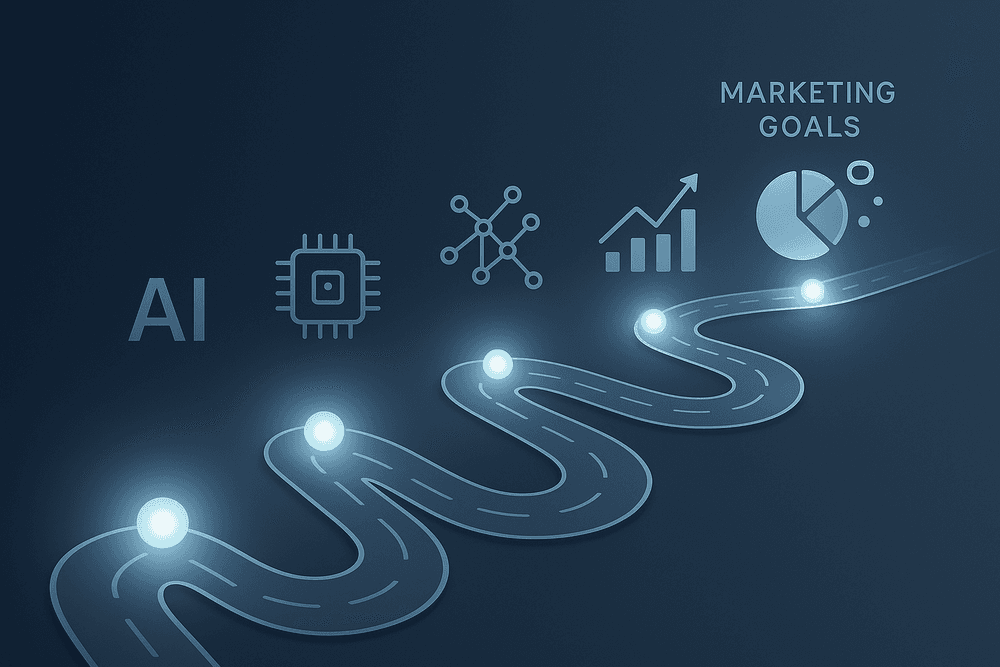
Strategic Implementation: Your Roadmap to Successful AI Marketing Automation
Embarking on your AI marketing automation journey requires more than just acquiring new software; it demands a strategic, phased approach. This roadmap will guide you through the essential steps to successfully integrate AI into your marketing efforts, transforming your strategies and driving tangible results.
Step 1: Identifying Your Business Goals and AI Use Cases
Before diving into the tech, ask the crucial question: What do we want to achieve with AI marketing automation? Clearly defined business goals are the bedrock of any successful implementation. Are you aiming to:
- Increase lead generation and conversion rates?
- Enhance customer personalization and engagement?
- Improve marketing campaign ROI?
- Boost customer retention and lifetime value?
- Streamline repetitive marketing tasks to free up your team?
Once your objectives are clear, you can identify specific AI marketing automation use cases that directly support them. For instance, if improving lead quality is a goal, predictive lead scoring is a relevant use case. If enhancing personalization is key, AI-powered content recommendation engines or dynamic email personalization become vital. Aligning AI capabilities with concrete business needs ensures your investment in AI marketing automation yields meaningful outcomes.
Step 2: Choosing the Right AI Marketing Automation Tools and Platforms
The market for AI marketing automation solutions is burgeoning, offering a diverse array of options. Selecting the right tools and platforms is critical and depends heavily on your identified goals and use cases. Consider these factors during your evaluation:
- Functionality: Does the tool offer the specific AI features you need (e.g., predictive analytics, Natural Language Processing for chatbots, automated customer segmentation)?
- Integration Capabilities: How well does it integrate with your existing marketing stack (CRM, analytics platforms, email marketing services, etc.)? This is vital for a cohesive AI marketing automation ecosystem.
- Scalability: Can the platform grow with your business, data volumes, and evolving AI needs?
- Ease of Use: Is the interface intuitive for your team? What is the learning curve associated with mastering its AI marketing automation features?
- Vendor Support & Community: What level of technical support, training resources, and user community engagement does the vendor provide?
- Pricing & ROI: Does the cost structure align with your budget, and what is the anticipated return on investment for implementing this AI marketing automation solution?
Thoroughly research and demo potential solutions. Look for case studies and reviews relevant to your industry and business size to make an informed decision.
Step 3: Integrating AI with Your Existing Marketing Stack: A Practical Guide
Successful AI marketing automation doesn't operate in a vacuum. It must seamlessly integrate with your current marketing technology stack – your Customer Relationship Management (CRM) system, email marketing platforms, web analytics tools, and more. This integration is key to unlocking the full potential of AI by leveraging your existing customer data and operational workflows.
Key considerations for a smooth integration include:
- API Availability and Robustness: Ensure the AI tool offers well-documented and robust APIs for smooth, reliable data exchange.
- Data Mapping: Carefully plan how data fields will map between systems. Consistent data definitions and formats are crucial for accurate AI marketing automation.
- Synchronization: Determine the frequency (real-time, batch) and method of data synchronization to keep all platforms up-to-date.
- Testing: Rigorously test the integration across various scenarios to ensure data accuracy, process automation, and system stability.
A well-integrated system provides a unified view of your customer journey, enabling more sophisticated personalization, targeted campaigns, and accurate insights from your AI marketing automation efforts.
Step 4: Training Your Team and Fostering an AI-First Marketing Culture
Technology is only one piece of the puzzle; your team is the driving force behind successful AI marketing automation. Invest in comprehensive training programs to equip your marketers with the skills to use new AI tools effectively, interpret AI-driven insights, and adapt their strategies accordingly.
Beyond technical training, cultivate an AI-first marketing culture:
- Encourage Data Literacy: Help your team become comfortable with data analysis and making data-driven decisions powered by AI marketing automation.
- Promote Experimentation: Create a safe and supportive environment for testing new AI features, campaign ideas, and optimization strategies.
- Champion Collaboration: Foster communication and collaboration between marketing, sales, and data science teams (if applicable) to ensure a holistic approach to AI.
- Address Concerns: Proactively discuss how AI will augment human capabilities, not replace them, focusing on its potential to enhance creativity, strategic thinking, and efficiency.
An empowered, knowledgeable, and AI-savvy team is essential to maximize the benefits and ROI of your AI marketing automation investment.
Step 5: Measuring Success: Key Metrics for Your AI Marketing Automation Initiatives
To validate your AI marketing automation strategy, demonstrate its value, and continuously improve, you must track the right metrics. These Key Performance Indicators (KPIs) should directly reflect your initial business goals and the specific outcomes you expect from your AI initiatives. Essential metrics might include:
- Conversion Rates: Track improvements in lead-to-customer conversion, landing page form submissions, and other critical conversion points.
- Improved Lead Quality: Monitor metrics like Marketing Qualified Lead (MQL) to Sales Qualified Lead (SQL) conversion rates, and sales acceptance rates.
- Customer Lifetime Value (CLV): Measure the impact of AI-driven personalization and retention efforts on overall CLV.
- Return on Investment (ROI): Calculate the ROI specifically for your AI marketing automation campaigns and platform investment.
- Engagement Metrics: Analyze email open rates, click-through rates, website dwell time, content interaction, and social media engagement for AI-powered campaigns.
- Efficiency Gains: Quantify time saved on automated tasks, reduction in manual effort, and decreased cost per acquisition or cost per lead.
- Churn Rate Reduction: Assess if AI-driven predictive analytics and proactive engagement are reducing customer churn.
Regularly monitor these metrics, analyze the results, and be prepared to iterate. AI marketing automation is not a set-it-and-forget-it solution. Continuous optimization based on performance data is key to sustained success.
Real-World Impact: See How Businesses Thrive with AI Marketing Automation
The theoretical benefits of ai marketing automation are compelling, but its true power shines through in real-world applications. Across diverse industries, businesses are leveraging artificial intelligence to transform their marketing efforts, drive unprecedented growth, and build stronger customer relationships. These case studies highlight how companies are thriving by integrating ai marketing automation into their core strategies, turning challenges into remarkable successes.
E-commerce Trailblazers: Personalized Journeys with AI-Driven Recommendations
Imagine an online store that anticipates your needs almost intuitively. This is the reality for e-commerce businesses embracing ai marketing automation to power hyper-personalized shopping experiences. Before AI, customers often faced generic product listings and irrelevant suggestions, contributing to high cart abandonment rates and missed sales opportunities. Now, sophisticated AI algorithms meticulously analyze vast datasets – including browsing history, past purchases, demographic information, and even real-time on-site behavior. This deep understanding fuels dynamic product recommendation engines, showcasing "Frequently Bought Together" items or "Picks For You" with uncanny accuracy, directly on product pages or within the shopping cart.
Beyond the website, ai marketing automation extends its reach. Personalized email campaigns, triggered by specific customer actions or inactivity, re-engage shoppers with tailored product suggestions and exclusive offers. AI-powered chatbots provide instant, relevant assistance 24/7, guiding customers through their purchase journey and resolving queries efficiently. The results of implementing such AI-driven strategies are consistently impressive: significant uplifts in average order value (AOV), dramatically improved conversion rates, and enhanced customer loyalty, effectively turning casual browsers into devoted brand advocates and boosting overall e-commerce revenue.
B2B Powerhouses: Optimizing Lead Nurturing with Predictive AI Scoring
In the complex and often lengthy B2B sales cycle, not all leads are created equal. Sales teams frequently find themselves overwhelmed with a high volume of prospects, many of whom are not yet ready to buy, leading to wasted effort and missed opportunities with genuinely interested leads. This is where ai marketing automation, specifically through predictive AI scoring, revolutionizes B2B lead nurturing. AI systems delve into a multitude of data points – from firmographics and website engagement (pages visited, content downloaded) to social media interactions and email response patterns.
Based on this comprehensive analysis, AI algorithms assign a predictive score, indicating the likelihood of a lead converting into a paying customer. This allows marketing teams to automatically segment leads with greater precision. High-potential Marketing Qualified Leads (MQLs) can be fast-tracked to sales or enrolled in targeted, automated nurturing sequences designed to address their specific pain points and interests. AI marketing automation can even determine the optimal timing and channels for communication, ensuring messages are delivered when they are most likely to resonate. The impact is profound: sales teams can focus their energy on genuinely hot leads, leading to higher lead-to-customer conversion rates, significantly shorter sales cycles, and a stronger, more collaborative alignment between marketing and sales departments.
Content Innovators: Enhancing Strategy with AI-Powered Topic Generation and SEO
Content remains a cornerstone of modern marketing, but consistently creating high-impact, SEO-optimized content that captivates target audiences is a monumental challenge. Many businesses struggle with content ideation, keeping pace with evolving trends, and ensuring their efforts translate into tangible results. Businesses are now increasingly turning to ai marketing automation to enhance their content strategy from initial ideation to final optimization and distribution. AI tools act as powerful research assistants, capable of scanning current search trends, analyzing top-performing competitor content, sifting through social listening data, and even parsing customer feedback to unearth compelling and relevant topic ideas.
Some advanced AI platforms can even generate blog post outlines, suggest compelling headlines, or draft initial content segments, significantly speeding up the creation process. Furthermore, ai marketing automation integrates sophisticated SEO capabilities. These tools assist with in-depth keyword research, provide actionable on-page optimization suggestions (like meta descriptions and internal linking), and identify crucial content gaps where a business can establish authority. This ensures that the content produced not only resonates deeply with the target audience but also ranks prominently in search engine results, driving organic traffic. The outcome is a more efficient and effective content creation workflow, higher quality and more relevant content, improved search visibility, increased audience engagement, and a demonstrably better return on investment for all content marketing endeavors.
Embrace the Future: Getting Started with AI Marketing Automation Today
The journey into intelligent marketing is not just a distant vision; it's a tangible reality that businesses can, and should, embrace now. AI marketing automation is revolutionizing how brands connect with their audiences, optimize their efforts, and drive unprecedented growth. If you're ready to move beyond traditional methods and harness the power of artificial intelligence, this is your moment.
Recapping the Power of AI Marketing Automation
Throughout this exploration, we've delved into the transformative capabilities of AI marketing automation. Let's revisit the core advantages that make it an indispensable asset for modern marketers. At its heart, AI marketing automation delivers unparalleled efficiency, automating complex and repetitive tasks, thereby freeing up your valuable human talent for strategic thinking and creative endeavors. We've seen how it supercharges personalization, enabling you to deliver hyper-relevant content and experiences to individual customers at scale – something previously unimaginable.
Key applications like predictive analytics allow you to anticipate customer behavior, identify high-value leads, and preempt churn. Automated customer segmentation, powered by AI, ensures your messaging is always targeted and impactful. The ability to analyze vast datasets in real-time means your campaigns are continuously optimized, leading to significantly improved ROI and a deeper understanding of your market. In essence, AI marketing automation is not just an upgrade; it's a fundamental shift towards a more intelligent, responsive, and effective marketing paradigm.
Overcoming Common Challenges in Adopting AI Marketing Automation
While the benefits are compelling, the prospect of integrating AI marketing automation can sometimes seem daunting. It’s natural to have questions or concerns about implementation. Some common challenges businesses face include:
- Data Quality and Integration: AI thrives on data. Siloed or poor-quality data can hinder the effectiveness of any AI system. The key is to start with a data audit, prioritize data hygiene, and explore tools that facilitate seamless integration from various sources.
- Skill Gap and Expertise: Implementing and managing AI marketing automation tools might seem to require specialized knowledge. However, many modern platforms are designed with user-friendliness in mind. Furthermore, investing in training for your existing team or starting with a managed service can bridge this gap. Remember, AI is here to augment your team, not replace it.
- Initial Investment Costs: While there's an upfront investment, it's crucial to view AI marketing automation as a long-term strategic asset that delivers significant returns through increased efficiency, higher conversion rates, and improved customer lifetime value. Many solutions offer scalable pricing, allowing you to start small.
- Fear of Complexity: The term "Artificial Intelligence" can sound complex. However, the goal of these tools is to simplify your marketing. Begin by identifying one or two key areas where AI marketing automation can make an immediate impact, learn from that experience, and then expand.
Addressing these challenges proactively, with a clear strategy and a willingness to learn and adapt, will smooth your transition into the world of AI-powered marketing.
Ready to Transform Your Marketing? Start Your AI Marketing Automation Journey Now!
The future of marketing isn't on the horizon; it's here, and it's powered by artificial intelligence. There has never been a better time to begin your AI marketing automation journey and unlock a new dimension of marketing effectiveness and customer engagement.
So, how do you take that pivotal first step?
- Assess and Identify: Begin by thoroughly evaluating your current marketing processes. Pinpoint the bottlenecks, the areas ripe for improvement, and the opportunities where AI marketing automation could deliver the most significant impact. Are you struggling with lead scoring? Is content personalization a manual, time-consuming task?
- Research and Select: Explore the diverse landscape of AI marketing automation tools and platforms. Look for solutions that align with your specific needs, integrate with your existing tech stack, and offer scalability. Don't hesitate to request demos and read user reviews.
- Start Small, Think Big: You don’t need to overhaul everything at once. Launch a pilot project focusing on a specific, measurable goal. This could be using AI for smarter email campaign segmentation or employing predictive analytics to identify at-risk customers. Learn from this initial foray and build momentum.
- Invest in Your Team: Equip your marketers with the knowledge and skills they need to leverage AI marketing automation effectively. This might involve training, workshops, or hiring specialized talent.
- Embrace Iteration: Implementing AI marketing automation is an ongoing process of learning, refining, and optimizing. Continuously monitor your results, gather feedback, and adapt your strategies.
Your journey towards a more intelligent, efficient, and impactful marketing future starts with the decision to embrace AI marketing automation today. Take that step, and begin transforming your marketing potential into reality.