
June 4, 2025
Introducing Your AI Grading Assistant
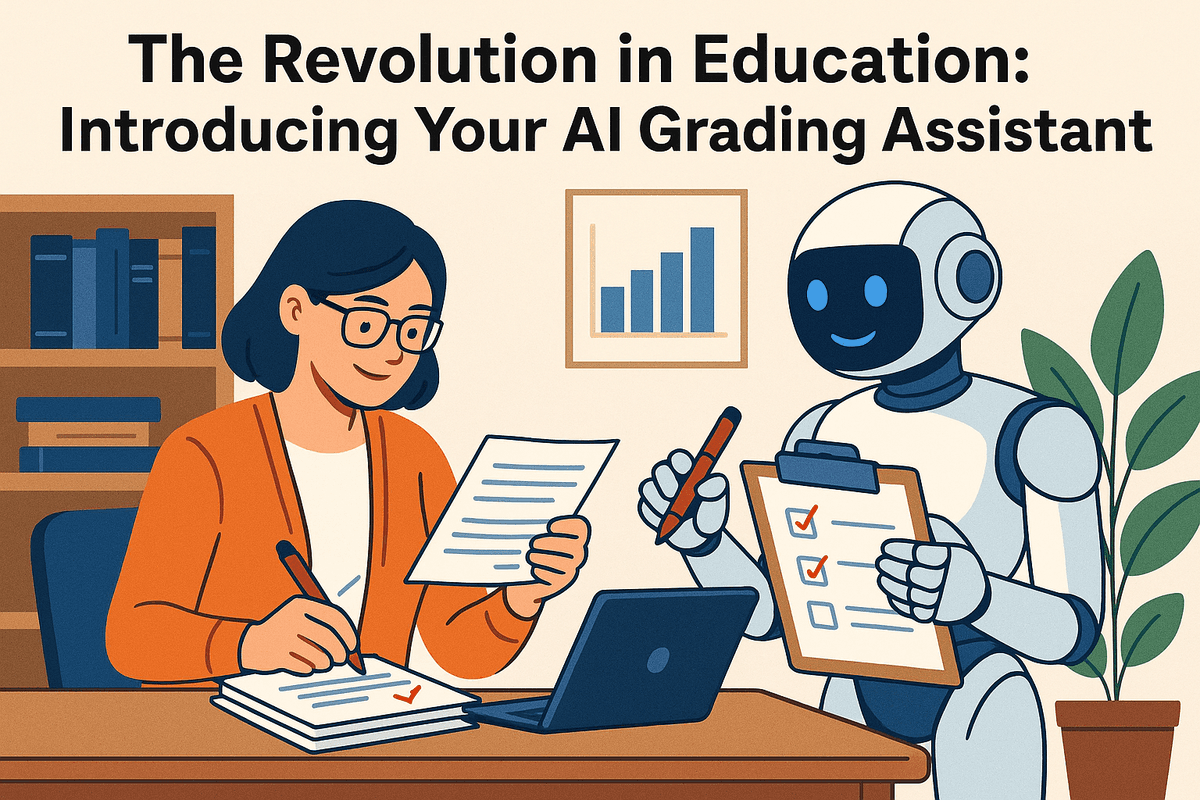
The Revolution in Education: Introducing Your AI Grading Assistant
Imagine a typical week: piles of assignments waiting, late nights spent meticulously providing feedback, and the constant race against the clock. Sound familiar? For countless educators, the grading process is a significant drain on time and energy. But what if technology could offer a powerful ally? Enter the AI grading assistant, a groundbreaking tool poised to revolutionize how educators approach assessment and reclaim valuable time.
What Exactly is an AI Grading Assistant?
At its core, an AI grading assistant is sophisticated software designed to support educators by automating parts of the assessment process. It's not about replacing the crucial human element of teaching, but rather augmenting it. Think of it as a highly efficient, tireless partner. These tools leverage advanced artificial intelligence, including Natural Language Processing (NLP) and machine learning algorithms, to analyze student submissions – from essays and short answers to coding assignments and multiple-choice questions.
So, how does this ai grading assistant actually work to transform your teaching workload?
- Automated Evaluation: For objective questions or specific criteria-based tasks, an ai grading assistant can process and score submissions with incredible speed and accuracy, often based on rubrics you define. This significantly reduces the manual effort involved in grading large batches of similar assignments.
- Initial Feedback Generation: Many systems can provide initial, objective feedback, highlighting areas where students met criteria or where they might need improvement. This gives students quicker insights and provides a solid foundation for your more nuanced, personalized comments. An ai grading assistant can flag common errors or point to specific rubric elements.
- Streamlined Workflow: By handling the more repetitive aspects of grading, an AI grading assistant frees you from the drudgery, allowing you to focus on higher-order tasks like curriculum development, personalized student support, and fostering engaging classroom discussions. The hours saved can be reinvested directly into enhancing the learning experience, rather than being consumed by the mechanics of assessment.
Beyond the Hype: The Real Benefits of an AI Grading Assistant for Educators
While "AI" can sometimes sound like a far-off, futuristic concept, the practical advantages of an AI grading assistant are very real and already impacting classrooms today. Let's move beyond the buzzwords and explore the tangible benefits for dedicated educators like yourself:
- Unparalleled Consistency and Fairness: Human graders, no matter how experienced, can be susceptible to fatigue or unintentional bias, especially when facing large volumes of work. An AI grading assistant applies scoring rubrics with unwavering consistency, ensuring every student's work is evaluated against the same criteria, every single time. This promotes fairness and transparency in the assessment process, leading to more equitable outcomes.
- Accelerated Feedback Cycles: In a traditional setting, students might wait days or even weeks for feedback. An AI grading assistant can dramatically shorten this turnaround time. Prompt feedback is critical for learning, allowing students to understand their mistakes and make improvements while the material is still fresh in their minds. Faster feedback from an ai grading assistant can significantly improve student engagement and learning momentum.
- Deeper Insights into Student Performance: Many AI grading assistant tools offer powerful analytics. They can identify common misconceptions across a class, highlight areas where students are excelling or struggling, and provide data-driven insights that can inform your teaching strategies and curriculum adjustments. This allows for more targeted interventions and a better understanding of overall learning patterns.
- Reduced Educator Workload and Burnout: This is perhaps the most immediate and appreciated benefit. By significantly cutting down on the time spent on grading, an AI grading assistant helps alleviate a major source of stress and burnout for teachers. This reclaimed time and energy can be redirected towards more fulfilling aspects of teaching, fostering a more sustainable and rewarding career.
- Enhanced Focus on Personalized Interaction: With the burden of bulk grading lifted, educators can dedicate more quality time to individual student interactions, providing tailored support, and addressing complex questions that an AI might not be equipped to handle. The ai grading assistant handles the mechanics, so you can focus on the mentorship and deeper conceptual understanding.
Ultimately, an AI grading assistant is more than just a time-saving device; it’s a strategic tool that empowers educators to be more effective, efficient, and engaged in their critical role of shaping minds. It champions a future where technology and pedagogy work hand-in-hand to enhance the educational landscape.

Why Every Modern Educator Needs an AI Grading Assistant
The landscape of education is continually evolving, and modern educators are increasingly seeking tools that not only enhance their teaching but also preserve their most valuable asset: time. The relentless demand of grading can often feel overwhelming, but the rise of sophisticated AI tools offers a significant reprieve. An ai grading assistant isn't just a futuristic concept; it's a practical solution transforming how educators manage assessments, deliver feedback, and ultimately, reclaim their focus on teaching.
Saving Time and Sidelining Burnout: The Unmatched Efficiency of an AI Grading Assistant
The red pen, the late nights, the seemingly endless stack of papers or digital submissions – sound familiar? For dedicated educators, grading is an essential but often overwhelming part of the job. It's a time sink that can easily consume evenings and weekends, contributing significantly to workload stress and, ultimately, burnout. But what if there was a way to reclaim those precious hours? This is where an ai grading assistant steps in, offering a powerful solution to streamline this demanding task. An ai grading assistant isn't about replacing human insight; it's about leveraging technology to handle the repetitive, time-consuming aspects of assessment. Imagine significantly reducing the time spent on initial reads, identifying common errors, or applying standardized rubric criteria. This efficiency boost translates directly into more manageable workloads, allowing educators to breathe easier and dedicate their energy where it's most impactful, fostering a more sustainable and fulfilling teaching experience.
Elevating Feedback: AI Precision for Quality and Consistency
Providing every student with high-quality, consistent feedback is a cornerstone of effective teaching. However, maintaining this standard across dozens, or even hundreds, of submissions can be incredibly challenging. Fatigue, unconscious bias, or simply the sheer volume of work can lead to variations in the depth and nature of feedback. An ai grading assistant introduces a level of precision and consistency that is difficult for humans to replicate consistently over long periods. By operating based on pre-defined rubrics and learning from vast datasets, an ai grading assistant can help ensure that every student receives equitable and objective initial feedback. It can flag common misconceptions, grammatical errors, or structural issues with unwavering accuracy. This doesn't mean the educator's role in feedback diminishes; instead, it evolves. With an ai grading assistant handling the foundational checks, teachers can focus their expertise on providing more nuanced, personalized insights that address higher-order thinking and individual student needs. The result is a more robust, fair, and ultimately more developmental feedback process for everyone.
Reclaiming Your Passion: Focus on Teaching, Not Just Grading, with an AI Grading Assistant
At the heart of every educator is a passion for teaching – for inspiring students, fostering understanding, and shaping futures. Yet, the administrative burden of grading can often overshadow these core activities, transforming a fulfilling profession into a checklist of tasks. An ai grading assistant offers a path back to what truly matters by significantly reducing the time tethered to assessments. When you’re not bogged down by hours of grading, imagine the possibilities. That reclaimed time can be reinvested into developing more innovative lesson plans, offering personalized support to struggling students, engaging in professional development to stay at the cutting edge, or simply having more energy for dynamic classroom interactions. An ai grading assistant acts as a powerful enabler, freeing educators from the drudgery of mass grading to concentrate on the art and science of teaching. It’s a tool that empowers you to be more present, more creative, and ultimately, more effective in nurturing your students' growth. This shift not only benefits students but also enhances job satisfaction and sustainability for educators themselves.
Essential Features: What to Demand from Your AI Grading Assistant
Choosing the right ai grading assistant can revolutionize your teaching workload, but not all tools are created equal. To truly benefit from AI in assessment, it's crucial to look beyond the hype and demand features that genuinely support your pedagogical goals and streamline your workflow. Here’s what to prioritize:
Seamless LMS Integration: Your AI Grading Assistant as a Team Player
The last thing any educator needs is another disconnected platform. A top-tier ai grading assistant must offer robust integration capabilities with existing Learning Management Systems (LMS) like Canvas, Moodle, Blackboard, or Google Classroom. Why is this non-negotiable?
- Streamlined Workflows: Direct integration means assignments can be pulled from your LMS, graded by the ai grading assistant, and grades can be pushed back, all without manual data entry. This saves invaluable time and reduces the risk of errors.
- Centralized Data: Student rosters, assignment details, and grades remain within your established ecosystem, ensuring data consistency and easier tracking of student progress.
- Familiar Environment: Students and educators can continue working within the LMS they already know, minimizing the learning curve associated with a new tool.
Look for an ai grading assistant that boasts deep, bi-directional sync capabilities, ensuring that information flows smoothly between your core educational platform and the AI tool.
Customizable Rubrics and Personalized Feedback: Keeping You in Control
An effective ai grading assistant shouldn't be a black box. Instead, it should empower educators by offering extensive customization options.
- Tailored Rubrics: The ability to create, import, or adapt detailed rubrics is paramount. Your ai grading assistant should allow you to define specific criteria, weighting, and performance levels that align perfectly with your learning objectives and assessment standards. Generic, unadaptable rubrics simply won't cut it for nuanced grading.
- Personalized Feedback Libraries: While AI can generate initial feedback, the best systems allow you to build libraries of pre-approved comments, modify AI-suggested feedback, or add your own unique insights. This ensures that the feedback, even when AI-assisted, retains your voice and addresses specific student needs. The ai grading assistant should act as a true assistant, amplifying your ability to provide targeted, constructive criticism.
This level of control ensures that the ai grading assistant adapts to your teaching style, not the other way around.
Ensuring Fairness and Mitigating Bias: The Ethical Imperative
The potential for bias in AI is a significant concern. A responsible ai grading assistant provider will be transparent about how their algorithms work and what measures are in place to promote fairness.
- Transparency and Explainability: While complex, the ai grading assistant should offer insights into why a particular grade or piece of feedback was suggested. This helps educators understand the AI's reasoning and identify potential inconsistencies.
- Human-in-the-Loop: No ai grading assistant should completely replace human oversight. Features allowing for easy review, override, and calibration by educators are essential. The AI should augment, not automate away, professional judgment.
- Bias Detection and Mitigation Features: Ask providers what steps they take to train their models on diverse datasets and to actively test for and mitigate biases related to writing style, dialect, or other demographic factors. Regular audits and updates focused on fairness are good indicators.
Demand an ai grading assistant that prioritizes ethical considerations and provides tools to help you ensure equitable assessment for all students.
Support for Diverse Assignment Types: Beyond the Bubble Sheet
Modern education involves a wide array of assessment methods. Your ai grading assistant needs to be versatile enough to handle more than just multiple-choice questions.
- Essays and Open-Ended Responses: Look for robust natural language processing (NLP) capabilities that can analyze written work for coherence, argumentation, evidence use, and adherence to specific instructions.
- Short Answer Questions: The ai grading assistant should be able to evaluate concise responses for accuracy and completeness based on your defined criteria.
- Problem Sets and Technical Tasks: For STEM subjects, some AI tools are emerging that can assess steps in mathematical problems or even segments of code.
- Multiple-Choice and Fill-in-the-Blanks: While simpler, ensure the ai grading assistant handles these efficiently, offering options for partial credit or varied question formats.
A truly helpful ai grading assistant will be a flexible partner, capable of supporting the diverse ways you assess student learning, transforming it from a niche tool into an indispensable part of your teaching toolkit.
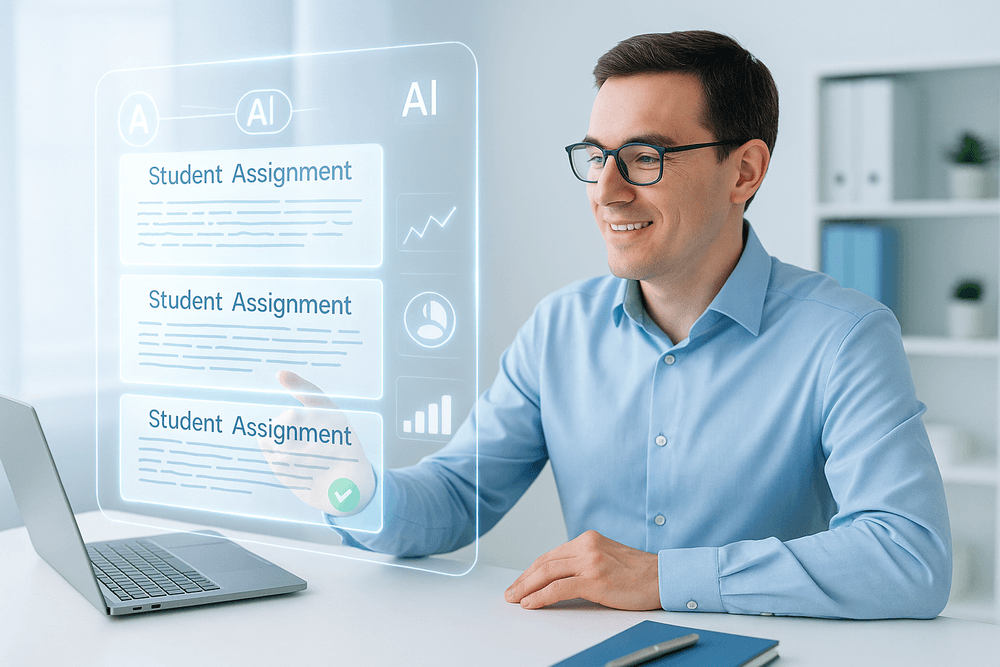
Mastering Your AI Grading Assistant: Best Practices for Seamless Integration
An ai grading assistant is a powerful ally in modern education, but like any sophisticated tool, its effectiveness hinges on proper setup, diligent training, and mindful application. By adopting best practices, you can seamlessly integrate this technology into your workflow, enhancing both your productivity and your students' learning experience.
Setting Up and Configuring Your AI Grading Assistant for Optimal Performance
Unlock the full potential of your ai grading assistant with thoughtful setup and configuration. Don't treat it as plug-and-play; invest time upfront to tailor it to your specific course requirements and teaching style. Begin by familiarizing yourself with the platform's interface and core functionalities. Most ai grading assistant tools allow for deep customization of grading rubrics, the weighting of different assessment criteria, and specific feedback parameters—ensure these align perfectly with your established assessment standards. If your institution utilizes a Learning Management System (LMS), explore available integration options. A well-integrated ai grading assistant can significantly streamline workflows, automatically pulling assignments and pushing back grades with minimal manual intervention. The ultimate goal is to configure your ai grading assistant to thoroughly understand the nuances of your assignments, leading to more accurate initial assessments and freeing up your valuable time for other pedagogical tasks.
Training Your AI Grading Assistant: Tips for Accuracy and Reliability
An ai grading assistant learns effectively, but its accuracy and reliability depend heavily on the quality of its training. Think of this crucial phase as mentoring your new digital teaching assistant. Begin by feeding it a diverse set of student submissions that you have already manually graded. This initial dataset, complete with your grades and detailed feedback, serves as the foundational benchmark. For optimal results when training your ai grading assistant:
- Use Representative Samples: Ensure your training data includes a wide range of performance levels – from excellent to average, to areas needing significant improvement – as well as varied approaches students might take to the assignment.
- Calibrate and Iterate: After the initial training, test your ai grading assistant on a fresh batch of assignments. Meticulously compare its output with your own evaluations. Identify any discrepancies and use these insights to further refine the AI's understanding. Most advanced systems are designed for this iterative calibration process.
- Focus on Nuance: For assignments that are complex or subjective, provide clear, annotated examples of how different elements should be interpreted by the ai grading assistant. The more context and high-quality examples you provide, the more discerning and reliable your ai grading assistant will become.
Effectively Reviewing and Overriding AI-Generated Grades and Feedback
While your ai grading assistant can significantly reduce your grading workload, it's crucial to remember that it's an assistant, not a replacement for your professional judgment and pedagogical expertise. The final accountability for all grades and feedback unequivocally rests with you, the educator. Develop an efficient review process. Instead of re-grading every paper from scratch, focus your attention on strategic spot-checks, particularly for assignments where the ai grading assistant indicates lower confidence in its assessment, or for student submissions that fall into borderline categories. Many tools provide confidence scores for their suggestions, which can intelligently guide your review efforts.
Don't hesitate to override AI-generated grades or modify suggested feedback. Your ai grading assistant provides a strong and consistent first pass, but your expertise is invaluable for catching subtle nuances, appreciating unique student insights, or providing highly personalized encouragement and constructive criticism. Use the AI's output as a robust foundation, then layer your own nuanced understanding and pedagogical touch. This "human-in-the-loop" approach is fundamental to responsibly and ethically using an ai grading assistant, ensuring both efficiency and the high-quality, personalized assessment your students deserve.
Communicating the Use of an AI Grading Assistant to Students Transparently
Introducing an ai grading assistant into your classroom environment necessitates open, honest, and transparent communication with your students. Building trust is paramount, and students have a right to understand the processes by which their work is being assessed. Start by clearly stating the use of an ai grading assistant in your course syllabus and reiterate this information in a class announcement or via your LMS. Crucially, explain why you're choosing to use this technology—focus on the tangible benefits to them, such as significantly faster feedback turnaround times, more consistent application of rubrics across numerous submissions, and, importantly, allowing you more time for direct student interaction, curriculum development, and personalized teaching.
Address potential student concerns proactively. Students might understandably worry about fairness, the potential for bias, or the impersonality of AI. Reassure them that you, the educator, remain firmly in control, meticulously reviewing and validating the AI’s work, and making all final grading decisions. Emphasize that the ai grading assistant is a tool designed to support and augment the grading process, not to replace essential human oversight and judgment. Framing the ai grading assistant as an innovative tool to enhance fairness, improve feedback quality, and enrich their overall learning experience can help students view its adoption positively.
Real-World Impact: Success Stories with an AI Grading Assistant
The theoretical benefits of an ai grading assistant are compelling, but its true value shines through in real-world applications. Across diverse educational settings, these tools are not just changing how assignments are graded; they're revolutionizing the entire assessment ecosystem, empowering educators, and enriching student learning experiences.
Case Study: How Northwood University Transformed Assessment with an AI Grading Assistant
Northwood University’s expansive first-year composition program faced a familiar challenge: ensuring consistent, timely, and constructive feedback for over 2,000 students each semester. Faculty, though dedicated, were stretched thin, spending an overwhelming majority of their time on grading, which sometimes led to feedback delays and potential inconsistencies across different sections.
The introduction of an ai grading assistant marked a turning point. Initially piloted in a few core courses, the tool was trained on Northwood's specific rubrics and examples of student work. The results were transformative. Grading time for initial drafts was reduced by an average of 60%, allowing instructors to focus on providing more in-depth, personalized feedback on higher-order thinking skills and nuanced arguments. The ai grading assistant provided immediate, consistent feedback on grammar, mechanics, and adherence to formatting guidelines, freeing instructors to concentrate on content and critical analysis. Student surveys indicated a significant increase in satisfaction with the speed and consistency of feedback, and faculty reported feeling less burdened and more engaged in their teaching. Northwood University has since expanded its use of the ai grading assistant, viewing it as a vital tool for maintaining high academic standards while supporting its faculty.
Testimonials: Educators Share Their Experiences with AI Grading Assistant Tools
The true measure of any educational technology is its impact on those who use it daily. Here’s what educators are saying about their experiences with an ai grading assistant:
- Dr. Anya Sharma, Professor of Economics: "Before using an ai grading assistant, I’d spend entire weekends grading. Now, it handles the initial pass on problem sets and quizzes, highlighting areas where students commonly struggle. This has given me back valuable time to develop more engaging lecture content and offer extra help sessions. It’s been a game-changer for my work-life balance and my ability to support student understanding."
- Mr. David Lee, High School English Teacher: "I was initially skeptical, but the ai grading assistant has been surprisingly effective. It provides consistent, objective feedback on foundational writing skills, which helps my students make immediate improvements. This allows me to focus my comments on their argumentation, creativity, and voice. The quality of their revisions has noticeably improved."
- Sarah Chen, Community College Instructor: "With large class sizes, providing individualized feedback was always a struggle. The ai grading assistant helps me deliver personalized pointers to each student, flagging common errors quickly. It’s not about replacing me; it’s about augmenting my ability to reach every student more effectively. My students appreciate the quicker turnaround."
From Skepticism to Advocacy: Journeys of Adopting an AI Grading Assistant in the Classroom
The path to adopting an ai grading assistant often begins with a healthy dose of skepticism. Many educators, like Maria, a tenured history professor, initially worried. "Could a machine truly understand the nuances of a historical argument? Would it stifle student creativity or be perceived as impersonal?" she wondered. Her department decided to pilot an ai grading assistant for a semester, focusing on low-stakes assignments and formative assessments.
Maria agreed to participate, albeit hesitantly. She meticulously reviewed the feedback provided by the ai grading assistant, comparing it against her own. She was surprised to find that for foundational checks – adherence to citation styles, identification of key terms, and basic factual recall – the tool was not only accurate but also remarkably consistent. More importantly, it flagged areas where many students were struggling, providing her with actionable insights to adjust her teaching.
The time saved on these initial checks allowed Maria to dedicate more energy to one-on-one discussions with students about their interpretations and analytical skills. She found that the ai grading assistant wasn't a replacement, but a powerful partner. It handled the repetitive aspects of grading, freeing her to engage more deeply with the intellectual development of her students. Today, Maria is an advocate, sharing her positive experience and encouraging colleagues to explore how an ai grading assistant can enhance, not diminish, their pedagogical impact. Her journey from skeptic to supporter highlights a common experience: when used thoughtfully, these tools become invaluable allies in the educational process.
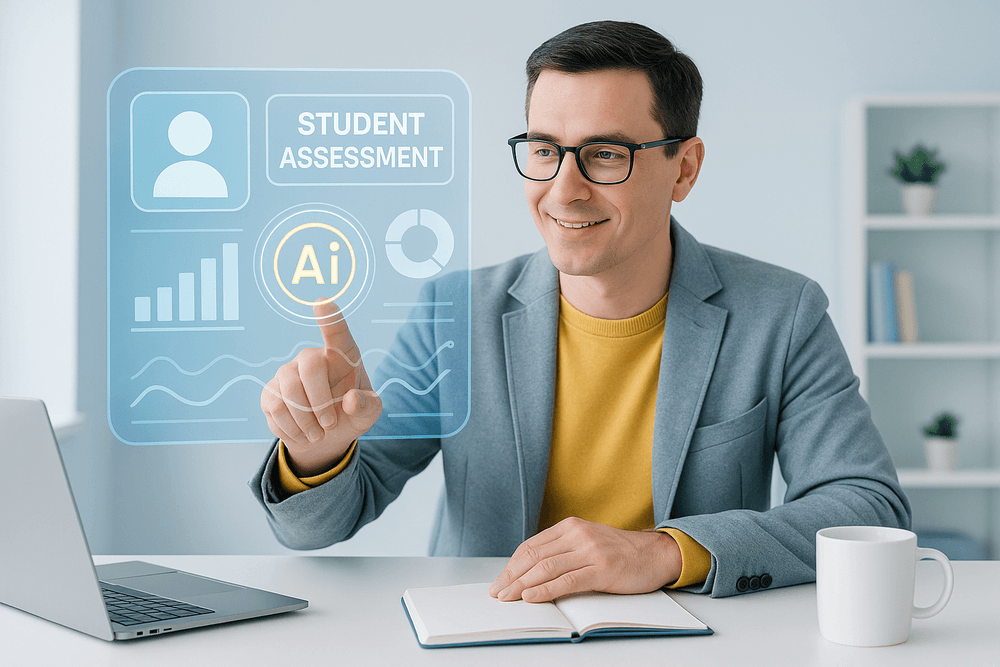
The Future is Now: Take Control with an AI Grading Assistant
The shift towards AI-enhanced education is well underway, and the power to revolutionize your grading process is at your fingertips. An ai grading assistant isn't just about saving time; it's about reclaiming your focus for more impactful teaching, providing consistent feedback, and fostering a more dynamic learning environment. It's time to move beyond the traditional constraints of manual grading and step into a more efficient and insightful future.
Choosing the Right AI Grading Assistant for Your Specific Needs
The landscape of AI grading assistant tools is rapidly expanding. Choosing the one that perfectly aligns with your unique teaching context is crucial for maximizing its benefits. When selecting an ai grading assistant, consider:
- Subject Matter & Assignment Types: Does it suit STEM's quantitative needs or humanities' nuanced feedback? Can it handle essays, multiple-choice, or coding projects? The best ai grading assistant will be versatile enough for your core assessment types.
- LMS Integration: Will it seamlessly connect with your current Learning Management System (e.g., Canvas, Moodle, Blackboard)? A smooth integration ensures your ai grading assistant enhances, not complicates, your workflow.
- Customization & Control: Can you tailor rubrics, define feedback parameters, and maintain your pedagogical voice? A quality ai grading assistant should empower you to guide its evaluations, not dictate them.
- Data Privacy & Security: Does the tool comply with relevant data protection regulations like FERPA or GDPR? Ensuring student data is handled responsibly by your ai grading assistant is paramount.
- Ease of Use & Support: Is the ai grading assistant intuitive, with a manageable learning curve and readily available support?
- Feedback Quality: Evaluate how the ai grading assistant generates feedback. Does it offer actionable insights for students, or is it purely score-based?
Prioritize tools that offer free trials or demos. This hands-on experience is invaluable for determining if an ai grading assistant truly meets your specific needs and helps streamline your assessment process effectively.
Next Steps: How to Start Implementing an AI Grading Assistant Today
Ready to harness the power of an ai grading assistant? Implementing this technology can be a smooth process with a clear plan. Here’s how to get started today:
- Research & Shortlist: Based on your needs, identify 2-3 promising ai grading assistant tools. Read reviews, compare features, and check for case studies relevant to your field.
- Utilize Trials & Demos: Get hands-on experience. Test the features with a sample assignment. An ai grading assistant should feel intuitive and supportive before you commit.
- Start Small & Iterate: Pilot your chosen ai grading assistant with a single, low-stakes assignment or in one class. This allows you to learn the tool, calibrate its settings, and gather initial feedback without overwhelming yourself or your students.
- Communicate with Students: Be transparent about using an ai grading assistant. Explain its role (e.g., initial review, consistency check), how their data is handled, and the benefits, such as faster and more consistent feedback.
- Review & Refine: Initially, closely monitor the AI's suggestions. Use its output as a first pass, always applying your professional judgment. Fine-tune your rubrics and settings within the ai grading assistant for optimal accuracy and alignment with your standards.
- Seek Training: Leverage vendor-provided training, tutorials, and support channels to maximize your effectiveness with the ai grading assistant.
- Gradual Rollout: As you and your students gain confidence and see the benefits, gradually expand its use to more assignments and courses.
Join the Community: Resources and Support for Educators Using AI Grading Assistants
You're not alone on this journey into the future of assessment! A vibrant and growing community of educators is actively exploring and implementing ai grading assistant tools. Tapping into this collective wisdom can significantly enhance your experience and success.
Look for online forums (like those on LinkedIn or Reddit), dedicated social media groups, or professional learning networks (PLNs) where educators share best practices, innovative use cases for their ai grading assistant, and troubleshoot common challenges. Many ai grading assistant providers also host rich knowledge bases, offer comprehensive tutorials, and conduct regular webinars or workshops to help you master their platforms and understand the nuances of AI in education.
Don't underestimate the power of peer support. Connecting with other educators using the same or similar ai grading assistant tools can provide invaluable insights and practical advice tailored to real-world classroom scenarios. These communities are excellent places to ask questions, share your successes, and learn from the experiences of others. Engaging with these resources will not only help you overcome any hurdles but also keep you informed about the latest advancements and ethical considerations in ai grading assistant technology, ensuring you continue to leverage these tools to their fullest potential.