
October 27, 2025
How AI is Changing the Game
The New Frontier of Security Compliance: How AI is Changing the Game
In today's hyper-connected world, achieving and maintaining security compliance is no longer a periodic, check-the-box exercise. It's a continuous, high-stakes battle against evolving threats and increasingly complex regulatory landscapes like GDPR, SOC 2, and HIPAA. As businesses migrate to the cloud and adopt intricate tech stacks, the old methods of managing compliance are buckling under the pressure. This is where Artificial Intelligence steps in, not just as an assistant, but as a revolutionary force redefining the entire compliance paradigm.
What is AI-Powered Security Compliance?
AI-powered security compliance is the use of intelligent systems, machine learning (ML), and automation to continuously monitor, manage, and report on an organization's adherence to regulatory standards and internal policies. It moves beyond simple task automation by introducing a layer of intelligence that can analyze vast amounts of data, identify patterns, predict potential risks, and even suggest remediation steps.
Think of it as upgrading from a manual map to a self-driving car with real-time traffic analysis. The map (a manual checklist) can tell you the route, but the AI-powered vehicle can:
- Continuously scan the environment for hazards (vulnerabilities).
- Analyze data from thousands of sources to predict traffic jams (emerging threats).
- Automatically reroute to maintain efficiency and safety (proactive risk mitigation).
- Provide a complete log of its journey for review (audit-ready evidence).
This intelligent approach transforms security compliance from a reactive, manual burden into a proactive, strategic business function.
Moving Beyond Manual Checklists: The Problem with Traditional Compliance
For years, compliance management revolved around spreadsheets, manual evidence collection, and point-in-time audits. This traditional approach is fundamentally broken in the modern digital ecosystem. The core problems are glaring:
- Human Error and Fatigue: Manual checks are tedious and repetitive, making them highly susceptible to human error. A single overlooked configuration or misinterpretation can lead to a significant compliance gap.
- Static Snapshots: An annual or quarterly audit provides only a snapshot of your compliance posture on that specific day. It's outdated the moment it’s completed and fails to capture the dynamic, ever-changing nature of cloud environments.
- Impossibly Scalable: As your organization grows—adding new services, employees, and cloud assets—the number of controls to monitor explodes. Manually tracking thousands of evidence points across multiple frameworks is simply not sustainable.
- Resource Drain: Highly skilled security and engineering teams spend countless hours on mundane compliance tasks like taking screenshots and chasing down evidence, diverting them from critical, high-value security work.
Why Automation is No Longer Optional for Modern Businesses
The limitations of manual processes make automation a foundational requirement for any serious security compliance program. Automation shifts the paradigm from periodic auditing to continuous assurance. By automating control monitoring and evidence collection, businesses can maintain a 24/7 view of their compliance status, catching drifts and non-conformities in near-real-time, not months later during an audit.
This automated foundation is crucial for speed, accuracy, and scalability. It ensures that as your business innovates and expands, your compliance framework scales with it, without exponentially increasing headcount or risk. In an era where a single breach can have devastating financial and reputational consequences, relying on manual, error-prone processes is a risk no modern business can afford to take. Automation sets the stage, but it’s the intelligence of AI that truly unlocks the future of compliance management.
Core Capabilities: How AI Revolutionizes Security Compliance Tasks
Artificial intelligence is fundamentally reshaping the landscape of security compliance, transforming it from a periodic, labor-intensive exercise into a continuous, intelligent, and automated process. Instead of drowning in spreadsheets and manual checklists, organizations can now leverage AI to handle the most demanding compliance tasks with speed and precision. This shift allows teams to move beyond simply meeting standards and toward building a truly resilient security posture. Let's explore the core capabilities driving this revolution.
Automating Evidence Collection for Seamless Audits
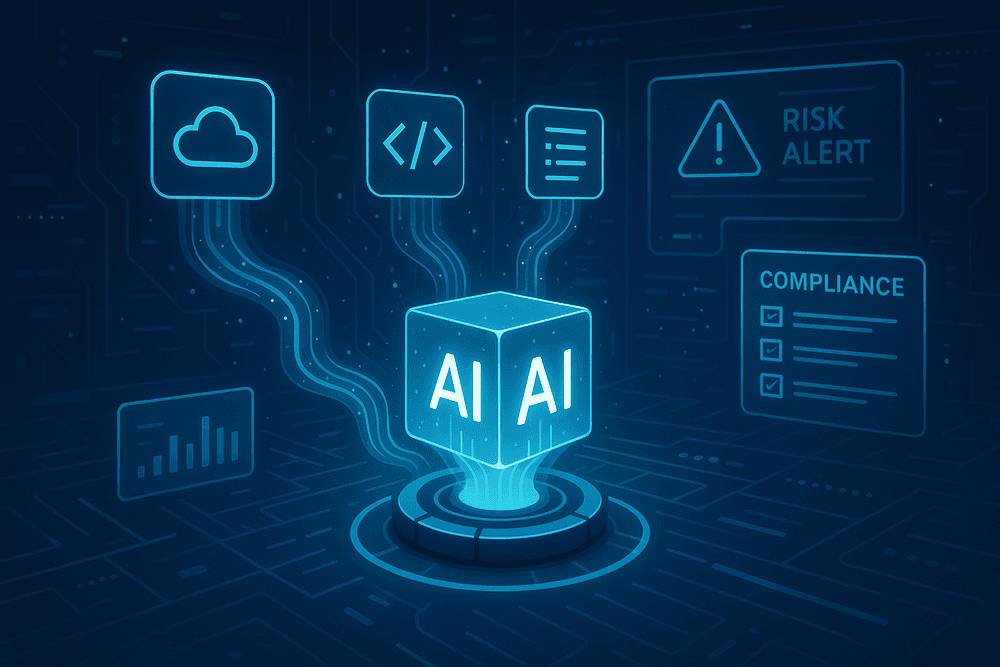
Anyone who has prepared for a SOC 2 or ISO 27001 audit knows the pain of evidence collection. It’s a frantic, time-consuming scramble to gather screenshots, configuration files, access logs, and policy documents from dozens of disparate systems. AI-powered platforms eliminate this chaotic process. By integrating directly with your cloud environments (like AWS and Azure), SaaS applications, and code repositories, these tools act as a central nervous system for data gathering. They automatically and continuously collect the required evidence, tag it to the relevant controls, and store it in an audit-ready format. This not only saves hundreds of hours of manual labor but also reduces human error, ensuring that the evidence is consistent, complete, and readily available for auditors.
Leveraging Continuous Control Monitoring for Real-Time Alerts
Traditional security compliance operates on a point-in-time basis, often leading to a mad dash to fix issues right before an audit. AI enables a far more effective approach: Continuous Control Monitoring (CCM). Instead of periodic checks, AI constantly scans your entire technology stack, validating that security controls are operating as intended. Is a critical S3 bucket suddenly made public? Has an unauthorized user been granted admin privileges? AI-driven CCM detects these deviations from your established security compliance baseline in real-time. It immediately generates an alert, complete with context, allowing your team to remediate the issue long before it can be exploited by an attacker or flagged by an auditor. This proactive monitoring ensures your organization remains compliant 24/7, not just during audit season.
Using AI-Driven Risk Assessment and Predictive Analytics
Static risk registers are becoming a relic of the past. A modern security compliance program requires a dynamic, forward-looking approach to risk management, and AI is the engine that powers it. By analyzing vast datasets—including internal vulnerability scans, threat intelligence feeds, historical incident data, and system logs—machine learning algorithms can identify subtle patterns and emerging threats that would be invisible to human analysts. This capability moves risk assessment from a reactive to a predictive model. AI can forecast which assets are most likely to be targeted or which controls are at the highest risk of failure, enabling you to prioritize resources and proactively strengthen your defenses where they are needed most.
Streamlining Policy and Procedure Management
Policies are the bedrock of any security compliance framework, but ensuring they are comprehensive, up-to-date, and correctly mapped to controls is a monumental task. AI, particularly Natural Language Processing (NLP), brings order to this complexity. AI-powered tools can scan your entire library of policy documents and automatically map specific statements to relevant industry standards and internal controls. This automates gap analysis, highlighting areas where your policies may not fully address regulatory requirements. Furthermore, AI can streamline the entire policy lifecycle, from tracking employee attestations to flagging policies that need review due to new regulations or emerging technologies, ensuring your documentation is a living, effective governance tool.
A Practical Guide to Implementing AI for Security Compliance
Moving from theory to action is the most critical part of leveraging AI for security compliance. A successful implementation isn’t about flipping a switch; it’s a strategic process that aligns technology with your organization's specific needs and goals. This four-step guide provides a clear roadmap to integrate AI into your compliance framework effectively, turning a complex challenge into a manageable, automated process.
Step 1: Assessing Your Current Compliance Framework
Before you can introduce AI, you must deeply understand your starting point. Begin by mapping your current security compliance posture against the frameworks you adhere to, whether it's SOC 2, ISO 27001, HIPAA, or GDPR. Identify the most time-consuming and error-prone areas of your existing process. Where are your teams spending hours manually collecting evidence? Which controls are the most difficult to monitor continuously?
Document these pain points. This assessment creates a "gap analysis" that highlights the exact problems AI needs to solve. For instance, you might discover that tracking employee security training for ISO 27001 is a manual nightmare, or that continuously monitoring cloud configurations for your SOC 2 audit is nearly impossible. This initial discovery phase is crucial for defining your objectives and measuring the ROI of your AI implementation later on.
Step 2: Choosing the Right AI Compliance Tools and Platforms
With a clear understanding of your needs, you can navigate the market for AI-powered solutions. Not all platforms are created equal, so evaluate potential tools against a specific set of criteria. Look for a solution that:
- Supports Your Frameworks: Ensure the platform has pre-built content and automated checks for the specific regulations you follow.
- Offers Deep Automation: Go beyond simple checklists. The right tool should automate evidence collection, map it to relevant controls, and continuously monitor your environment for deviations.
- Provides Actionable Insights: The AI should not just flag problems but also provide context and recommend remediation steps. Look for sophisticated risk scoring and clear, audit-ready reporting.
- Integrates Seamlessly: A platform’s value is directly tied to its ability to connect with your existing infrastructure. This brings us to the next critical step.
Step 3: Integrating AI with Your Existing Security Stack
An AI compliance platform cannot operate in a silo. Its power comes from its ability to ingest data from across your entire technology environment. A successful integration strategy connects the AI tool to your core systems, such as:
- Cloud Providers: AWS, Azure, and Google Cloud for configuration and activity monitoring.
- Identity Providers: Okta or Azure AD for user access reviews.
- Code Repositories: GitHub or GitLab for secure development practices.
- HR Systems: Workday or BambooHR for employee onboarding and offboarding controls.
By connecting these sources, the AI platform can automatically pull the necessary evidence without human intervention. This creates a single source of truth for your security compliance program, eliminating manual data gathering and ensuring the information is always current.
Step 4: Training Your Team to Maximize AI's Potential
Technology alone is not a silver bullet. Your team must be equipped to use these new tools effectively. Training should focus on shifting the team’s role from manual auditors to strategic analysts. Instead of chasing down screenshots, they will be interpreting AI-driven insights, prioritizing high-risk issues, and managing exceptions.
Empower your team by training them on how to read the AI dashboards, respond to automated alerts, and use the platform to collaborate with auditors. This fosters a proactive culture of continuous security compliance, where the goal is to maintain a strong security posture year-round, not just to pass an annual audit. Proper training ensures your investment in AI delivers its full potential, transforming your compliance program from a reactive burden into a strategic advantage.
Real-World Wins: Use Cases for AI in Security Compliance
The theoretical benefits of AI in security compliance are compelling, but the real proof lies in its application. Across industries, organizations are leveraging AI-powered automation to transform their compliance programs from costly obligations into strategic advantages. Here are three examples of how businesses are achieving tangible results.
Case Study: How a FinTech Startup Automated SOC 2 Readiness
The Challenge: A rapidly scaling FinTech startup was hitting a wall. To land crucial enterprise clients, they needed a SOC 2 report, but their small engineering team was already stretched thin. The prospect of manually collecting hundreds of pieces of evidence from their complex cloud environment was daunting, threatening to delay their growth roadmap by months.
The AI Solution: The company adopted an AI-powered compliance automation platform. The tool integrated directly with their AWS environment, code repositories, and HR systems. Using AI, it continuously monitored their infrastructure against SOC 2 controls, automatically gathering evidence like system configuration snapshots, access control lists, and change management logs. The AI engine mapped this evidence directly to the relevant trust services criteria, flagging misconfigurations and policy gaps in a real-time dashboard.
The Result: The startup achieved audit-readiness in just six weeks, a fraction of the six-plus months they had initially projected. The automated evidence collection saved over 400 developer hours, allowing the team to focus on product innovation. Their security compliance posture shifted from a periodic, stressful event to a state of continuous, automated assurance, giving them a powerful selling point for security-conscious customers.
Case Study: A Healthcare Provider's Journey to Proactive HIPAA Compliance
The Challenge: A multi-facility healthcare provider struggled with the immense complexity of maintaining HIPAA compliance. Their risk assessments were manual, infrequent, and often outdated by the time they were completed. This reactive approach left them vulnerable to undetected vulnerabilities and potential breaches of protected health information (PHI).
The AI Solution: They implemented a compliance platform with a sophisticated AI risk engine. The system continuously ingested and analyzed data from across their network, including electronic health record (EHR) access logs, system configurations, and employee training data. The AI used anomaly detection to flag suspicious activities, such as an employee accessing patient records outside their department. It also used Natural Language Processing (NLP) to ensure their written policies aligned with current HIPAA regulations.
The Result: The provider moved from a reactive to a proactive security compliance model. The AI platform provided a live, unified view of their HIPAA risk posture, enabling them to remediate issues before they could be exploited. This continuous monitoring not only simplified their annual audits but also fostered a stronger culture of security and significantly reduced the risk of a costly data breach.
Case Study: Reducing Manual Audit Workload by 80% in a SaaS Company
The Challenge: For a mid-sized B2B SaaS company, audit season meant "all hands on deck." Their governance team was drowning in evidence requests for ISO 27001 and SOC 2 audits, spending weeks manually taking screenshots, pulling reports, and chasing down information from different departments. This "audit fatigue" left no time for strategic security initiatives.
The AI Solution: The company integrated an AI-driven platform that served as a centralized, intelligent evidence locker. The system automatically collected, tagged, and organized compliance artifacts from their entire tech stack. When an audit began, instead of responding to endless email requests, the team could grant their auditors secure, read-only access to a pre-populated portal. The AI ensured all evidence was mapped correctly to the specific controls being tested.
The Result: The impact was immediate and transformative. The company successfully reduced the manual labor associated with audit preparation by over 80%. Audits that previously took months of preparation were completed in a matter of weeks. The GRC team was freed from administrative drudgery, allowing them to focus on maturing their overall security compliance program and tackling emerging threats.
The Future of Security Compliance: Trends and Predictions
The intersection of artificial intelligence and security compliance is not a distant concept; it's a rapidly evolving reality. As technology advances and regulatory landscapes shift, organizations must look ahead to stay prepared. The future promises even deeper integration of AI, bringing both unprecedented efficiency and new, complex challenges to navigate. By understanding these trends, businesses can proactively shape their strategies to maintain a robust and forward-thinking compliance posture.
Emerging Trends: Generative AI for Policy and Control Mapping
The most significant shift in the near future will be the widespread adoption of Generative AI. This technology moves beyond simple automation to become a creative partner in the security compliance lifecycle. Imagine AI-powered systems that don't just identify a missing policy but draft a comprehensive, tailored one based on your industry, operational specifics, and relevant frameworks like NIST, ISO 27001, or GDPR.
Furthermore, Generative AI will revolutionize control mapping. When a new regulation is introduced, compliance teams currently spend weeks, if not months, manually mapping existing controls to the new requirements. In the future, an AI could analyze the new framework, cross-reference it with your entire library of existing controls, and generate a detailed gap analysis in minutes. This frees up human experts to focus on strategic implementation and remediation rather than tedious, repetitive analysis.
Overcoming Challenges: Data Privacy and AI Model Bias
As we embrace AI, we must also confront its inherent challenges. The most pressing concerns for security compliance are data privacy and model bias. Feeding sensitive information about your company's vulnerabilities, infrastructure, and internal policies into a public AI model is a significant security risk. The future lies in private, sandboxed AI instances and models trained specifically on anonymized, proprietary data to ensure confidentiality.
Equally critical is the issue of AI model bias. An AI is only as good as the data it's trained on. If the training data reflects historical biases or contains blind spots, the AI may perpetuate them, leading it to misclassify risks or overlook non-compliance in novel situations. Overcoming this requires rigorous model validation, transparent "explainable AI" (XAI) that can articulate its reasoning, and a commitment to continuous human oversight to challenge and refine AI-driven compliance recommendations.
Preparing for the Next Wave of Regulations
The future of security compliance isn't just about using AI to meet existing rules; it’s also about preparing for regulations about AI. Landmark legislation like the EU AI Act will soon impose strict requirements on how AI systems are developed, deployed, and monitored, especially in high-risk applications like security.
To prepare, organizations should:
- Establish an AI Governance Framework: Create clear internal policies for the ethical and secure use of AI in compliance processes.
- Invest in Upskilling: Your compliance team doesn't need to become data scientists, but they do need to be AI-literate. Training them on how to effectively query AI, interpret its outputs, and identify potential bias is crucial.
- Start with Pilot Projects: Begin integrating AI into lower-risk compliance tasks, such as initial evidence gathering or policy reviews, to build experience and demonstrate value before deploying it in critical audit functions.

Conclusion: Take the First Step Towards Automated Security Compliance
The landscape of regulatory requirements and cyber threats is in constant flux. Relying on manual, point-in-time security compliance methods is no longer a viable strategy; it's a significant business risk. As we've explored, AI and automation are not just enhancements but essential components of a modern, resilient, and effective security compliance program. By embracing these technologies, you transform compliance from a reactive, resource-draining obligation into a proactive, strategic advantage that builds trust and safeguards your organization's future.
Key Takeaways: Why AI is Essential for Your Security Compliance Strategy
To recap, integrating AI into your security compliance framework delivers transformative benefits:
- From Reactive to Proactive: AI shifts your posture from scrambling to fix issues post-audit to proactively identifying and remediating risks in real-time. It predicts potential vulnerabilities before they can be exploited, ensuring your defenses are always a step ahead.
- Continuous, Audit-Ready State: Forget the last-minute fire drills before an audit. AI-powered platforms automate evidence collection and continuous monitoring against hundreds of controls, ensuring you maintain a state of perpetual security compliance and are ready for scrutiny at any moment.
- Unmatched Efficiency and Accuracy: Automation eliminates the soul-crushing manual work of gathering screenshots, pulling logs, and mapping evidence to controls. This frees your expert teams to focus on high-value strategic initiatives while dramatically reducing the risk of human error in your security compliance processes.
- Scalability for Growth: As your organization adopts new technologies and enters new markets, your compliance obligations multiply. AI provides the only scalable solution to manage this complexity, effortlessly adapting to new frameworks and an expanding digital footprint without a linear increase in cost or headcount.
Ready to Transform Your Compliance? Here's How to Get Started
Embarking on the journey to automated security compliance is more accessible than you might think. Follow these practical steps to begin:
- Assess Your Current Framework: Start by identifying the biggest pain points in your current compliance workflow. Where do you spend the most time? Which processes are most prone to errors? Understanding these weaknesses will highlight the areas where AI can deliver the most immediate impact.
- Define Clear Objectives: What is your primary goal? Is it to achieve a specific certification like SOC 2 or ISO 27001 faster? Or is it to gain better visibility into your cloud security posture? Set specific, measurable goals for your AI implementation.
- Launch a Pilot Program: You don’t need to overhaul everything at once. Begin with a targeted project. Automate evidence collection for a single, critical control or use an AI tool to continuously monitor one part of your cloud infrastructure. This allows you to demonstrate value quickly and build momentum.
- Choose the Right AI Platform: Look for a solution that integrates seamlessly with your existing tech stack (e.g., cloud providers, identity management tools, version control systems). Prioritize platforms that offer transparent, auditable reporting and can scale with your security compliance needs.
Frequently Asked Questions (FAQ) about AI in Security Compliance
Is AI going to replace my compliance team?
Not at all. AI is a force multiplier, not a replacement. It automates the repetitive, data-intensive tasks that consume your team's time, empowering them to function as strategic advisors. This shift allows them to focus on interpreting complex regulations, managing exceptions, and improving the overall security posture.
How can I trust the findings from an AI-powered system?
Leading AI security compliance platforms are built on a foundation of transparency. They provide clear, auditable evidence trails, showing exactly how a conclusion was reached and linking directly to the source data. This makes the findings highly defensible and trustworthy for internal stakeholders and external auditors alike.
Is implementing AI for security compliance too expensive for a small business?
While there is an upfront investment, the return on investment is substantial. Consider the high costs of manual labor, the potential for six-figure fines for non-compliance, and the devastating financial and reputational damage of a security breach. AI-driven security compliance significantly reduces these long-term costs, making it a financially sound decision for businesses of all sizes.