November 28, 2025
An Introduction to AI Marketing Automation Tools
The New Era of Marketing: An Introduction to AI Marketing Automation Tools
The marketing landscape is in the midst of a seismic shift. For years, automation has helped us schedule emails and social media posts, but it has largely operated on pre-set rules. Today, a new force is at play: artificial intelligence. The fusion of these two technologies has given rise to a powerful new category of platforms known as AI marketing automation tools, and they are fundamentally changing how businesses connect with customers.
What Are AI Marketing Automation Tools, Really?
To understand AI marketing automation, it's helpful to first look at its predecessor. Traditional marketing automation follows "if-then" logic. If a user downloads an ebook, then send them a specific email sequence. It’s effective, but rigid.
AI marketing automation is the intelligent evolution of this concept. Instead of just following commands, these tools learn, predict, and adapt. They leverage complex algorithms, machine learning, and natural language processing (NLP) to analyze vast amounts of data in real-time. At their core, AI marketing automation tools are sophisticated platforms that don't just execute tasks; they optimize them by making intelligent decisions to achieve better outcomes, from personalizing content on the fly to predicting the next best action for each individual customer.
Beyond a Buzzword: The Real ROI of AI in Marketing
"AI" can often feel like an overused buzzword, but its application in marketing delivers tangible, measurable returns. By moving beyond simple task execution, businesses that adopt AI-powered tools unlock a new level of strategic advantage. The real ROI manifests in several key areas:
- Hyper-Personalization at Scale: AI analyzes individual user behavior—clicks, time on page, purchase history—to deliver unique experiences. This goes far beyond using a
[First Name]tag; it’s about recommending the perfect product, showing the most relevant website content, or sending an offer at the exact moment a customer is most likely to convert. - Predictive Insights: These tools act as a crystal ball for your marketing efforts. They can forecast customer lifetime value, identify leads who are most likely to become customers (predictive lead scoring), and even signal which existing customers are at risk of churning, allowing you to intervene proactively.
- Enhanced Operational Efficiency: By automating complex decision-making, AI frees up your team to focus on strategy and creativity. It can automatically optimize ad spend across channels, identify the best times to send emails for maximum engagement, and generate data-driven reports that would take a human analyst hours to compile.
How AI is Revolutionizing the Customer Journey
AI isn’t just a backstage tool for marketers; it profoundly reshapes the entire customer experience from start to finish. It creates a more seamless, intuitive, and responsive journey for every individual.
- Awareness: At the top of the funnel, AI helps create and optimize content that resonates with target audiences. It powers sophisticated ad platforms to find lookalike audiences and targets users with unparalleled precision, ensuring your message reaches the right people.
- Consideration: As a potential customer explores their options, AI-powered chatbots can provide instant, 24/7 support, answering complex questions and guiding users to the right information. Behind the scenes, AI is personalizing email nurture sequences and website content based on the user's real-time engagement.
- Conversion: When a lead is ready to buy, AI lead scoring ensures the sales team prioritizes the hottest prospects. It can power dynamic pricing and personalized offers to nudge a hesitant buyer over the finish line.
- Loyalty & Advocacy: After the purchase, AI continues to work by predicting potential churn and triggering retention campaigns. It helps create personalized loyalty programs and post-purchase follow-ups that make customers feel valued, turning them into long-term brand advocates.
Comparing the Top AI Marketing Automation Tools on the Market
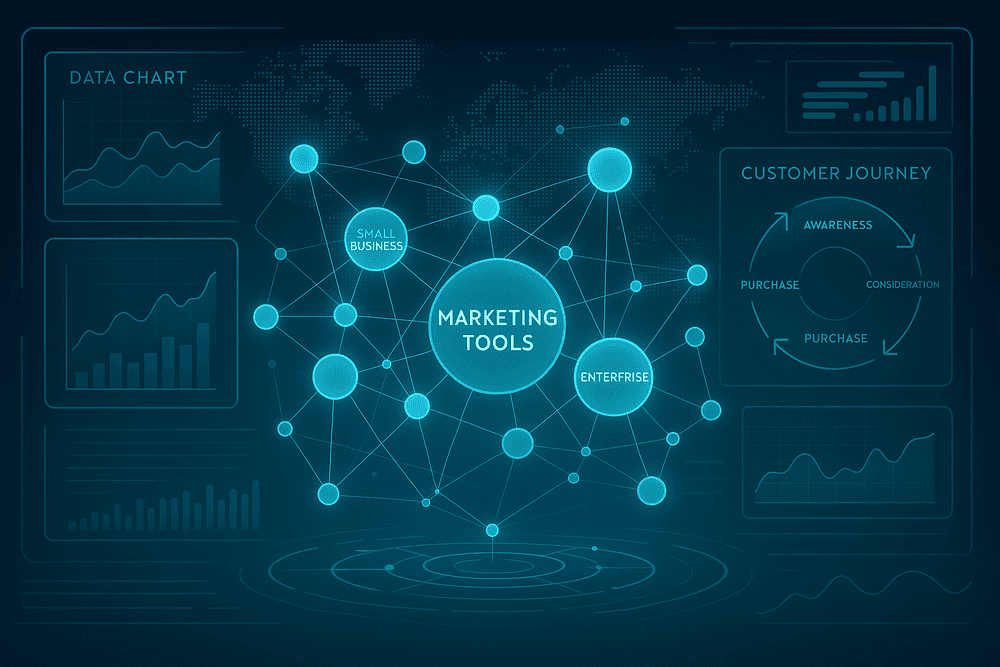
Navigating the landscape of AI marketing automation tools can feel overwhelming. The right platform can revolutionize your strategy, while the wrong one can be a costly mismatch. The key is to align a tool's capabilities with your specific business needs, team size, and long-term goals. Let's break down the market to help you identify the perfect solution.
For Small Businesses: Cost-Effective & Scalable Solutions
For small and medium-sized businesses (SMBs), the best AI marketing automation tools are those that deliver powerful features without a steep learning curve or an enterprise-level price tag. The focus here is on efficiency and growth. Look for platforms that automate core tasks like email marketing, social media scheduling, and basic lead nurturing with an AI-powered twist.
Key features for SMBs include AI-driven email send-time optimization, content suggestions for social posts, and simplified customer segmentation. These tools should grow with you, offering scalable pricing plans that unlock more advanced features as your business expands. The goal is to get a robust, user-friendly platform that saves time and provides a clear return on investment.
For Enterprise Teams: Advanced Analytics and Integration Powerhouses
Enterprise-level organizations have a different set of challenges. They manage vast amounts of customer data, operate across multiple channels, and require deep integrations with existing systems like CRM, ERP, and business intelligence platforms. For them, the leading AI marketing automation tools are powerhouses of advanced analytics and complex workflow orchestration.
These platforms leverage AI for predictive lead scoring, multi-touch attribution modeling, and hyper-personalized customer journey mapping. They can forecast campaign outcomes, identify high-value customer segments with precision, and automate sophisticated, cross-channel campaigns at scale. Security, compliance, and extensive API access are non-negotiable features for this tier.
Niche vs. All-in-One: Which Platform Type is Right for You?
Your choice between a specialized niche tool and a comprehensive all-in-one platform depends entirely on your existing tech stack and strategy.
- All-in-One Platforms: These solutions aim to be the central hub for all your marketing activities—from CRM and email to social media and analytics. The primary benefit is a unified data source and a seamless user experience. This is ideal for teams looking to consolidate their tools and create a single view of the customer.
- Niche Tools: These are best-in-class solutions that excel at one specific function, such as AI-powered copywriting, advanced analytics, or chatbot automation. If you already have a solid marketing stack but want to enhance a specific area, integrating a niche tool can provide superior functionality without replacing your entire system.
Feature Face-Off: Personalization, Analytics, and Lead Scoring
When evaluating different AI marketing automation tools, three features stand out as game-changers:
- Personalization: AI takes personalization far beyond simple name tokens. It enables dynamic content that changes based on user behavior, predictive product recommendations, and messages triggered by real-time actions, ensuring every interaction feels relevant and timely.
- Analytics: Gone are the days of purely historical reporting. AI-powered analytics can forecast future trends, identify which channels will deliver the highest ROI, and uncover hidden patterns in customer data to inform your entire marketing strategy.
- Lead Scoring: Traditional lead scoring relies on static, rule-based points. AI transforms this with predictive scoring models that learn from actual sales outcomes. The system automatically identifies the attributes of leads most likely to convert, allowing your sales team to focus its efforts with incredible accuracy.
Must-Have Features of Modern AI Marketing Automation Tools
Not all platforms are built the same. While basic automation can handle simple, repetitive tasks, true ai marketing automation tools offer a suite of intelligent features that transform your strategy from reactive to predictive. When evaluating your options, these are the non-negotiable capabilities that separate the game-changers from the merely convenient, empowering you to work smarter, not harder.
Harnessing Predictive Analytics for Lead Scoring
Move beyond the limitations of manual, rule-based scoring. Predictive lead scoring is a cornerstone feature where AI analyzes vast datasets—including demographic information, on-site behavior, and historical engagement—to identify patterns that signal a high likelihood to convert. Instead of just assigning points for an email open or a form fill, the AI understands the nuanced journey of your best customers and finds new leads who mirror that behavior. This allows your sales team to stop chasing cold leads and focus their energy exclusively on prospects who are primed for a conversation, dramatically increasing efficiency, shortening the sales cycle, and improving sales-marketing alignment.
Automating Hyper-Personalized Content Delivery at Scale
Personalization today means more than just using a contact's first name in an email. Modern ai marketing automation tools enable hyper-personalization by dynamically tailoring every touchpoint to the individual user. AI algorithms analyze real-time behavioral data to deliver the right message, on the right channel, at the perfect moment. This could mean changing website content based on a visitor's industry, sending a follow-up email with product recommendations based on their browsing history, or customizing a mobile push notification triggered by their location. Accomplishing this level of one-to-one communication for thousands of customers is impossible manually, but AI makes it a seamless, automated reality that builds deeper customer relationships and boosts lifetime value.
Optimizing Ad Spend with AI-Powered Bid Management
Are you getting the most out of your advertising budget? AI-powered bid management takes the guesswork and manual labor out of paid campaigns. These systems continuously analyze performance data across platforms like Google Ads and Meta, adjusting bids in real-time to maximize your Return on Ad Spend (ROAS). The AI considers hundreds of signals—such as time of day, user device, location, and conversion probability—to determine the optimal bid for every single impression. This automated process not only saves countless hours of manual adjustments but also uncovers optimization opportunities a human analyst might miss, ensuring your budget is allocated with surgical precision to drive the best possible results and lower your customer acquisition costs.
Streamlining Social Media with Intelligent Scheduling and Curation
A powerful social media presence requires consistency and relevance. Top-tier ai marketing automation tools elevate your social strategy by moving beyond simple post scheduling. Intelligent scheduling analyzes your specific audience’s engagement patterns to identify the absolute best times to post for maximum visibility and interaction on each platform. Furthermore, AI-powered content curation can scan the web for relevant articles and trending topics that your audience will find valuable, helping you fill your content calendar with engaging material. Some tools even use generative AI to help draft compelling captions and suggest relevant hashtags, transforming social media management from a daily chore into a streamlined, high-impact function.
Real-World Success: Use Cases for AI Marketing Automation Tools
The true power of any technology lies in its practical application. While the features of AI marketing automation tools are impressive on paper, their real-world impact is what drives adoption. From B2B giants to nimble e-commerce startups, companies are leveraging AI to solve core marketing challenges, drive revenue, and build stronger customer relationships. Let’s explore a few powerful use cases that demonstrate tangible results.
Case Study: How a B2B Firm Doubled Lead Quality with AI Nurturing
The Challenge: A mid-sized SaaS company, "Innovate Solutions," was facing a common problem: their marketing efforts generated a high volume of leads, but the sales team was overwhelmed trying to sift through them. Time was wasted on prospects who weren't ready to buy, while genuinely interested leads often went cold due to slow follow-up. Their manual nurturing process was generic and ineffective.
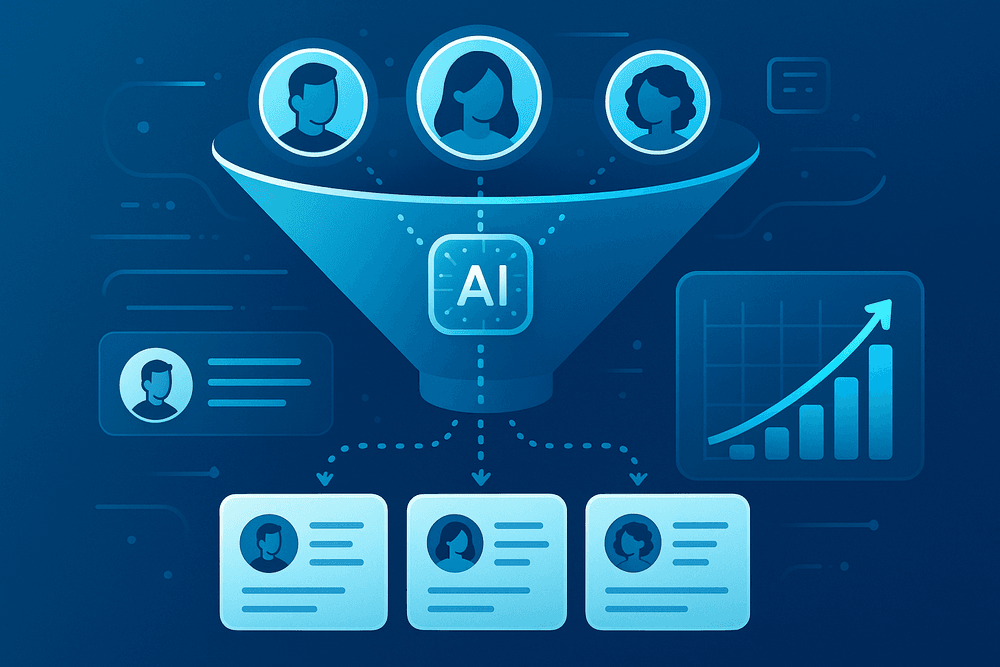
The Solution: Innovate Solutions integrated a sophisticated AI marketing automation platform. The tool’s predictive lead scoring model analyzed dozens of data points in real-time—including website engagement, content downloads, and email interaction—to assign a "sales-readiness" score to each lead. More importantly, it powered an AI nurturing engine that delivered hyper-personalized email sequences. If a lead read a blog post about a specific feature, the AI would automatically send them a relevant case study or webinar invitation on that topic.
The Result: Within six months, the quality of marketing-qualified leads (MQLs) sent to the sales team doubled. Because sales reps were only engaging with well-informed, high-intent prospects, the sales cycle was shortened by 30%, and the close rate increased significantly.
E-commerce Spotlight: Boosting Customer Lifetime Value with AI Recommendations
The Challenge: An online fashion retailer, "Luxe & Bloom," struggled with low repeat purchase rates. Their customer acquisition costs were high, and their generic "you might also like" product recommendations were falling flat. They needed a way to re-engage past buyers and increase their overall customer lifetime value (CLV).
The Solution: By implementing one of the market-leading AI marketing automation tools with a powerful recommendation engine, Luxe & Bloom transformed its customer experience. The AI analyzed each user's complete history—past purchases, browsing behavior, items added to the cart, and even products they hovered over. It then cross-referenced this data with trends from thousands of other shoppers to make uncannily accurate predictions about what each individual customer would want to buy next.
The Result: These hyper-personalized recommendations were deployed across the website, in abandoned cart emails, and in post-purchase follow-ups. Luxe & Bloom saw a 25% increase in repeat purchases and a 15% lift in average order value, fundamentally improving their profitability.
From Manual to Automated: Generating and Qualifying Leads 24/7
For many businesses, the top of the funnel is a constant bottleneck. Manually qualifying leads from contact forms is slow, subjective, and simply doesn't scale. This is where AI marketing automation tools create a non-stop, intelligent lead-capturing machine.
AI-powered chatbots can now engage website visitors 24/7, answering common questions and collecting crucial information in a conversational way. As soon as that information is captured, the AI gets to work. It instantly enriches the lead data and scores it against the company’s Ideal Customer Profile (ICP) and intent signals. A high-scoring lead—like a director from a target company visiting the pricing page—can be automatically routed to the right sales rep’s calendar for an immediate booking. A lower-scoring lead is automatically placed into a long-term nurturing track, ensuring no opportunity is ever lost. This turns a slow, manual process into an efficient, always-on engine for business growth.
Best Practices for Integrating AI into Your Marketing Strategy
Adopting AI is more than just buying new software; it's about fundamentally enhancing your marketing engine. A strategic approach ensures you harness the full potential of AI without the common implementation headaches. The right ai marketing automation tools can transform your efforts, but only with a solid foundation. Follow these best practices to ensure a smooth and successful integration.
Start Small: Identifying the Best First Use Case for AI
The key to a successful AI journey is to walk before you run. Instead of attempting a complete overhaul of your marketing operations overnight, identify a single, high-impact area to serve as your pilot project. Look for tasks that are repetitive, data-heavy, and have a clear potential for improvement.
Excellent starting points include:
- Email Marketing: Use AI to automate subject line A/B testing or personalize send times for individual subscribers.
- Lead Scoring: Implement an AI model to more accurately predict which leads are most likely to convert, allowing your sales team to focus their efforts.
- Content Personalization: Start with a simple AI-powered recommendation engine on your blog or website.
By starting with a manageable project, you can demonstrate value quickly, build internal confidence, and gather crucial learnings that will inform your broader AI strategy.
Data is King: Preparing Your Data for a Seamless AI Integration
AI marketing automation tools are powered by data. The quality of your outputs—whether it's a predictive analysis or a personalized campaign—is directly dependent on the quality of your inputs. Before you integrate any new platform, you must get your data house in order.
Focus on these key data preparation steps:
- Cleanse Your Data: Remove duplicate entries, correct inaccuracies, and standardize formats across your databases (e.g., CRM, analytics platforms).
- Consolidate Sources: Ensure your key data sources are integrated and can communicate with each other. A unified customer profile is the goal.
- Ensure Accessibility: Make sure your chosen AI tool can easily and securely access the data it needs to function effectively.
Investing time in data hygiene is non-negotiable; it’s the bedrock upon which effective AI automation is built.
Measuring Success: Setting KPIs and Tracking the ROI of Automation
How will you know if your AI investment is paying off? You need to define success before you even begin. Establish clear, measurable Key Performance Indicators (KPIs) that align with your initial use case and broader business objectives. Vague goals like "improve marketing" won't cut it.
Instead, set specific KPIs such as:
- Increase email open rates by 15%
- Reduce cost-per-acquisition (CPA) by 20%
- Improve marketing qualified lead (MQL) to sales qualified lead (SQL) conversion rate by 10%
- Decrease time spent on campaign reporting by 5 hours per week
Regularly track these metrics to calculate the Return on Investment (ROI) of your AI tools. This data-driven approach not only justifies the expenditure but also helps you identify what's working and where to optimize.
Avoiding Common Pitfalls in Your AI Implementation Journey
Many organizations stumble when adopting AI. Being aware of the common pitfalls can help you navigate the process more effectively. Watch out for:
- Lack of a Clear Strategy: Don't adopt an AI tool just for the sake of it. Ensure it solves a specific problem and aligns with your marketing goals.
- Ignoring the Human Element: AI is a powerful assistant, not a replacement for your team's creativity and strategic insight. Provide proper training and foster a culture where marketers work with AI.
- Data Privacy Negligence: Always prioritize data security and compliance with regulations like GDPR and CCPA. Vet your ai marketing automation tools for their security features and data handling policies.
- Unrealistic Expectations: AI is not a magic wand. It requires time to learn from your data, and its models need to be tweaked and refined for optimal performance. Be patient and embrace an iterative process.
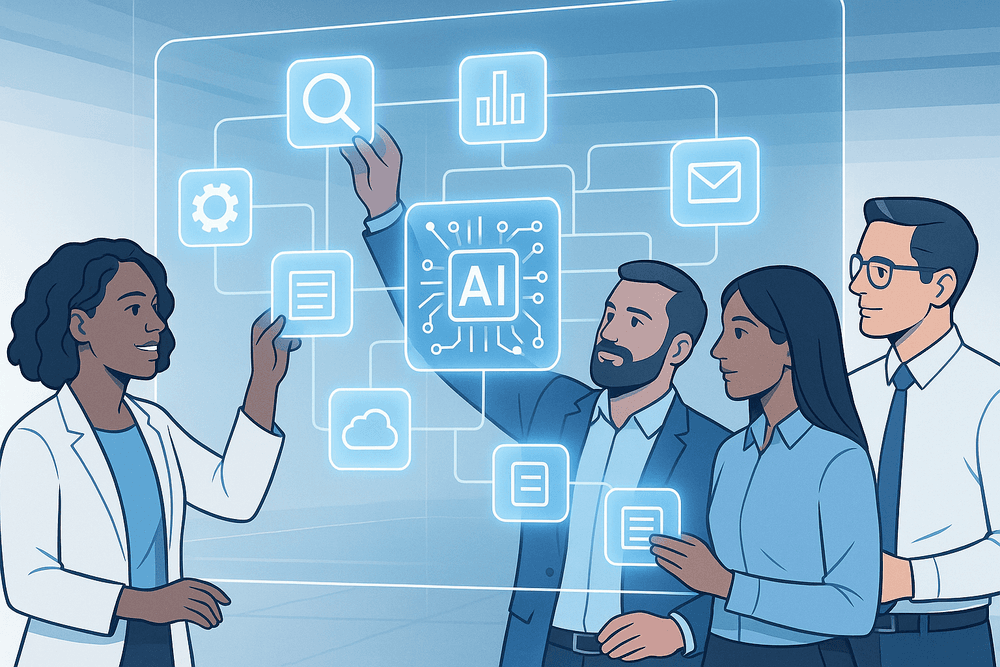
The Future is Automated: Your Next Steps with AI Marketing Tools
You’ve seen the power, the potential, and the proof. The shift to AI-driven marketing isn’t a distant trend; it’s the new standard for efficiency and growth. But knowing the "what" is only half the battle. The "how" is what separates the leaders from the laggards. This final section provides a clear roadmap to help you select the right platform, prepare your team, and take your first confident steps into an automated future.
Making Your Choice: A Final Checklist for Selecting the Right Tool
Choosing from the vast landscape of ai marketing automation tools can feel daunting. Use this final checklist to cut through the noise and zero in on the solution that truly fits your business.
- ✅ Core Problem Solved: Does the tool directly address your most significant marketing bottleneck? Whether it's lead scoring, content creation, or customer segmentation, ensure its primary function aligns with your primary need.
- ✅ Seamless Integration: Will it play well with your existing tech stack? Check for native integrations with your CRM, analytics platforms, and other essential software to avoid creating data silos.
- ✅ Scalability for Growth: Consider your five-year plan. Can the tool’s features and pricing structure grow with your company, or will you be forced to switch platforms down the line?
- ✅ Intuitive User Experience (UX): A powerful tool is useless if your team can't use it. Is the interface clean and logical? Request a demo to gauge the learning curve for your team.
- ✅ Robust Support and Training: What happens when you hit a snag? Look for comprehensive onboarding, accessible customer support, and a rich knowledge base (tutorials, webinars, etc.) to ensure a smooth adoption process.
Preparing Your Team for an AI-Powered Future
The most advanced technology will fail without the right people and processes behind it. Preparing your team for this transition is just as critical as choosing the software itself.
First, frame the narrative correctly. Communicate that AI is a tool to augment human creativity, not replace it. These platforms handle the repetitive, data-heavy tasks, freeing up your marketers to focus on strategy, brand building, and complex problem-solving.
Next, invest in education. Don't just hand over the login credentials. Organize structured training sessions, provide access to online courses, and establish an internal "AI champion"—an enthusiastic team member who can act as a go-to resource for others.
Finally, set clear expectations and goals. Define what success with the new tool looks like. Is it a 15% increase in qualified leads? A 20% reduction in time spent on content scheduling? By establishing measurable KPIs, you create a clear benchmark for success and demonstrate the tangible value of the new technology to the entire team.
Ready to Automate? Here's How to Get Started Today
Feeling inspired? Don't wait. Momentum is key. Follow these simple, actionable steps to begin your AI marketing journey right now.
- Start Small, Win Big: Resist the urge to automate everything at once. Identify one specific, high-impact but low-risk process. A great starting point could be automating your welcome email sequence for new subscribers or using an AI-powered scheduler for social media posts.
- Activate a Free Trial: Nearly all leading ai marketing automation tools offer a free trial or a live demo. Sign up for one or two of your top contenders and use your checklist to evaluate them in a real-world environment.
- Run a Pilot Project: Connect a small, segmented portion of your data and launch a pilot campaign. For example, A/B test an AI-generated email subject line against one written by your team, or use predictive analytics to target a specific customer segment with a personalized offer.
- Analyze, Learn, and Iterate: Review the results from your pilot. What worked? What insights did the AI uncover? Use this initial data to refine your approach and build a business case for a wider, more strategic rollout.