
September 22, 2025
An Introduction to AI Marketing Automation
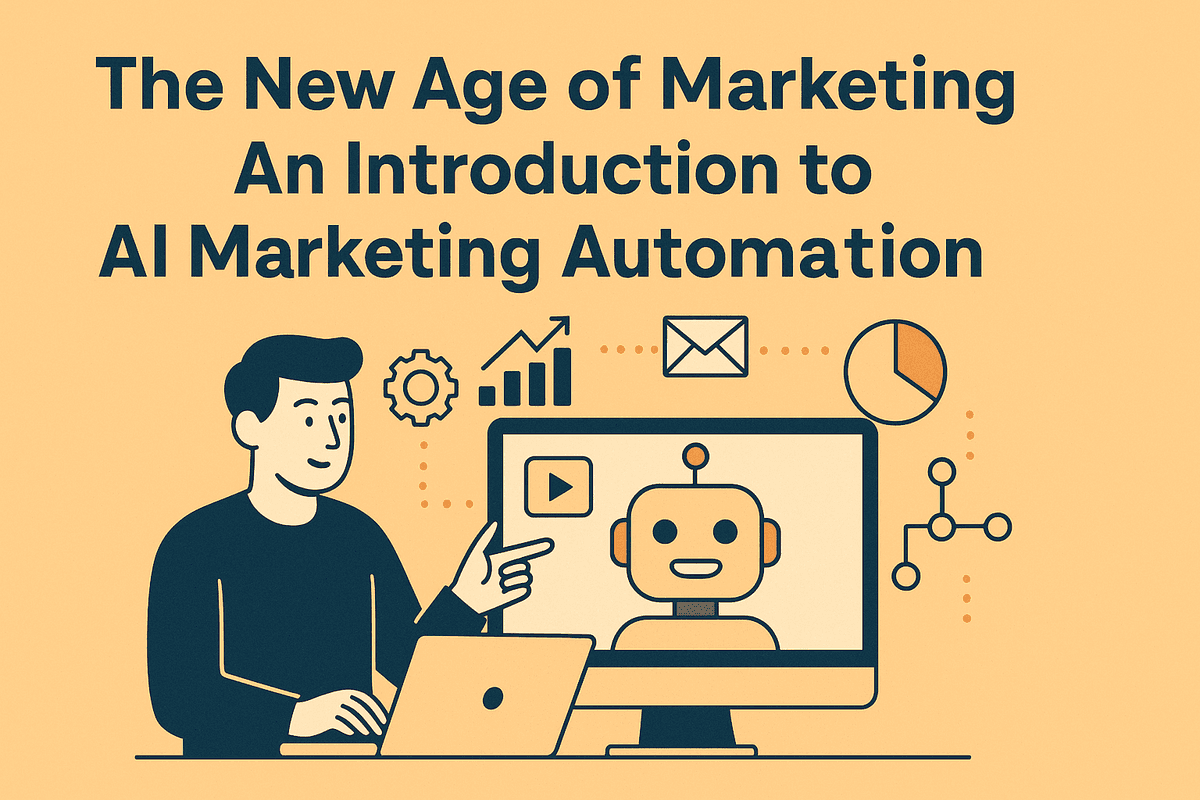
The New Age of Marketing: An Introduction to AI Marketing Automation
Welcome to the next frontier of digital marketing. For years, automation has been a buzzword, promising to save time and streamline repetitive tasks. But today, a more powerful force is reshaping the landscape entirely. We’re moving beyond simple, pre-programmed workflows into an era of intelligent, adaptive, and predictive strategy, all thanks to AI marketing automation.
What is AI Marketing Automation, and How Does It Work?
At its core, traditional marketing automation uses rule-based logic ("if a user does X, then send them email Y") to execute tasks. It’s a powerful tool for efficiency, but it's fundamentally rigid.
AI marketing automation infuses this process with intelligence. Instead of just following pre-set commands, it leverages artificial intelligence, machine learning, and data analysis to make decisions in real-time. It’s the difference between a simple calculator and a supercomputer.
Here’s how it works:
- Data Ingestion: AI systems absorb vast amounts of data from multiple sources—your CRM, website analytics, social media engagement, purchase history, and even third-party data.
- Intelligent Analysis: Machine learning algorithms sift through this data to identify patterns, predict future behavior, and understand customer intent on a deeply individual level.
- Autonomous Action: Based on this analysis, the system autonomously triggers the most effective action. This could mean sending a hyper-personalized email at the exact moment a customer is most likely to open it, recommending the perfect product, or adjusting ad spend to target the most valuable audiences.
Think of it as having a team of data scientists and strategists working 24/7 to optimize every single customer interaction.
From Manual to Autonomous: The Evolution of Marketing Workflows
The journey of marketing workflows illustrates just how revolutionary this shift is.
- The Manual Era: Marketers relied on spreadsheets, manual email blasts, and gut feelings. This approach was time-consuming, prone to error, and impossible to scale effectively.
- The Rule-Based Automation Era: This was a massive leap forward. Marketers could build automated email sequences, schedule social media posts, and score leads based on simple criteria. It brought efficiency, but personalization was often superficial and based on broad segments.
- The Autonomous Era: Today, AI marketing automation ushers in an age of dynamic, self-optimizing workflows. Instead of a rigid, one-size-fits-all customer journey, AI creates millions of unique paths simultaneously. It can predict customer churn and intervene, identify which content will resonate most with a specific individual, and optimize campaign elements on the fly for maximum impact.
Why AI is No Longer Optional for a Competitive Marketing Strategy
In today’s hyper-competitive digital marketplace, consumers are inundated with messages. They don’t just appreciate personalization; they expect it. Generic, one-to-many communication is no longer effective.
Trying to deliver true, 1:1 personalization at scale using manual or rule-based systems is simply not feasible. The sheer volume of data and the complexity of customer behavior are beyond human capacity to manage in real-time. This is where AI marketing automation becomes a non-negotiable competitive advantage.
Businesses that leverage AI can:
- Understand Customers Deeper: Move beyond basic demographics to understand intent and context.
- Boost Efficiency: Free up marketing teams from tedious analysis to focus on creativity and high-level strategy.
- Increase ROI: Optimize ad spend, improve conversion rates, and increase customer lifetime value through smarter, data-driven decisions.
Ignoring AI is like choosing to navigate with a paper map in the age of GPS. While you might eventually reach your destination, your competitors will have already gotten there faster, more efficiently, and with a far better understanding of the terrain. Adopting an AI marketing automation strategy is no longer about getting ahead—it’s about not getting left behind.
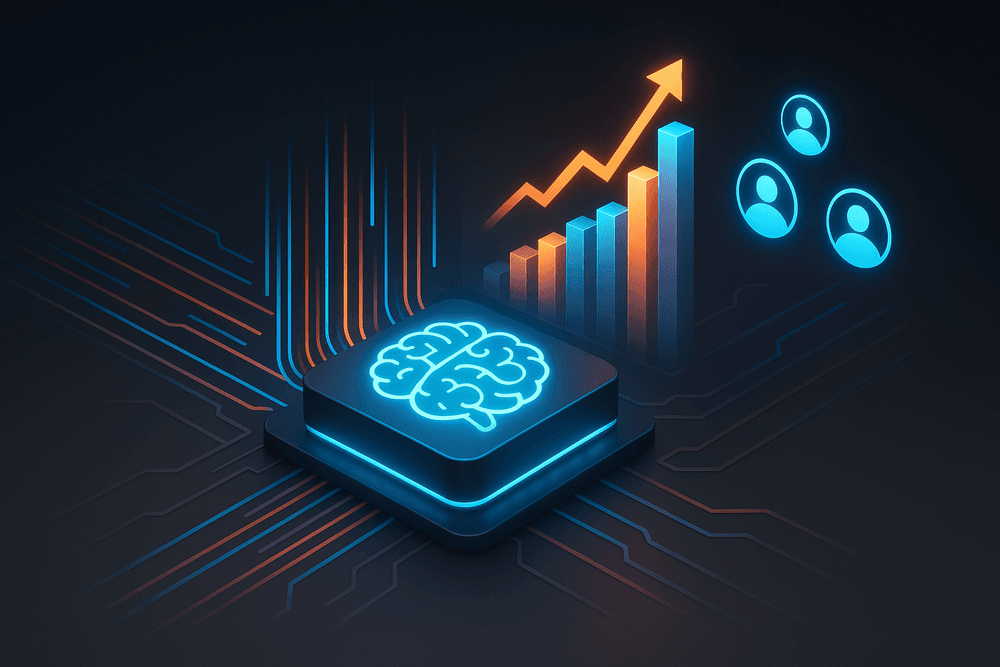
Core Benefits: How AI Marketing Automation Drives Unprecedented ROI
Traditional marketing automation saves time, but AI marketing automation fundamentally changes what’s possible. It’s not just about scheduling emails; it’s about creating intelligent, self-optimizing systems that deliver tangible business growth. By infusing artificial intelligence into your marketing stack, you can unlock a level of efficiency, personalization, and foresight that directly translates into a higher return on investment. Let’s explore the core benefits that make this technology a game-changer.
Achieve Hyper-Personalization at Scale
In a crowded market, generic messaging is ignored. Customers now expect experiences tailored specifically to them, but manually creating unique journeys for thousands of individuals is impossible. This is where AI excels. By analyzing vast amounts of data—including browsing behavior, purchase history, and real-time interactions—AI marketing automation platforms can build a dynamic, 360-degree view of each customer.
This allows you to:
- Deliver 1:1 Product Recommendations: Suggest products a customer is genuinely likely to buy.
- Customize Website Content: Dynamically change headlines, images, and offers based on who is visiting.
- Orchestrate Adaptive Email Journeys: Send messages triggered by individual actions, not rigid, pre-set schedules.
This level of hyper-personalization forges stronger customer relationships, significantly boosts engagement, and drives higher conversion rates.
Boost Efficiency with Predictive Lead Scoring and Analytics
Are your sales and marketing teams aligned? Often, a major point of friction is lead quality. Sales teams waste valuable time chasing prospects who aren’t ready to buy, while marketing struggles to prove its impact. Predictive lead scoring, a cornerstone of AI marketing automation, solves this problem.
Instead of relying on simple demographic or firmographic data, AI algorithms analyze thousands of data points to identify the behaviors and attributes of your most successful customers. The system then scores new leads based on their likelihood to convert. This data-driven approach allows your sales team to confidently prioritize their efforts on the hottest leads, dramatically shortening the sales cycle and increasing close rates.
Optimize Campaign Performance with Real-Time Data Analysis
The days of "set it and forget it" campaigns are over. To maximize ROI, you need to be agile. AI-powered analytics act as a 24/7 campaign strategist, constantly monitoring performance and uncovering insights that a human analyst might miss. The system can identify which ad creatives are resonating with specific audience segments, predict which channels will deliver the best results, and even alert you to emerging trends or performance dips in real time.
This capability empowers you to make rapid, data-backed decisions. You can reallocate your budget to top-performing assets on the fly, A/B test campaign elements with machine-learning precision, and continuously refine your strategy to ensure every marketing dollar is working as hard as it possibly can.
Reduce Churn with AI-Powered Customer Retention Strategies
Acquiring a new customer can cost five times more than retaining an existing one. Yet, many businesses only react after a customer has already left. AI marketing automation flips the script by enabling proactive, predictive retention.
AI models analyze customer health scores by tracking subtle shifts in behavior, such as decreased app usage, fewer logins, or a drop in engagement. When the system flags a customer as an "at-risk," it can automatically trigger a retention workflow. This could be a personalized email with a special offer, a helpful tutorial to re-engage them, or an alert for a customer success manager to reach out personally. By identifying and addressing potential churn before it happens, you can protect your revenue and build a more loyal customer base.
Top AI Marketing Automation Tools and Platforms for 2024
Selecting the right platform is the most critical step in harnessing the power of ai marketing automation. The market is filled with options, from all-in-one giants to specialized tools, each offering unique AI capabilities. Here’s a breakdown of the leading platforms to help you navigate the landscape and find the perfect fit for your business.
Comparing the Leaders: HubSpot vs. Salesforce Einstein
For businesses seeking a comprehensive solution, HubSpot and Salesforce are the undisputed titans. While both offer robust automation, their AI approaches cater to different needs.
- HubSpot's AI Platform: HubSpot has seamlessly integrated AI tools across its Marketing, Sales, and Service Hubs, making it an incredibly accessible choice for SMBs and mid-market companies. Its key features include an AI Content Assistant for generating copy, predictive lead scoring to prioritize high-value prospects, and AI-powered chatbots that offer 24/7 support. HubSpot’s strength lies in its user-friendly interface that democratizes powerful ai marketing automation without requiring a dedicated data science team.
- Salesforce Einstein: As the AI layer for the entire Salesforce ecosystem, Einstein is an enterprise-grade powerhouse built for complex data environments. It excels at deep analysis and large-scale personalization. Standout features include Einstein Engagement Scoring, which predicts how likely a customer is to engage with an email, Einstein Send Time Optimization to maximize open rates, and predictive journey splits in Marketing Cloud to dynamically guide customers down the most effective path. Einstein is the go-to for large organizations that need to leverage vast amounts of customer data.
AI-Powered Email Marketing: Klaviyo and Mailchimp's AI Features
Email marketing remains a core channel, and AI has made it smarter than ever. Klaviyo and Mailchimp lead the pack with AI features tailored for impactful communication.
- Klaviyo: The dominant force in e-commerce, Klaviyo uses AI to drive revenue. Its platform offers predictive analytics that can forecast a customer's next order date, churn risk, and lifetime value. This allows for hyper-targeted segmentation and proactive retention campaigns. Its AI-driven product recommendations are essential for creating personalized shopping experiences directly within emails.
- Mailchimp: While known for its simplicity, Mailchimp has invested heavily in AI to empower small businesses. Its Content Optimizer analyzes email copy and suggests improvements based on industry best practices. The Creative Assistant generates custom-branded designs in seconds, while its send-time optimization and subject line helpers use data to boost engagement.
How to Choose the Right AI Tool for Your Business
The best ai marketing automation tool is the one that aligns with your specific context. Consider these factors before making a decision:
Assess Your Business Size and Goals
Are you a startup focused on lead generation, or a global enterprise aiming for sophisticated customer retention? Your scale and primary objectives will point you toward the right solution. A small e-commerce shop will thrive with Klaviyo, while a B2B corporation will benefit from Salesforce Einstein's depth.
Evaluate Integration Capabilities
Your marketing automation platform doesn't exist in a vacuum. Ensure your chosen tool integrates seamlessly with your existing tech stack, including your CRM, e-commerce platform, analytics tools, and other essential software. Poor integration creates data silos and defeats the purpose of automation.
Consider Scalability
Choose a platform that can grow with you. Review the different pricing tiers and feature sets. Does the platform offer the advanced capabilities you’ll need in two or three years? A scalable solution prevents costly and disruptive migrations down the road.
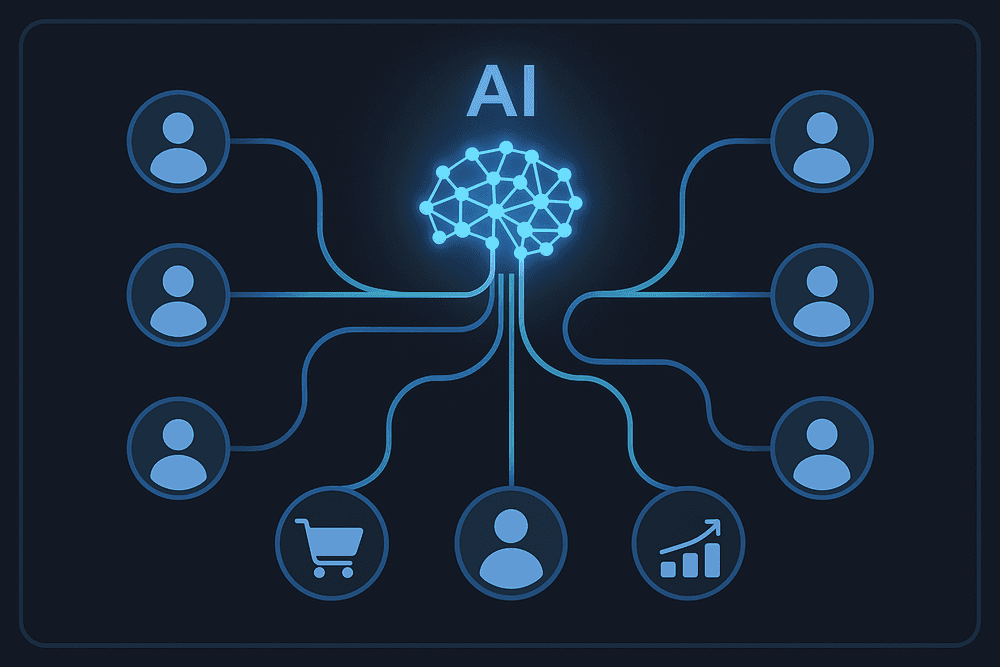
AI Marketing Automation in Action: Powerful Real-World Use Cases
Theory is one thing, but results are what truly matter. The transformative power of AI marketing automation comes to life when you see how businesses are using it to solve complex challenges and drive tangible growth. Let’s explore four powerful use cases that demonstrate how this technology is reshaping the marketing landscape.
Case Study: How an E-commerce Brand Lifted Conversions by 35%
An online fashion retailer was struggling with a classic problem: high cart abandonment rates and generic post-purchase follow-ups. By implementing an AI marketing automation platform, they completely overhauled their customer journey.
The AI began analyzing real-time user behavior, tracking everything from clicks and viewed products to time spent on a page. This data fueled a hyper-personalized communication strategy.
- Predictive Cart Abandonment: Instead of sending a generic "You left something behind!" email 24 hours later, the AI identified users most likely to abandon their cart and triggered an immediate, personalized on-site pop-up with a small, time-sensitive shipping discount.
- AI-Powered Recommendations: Post-purchase emails were transformed from simple receipts into curated lookbooks. The AI recommended products that complemented the recent purchase based on the buying patterns of thousands of similar customers, significantly increasing cross-sell and upsell opportunities.
The result? The brand achieved a 35% increase in conversions from recovered carts and follow-up campaigns within six months, alongside a significant boost in customer lifetime value.
Automating B2B Lead Nurturing with Smart Drip Campaigns
For B2B companies with long sales cycles, keeping leads warm without fatiguing them is a constant battle. A mid-sized tech firm replaced its static, one-size-fits-all drip campaign with an AI-driven nurturing workflow.
Their new AI marketing automation system dynamically scores leads based on their engagement—website visits, content downloads, webinar attendance, and email interactions. The AI then personalizes the entire nurturing path for each lead:
- High-Intent Leads: A prospect who downloads a pricing sheet and visits the case study page is instantly flagged as "sales-ready." The AI automatically alerts a sales rep and sends a personalized email from their account offering a one-on-one demo.
- Low-Intent Leads: A lead who only downloaded a top-of-funnel eBook continues to receive educational content, like blog posts and industry reports, tailored to their specific interests, keeping them engaged until their behavior signals a higher intent.
This intelligent automation ensures the sales team only engages with the hottest leads, resulting in a 50% increase in marketing-qualified leads (MQLs) and a shorter overall sales cycle.
Dynamic Content Optimization for SaaS Onboarding
Customer churn is the enemy of any SaaS business, and it often starts with a poor onboarding experience. A project management SaaS platform used AI marketing automation to create a dynamic and adaptive onboarding process.
Instead of forcing every new user through the same linear tutorial, the AI monitors in-app behavior from the moment of sign-up. Based on the features a user engages with first, the system personalizes the entire experience:
- It serves up contextual tooltips and short video guides relevant to the specific tasks the user is trying to accomplish.
- If a user appears to be struggling with a key feature, the AI can trigger an automated email with a link to a helpful knowledge base article or invite them to a live onboarding webinar.
This personalized guidance helps users achieve their "aha!" moment faster, dramatically increasing feature adoption and reducing churn in the critical first 30 days.
Personalizing Ad Creative and Copy Across Channels
Running paid ad campaigns across multiple channels can feel like a guessing game. An international travel company leveraged an AI platform to automate and personalize its ad creative at scale. The AI system analyzed audience data and generated hundreds of ad variations by mixing and matching different headlines, images, calls-to-action, and promotional offers.
The platform then launched these micro-targeted campaigns across Facebook, Instagram, and Google. It continuously monitored performance in real-time, automatically reallocating budget to the top-performing ad combinations for each specific audience segment. An ad for "adventure travel" shown to a 25-year-old in Colorado featured hiking imagery, while an ad for the same destination shown to a 55-year-old in Florida highlighted relaxing beach resorts. This level of granular optimization, impossible to manage manually, led to a 40% increase in return on ad spend (ROAS).
Best Practices for Implementing Your AI Marketing Automation Strategy
Transitioning to an AI-powered strategy is more than just flipping a switch on new software. A successful implementation requires a thoughtful approach grounded in solid fundamentals. By following these best practices, you can ensure your investment in ai marketing automation delivers transformative results and a significant return.
Start with Clean Data: The Foundation of AI Success
The old adage "garbage in, garbage out" has never been more relevant. Artificial intelligence is only as intelligent as the data it learns from. To unlock the full potential of your ai marketing automation platform, you must feed it high-quality, accurate, and well-structured data. Inaccurate or incomplete customer profiles will lead to flawed predictions, mistargeted personalization, and ultimately, wasted resources.
Before you begin, conduct a thorough data audit. This involves:
- Cleaning and De-duplicating: Remove duplicate contacts and correct inaccuracies in your CRM and other databases.
- Standardizing Formats: Ensure data points like names, dates, and locations follow a consistent format across all systems.
- Enriching Profiles: Integrate data from multiple sources (e.g., website behavior, purchase history, support interactions) to create a comprehensive 360-degree view of each customer.
Integrating AI Seamlessly with Your Existing Martech Stack
Your new AI tool shouldn't live on an island. To maximize its effectiveness, it must integrate seamlessly with your existing marketing technology (martech) stack. Disconnected systems create data silos, preventing your AI from accessing the complete picture of the customer journey.
Prioritize ai marketing automation solutions that offer robust, native integrations or flexible APIs to connect with your core platforms, such as your:
- Customer Relationship Management (CRM) system (e.g., Salesforce, HubSpot)
- E-commerce platform (e.g., Shopify, Magento)
- Analytics tools (e.g., Google Analytics)
- Content Management System (CMS)
A well-integrated ecosystem ensures a free flow of data, enabling real-time personalization and automating workflows across your entire marketing and sales funnel.
Setting Clear KPIs to Measure AI Impact
How will you know if your AI strategy is working? You can't improve what you don't measure. Before implementation, establish clear Key Performance Indicators (KPIs) to benchmark your current performance and track the impact of AI over time. Vague goals like "improve marketing" are not enough.
Focus on specific, measurable metrics that align with your business objectives. Examples include:
- Conversion Rate: A 15% increase in lead-to-customer conversion.
- Customer Lifetime Value (CLV): A 10% rise in average CLV through AI-driven personalization and retention campaigns.
- Churn Rate: A 5% reduction in customer churn due to predictive analytics.
- Campaign ROI: An improved return on investment from more efficient ad spend and hyper-targeted campaigns.
Training Your Team to Work Alongside AI-Powered Systems
Implementing AI is not about replacing your marketing team; it's about empowering them. Your team’s role will evolve from tedious, manual execution to high-level strategic oversight. Provide comprehensive training to help your marketers understand how the new ai marketing automation systems work and how to interpret their insights.
Focus on upskilling them in areas like:
- Data Analysis: Understanding the "why" behind AI-driven recommendations.
- Strategic Planning: Using AI insights to build more creative and effective campaigns.
- System Oversight: Monitoring AI performance and making adjustments to optimize outcomes.
By fostering a collaborative environment where humans guide the strategy and AI handles the heavy lifting, you create a powerful synergy that drives unprecedented growth.

The Future is Automated: Your Next Steps with AI Marketing Automation
You've explored the what, why, and how of AI-powered marketing. Now, it's time to translate that knowledge into action. The journey towards a smarter, more efficient marketing engine begins with decisive next steps. This final section provides a quick-glance summary, highlights common challenges to sidestep, and offers a clear call-to-action to begin your transformation.
Key Takeaways: A Quick Summary for a Busy Marketer
Navigating the landscape of AI marketing automation can feel complex, but its core advantages are clear. If you remember nothing else, keep these points in mind:
- Hyper-Personalization at Scale: AI moves beyond simple name tokens. It enables you to deliver deeply personalized content, product recommendations, and messaging to every individual customer, automatically.
- Predictive Power Unlocks ROI: The true magic of AI in marketing is its ability to forecast trends, predict customer churn, identify high-value leads, and optimize ad spend before you waste a single dollar.
- Efficiency is the New Standard: By automating repetitive tasks like data analysis, audience segmentation, and content scheduling, your team is freed to focus on high-impact strategic work and creativity.
- It's a Strategic Shift, Not Just a Tool: Successfully implementing AI marketing automation requires a change in mindset. It’s about creating a data-driven culture that continuously learns and adapts.
Avoiding Common Pitfalls in Your AI Implementation
Embarking on your AI journey is exciting, but awareness of potential roadblocks can ensure a smoother transition. Watch out for these common pitfalls:
- Poor Data Quality: AI is only as smart as the data it's fed. "Garbage in, garbage out" is the golden rule. Before you implement any AI-powered solution, prioritize cleaning, organizing, and integrating your data sources. A unified customer profile is your foundation for success.
- Setting Unrealistic Expectations: AI is a powerful amplifier, not a magic wand. Expecting instant, revolutionary results overnight will lead to disappointment. A successful AI marketing automation strategy involves testing, learning, and iterative improvement over time.
- Neglecting the Human Element: The goal of automation is to empower your team, not replace it. AI excels at processing data and executing tasks, but it lacks human intuition, empathy, and creativity. The most successful strategies blend machine efficiency with human oversight and strategic direction.
- Choosing a Tool Before the Strategy: Don't let a flashy platform dictate your marketing goals. First, define what you want to achieve—whether it's improving lead scoring, reducing cart abandonment, or personalizing email campaigns. Then, find the AI tool that best solves that specific problem.
Ready to Transform Your Strategy?
The evidence is clear: AI marketing automation is no longer a futuristic concept but a present-day necessity for growth. By personalizing customer journeys, predicting outcomes, and streamlining your workflows, you can achieve a level of efficiency and effectiveness that was previously unimaginable. The time to act is now.
Are you ready to stop guessing and start knowing what your customers want?
[Your Call-to-Action Here]
Example CTA: Schedule a free, personalized demo of our AI marketing platform today and discover how to unlock the full potential of your marketing data.