
September 12, 2025
An Introduction to AI Training Modules
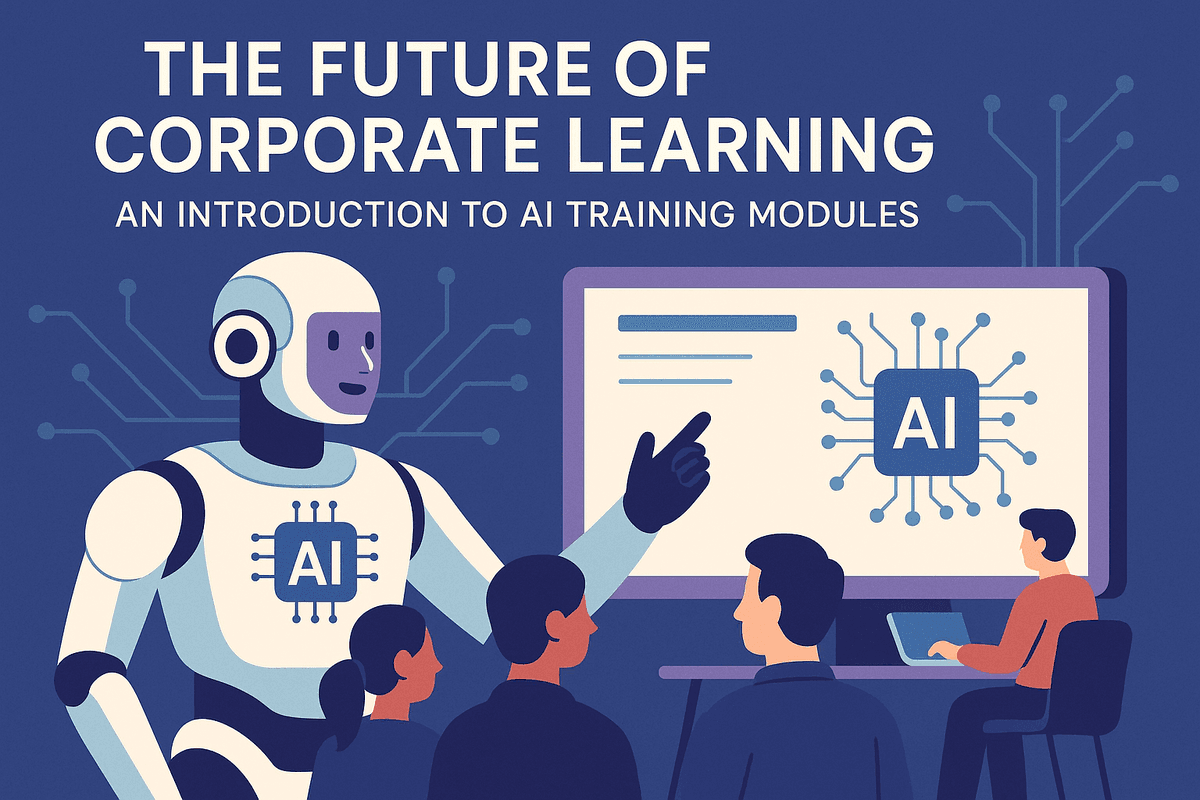
The Future of Corporate Learning: An Introduction to AI Training Modules
The corporate landscape is evolving at an unprecedented pace, and the way we train our workforce must evolve with it. The days of static, one-size-fits-all training sessions are numbered. Stepping into the spotlight is a transformative technology poised to redefine learning and development (L&D): AI training modules.
But what exactly are they? Far more than a simple digital course, an AI training module is an intelligent, adaptive learning system. Powered by technologies like machine learning (ML) and natural language processing (NLP), these platforms create a dynamic learning environment that tailors itself to each individual employee. They work by analyzing a user's performance, identifying knowledge gaps in real-time, and personalizing the content, pace, and difficulty to create a truly unique educational journey. Imagine a sales simulation that adjusts its objections based on the trainee's responses or a compliance module that focuses only on the regulations a specific employee needs to master.
Why Traditional Corporate Training is Falling Behind
For years, organizations have relied on classroom lectures, dense PDF manuals, and generic e-learning courses. While these methods served a purpose, they are fundamentally at odds with the needs of the modern, agile workforce. This traditional approach is falling behind for several key reasons:
- Lack of Personalization: A single curriculum for a diverse team means advanced employees are bored while others are left struggling to keep up.
- Low Engagement and Retention: Passive learning formats lead to what psychologists call the "forgetting curve," where employees forget the majority of what they learned within days.
- Scalability Issues: Updating and deploying traditional training across a large, distributed workforce is slow, expensive, and logistically complex.
- No Actionable Insights: It's incredibly difficult to measure true skill acquisition and ROI, leaving L&D leaders guessing about a program’s effectiveness.
The Key Benefits of Integrating AI Into Your L&D Strategy
Integrating AI training modules is more than just a technological upgrade; it's a strategic move that drives tangible business outcomes. By embracing this technology, organizations can unlock a powerful new level of efficiency and effectiveness.
- Hyper-Personalized Learning Paths: AI assesses each employee's skills and learning style to build a custom curriculum. This ensures everyone focuses on their specific needs, dramatically accelerating skill development and maximizing the value of training time.
- Enhanced Engagement and Retention: Through interactive simulations, gamified challenges, and instant, contextual feedback, AI training modules make learning an active, engaging experience. This hands-on approach significantly boosts knowledge retention and the ability to apply new skills on the job.
- Unmatched Scalability and Efficiency: Deploy consistent, high-quality training to thousands of employees at once, regardless of their location. Need to update a process or policy? The changes can be rolled out instantly, ensuring the entire organization is always up-to-date.
- Data-Driven Insights: Gain powerful analytics on learner progress, common challenges, and departmental skill gaps. This data empowers L&D teams to refine their strategy, prove the ROI of their programs, and align training directly with core business objectives.
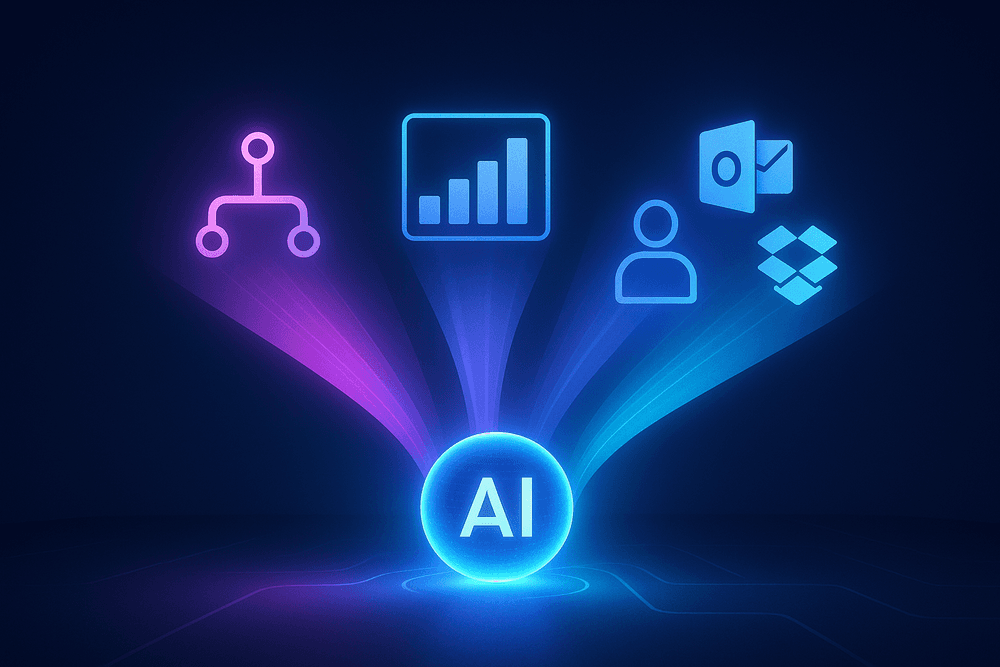
Core Features to Demand from Your AI Training Modules
Not all AI platforms are built the same. To truly revolutionize your corporate training, you need to look beyond the hype and demand specific, powerful capabilities. The most effective ai training modules are more than just digital content libraries; they are dynamic ecosystems designed to foster genuine skill development and deliver measurable business results. When evaluating solutions, ensure these four core features are at the top of your checklist to guarantee a strong return on your investment.
Hyper-Personalized Learning Journeys for Every Employee
The era of one-size-fits-all training is officially over. The primary hallmark of a premier AI learning platform is its ability to move beyond generic course catalogs and craft truly individualized learning paths. Instead of forcing every employee through the same linear content, the system assesses each person’s existing knowledge, current role responsibilities, and long-term career aspirations. Based on this rich data, the AI curates a unique curriculum, recommending specific courses, articles, and practical activities that are directly relevant to that individual. This level of personalization doesn't just boost engagement; it dramatically improves knowledge retention and practical application, ensuring every minute spent on training is a minute well invested.
Automated Skill Gap Analysis and Progress Tracking
How do you know what your team needs to learn to stay ahead? Top-tier ai training modules take the guesswork out of talent development. They utilize sophisticated algorithms to perform automated skill gap analysis, continuously comparing an employee's demonstrated competencies against the skills required for their current role and future growth opportunities. This provides L&D managers and team leaders with a real-time, data-driven map of the organization's strengths and weaknesses. Furthermore, the system tracks progress automatically as employees complete modules and assessments, offering clear visualizations of their development journey. This eliminates cumbersome manual tracking and provides actionable insights for performance reviews and strategic succession planning.
Engaging Learners with Interactive Simulations and Real-Time Feedback
Passive learning leads to poor outcomes. To truly master new skills, employees need to practice them in a safe, controlled environment. This is where AI-powered simulations shine. Insist on a platform that offers interactive scenarios tailored to your business functions—whether it’s navigating a complex sales negotiation, resolving a challenging customer support call, or making a critical leadership decision. The true power of these simulations lies in the AI’s ability to provide instant, contextual feedback. Like a dedicated virtual coach, the system can analyze a learner's choices, point out missteps, and suggest more effective approaches in real-time, dramatically accelerating the learning curve from theory to practical application.
Seamless Integration with Your Existing LMS and HRIS Platforms
Even the most advanced training tool will fail if it creates data silos and administrative headaches. A critical, non-negotiable feature is the ability for the ai training modules to integrate seamlessly with your existing corporate ecosystem. This means demanding robust APIs and pre-built connectors for your Learning Management System (LMS) and Human Resources Information System (HRIS). Proper integration ensures that training completion data, skill acquisitions, and competency levels flow directly into employee records. This creates a unified talent management strategy where learning directly informs performance management, career pathing, and overall business intelligence, making your training platform a strategic asset, not just another standalone tool.
How to Successfully Implement AI Training Modules in Your Organization
Transitioning to an AI-powered learning environment is more than just purchasing new software; it's a strategic initiative that requires a clear, phased approach. A well-planned implementation ensures you maximize your investment, drive employee adoption, and achieve tangible business outcomes. Follow these four essential steps to integrate AI training modules seamlessly into your organization's workflow.
Step 1: Assess Your Organization's Training Needs and Goals
Before you can build a solution, you must deeply understand the problem. The first step is a thorough audit of your organization's current skills landscape and future objectives. Don't jump into a platform search without first defining what success looks like.
Start by identifying specific knowledge and skill gaps. Are your sales teams struggling with a new CRM? Do your customer service agents need to improve their de-escalation techniques? Is there a company-wide need for better data literacy? Engage with department heads, managers, and employees through surveys and interviews to pinpoint the most critical areas for improvement.
Once you’ve identified these gaps, set clear, measurable goals. For example, a goal could be "Reduce new-hire onboarding time by 25% within six months" or "Increase product knowledge quiz scores by 15% post-training." This foundational analysis will guide your entire strategy, ensuring the AI training modules you eventually implement are targeted, relevant, and impactful.
Step 2: Choose the Right Platform for Customizable AI Training Modules
With your goals defined, you can now evaluate potential platforms. The market is filled with options, but the right choice depends on your specific needs for customization, scalability, and integration. Look for a solution that isn’t a one-size-fits-all product but a flexible framework.
Key features to prioritize include:
- Deep Customization: The platform must allow you to tailor content to your company’s unique brand voice, internal processes, and specific learning objectives. Generic modules are far less effective.
- Adaptive Learning Paths: A key benefit of AI is its ability to personalize the learning journey. The platform should adjust the difficulty and content based on an individual employee’s performance.
- Seamless Integration: Ensure the platform can integrate with your existing Learning Management System (LMS), HRIS, or other essential software to create a unified ecosystem.
- Robust Analytics: You need access to detailed data on employee progress, engagement rates, and knowledge retention to measure effectiveness and ROI.
Step 3: Pilot a Program and Gather Employee Feedback
Resist the urge to launch your new AI training modules to the entire company at once. A pilot program is a critical, low-risk step to work out any kinks and build momentum. Select a diverse group of employees from a specific department to be your test cohort.
This initial phase serves two purposes. First, it allows you to test the technical aspects and content in a controlled environment. More importantly, it’s your best opportunity to gather honest, qualitative feedback. Ask your pilot group about their experience: Was the platform intuitive? Did the content feel relevant and engaging? Did the AI-powered features genuinely enhance their learning? Use this feedback to refine the modules, adjust learning paths, and improve the user experience before a full-scale rollout.
Step 4: Measure ROI and Scale Your AI Training Initiatives
Once your pilot is complete and the program is refined, it's time to measure its success against the goals you set in Step 1. Your platform's analytics are your best friend here. Track key performance indicators (KPIs) like course completion rates, assessment scores, and time-to-proficiency.
Connect this learning data to real-world business metrics. Did the sales team that completed the training see a lift in their conversion rates? Has the customer support team’s average resolution time decreased? Quantifying this return on investment (ROI) builds a powerful business case for expanding the program.
With proven results and a refined system, you can confidently scale your AI training initiatives. Roll out the program to other departments in phases, using the lessons learned from your pilot to ensure each launch is smoother than the last. This iterative cycle of assessing, implementing, measuring, and scaling is the key to creating a sustainable and highly effective learning culture powered by AI.
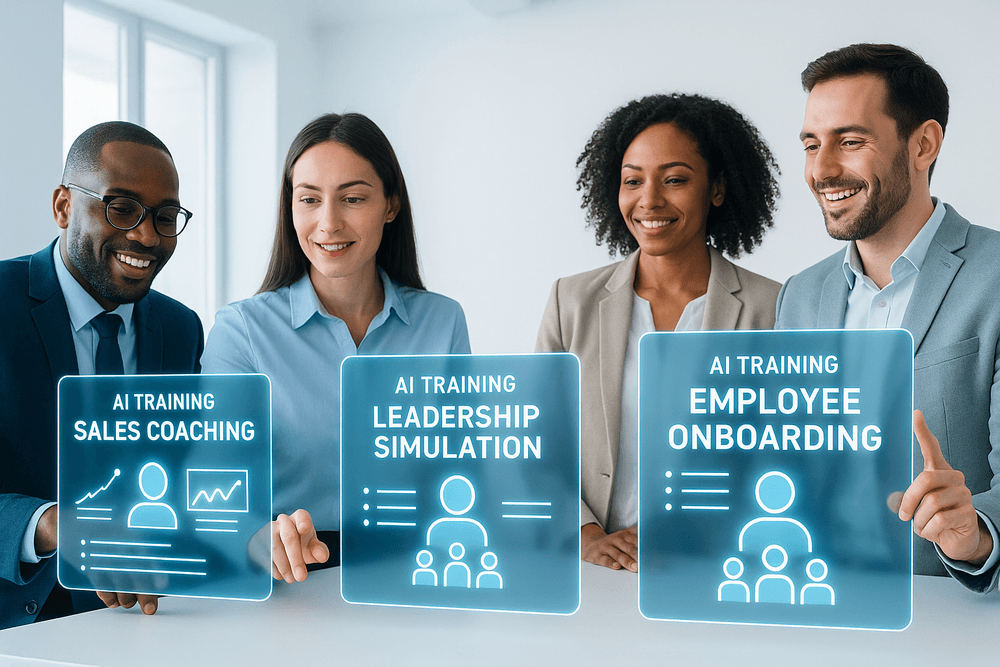
Real-World Use Cases: How Companies Leverage AI Training Modules
The theoretical benefits of artificial intelligence in corporate learning are compelling, but the real magic happens when these concepts are put into practice. Forward-thinking organizations are no longer just experimenting; they are actively deploying AI training modules to solve critical business challenges, transform their workforce, and gain a significant competitive edge. From day one of an employee's journey to the development of senior leaders, AI is reshaping what’s possible. Here’s how.
Onboarding New Hires Faster and More Effectively
Traditional onboarding can be a whirlwind of information overload, leaving new hires feeling overwhelmed and disengaged. Companies are now using AI training modules to create a personalized, streamlined experience. Instead of a one-size-fits-all document dump, an AI system can curate a unique learning path for each individual based on their role, department, and existing skill set.
Imagine an AI-powered chatbot available 24/7 to answer a new employee’s questions—from "Where do I find the benefits portal?" to "Can you explain our Q3 sales strategy again?" This immediate support accelerates their integration and reduces the burden on HR and team managers. The result is a new hire who feels supported, understands their role faster, and reaches full productivity in record time.
Upskilling Sales Teams with AI-Powered Coaching
A confident, well-prepared sales team is the lifeblood of any company. To sharpen their skills, businesses are turning to AI training modules that offer sophisticated role-playing and coaching simulations. Sales representatives can practice their pitch, handle difficult objections, and navigate complex negotiations with an AI avatar that mimics various customer personas—from the skeptical buyer to the enthusiastic prospect.
This AI coach provides instant, unbiased feedback on tone of voice, clarity, use of keywords, and even emotional sentiment. It identifies moments of hesitation or missed opportunities, allowing reps to practice and refine their approach in a safe, repeatable environment. This moves training from theoretical knowledge to practical mastery, directly boosting confidence and closing rates.
Automating Mandatory Compliance and Certification Training
Compliance training is essential but often seen as a tedious, check-the-box exercise. AI is making it smarter, more engaging, and far more efficient. AI training modules can adapt to each employee's knowledge level, testing them on key concepts and skipping material they have already mastered. This respects employees' time and keeps them focused on critical information.
For topics like data security (GDPR, CCPA) or workplace safety, AI can present learners with realistic scenarios and ask them to make decisions. The system then provides immediate feedback on the consequences of their choices, ensuring a deeper understanding of the policies. Behind the scenes, the AI automates tracking and reporting, simplifying audits and ensuring the entire organization remains compliant with minimal administrative overhead.
Developing Leadership Skills with Adaptive Learning Scenarios
Great leaders aren't born; they're developed. AI is creating a new frontier for leadership training by providing a "flight simulator" for complex management challenges. Aspiring and current leaders can engage with adaptive learning scenarios that simulate difficult conversations, such as delivering negative feedback, resolving team conflicts, or navigating organizational change.
The AI-driven characters in these scenarios react dynamically based on the leader's choices and communication style. This branching narrative forces them to think critically and practice empathy, strategic communication, and decision-making under pressure. By experiencing these situations in a controlled environment, leaders can hone their soft skills and build the confidence needed to guide their teams effectively through any challenge.
Comparing the Top Platforms for AI Corporate Training
Choosing the right AI training platform is like picking a co-pilot for your company's growth. The market is filled with powerful options, but the best fit depends entirely on your unique goals, scale, and budget. To make an informed decision, you need to look beyond the flashy features and evaluate the core components that drive real learning outcomes. Let's break down the key criteria for your comparison.
Evaluating Content Creation and Customization Capabilities
A one-size-fits-all approach to training is obsolete. The real power of an AI platform lies in its ability to create and adapt content to your specific needs. When evaluating options, ask:
- Authoring Tools: Does the platform have an intuitive, built-in authoring tool for creating bespoke ai training modules from scratch? Or does it rely on rigid templates?
- AI-Powered Generation: Can the AI assist in generating relevant content, quizzes, and scenarios based on your internal documents or simple prompts, drastically reducing development time?
- Customization: How deeply can you customize the look, feel, and branding? Can you integrate your own existing content (like videos, PDFs, and SCORM files) seamlessly?
A platform that allows you to rapidly develop and deploy custom ai training modules tailored to specific job roles and business challenges will deliver a significantly higher return on investment.
Comparing Analytics, Reporting, and Performance Metrics
If you can't measure it, you can't improve it. AI supercharges analytics, providing insights that were once impossible to track. Look for platforms that offer more than just completion rates.
- Learner Analytics: Track individual progress, identify knowledge gaps in real-time, and see where employees are struggling.
- Performance Metrics: Connect training outcomes to actual job performance. Can the platform show a correlation between completing a sales module and an increase in closed deals?
- Predictive Insights: The best systems use AI to predict future training needs and recommend personalized learning paths, ensuring your workforce stays ahead of the curve.
Robust, easy-to-understand reporting dashboards are essential for demonstrating the value and impact of your training program to leadership.
Understanding Different Pricing Models
The cost structure can significantly impact your budget and long-term strategy. Most platforms fall into two main categories:
- Subscription Model: This is typically a per-user, per-month/year fee (SaaS model). It’s ideal for organizations committed to continuous learning, providing predictable costs and access to the full platform. It works best for companies with a stable or growing number of employees needing consistent training.
- Pay-per-Module Model: With this model, you purchase access to specific ai training modules or courses as needed. This is a great option for targeted training initiatives, smaller businesses, or companies wanting to test a platform before a full commitment. It offers flexibility but can become more expensive at scale.
Always inquire about potential hidden costs, such as one-time implementation fees, customization charges, or fees for premium support tiers.
Assessing Vendor Support, Security, and Scalability
These three pillars are the foundation of a successful long-term partnership with a vendor.
- Support: What happens when you hit a snag? Evaluate the vendor's support system. Do they offer 24/7 support, a dedicated account manager, or just a generic email address? A strong support system is invaluable during implementation and beyond.
- Security: You're trusting the platform with sensitive employee and company data. Ensure the vendor has robust security protocols, such as SOC 2 or ISO 27001 compliance, end-to-end data encryption, and clear GDPR policies.
- Scalability: Your company plans to grow, and your training platform must be able to grow with it. Can the system handle a surge from 100 to 10,000 users without performance issues? A scalable platform ensures your investment remains viable for years to come.

Conclusion: Take the Next Step in Your Corporate Training Evolution
The landscape of corporate learning is no longer just changing—it has been fundamentally transformed. Sticking with outdated, one-size-fits-all training methods is no longer a viable option for organizations that want to attract top talent, retain high-performers, and dominate their market. The future is intelligent, personalized, and data-driven. As we've explored, the strategic implementation of AI training modules is the definitive step forward, moving your L&D programs from a cost center to a powerful engine for growth and innovation.
Why AI Training Modules Are Your Competitive Edge
Let's recap the transformative power you can unlock. By moving beyond static presentations and generic courses, you embrace a learning ecosystem that:
- Personalizes at Scale: AI algorithms assess individual skill gaps, learning styles, and career goals to deliver truly customized content. This means every employee, from a new hire to a senior executive, receives the precise training they need to excel, dramatically boosting engagement and knowledge retention.
- Maximizes Efficiency and ROI: Automation handles the heavy lifting of content curation, progress tracking, and reporting. This frees up your L&D team to focus on high-impact strategic initiatives. The result is a more agile, cost-effective training program that delivers measurable returns on investment through increased productivity and reduced skill gaps.
- Provides Actionable, Data-Driven Insights: AI training modules generate a wealth of data on learner performance and engagement. You can finally move from guesswork to strategy, identifying which programs are working, where employees are struggling, and how to optimize your learning pathways for maximum business impact.
Your Quick-Start Checklist for AI Training Implementation
Embarking on this journey is more accessible than you might think. Follow these essential steps to successfully launch your first AI-powered learning initiative:
- Identify a Pilot Area: Don't try to overhaul everything at once. Select a specific, high-impact area to start, such as sales team onboarding, leadership development, or compliance training. A successful pilot builds momentum and demonstrates value.
- Define Clear, Measurable Objectives: What does success look like? Is it a 15% reduction in onboarding time? A 10% increase in sales conversions post-training? Set specific KPIs to measure the effectiveness of your new AI training modules.
- Assess Your Existing Tech Ecosystem: Understand how a new AI platform will integrate with your current HRIS, LMS, or other internal systems. A seamless integration is key to a smooth user experience and effective data flow.
- Engage Key Stakeholders: Get buy-in from the start. Involve department heads, IT leadership, and a sample group of end-users to ensure the solution meets everyone's needs and to foster a culture of enthusiastic adoption.
- Choose the Right Technology Partner: Look for a provider that not only offers a powerful platform but also understands your unique business challenges. A true partner will work with you to configure and deploy a solution tailored to your goals.
See AI-Powered Learning in Action: Request Your Demo
Reading about the potential is one thing; seeing it transform your own training content is another. Stop imagining a more effective learning culture and start building one.
Take the definitive next step in your corporate training evolution. Schedule a personalized demo today to witness firsthand how our intelligent AI training modules can create adaptive learning paths, provide deep analytics, and empower your workforce to meet the challenges of tomorrow. Let us show you what’s possible.