
August 27, 2025
An Introduction to AI Trend Forecasting
The Future is Now: An Introduction to AI Trend Forecasting
In a world where market dynamics shift overnight and consumer preferences evolve at the speed of a social media post, waiting for a trend to become obvious means you’re already behind. Businesses have long relied on a mix of historical data, expert intuition, and market surveys to chart their course. But in today’s data-saturated environment, these tools are like using a compass to navigate a superhighway. The future of strategic decision-making belongs to those who can see what’s coming next, and the key to that vision is AI trend forecasting.
What is AI Trend Forecasting and How Does It Work?
AI trend forecasting is the process of using artificial intelligence, particularly machine learning and deep learning algorithms, to analyze vast datasets and predict future outcomes with a high degree of accuracy. It’s not about magic or guesswork; it’s about sophisticated pattern recognition on a massive scale.
At its core, the process works in three stages:
- Data Ingestion: AI systems consume immense volumes of structured and unstructured data from countless sources. This includes everything from social media conversations, product reviews, and news articles to sales figures, economic indicators, and web search analytics.
- Pattern Recognition: Using advanced techniques like Natural Language Processing (NLP) to understand text and sentiment, and time-series analysis to track changes over time, the AI sifts through this digital noise. It identifies subtle correlations, emerging topics, and sentiment shifts that would be invisible to a human analyst.
- Predictive Modeling: The AI builds and constantly refines complex models that project these identified patterns into the future. The output isn’t a single, definitive prediction but rather a set of probable future scenarios, allowing businesses to understand the likelihood of emerging consumer behaviors, market shifts, or competitive threats.
Beyond the Crystal Ball: Why Traditional Forecasting is Falling Behind
For decades, businesses leaned on traditional forecasting methods. This involved analyzing past sales data, conducting consumer surveys, and convening panels of experts. While valuable in a slower-moving world, these methods now show their age and limitations.
- Reactive Nature: Traditional forecasting is inherently backward-looking. It assumes future patterns will closely mirror the past, leaving companies vulnerable to sudden, unprecedented market disruptions.
- Data Overload: A human team simply cannot process the sheer volume, velocity, and variety of data generated today. They might spot a major trend, but they will miss the faint, early signals hidden in millions of online data points.
- Inherent Bias: Human analysis is susceptible to cognitive biases, groupthink, and personal experience, which can skew interpretations and lead to flawed conclusions.
AI trend forecasting overcomes these hurdles by being data-driven, objective, and capable of processing information at a scale and speed no human can match. It finds the "unknown unknowns"—the nascent trends that haven't yet hit the mainstream radar.
The Business Impact of Predictive AI Insights
Adopting AI trend forecasting isn't just a technological upgrade; it's a fundamental strategic advantage. By turning predictive insights into action, businesses can achieve a significant competitive edge.
- Proactive Product Development: Instead of reacting to competitor launches, you can develop products and services that meet anticipated consumer needs before they are even fully articulated.
- Hyper-Targeted Marketing: AI can predict which marketing messages, channels, and cultural moments will resonate with specific audience segments, maximizing campaign ROI and brand relevance.
- Optimized Supply Chains: By anticipating spikes and dips in demand with greater accuracy, companies can optimize inventory, reduce waste, and avoid costly stockouts or overstock situations.
- Informed Strategic Planning: From market entry decisions to risk mitigation, predictive AI insights provide the data-driven foundation needed to make bold, confident business moves.
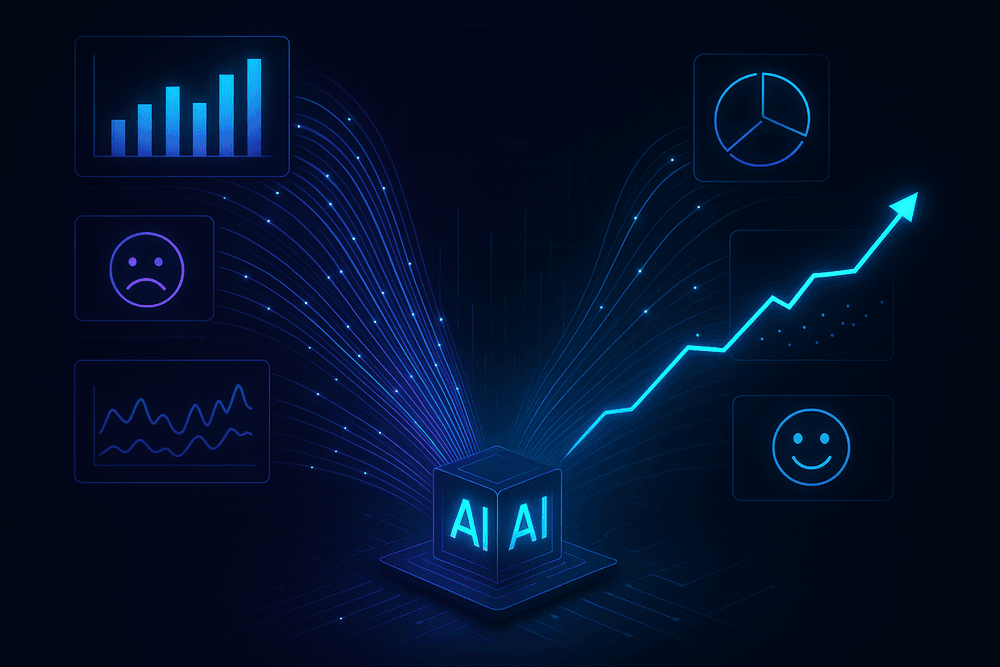
Under the Hood: Key Techniques in AI Trend Forecasting
So, how does AI actually see into the future? It’s not a crystal ball, but a sophisticated engine powered by specific, powerful techniques. Effective AI trend forecasting relies on a symphony of algorithms and models working together to find signals in the noise. By understanding these core components, you can appreciate the true power behind the predictions. Let’s pull back the curtain on the key techniques that transform raw data into strategic foresight.
Leveraging Machine Learning for Predictive Analytics
At the heart of AI trend forecasting lies machine learning (ML), the science of teaching computers to learn from data without being explicitly programmed. ML algorithms are the workhorses that sift through massive datasets to identify hidden correlations and patterns that a human analyst could easily miss. Using techniques like regression analysis, these models can predict numerical outcomes, such as future sales figures based on past performance, marketing spend, and economic indicators. Other methods, like clustering, can group customers into emerging segments based on their behavior, revealing new target audiences before they become obvious. The beauty of machine learning is its ability to adapt; the more data it processes, the smarter and more accurate its predictions become, continuously refining the AI trend forecasting model for superior results.
Natural Language Processing (NLP) for Social Listening and Sentiment Analysis
While numbers tell part of the story, the "why" often lives in human language. This is where Natural Language Processing (NLP) comes in. NLP gives machines the ability to read, understand, and interpret human language from sources like social media posts, product reviews, news articles, and call center transcripts. In AI trend forecasting, NLP fuels two critical activities: social listening and sentiment analysis. Social listening allows you to tune into the global conversation, tracking mentions of your brand, competitors, and industry keywords in real-time. Sentiment analysis then goes a step further, automatically classifying the emotion behind that text—positive, negative, or neutral. This allows you to gauge public perception, spot a burgeoning PR crisis, or identify the enthusiastic language surrounding an emerging product feature, providing invaluable qualitative context to your quantitative data.
Time-Series Analysis: Predicting Future Patterns from Past Data
Trends, by their very nature, unfold over time. Time-series analysis is a statistical method specifically designed to analyze sequential data points to extract meaningful characteristics and predict future values. Think of it as looking at a stock chart or historical weather data to understand its underlying patterns. In business, this technique is used to analyze everything from weekly website traffic to quarterly revenue. Traditional time-series forecasting is powerful, but AI supercharges it. AI models can analyze multiple, complex time-series variables simultaneously (e.g., sales, competitor pricing, and consumer confidence) to create far more nuanced and accurate forecasts. By identifying seasonality, long-term trends, and cyclical patterns, this cornerstone of AI trend forecasting enables businesses to anticipate demand, manage inventory, and allocate resources with incredible precision.
Choosing Your Platform: Top AI Trend Forecasting Tools Compared
Selecting the right tool is a critical step in harnessing the power of AI trend forecasting. The market is flooded with options, from massive, all-encompassing platforms to highly specialized niche solutions. Your choice will depend on your company’s scale, industry, technical resources, and strategic goals. Let’s break down the landscape to help you identify the best fit.
Enterprise-Level Solutions for Comprehensive Insights
For large organizations managing vast and complex datasets, enterprise-level solutions offer a holistic approach to trend analysis. These platforms are designed for scalability and deep integration with your existing tech stack, including CRMs, ERPs, and business intelligence tools.
Key features to look for in an enterprise solution include:
- Broad Data Integration: The ability to pull in and process data from diverse sources, such as market reports, social media, news, patent filings, and internal sales data.
- Advanced Analytics: Sophisticated modeling capabilities, including natural language processing (NLP) for sentiment analysis and predictive algorithms to identify patterns and forecast future outcomes.
- Customizable Dashboards: User-friendly interfaces that allow different departments—from marketing to product development—to visualize trends relevant to their functions.
Platforms from major tech players and specialized intelligence firms like WGSN or TrendWatching fall into this category. While they represent a significant investment, they provide a powerful, centralized engine for driving company-wide, data-informed strategy.
Niche Players for Industry-Specific Precision
While enterprise systems offer breadth, niche players provide unmatched depth. These specialized AI trend forecasting tools are built with a deep understanding of a specific industry’s nuances, language, and data sources. They deliver highly relevant, actionable insights that a general-purpose tool might miss.
- Fashion and Retail: Companies like Heuritech and Edited use AI to analyze images from social media and runway shows, predicting which colors, silhouettes, and materials will be commercially successful seasons in advance.
- Finance and Investing: Fintech platforms leverage AI to scan news, social media sentiment, and economic reports in real-time to forecast market volatility and identify emerging investment opportunities.
- Consumer Packaged Goods (CPG): Tools in this space analyze online conversations, product reviews, and recipe blogs to spot burgeoning consumer preferences for ingredients, flavors, and dietary trends.
If your business operates in a fast-moving, specialized vertical, a niche tool can provide the competitive edge you need.
Open-Source vs. SaaS: Which Model is Right for Your Business?
Your final consideration is the delivery model: building a custom solution with open-source tools or subscribing to a SaaS platform.
Open-Source Forecasting
Leveraging frameworks like TensorFlow or Prophet allows for complete customization. You control the algorithms, data, and infrastructure.
- Pros: Maximum flexibility, no subscription fees, and full ownership of your proprietary models.
- Cons: Requires a dedicated team of data scientists and engineers, significant upfront investment in development, and ongoing maintenance.
- Best For: Tech-forward companies with unique data challenges and the in-house talent to build a bespoke AI trend forecasting solution from the ground up.
SaaS (Software-as-a-Service) Platforms
SaaS tools provide a ready-to-use solution with a subscription-based model.
- Pros: Fast implementation, lower initial cost, user-friendly interfaces, and access to continuous updates and support from the vendor.
- Cons: Less customization, reliance on the vendor’s roadmap, and recurring fees.
- Best For: The vast majority of businesses that want to access powerful analytics without the overhead of building and maintaining their own system.
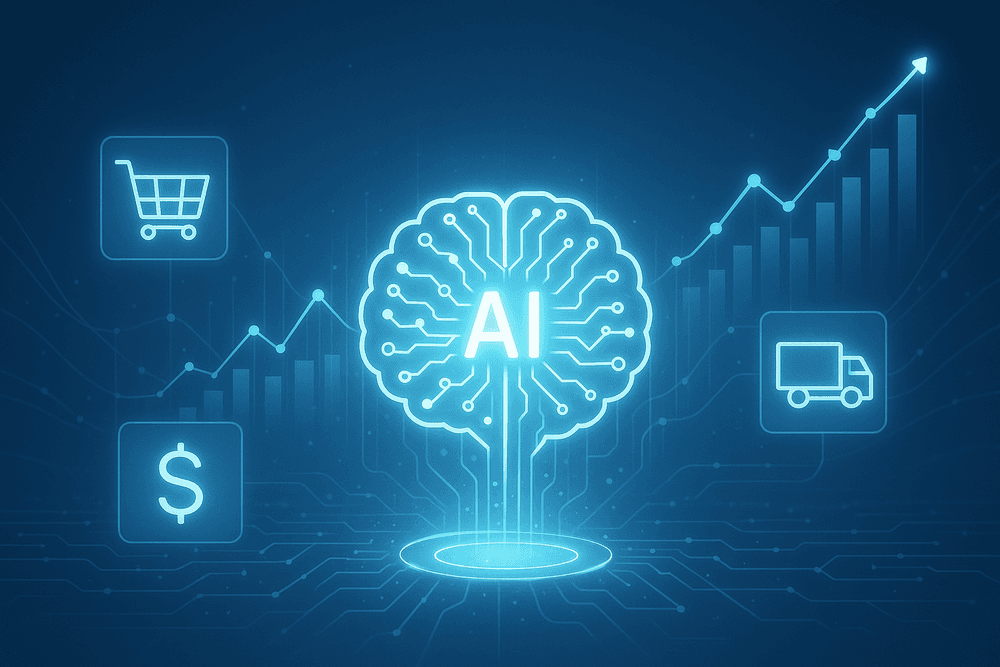
AI Trend Forecasting in Action: Real-World Success Stories
Theory is valuable, but tangible results are what drive business. The true power of AI trend forecasting becomes clear when we see it in action, transforming industries from the ground up. Across retail, finance, and logistics, companies are no longer just reacting to change—they are predicting and shaping it. Let's explore how leading organizations are leveraging this technology to gain a decisive competitive edge.
Case Study: How a Retail Giant Predicts Consumer Buying Habits
A global fashion retailer faced a classic challenge: misjudging seasonal and micro-trends led to warehouses full of unpopular items while in-demand products sold out instantly, resulting in lost revenue. To break this cycle, they implemented a sophisticated AI trend forecasting platform. This system ingests and analyzes vast, unstructured datasets in real-time, including:
- Social Media Sentiment: Tracking hashtags, influencer styles, and comments across platforms.
- Search Engine Queries: Identifying rising search interest for specific colors, materials, or silhouettes.
- E-commerce Behavior: Analyzing on-site search terms and browsing patterns.
The AI algorithms correlate these external signals with internal historical sales data to pinpoint emerging trends before they hit the mainstream. As a result, the retailer can now make rapid, data-backed decisions on design, production volume, and marketing campaigns. This proactive approach has led to a significant reduction in excess inventory and a marked increase in sales for trend-aligned products.
In Finance: Using AI to Forecast Market Volatility
In the high-stakes world of financial markets, anticipating volatility is the key to mitigating risk and capitalizing on opportunity. An international investment firm deployed an AI trend forecasting model to get ahead of market shifts. The system uses advanced natural language processing (NLP) to analyze millions of global news articles, central bank statements, earnings reports, and even social media chatter for subtle shifts in sentiment and economic indicators.
This AI model can detect correlations and patterns that are invisible to human analysts, such as the link between geopolitical tensions in one region and the future price of a commodity. By forecasting periods of high volatility with greater accuracy, the firm’s traders gain a critical window to adjust their portfolios, hedge against risk, and execute more profitable algorithmic trading strategies.
Revolutionizing Supply Chain Management with Predictive Logistics
A multinational consumer goods company was constantly battling supply chain disruptions, where a single delayed shipment could halt production lines. They integrated AI trend forecasting into their logistics network to build resilience and efficiency. The platform synthesizes data from a multitude of sources, including IoT sensors on cargo ships, weather forecast APIs, port congestion data, and traffic patterns.
The machine learning model continuously analyzes this information to predict potential delays with a high degree of accuracy. For example, it can flag that a specific weather pattern combined with current congestion levels at the Port of Singapore will likely result in a 48-hour delay. Armed with this foresight, the logistics team can proactively reroute shipments, adjust inventory levels at distribution centers, and manage customer expectations, ultimately cutting costs and ensuring products reach shelves on time.
Best Practices for Implementing AI Trend Forecasting
Adopting AI trend forecasting is more than just plugging in a new tool; it's about fundamentally shifting how your organization anticipates the future. To move from theoretical potential to tangible results, you need a strategic approach grounded in best practices. By focusing on data integrity, strategic integration, and clear-eyed evaluation, you can build a powerful predictive engine that drives real business growth.
Ensuring Data Quality for Accurate Predictions
The golden rule of machine learning is "garbage in, garbage out," and this holds especially true for AI trend forecasting. Your predictions will only ever be as reliable as the data they are built on. Before you even begin training a model, you must prioritize establishing a clean, robust, and relevant dataset.
Start with a thorough data audit. This involves:
- Data Cleansing: Systematically identifying and correcting or removing corrupt, inaccurate, or irrelevant records. This includes dealing with missing values and eliminating duplicate entries.
- Data Standardization: Ensuring all your data is in a consistent format. For example, standardizing date formats, units of measurement, and categorical labels across all sources.
- Data Enrichment: Augmenting your internal data (e.g., sales history, customer behavior) with external sources. This could include social media sentiment, competitor pricing, economic indicators, or even weather patterns to provide a more holistic view for your AI trend forecasting model.
A high-quality data pipeline isn't a one-time task but an ongoing commitment to data governance.
Integrating AI Insights into Your Business Strategy
An accurate forecast is useless if it sits in a dashboard, unviewed and unactioned. The true power of AI trend forecasting is unlocked when its insights are woven into the fabric of your daily operations and long-term strategy.
To achieve this, focus on making insights accessible and actionable for different teams. A forecast predicting a surge in demand for a specific product feature should automatically trigger alerts for both the supply chain team to adjust inventory and the marketing team to prepare a targeted campaign.
Create a feedback loop where business outcomes are fed back into the model. Did a marketing campaign based on a predicted trend succeed? That success data helps refine and improve future predictions. Ultimately, successful integration means AI trend forecasting isn't just an IT project; it's a core component of your strategic decision-making process, from product development to market positioning.
Avoiding Common Pitfalls in Your AI Forecasting Journey
The path to implementing predictive AI is fraught with potential missteps. Being aware of these common pitfalls can save you significant time and resources:
- The "Black Box" Problem: Don't blindly trust a model you don't understand. Prioritize explainable AI (XAI) techniques that provide insight into why a certain prediction was made. This builds trust and allows for crucial human oversight.
- Ignoring Model Drift: Markets are dynamic, and a model trained on last year's data may not be accurate today. You must continuously monitor your model's performance and retrain it regularly with new data to prevent its predictive power from degrading.
- Underestimating Human Expertise: AI should augment, not replace, your team's domain knowledge. Use AI to surface patterns and possibilities, but rely on your experts to provide context, validate the insights, and make the final strategic calls.
Measuring the ROI of Your Predictive Models
To justify the investment and secure ongoing buy-in, you must clearly measure the return on investment (ROI) of your AI trend forecasting initiatives. Define your key performance indicators (KPIs) before you begin.
Tie your metrics directly to business outcomes:
- Operational Efficiency: Measure the reduction in inventory holding costs or the decrease in stockouts due to more accurate demand forecasting.
- Marketing Effectiveness: Track the lift in conversion rates or customer lifetime value from campaigns targeting AI-identified trends.
- Strategic Advantage: Quantify the revenue generated from new products or services launched to capitalize on a predicted market shift ahead of competitors.
By connecting your AI trend forecasting efforts to concrete financial gains and operational improvements, you can demonstrate its immense value and build a compelling case for further investment.

Conclusion: Your Next Steps in AI Trend Forecasting
The journey into AI trend forecasting is no longer a futuristic concept; it's a present-day strategic imperative. We've explored how artificial intelligence moves beyond simple data analysis to become a predictive powerhouse, capable of identifying subtle market shifts and nascent consumer behaviors before they become mainstream. Now, the critical question is: how do you harness this power? This conclusion provides a clear summary and an actionable roadmap to integrate AI-driven foresight into your organization's DNA.
Key Takeaways for Proactive Decision-Making
Transitioning to an AI-powered strategy means shifting from a reactive posture to a proactive one. Instead of responding to market changes, you begin to anticipate and shape them. Remember these core advantages:
- Unmatched Speed and Scale: AI algorithms process vast, unstructured datasets—from social media chatter to economic indicators—in real-time, delivering insights at a speed no human team can match.
- Superior Accuracy: By identifying complex patterns and correlations hidden within the data, AI models provide more nuanced and accurate predictions, reducing the risks associated with gut-feel decisions.
- Competitive Edge: Being the first to identify an emerging trend allows you to innovate faster, optimize marketing spend, and align your supply chain, securing a significant advantage over competitors.
- Deeper Consumer Understanding: AI goes beyond demographics to uncover the "why" behind consumer actions, predicting future needs and desires with remarkable precision.
The Evolving Landscape: What's Next for AI in Forecasting?
The field of AI trend forecasting is constantly advancing. The tools and techniques of today are just the beginning. Keep an eye on these developments that are set to redefine the competitive landscape:
- Generative AI for Scenario Modeling: Beyond predicting what's likely, generative AI will help businesses create and test detailed "what-if" scenarios. Imagine simulating market response to a new product launch or a competitor's strategic move before investing a single dollar.
- Hyper-Personalized Trend Feeds: Forecasting will become increasingly granular. AI will soon deliver personalized trend alerts relevant to specific product lines, customer segments, or regional markets, making insights more actionable than ever.
- Seamless Integration: Expect AI forecasting tools to become more deeply embedded within core business systems like ERPs, CRMs, and marketing automation platforms, enabling automated, data-driven actions based on predictive insights.
How to Build Your Own AI Forecasting Roadmap
Ready to get started? Embarking on your AI trend forecasting journey requires a structured approach. Follow these steps to build a practical and effective roadmap.
- Assess Your Data Readiness: Begin with an internal audit. What data sources do you have? Are they clean, accessible, and structured? Identify gaps and create a plan to improve your data hygiene and infrastructure.
- Define a Clear Business Objective: Don't adopt AI for its own sake. Pinpoint a specific, high-value problem to solve. Do you want to predict the next big fashion trend, anticipate supply chain disruptions, or forecast demand for a new service?
- Start with a Pilot Project: Begin small. Select a single department or product line for a pilot program. This allows you to test tools, refine processes, and demonstrate ROI with contained risk, building momentum for wider adoption.
- Choose the Right Tools: Evaluate your options. You can leverage user-friendly, off-the-shelf SaaS platforms for quick implementation or build custom models for highly specific needs. Your choice should align with your team's technical skills, budget, and the complexity of your objective.
- Foster a Data-Driven Culture: Technology is only half the battle. Invest in training your team to interpret AI-generated insights and, most importantly, trust them to inform strategic decisions. Empower them to ask new questions and act on the predictive intelligence at their fingertips.