
August 6, 2025
Your Introduction to the AI Research Assistant
The End of Manual Drudgery: Your Introduction to the AI Research Assistant
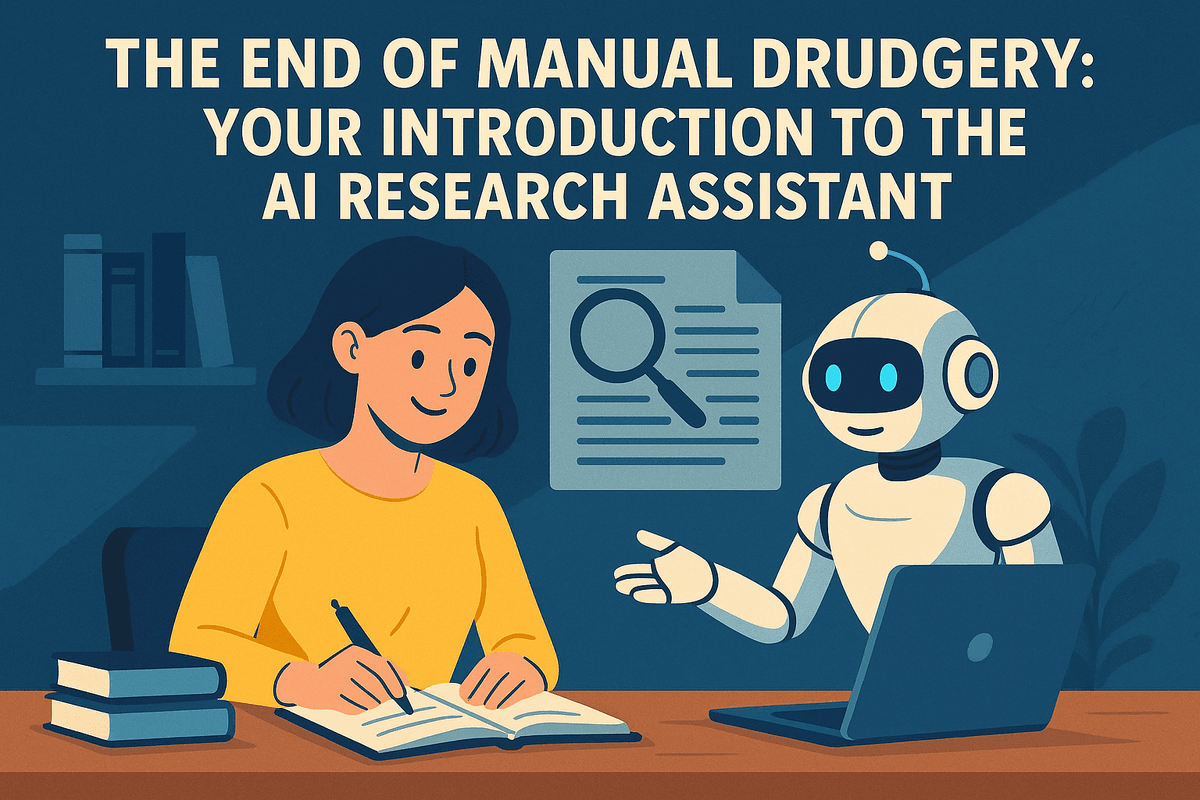
Remember the last time you embarked on a research project? The endless browser tabs, the mountain of PDFs, the creeping feeling that the one critical paper you need is buried somewhere in the 50 you’ve already skimmed. For decades, this manual drudgery has been the accepted price of discovery. You weren’t just a researcher; you were a digital librarian, a data entry clerk, and a human search engine, all before you could even begin to analyze the information. Today, that is changing.
So, what is an AI research assistant? In essence, it’s a sophisticated software tool powered by artificial intelligence—specifically large language models (LLMs) and natural language processing (NLP)—designed to automate and accelerate the most time-consuming parts of the research process. Think of it not as a simple tool, but as a tireless, intelligent partner. It reads, understands, summarizes, and connects information at a scale and speed no human ever could, freeing you to focus on the most important part of your job: thinking.
Beyond the Search Bar: How an AI Research Assistant is Different
It’s easy to mistake an AI research assistant for a souped-up version of Google Scholar, but that would be like comparing a calculator to a supercomputer. A traditional search engine is a master of retrieval. You give it keywords, and it returns a list of documents that contain those words. It’s an incredibly powerful filing system for the world’s information, but its job ends there. It doesn’t understand the content, the context, or the connections between the documents it finds.
An AI research assistant operates on a different level entirely. It moves beyond simple retrieval into the realm of synthesis and analysis.
- It Understands Context: Instead of just matching keywords, it comprehends the meaning behind your query and the nuances within the source material. You can ask it to "find papers that critique this methodology" or "summarize the key arguments against this theory."
- It Synthesizes Information: It can read dozens—or even hundreds—of papers and distill their core findings, conflicting results, and common themes into a single, coherent summary.
- It Extracts Specific Data: Need to find all mentions of a specific protein, a particular statistical method, or a date across a library of documents? The AI can pinpoint and extract this information in seconds.
The Core Problem: From Information Overload to Actionable Insight
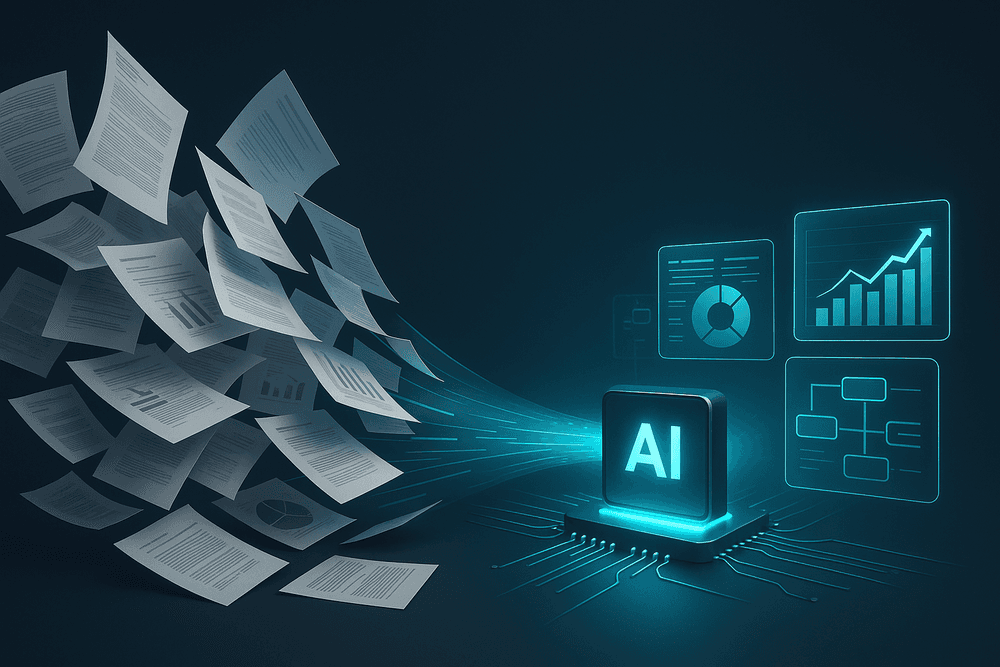
The fundamental challenge for any modern researcher, academic, or professional isn't a lack of information; it's an overwhelming surplus. We are drowning in data. With millions of new academic papers published every year, the bottleneck has shifted from finding sources to processing them. The real work—identifying trends, spotting gaps in the literature, and generating novel ideas—is often crushed under the weight of manual review.
This is the core problem an AI research assistant is built to solve. It acts as a powerful filter and synthesizer, transforming the chaotic flood of information into a structured, manageable stream of knowledge. It automates the grunt work, cross-referencing sources and highlighting connections you might have missed after hours of painstaking reading. By handling the "what" and "where," it empowers you to dedicate your cognitive energy to the "why" and "so what." The result is a dramatic acceleration of the journey from information overload to true, actionable insight.
How an AI Research Assistant Can Revolutionize Your Workflow
Imagine reclaiming weeks of your time. Traditional research is often a grueling process defined by information overload, painstaking manual searches, and the tedious task of organizing sources. An AI research assistant fundamentally changes this equation, transforming your workflow from a manual slog into an efficient, insight-driven engine for discovery. It’s not just about working faster; it’s about working smarter and elevating the quality of your insights. By automating the most labor-intensive tasks, these tools free you to focus on what truly matters: critical thinking, analysis, and generating novel ideas.
Accelerate Literature Reviews from Weeks to Hours
The literature review is the bedrock of any research project, but it can also be the most time-consuming phase. Manually sifting through countless databases to find relevant articles can feel like searching for a needle in a global haystack. An AI research assistant acts as your hyper-intelligent scout, using advanced algorithms and natural language processing to scan millions of academic papers, reports, and articles in seconds. It goes beyond simple keyword matching to understand the context and nuance of your research question, filtering out irrelevant noise and delivering a highly curated list of the most pertinent and impactful sources. This powerful capability condenses what could be weeks of work into a single afternoon.
Uncover Hidden Patterns and Connections
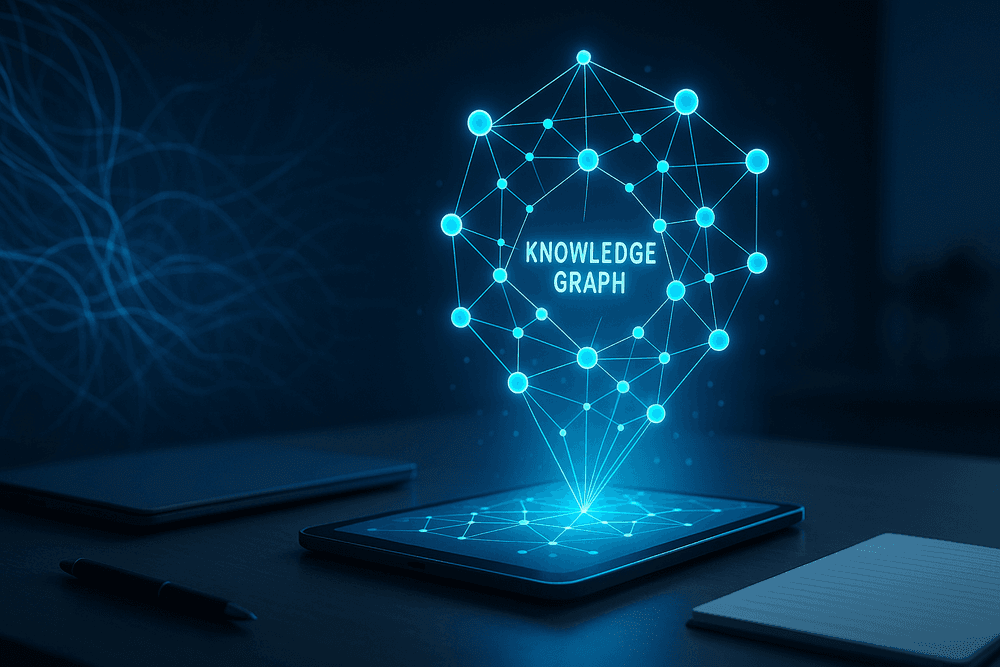
The true power of an AI research assistant lies in its ability to see the forest and the trees. While a human researcher can analyze a few dozen papers, an AI can process thousands simultaneously, identifying subtle patterns, emerging trends, and cross-disciplinary connections that would otherwise go unnoticed. It can create "knowledge graphs" that visually map the relationships between concepts, authors, and studies, revealing research gaps or unexpected collaborations. This analytical depth can spark groundbreaking hypotheses and guide your work in innovative directions you might never have considered.
Automate Summarization of Dense Academic Papers
You’ve found a promising 50-page study, but you're not sure if it's worth a deep dive. Instead of spending hours reading it, you can deploy your AI tool. A key feature of any modern AI research assistant is its ability to generate concise, accurate summaries of complex documents. In moments, it can distill a dense paper into its core components: the research question, methodology, key findings, and conclusions. This allows you to rapidly assess a source's relevance, absorb its main arguments, and decide whether to invest more time, dramatically increasing the volume of information you can effectively process.
Enhance Citation Management and Prevent Plagiarism
Maintaining academic integrity is paramount, but managing citations manually is tedious and prone to error. An AI research assistant streamlines this entire process. It can automatically extract citation information from papers and format it perfectly in any style you need—APA, MLA, Chicago, and more—building your bibliography as you work. Crucially, many of these tools also provide sophisticated plagiarism detection. By cross-referencing your writing against a vast database of published material, the AI flags passages of unintentional overlap, helping you properly attribute sources and safeguard your work against academic misconduct.
Choosing Your AI Research Assistant: Key Features to Compare
The market for AI-powered research tools is expanding rapidly, and not all platforms are created equal. To find the best ai research assistant for your needs, you must look beyond the surface-level promises and compare the core functionalities that truly drive efficiency and discovery. Focusing on these key features will help you distinguish a simple search tool from a transformative research partner.
Beyond Keywords: The Power of Semantic Search
Traditional research often begins with a frustrating cycle of keyword guessing. You search for one term, get limited results, and then try synonyms until you strike gold. A modern ai research assistant shatters this limitation with semantic search.
Instead of just matching exact keywords, semantic search understands the context and intent behind your query. It grasps conceptual relationships between ideas. For example, if you search for "the role of gut microbiota in metabolic syndrome," a semantic search engine won't just find papers with those exact words. It will also surface relevant studies on "the influence of intestinal flora on obesity" or "dysbiosis and its link to insulin resistance." This capability is a game-changer, allowing you to uncover critical connections and papers you might have otherwise missed, ensuring a more comprehensive literature review.
Automated Data Extraction and Synthesis
Finding the right papers is only half the battle. The next challenge is extracting and making sense of the critical information within them. This is where a top-tier ai research assistant truly shines. Look for features that can automatically extract key data points from PDFs, such as:
- Methodologies: What techniques and protocols were used?
- Outcomes: What were the primary findings and conclusions?
- Sample Sizes: Who or what was studied?
- Key Figures and Tables: Visual data and summaries.
Even more powerful is the ability to synthesize this extracted information. The best tools can create summary tables comparing methodologies across dozens of papers, identify overarching themes in a body of literature, or generate concise, evidence-based summaries, dramatically accelerating your analysis.
Seamless Integration with Your Existing Workflow
An ai research assistant should streamline your process, not complicate it with another isolated silo of information. The best platforms integrate seamlessly with the tools you already use every day. Critical integrations to look for include:
- Reference Managers: Direct export or two-way sync with Zotero, Mendeley, or EndNote is non-negotiable for serious researchers. This eliminates the tedious manual transfer of citations.
- Writing and Note-Taking Apps: Look for integrations with Google Docs, Microsoft Word, Obsidian, or Notion to easily drag and drop insights, citations, and summaries directly into your manuscript or notes.
A well-integrated tool becomes a central hub for your research, connecting your library, your analysis, and your final output into one fluid workflow.
Collaboration and Knowledge Sharing in Real-Time
Research is rarely a solitary endeavor. For teams, labs, and institutions, collaborative features are essential. A sophisticated ai research assistant facilitates teamwork by providing shared project spaces where members can collectively build and annotate a library of relevant papers. You can share collections, highlight key passages for a colleague, and leave comments directly on source documents. This shared understanding prevents duplicate work, ensures everyone is on the same page, and fosters a dynamic environment for collective discovery, making the entire team more efficient and effective.
Putting Theory into Practice: AI Research Assistant Use Cases
The true value of an AI research assistant isn't just in its technical capabilities, but in how it transforms complex, time-consuming workflows into efficient, insightful processes. Moving beyond theory, let's explore three powerful, real-world scenarios where these tools are making a tangible impact.
Use Case 1: Building a Comprehensive Literature Review for a PhD Dissertation
For any doctoral candidate, the literature review is a monumental task. It involves manually sifting through thousands of academic papers, identifying key themes, tracking citations, and pinpointing a unique research gap—a process that can take months.
How an AI Research Assistant Changes the Game:
- Accelerated Discovery: Instead of spending weeks on databases like Google Scholar or PubMed, a researcher can input their core research question. The AI research assistant scans vast repositories in minutes, pulling a highly relevant list of seminal papers, recent studies, and related articles that keyword-based searches might miss.
- Intelligent Summarization: The tool can generate concise, accurate summaries of lengthy articles. This allows the researcher to quickly assess dozens of papers for relevance without having to read each one in its entirety, dramatically speeding up the initial screening phase.
- Thematic Synthesis: Advanced AI tools can analyze a collection of papers and identify recurring themes, dominant methodologies, and conflicting findings. It can group sources by concept, helping to structure the literature review narrative and highlight the current state of the academic conversation. This moves the researcher from mere collection to critical synthesis far more quickly.
Use Case 2: Streamlining Market Analysis for Business Strategy
In the fast-paced business world, staying ahead requires a deep understanding of market dynamics, competitor movements, and consumer sentiment. Traditionally, this involves analysts manually compiling data from industry reports, news outlets, financial filings, and social media—a fragmented and often lagging process.
How an AI Research Assistant Drives Business Intelligence:
- Real-Time Data Aggregation: An AI research assistant can be configured to continuously monitor and pull data from specified sources. It acts as a centralized intelligence hub, delivering real-time updates on competitor product launches, pricing changes, and market news directly to a dashboard.
- Sentiment and Trend Analysis: By analyzing thousands of customer reviews, social media posts, and news articles, the AI can quantify market sentiment toward a brand, product, or competitor. It can also identify emerging consumer trends or pain points, providing invaluable insights for product development and marketing strategy.
- Competitor Deep Dives: An analyst can command the AI to "summarize a competitor's Q3 earnings call" or "find all news related to their recent supply chain issues." This provides on-demand, focused intelligence that informs strategic decision-making without the manual legwork.
Use Case 3: Accelerating Patent and Legal Research
For legal professionals and innovators, research is the bedrock of their work. Searching for prior art to validate a patent or finding relevant case law to build a legal argument is a meticulous, high-stakes process where missing a single document can have significant consequences.
How an AI Research Assistant Enhances Legal and IP Work:
- Conceptual Search for Prior Art: Patent language is notoriously complex. An AI research assistant goes beyond simple keywords, using semantic search to understand the concepts behind an invention. It can find conceptually similar patents or publications even if they use entirely different terminology, drastically improving the thoroughness of a prior art search.
- Rapid Case Law Analysis: A lawyer can upload dozens of legal documents and ask the AI to identify precedents related to a specific legal principle. The tool can summarize lengthy judgments, extract key arguments, and highlight citations, allowing legal teams to build their case strategy more efficiently and effectively. This frees up valuable time for strategic thinking rather than document retrieval.
Best Practices for Maximizing Your AI Research Assistant
Adopting an ai research assistant is more than just adding another tool to your belt; it’s about cultivating a new skill set. To transform this powerful technology from a simple search engine into an indispensable partner, you need to master how you interact with it. By implementing a few best practices, you can ensure you’re getting accurate, relevant, and truly insightful results that accelerate your work.
Mastering the Art of the Prompt: Garbage In, Gospel Out
The quality of the output from your ai research assistant is directly proportional to the quality of your input. Vague queries yield vague results. To get the precision you need, treat your queries like a detailed directive for a human assistant.
- Be Specific and Contextual: Instead of asking, "What is the effect of climate change on agriculture?" try a more detailed prompt: "Summarize recent peer-reviewed studies (2020-2024) on the impact of increased drought conditions on corn yields in North America." This specificity narrows the search field and provides crucial context.
- Use Keywords and Operators: Leverage specific terminology, author names, and journal titles. If your tool supports them, use boolean operators (AND, OR, NOT) to refine your search further, just as you would in a traditional academic database.
- Iterate and Refine: Your first query is often just a starting point. Use the initial results to refine your next prompt. If the AI misunderstood your intent, rephrase your question or add clarifying details.
Think Like a Reviewer: Critically Evaluate AI-Generated Summaries
An ai research assistant is brilliant at synthesis, but it lacks human intuition and critical judgment. It can’t discern nuance, authorial intent, or subtle bias with perfect accuracy. Therefore, you must act as the final gatekeeper of quality. When reviewing a summary, ask yourself:
- Does this summary accurately reflect the original paper's thesis and key findings?
- Has any critical nuance, limitation, or counterargument been omitted?
- Is the tone of the summary neutral, or does it inadvertently introduce a bias not present in the source material?
- Are the key takeaways logical and well-supported by the evidence mentioned?
Seamless Integration: Making Your AI Assistant a True Partner
To truly maximize efficiency, integrate your ai research assistant into your existing research phases, not just as a one-off tool.
- Exploratory Phase: Use the AI to conduct broad literature sweeps, identify seminal works, and discover key researchers in a new field.
- Literature Review Phase: Deploy the tool to rapidly summarize and categorize dozens of papers, helping you quickly identify themes, gaps, and areas of scholarly debate.
- Writing and Analysis Phase: When drafting your work, use the assistant to find specific data points, pull relevant quotes, or find papers that support or challenge your argument.
Trust but Verify: Ensuring Data Accuracy and Source Integrity
This is the golden rule of using any AI tool for research. AI models can "hallucinate"—that is, invent facts, citations, or data. Your credibility rests on the accuracy of your work, so verification is non-negotiable.
- Always Check the Source: Never cite a fact or summary from an ai research assistant without first clicking through to the original source document and confirming the information yourself.
- Cross-Reference Key Data: For critical statistics, figures, or claims, cross-reference them with at least one other trusted source.
- Verify Citations: Ensure that any sources cited by the AI are real, relevant, and correctly attributed. Check publication dates and venues to confirm credibility.

Conclusion: The Future of Research and Your Next Steps
We've journeyed through the transformative world of AI-powered research, exploring how these sophisticated tools are revolutionizing everything from literature discovery to data synthesis. The key takeaway is clear: selecting the best AI research assistant is not about finding a one-size-fits-all solution, but about identifying a partner that aligns with your unique workflow, field of study, and specific research goals. Whether you prioritize deep semantic search, automated summarization, citation management, or collaborative features, the ideal tool is the one that seamlessly integrates into your process and amplifies your intellectual output.
The Evolving Landscape: AI as a Research Partner
The capabilities we see today are just the beginning. The landscape of academic and professional research is shifting from a model where technology is a passive tool to one where AI is an active, collaborative partner. The future AI research assistant will likely move beyond simple retrieval and summarization to offer predictive insights, identify novel research gaps, and even assist in formulating hypotheses.
This evolution doesn't diminish the role of the human researcher; it elevates it. By delegating the time-consuming, repetitive tasks of data collection and organization to a powerful AI research assistant, you free up invaluable cognitive resources. This allows you to focus on what humans do best: critical thinking, creative problem-solving, nuanced interpretation, and asking the profound questions that drive discovery forward. The researcher of the future will be a strategist, a curator, and a critical thinker, working in tandem with AI to push the boundaries of knowledge.
Your Next Steps: How to Transform Your Research Process Today
Feeling inspired? The best time to start leveraging these tools is now. Embracing an AI research assistant can feel like a big shift, but you can begin integrating one into your workflow with a few simple, strategic steps.
- Pinpoint Your Primary Bottleneck. Take a moment to reflect on your current research process. Where do you lose the most time and energy? Is it sifting through hundreds of irrelevant papers? Manually organizing your notes and references? Or perhaps summarizing dense academic texts? Identifying your biggest pain point will immediately clarify which type of AI tool will deliver the most impact.
- Select and Trial a Tool. With your primary need in mind, revisit the options we’ve discussed or explore the market for a tool that specializes in that area. Nearly every platform offers a free trial or a freemium version. Sign up and commit to using it for a single, specific project. This hands-on experience is the only way to truly gauge if the interface, features, and output are a good fit for you.
- Start Small, then Scale. Don't try to revolutionize your entire workflow overnight. Begin by integrating your chosen AI research assistant for that one task you identified. Use it exclusively for your next literature search or to generate summaries for a handful of articles. As you become more comfortable, you can gradually expand its role, allowing it to become a more integral part of your research toolkit.
By taking these deliberate steps, you are not just adopting a new piece of software; you are investing in a smarter, faster, and more efficient future for your work. You are positioning yourself at the forefront of a new era of discovery, one where human intellect and artificial intelligence collaborate to achieve what was once unimaginable.