October 10, 2025
Why Manual Security Compliance Can't Keep Up
The End of Audit Anxiety: Why Manual Security Compliance Can't Keep Up
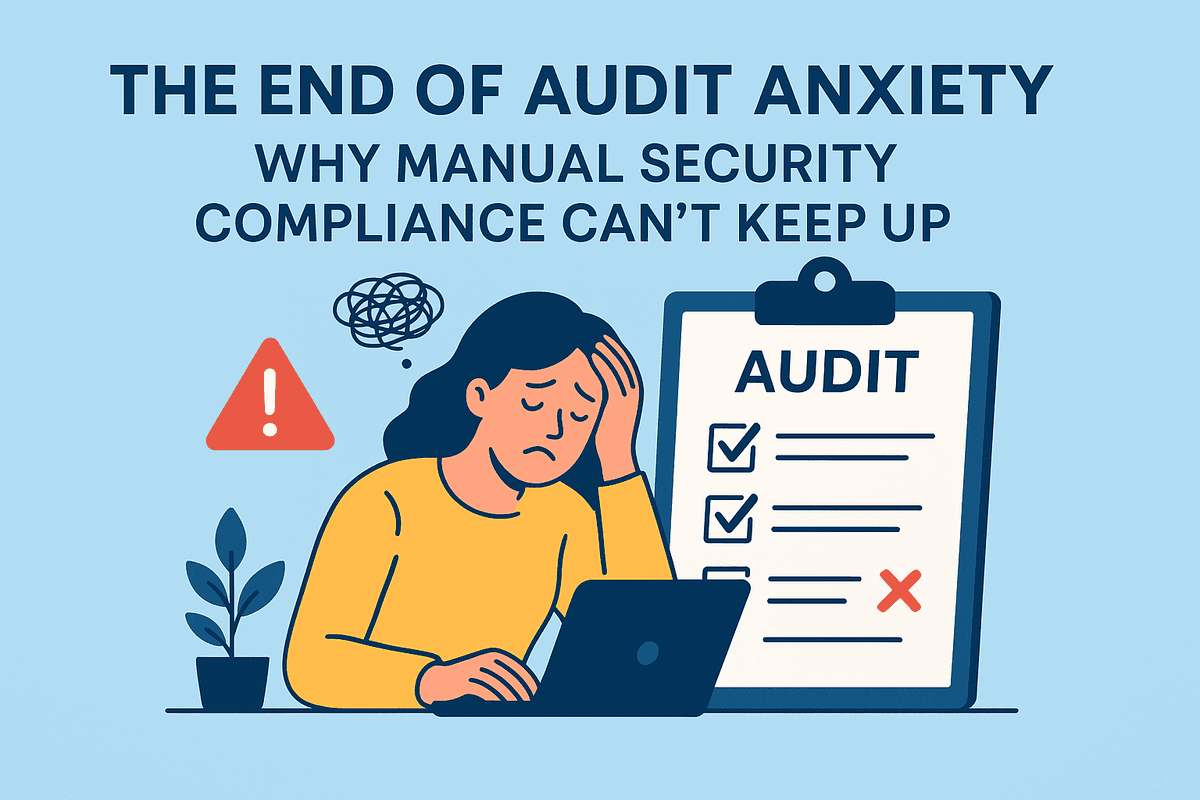
The calendar flips to a new quarter, and a familiar sense of dread descends upon your GRC and engineering teams: audit season is here. It’s a period defined by frantic evidence gathering, endless spreadsheets, and the high-stakes pressure to prove your organization is secure. For too long, this has been the reality of security compliance. But this manual, reactive approach is no longer sustainable. It’s a system cracking under the weight of modern digital business, turning a critical function into a source of anxiety and a bottleneck to growth.
The Growing Maze of Regulations: SOC 2, ISO 27001, and Beyond
In today's interconnected market, achieving and maintaining security compliance isn't about clearing a single hurdle. It’s about navigating an ever-expanding maze of frameworks. You’re not just dealing with SOC 2; you’re juggling the overlapping controls of ISO 27001, the stringent data privacy mandates of GDPR and CCPA, and industry-specific requirements like HIPAA or PCI DSS.
Each framework comes with its own set of controls, evidence requirements, and reporting nuances. Manually mapping these overlapping demands is a recipe for disaster. Teams waste countless hours cross-referencing spreadsheets, duplicating evidence collection, and trying to translate one framework’s requirements to another. This manual effort is not only inefficient but also creates dangerous gaps, leaving you vulnerable to non-compliance in areas you thought were covered. Effective security compliance now demands a unified, intelligent approach that manual methods simply cannot provide.
Human Error and the High Cost of Failed Audits
The bedrock of manual compliance is often the humble spreadsheet—a tool notoriously prone to human error. A single misplaced entry, an outdated file version, or a missed screenshot can cascade into a critical audit finding. When your entire compliance posture relies on individuals remembering to perform manual checks and upload evidence correctly, you are building your security on a foundation of risk.
The consequences of this risk are severe. A failed audit isn’t just a report card with a bad grade. It translates to tangible business losses:
- Financial Drain: Re-auditing fees, potential regulatory fines, and the immense internal cost of remediation can run into tens or even hundreds of thousands of dollars.
- Blocked Revenue: A missing SOC 2 report can bring promising enterprise deals to a screeching halt, directly impacting your bottom line.
- Reputational Damage: Failing an audit erodes customer trust and can damage your brand’s reputation as a secure and reliable partner.
How AI Automation Transforms Security Compliance from a Blocker to a Business Enabler
What if you could flip the script? Instead of being a roadblock that halts progress, what if security compliance became a powerful business accelerator? This is the transformative promise of AI-powered automation. By moving away from point-in-time manual checks to a state of continuous, automated compliance, you change the entire paradigm.
AI-driven platforms integrate directly with your cloud environment, HR systems, and development tools to monitor controls and collect evidence 24/7. This transforms security compliance in three fundamental ways:
- From Blocker to Enabler: With compliance running continuously in the background, your teams can innovate and close deals with confidence. A real-time dashboard proving your security posture becomes a powerful sales tool, not an annual fire drill.
- From Reactive to Proactive: AI doesn't wait for an auditor to find a problem. It identifies misconfigurations, access control issues, and policy gaps as they happen, allowing you to remediate them long before they become audit findings.
- From Manual Toil to Strategic Focus: By automating up to 90% of the repetitive evidence collection and control monitoring, you free your most valuable security talent to focus on strategic risk management and threat mitigation, rather than chasing paperwork.
How AI Revolutionizes Your Security Compliance Strategy
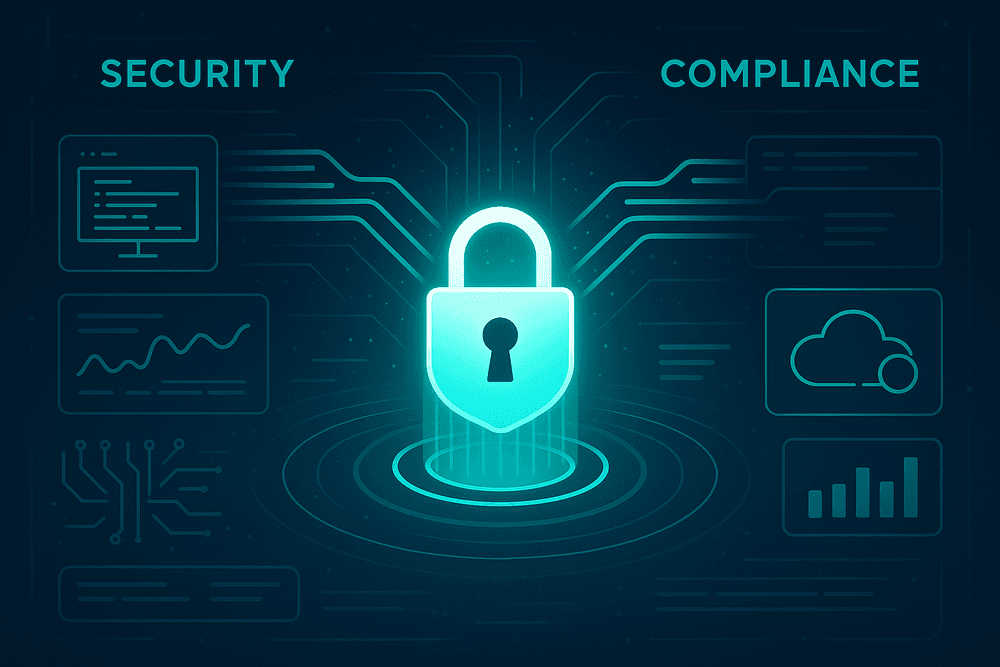
The traditional approach to security compliance—marked by manual checklists, frantic evidence gathering, and high-stress annual audits—is no longer sustainable. It’s resource-intensive, prone to human error, and provides only a brief, retrospective snapshot of your security posture. Artificial intelligence fundamentally transforms this paradigm, shifting security compliance from a periodic obligation to a continuous, intelligent, and strategic business function. Here’s how AI is reshaping the landscape.
From Point-in-Time Audits to Continuous Control Monitoring
Instead of the annual fire drill, imagine being audit-ready every single day. AI makes this possible through Continuous Control Monitoring (CCM). AI-powered platforms integrate with your systems to automatically and perpetually test your controls against established frameworks like SOC 2, ISO 27001, and HIPAA.
This constant validation provides a real-time dashboard of your compliance status, instantly flagging any deviations or control failures. This proactive approach means you’re not discovering issues during a high-stakes audit; you’re identifying and fixing them as they happen. It transforms security compliance from a stressful event into a manageable, business-as-usual process, eliminating audit anxiety and ensuring a consistently strong security posture.
Automate Evidence Collection Across Your Entire Tech Stack
One of the most grueling aspects of compliance is the manual collection of evidence. Chasing down engineers for screenshots, sifting through logs, and organizing documentation from dozens of disparate systems is a recipe for inefficiency and burnout.
AI-driven automation eliminates this bottleneck. These platforms connect directly to your entire tech stack—from cloud infrastructure like AWS and Azure to HR systems and code repositories like GitHub. The AI intelligently pulls the necessary evidence, such as configuration settings, user access lists, and policy documents, and automatically maps it to the relevant security controls. This not only saves hundreds of hours but also creates a centralized, tamper-proof audit trail that drastically simplifies collaboration with auditors.
Identify and Remediate Risks with Predictive Analytics
A mature security compliance program moves beyond simply checking boxes to actively reducing risk. AI supercharges this effort with predictive analytics. By analyzing vast datasets of system configurations, user activities, and historical compliance data, AI algorithms can identify subtle patterns and anomalies that signal potential future vulnerabilities.
For example, an AI might flag a gradually deteriorating configuration hygiene or detect unusual access patterns that could precede a security incident. This foresight allows your security team to move from a reactive to a proactive stance, remediating potential risks long before they escalate into compliance failures or data breaches.
Streamline Policy Management and Employee Training
Compliance is as much about people and processes as it is about technology. AI helps bridge this gap by streamlining policy management and enhancing employee awareness. AI tools can analyze new regulations and suggest updates to your existing policies, ensuring they remain current. Furthermore, they can automatically map your internal policies to specific controls, simplifying governance and demonstrating due diligence.
AI can also personalize security training. By identifying common areas of human error or non-compliance across the organization—such as weak password practices or mishandling of sensitive data—the system can assign targeted micro-trainings to the relevant employees, reinforcing best practices where they're needed most and fostering a more resilient security culture.
Core Features of an AI-Powered Security Compliance Platform
Not all automation platforms are built the same. When evaluating an AI-powered solution, the goal isn't just to check a box; it's to fundamentally transform your approach to security compliance. An effective platform moves you from periodic, manual fire drills to a state of continuous, audit-ready readiness. Look for these four critical capabilities that form the foundation of a robust automated compliance engine.
Broad Framework Support and Controls Library
Modern businesses operate globally and often need to adhere to multiple regulatory standards. A leading AI platform won’t lock you into a single framework. Instead, it offers a comprehensive library supporting major standards like SOC 2, ISO 27001, HIPAA, GDPR, PCI DSS, and CCPA out of the box. The real power of AI shines here through "controls mapping." The platform intelligently understands that a single security control—like enforcing Multi-Factor Authentication (MFA)—can satisfy requirements across several frameworks. By collecting evidence for that control once, the AI automatically maps it to every relevant requirement, saving your team hundreds of hours and ensuring consistency in your security compliance program.
Seamless Integrations with Your Tech Stack
Your company’s security posture is the sum of its parts. An effective security compliance platform must integrate deeply and seamlessly with the tools your business already uses. This is the only way to achieve true automation. Look for API-first integrations across your entire tech stack:
- Cloud Providers (AWS, GCP, Azure): To continuously monitor for infrastructure misconfigurations and vulnerabilities.
- HRIS (Gusto, Rippling, BambooHR): To automate evidence collection for employee onboarding/offboarding, background checks, and security training.
- Version Control (GitHub, GitLab): To ensure secure coding practices are followed and peer reviews are documented.
- Identity Providers (Okta, Google Workspace): To verify access controls and MFA enforcement.
By connecting to these systems, the AI platform acts as a central nervous system, automatically pulling the evidence needed to prove compliance without manual intervention.
Real-Time Dashboards for a Unified View of Your Security Posture
Spreadsheets and static documents are relics of a bygone compliance era. Today’s dynamic threat landscape demands a real-time, unified view of your security posture. An AI-powered platform provides this through intuitive, live dashboards. Instead of wondering if you’re compliant, you’ll know. These dashboards consolidate data from all integrated services, presenting a clear picture of your security compliance status at any given moment. AI-driven alerts can instantly notify you of new risks, failed checks, or policy deviations—like a new S3 bucket made public—allowing you to remediate issues before they become audit findings or, worse, security incidents. This transforms compliance from a periodic audit into a continuous, proactive process.
Automated Reporting and Secure Evidence Management for Auditors
The ultimate test of any security compliance program is the audit. This is where AI automation delivers its most significant return on investment. A top-tier platform automates the most painful part of the process: evidence collection and organization. It systematically gathers, categorizes, and securely stores thousands of evidence artifacts—from screenshots and system logs to policy documents. When it's time for an audit, you can generate comprehensive, audit-ready reports with a few clicks. Furthermore, the platform provides a secure, read-only portal for auditors to review evidence directly, eliminating the chaotic back-and-forth of emails and shared folders. This not only streamlines the audit but also demonstrates a mature and organized approach to security compliance, building trust and confidence with your auditors.

Implementing Automated Security Compliance: A 4-Step Framework
Transitioning from sporadic, manual audits to a state of continuous readiness requires a structured approach. An AI-powered automation platform makes this transition seamless, but success hinges on a deliberate implementation strategy. This four-step framework breaks down the process of operationalizing automated security compliance, turning a daunting project into a manageable and highly effective initiative. By following these steps, you can build a robust, scalable, and audit-ready compliance program.
Step 1: Mapping Your Controls to Regulatory Frameworks
The foundation of automated compliance is translation. You need to map your internal security controls—the specific policies and procedures you follow—to the requirements of external regulatory frameworks like SOC 2, ISO 27001, HIPAA, or GDPR. Manually, this is a painstaking process of cross-referencing spreadsheets.
This is where AI-driven platforms provide immediate value. They come pre-loaded with hundreds of controls mapped across dozens of common frameworks. You simply select the frameworks you need to adhere to, and the platform automatically identifies overlapping requirements. This "map once, comply with many" approach eliminates redundant work and ensures comprehensive coverage. The system acts as a central repository, linking each of your internal practices to the specific evidence an auditor will demand, creating a clear and defensible security compliance posture from day one.
Step 2: Connecting Your Tech Stack for Automated Data Collection
Effective security compliance relies on verifiable evidence. The traditional method of gathering this evidence—endless screenshots, manual report downloads, and interviews—is the primary source of audit fatigue. Automation eliminates this entirely by creating a live, synchronized connection to your technology stack.
By integrating your compliance platform with cloud providers (AWS, Azure, GCP), identity providers (Okta), code repositories (GitHub), HR systems, and other critical SaaS tools, you enable automated, continuous evidence collection. The platform constantly polls these systems for proof that controls are operating as intended. For example, it can automatically verify that MFA is enabled for all privileged users, that data backups are successfully completed, or that new employees have undergone security training. This creates a single source of truth, providing real-time visibility and audit-ready evidence on demand.
Step 3: Configuring Alerts for Real-Time Non-Compliance Notifications
The most significant advantage of automation is the shift from reactive to proactive compliance management. Instead of discovering a configuration drift or policy violation during a quarterly review, you can be notified the moment it happens. This is achieved through continuous monitoring and intelligent alerting.
Once your tech stack is connected, you can configure the platform to monitor for specific states of non-compliance. If a critical control fails—for instance, a public S3 bucket is detected or a firewall rule is improperly changed—an alert is automatically generated. These notifications can be routed directly to the appropriate teams via tools they already use, like Slack or Jira, complete with context about the issue and remediation guidance. This transforms security compliance from a periodic check-the-box exercise into an integral part of your real-time security operations.
Step 4: Training Your Team to Leverage a Continuous Compliance Model
Technology is the enabler, but culture solidifies the change. Implementing an automated security compliance platform requires a mindset shift across the organization. Compliance is no longer the sole responsibility of a dedicated GRC team; it becomes a shared, ongoing practice embedded in daily workflows.
Train your engineering and DevOps teams to view the compliance platform as a security guardrail, not a roadblock. Show them how the real-time alerts help them identify and fix issues early, long before they become audit findings. Educate your HR and IT teams on how their processes for employee onboarding and offboarding are now automatically documented as compliance evidence. By demonstrating how automation reduces manual toil and minimizes disruptive "audit fire drills," you can foster a culture where everyone sees themselves as a stakeholder in maintaining a strong, continuous compliance posture.
Real-World Wins: AI-Driven Security Compliance in Action
Theory is one thing, but the true power of AI in security compliance shines in its real-world applications. Across industries, organizations are leveraging intelligent automation to conquer complex regulatory landscapes, save time, and build unshakeable trust with their customers. Let's explore three distinct scenarios where AI-driven platforms turned compliance challenges into strategic advantages.
Case Study: How a FinTech Startup Passed Their First SOC 2 Audit in 60 Days
For a fast-moving FinTech startup, achieving SOC 2 compliance is a critical milestone for earning enterprise client trust. However, the traditional path is resource-intensive, often taking 6-12 months and diverting valuable engineering talent from core product development.
This startup faced the classic dilemma: move fast or be compliant. By implementing an AI-powered compliance platform, they were able to do both. The platform integrated directly with their cloud environment, automatically collecting evidence for hundreds of controls. Its AI engine mapped their existing security configurations to specific SOC 2 trust services criteria, instantly highlighting gaps and providing actionable remediation guidance. Instead of manually chasing screenshots and configurations, the team focused on strategic fixes identified by the AI. The result? They were audit-ready and successfully passed their SOC 2 Type 1 audit in just 60 days, accelerating their sales cycle and proving their commitment to robust security compliance from day one.
Use Case: Automating ISO 27001 Controls in a Multi-Cloud Enterprise
A global enterprise with infrastructure spanning AWS, Azure, and on-premise data centers struggled with maintaining a consistent ISO 27001 posture. With thousands of assets and multiple teams, manual control monitoring was inefficient and prone to human error, creating significant risk and a fragmented view of their security.
Adopting an AI-driven solution provided them with a unified control plane. The platform used AI to continuously monitor configurations across all environments against their ISO 27001 Information Security Management System (ISMS). It automatically translated high-level policies into enforceable code, flagging deviations in real-time. For example, if a developer accidentally configured a storage bucket to be publicly accessible, the AI would immediately detect the violation, create an alert, and trigger an automated remediation workflow. This proactive approach to security compliance reduced manual audit preparation by over 80% and gave their security team a single, reliable source of truth.
Example: Maintaining Continuous HIPAA Compliance in Healthcare Tech
In the healthcare technology space, protecting Patient Health Information (PHI) isn't a one-time project; it's a continuous, high-stakes responsibility governed by HIPAA. A HealthTech company providing patient portals needed to ensure their security compliance was unbreachable, 24/7.
They leveraged an AI platform specifically designed for continuous compliance. The system’s AI models were trained to recognize patterns indicative of potential HIPAA violations. It constantly scanned logs, databases, and application traffic for unauthorized access attempts or improper data handling. If an anomaly was detected—such as an unusual data export or an unencrypted PHI transfer—the system would instantly alert the security team and provide detailed context for rapid investigation. This shifted their compliance model from periodic, stressful audits to a state of perpetual readiness, ensuring patient data was always protected and demonstrating unwavering adherence to HIPAA’s strict security rules to partners and regulators.
The Future is Now: Taking the Next Step in Automated Security Compliance
The journey toward modernizing security compliance is no longer a futuristic concept—it's a present-day necessity. We've explored how AI is fundamentally reshaping the landscape, transforming a traditionally manual, stressful, and cyclical process into an automated, continuous, and strategic function. The days of scrambling for evidence and dreading annual audits are numbered. By embracing AI, organizations can move beyond merely "passing" audits to cultivating a state of continuous, verifiable compliance that strengthens their overall security posture and builds lasting trust with customers.
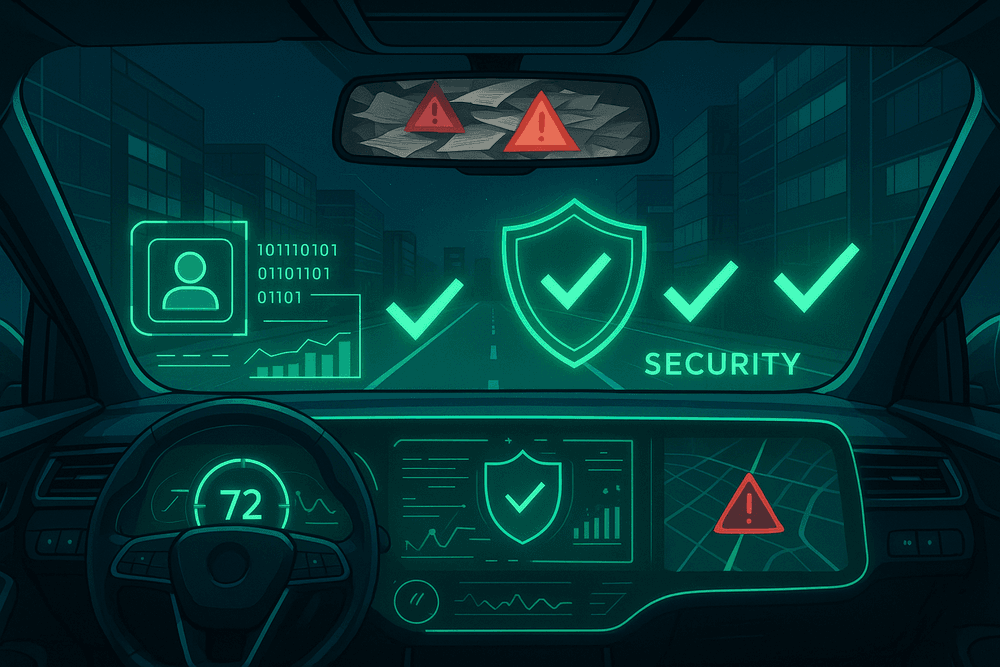
This evolution is about shifting from a reactive stance to a proactive one. It’s the difference between looking in the rearview mirror at last year's compliance status and looking ahead through a panoramic windshield, with real-time data guiding your path. Now, it's time to take the final, most crucial step: putting this knowledge into action.
Moving from Reactive Audits to a Proactive Security Posture
The traditional approach to security compliance has always been event-driven. A looming SOC 2 or ISO 27001 audit would trigger a flurry of activity—chasing down engineers for screenshots, digging through logs, and manually updating spreadsheets. This model provides only a point-in-time snapshot of your security, leaving you blind to compliance gaps that emerge between audit cycles.
AI-powered automation flips this model on its head. Instead of a year-end sprint, you have a year-round, automated marathon. An AI compliance platform continuously monitors your cloud environments, systems, and controls, collecting evidence automatically and in real-time. It alerts you to misconfigurations or policy deviations the moment they occur, not months later during an audit. This shift fundamentally improves your security compliance by making it an ongoing, integrated part of your operations rather than a disruptive, periodic event.
Choosing the Right AI Compliance Partner for Your Business
Adopting an AI-powered solution is a significant step, and selecting the right partner is critical for success. Not all platforms are created equal. As you evaluate your options, consider these key factors:
- Comprehensive Framework Support: Ensure the platform supports the frameworks you need now (like SOC 2, ISO 27001, HIPAA, PCI DSS) and has the flexibility to adapt as your business grows and regulations evolve.
- Deep Integration Capabilities: The platform's value is directly tied to its ability to connect with your existing tech stack. Look for robust, pre-built integrations with your cloud providers (AWS, Azure, GCP), identity providers (Okta), version control systems (GitHub), and HR platforms.
- Intelligent Automation: Go beyond simple checklists. A top-tier solution should offer true automation of evidence collection, continuous control monitoring, and automated workflows for policy management and employee training.
- Scalability and Usability: The ideal platform should be intuitive for your team to use and powerful enough to scale with your organization's growth, from a single framework to a multi-framework security compliance program.
Get a Demo: See How AI Can Simplify Your Security Compliance Today
Reading about the benefits of automated security compliance is one thing; seeing it in action is another. The most effective way to understand how AI can transform your processes is to witness it firsthand. A personalized demo will show you exactly how an AI-powered platform can:
- Connect to your environment and begin automating evidence collection in minutes.
- Provide a real-time dashboard of your compliance status across multiple frameworks.
- Streamline vendor reviews, security questionnaires, and audit preparations.
- Free up your team to focus on strategic security initiatives instead of manual compliance tasks.
Don't let outdated processes hold your business back. Take the next step toward a stronger, more efficient, and continuous security posture. Schedule a demo today and see how the future of security compliance can become your reality.