
June 1, 2025
An Introduction to AI Performance Monitoring
The Dawn of Intelligent Systems: An Introduction to AI Performance Monitoring
The digital world is evolving at a breakneck pace, and the systems underpinning our daily lives are becoming increasingly intricate. In this dynamic landscape, ensuring seamless performance is paramount. This is where the revolutionary power of AI performance monitoring steps in, heralding a new era of intelligent system oversight. But what exactly does this entail, and why is it such a transformative development for businesses and IT operations alike?
What is AI Performance Monitoring and Why is it a Game-Changer?
AI performance monitoring refers to the strategic application of artificial intelligence (AI) and machine learning (ML) technologies to observe, analyze, predict, and optimize the performance of IT systems, applications, and infrastructure. Unlike traditional monitoring that often relies on static thresholds and manual analysis, AI-driven approaches bring an unprecedented level of intelligence and automation to the table. This isn't just about displaying metrics on a dashboard; it's about creating systems that learn, adapt, and provide actionable insights proactively.
So, why is AI performance monitoring considered a game-changer? It fundamentally shifts the paradigm from reactive problem-solving to proactive and even predictive maintenance. Imagine systems that don't just tell you when something has broken, but intelligently alert you to potential issues before they impact end-users or critical business processes. This capability to anticipate and prevent downtime, identify subtle performance degradations, and automate complex diagnostic tasks offers a quantum leap in efficiency and reliability. It empowers IT teams to move beyond firefighting and focus on strategic initiatives, ultimately delivering a superior user experience and safeguarding business continuity.
Beyond Traditional Monitoring: The AI Advantage in System Reliability
For years, IT teams have relied on traditional monitoring tools. While valuable, these systems often operate like a rearview mirror – effective at showing what just happened but limited in their ability to predict the road ahead. They typically depend on predefined rules and thresholds, which can lead to alert fatigue from false positives or, conversely, miss novel issues that don't fit pre-programmed patterns. The manual effort required to sift through data and diagnose problems can be time-consuming and resource-intensive.
AI performance monitoring transcends these limitations, offering distinct advantages that significantly bolster system reliability:
- Predictive Analytics: AI algorithms excel at analyzing vast historical datasets and real-time telemetry to identify trends and forecast potential failures. This means AI performance monitoring can predict when a server might run out of resources, when application response times are likely to degrade, or when unusual traffic patterns might signal an impending security threat, allowing for preemptive action.
- Intelligent Anomaly Detection: Modern systems generate an overwhelming deluge of data. AI, particularly machine learning, can autonomously learn what "normal" behavior looks like for complex applications and infrastructure. It can then instantly detect subtle deviations and anomalies—the "unknown unknowns"—that would be imperceptible to human operators or static rule-based systems, flagging nascent problems before they escalate.
- Automated Root Cause Analysis (RCA): When performance issues inevitably arise, pinpointing the root cause quickly is critical. AI-powered tools can automatically correlate events, logs, metrics, and traces across distributed systems, sifting through terabytes of data in seconds to identify the underlying problem. This dramatically reduces Mean Time To Resolution (MTTR), minimizing impact and freeing up valuable engineering time.
These AI-driven capabilities work in concert to create a far more resilient and reliable IT ecosystem, ensuring services remain consistently available and performant.
Understanding the Core Problem: The Growing Complexity of Modern IT Environments
The need for advanced AI performance monitoring is largely driven by the exponential increase in the complexity of modern IT environments. We've moved far beyond monolithic applications running on a few on-premise servers. Today's landscape is characterized by:
- Distributed Architectures: Microservices, serverless functions, and containerized applications create a highly distributed and dynamic environment.
- Cloud and Hybrid Deployments: Workloads are spread across public clouds, private clouds, and on-premise infrastructure, adding layers of complexity.
- Data Deluge: The sheer volume, velocity, and variety of data generated by applications, infrastructure, and IoT devices are staggering.
- Rapid Change: Agile development and CI/CD practices mean frequent updates and deployments, constantly altering the operational landscape.
Attempting to monitor these intricate, fast-changing ecosystems with traditional tools is like trying to navigate a sprawling, ever-shifting metropolis with an outdated map. The sheer scale, dynamism, and interdependencies quickly overwhelm manual approaches. Alert fatigue becomes rampant as simplistic thresholds trigger incessant, often irrelevant, warnings, making it difficult to discern critical signals from noise. This is precisely where AI performance monitoring becomes not just a luxury, but an absolute necessity. It provides the intelligent automation required to make sense of this complexity, offering clarity and control in an otherwise overwhelming environment, ensuring that as our digital systems grow more sophisticated, so too does our ability to effectively manage and optimize their performance.
Unveiling the Powerhouse: Key Features of AI Performance Monitoring
Traditional performance monitoring often leaves teams scrambling, reacting to problems only after they've impacted users. But what if you could see into the future of your system's health? This is where AI performance monitoring steps in, transforming a reactive stance into a proactive, intelligent strategy. It’s not just about collecting data; it’s about understanding it, predicting it, and acting on it with unprecedented speed and accuracy. Let's delve into the core features that make AI performance monitoring an indispensable tool for modern IT operations.
Predictive Analytics: How AI Performance Monitoring Foresees and Prevents Issues
Imagine your monitoring system acting as a digital early warning system, alerting you to impending performance degradation before it affects your end-users. This is the reality with predictive analytics, a cornerstone of advanced AI performance monitoring. By leveraging machine learning algorithms to analyze vast quantities of historical performance data, these systems identify subtle patterns, trends, and correlations that would be invisible to human observers. This allows AI performance monitoring tools to forecast potential issues like resource exhaustion, latency spikes, or capacity shortfalls with remarkable accuracy. Instead of merely reporting current problems, predictive analytics empowers teams to take preemptive action, optimize resource allocation, and schedule maintenance proactively, thereby preventing costly downtime. This proactive stance is a game-changer for operational efficiency.
Mastering Anomaly Detection with AI for Performance Monitoring
Not all performance issues announce themselves loudly; some are subtle, gradual deviations from normal behavior that can escalate into major incidents if left unchecked. Traditional monitoring, often reliant on predefined static thresholds, can miss these "unknown unknowns." This is where AI performance monitoring truly shines with its sophisticated anomaly detection capabilities. AI algorithms learn the unique, dynamic baseline of your system's normal operational patterns across countless metrics. When a behavior deviates significantly from this learned norm—even if it doesn't cross a static threshold—the AI flags it as an anomaly. This could be an unusual spike in error rates, an unexpected change in transaction volume, or a subtle degradation in response time. Early identification of these outliers through AI performance monitoring allows teams to investigate and address potential problems before they escalate, safeguarding service reliability.
Automated Root Cause Analysis: Slashing Downtime with AI Insights
When performance incidents inevitably occur, the race against time begins. Manually sifting through logs, metrics, and event data from disparate sources to pinpoint the root cause can be a time-consuming, frustrating task, leading to extended Mean Time To Resolution (MTTR). AI performance monitoring revolutionizes this process with automated root cause analysis (RCA). AI engines correlate vast streams of telemetry data – logs, metrics, traces, and events – in real-time. They can identify causal relationships between seemingly unrelated events, trace issues back to their origin (be it a faulty code deployment, a misconfigured service, or a resource bottleneck), and present a clear, concise diagnosis. This dramatically slashes the time engineers spend on troubleshooting, freeing them to focus on remediation. This rapid insight from AI performance monitoring dramatically cuts downtime and its business impact.
Intelligent Alerting: Reducing Noise and Focusing on Critical Performance Events
One of the biggest frustrations with traditional monitoring is "alert fatigue." A constant barrage of notifications, many of which are duplicates, low-priority, or false positives, can desensitize operations teams, causing them to miss genuinely critical alerts. AI performance monitoring tackles this challenge head-on with intelligent alerting systems. Instead of simply triggering an alarm when a metric crosses a threshold, AI analyzes the context, severity, and potential business impact of an event. It can group related alerts, suppress redundant notifications, and even learn from past incidents and operator feedback to refine alerting policies. This means teams receive fewer, more meaningful alerts that pinpoint actual problems requiring immediate attention. By reducing noise, AI performance monitoring ensures critical issues receive immediate attention, enhancing overall operational responsiveness.
Choosing Your AI Co-Pilot: What to Look for in AI Performance Monitoring Solutions
The promise of AI transforming your performance monitoring is immense, but selecting the right solution is crucial. Not all ai performance monitoring tools are created equal. To truly harness benefits like predictive analytics and automated root cause analysis, you need a co-pilot that’s intelligent, adaptable, and user-friendly. Here’s what to look for:
Key Criteria for Evaluating AI Performance Monitoring Tools
Choosing your ai performance monitoring solution requires a deep dive into its core intelligence and real-world effectiveness. Key criteria include:
- AI-Driven Insights: Evaluate the accuracy of its anomaly detection, the power of its predictive analytics, and the speed of its automated root cause analysis. Strong machine learning is essential.
- Data Handling: Can it ingest and correlate data from all your vital sources (applications, infrastructure, logs)? Holistic, contextualized data is the foundation of superior ai performance monitoring.
- Actionability: Does it provide clear, actionable steps for remediation, not just vague alerts?
- Smart Alerting: Look for dynamic, adaptive alerting that reduces noise and prioritizes critical incidents effectively.
- Reporting Clarity: Are dashboards customizable and reports easy to understand for tracking trends and sharing insights?
Integration Capabilities: Ensuring Seamless Fit with Your Existing Stack
An ai performance monitoring tool must seamlessly integrate with your existing tech stack to deliver full value. Key considerations:
- Broad Compatibility: Verify support for your infrastructure (cloud, on-prem, hybrid) and out-of-the-box integrations for your key technologies.
- API & Extensibility: A robust API is vital for custom integrations, connecting your ai performance monitoring solution with other observability or CI/CD tools.
- Data Unification: The solution should break down data silos by easily ingesting from, and sharing insights with, your ecosystem tools for a unified performance view.
Scalability and Customization: Adapting AI Monitoring to Your Unique Needs
Your ai performance monitoring solution must scale with growth and adapt to your specific needs. Look for:
- Architectural Scalability: The tool must efficiently handle increasing data volumes and complexity without performance dips or excessive costs.
- Deep Customization: Prioritize customizable dashboards, user-defined KPIs, and adaptable alert thresholds. Effective ai performance monitoring aligns with your business context.
- Versatility: The solution should flexibly adapt its ai performance monitoring capabilities across diverse applications and infrastructures.
Understanding the Learning Curve: Ease of Use in AI Performance Monitoring Platforms
An advanced ai performance monitoring platform is only valuable if your team can use it effectively. Prioritize user-friendliness for rapid adoption and ROI:
- Intuitive Design (UI/UX): A clean interface and clear navigation are crucial. AI-driven insights from your ai performance monitoring tool should be easily digestible.
- Quick Time-to-Value: Seek solutions with straightforward setup, auto-discovery, and pre-built templates to accelerate benefit realization.
- Comprehensive Support: Quality documentation, tutorials, responsive support, and an active user community significantly ease adoption of any ai performance monitoring platform.
- Explainable AI: The platform should offer transparency into its AI's decision-making, building trust for confident action on its insights.
Choosing the right ai performance monitoring solution is an investment in your operational stability and efficiency. By focusing on these key criteria, you can select a true AI co-pilot that empowers your team and future-proofs your systems.
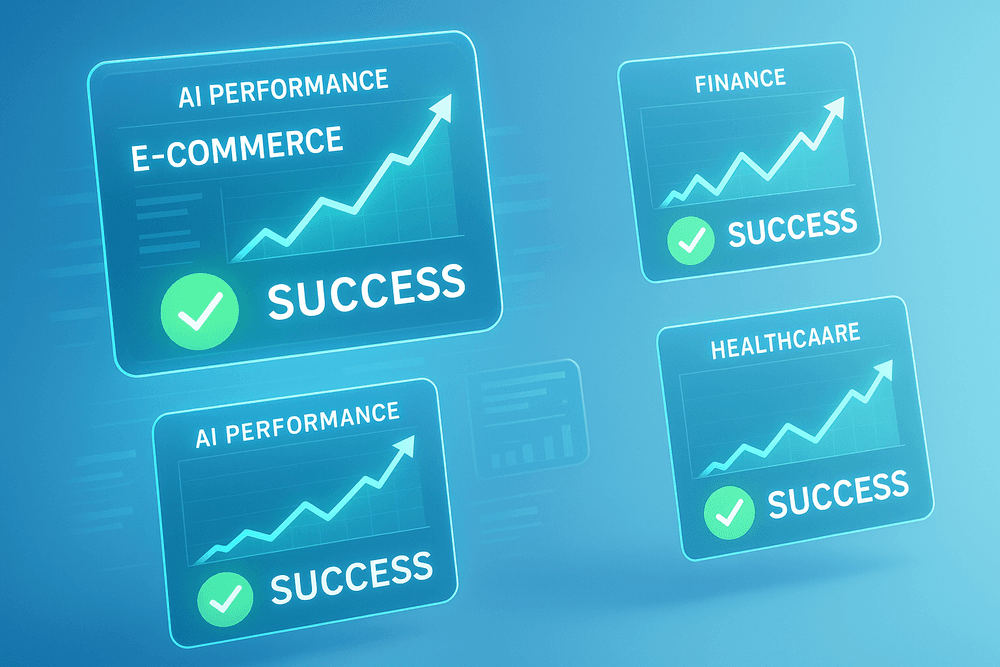
AI Performance Monitoring in Action: Real-World Success Stories
The true power of AI performance monitoring isn't just theoretical; it's actively reshaping industries. By moving beyond reactive fixes to proactive and predictive strategies, businesses are achieving unprecedented levels of efficiency, reliability, and customer satisfaction. Let's explore how different sectors are leveraging AI to conquer their unique performance challenges.
E-commerce: How AI Ensures Peak Performance During High-Traffic Events
The e-commerce landscape thrives on handling fluctuating demand, especially during peak events like Black Friday. Traditional monitoring often falters, leading to slowdowns or outages. Here, AI performance monitoring shines. Online retailers can seamlessly scale resources using AI's predictive analytics, which analyze traffic, server loads, and transaction times to preempt bottlenecks. Anomaly detection flags unusual cart abandonment or payment errors for swift intervention. This proactive approach ensures a smooth customer experience, maximizes conversions, and protects revenue during critical high-traffic periods. For e-commerce, robust AI performance monitoring is essential for sustained success and customer satisfaction, transforming potential chaos into seamless operational excellence.
Finance: Leveraging AI Performance Monitoring for Secure and Swift Transactions
In finance, speed, security, and reliability are paramount. Financial institutions manage vast sensitive data and high-value transactions where performance glitches can be disastrous. AI performance monitoring offers the sophisticated oversight vital for this sector. AI tools excel at real-time anomaly detection, flagging fraudulent activities or unusual transaction patterns with high accuracy, thereby safeguarding assets and maintaining trust. They monitor complex trading systems, ensuring crucial low latency and optimal execution speeds, which are critical for market competitiveness. Furthermore, AI performance monitoring aids financial organizations in maintaining stringent regulatory compliance through detailed audit trails and system integrity checks. From mobile banking security to high-frequency trading optimization, AI fortifies the delivery of secure and swift financial services.
Healthcare: AI-Driven Monitoring for Critical System Uptime and Patient Data Integrity
Healthcare carries the immense responsibility of patient well-being, demanding absolute system uptime and data integrity. Clinical systems, Electronic Health Records (EHRs), and medical devices must operate flawlessly, as any disruption can directly impact patient care. AI performance monitoring is transforming how healthcare ensures the reliability and security of these critical systems. AI algorithms can predict potential IT infrastructure or medical equipment failures, enabling proactive maintenance and preventing downtime that could jeopardize patient safety. For patient data integrity, AI performance monitoring plays a crucial role in detecting and alerting to unauthorized access attempts or unusual data handling, bolstering HIPAA compliance and protecting sensitive information. By ensuring vital applications like telehealth platforms and diagnostic imaging systems are always available and performing optimally, AI directly contributes to better patient outcomes and more efficient healthcare delivery.
Telecommunications: Optimizing Network Performance with AI Insights
For telecommunications providers, network performance is their business cornerstone. Customers demand seamless connectivity for calls, internet, and streaming. The complexity and scale of modern telecom networks, especially with the rollout of 5G, often overwhelm traditional monitoring methods. AI performance monitoring provides a powerful solution, offering deep insights into network behavior and enabling proactive optimization. AI algorithms analyze vast streams of network data to predict potential outages, identify anemic Wi-Fi signals in specific geographic areas, or pinpoint sources of call drops and slow data speeds. This allows telecom companies to perform predictive maintenance, dynamically allocate network resources to areas of high demand, and ultimately enhance the customer experience. By leveraging AI performance monitoring, telcos can ensure greater network reliability, reduce operational costs, and maintain a competitive edge in a rapidly evolving market.
Maximizing Your ROI: Best Practices for Implementing AI Performance Monitoring
Implementing AI performance monitoring effectively is more than just adopting new technology; it's a strategic endeavor that, when executed thoughtfully, can yield significant returns. To truly maximize your ROI and unlock the full potential of AI in overseeing your systems, consider these best practices. By focusing on clear goals, quality data, robust model management, and human-AI collaboration, you can transform your monitoring capabilities and drive tangible business value.
Defining Clear Objectives for Your AI Monitoring Strategy
Before diving into the technical intricacies of AI performance monitoring, it’s crucial to establish clear, measurable objectives. What specific outcomes do you aim to achieve? Without well-defined goals, your AI initiative risks becoming a costly experiment rather than a strategic asset. Start by identifying key pain points in your current monitoring processes. Are you struggling with excessive alert noise, slow root cause analysis, or an inability to predict potential failures?
Your objectives should be SMART (Specific, Measurable, Achievable, Relevant, Time-bound). For instance, instead of a vague goal like "improve system stability," aim for "reduce critical system downtime by 20% within six months by implementing predictive AI performance monitoring for anomaly detection" or "decrease Mean Time To Resolution (MTTR) for P1 incidents by 30% through AI-assisted root cause analysis." Clearly defined objectives not only guide the implementation and configuration of your AI performance monitoring tools but also provide a benchmark against which to measure success and demonstrate ROI to stakeholders. Aligning these objectives with broader business goals ensures that your AI investment directly contributes to organizational priorities.
Data Preparation and Quality: Fueling Effective AI Performance Monitoring
High-quality, relevant data is the lifeblood of any successful AI performance monitoring system. The principle of "garbage in, garbage out" holds particularly true for AI models; their ability to detect anomalies, predict failures, and provide actionable insights is entirely dependent on the data they are fed. Effective AI performance monitoring requires access to comprehensive datasets, including metrics, logs, traces, and event data from across your IT landscape.
The journey begins with robust data collection mechanisms, ensuring that all necessary data points are captured consistently. However, raw data is often noisy, incomplete, or inconsistent. Therefore, a rigorous data preparation pipeline is essential. This involves several key steps:
- Data Cleansing: Identifying and correcting errors, handling missing values, and removing outliers that could skew AI model training.
- Data Transformation and Normalization: Converting data into a suitable format and scale for AI algorithms. This might include standardizing timestamps, normalizing numerical values, or encoding categorical data.
- Feature Engineering: Selecting or creating the most relevant features (variables) that will help the AI model understand system behavior and identify performance issues.
Investing time and resources in data governance and quality assurance is non-negotiable. Poor data quality can lead to inaccurate predictions, a high rate of false positives or negatives, and ultimately, a lack of trust in your AI performance monitoring solution, diminishing its potential ROI.
Training and Fine-Tuning Your AI Models for Optimal Results
An out-of-the-box AI model rarely delivers optimal results for the unique nuances of your specific environment. The magic of effective AI performance monitoring often lies in meticulous training and continuous fine-tuning of the AI models. This process ensures that the AI can accurately learn the normal behavior patterns of your systems and applications, making it more adept at identifying true anomalies and predicting potential issues.
Model training involves feeding the prepared historical data to selected AI algorithms (e.g., machine learning for anomaly detection, deep learning for predictive analytics). The choice of algorithm depends on your defined objectives and the nature of your data. Initial training establishes a baseline understanding. However, IT environments are dynamic; applications are updated, infrastructure is scaled, and usage patterns change. This is where fine-tuning and continuous learning become critical.
Fine-tuning involves adjusting model parameters or retraining models with new data to adapt to these evolving conditions. Regular retraining ensures that your AI performance monitoring system remains accurate and relevant over time. Implementing MLOps (Machine Learning Operations) practices can help automate and streamline the model training, deployment, and monitoring lifecycle, ensuring your AI models are always performing at their peak and delivering reliable insights for proactive AI performance monitoring.
Fostering Collaboration Between AI Systems and Human Expertise in Performance Monitoring
The most potent AI performance monitoring strategies recognize that artificial intelligence and human expertise are not mutually exclusive but powerfully complementary. AI excels at processing vast amounts of data, detecting subtle patterns invisible to humans, and automating repetitive tasks. However, human oversight, domain knowledge, and critical thinking remain indispensable.
Instead of viewing AI as a replacement for human operators, consider it an intelligent assistant that augments their capabilities. For instance, an AI performance monitoring tool can flag an unusual spike in latency and suggest potential root causes. Human experts can then use their contextual understanding and experience to validate the AI's findings, investigate further, and implement the most appropriate remediation. This human-in-the-loop approach is vital for:
- Validating AI-driven insights: Ensuring accuracy and reducing false positives.
- Handling novel or complex scenarios: AI models may struggle with situations they haven't been trained on, requiring human ingenuity.
- Building trust: When human experts work alongside AI and understand its outputs, it fosters greater adoption and confidence in the system.
- Continuous improvement: Feedback from human operators on the AI's performance can be used to refine models and improve the overall effectiveness of your AI performance monitoring strategy.
By creating a symbiotic relationship between AI systems and your skilled IT professionals, you can achieve a level of performance monitoring that is more efficient, proactive, and resilient, truly maximizing the ROI of your AI investment.
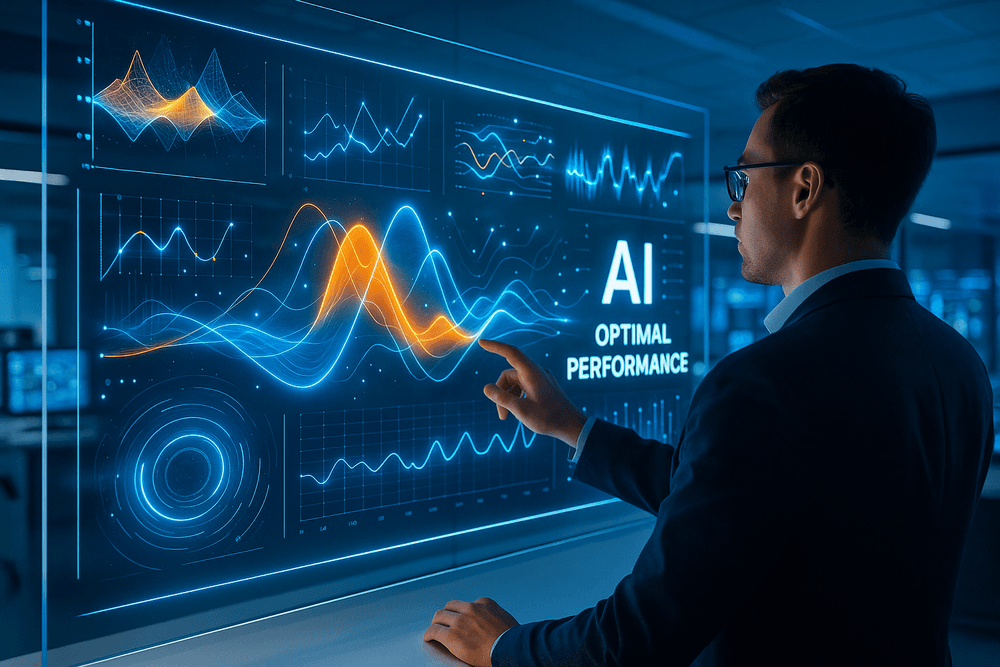
The Future is Now: Embracing AI Performance Monitoring for Unstoppable Systems
The digital landscape is in constant flux, demanding systems that are not just functional, but flawlessly resilient and incredibly efficient. As we've explored, traditional performance monitoring, with its manual thresholds and reactive firefighting, is no longer sufficient. The paradigm shift is here, powered by artificial intelligence. It's time to fully embrace AI performance monitoring and build truly unstoppable systems.
Recap: The Transformative Impact of AI on Performance Monitoring
The journey into AI performance monitoring has already revealed its profound capabilities. We've moved beyond simple alerts to a realm where systems possess a form of self-awareness. AI has revolutionized how we approach system health by:
- Unleashing Predictive Analytics: Instead of waiting for failures, AI performance monitoring tools forecast potential issues, allowing IT teams to act proactively and prevent downtime. This foresight is crucial for maintaining continuous service delivery.
- Mastering Anomaly Detection: AI algorithms sift through terabytes of telemetry data, identifying subtle deviations from normal behavior that would be invisible to human eyes. This early detection of anomalies is key to nipping problems in the bud.
- Automating Root Cause Analysis: Gone are the days of tedious, time-consuming investigations. AI rapidly pinpoints the root causes of performance degradations, drastically reducing Mean Time To Resolution (MTTR) and freeing up valuable engineering resources.
This transformative impact means AI performance monitoring isn't just an upgrade; it's a fundamental re-imagining of how we ensure system reliability and operational excellence.
Emerging Trends in AI Performance Monitoring: What’s Next?
The evolution of AI performance monitoring is far from over. The horizon is bright with exciting advancements poised to further redefine system management:
- Hyperautomation in Operations: Expect AI to take on even more complex decision-making and automated remediation tasks. This goes beyond simple fixes, potentially involving self-healing systems that adapt to changing conditions with minimal human intervention.
- Explainable AI (XAI) for Deeper Trust: As AI plays a bigger role, understanding why it makes certain recommendations or flags specific anomalies becomes critical. XAI in AI performance monitoring will provide clearer, more transparent insights into the AI's reasoning, fostering greater trust and enabling more informed actions.
- The Rise of Generative AI in AIOps: Generative AI is set to revolutionize AIOps by automating the creation of incident summaries, suggesting remediation scripts, and even generating natural language explanations of complex performance issues, making insights more accessible to a wider range of IT professionals.
- AI-Driven Capacity Planning and Optimization: Future AI performance monitoring systems will offer more sophisticated resource forecasting, optimizing cloud spend and infrastructure investments with unparalleled accuracy based on predictive load models.
- Enhanced Security Posture through Performance Insights: The line between performance and security monitoring is blurring. AI can identify anomalous behavior patterns that may indicate security threats, adding another layer of defense through performance data analysis.
These trends indicate a future where AI performance monitoring becomes an even more intelligent, autonomous, and indispensable partner in managing complex IT ecosystems.
Take the Leap: Getting Started with AI-Powered Performance Monitoring Today
The future of resilient, high-performing systems is being built now with AI performance monitoring. Delaying adoption means missing out on critical efficiencies, enhanced reliability, and a significant competitive advantage. Here’s how you can take the leap:
- Assess Your Current Landscape: Identify your most significant performance bottlenecks and areas where system instability impacts your business. Where could predictive insights from AI performance monitoring deliver the most value?
- Start with a Focused Pilot: You don't need to overhaul everything at once. Select a critical application or system and implement an AI performance monitoring solution as a pilot project. This allows you to learn, demonstrate value, and build momentum.
- Choose the Right AI-Powered Tools: Look for solutions that offer robust AI capabilities like advanced anomaly detection, predictive analytics, and automated root cause analysis. Consider ease of integration, scalability, and the specific needs of your technology stack.
- Prioritize Data Quality: AI is fueled by data. Ensure your monitoring tools are collecting comprehensive, high-quality telemetry from across your systems. Clean, reliable data is the bedrock of effective AI performance monitoring.
- Invest in Your Team: Equip your IT operations and SRE teams with the skills to leverage AI-driven insights. Training and a willingness to adapt workflows are key to maximizing the benefits.
Embracing AI performance monitoring is no longer a futuristic aspiration; it's a practical step towards building self-healing, hyper-efficient, and truly unstoppable systems. The tools and technologies are mature, and the benefits are compelling. The time to transform your performance monitoring strategy is now.