
May 24, 2025
An Introduction to Marketing Automation AI
The Dawn of Intelligent Campaigns: An Introduction to Marketing Automation AI
What is Marketing Automation AI and Why Should You Care?
Imagine marketing campaigns that don't just run on autopilot, but think, learn, and adapt in real-time. This is the power of Marketing Automation AI. It's the strategic fusion of artificial intelligence with marketing automation platforms, transforming them from mere task executors into intelligent partners. Essentially, marketing automation ai acts as the 'brain' for your marketing, using machine learning and predictive analytics to deeply understand your audience and engage them more effectively.
Why should this matter to you? In today's fast-paced digital world, Marketing Automation AI offers a crucial competitive edge. It empowers you to:
- Amplify Efficiency: Automate complex decisions, freeing your team for high-level strategy.
- Unlock Deeper Insights: Discover hidden customer patterns and preferences.
- Deliver Hyper-Personalization at Scale: Craft unique experiences for individual users, moving beyond broad segmentation.
- Sharpen Your Competitive Edge: Launch sophisticated, responsive campaigns that resonate. Embracing marketing automation ai is key to future-proofing your marketing and unlocking superior performance.
Beyond Basic Automation: How AI Elevates Your Marketing Strategy
Traditional marketing automation excels at streamlining tasks like email sequences based on pre-set rules. However, Marketing Automation AI propels your strategy far beyond these 'if-then' scenarios by injecting genuine intelligence. It’s not merely about accelerating existing processes; it's about enabling entirely new, smarter marketing actions.
Here’s how AI elevates your approach:
- Predictive Capabilities: Marketing automation ai analyzes data to forecast customer behavior, identifying high-potential leads or customers at risk of churn before it happens.
- True Hyper-Personalization: AI moves past basic segmentation, dissecting individual user data (browsing habits, purchase history) to deliver one-to-one experiences with dynamically customized content and offers.
- Intelligent Content Optimization: AI algorithms can rapidly test numerous content variations in real-time, automatically deploying the most effective versions for different audience segments, maximizing impact.
- Adaptive Lead Scoring: Unlike static models, marketing automation ai dynamically adjusts lead scores based on real-time engagement and conversion patterns, guiding sales efforts more precisely. This infusion of intelligence makes your campaigns more adaptive, insightful, and ultimately, far more potent.
The Real Impact of AI on Marketing ROI: Early Statistics
The potential of Marketing Automation AI is compelling, but what tangible impact does it have on your marketing Return on Investment (ROI)? Businesses are rightfully focused on the bottom line, and while the technology is continuously advancing, early data and case studies highlight significant gains.
Consider the measurable benefits reported by early adopters of marketing automation ai:
- Higher Conversion Rates: Personalized journeys guided by AI often lead to notable increases in lead-to-customer conversions, with some businesses seeing uplifts of 10-20%.
- Deeper Customer Engagement: AI-driven relevance in messaging boosts open rates, click-throughs, and overall brand interaction, sometimes by 20% or more.
- Improved Sales Efficiency: Predictive lead scoring ensures sales teams prioritize the most promising prospects, enhancing lead quality and potentially shortening sales cycles.
- Optimized Marketing Spend: By automating intelligently and refining targeting, marketing automation ai helps businesses achieve more with their budgets, often leading to a reduction in customer acquisition costs.
- Increased Customer Lifetime Value (CLV): Proactive, AI-informed retention strategies can reduce churn and foster loyalty. While specific figures vary, the trend is undeniable: marketing automation ai is proving to be a powerful lever for improving marketing ROI, enabling data-driven decisions that directly enhance business performance.
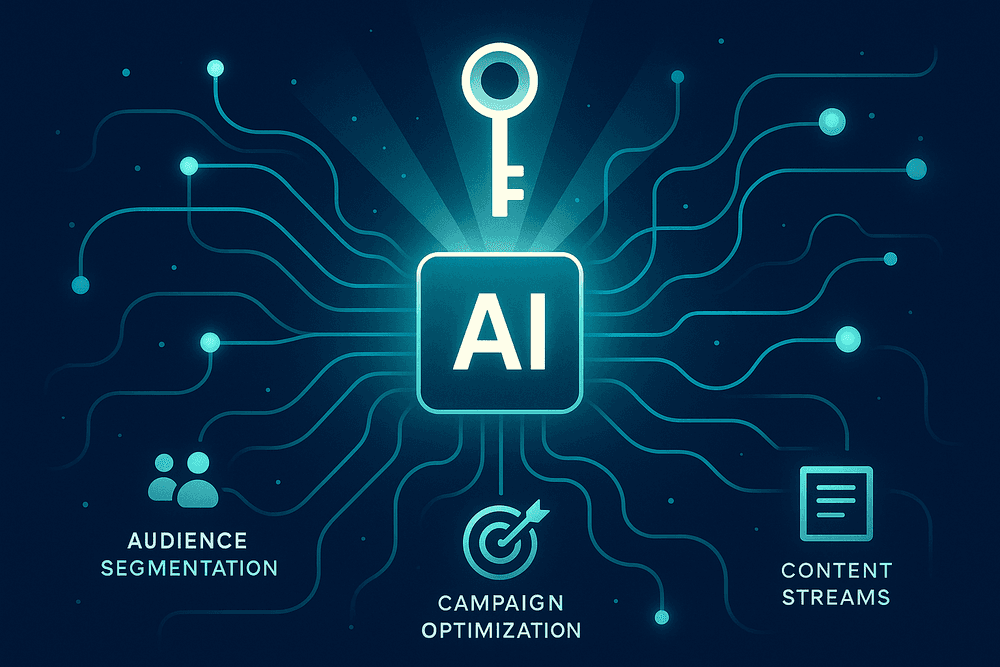
Unlocking Potential: Key Features of Marketing Automation AI
The fusion of Artificial Intelligence with marketing automation isn't just an upgrade; it's a paradigm shift, unlocking capabilities that were once the domain of science fiction. Marketing automation AI empowers businesses to connect with their audiences on a profoundly deeper level and optimize their strategies with unprecedented precision. Let's explore the key features driving this transformation.
AI-Powered Audience Segmentation and Hyper-Personalization Strategies
Gone are the days of broad, static audience segments. Marketing automation AI revolutionizes how businesses understand and interact with their customers by enabling dynamic, intelligent segmentation. Instead of relying solely on demographic data, AI algorithms analyze vast datasets in real-time – including browsing history, purchase patterns, engagement levels, and even predicted future behavior. This allows for the creation of micro-segments, identifying nuanced groups with specific needs and preferences. But marketing automation AI doesn't stop there; it powers hyper-personalization strategies. Imagine delivering individually tailored messages, product recommendations, and content experiences to each customer, at scale. This granular approach moves beyond simple name tokenization, crafting unique user journeys that resonate deeply. This level of personalization, driven by marketing automation AI, fosters stronger customer connections, significantly boosts engagement metrics, increases conversion rates, and cultivates lasting brand loyalty by making every interaction feel uniquely relevant and timely.
Predictive Analytics for Campaign Optimization with Marketing Automation AI
The true power of marketing automation AI shines brightly when it comes to forecasting future trends and proactively optimizing campaigns. Predictive analytics, fueled by sophisticated machine learning models, delves into your historical campaign data, customer behavioral patterns, and prevailing market trends to generate remarkably accurate predictions. This isn't merely about understanding past performance; it's about strategically anticipating future outcomes and opportunities. For instance, marketing automation AI can identify which leads exhibit the highest propensity to convert, predict customer churn with actionable accuracy, or even forecast the potential return on investment (ROI) of different marketing expenditures across various channels. Armed with these predictive insights, marketers can make data-driven decisions, proactively adjust campaign strategies, allocate budgets more effectively, and personalize interventions to maximize impact. This ensures that every marketing dollar invested through marketing automation AI works harder and smarter towards achieving business objectives.
Intelligent Content Creation and Curation Using AI in Marketing
Content remains the cornerstone of effective marketing, but the demand for high-quality, relevant material can be overwhelming. Marketing automation AI steps in as a powerful co-creator and curator, transforming content workflows. AI tools, leveraging advanced Natural Language Processing (NLP) and Natural Language Generation (NLG) capabilities, can assist in drafting initial versions of various content types, including compelling email copy, engaging social media updates, persuasive ad creatives, and even detailed product descriptions. While human oversight and creativity remain crucial for refinement and strategic alignment, AI significantly accelerates the creative process and helps overcome writer's block. Furthermore, marketing automation AI excels at intelligent content curation. It can sift through the vast expanse of the internet to identify relevant, authoritative third-party articles, insightful blog posts, or compelling user-generated content that resonates with specific audience segments. It can also suggest trending topics and optimal content formats, ensuring your brand message stays fresh, relevant, and provides continuous value, all while enabling the personalization of content delivery at an unprecedented scale.
Automated A/B Testing and Performance Insights Driven by Marketing Automation AI
Optimizing marketing campaigns for peak performance is an ongoing, iterative journey, and marketing automation AI supercharges this critical process through advanced, automated A/B testing and the provision of profound performance insights. Traditional A/B testing methodologies can often be slow, cumbersome, and limited in the number of variables that can be tested simultaneously. In contrast, AI-driven platforms can conduct sophisticated multivariate testing, efficiently evaluating numerous variations of headlines, calls-to-action, imagery, body copy, send times, and even audience segments far more rapidly and comprehensively than manual methods. Crucially, marketing automation AI doesn't just identify the statistically significant winning combinations; it delves deeper to provide actionable insights into why certain elements perform better and with which specific audience segments they resonate most. This continuous learning loop, powered by marketing automation AI, allows marketers to rapidly iterate on their campaigns, refine their strategies based on robust, granular data, and consistently maximize campaign effectiveness, ensuring that marketing efforts are not just launched, but meticulously honed for peak performance and optimal ROI.
Choosing Your Ally: Comparing Top Marketing Automation AI Solutions
Navigating the dynamic landscape of marketing automation AI can feel like searching for a needle in a haystack. But fear not! Understanding your options is the first crucial step towards harnessing AI's transformative power for your marketing efforts. This section will guide you through the different types of solutions available, key evaluation criteria, and the fundamental build-versus-buy decision.
The Titans: All-in-One Platforms with Integrated Marketing Automation AI
For businesses seeking a comprehensive, integrated approach, several leading platforms offer robust suites where marketing automation AI is deeply embedded. Powerhouses like HubSpot, Salesforce Marketing Cloud, and Adobe Marketo Engage provide a centralized command center for your marketing operations. These platforms leverage marketing automation AI for a wide array of tasks, including intelligent audience segmentation that goes beyond basic demographics, AI-powered campaign optimization for maximum ROI, predictive lead scoring to identify your hottest prospects, and the delivery of hyper-personalized content across various channels.
The significant advantage of these all-in-one solutions lies in their seamless integration. The AI algorithms work with the wealth of data already residing within the platform – from CRM information to campaign engagement metrics – fostering more cohesive, data-driven, and ultimately more impactful marketing strategies. If your organization aims for a holistic enhancement where marketing automation AI touches every facet of your marketing funnel, these industry titans warrant serious consideration.
Sharpshooters: Niche AI Tools for Specific Marketing Automation Tasks
Perhaps an all-encompassing platform isn't what you need right now. Maybe you're looking to augment your existing marketing stack with targeted AI capabilities or address a very specific pain point. This is where niche marketing automation AI tools – the "sharpshooters" – come into play. These specialized solutions excel at particular tasks, bringing sophisticated AI to your fingertips without requiring a complete system overhaul.
Consider AI copywriting assistants (e.g., Jasper, Copy.ai), which can generate compelling ad copy, engaging email subject lines, or even first drafts of blog content in mere moments. Predictive analytics tools, a core component of advanced marketing automation AI, can delve into your customer data to forecast churn with impressive accuracy or identify high-value leads your team might otherwise miss. Other niche AI tools focus on optimizing advertising spend across multiple platforms, personalizing website experiences in real-time based on user behavior, or even automating aspects of video content creation. The appeal of these sharpshooters lies in their focused power and often quicker implementation, allowing you to strategically deploy marketing automation AI where it's needed most.
Your Checklist: Key Considerations When Evaluating Marketing Automation AI Vendors
Selecting the right marketing automation AI vendor is a pivotal decision. To ensure you choose a true ally for your business, go beyond the glossy brochures and demos with a thorough evaluation. Keep this checklist handy:
- Genuine AI Capabilities: Scrutinize what's under the hood. Does the platform offer true marketing automation AI features like AI-driven predictive analytics, natural language processing for content insights, sophisticated machine learning for segmentation, or intelligent A/B testing? Beware of "AI-washing."
- Integration Prowess: Your chosen marketing automation AI solution must integrate seamlessly with your existing tech stack. Verify its compatibility and ease of integration with your CRM, e-commerce platform, analytics tools, and other essential marketing technologies. Siloed data will hinder AI's effectiveness.
- Usability and Learning Curve: A powerful tool is only valuable if your team can effectively use it. Assess the user interface's intuitiveness. Are comprehensive training resources and responsive customer support available for the marketing automation AI system?
- Scalability for Future Growth: Your business will evolve, and your marketing automation AI solution should be able to scale with it. Ensure the platform can handle increasing data volumes, user numbers, and campaign complexity without performance degradation.
- Data Security and Compliance: AI thrives on data. Therefore, robust data security measures and unwavering compliance with privacy regulations (like GDPR, CCPA) are non-negotiable. Inquire about data encryption, access controls, and data governance policies.
- Transparent Pricing and ROI Measurement: Understand the complete cost structure, including any potential hidden fees or charges for premium AI features. Crucially, can the vendor provide clear methodologies or case studies demonstrating the potential return on investment from their marketing automation AI?
Build or Buy? The Strategic Choice for Your Marketing Automation AI Integration
Finally, a fundamental strategic question looms: should you invest in building your own in-house marketing automation AI capabilities, or is buying an off-the-shelf solution the wiser path?
Building your own marketing automation AI offers the allure of complete customization and control. You can tailor algorithms precisely to your unique business model and proprietary datasets. However, this path is extraordinarily resource-intensive. It demands significant, ongoing investment in specialized talent (data scientists, machine learning engineers), robust infrastructure, and continuous development and maintenance. This approach is typically viable only for large enterprises with very specific, complex requirements and substantial R&D budgets.
Conversely, buying a marketing automation AI solution from an established vendor offers faster deployment, access to proven and continually refined technology, and generally a lower upfront cost. You leverage the vendor's specialized expertise, ongoing R&D, and customer support. The trade-offs can include less granular customization compared to a bespoke build and a degree of reliance on the vendor's product roadmap for new marketing automation AI features. For the vast majority of small to medium-sized businesses, and indeed many larger organizations, purchasing a specialized marketing automation AI platform or tool presents the most practical, cost-effective, and efficient route to unlocking the power of artificial intelligence in their marketing endeavors.
Maximizing Impact: Best Practices for Marketing Automation AI Success
Unlocking the full potential of marketing automation AI requires more than just implementing new software; it demands a strategic approach. By adopting best practices, businesses can transform their marketing efforts, driving significant growth and efficiency. Here’s how to ensure your marketing automation AI initiatives deliver maximum impact.
Setting Clear Goals and KPIs for Your Marketing Automation AI Strategy
Before diving into the technological capabilities of marketing automation AI, it's crucial to define what success looks like for your business. Without clear objectives, even the most advanced AI tools can fall short. Start by aligning your marketing automation AI strategy with overarching business goals. Do you aim to increase qualified leads, boost customer retention, or enhance campaign ROI?
Translate these broad aims into SMART (Specific, Measurable, Achievable, Relevant, Time-bound) goals. For example:
- Increase marketing qualified leads (MQLs) generated by AI-powered segmentation by 25% within six months.
- Improve email engagement rates by 15% in the next quarter using AI-driven content personalization.
- Reduce customer churn by 10% over the next year by leveraging AI predictive analytics for at-risk customers.
Complement these goals with specific Key Performance Indicators (KPIs) to track progress. Beyond standard metrics, consider KPIs unique to marketing automation AI, such as the accuracy of AI predictions, the efficiency gains from automated tasks (e.g., time saved on campaign setup), and the uplift in conversion rates from AI-optimized customer journeys. Regularly review these goals and KPIs, adapting them as your marketing automation AI capabilities and business landscape evolve.
Ensuring Data Quality and Seamless Integration for Effective AI in Marketing
The adage "garbage in, garbage out" is especially true for marketing automation AI. Artificial intelligence thrives on data; its quality, volume, and accessibility directly determine the effectiveness of your AI-driven insights and automations. Prioritize establishing robust data governance practices. This includes processes for data collection, cleansing, standardization, and enrichment. Ensure your customer data – encompassing demographics, behavioral patterns, transaction history, and engagement signals – is accurate, complete, and up-to-date.
Equally vital is the seamless integration of your marketing automation AI platform with other critical business systems. Your CRM, e-commerce platform, analytics tools, and customer service software should communicate fluently, creating a unified data ecosystem. Siloed data prevents AI from gaining a holistic view of the customer, leading to fragmented experiences and suboptimal predictions. Investing in proper integration ensures your marketing automation AI can access and leverage all relevant data points to personalize interactions, predict behavior, and optimize campaigns effectively. Without this foundation, the sophisticated algorithms within your AI tools cannot perform optimally.
Training Your Team to Leverage Marketing Automation AI Tools Efficiently
The most advanced marketing automation AI tools are only as effective as the teams using them. To truly maximize impact, invest in comprehensive training and ongoing development for your marketing staff. This isn't just about learning software functionalities; it's about fostering a new mindset where AI is a collaborative partner.
Your training program should cover:
- Understanding AI Capabilities: Educate your team on the specific AI features within your platform, such as predictive lead scoring, AI-powered content generation, or automated journey optimization.
- Interpreting AI-Driven Insights: Teach them how to analyze the reports and recommendations generated by the marketing automation AI and translate these insights into actionable strategies.
- Configuring and Managing AI: Ensure they are proficient in setting up, customizing, and monitoring AI-driven campaigns and workflows.
- Ethical Use of AI: Include modules on data privacy and responsible AI application.
Encourage a culture of continuous learning and experimentation. As marketing automation AI technology rapidly evolves, your team's skills must evolve too. Empower them to explore new features, test different AI models, and share best practices. When your team is confident and proficient, they can move beyond basic execution to strategically leverage marketing automation AI for innovative and high-impact marketing.
Ethical Considerations: Maintaining a Human Touch with Marketing Automation AI
While marketing automation AI offers unprecedented opportunities for personalization and efficiency, it's crucial to navigate its implementation with ethical awareness and a commitment to maintaining the human touch. Customers are increasingly savvy about data usage and can be wary of interactions that feel overly intrusive or impersonal, even if driven by sophisticated AI.
Key ethical considerations include:
- Data Privacy and Transparency: Be transparent with your audience about how their data is being used to power AI-driven experiences. Comply with all relevant data protection regulations (like GDPR or CCPA) and provide clear opt-out mechanisms.
- Algorithmic Bias: Be mindful that AI models can inadvertently perpetuate biases present in historical data. Regularly audit your AI outputs for fairness and strive to use diverse and representative datasets for training.
- Over-Personalization: While personalization is a key benefit of marketing automation AI, there's a fine line between helpful and "creepy." Monitor customer feedback and sentiment to ensure your AI-driven personalization enhances, rather than detracts from, the customer experience.
Crucially, AI should augment, not entirely replace, human interaction. Use marketing automation AI to handle repetitive tasks and provide valuable insights, freeing up your team to focus on strategic thinking, creative problem-solving, and building genuine relationships. Ensure there are clear pathways for customers to reach a human representative when needed. By thoughtfully balancing the power of AI with genuine human empathy and ethical oversight, you can build trust and foster lasting customer loyalty.
Real-World Wins: How Businesses Thrive with Marketing Automation AI
The theoretical advantages of AI are compelling, but the true test lies in its real-world application. Across diverse industries, businesses are leveraging marketing automation AI to achieve tangible results, transforming challenges into triumphs. From boosting e-commerce sales to empowering small businesses, the impact is undeniable.
E-commerce Success: Boosting Sales with AI-Driven Personalization and Retargeting using Marketing Automation AI
In the competitive e-commerce landscape, marketing automation AI is a game-changer for driving sales and enhancing customer loyalty. AI algorithms excel at analyzing vast amounts of customer data – browsing history, purchase patterns, wish lists, and demographic information – to deliver hyper-personalized experiences. Imagine an online storefront where every visitor sees product recommendations, offers, and content specifically tailored to their individual preferences. This level of personalization, powered by marketing automation AI, significantly boosts conversion rates and average order values.
Furthermore, marketing automation AI revolutionizes retargeting strategies. Instead of generic ads following users across the web, AI enables dynamic, intelligent retargeting. If a customer abandons their cart, AI can trigger personalized follow-up emails with compelling offers or showcase the exact products they considered through targeted ads on social media. For instance, an online fashion retailer utilizing marketing automation AI can see a marked increase in recovered sales by automatically sending personalized reminders with images of carted items and perhaps a small, time-sensitive discount, all managed seamlessly by their AI-enhanced platform. This smart approach ensures that marketing spend is optimized, focusing efforts on leads most likely to convert.
B2B Triumphs: Enhancing Lead Nurturing and Sales Alignment through Marketing Automation AI
For B2B companies, navigating long sales cycles and complex customer journeys is a constant challenge. Marketing automation AI offers powerful solutions to enhance lead nurturing and foster better alignment between sales and marketing teams. AI-driven lead scoring moves beyond simple demographic data, incorporating behavioral triggers and predictive analytics to identify which leads are truly sales-ready. This allows marketing teams to implement sophisticated, automated nurture campaigns that deliver the right content to the right lead at the right time, effectively guiding prospects through the sales funnel. A robust marketing automation AI system ensures no promising lead falls through the cracks.
The synergy between marketing and sales is also significantly improved. Marketing automation AI platforms provide sales teams with rich, actionable insights into a lead's engagement history, interests, and pain points before they even make the first call. This data-driven approach enables more relevant and effective sales conversations. For example, a B2B software provider using marketing automation AI can automatically alert sales reps when a lead interacts with specific high-value content or revisits the pricing page multiple times. This timely intelligence, coupled with a comprehensive lead profile, empowers sales to close deals faster and more efficiently.
Small Business Growth: Achieving Scalable Operations with Smart Marketing Automation AI
Many small businesses believe advanced AI tools are out of reach, but marketing automation AI is increasingly democratizing access to powerful capabilities. For SMBs, the ability to automate repetitive marketing tasks – email campaigns, social media scheduling, basic lead qualification – is invaluable. This frees up limited human resources to focus on strategic growth initiatives, customer service, and product development. Marketing automation AI effectively allows small businesses to punch above their weight, competing more effectively with larger organizations.
Beyond just automation, smart marketing automation AI provides small businesses with sophisticated insights that were previously unavailable. AI can analyze customer data to identify emerging trends, segment audiences with greater precision, and optimize campaign timing for maximum impact, all without requiring a dedicated data science team. A local service business, for example, could use marketing automation AI to automatically send appointment reminders, solicit reviews post-service, and re-engage past clients with tailored seasonal offers, fostering loyalty and driving repeat business, all while maintaining lean operations. The return on investment makes intelligent automation a smart choice for sustainable growth.
Lessons Learned from Real-World Marketing Automation AI Implementations
The journey to successfully implementing marketing automation AI is paved with valuable lessons from businesses that have already embraced this technology. A primary takeaway is that the quality and quantity of data are paramount; AI is only as intelligent as the data it learns from. Ensuring clean, well-organized, and comprehensive data is crucial for unlocking the full potential of any marketing automation AI platform.
Integration also emerges as a critical success factor. Siloed systems hinder efficiency, so seamless integration between the marketing automation AI tool and other core business systems like CRM, e-commerce platforms, and sales enablement tools is essential for a holistic view of the customer and streamlined workflows. Furthermore, many successful implementations adopt a phased approach, starting with specific, high-impact use cases and gradually expanding AI adoption. This allows teams to learn, adapt, and demonstrate ROI progressively. Finally, while AI offers incredible power, human oversight and strategic direction remain indispensable. Marketers must guide the AI, interpret its outputs, and ensure that the technology aligns with broader business goals, recognizing that marketing automation AI is a powerful assistant, not a complete replacement for human ingenuity.

Embracing the Future: Your Next Steps with Marketing Automation AI
The transformative power of AI in marketing automation is undeniable. Marketing automation AI creates unprecedented avenues for optimizing campaigns, delivering deeply personalized customer experiences, and boosting operational efficiency. Moving from understanding this potential to actively harnessing it requires a clear plan. This section guides you through initiating your marketing automation AI journey, navigating future trends, fostering continuous learning, and ultimately, revolutionizing your marketing for sustained success.
How to Get Started with Marketing Automation AI for Your Business Today
Launching your marketing automation AI initiative is most effective with a structured plan. Start by evaluating your current marketing efforts to pinpoint specific pain points and areas where intelligent automation can deliver the most impact. Are there repetitive tasks hindering your team, or opportunities for AI-driven insights to significantly improve lead nurturing or segmentation?
Once opportunities are clear, set measurable goals for your initial marketing automation AI projects. Consider a pilot program—perhaps AI-assisted content personalization or predictive lead scoring—to gain experience and demonstrate early ROI. Clean, organized data is foundational for marketing automation AI, so prioritize data hygiene. Concurrently, research and select a marketing automation AI platform that suits your business needs and budget. Finally, invest in team training to ensure your staff can confidently utilize these powerful new marketing automation AI tools.
Key Trends Shaping the Future of AI in Marketing Automation Platforms
The marketing automation AI landscape is incredibly dynamic, with innovations continuously reshaping its capabilities. Awareness of these key trends is vital for a forward-thinking marketing strategy:
- Hyper-Personalization at Scale: AI will facilitate deeply individualized customer experiences across all touchpoints, dynamically tailoring content based on real-time behavior—a core capability of advanced marketing automation AI.
- Predictive Analytics Mastery: Expect more sophisticated and accurate predictive models for vital functions like lead scoring, customer churn prediction, and campaign outcome forecasting.
- Generative AI in Content Creation: AI tools will increasingly assist, and even autonomously create, marketing copy, email drafts, and ad creatives, significantly accelerating content production.
- Intelligent Customer Journey Orchestration: Future marketing automation AI will offer more adaptive customer journey mapping, automatically adjusting paths based on individual interactions and preferences.
- Ethical AI and Data Privacy Imperatives: As marketing automation AI becomes more pervasive, the emphasis on responsible usage, robust data security, and transparent data handling will grow significantly.
Continuous Learning: Staying Ahead in the Evolving Landscape of Marketing Automation AI
In the rapidly advancing field of marketing automation AI, continuous learning isn't just beneficial—it's essential. New algorithms, platform features, and strategic best practices emerge constantly. To maintain a competitive edge, foster a culture of ongoing education and adaptation within your marketing team.
Encourage exploration of diverse learning resources: industry publications, expert-led webinars on marketing automation AI, online courses, and professional certifications. Promote a mindset of experimentation, allowing your team to test new AI-driven functionalities within your chosen marketing automation AI platform. Regularly analyze the performance of your AI initiatives, learn from the results, and iterate on your strategies. Networking with peers also offers invaluable insights.
Transform Your Marketing: Implementing Marketing Automation AI for Lasting Success
Embracing marketing automation AI is about more than adopting new technology; it’s about fundamentally re-engineering your marketing approach for greater efficiency, stronger customer relationships, and sustainable growth. Strategic implementation is the cornerstone of unlocking the long-term benefits.
Lasting success with marketing automation AI translates into improved ROI through optimized resource allocation, enhanced customer loyalty driven by truly personalized engagement, and significant operational efficiencies from automating routine tasks. View marketing automation AI as an indispensable core of your modern marketing strategy. This perspective helps build a resilient, future-proof marketing operation. The time to act is now—implement marketing automation AI to transform your marketing and secure a lasting competitive advantage.