
June 25, 2025
Meet Your AI Research Assistant
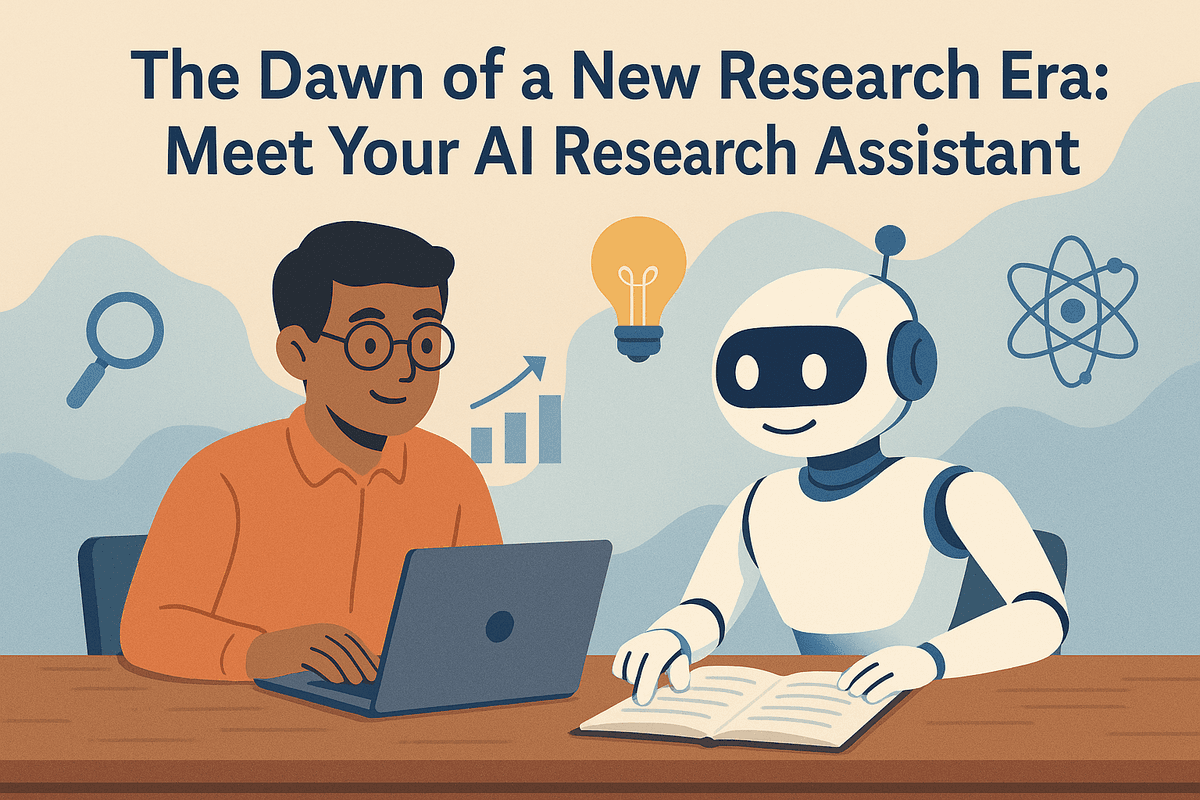
The Dawn of a New Research Era: Meet Your AI Research Assistant
The world of research is on the cusp of a profound transformation, and at its heart lies a powerful new ally: the AI research assistant. Imagine a tireless, intelligent partner capable of sifting through mountains of data, identifying relevant literature in minutes, and even helping you synthesize complex information. This isn't science fiction; it's the rapidly evolving reality of AI-powered tools designed to supercharge your research endeavors.
What Exactly is an AI Research Assistant and How Does It Work?
At its core, an AI research assistant is a sophisticated software application engineered to automate, augment, and accelerate various stages of the research lifecycle. It’s not about replacing human intellect but rather empowering it. These intelligent systems leverage cutting-edge technologies, primarily:
- Machine Learning (ML): Algorithms that enable the software to learn from vast datasets (like academic papers or experimental results) to identify patterns, make predictions, and improve its performance over time without being explicitly programmed for each task.
- Natural Language Processing (NLP): This allows the AI research assistant to understand, interpret, and even generate human language. It can process your queries, comprehend the content of research papers, extract key information, and summarize findings in a coherent manner.
- Large Language Models (LLMs): A more recent advancement, LLMs are a type of AI that excels at understanding and generating text, making them particularly adept at tasks like literature review, drafting assistance, and answering complex questions based on the ingested knowledge.
So, how does it all come together? An AI research assistant typically works by ingesting and processing massive volumes of information – from academic journals and databases to experimental data. When you pose a query or assign a task, its algorithms analyze the request, scan its knowledge base, and utilize its learned patterns to deliver relevant results. This could mean generating a list of seminal papers on a niche topic, highlighting key themes across a dozen articles, or even suggesting potential gaps in existing research. It acts as an intelligent filter and a powerful analytical engine, working tirelessly in the background.
Why Every Researcher Needs to Explore AI Research Assistant Tools Today
In today's hyper-competitive and information-saturated academic landscape, the pressure to publish groundbreaking research while juggling teaching, grant writing, and administrative tasks is immense. The sheer volume of new publications – often described as an "information tsunami" – makes it nearly impossible for any individual to stay completely abreast of all relevant developments. This is precisely where an AI research assistant becomes not just a helpful tool, but an essential one.
Exploring AI research assistant tools today is crucial for several reasons:
- Maintaining a Competitive Edge: Early adopters of powerful new technologies often gain significant advantages. Leveraging AI can help you accelerate your research, uncover insights faster, and ultimately publish more impactful work.
- Combating Information Overload: An AI research assistant can act as your first line of defense against the deluge of data, helping you quickly identify the most relevant and impactful information, saving you countless hours.
- Democratizing Access: These tools can level the playing field, providing researchers at smaller institutions or those with limited funding access to analytical power previously available only to large, well-resourced teams.
- Future-Proofing Your Skills: AI is rapidly becoming an integral part of the modern research toolkit. Familiarizing yourself with these tools now will ensure you remain at the forefront of methodological innovation.
The question is no longer if AI will impact research, but how you will leverage it. Ignoring the potential of an AI research assistant is akin to a scribe ignoring the printing press – a missed opportunity for a monumental leap in productivity and reach.
Beyond the Hype: The Tangible Benefits of Deploying an AI Research Assistant
While the buzz around artificial intelligence is undeniable, the practical, real-world advantages of integrating an AI research assistant into your workflow are what truly matter. These tools offer far more than just novelty; they deliver concrete benefits that can transform your research process:
- Drastic Time Savings and Enhanced Efficiency: Imagine slashing the hours spent on tedious literature searches, reference management, or even initial data screening. An AI research assistant automates these laborious tasks, freeing you to focus on critical thinking, experimental design, and interpreting results.
- Unprecedented Scope in Literature Discovery: AI algorithms can scan and connect information across thousands of papers, identifying relevant studies, methodologies, or data points you might have missed through traditional search methods. This can lead to more comprehensive reviews and novel research questions.
- Improved Accuracy and Consistency: For repetitive tasks like data extraction or systematic reviews, an AI research assistant can reduce the likelihood of human error, ensuring greater consistency and reliability in your foundational work.
- Deeper Insights and Pattern Recognition: Advanced AI tools can help analyze complex datasets, identify subtle patterns, visualize connections, and even assist in formulating or testing hypotheses, pushing the boundaries of what's discoverable.
- Accelerated Pace of Innovation: By streamlining multiple stages of the research cycle, from ideation to manuscript preparation, an AI research assistant directly contributes to a faster pace of discovery and dissemination, helping to bring valuable findings to light sooner.
- Enhanced Writing and Synthesis Support: Many tools now offer capabilities to help outline papers, summarize complex information for different sections, check for clarity, and even assist in rephrasing for better impact, acting as a valuable co-writer.
Ultimately, deploying an AI research assistant is about augmenting your capabilities, allowing you to conduct more ambitious, efficient, and impactful research. It’s about turning the challenge of information overload into an opportunity for deeper, faster discovery.

Unlocking Research Superpowers: Key Features of an AI Research Assistant
Imagine having a tireless, intelligent partner in your research journey, one that amplifies your abilities and accelerates your path to discovery. This is the promise of an ai research assistant. These sophisticated tools are not just about automation; they're about augmentation, equipping you with superpowers to tackle the most demanding aspects of research. Let's delve into the key features that make an ai research assistant an indispensable asset, transforming complex challenges into manageable tasks.
Automate Literature Discovery: Finding Relevant Papers with an AI Research Assistant
The traditional literature review can feel like searching for a needle in a digital haystack. An ai research assistant revolutionizes this by acting as your expert librarian. Instead of just basic keyword searches, these AI tools use advanced natural language processing (NLP) to understand your research questions' context. Your ai research assistant sifts through millions of academic papers, preprints, and proceedings in minutes, identifying highly cited works and emerging research you might otherwise miss. It provides personalized recommendations based on your previous work and interests, ensuring you stay at the cutting edge. This automated discovery saves countless hours, allowing you to focus on critical analysis, not just the frustrating search.
Streamline Data Analysis: How an AI Research Assistant Crunches Numbers Faster
Data is research's lifeblood, but analysis can be monumental. Whether dealing with vast quantitative datasets or complex qualitative information, an ai research assistant offers powerful capabilities to expedite this. These tools perform sophisticated statistical analyses, identify patterns and correlations, and help build predictive models much faster than manual methods. For qualitative data, an ai research assistant assists in thematic analysis, sentiment analysis, and coding, extracting meaningful insights from text, interviews, or surveys. By automating repetitive calculations and complex analytical tasks, your ai research assistant frees you to interpret results, formulate hypotheses, and draw conclusions, significantly accelerating the journey from raw data to actionable knowledge.
Master Information Synthesis: Getting Coherent Insights from Vast Datasets Using Your AI Research Assistant
The challenge often lies not just in finding information or analyzing data, but in synthesizing it into a coherent understanding. An ai research assistant excels at this complex cognitive task. It can help you connect disparate pieces of information from multiple sources, identify overarching themes, and even generate concise summaries of large volumes of text. Imagine feeding your ai research assistant dozens of relevant papers; it can help you map out the intellectual landscape, highlight conflicting findings, and identify gaps in existing research. This ability to see the bigger picture and distill complex information into understandable insights is crucial for developing novel arguments and groundbreaking theories. An ai research assistant acts as a powerful cognitive partner in this synthesis process.
Enhance Academic Writing: Drafting and Refining Papers with AI Research Assistant Support
Crafting a compelling research paper is an art form, and an ai research assistant can be your invaluable co-author and editor. Beyond basic grammar and spell-checking, these AI tools offer sophisticated support for academic writing. An ai research assistant can help you structure your paper, suggest relevant citations, and even assist in drafting sections based on your notes and data. It can help paraphrase complex ideas for clarity, ensure consistent terminology, and check for accidental plagiarism. Some AI research assistants also provide feedback on tone, style, and flow, helping you refine your manuscript to meet the high standards of academic publications. This support empowers researchers to communicate their findings more effectively and efficiently, reducing the burden of the writing process.
Navigating the AI Research Assistant Landscape: Top Tools & Platforms
The promise of an AI research assistant to streamline your workflow is compelling, but the sheer number of options can be daunting. How do you choose the right digital partner for your academic endeavors? This guide will help you navigate the landscape, identify key selection criteria, compare software types, and decide between specialized and generalist solutions.
Decoding Your Needs: Key Criteria for Selecting the Best AI Research Assistant
Choosing the best AI research assistant starts with understanding your specific requirements. Not all tools are created equal, and what works for one researcher might not suit another. Consider these critical factors before committing:
- Accuracy and Reliability: This is paramount. An AI research assistant must provide trustworthy information, accurate summaries, and reliable data analysis. Investigate how the tool mitigates biases and "hallucinations" – fabricated but plausible-sounding information.
- Core Functionality: What tasks do you need help with most? Look for features like advanced literature discovery (access to diverse databases, smart filtering), robust information synthesis, intelligent data analysis capabilities, and effective writing assistance (grammar, style, citation generation).
- Integration with Your Existing Workflow: The ideal AI research assistant should seamlessly integrate with tools you already use, such as reference managers (Zotero, Mendeley), word processors, and data analysis software. Smooth integration minimizes disruption and maximizes efficiency.
- User Experience (UX) and Ease of Use: A complicated interface can negate any time-saving benefits. Seek an AI research assistant with an intuitive design, a manageable learning curve, and clear instructions. Many offer free trials – use them to assess usability.
- Data Security and Privacy: Research often involves sensitive or unpublished data. Ensure the platform has robust security measures, clear data privacy policies, and complies with relevant regulations (e.g., GDPR). Understand how your data is used, stored, and protected.
- Pricing and Value: AI research assistant tools come with various pricing models, from free (often with limitations) to premium subscriptions. Evaluate the cost against the features offered and the potential return on investment in terms of time saved and enhanced research quality.
- Specialization vs. General Purpose: Does the tool cater to your specific field (e.g., biomedical sciences, humanities, engineering)? Some AI assistants are trained on domain-specific data, offering more nuanced understanding and relevant suggestions.
Sizing Up the Contenders: Comparing AI Research Assistant Software
Once you've defined your needs, it's time to compare specific AI research assistant software. While new tools emerge frequently, the principles of comparison remain consistent. Here’s what to scrutinize:
- Feature Deep-Dive: Don't just look at a feature list; examine the depth and quality. For literature review, how comprehensive are its search capabilities? Can it identify seminal papers and track citation networks effectively? For summarization, how accurately does it capture key arguments and methodologies? If it offers data analysis, what types of data can it handle, and what analytical techniques does it employ? For writing support, assess its ability to help with outlining, drafting, rephrasing, and checking for clarity.
- Pricing Structures: Most AI research assistant platforms operate on a subscription basis (monthly or annually), often with tiered plans offering varying levels of features, usage limits, or access to premium databases. Some might offer freemium versions, which are excellent for initial testing. Understand exactly what you get at each price point and whether there are any hidden costs or usage caps that could impact your research.
- User Experience (UX) and Support: Beyond a clean interface, consider the overall user journey. Is it easy to import your existing research or data? Is the output easy to understand and export? What kind of customer support is available (e.g., tutorials, FAQs, live chat, community forums)? A responsive support team can be invaluable, especially when you're relying on the AI research assistant for critical tasks. Look for user reviews and testimonials to gauge real-world experiences.
The Specialist or the All-Rounder? Choosing Between Niche and Generalist AI Research Assistants
A crucial decision point is whether to opt for a niche AI research assistant tailored to your specific discipline or a generalist tool designed for broader applications.
- Generalist AI Research Assistants: These tools aim to serve a wide array of research fields.
- Pros: They often boast a broad feature set, including literature search across multiple disciplines, summarization, and writing assistance applicable to various academic styles. They can be excellent for interdisciplinary research or if your needs span different types of tasks.
- Cons: Their understanding of highly specialized terminology or niche methodologies might be limited. The "one-size-fits-all" approach may not provide the depth required for very specific research questions.
- Best for: Researchers needing versatile support, those in interdisciplinary fields, or those whose primary need is for broad literature discovery and general writing aid.
- Niche AI Research Assistants: These are designed with a particular field (e.g., bioinformatics, legal research, chemical engineering) in mind.
- Pros: They are often trained on domain-specific datasets, understand specialized jargon, and may offer features unique to that field (e.g., analyzing specific types of experimental data, accessing specialized legal databases). This can lead to more relevant and accurate results for highly focused research.
- Cons: Their feature set might be narrower, and they are less useful if your research extends beyond their area of specialization. They can sometimes be more expensive due to their specialized nature.
- Best for: Researchers working deeply within a specific discipline who require an AI research assistant with expert knowledge of their field's language, data types, and core literature.
Ultimately, the choice between a niche and a generalist AI research assistant depends on your research focus, the specific tasks you want to automate or enhance, and whether the depth of a specialist tool outweighs the versatility of a generalist one. Consider your long-term research trajectory as well; a tool that supports your evolving needs will be the most valuable investment.

Mastering Your AI Research Assistant: Best Practices for Peak Performance
An ai research assistant is a powerful ally, but its true potential is unlocked through skillful application. To transform it into an indispensable partner, master best practices for peak performance, ethical conduct, and seamless integration into your scholarly pursuits. Let's explore how.
Unlocking Potential: Crafting Powerful Prompts for Your AI Research Assistant
The output quality from your ai research assistant directly mirrors your input. Precise prompts act as the steering wheel, guiding your ai research assistant to the exact information you need, whereas vague directions often lead to meandering or irrelevant results.
- Be Specific and Clear: Instead of a broad request like "summarize climate change research," try a detailed prompt: "Summarize the key findings from peer-reviewed articles published between 2020 and 2023 on the impact of rising sea levels on coastal ecosystems in Southeast Asia, focusing specifically on community-based adaptation strategies."
- Provide Context: Inform your ai research assistant about the purpose of the research (e.g., "for a literature review chapter"), your intended audience ("academic peers in environmental science"), and the desired tone or format ("formal academic style, bullet points for key strategies").
- Iterate and Refine: Your first prompt might not yield perfect results. Treat prompting as an iterative dialogue. If the output isn't quite right, adjust your prompt, add more specific constraints, or ask for clarification. Don't hesitate to experiment with different phrasings.
- Use Keywords Strategically: Include relevant academic keywords that your ai research assistant can use to search, filter, and synthesize information more effectively within its knowledge base.
- Request Varied Outputs: Ask for outlines, comparative analyses, summaries of arguments and counterarguments, or even potential research questions to deepen your understanding and explore different facets of a topic.
Mastering prompt engineering will significantly enhance the value you derive from your ai research assistant, saving you critical time and surfacing more relevant, actionable insights for your work.
Seamless Synergy: Weaving Your AI Research Assistant into Your Workflow
Integrating an ai research assistant effectively means making it a natural extension of your existing research habits, a tool that augments your intellect rather than an awkward add-on. The goal is to enhance your capabilities, ensuring human critical thinking remains central to the research process.
- Identify Strategic Integration Points: Pinpoint stages in your research where an ai research assistant can offer the most leverage. Common areas include:
- Literature Discovery: Rapidly scanning and filtering vast academic databases for relevant papers and preprints.
- Information Synthesis: Generating concise summaries of complex articles or drafting initial outlines for sections of your paper.
- Data Analysis Support: For AI tools with this capability, identifying potential patterns, anomalies, or trends in datasets that warrant further human investigation.
- Writing Assistance: Overcoming writer's block by generating first drafts of paragraphs, improving sentence structure, checking for grammatical consistency, or rephrasing complex ideas for clarity.
- Start Small, Scale Gradually: Begin by using your ai research assistant for one or two well-defined tasks. As you become more comfortable and confident in its outputs, you can gradually expand its role in your workflow.
- Choose the Right Tool for the Job: Different ai research assistant platforms and models excel at different tasks. Select tools that align with your specific research needs and the type of assistance you require.
- Maintain Critical Oversight: Always critically evaluate the output of your ai research assistant. Verify facts against primary sources, check for potential biases, and ensure the information aligns with your research goals and ethical standards. Your expertise is irreplaceable.
- Develop a System: Establish clear protocols for how you use AI-generated content. This includes how you will verify its accuracy, attribute its use appropriately (if necessary), and integrate it responsibly into your original work.
A thoughtfully integrated ai research assistant streamlines laborious processes, freeing you to focus on higher-level critical thinking, nuanced analysis, and innovative research.
Navigating the Nuances: Ethical Use of Your AI Research Assistant in Academia
The transformative power of an ai research assistant comes with significant ethical responsibilities, especially within academic settings where integrity, originality, and accuracy are paramount.
- Plagiarism and Originality: AI-generated text should never be presented as your own original work without substantial modification and proper attribution where required. Use it as a starting point, a summarization tool, or an idea generator, but always synthesize, critically analyze, and rewrite information in your own voice, reflecting your unique insights. Adhere strictly to your institution's academic integrity and plagiarism policies.
- Accuracy and Bias: Remember that an ai research assistant can make errors (often termed "hallucinations") or inadvertently reflect biases present in its vast training data. You are ultimately responsible for the accuracy, validity, and objectivity of your research. Meticulously cross-verify all information derived from AI tools with reliable, peer-reviewed primary sources.
- Data Privacy and Confidentiality: Exercise extreme caution when inputting sensitive, unpublished research data, or confidential information into any ai research assistant, particularly third-party cloud-based platforms. Thoroughly understand the tool's data usage policies, privacy settings, and security measures before uploading proprietary material.
- Authorship and Acknowledgment: Current academic consensus generally does not recognize AI tools as authors. However, transparency is crucial. If an ai research assistant played a significant role in your research process (beyond simple proofreading or grammar correction), consider acknowledging its use in your methodology section or acknowledgments, adhering to relevant publisher and institutional guidelines.
- Preserving Critical Thinking: Avoid becoming overly reliant on AI. An ai research assistant should serve to augment, not replace, your own critical thinking, analytical skills, and deep intellectual engagement with your subject matter.
Upholding these ethical principles ensures that your use of an ai research assistant enhances your research credibility and contributes positively to the scholarly community.
Future-Proofing Your Research: Keeping Pace with AI Research Assistant Advancements
The landscape of ai research assistant technology is evolving at an astonishing speed. New models, features, and capabilities are constantly emerging, transforming how research can be conducted. Staying informed and adaptable is crucial to continuously maximizing the benefits of these powerful tools.
- Commit to Continuous Learning: Dedicate regular time to learn about new AI tools, emerging features in your current ai research assistant, and innovative techniques relevant to academic research and your specific field.
- Follow Reputable Sources: Stay updated by subscribing to leading AI research journals, reputable technology news sites, and newsletters from prominent AI developers, research institutions, and academic societies.
- Engage with Communities: Join online forums, professional networking groups, or university-led discussion groups where researchers share experiences, best practices, and insights about using various ai research assistant tools.
- Experiment and Adapt: Don't be afraid to try out new ai research assistant tools or features as they become available. Critically assess how they can improve your efficiency, enhance your analytical capabilities, or open up new research avenues.
- Attend Workshops and Webinars: Many universities, libraries, and professional organizations offer training sessions, workshops, and webinars focused on leveraging AI tools responsibly and effectively for research.
By proactively staying updated, you ensure that your ai research assistant remains a valuable and relevant asset in your toolkit, allowing you to continually refine your research process and tap into the latest technological advancements to produce high-impact, cutting-edge scholarly work.
The AI Research Assistant in Action: Transforming Discovery Across Fields
The theoretical benefits of an ai research assistant become tangible when we look at its real-world impact. From uncovering life-saving medical insights to reshaping how we understand our society, these intelligent tools are becoming indispensable partners in the quest for knowledge.
Case Study: Accelerating Cancer Drug Discovery with an AI Research Assistant
Dr. Evelyn Hayes and her oncology research team were grappling with an aggressive, poorly understood form of cancer. They faced a monumental task: analyzing tens of thousands of genomic studies, clinical trial results, and biochemical papers to identify potential new therapeutic targets. The sheer volume of data made traditional research methods slow and prone to overlooking subtle connections.
By integrating an advanced ai research assistant into their workflow, Dr. Hayes's team experienced a paradigm shift. The AI tool rapidly ingested and processed vast datasets, identifying patterns in genetic mutations and protein interactions that had previously gone unnoticed. It cross-referenced information from disparate sources, flagging novel molecular pathways that showed susceptibility to existing compounds or suggested new drug development avenues. Within months, a task that would have taken years, the ai research assistant pinpointed three highly promising candidate targets. This AI-driven acceleration didn't replace the researchers; it empowered them, allowing them to focus their expertise on validating the AI's findings and designing subsequent experiments, dramatically shortening the path to potential new treatments.
From Social Sciences to Engineering: Diverse Applications of an AI Research Assistant
The transformative power of an ai research assistant isn't confined to a single discipline. Its versatility is unlocking new efficiencies and insights across the academic spectrum:
- Social Sciences & Humanities: Researchers in fields like sociology, political science, and history are utilizing ai research assistant tools to conduct comprehensive literature reviews at unprecedented speed. These tools can analyze vast corpora of text, identify thematic trends in qualitative data (such as interview transcripts or historical documents), and even track the evolution of concepts over time. For instance, an ai research assistant can help a historian trace the influence of a particular idea through centuries of texts or assist a sociologist in understanding sentiment shifts in online discourse.
- Engineering & Computer Science: In engineering disciplines, an ai research assistant accelerates innovation by helping researchers navigate the complex landscape of existing patents, technical papers, and material science databases. It can identify optimal materials for specific applications, predict potential design flaws based on historical data, or even assist in generating code snippets for software development. This allows engineers to focus on creative problem-solving and rapid prototyping.
- Environmental Science: Climate scientists and ecologists are employing the ai research assistant to analyze massive datasets from satellites, sensor networks, and field studies. These AI tools can help identify patterns in climate change, model ecosystem responses to environmental stressors, and predict biodiversity loss, providing crucial information for policy-making and conservation efforts.
Voices from the Field: Researchers Share Their Success Stories
The true measure of any tool is the impact it has on its users. Here’s what researchers are saying about their experiences with ai research assistant platforms:
- "The ai research assistant has revolutionized how I approach literature reviews. I can now synthesize information from hundreds of papers in a matter of hours, not weeks. This has freed up invaluable time for critical analysis and writing, significantly boosting my research output." – Dr. Samuel Green, Political Scientist.
- "In materials science, staying current is everything. My ai research assistant acts like a vigilant scout, constantly scanning new publications and patents for developments relevant to my specific research focus. It's helped me identify novel research directions I might have otherwise missed." – Dr. Priya Sharma, Materials Engineer.
- "As a PhD student, managing the sheer volume of reading was overwhelming. The ai research assistant helps me quickly identify key papers, summarize core arguments, and even draft initial outlines. It’s an incredible learning and productivity tool that has made my research journey far more manageable and focused." – Ben Carter, Doctoral Candidate in Sociology.
These experiences underscore a common theme: the ai research assistant is not just a productivity tool but a catalyst for deeper insights, broader exploration, and faster progress across all fields of study.

The Future of Research is Assisted: Embrace Your AI Research Assistant
The research landscape is undergoing a monumental shift, and at the heart of this transformation is your new indispensable partner: the AI research assistant. As we've explored, the days of solely relying on manual, time-intensive methods are waning. An AI research assistant is no longer a futuristic concept but a present-day necessity for anyone serious about conducting modern, efficient, and impactful research.
The Indispensable Partner in Modern Research
Why has an AI research assistant become so crucial? The answer lies in its power to amplify your capabilities and streamline your entire research workflow. Imagine significantly reducing the hours spent on sifting through endless literature, deciphering complex datasets, or synthesizing vast amounts of information. An AI research assistant automates these laborious tasks, freeing you to focus on critical thinking, hypothesis generation, and groundbreaking insights. From accelerating literature discovery and ensuring comprehensive reviews to offering sophisticated data analysis and even assisting in drafting and refining your manuscripts, these AI-powered tools are designed to tackle the bottlenecks that traditionally slow down progress. Embracing an AI research assistant means embracing enhanced productivity, improved accuracy, and a faster path from question to publication. It's about working smarter, not just harder, in an increasingly competitive academic and scientific environment.
Your First Steps to Harnessing AI Research Power
Ready to integrate the power of an AI research assistant into your work? Getting started is more straightforward than you might think. Here’s how you can begin to leverage an AI research assistant effectively:
1. Pinpoint Your Research Bottlenecks
Identify the most time-consuming or challenging aspects of your current research process. Is it literature review, data analysis, or writing? Knowing your pain points will help you select an AI research assistant with the right features.
2. Explore the AI Research Assistant Landscape
The market for AI research assistant tools is diverse and growing. Research different platforms, read reviews, and understand their specific functionalities. Look for tools that specialize in your field or the tasks you identified in step one. Many offer free trials or demos.
3. Start Small, Scale Smart
Don't try to overhaul your entire workflow overnight. Begin by using an AI research assistant for a single, manageable task or a small project. This allows you to learn the tool's capabilities and limitations in a low-pressure environment.
4. Master the Art of Interaction
Effective use of an AI research assistant often involves clear and precise prompting. Invest a little time in understanding how to best communicate your needs to the AI to get the most accurate and relevant results. Think of it as learning to collaborate with a new, highly intelligent colleague.
5. Integrate and Iterate
Once comfortable, gradually integrate the AI research assistant into more aspects of your research. Continuously evaluate its effectiveness and adapt your usage. The goal is to create a symbiotic relationship where the AI handles the heavy lifting, and you guide the intellectual direction.
Revolutionize Your Research Today: Explore AI Tools & Resources
The future of research is not about replacing human intellect but augmenting it. An AI research assistant is the key to unlocking new levels of efficiency and discovery. The time to adapt and embrace this powerful technology is now. Don't let your research be constrained by outdated methods.
We urge you to take the next step: Explore the recommended AI research assistant tools and resources available. Investigate platforms that align with your research needs, experiment with their features, and discover how an AI research assistant can revolutionize your work. Start your journey towards a more streamlined, insightful, and impactful research process today, and position yourself at the forefront of your field. Your next breakthrough could be just an AI-assisted query away!